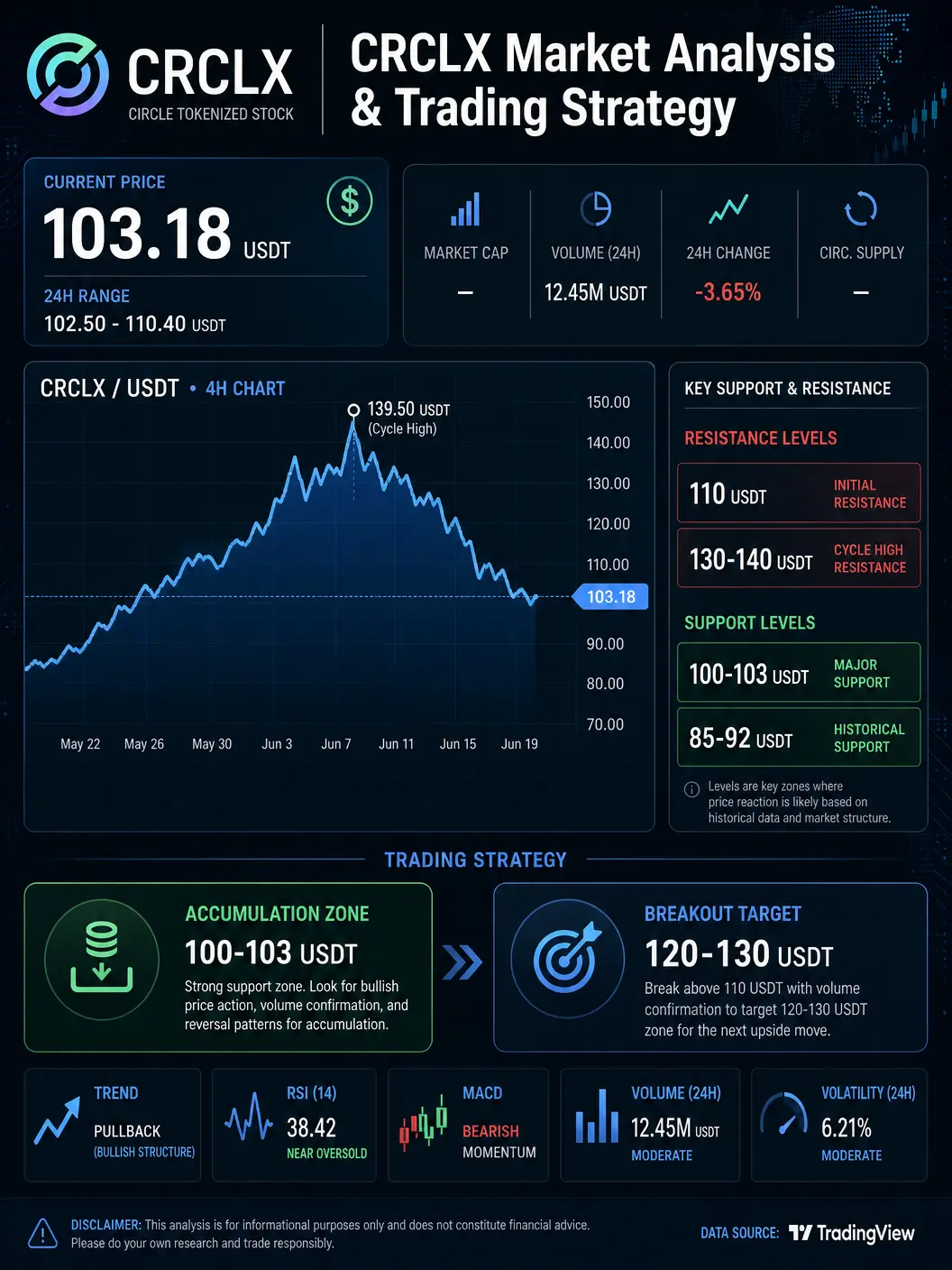
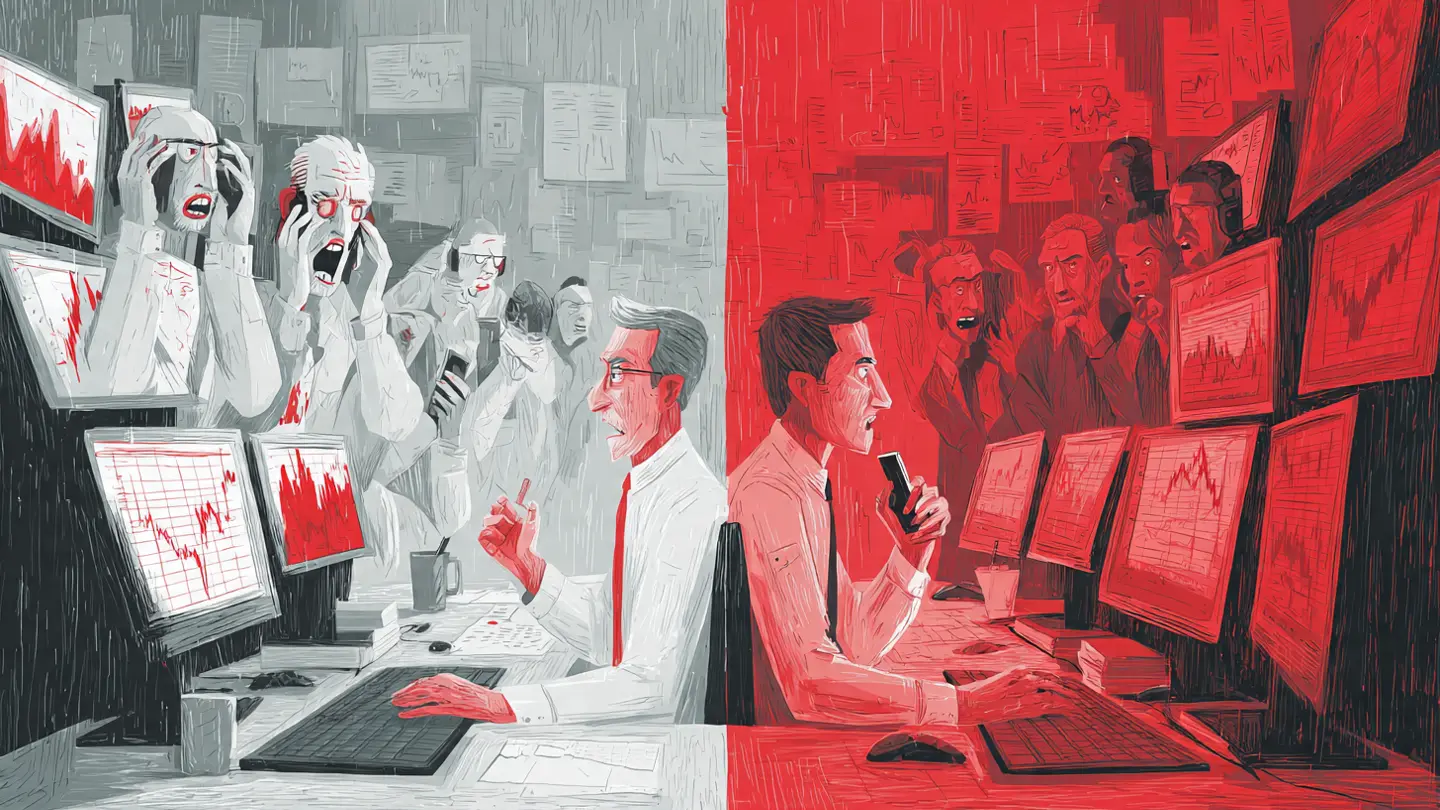
#Gate正式推出股票交易 #CRCLX CRCLX, the tokenized stock representing Circle equity exposure, is currently trading around 103.18 USDT as of early June 2026. During the latest 24-hour session, the asset opened near 110.24 USDT, reached a high of 110.40 USDT, and fell to a low of 102.50 USDT before settling near current levels. Daily trading volume exceeded 11,000 tokens, generating approximately 1.16 million USDT in turnover.
The recent decline extends a broader short-term correction that has pushed CRCLX down from roughly 139.50 USDT at the end of May to just above 103 USDT today, representing a pullback of approximately 26 percent in only a few trading sessions.
Price History and Major Trends
CRCLX has been one of the most volatile tokenized equity assets throughout 2026. The token traded near 61 USDT in late February before launching into a powerful rally that carried prices above 80 USDT, then 100 USDT, and eventually into the 120 USDT region by April.
The strongest rally occurred during mid-April when CRCLX surged to an all-time high near 136.32 USDT. Following that advance, a major correction emerged on April 21, when the price collapsed from above 124 USDT to nearly 101 USDT in a single session as volume exploded. The correction continued through early May, ultimately reaching a low around 85.90 USDT.
A strong recovery followed during mid-to-late May. Buyers pushed the token back above 120 USDT and eventually toward a new cycle high near 139.50 USDT. However, profit-taking quickly returned, triggering the current decline that has brought the asset back toward the important 100 USDT support region.
Technical Analysis
Current technical indicators lean slightly bearish but do not signal extreme weakness. Bollinger Bands, MACD, Moving Averages, and KDJ indicators all show a modest advantage for sellers, while RSI remains close to neutral territory, suggesting the market is neither significantly overbought nor oversold.
The recent decline has damaged short-term momentum, but the asset remains above the major support area that previously triggered strong buying interest. Historically, CRCLX has demonstrated the ability to recover rapidly after sharp corrections, making support levels especially important to monitor.
Key Support and Resistance Levels
The most important support zone currently sits between 100 and 103 USDT. This area is being tested now and will likely determine the next major directional move.
If support fails, the next downside targets are located near 95 USDT, followed by the stronger historical support region between 85 and 92 USDT where buyers previously regained control.
On the upside, initial resistance is located around 110 USDT. A successful breakout above this level could open the path toward 120 USDT and eventually the 130 to 140 USDT resistance zone, which has repeatedly capped rallies throughout 2026.
A decisive break above 140 USDT would be highly bullish and could create conditions for a move toward 150 USDT and potentially 160 USDT under favorable market conditions.
Price Outlook
Most forecasts suggest CRCLX will remain highly volatile throughout 2026. Conservative projections place the asset within a broad range of 80 to 115 USDT, while more optimistic models suggest a return toward 130 USDT or higher if Circle continues benefiting from stablecoin growth and expanding digital payment adoption.
The most realistic medium-term scenario is continued movement between 90 and 135 USDT, with price direction largely dependent on Circle's business performance, regulatory developments surrounding stablecoins, and broader crypto market sentiment.
Trading Strategy
For conservative traders, the current 100 to 103 USDT zone offers a potential accumulation area. Entries near support can target a recovery toward 110 to 115 USDT while maintaining stop-loss protection below 95 USDT.
Aggressive traders may prefer waiting for a confirmed breakout above 110 USDT. Such a move would indicate renewed momentum and could support a rally toward 120 to 130 USDT. In this scenario, stops near 105 USDT help manage downside risk.
Swing traders should monitor volume closely. Strong buying volume near support would increase the probability of a rebound, while heavy selling volume below 100 USDT would strengthen the bearish case and increase the likelihood of a move toward the 85 to 92 USDT support zone.
Risk Factors
CRCLX remains a high-volatility asset. As a tokenized stock, it carries risks beyond normal cryptocurrency exposure, including liquidity limitations, regulatory uncertainty, tracking differences relative to underlying equity valuation, and sharp price swings caused by relatively low circulating supply.
Single-day moves exceeding 20 percent have occurred multiple times throughout its trading history, making disciplined risk management essential. Traders should size positions appropriately and avoid excessive leverage given the asset's volatility profile.
Outlook and Conclusion
The 100 to 103 USDT support zone is the most important level to watch in the near term. If buyers successfully defend this area, a recovery toward 110 to 120 USDT becomes increasingly likely. If support breaks, downside risk toward 85 to 92 USDT increases significantly.
Over the remainder of 2026, CRCLX is expected to remain one of the more volatile tokenized equity assets. The long-term opportunity remains tied to Circle's growth as a leading stablecoin issuer and digital finance company. While upside potential toward 130 to 140 USDT remains achievable, traders should balance that opportunity against the possibility of further corrections and maintain strict risk management at all times.
#ShareYourUSStocksWinNvidia #StockTradingChallengeUpTo17000U #TradeCFDWinGold