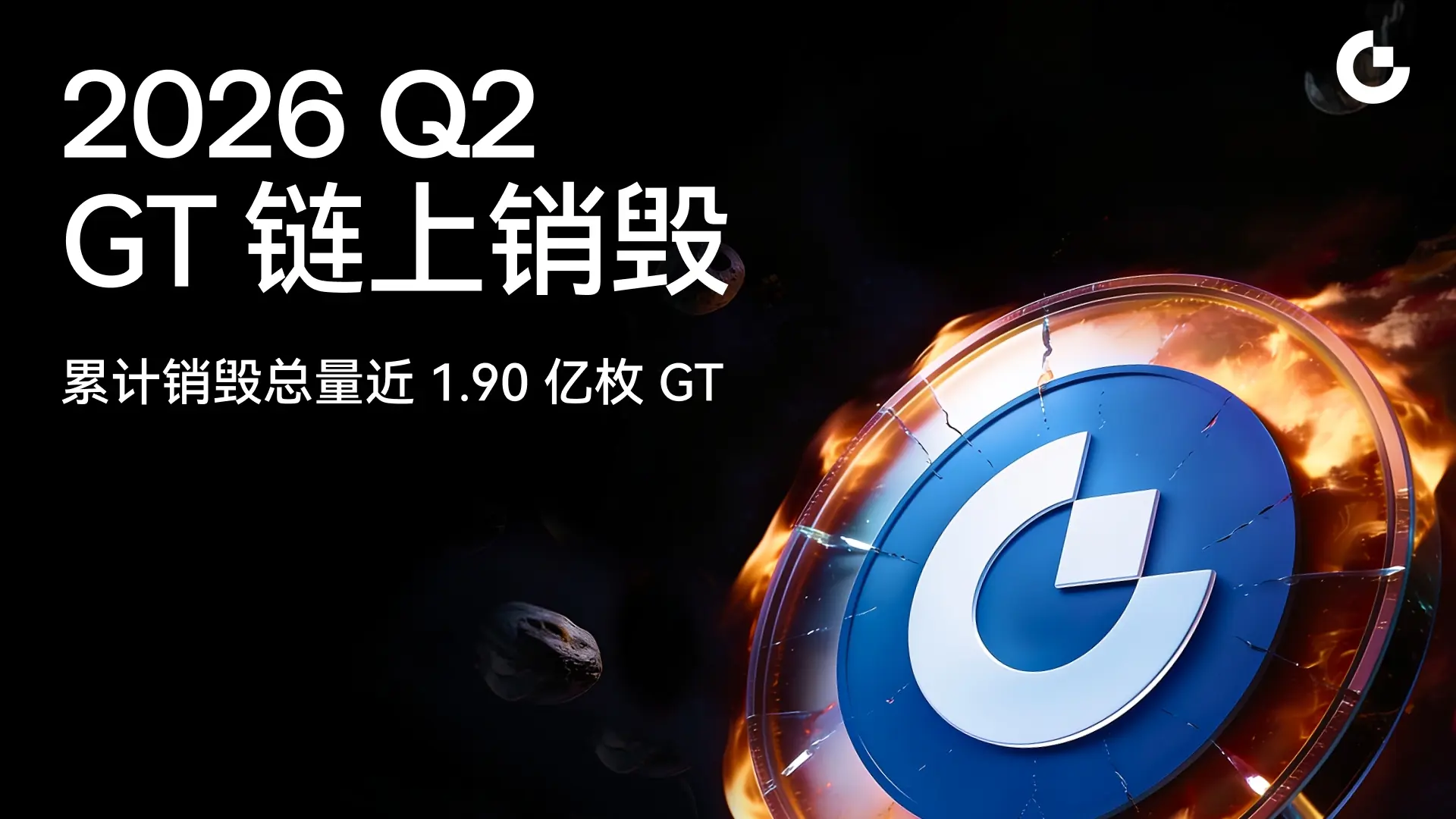
#GTBurns2.57MInQ2
🔥 GT Burn Q2 2026 — The Scarcity Engine Reaches Critical Mass
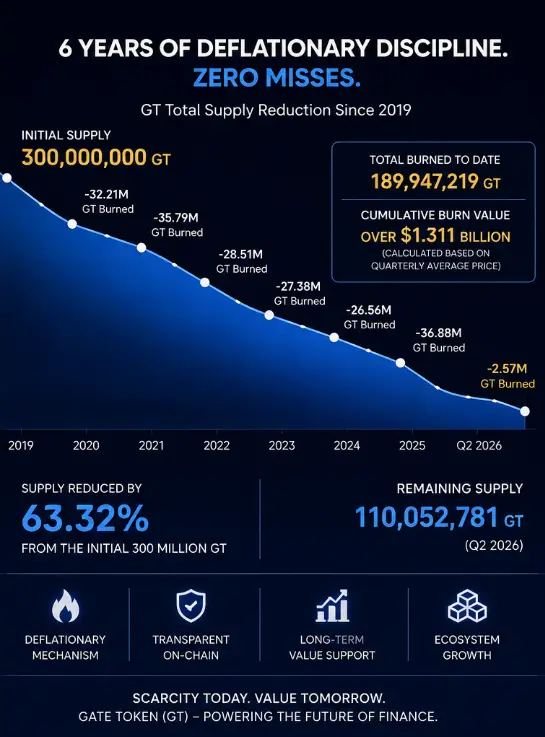
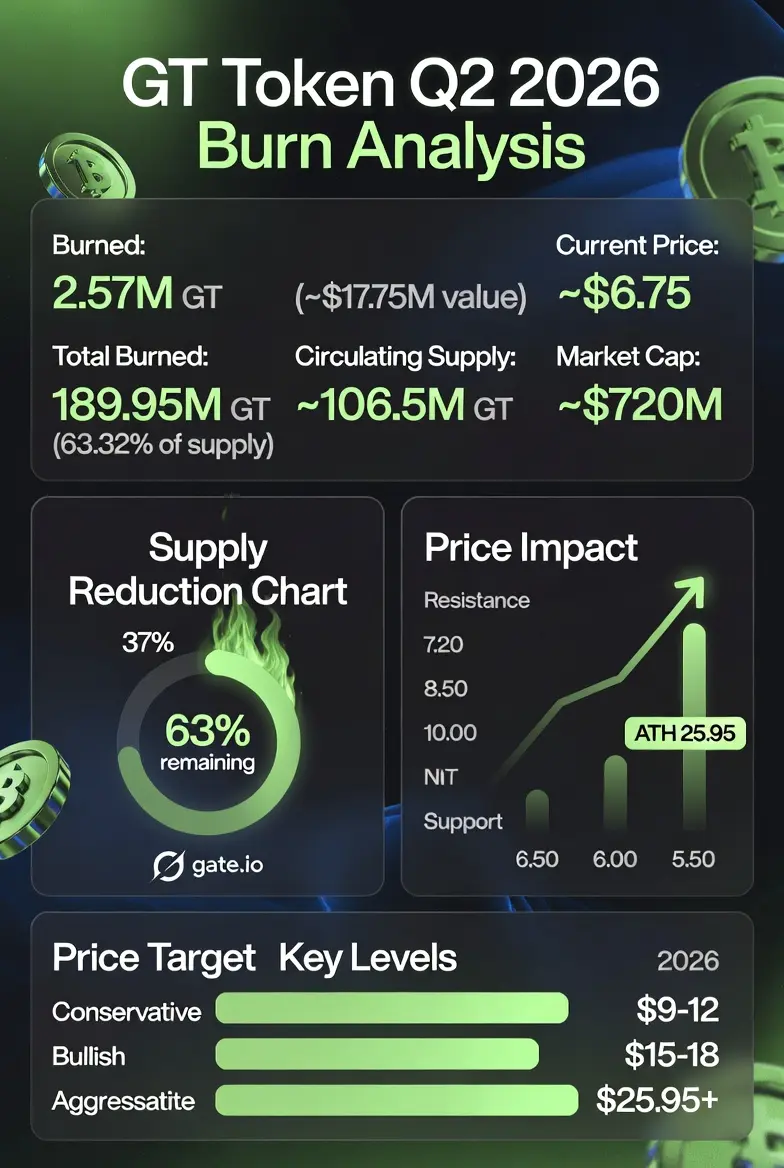
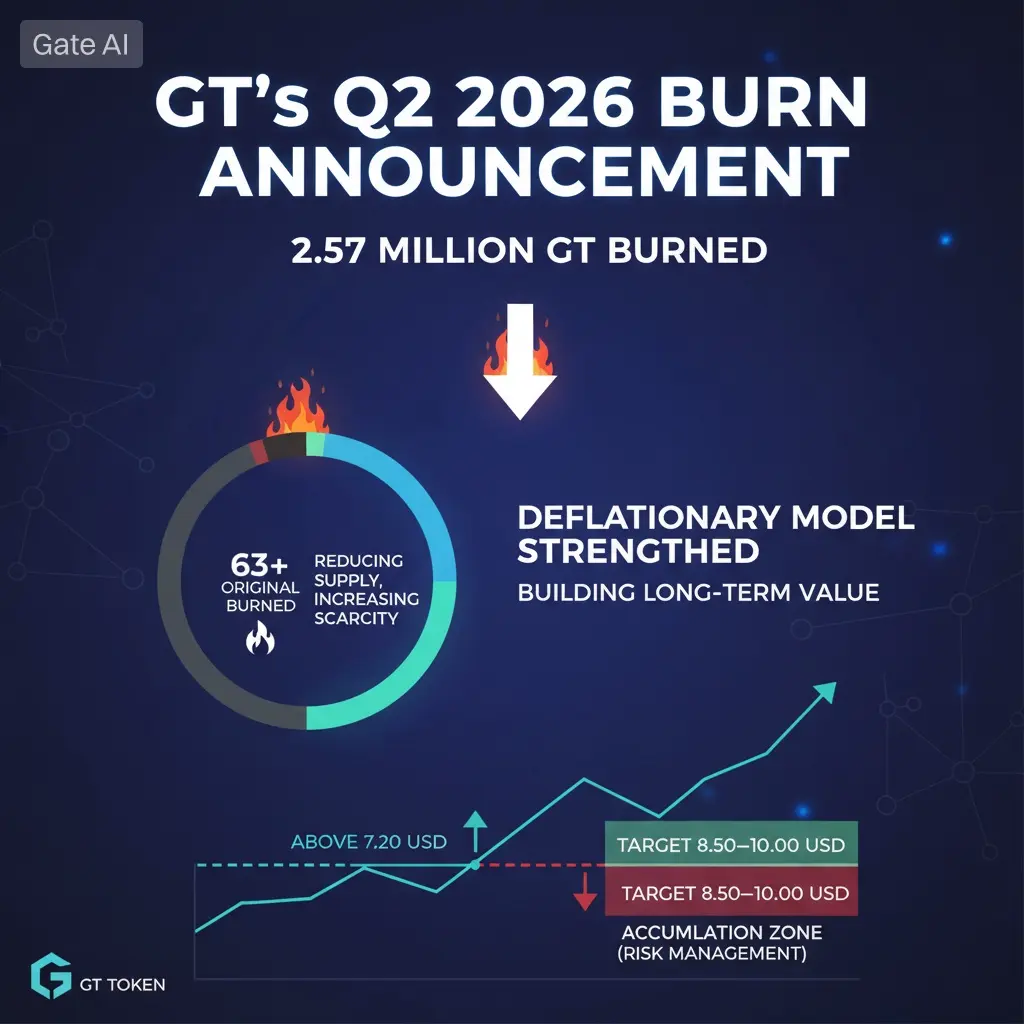
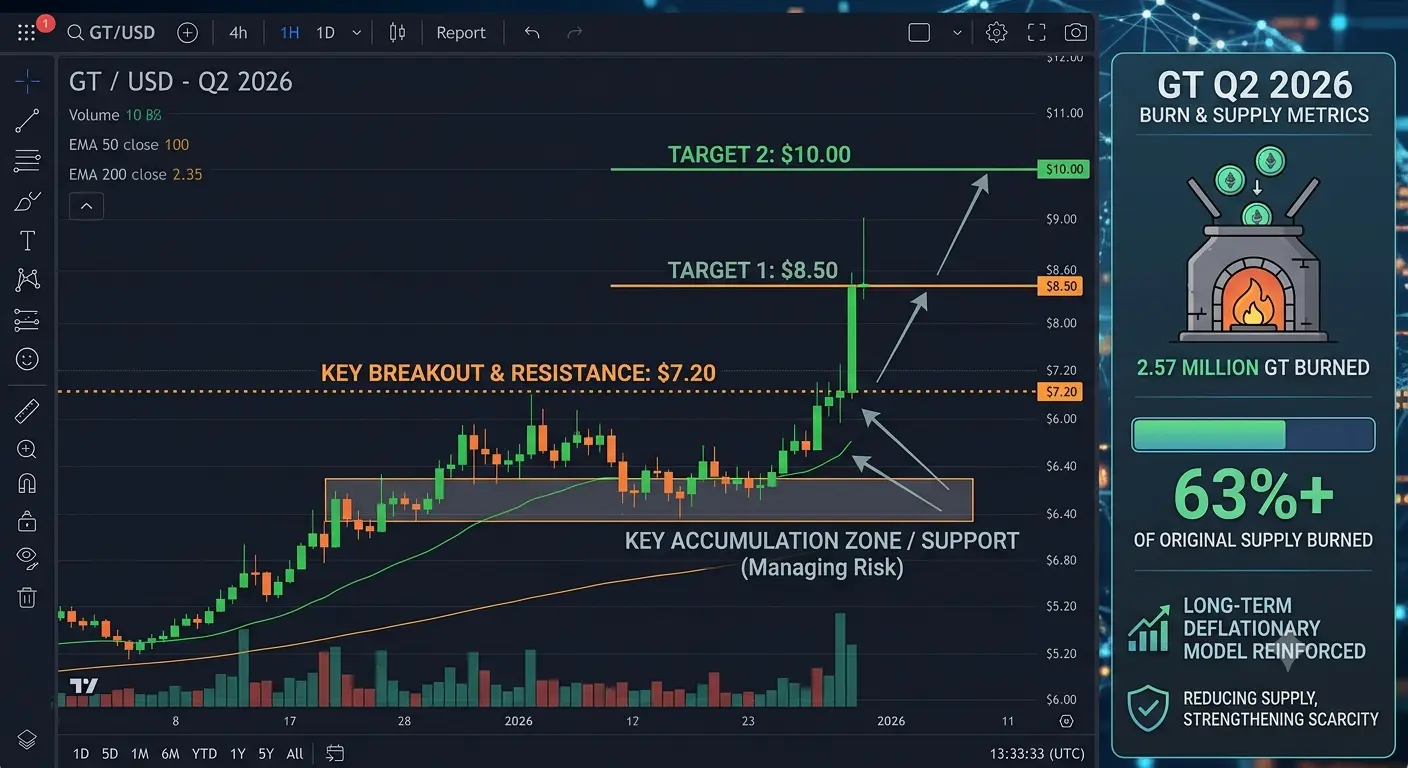
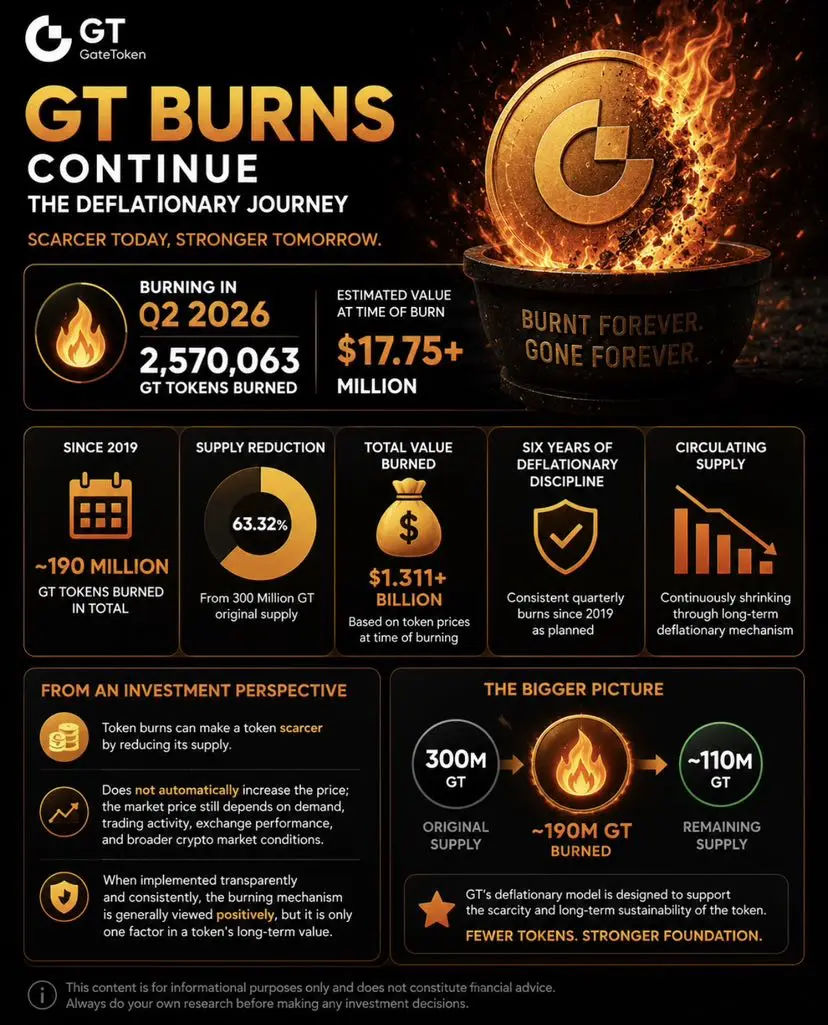
2,570,063 GT permanently removed.
Roughly $17.75 million erased from circulating supply—no lock, no vesting, no reversal. Just permanent destruction.
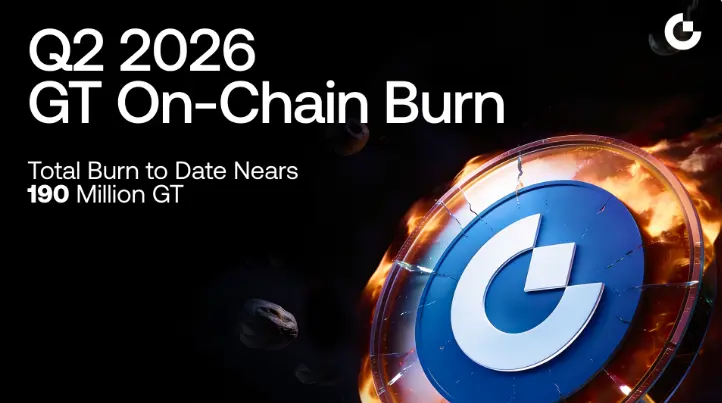
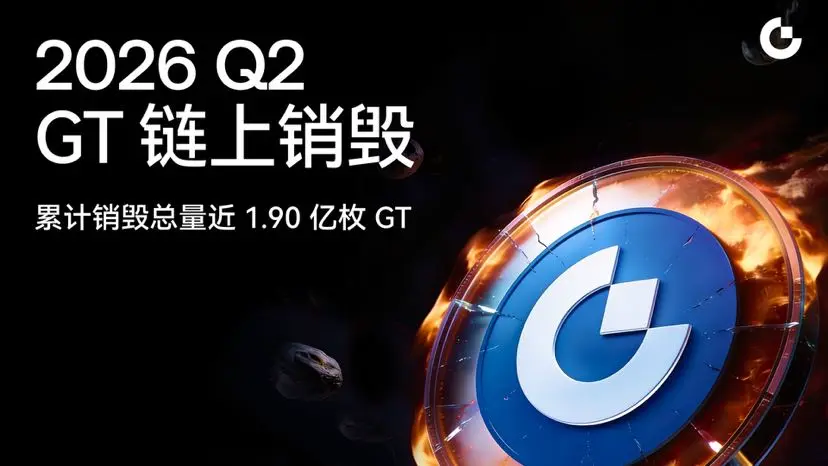
This is not a marketing event. It is the continuation of a six-year deflation system that has now eliminated 189,947,219 GT, representing 63.32% of total supply. The original 300 million supply has been structurally compressed into a fundamentally different asset.
The real question is no longer whether burns are happening. The real question is: has the market fully priced in structural scarcity at this scale?
📉 Not a Burn Event — A Supply Compression Machine
Most crypto projects treat burns as PR moments. A headline. A spike. Then silence.
GT operates differently:
Predictable quarterly burns
Consistent long-term execution
No emotional signaling, only mechanical reduction
This consistency matters more than size. Markets do not price one-time events efficiently; they price expectations. And GT has successfully converted burns into a predictable monetary policy.
A 63% supply reduction is not cosmetic. It fundamentally changes token distribution dynamics. Each remaining token now represents a significantly larger share of the network economy.
🧠 The Compression Effect — How Scarcity Actually Compounds
GT’s deflationary structure operates through three reinforcing layers:
1) Mechanical Layer
Supply is reduced every quarter with verifiable on-chain burns.
2) Psychological Layer
Market participants internalize the expectation of continuous scarcity.
3) Valuation Layer
Price discovery shifts from current supply to expected future supply contraction.
This is where most traders misinterpret the system. They focus on burn events instead of forward scarcity pricing.
Once expectations stabilize, scarcity becomes a permanent input into valuation models.
🌍 Macro Context — Deflation in an Inflation-Dominated Market
The broader crypto market is structurally inflationary:
Token unlock schedules
Vesting-based sell pressure
Continuous emissions in most ecosystems
Even major assets struggle with net inflation in different cycles.
GT stands on the opposite side of this structure. While most tokens expand supply over time, GT consistently reduces it. This creates a rare divergence:
One asset class inflating vs. one asset class compressing
Capital naturally flows toward relative scarcity when utility is comparable.
⚖️ Critical Truth — Burns Do NOT Guarantee Price Growth
This is the most important misconception to correct.
Burns reduce supply. They do not create demand.
Price depends on:
Demand × Utility × Net Supply Pressure
If demand weakens faster than supply shrinks, price can still decline even under aggressive deflation.
This has been observed across multiple “deflationary” tokens in past cycles. Scarcity alone is not enough.
📊 Liquidity vs Scarcity — The Hidden Tradeoff
Deflation introduces a structural tension:
Lower supply → higher scarcity premium
Lower supply → reduced liquidity depth
Reduced liquidity → higher volatility
This creates a double-edged environment. Small inflows can move price aggressively, but large institutional entries become more difficult.
GT partially offsets this through ecosystem expansion:
Fee utility
Exchange usage
Trading incentives
Broader platform integration
This helps maintain token velocity and prevents liquidity collapse.
🧨 The 63% Reality Check
A 63.32% supply reduction is not a narrative—it is a structural transformation.
Imagine a system designed for 100 participants where 63 permanently disappear. The remaining system does not just become “slightly scarcer”—it becomes fundamentally re-priced.
However, scarcity only matters if demand remains active.
Scarcity without demand is irrelevant.
Scarcity with demand is exponential.
📈 Three Realistic Market Scenarios
1) Strong Execution Scenario
Continued burns + ecosystem expansion → sustained long-term appreciation
2) Maturity Scenario
Burn-driven valuation with stable utility → moderate but consistent growth
3) Weak Demand Scenario
Burns continue but ecosystem stagnates → scarcity fails to translate into price
The outcome depends less on burns and more on ecosystem demand growth.
⚠️ Key Risk Factors
Several risks are often ignored in bullish narratives:
Burns do not prevent bear market drawdowns
Exchange tokens are highly cycle-dependent
Regulatory pressure can reduce utility demand
Market may already price in future burns
Liquidity contraction can limit large-scale adoption
The biggest risk is narrative overconfidence—assuming deflation alone guarantees appreciation.
🧠 Core Insight — Scarcity Is Psychological, Not Just Mathematical
The 63% reduction works on multiple levels:
Mathematical: fewer tokens in circulation
Psychological: stronger holding conviction
Behavioral: reduced sell pressure over time
Narrative: continuous reinforcement of scarcity theme
But psychology only works when backed by real utility.
Without demand, scarcity becomes an empty signal.
🎯 Final Conclusion
GT’s burn mechanism is one of the more consistent deflationary models in crypto, but its real value does not come from burns alone.
The true equation is:
Sustained burns + growing utility + stable demand cycles = structural scarcity premium
If all three align, GT benefits from a compounding supply shock that most tokens cannot replicate.
If they do not, burns remain a background mechanic rather than a price driver.
🔥 GT Burn Q2 2026 — The Scarcity Engine Reaches Critical Mass
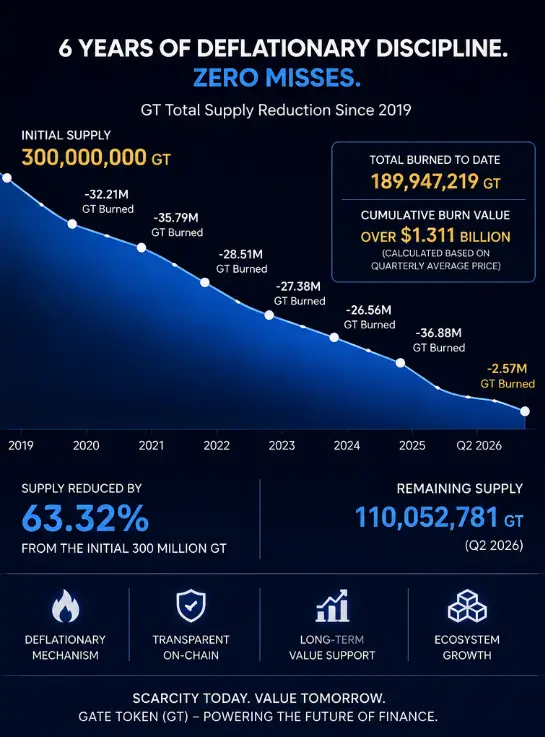
2,570,063 GT permanently removed.
Roughly $17.75 million erased from circulating supply—no lock, no vesting, no reversal. Just permanent destruction.
This is not a marketing event. It is the continuation of a six-year deflation system that has now eliminated 189,947,219 GT, representing 63.32% of total supply. The original 300 million supply has been structurally compressed into a fundamentally different asset.
The real question is no longer whether burns are happening. The real question is: has the market fully priced in structural scarcity at this scale?
📉 Not a Burn Event — A Supply Compression Machine
Most crypto projects treat burns as PR moments. A headline. A spike. Then silence.
GT operates differently:
Predictable quarterly burns
Consistent long-term execution
No emotional signaling, only mechanical reduction
This consistency matters more than size. Markets do not price one-time events efficiently; they price expectations. And GT has successfully converted burns into a predictable monetary policy.
A 63% supply reduction is not cosmetic. It fundamentally changes token distribution dynamics. Each remaining token now represents a significantly larger share of the network economy.
🧠 The Compression Effect — How Scarcity Actually Compounds
GT’s deflationary structure operates through three reinforcing layers:
1) Mechanical Layer
Supply is reduced every quarter with verifiable on-chain burns.
2) Psychological Layer
Market participants internalize the expectation of continuous scarcity.
3) Valuation Layer
Price discovery shifts from current supply to expected future supply contraction.
This is where most traders misinterpret the system. They focus on burn events instead of forward scarcity pricing.
Once expectations stabilize, scarcity becomes a permanent input into valuation models.
🌍 Macro Context — Deflation in an Inflation-Dominated Market
The broader crypto market is structurally inflationary:
Token unlock schedules
Vesting-based sell pressure
Continuous emissions in most ecosystems
Even major assets struggle with net inflation in different cycles.
GT stands on the opposite side of this structure. While most tokens expand supply over time, GT consistently reduces it. This creates a rare divergence:
One asset class inflating vs. one asset class compressing
Capital naturally flows toward relative scarcity when utility is comparable.
⚖️ Critical Truth — Burns Do NOT Guarantee Price Growth
This is the most important misconception to correct.
Burns reduce supply. They do not create demand.
Price depends on:
Demand × Utility × Net Supply Pressure
If demand weakens faster than supply shrinks, price can still decline even under aggressive deflation.
This has been observed across multiple “deflationary” tokens in past cycles. Scarcity alone is not enough.
📊 Liquidity vs Scarcity — The Hidden Tradeoff
Deflation introduces a structural tension:
Lower supply → higher scarcity premium
Lower supply → reduced liquidity depth
Reduced liquidity → higher volatility
This creates a double-edged environment. Small inflows can move price aggressively, but large institutional entries become more difficult.
GT partially offsets this through ecosystem expansion:
Fee utility
Exchange usage
Trading incentives
Broader platform integration
This helps maintain token velocity and prevents liquidity collapse.
🧨 The 63% Reality Check
A 63.32% supply reduction is not a narrative—it is a structural transformation.
Imagine a system designed for 100 participants where 63 permanently disappear. The remaining system does not just become “slightly scarcer”—it becomes fundamentally re-priced.
However, scarcity only matters if demand remains active.
Scarcity without demand is irrelevant.
Scarcity with demand is exponential.
📈 Three Realistic Market Scenarios
1) Strong Execution Scenario
Continued burns + ecosystem expansion → sustained long-term appreciation
2) Maturity Scenario
Burn-driven valuation with stable utility → moderate but consistent growth
3) Weak Demand Scenario
Burns continue but ecosystem stagnates → scarcity fails to translate into price
The outcome depends less on burns and more on ecosystem demand growth.
⚠️ Key Risk Factors
Several risks are often ignored in bullish narratives:
Burns do not prevent bear market drawdowns
Exchange tokens are highly cycle-dependent
Regulatory pressure can reduce utility demand
Market may already price in future burns
Liquidity contraction can limit large-scale adoption
The biggest risk is narrative overconfidence—assuming deflation alone guarantees appreciation.
🧠 Core Insight — Scarcity Is Psychological, Not Just Mathematical
The 63% reduction works on multiple levels:
Mathematical: fewer tokens in circulation
Psychological: stronger holding conviction
Behavioral: reduced sell pressure over time
Narrative: continuous reinforcement of scarcity theme
But psychology only works when backed by real utility.
Without demand, scarcity becomes an empty signal.
🎯 Final Conclusion
GT’s burn mechanism is one of the more consistent deflationary models in crypto, but its real value does not come from burns alone.
The true equation is:
Sustained burns + growing utility + stable demand cycles = structural scarcity premium
If all three align, GT benefits from a compounding supply shock that most tokens cannot replicate.
If they do not, burns remain a background mechanic rather than a price driver.