#StablecoinReserveDrops
The recent decline in stablecoin reserves across major cryptocurrency exchanges is becoming one of the most important market indicators traders are watching closely. Stablecoins often act as the primary source of liquidity inside the crypto ecosystem because investors usually convert capital into stablecoins before buying Bitcoin, Ethereum, or altcoins. When reserve balances begin to fall sharply, it signals that market participants are either deploying capital into active trades, withdrawing funds from exchanges, or reducing overall exposure due to uncertainty. This movement creates a major impact on short-term market direction, volatility conditions, and investor psychology.
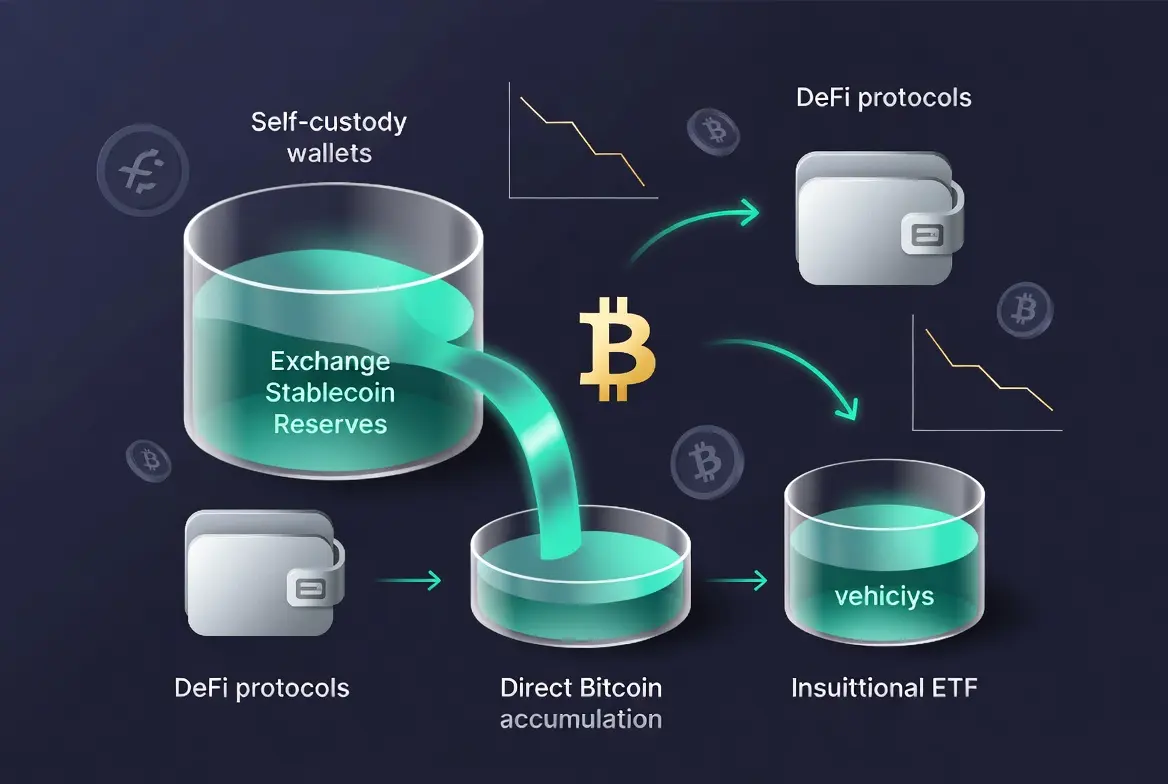
At the current stage of the market cycle, stablecoin reserve drops are attracting attention because they are happening during a highly sensitive macroeconomic environment. Rising bond yields, uncertainty around global monetary policy, inflation concerns, and mixed institutional sentiment are all influencing trader behavior. Many investors are no longer keeping large idle balances on exchanges and are instead moving capital into self-custody wallets, decentralized finance ecosystems, or direct spot positions. This transition changes the liquidity structure of the market and can significantly influence price momentum across major digital assets.
One important factor behind falling stablecoin reserves is capital deployment into Bitcoin accumulation. Historically, when traders hold large stablecoin balances on exchanges, the market often interprets it as “dry powder” waiting for entry opportunities. However, when reserves start declining while Bitcoin maintains strength, it may indicate that buyers are actively converting stablecoins into BTC positions. This can support bullish momentum temporarily because active buying pressure absorbs available supply. If Bitcoin continues holding key psychological levels during reserve declines, it could reinforce confidence among institutional traders and large-scale holders.
Another major explanation involves investor caution and exchange risk management. After multiple exchange collapses and liquidity crises over previous market cycles, many investors now prefer self-custody solutions over keeping large stablecoin balances on centralized platforms. In this environment, declining reserves do not automatically mean bearish conditions. Instead, they may reflect a structural shift in how market participants manage capital security. Traders increasingly prioritize wallet control, decentralized storage, and on-chain asset management rather than maintaining exchange exposure for long periods.
The decline in stablecoin reserves also affects altcoin market behavior. Altcoins typically depend heavily on fresh liquidity entering exchanges because speculative trading activity drives short-term rallies. When stablecoin liquidity decreases, smaller-cap tokens often experience weaker momentum, thinner order books, and higher volatility. This creates conditions where sudden price swings become more aggressive because there is less available capital to absorb large buy or sell orders. Traders may notice stronger fake breakouts, rapid liquidations, and inconsistent trend continuation during such periods.
From a technical market perspective, shrinking reserves can create two completely different outcomes depending on broader sentiment conditions. In bullish environments, falling stablecoin balances may signal active accumulation as traders rotate into crypto assets aggressively. In bearish or uncertain conditions, reserve declines may instead reflect capital leaving the ecosystem entirely. Therefore, analysts are focusing not only on reserve levels themselves but also on accompanying indicators such as spot volume, ETF inflows, futures open interest, and on-chain transaction activity. These combined metrics help determine whether liquidity is rotating internally or exiting the market structure altogether.
Institutional participation is another critical element influencing stablecoin reserve trends. Large financial firms and funds increasingly use stablecoins for settlement, arbitrage, and liquidity management strategies. When institutions become more active in direct Bitcoin exposure through ETFs or custodial products, stablecoin balances on exchanges can decline naturally because capital routes change. Instead of keeping reserves on trading platforms, institutions may allocate funds through regulated investment vehicles or private custody solutions. This evolution is gradually transforming the structure of crypto liquidity compared to earlier retail-dominated market cycles.
Regulatory developments are also shaping stablecoin behavior globally. Governments and financial regulators continue discussing reserve transparency, issuer compliance, and stablecoin oversight frameworks. As regulatory pressure increases, some investors are diversifying away from specific stablecoins or reducing exchange exposure until clearer legal guidelines emerge. This uncertainty occasionally contributes to reserve outflows, especially during periods of aggressive policy announcements or enforcement actions affecting major crypto platforms.
For short-term traders, stablecoin reserve monitoring has become a powerful sentiment indicator. If reserves continue declining while Bitcoin price remains stable or climbs higher, the market may interpret it as strong demand absorption. However, if reserves fall alongside weakening price action and declining spot activity, traders may view it as deteriorating liquidity conditions. In such situations, volatility can rise sharply because lower liquidity environments amplify market reactions to news events, liquidations, and whale transactions.
Risk management becomes especially important during periods of reserve contraction. Traders should avoid excessive leverage because thinner liquidity conditions increase the probability of rapid price spikes and liquidation cascades. Stop-loss placement, position sizing, and emotional discipline become essential for navigating unstable market conditions. Many experienced traders prefer waiting for confirmation signals from volume expansion, support retests, and macroeconomic data before making aggressive directional trades.
Looking ahead, the future impact of stablecoin reserve drops will depend heavily on whether capital rotation remains inside the crypto ecosystem or exits toward traditional financial markets. If Bitcoin dominance continues rising while reserves decline, it could indicate consolidation around major assets before another expansion phase. On the other hand, if liquidity weakens across both Bitcoin and altcoins simultaneously, markets may enter a prolonged consolidation period with increased volatility and reduced momentum.
Overall, the current decline in stablecoin reserves is not a simple bullish or bearish signal by itself. It represents a deeper shift in liquidity behavior, investor confidence, institutional participation, and market structure evolution. Traders and analysts are closely watching how these reserve movements interact with Bitcoin price stability, macroeconomic developments, and overall exchange activity. The coming weeks may determine whether the market interprets falling reserves as aggressive capital deployment into crypto assets or as a warning sign of weakening liquidity conditions across the broader digital asset ecosystem.
The recent decline in stablecoin reserves across major cryptocurrency exchanges is becoming one of the most important market indicators traders are watching closely. Stablecoins often act as the primary source of liquidity inside the crypto ecosystem because investors usually convert capital into stablecoins before buying Bitcoin, Ethereum, or altcoins. When reserve balances begin to fall sharply, it signals that market participants are either deploying capital into active trades, withdrawing funds from exchanges, or reducing overall exposure due to uncertainty. This movement creates a major impact on short-term market direction, volatility conditions, and investor psychology.
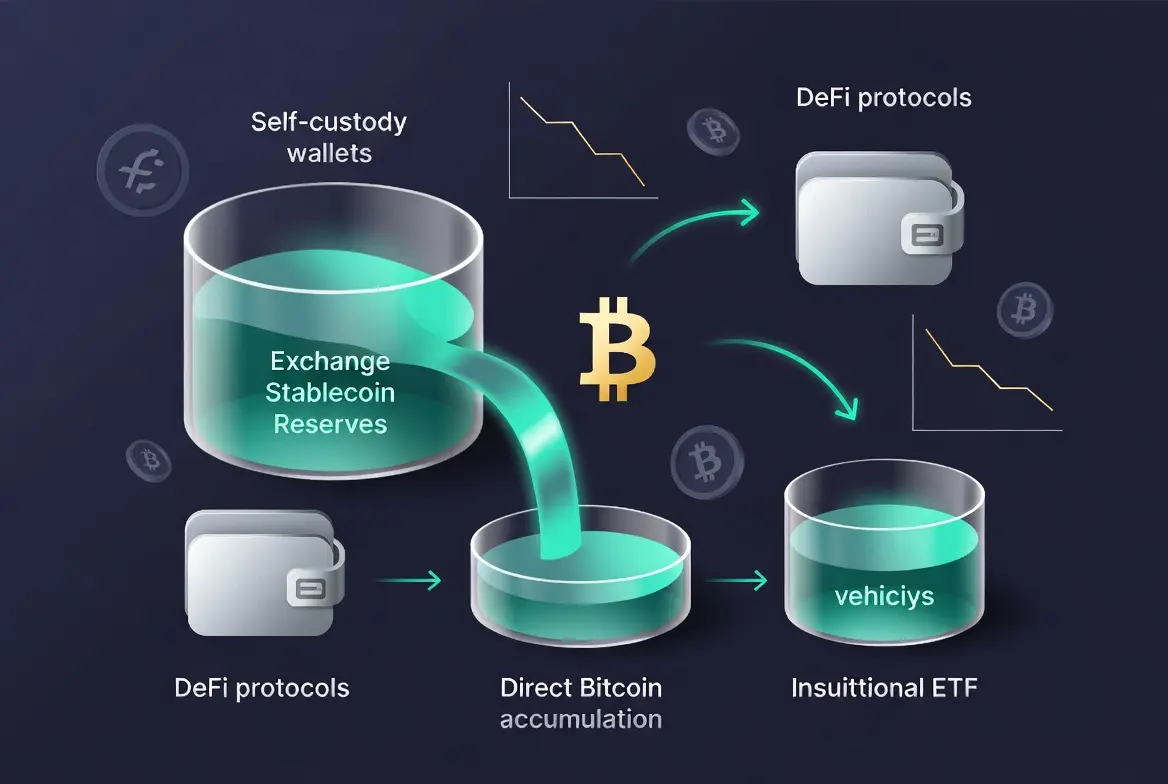
At the current stage of the market cycle, stablecoin reserve drops are attracting attention because they are happening during a highly sensitive macroeconomic environment. Rising bond yields, uncertainty around global monetary policy, inflation concerns, and mixed institutional sentiment are all influencing trader behavior. Many investors are no longer keeping large idle balances on exchanges and are instead moving capital into self-custody wallets, decentralized finance ecosystems, or direct spot positions. This transition changes the liquidity structure of the market and can significantly influence price momentum across major digital assets.
One important factor behind falling stablecoin reserves is capital deployment into Bitcoin accumulation. Historically, when traders hold large stablecoin balances on exchanges, the market often interprets it as “dry powder” waiting for entry opportunities. However, when reserves start declining while Bitcoin maintains strength, it may indicate that buyers are actively converting stablecoins into BTC positions. This can support bullish momentum temporarily because active buying pressure absorbs available supply. If Bitcoin continues holding key psychological levels during reserve declines, it could reinforce confidence among institutional traders and large-scale holders.
Another major explanation involves investor caution and exchange risk management. After multiple exchange collapses and liquidity crises over previous market cycles, many investors now prefer self-custody solutions over keeping large stablecoin balances on centralized platforms. In this environment, declining reserves do not automatically mean bearish conditions. Instead, they may reflect a structural shift in how market participants manage capital security. Traders increasingly prioritize wallet control, decentralized storage, and on-chain asset management rather than maintaining exchange exposure for long periods.
The decline in stablecoin reserves also affects altcoin market behavior. Altcoins typically depend heavily on fresh liquidity entering exchanges because speculative trading activity drives short-term rallies. When stablecoin liquidity decreases, smaller-cap tokens often experience weaker momentum, thinner order books, and higher volatility. This creates conditions where sudden price swings become more aggressive because there is less available capital to absorb large buy or sell orders. Traders may notice stronger fake breakouts, rapid liquidations, and inconsistent trend continuation during such periods.
From a technical market perspective, shrinking reserves can create two completely different outcomes depending on broader sentiment conditions. In bullish environments, falling stablecoin balances may signal active accumulation as traders rotate into crypto assets aggressively. In bearish or uncertain conditions, reserve declines may instead reflect capital leaving the ecosystem entirely. Therefore, analysts are focusing not only on reserve levels themselves but also on accompanying indicators such as spot volume, ETF inflows, futures open interest, and on-chain transaction activity. These combined metrics help determine whether liquidity is rotating internally or exiting the market structure altogether.
Institutional participation is another critical element influencing stablecoin reserve trends. Large financial firms and funds increasingly use stablecoins for settlement, arbitrage, and liquidity management strategies. When institutions become more active in direct Bitcoin exposure through ETFs or custodial products, stablecoin balances on exchanges can decline naturally because capital routes change. Instead of keeping reserves on trading platforms, institutions may allocate funds through regulated investment vehicles or private custody solutions. This evolution is gradually transforming the structure of crypto liquidity compared to earlier retail-dominated market cycles.
Regulatory developments are also shaping stablecoin behavior globally. Governments and financial regulators continue discussing reserve transparency, issuer compliance, and stablecoin oversight frameworks. As regulatory pressure increases, some investors are diversifying away from specific stablecoins or reducing exchange exposure until clearer legal guidelines emerge. This uncertainty occasionally contributes to reserve outflows, especially during periods of aggressive policy announcements or enforcement actions affecting major crypto platforms.
For short-term traders, stablecoin reserve monitoring has become a powerful sentiment indicator. If reserves continue declining while Bitcoin price remains stable or climbs higher, the market may interpret it as strong demand absorption. However, if reserves fall alongside weakening price action and declining spot activity, traders may view it as deteriorating liquidity conditions. In such situations, volatility can rise sharply because lower liquidity environments amplify market reactions to news events, liquidations, and whale transactions.
Risk management becomes especially important during periods of reserve contraction. Traders should avoid excessive leverage because thinner liquidity conditions increase the probability of rapid price spikes and liquidation cascades. Stop-loss placement, position sizing, and emotional discipline become essential for navigating unstable market conditions. Many experienced traders prefer waiting for confirmation signals from volume expansion, support retests, and macroeconomic data before making aggressive directional trades.
Looking ahead, the future impact of stablecoin reserve drops will depend heavily on whether capital rotation remains inside the crypto ecosystem or exits toward traditional financial markets. If Bitcoin dominance continues rising while reserves decline, it could indicate consolidation around major assets before another expansion phase. On the other hand, if liquidity weakens across both Bitcoin and altcoins simultaneously, markets may enter a prolonged consolidation period with increased volatility and reduced momentum.
Overall, the current decline in stablecoin reserves is not a simple bullish or bearish signal by itself. It represents a deeper shift in liquidity behavior, investor confidence, institutional participation, and market structure evolution. Traders and analysts are closely watching how these reserve movements interact with Bitcoin price stability, macroeconomic developments, and overall exchange activity. The coming weeks may determine whether the market interprets falling reserves as aggressive capital deployment into crypto assets or as a warning sign of weakening liquidity conditions across the broader digital asset ecosystem.