
Vortex_King

vip
Airdrop Hunter
Crypto Market Researcher
Peak Tier 5
"Stay happy, let others stay happy too."
#BitcoinETFOptionLimitQuadruples
The represents one of the most important structural developments in the evolution of Bitcoin as a financial asset. At its core, this change revolves around expanding the position limits on Bitcoin ETF options, particularly those tied to major products like the iShares Bitcoin Trust (IBIT) managed by BlackRock. Previously, traders were restricted in how many options contracts they could hold, typically capped around 250,000 contracts. The new proposal—and in some cases implementation—raises that limit to 1,000,000 contracts, effectively quadrupling the exposure
post-image
post-image
  • Reward
  • 5
  • Repost
  • Share
Pheonixprincess:
LFG 🔥
View More
#BitcoinSpotVolumeNewLow
The narrative behind #BitcoinSpotVolumeNewLow highlights a critical market condition where trading activity in Bitcoin’s spot market has dropped to unusually low levels. Spot volume refers to the actual buying and selling of Bitcoin (not derivatives), where real ownership of the asset is transferred between participants. When this volume declines significantly, it signals reduced participation, weaker conviction, and a potential shift in market dynamics. While price often gets the most attention, volume is the underlying force that validates or questions any price mov
BTC0.91%
post-image
post-image
  • Reward
  • 8
  • Repost
  • Share
discovery:
To The Moon 🌕
View More
#OilBreaks110
The narrative behind reflects a major macroeconomic development where crude oil prices surge above the $110 per barrel level. This is not just a commodity milestone—it is a signal that can ripple across global financial markets, inflation dynamics, and even cryptocurrency price behavior. Oil is one of the most important inputs in the global economy, affecting transportation, manufacturing, energy costs, and supply chains. When it breaks above a key psychological level like $110, it often indicates either strong demand, supply disruptions, geopolitical tensions, or a combination
BTC0.91%
post-image
post-image
  • Reward
  • 5
  • Repost
  • Share
discovery:
2026 GOGOGO 👊
View More
#OilBreaks110
Oil Hit 110 Dollars — What Does It Mean for the Crypto Market?
Today, Brent crude tested 110 dollars after rising geopolitical tension in the Middle East and OPEC+ members deciding to extend production cuts through the end of June. The last time this level was seen was March 2022.
The data is clear: According to ICE, Brent reached $110.34 in the May 1 session. US crude inventories fell by 6.3 million barrels more than expected in the EIA report on Wednesday. Supply is tightening while demand rises ahead of summer.
So what does this mean for crypto?
1. Inflation pressure
BTC0.91%
discovery
#OilBreaks110
Oil Hit 110 Dollars — What Does It Mean for the Crypto Market?
Today, Brent crude tested 110 dollars after rising geopolitical tension in the Middle East and OPEC+ members deciding to extend production cuts through the end of June. The last time this level was seen was March 2022.
The data is clear: According to ICE, Brent reached $110.34 in the May 1 session. US crude inventories fell by 6.3 million barrels more than expected in the EIA report on Wednesday. Supply is tightening while demand rises ahead of summer.
So what does this mean for crypto?
1. Inflation pressure: Oil → transportation → food → CPI. If the Fed’s rate-cut plans are delayed, risk assets can come under pressure. 2. Energy costs: Bitcoin mining costs are rising. With hashprice already low, unprofitable machines may shut down. That can impact hash rate in the short term. 3. Capital rotation: If a “flight to energy stocks” starts in traditional markets, we could see outflows from crypto ETFs. But at the same time, the digital gold narrative also gets stronger.
On Gate io, interest in USDT/WTI and energy tokens has increased 40% in the last 24 hours. In May, extra attention should be paid to the commodities-crypto correlation.
My view: If $110 becomes permanent, the Fed cannot turn dovish. That’s why we may talk about the 60k support in BTC more often. But no panic — in 2022, BTC bottomed while oil was at $120.
What do you think? Does this move in oil delay the bull run, or does it turn BTC into a safe haven?
#GateSquareMayTradingShare
#Gate广场五月交易分享
#OilBreaks110
Note: This post is not financial advice. Always do your own research (DYOR).
repost-content-media
  • Reward
  • 11
  • Repost
  • Share
discovery:
To The Moon 🌕
View More
#TreasuryYieldBreaks5PercentCryptoUnderPressure
The narrative behind reflects a powerful macroeconomic shift where rising bond yields directly influence risk assets, including cryptocurrencies. When U.S. Treasury yields cross the 5% level, it signals that investors can now earn relatively high, “risk-free” returns by holding government bonds. This changes the entire capital flow dynamic in global markets because money tends to move toward safer assets when returns become attractive enough.
To understand this properly, one must first grasp what Treasury yields represent. U.S. Treasury bonds ar
BTC0.91%
post-image
post-image
  • Reward
  • 10
  • Repost
  • Share
discovery:
To The Moon 🌕
View More
#TreasuryYieldBreaks5PercentCryp#TreasuryYieldBreaks5PercentCryptoUnderPressure
📉 1. Why 5% yields matter so much
High long-term yields do three things at the same time:
Pull institutional capital back into bonds
Increase discount rates for risk assets (stocks + crypto get devalued in models)
Reduce liquidity flowing into speculative markets
So yes — crypto doesn’t get “attacked,” it simply becomes less attractive relative to safe yield instruments.
₿ 2. Bitcoin’s current position (76K–79K range)
That range is not random — it reflects:
Weak new liquidity inflow
Profit-taking at higher levels
BTC0.91%
DragonFlyOfficial
#TreasuryYieldBreaks5PercentCryptoUnderPressure
📉 1. Why 5% yields matter so much
High long-term yields do three things at the same time:
Pull institutional capital back into bonds
Increase discount rates for risk assets (stocks + crypto get devalued in models)
Reduce liquidity flowing into speculative markets
So yes — crypto doesn’t get “attacked,” it simply becomes less attractive relative to safe yield instruments.
₿ 2. Bitcoin’s current position (76K–79K range)
That range is not random — it reflects:
Weak new liquidity inflow
Profit-taking at higher levels
Macro hesitation due to bond yields + Fed stance
Right now BTC is behaving like a liquidity-sensitive risk asset, not a pure “digital gold” narrative.
⚠️ 3. The “safe haven” narrative problem
The key question you raised is important:
Is crypto losing safe-haven status?
Short answer: It never fully had it in macro cycles.
Bitcoin behaves more like:
Liquidity-driven tech asset in risk-on phases
Partially hedge-like only during specific crises
When yields rise, BTC usually fails to behave like gold — it behaves more like NASDAQ beta.
💰 4. Will capital drain from crypto?
Not completely — but rotation happens in phases:
Likely short-term:
Capital moves into bonds / money market funds
Reduced speculative inflows into altcoins
Lower volatility expansion in crypto
Medium-term:
If liquidity tightens too long → altcoin underperformance intensifies
BTC dominance increases (capital consolidates)
Long-term:
If Fed pivots → crypto benefits faster than traditional assets
🧠 5. What smart traders are watching (not emotions)
Focus is not “bull vs bear,” but:
Real yields trend (not just headline yields)
Fed liquidity signals (not just rates)
Dollar strength index
BTC dominance behavior
ETF inflow/outflow patterns
🔴 Risk Reality
Higher Treasury yields don’t “kill crypto” — they change opportunity cost. That’s what forces de-risking, not fear.
If yields stay above 5% for extended periods, expect:
Longer sideways crypto structure
Sharper liquidation spikes on leverage
Slower altseason probability
🎯 Strategic takeaway
This is not a collapse setup — it’s a capital re-pricing environment.
Bonds = yield stability
Crypto = liquidity speculation engine
Right now, the system is temporarily rewarding stability over risk.
repost-content-media
  • Reward
  • 10
  • Repost
  • Share
discovery:
To The Moon 🌕
View More
#TapAndPayWithGateCard
The concept behind #TapAndPayWithGateCard represents a major step toward bridging the gap between cryptocurrency and everyday real-world payments. At its core, it refers to a crypto-linked payment card offered by Gate.io that allows users to spend their digital assets seamlessly using contactless “tap-and-pay” technology. This means that instead of converting crypto manually into fiat currency through exchanges, users can directly use their crypto balances to make purchases at merchants that accept standard card payments.
To understand its importance, it is essential to
BTC0.91%
ETH0.66%
post-image
post-image
  • Reward
  • 11
  • Repost
  • Share
discovery:
To The Moon 🌕
View More
#DailyPolymarketHotspot
The concept behind revolves around identifying, analyzing, and strategically participating in high-interest prediction markets on platforms like Polymarket. Unlike traditional trading, where participants buy and sell assets such as stocks or cryptocurrencies, prediction markets allow users to speculate on the outcomes of real-world events. These events can range from politics and economics to global news, technology developments, and even social trends. The “hotspot” refers to the most active, trending, and high-volume markets of the day—where attention, liquidity, and
BTC0.91%
post-image
post-image
  • Reward
  • 11
  • Repost
  • Share
discovery:
To The Moon 🌕
View More
#DailyPolymarketHotspot #DailyPolymarketHotspot
🚀 Daily Polymarket Hotspot
The current crypto market is operating in a highly complex and sentiment-sensitive environment where price action alone no longer defines direction. Instead, the market is being shaped by a combination of prediction market expectations, macroeconomic uncertainty, institutional positioning, and liquidity psychology, all interacting to form a deeply layered structure of anticipation rather than confirmation.
At present, Bitcoin is trading near $78,000, Ethereum is stabilizing around $2,300, and altcoins are showing mix
BTC0.91%
ETH0.66%
HighAmbition
#DailyPolymarketHotspot
🚀 Daily Polymarket Hotspot
The current crypto market is operating in a highly complex and sentiment-sensitive environment where price action alone no longer defines direction. Instead, the market is being shaped by a combination of prediction market expectations, macroeconomic uncertainty, institutional positioning, and liquidity psychology, all interacting to form a deeply layered structure of anticipation rather than confirmation.
At present, Bitcoin is trading near $78,000, Ethereum is stabilizing around $2,300, and altcoins are showing mixed and selective momentum. However, these numbers do not fully capture the underlying reality of the market, which is currently in a pre-expansion equilibrium phase where volatility is compressed but structural tension is gradually increasing beneath the surface.
🌍 1. Macro Environment — The Core Driver of Sentiment Dynamics
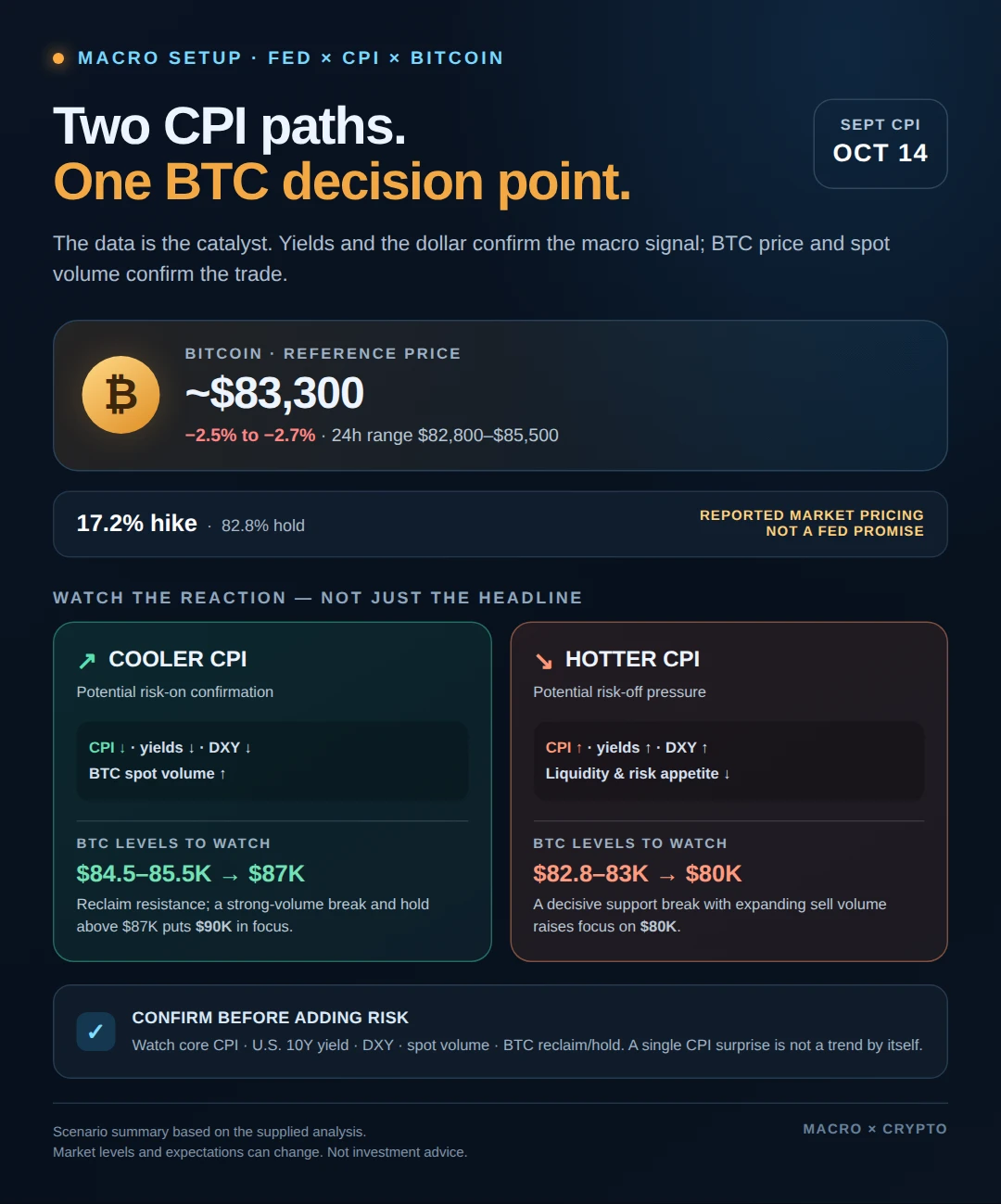
The most important factor influencing global crypto sentiment today is the uncertainty surrounding macroeconomic policy direction, particularly interest rates and liquidity expectations. The Federal Reserve’s approach remains data-dependent, with no clear long-term commitment toward either aggressive tightening or immediate easing.
This ambiguity forces markets to continuously reprice probability scenarios. Traders recalculate the likelihood of different outcomes based on inflation trends, labor data, and global economic stability. As a result, risk assets like cryptocurrencies experience a sentiment-driven holding pattern, with cautious and highly selective capital deployment.
₿ 2. Bitcoin Structure — Consolidation Near Key Psychological Boundary
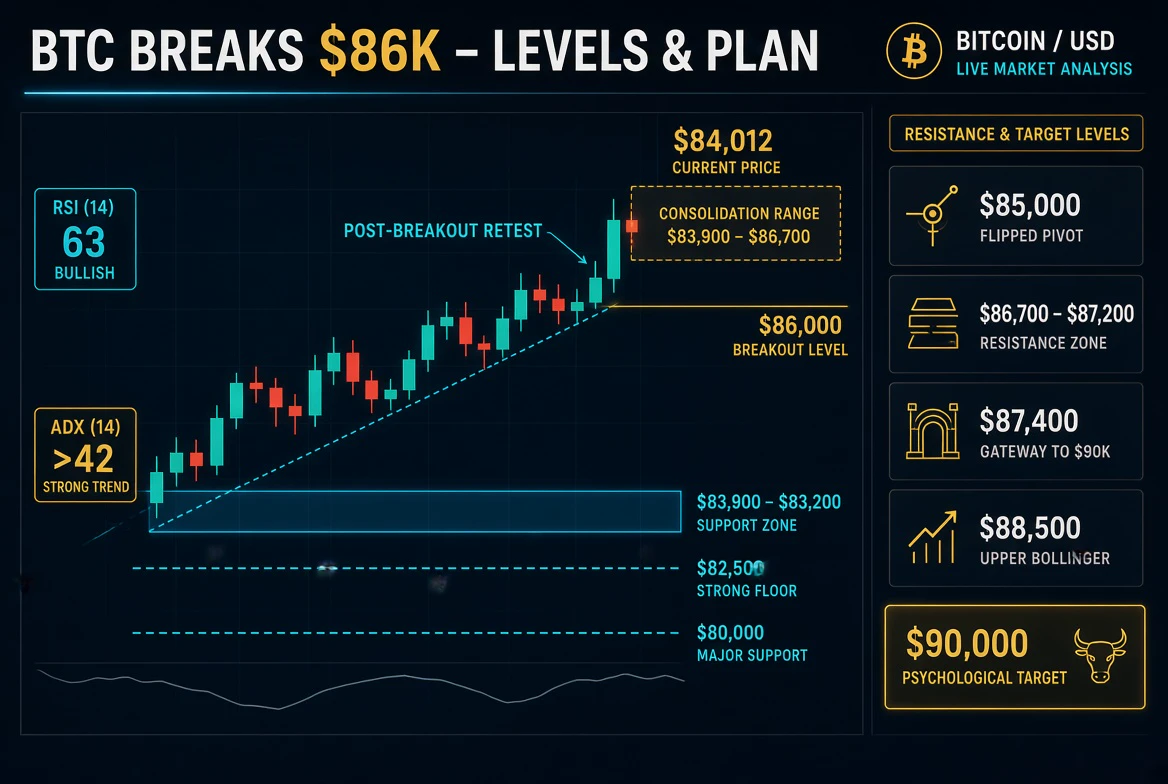
Bitcoin’s current positioning near the $78K zone represents a psychological and structural equilibrium between buyers and sellers at the institutional level. Bullish participants see a long-term accumulation phase supported by ETF inflows, institutional adoption, and its role as a macro hedge. Cautious traders highlight macro uncertainty, liquidity constraints, and resistance near $80K–$85K as potential barriers.
This creates compressed volatility where price remains stable on the surface but internally accumulates energy for a potential expansion phase. Historically, such setups often precede strong directional moves once a catalyst emerges.
⚖️ 3. Polymarket-Style Sentiment — The New Market Signal Engine
Prediction markets like Polymarket have transformed how traders gauge sentiment. Instead of reacting only to realized events, participants now actively price future probabilities across macro, political, and crypto-specific outcomes. This turns sentiment into a tradable, self-reinforcing signal: rising bullish probabilities encourage early positioning, while uncertainty triggers preemptive liquidity withdrawal.
This feedback loop makes expectation a powerful driver of price even before events unfold.
📊 4. Ethereum and Altcoin Structure — Selective Risk Exposure
Ethereum trades in a structurally stable range near $2,300, showing moderate confidence but limited aggressive inflows compared to Bitcoin’s ETF-supported strength. Altcoins display weaker momentum, signaling a risk-rotation environment where capital stays within safer parts of the crypto ecosystem rather than chasing higher-beta plays.
This behavior is typical in markets building toward a larger move but still awaiting strong macro confirmation for full risk-on rotation.
🧠 5. Market Psychology — Uncertainty Driven Accumulation Behavior
Current psychology blends long-term optimism with short-term hesitation. Long-term investors accumulate gradually during dips, while short-term traders reduce exposure and wait for clearer signals. This divergence creates quiet accumulation phases where price stays range-bound but ownership gradually shifts toward stronger hands.
📉 6. Volatility Structure — Compressed But Building Pressure
Volatility compression is a key feature right now. Price ranges are tightening, indicating liquidity building beneath the surface, paused directional conviction, and preparation for a larger breakout or breakdown. These setups rarely last indefinitely and often resolve sharply once catalysts appear.
🔗 7. Global Capital Flow Behavior — Institutional Caution
Institutional capital participates but in a measured, risk-managed way. ETF inflows provide steady support, yet aggressive leverage remains limited due to macro uncertainty. This leads to controlled volatility, slow trend development, and a transitional phase between retail-driven speculation and more mature institutional cycles.
🔥 8. Core Debate — Breakout or Extended Consolidation?
The central question is whether the market will break out above key resistance into a new expansion or remain in prolonged consolidation until macro clarity improves. Bulls emphasize structural adoption, ETF inflows, and scarcity. Bears point to liquidity risks and macro headwinds. With neither side dominating, the market stays balanced but tense.
💡 Final Insight
The current crypto environment reflects sentiment equilibrium under macro uncertainty. Bitcoin near $78K and Ethereum near $2.3K show a market that is neither in panic nor euphoria, but in controlled anticipation. This phase often builds the foundation for the next major directional move when sentiment, liquidity, and catalysts align.
💬 Final Thought
Modern crypto markets are driven by layered expectation systems where sentiment, probability, and macro liquidity interact continuously. The most important phase is often the quiet accumulation of pressure before the move begins.
repost-content-media
  • Reward
  • 11
  • Repost
  • Share
discovery:
To The Moon 🌕
View More
#DeFiLossesTop600MInApril
The narrative behind #DeFiLossesTop600MInApril reflects one of the most critical realities of decentralized finance: rapid innovation comes with equally high security risks. Decentralized finance (DeFi) is built on blockchain-based smart contracts that allow users to lend, borrow, and trade without intermediaries. However, this same open and permissionless structure also creates vulnerabilities, making the ecosystem a frequent target for exploits, hacks, and scams.
To understand the $600M+ losses in April, it is important to break down how these losses typically occ
post-image
post-image
post-image
  • Reward
  • 8
  • Repost
  • Share
discovery:
To The Moon 🌕
View More
#DeFiLossesTop600MInApril
April marked one of the most damaging months in decentralized finance in recent years, with confirmed losses across DeFi security incidents reaching approximately 651 million dollars. This is the highest monthly total since March 2022, and it signals a renewed wave of structural vulnerability across protocols that were previously considered mature or battle-tested. The scale, frequency, and sophistication of these incidents suggest that the risk landscape in DeFi is not only persistent but evolving in ways that are becoming harder to ignore.
The most significant inci
EagleEye
#DeFiLossesTop600MInApril
April marked one of the most damaging months in decentralized finance in recent years, with confirmed losses across DeFi security incidents reaching approximately 651 million dollars. This is the highest monthly total since March 2022, and it signals a renewed wave of structural vulnerability across protocols that were previously considered mature or battle-tested. The scale, frequency, and sophistication of these incidents suggest that the risk landscape in DeFi is not only persistent but evolving in ways that are becoming harder to ignore.
The most significant incidents in this period included major losses attributed to Kelp DAO and Drift Protocol, which together accounted for a large portion of the total damage. Kelp DAO alone was linked to hundreds of millions in exposure, while Drift Protocol experienced losses estimated around 280 million dollars. In addition to these large-scale events, the ecosystem saw more than 20 separate attacks within a single month, highlighting that the issue is not isolated to one protocol or one type of vulnerability, but rather spread across multiple layers of the DeFi infrastructure.
What makes this particularly concerning is the timing and recurrence of incidents. Even as April concluded with record losses, early May immediately continued the pattern, with Wasabi Protocol and Aftermath Finance both experiencing attacks on the first day of the month. This continuity suggests that attackers are not being deterred by previous defenses or industry responses. Instead, they appear to be operating with increasing frequency, targeting newly deployed contracts, governance systems, and liquidity mechanisms as soon as opportunities emerge.
In response to one of the larger incidents, governance activity has already begun to take shape. The Arbitrum DAO is actively voting on proposals to release frozen ETH in order to support remediation efforts related to Kelp. This introduces an additional layer of complexity, where decentralized governance systems are being used not only for protocol upgrades and parameter adjustments, but also for damage control after exploits occur. While this demonstrates flexibility within decentralized governance structures, it also raises questions about long-term sustainability and risk management in environments where losses can reach hundreds of millions in a single event.
The broader implication of these repeated incidents goes beyond individual protocol failures. It points toward a systemic challenge within decentralized finance itself. DeFi was built on the principle of composability, where different protocols interact seamlessly like building blocks. This architecture enables innovation, allowing developers to combine liquidity, lending, trading, and derivatives into complex financial systems without centralized intermediaries. However, the same composability that enables innovation also increases interconnected risk. When one component is compromised, the effects can propagate across multiple layers of the ecosystem.
This has led to an emerging concern within the space: whether composability is gradually evolving into what some describe as “attackability.” The idea is that the more interconnected protocols become, the more potential entry points exist for attackers to exploit. Smart contract interactions, cross-protocol integrations, and liquidity dependencies create a dense network of relationships where vulnerabilities can cascade. In such an environment, a single exploit is no longer isolated; it can trigger systemic stress across multiple platforms.
The financial impact of these incidents is also reshaping how risk is perceived within decentralized markets. Losses exceeding 600 million dollars in a single month are not just technical failures; they represent capital destruction at a scale that can influence liquidity, user confidence, and long-term participation. For many users and investors, the expectation of transparency and decentralization is now being weighed against the reality of security risks that remain unresolved.
At the same time, it is important to recognize that DeFi continues to evolve rapidly. Security audits, bug bounty programs, formal verification methods, and improved governance structures are all being developed in response to these challenges. However, the pace of innovation in attack strategies often matches or exceeds the pace of defensive improvements. This creates an ongoing arms race between protocol builders and malicious actors.
Another critical factor is the complexity of modern DeFi systems. As protocols become more advanced, they also become harder to fully audit and understand. Liquidity pools, automated market makers, lending protocols, derivatives platforms, and cross-chain bridges all interact in ways that can produce unintended consequences. Even small logic errors or overlooked edge cases can be exploited under the right conditions, especially when large amounts of capital are involved.
This complexity is compounded by the open nature of decentralized systems. Unlike traditional financial institutions, where access is controlled and systems are more siloed, DeFi protocols are publicly accessible and composable by design. This openness is a core strength, but it also means that attackers have the same level of visibility into systems as legitimate users and developers. They can analyze contracts, simulate interactions, and identify weaknesses without restriction.
The recent wave of incidents also highlights the importance of governance response mechanisms. When protocols suffer losses, communities are often forced to make rapid decisions regarding compensation, recovery, and system upgrades. The case involving Arbitrum DAO and Kelp remediation illustrates how decentralized governance must sometimes operate under pressure, balancing technical constraints with community expectations and financial responsibility. These decisions are rarely straightforward and often involve trade-offs between decentralization principles and practical recovery needs.
From a market perspective, repeated security incidents can influence overall sentiment toward the DeFi sector. While innovation continues, trust becomes a more fragile component. Users may begin to reassess their exposure, liquidity providers may demand higher returns for risk compensation, and developers may prioritize security over experimental design. These shifts can gradually reshape how capital flows within decentralized ecosystems.
It is also worth noting that despite these challenges, DeFi remains one of the most innovative areas within the broader crypto landscape. The ability to create permissionless financial systems, enable global access to liquidity, and build programmable financial instruments is still unmatched in traditional finance. However, the sustainability of this innovation depends heavily on whether security can keep pace with complexity.
In parallel, the broader crypto market, including assets like Bitcoin, often reacts indirectly to these events. While Bitcoin itself is not exposed to smart contract vulnerabilities in the same way as DeFi protocols, sentiment spillovers, liquidity shifts, and risk-off behavior can still influence price action. When confidence in parts of the ecosystem weakens, capital allocation across the broader market can become more cautious.
Ultimately, the events of April and the early days of May highlight a critical inflection point for decentralized finance. The frequency and scale of exploits are forcing the industry to confront fundamental questions about architecture, security, and resilience. Composability remains one of the most powerful features of DeFi, but it also introduces interconnected risk that cannot be ignored.
The central question moving forward is not whether DeFi can innovate, but whether it can evolve securely enough to sustain that innovation. If composability continues to expand without proportional improvements in security, the system may remain vulnerable to recurring shocks. If security practices evolve in parallel, DeFi could transition into a more mature phase where innovation and resilience coexist more effectively.
For now, the data from April sends a clear message. The ecosystem is growing, but so are the risks. And in a system defined by openness and interconnection, every new layer of complexity adds both opportunity and exposure.
repost-content-media
  • Reward
  • 8
  • Repost
  • Share
Pheonixprincess:
To The Moon 🌕
View More
##FedHoldsRateButDividesDeepen
The macro narrative behind reflects a critical moment in monetary policy where the central bank chooses stability on the surface, but internal disagreements reveal deeper uncertainty about the economic path ahead. When the Federal Reserve “holds rates,” it means it has decided not to increase or decrease interest rates during a policy meeting. On paper, this signals caution and patience. However, the second part—“divides deepen”—is where the real story lies. It indicates that policymakers within the Fed are no longer aligned on what should happen next, and that
BTC0.91%
post-image
post-image
  • Reward
  • 11
  • Repost
  • Share
discovery:
2026 GOGOGO 👊
View More
#BitcoinETFOptionLimitQuadruples
The development captured by the hashtag #BitcoinETFOptionLimitQuadruples may sound technical on the surface, but in reality, it represents a significant structural evolution in how Bitcoin is integrated into traditional financial markets. At its core, this development refers to the expansion of position limits on Bitcoin ETF options—typically increasing from around 250,000 contracts to as high as 1,000,000 contracts. This change is not random; it reflects growing institutional demand and the need for deeper, more flexible market infrastructure to support large
BTC0.91%
post-image
post-image
  • Reward
  • 7
  • Repost
  • Share
Pheonixprincess:
2026 GOGOGO 👊
View More
#USSeeksStrategicBitcoinReserve
The United States' concept of a “Strategic Bitcoin Reserve” is not just a simple crypto headline, but a potentially game-changing development for the global financial system. Just as historically countries have kept gold, oil, and foreign currencies in their reserves, considering Bitcoin as a digital reserve asset represents a new paradigm shift. The core idea is that Bitcoin should not only be viewed as a speculative asset but as a long-term strategic hedge — much like gold is used against inflation and currency devaluation.
If we understand this concept at a
BTC0.91%
View Original
post-image
post-image
  • Reward
  • 5
  • Repost
  • Share
Pheonixprincess:
LFG 🔥
View More
#WCTCTradingKingPK
Trading is not just a game of buy and sell, but a structured system where every decision is based on logic, discipline, and risk management. The core concept of this style is that a trader is not emotional, but calculated. Every trade is entered with a plan, which includes entry, stop loss, and take profit predefined. The first step is to understand the market, because without understanding the market structure, taking any trade is equivalent to gambling. The market always moves in three phases: uptrend, downtrend, and sideways. A professional trader's job is to identify wh
View Original
post-image
post-image
  • Reward
  • 5
  • Repost
  • Share
Pheonixprincess:
LFG 🔥
View More
  • Reward
  • 7
  • Repost
  • Share
Pheonixprincess:
LFG 🔥
View More
#GateSquareMayTradingShare
The hashtag #GateSquareMayTradingShare is all about discovering trending opportunities, sharing strategies, and identifying coins with strong narratives. Right now, one of the most talked-about emerging DeFi tokens in this space is Bedrock (BR). This is not a random meme coin—it is part of a powerful new sector in crypto known as BTCFi + Liquid Restaking, which is quickly becoming one of the hottest narratives in 2026. Understanding BR is not just about price—it’s about positioning yourself in a major shift happening inside decentralized finance.
The first step in u
BR-11.73%
BTC0.91%
ETH0.66%
post-image
post-image
  • Reward
  • 22
  • 4
  • Share
Pheonixprincess:
Ape In 🚀
View More
  • Reward
  • 13
  • Repost
  • Share
Pheonixprincess:
2026 GOGOGO 👊
View More
#BitcoinSpotVolumeNewLow
The hashtag #BitcoinSpotVolumeNewLow is not just a surface-level observation—it is a deep structural signal about the current state of the crypto market, especially Bitcoin. When traders see price movements, most focus only on whether the market is going up or down. However, professional traders understand that price alone is incomplete. The real strength of any move comes from participation, and that participation is measured through spot trading volume. When volume drops to unusually low levels, it tells a hidden story that price charts alone cannot reveal.
The firs
BTC0.91%
post-image
post-image
  • Reward
  • 25
  • 2
  • Share
Pheonixprincess:
Ape In 🚀
View More
#BRMarketAnalysis
BR Coin Overview (WCTCTradingKingPK Style — Full Breakdown)
Before jumping into analysis, one important thing:
👉 “BR coin” is NOT a single project. Multiple tokens use the name “BR,” but the most relevant and widely discussed one right now is Bedrock (BR).
So this overview will focus on Bedrock (BR) — the legit DeFi project with real utility.
---
🌍 What is BR Coin (Bedrock)?
Bedrock (BR) is a DeFi protocol token designed around a new concept called:
👉 Liquid Restaking (next evolution of staking)
Instead of locking your crypto (like BTC or ETH) and losing liquidity, Bedroc
BR-11.73%
BTC0.91%
ETH0.66%
post-image
  • Reward
  • 18
  • 1
  • Share
Pheonixprincess:
LFG 🔥
View More
  • Pin