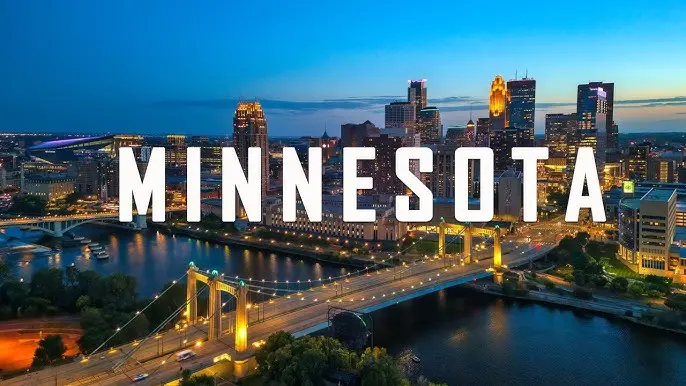
#MinnesotaPredictionMarketBanBlocked LEGAL SHOWDOWN OVER PREDICTION MARKETS
The future of prediction markets in the United States took a major turn on July 27, 2026, when a federal judge blocked Minnesota's groundbreaking prediction market ban before it could take effect. The decision allows platforms such as Kalshi and Polymarket to continue operating in the state while a broader legal battle unfolds over whether states have the authority to prohibit federally regulated event contracts.
KEY COURT DECISION
U.S. District Judge Katherine Menendez in Minneapolis issued a preliminary injunction preventing Minnesota from enforcing the law that Governor Tim Walz signed in May 2026. The legislation was scheduled to become effective on August 1 and would have made operating a prediction market within Minnesota a felony. If implemented, it would have been the first state law in the nation to completely ban prediction markets instead of regulating them.
WHY THE LAW WAS CHALLENGED
An unusual coalition formed to oppose the legislation. The U.S. Department of Justice, the Commodity Futures Trading Commission, Kalshi, and Polymarket each challenged the law, arguing that the Commodity Exchange Act grants exclusive authority over prediction markets and event contracts to the federal government. Their position was that states cannot override this federal framework by introducing separate bans.
THE COURT'S REASONING
Judge Menendez concluded that federal law is likely to preempt Minnesota's statute. According to the ruling, several event contracts offered by Kalshi and Polymarket satisfy the federal legal definition of a "swap" under the Commodity Exchange Act. Because these contracts fall within federal jurisdiction, the court found that Minnesota's attempt to prohibit them is unlikely to withstand legal review.
STATE VS FEDERAL AUTHORITY
Minnesota argued that prediction markets function as wagering systems, allowing consumers to speculate on sports, elections, entertainment, and world events, making them comparable to illegal gambling. The court, however, determined that federal regulation of qualifying event contracts likely overrides conflicting state restrictions. This creates an important distinction between federally regulated financial products and state gambling laws.
BUSINESS IMPACT
Kalshi and Polymarket maintained that the ban would create irreparable harm by disrupting a nationally unified prediction market. The companies also argued that restrictions on promoting their services raised First Amendment concerns. While those constitutional arguments remain unresolved, the court determined they were unnecessary to address during the preliminary injunction stage. Judge Menendez also indicated that future rulings could narrow the scope of the injunction if certain contracts are ultimately found not to qualify as federally regulated swaps.
WHY THIS CASE MATTERS
The decision represents one of the most important legal developments for the prediction market industry. Although multiple states have challenged these platforms through regulatory actions, Minnesota became the first to pass legislation making their operation a felony. Blocking that law signals that federal courts may increasingly recognize prediction markets as financial instruments governed by federal law rather than activities controlled by individual state gambling statutes.
BROADER IMPLICATIONS FOR CRYPTO
The outcome reaches beyond prediction markets alone. For the digital asset industry, the ruling strengthens the argument that federally regulated blockchain-based financial products receive meaningful protection from conflicting state-level prohibitions. That principle could influence future disputes involving tokenized assets, decentralized exchanges, and other crypto-native financial services operating within federal regulatory frameworks.
Prediction market platforms will continue operating in Minnesota while the lawsuit proceeds through the courts. The final outcome has the potential to establish a lasting precedent for how prediction markets are regulated across the United States and may shape the relationship between federal oversight and state authority for years to come.
@Gate_Square