PrinceMagsi786

vip
Age 0 Year
Peak Tier 0
No content yet
Wall Street moves into crypto trading! A full-scale price war begins — can traditional institutions really replace native crypto players?
gate liveLIVE
725
  • Reward
  • Comment
  • Repost
  • Share
#GateSquareMayTradingShare
#GateSquareMayTradingShare is becoming one of the hottest crypto community campaigns this month, with traders sharing market analysis Bitcoin predictions, altcoin setups, and trading psychology across Gate Square. The campaign rewards users for posting original trading insights, engaging with the community, and climbing the creator leaderboard.
Many traders are discussing Bitcoin volatility, institutional crypto adoption, AI expansion, and global macro events affecting the market. The trend is also pushing more social trading activity, where visibility, engagement
  • Reward
  • Comment
  • Repost
  • Share
New streamer
1,187 views
2026-05-13 05:00
  • Reward
  • Comment
  • Repost
  • Share
#GateSquareMayTradingShare is becoming one of the hottest crypto community campaigns on Gate Square this May, where traders, analysts, and creators share market insights, technical analysis, and trading strategies to earn rewards and climb leaderboard rankings. The campaign encourages users to post original crypto content, engage with the community, and build visibility in the trading ecosystem.
Many participants are sharing Bitcoin, XRP, DOGE, and altcoin market analysis, while others focus on macroeconomic trends, volatility, and trading psychology. The hashtag has already crossed hundreds
  • Reward
  • Comment
  • Repost
  • Share
New streamer
279 views
2026-05-13 04:36
  • Reward
  • Comment
  • Repost
  • Share
🎉 New Streamer Rewards Have Been Distributed — Congratulations to All Winners!
All rewards were successfully distributed on May 8.
You can check your rewards via: Assets → Spot Account.
The New Streamer Welcome Campaign is still ongoing!
High-quality livestreams can earn up to $100 GT, with rewards and traffic support available 💰
Start streaming now — your name could be on the next winner list 👇
Go Live: https://www.gate.com/live/apply
Campaign Details: https://www.gate.com/announcements/article/51080
GateLive
🎉 New Streamer Rewards Have Been Distributed — Congratulations to All Winners!
All rewards were successfully distributed on May 8.
You can check your rewards via: Assets → Spot Account.
The New Streamer Welcome Campaign is still ongoing!
High-quality livestreams can earn up to $100 GT, with rewards and traffic support available 💰
Start streaming now — your name could be on the next winner list 👇
Go Live: https://www.gate.com/live/apply
Campaign Details: https://www.gate.com/announcements/article/51080
repost-content-media
  • Reward
  • Comment
  • Repost
  • Share
#GateSquareMayTradingShare
🔥 My 623-Day Crypto Journey: From Complete Newbie to Launchpool Regular The Real Reality of Surviving Cycles, Learning Discipline, and Understanding How Markets Actually Move 🔥
When I first entered crypto 623 days ago, I had the typical beginner mindset — everything looked like opportunity, everything felt urgent, and every price movement seemed like it had meaning that I needed to act on immediately. I didn’t understand liquidity cycles, I didn’t understand leverage behavior, and I definitely didn’t understand how emotionally engineered this market can be. At tha
BTC0.33%
ETH0.96%
EagleEye
#GateSquareMayTradingShare
🔥 My 623-Day Crypto Journey: From Complete Newbie to Launchpool Regular The Real Reality of Surviving Cycles, Learning Discipline, and Understanding How Markets Actually Move 🔥
When I first entered crypto 623 days ago, I had the typical beginner mindset — everything looked like opportunity, everything felt urgent, and every price movement seemed like it had meaning that I needed to act on immediately. I didn’t understand liquidity cycles, I didn’t understand leverage behavior, and I definitely didn’t understand how emotionally engineered this market can be. At that stage, I thought success was simply about finding the right coin early and holding it long enough. What I didn’t realize is that timing alone is never enough — because even good assets can shake you out if your mindset is weak and your risk control is poor.
In the beginning, my trading behavior was completely reactive. I would buy into hype because I feared missing out, and I would sell into fear because I assumed every correction was the start of a bigger crash. I didn’t have a system, I didn’t have structure, and I didn’t have any real understanding of market cycles. Every decision was emotional. If the market pumped, I felt like I was late. If it dumped, I felt like I had made a mistake. This created a constant psychological loop of excitement and regret that slowly eroded consistency and clarity. Looking back, I realize I wasn’t trading the market — I was trading my emotions.
The first real shift in my journey happened when I stopped trying to predict everything and started focusing on observation. Instead of reacting to every candle, I began studying how liquidity actually flows through the market. I noticed that Bitcoin tends to move first, then Ethereum follows, and only after that does liquidity rotate into altcoins. But even then, it doesn’t rotate evenly — it concentrates into specific narratives such as AI, infrastructure, memes, or real-world assets depending on sentiment conditions. That realization completely changed my framework. I stopped thinking in terms of “what will pump next” and started thinking in terms of “where is capital currently flowing and why.”
Another major turning point was understanding that survival is more important than profit. In the early phase, I was obsessed with gains. I wanted fast results, big wins, and rapid progress. But over time, I realized that crypto is not a straight upward journey — it is a cycle-based environment where drawdowns, volatility spikes, and emotional traps are normal. The real enemy is not missing opportunities — it is losing too much capital during bad decisions. Once I started focusing on capital preservation instead of aggressive growth, my entire behavior changed. I reduced position sizes, avoided unnecessary trades, and stopped trying to force opportunities that didn’t align with my structure.
As I gained more experience, I also began to understand the importance of ecosystem participation, especially through launchpools. Initially, I viewed launchpools as simple reward mechanisms — something passive that didn’t require much thought. But over time, I realized they are actually early exposure points to new liquidity cycles and emerging narratives before they hit broader market attention. Participating consistently helped me understand how early-stage tokens are distributed, how communities form around new projects, and how attention builds before price discovery begins. It shifted my perspective from short-term reward thinking to long-term ecosystem positioning.
Emotional control became another critical pillar of my development. Even when I started understanding market structure, I still made emotional mistakes. I would exit too early during volatility, hesitate during entry opportunities, or overthink simple setups because I had experienced previous losses. The biggest realization was that knowledge alone is not enough — execution under pressure is what defines results. I had to train myself to detach emotionally from short-term price movements and focus on structured decision-making. That meant accepting uncertainty, understanding that not every move needs participation, and recognizing that patience is also a position.
Over time, I also developed a much deeper understanding of narrative cycles. Crypto does not move randomly — it rotates through attention phases. One cycle might be dominated by AI narratives, another by memes, another by infrastructure, and another by real-world asset tokenization. These narratives are not just trends — they are liquidity magnets. Capital flows into the story that attracts the most attention and perceived future value. Once I understood this, I stopped chasing random trades and started focusing on narrative alignment. Instead of asking “what is cheap,” I began asking “what narrative is gaining momentum and where is liquidity likely to rotate next.”
Now, after 623 days, my mindset is completely different from where I started. I no longer view crypto as a game of constant action. I view it as a structured environment where patience, discipline, and timing matter more than frequency. I don’t try to trade everything. I don’t chase every pump. I focus on selective participation, ecosystem engagement like launchpools, and structured positioning during strong narrative phases. My goal is no longer to catch every move — it is to survive long enough and stay disciplined enough to catch the meaningful cycles when they appear.
Even now, I still make mistakes, but they are no longer emotional breakdowns — they are controlled, smaller, and part of a learning process. The biggest difference between my early self and now is not intelligence or knowledge — it is behavior. I understand that consistency is built through repeated discipline, not isolated wins. I understand that missing trades is not failure, but overtrading often is. And I understand that the market does not reward urgency — it rewards patience under uncertainty.
If I had to summarize this entire 623-day journey in its deepest form, it would be this: crypto is not about predicting the perfect trade — it is about building the discipline to survive long enough, stay rational long enough, and remain positioned correctly long enough for the real opportunities to eventually come to you.
repost-content-media
  • Reward
  • Comment
  • Repost
  • Share
#GateSquareMayTradingShare
🔥 Why I Keep Coming Back to Gate’s Flexible Earn: A 600+ Day Deep-Dive Into Capital Discipline, Market Cycles, Liquidity Thinking, and Long-Term Crypto Survival Strategy 🔥
After more than 600 days inside crypto markets, my perspective on what actually matters has changed completely. When I first started, I believed success was about finding the right coins early, entering at the perfect time, and riding the move. Over time, that illusion slowly broke down through experience, volatility, and repeated exposure to different market phases. What I eventually learned is
EagleEye
#GateSquareMayTradingShare
🔥 Why I Keep Coming Back to Gate’s Flexible Earn: A 600+ Day Deep-Dive Into Capital Discipline, Market Cycles, Liquidity Thinking, and Long-Term Crypto Survival Strategy 🔥
After more than 600 days inside crypto markets, my perspective on what actually matters has changed completely. When I first started, I believed success was about finding the right coins early, entering at the perfect time, and riding the move. Over time, that illusion slowly broke down through experience, volatility, and repeated exposure to different market phases. What I eventually learned is that crypto is not just a trading environment — it is a liquidity system driven by cycles, emotions, leverage, and narrative shifts. And within that system, survival depends less on aggressive positioning and more on how efficiently you manage capital during both active and inactive phases.
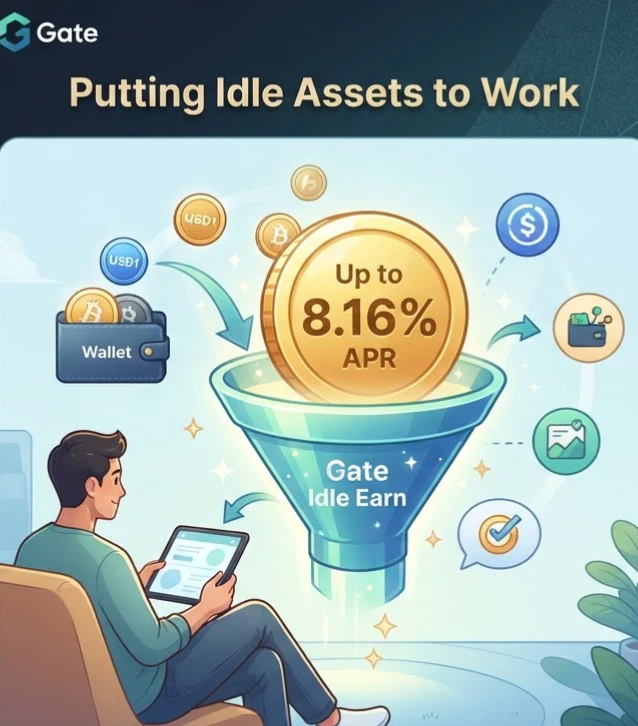
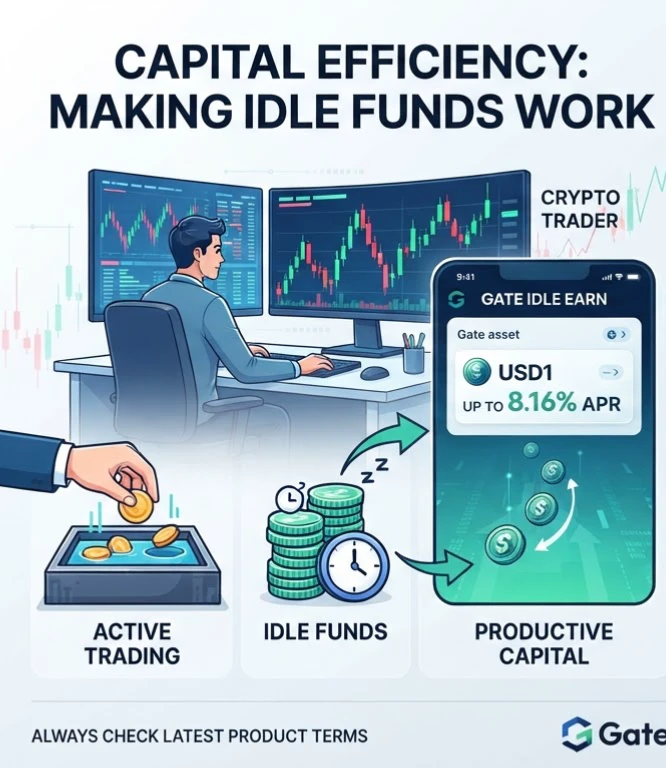
This is exactly why I keep coming back to Gate’s Flexible Earn. Not because it is flashy, not because it is the highest-yield product, and not because it promises anything unrealistic — but because it solves a structural problem that most traders only understand after they have experienced multiple market cycles: capital is rarely fully active, but it should never be fully idle. Flexible Earn sits in that exact gap between opportunity and inactivity, allowing assets to remain productive while still preserving instant liquidity when the market suddenly shifts.
In crypto, timing is everything — but timing is unpredictable. There are long periods where markets are slow, ranging, or uncertain. During these phases, holding capital idle feels inefficient, especially when you are constantly aware that your assets could be doing something. At the same time, locking funds into rigid structures creates another problem: loss of flexibility when unexpected opportunities appear. I have experienced both sides of this mistake — being too passive and missing yield efficiency, and being too locked in and missing sudden market opportunities. Flexible Earn became my solution to this contradiction.
One of the most important lessons I learned after 600+ days is that liquidity is more important than returns in isolation. A high yield is meaningless if your capital is not accessible when real opportunities appear. Crypto moves in bursts — not slowly, but in sharp rotations driven by liquidity shifts, macro catalysts, and narrative explosions. Bitcoin can move first, Ethereum can follow, and then altcoins can explode within days. But those moves are rarely predictable in advance. When those windows appear, having capital trapped becomes a real disadvantage. Flexible Earn solves this by keeping capital active while still allowing immediate redeployment when conditions change.
Another reason I continue using it is psychological stability, which is something beginners often underestimate. Crypto is emotionally exhausting, not because of constant action, but because of uncertainty and overreaction. When capital is sitting idle, there is often pressure to “do something” — which leads to forced trades, emotional entries, and unnecessary risk exposure. I’ve personally gone through phases where inactivity felt uncomfortable, and that discomfort led to bad decisions. Flexible Earn removes that pressure by ensuring capital is still productive even when I am not actively trading. This reduces emotional interference, which over time is far more valuable than small yield differences.
As my experience deepened, I started building a structured approach to capital allocation instead of treating everything as one pool. I now divide my capital into multiple layers: active trading capital for short-term opportunities, long-term holdings for conviction-based positions, opportunistic capital for events like launchpools or narrative shifts, and passive capital for efficiency and stability. Flexible Earn fits into this last category, but more importantly, it acts as a stabilizing layer between all other categories. It ensures that even when I am waiting for confirmation or rotating between strategies, my capital is still contributing in a controlled, low-friction way.
Another critical realization came when I understood that crypto is not linear — it is cyclical and rotational. Markets do not move uniformly; they rotate between dominance phases. Bitcoin leads liquidity, Ethereum confirms broader risk appetite, and then altcoins experience selective expansion based on narratives. Within that structure, capital is constantly shifting between sectors such as AI, infrastructure, memes, real-world assets, and DeFi depending on sentiment and macro conditions. Because of this constant rotation, having capital fully locked or fully idle becomes inefficient. Flexible Earn allows me to remain neutral while still being positioned for whichever phase emerges next.
Over time, I also began to appreciate the importance of compounding consistency rather than chasing peak returns. In the early stages of my journey, I was focused on aggressive gains and high-risk opportunities. But repeated exposure to volatility taught me a different truth: large gains mean nothing if they are followed by large losses. Survival and consistency matter more than isolated wins. Flexible Earn contributes to this mindset by providing a small but steady efficiency layer that smooths overall capital behavior. It does not create spikes in performance, but it reduces inefficiency across long periods, which is often more important in compounding systems.
Another layer that most people overlook is opportunity readiness. In crypto, opportunities do not announce themselves. They appear suddenly — a token breaks out, a narrative explodes, liquidity rotates into a new sector, or volatility spikes due to macro news. In those moments, speed matters more than anything. Flexible Earn ensures that capital is not only productive but also immediately deployable. This dual function — earning while remaining liquid — creates a strategic advantage that pure staking or locked products cannot provide.
As I progressed further in my journey, I stopped evaluating tools based on excitement or short-term yield and started evaluating them based on structural utility. Does it reduce decision fatigue? Does it preserve flexibility? Does it fit into a multi-cycle strategy? Does it remain useful in both bull and bear conditions? Flexible Earn consistently passes these criteria because it is not dependent on market direction. Whether markets are trending upward, crashing, or moving sideways, its function remains relevant.
I also realized something important about crypto behavior itself: most mistakes are not caused by lack of opportunity, but by poor capital positioning during uncertainty. Traders often lose money not because they missed a good trade, but because they were positioned incorrectly when volatility hit. Flexible Earn indirectly reduces this risk by keeping capital in a controlled state that avoids overexposure while still maintaining productivity. It does not replace strategy — it supports it by ensuring capital is always in a neutral, flexible condition.
Another reason I continue using it is the mental shift it creates over time. When capital is always either fully deployed or completely idle, decision-making becomes binary and emotionally charged. Flexible Earn introduces a middle state where capital is not forcing action. That alone improves discipline. It reduces overtrading, eliminates unnecessary urgency, and encourages patience — which is one of the most underrated advantages in crypto trading. Patience is not passive; it is a form of strategic positioning that allows better opportunities to be captured when they actually appear.
After 600+ days, I no longer see Flexible Earn as a product I “use.” I see it as part of my capital structure — a quiet layer that supports everything else I do in crypto. It does not compete with trading, it does not replace high-conviction investments, and it does not attempt to outperform the market. Instead, it ensures that my system remains balanced, flexible, and efficient across all market conditions.
At this stage of my journey, I understand something very clearly: crypto success is not about maximizing returns in every moment — it is about building a system that survives volatility, adapts to cycles, and minimizes irreversible mistakes. Flexible Earn fits into that philosophy not because it is aggressive, but because it is stable. And in a market defined by unpredictability, stability itself becomes a form of advantage.
If I had to reduce everything I learned into one core insight, it would be this: the longer you stay in crypto, the more you realize that your biggest enemy is not missing opportunities — it is losing flexibility at the wrong time. And Flexible Earn, in its simplest form, is one of the tools that helps me protect that flexibility every single day.
repost-content-media
  • Reward
  • Comment
  • Repost
  • Share
let's go for it
EagleEye
#PolymarketHundredUWarGodChallenge
🔥 Started the Gate Square × Polymarket 100U War God Challenge and I’m approaching this like a serious prediction market participant focused on strategy, discipline, and probability analysis.
Thanks to Gate for sponsoring the 100U challenge fund. Now the real question is:
Can disciplined analysis outperform emotional decision-making in prediction markets? 👀
I’m joining this challenge on Polymarket with one clear objective:
Turn research, probability analysis, and proper risk management into consistent results while documenting the entire journey publicly.
Most people enter prediction markets emotionally.
They chase hype.
They react too quickly after major news events.
They overreact to social media narratives.
But successful prediction market participants rely on something different:
📊 Information
📊 Timing
📊 Patience
📊 Probability understanding
📊 Risk management
That’s the mindset I’m bringing into this challenge.
━━━━━━━━━━━━━━━
📌 MY CORE STRATEGY
━━━━━━━━━━━━━━━
Instead of randomly entering markets, I’ll focus on structured decision-making. Every position I take must pass these filters:
✅ Is the probability pricing reasonable?
✅ Is the market overreacting to short-term news?
✅ Is sentiment too bullish or too bearish?
✅ Is there enough liquidity and trading volume?
✅ Does the risk/reward ratio make sense?
✅ Is there a clear exit strategy before entering?
If the answer is unclear, I skip the trade.
Because one of the biggest lessons in trading is:
Sometimes the best position is no position.
━━━━━━━━━━━━━━━
📌 MARKETS I’M FOCUSING ON
━━━━━━━━━━━━━━━
🔹 Crypto Markets
Bitcoin, ETF-related narratives, macro sentiment, major altcoin momentum, regulation-related markets, and trend reversals.
🔹 Political Markets
US election developments, approval probabilities, debate reactions, and major geopolitical events that create market volatility.
🔹 Global Event Markets
Breaking news, economic announcements, AI developments, major company events, and trend-driven prediction opportunities.
🔹 Momentum & Sentiment Markets
Markets where crowd psychology creates temporary pricing inefficiencies.
━━━━━━━━━━━━━━━
📌 HOW I ANALYZE MARKETS
━━━━━━━━━━━━━━━
Prediction markets are fascinating because they combine:
• News interpretation
• Crowd psychology
• Probability theory
• Trading behavior
• Real-time sentiment
• Risk management
Many beginners think prediction markets are simply “guessing.”
But experienced participants understand that pricing itself contains valuable information.
For example:
If a market says there is a 75% probability of an event happening, the important question becomes:
👉 Is the market overestimating or underestimating reality?
That’s where strategic advantage comes from.
I’ll be studying:
📈 Price movement behavior
📈 News impact timing
📈 Market overreactions
📈 Probability inefficiencies
📈 Community sentiment shifts
📈 Volume and liquidity changes
━━━━━━━━━━━━━━━
⚠️ COMMON BEGINNER MISTAKES ON POLYMARKET
━━━━━━━━━━━━━━━
After studying prediction markets, I believe these are some of the most common mistakes beginners make:
❌ Putting too much capital into one prediction
❌ Trading emotionally after losses
❌ Entering markets without proper research
❌ Buying into hype after large price spikes
❌ Ignoring liquidity and spread conditions
❌ Holding losing positions too long
❌ Following influencers without independent research
❌ Refusing to secure profits
❌ Confusing confidence with probability
❌ Overtrading low-quality markets
The market punishes emotional decision-making very quickly.
━━━━━━━━━━━━━━━
📌 MY RISK MANAGEMENT RULES
━━━━━━━━━━━━━━━
This challenge is not about reckless decision-making.
My main focus is capital preservation first, consistent growth second.
Rules I’ll follow:
✅ No oversized positions
✅ Diversified exposure across multiple markets
✅ Pre-planned entry and exit levels
✅ Taking partial profits when appropriate
✅ Avoiding emotional reactions after losses
✅ Staying patient during uncertain conditions
✅ Protecting capital during high-volatility events
Because long-term consistency matters more than short-term excitement.
━━━━━━━━━━━━━━━
📌 WHY PREDICTION MARKETS ARE GROWING FAST
━━━━━━━━━━━━━━━
Prediction markets may become one of the most interesting information systems online in the future.
Why?
Because markets combine public belief, information flow, incentives, and probability into one live system.
Unlike social media opinions, prediction markets encourage participants to support their views with real positions.
That changes everything.
In many cases, prediction markets react faster than traditional media because market sentiment moves before headlines fully develop.
That’s why understanding market psychology matters so much here.
━━━━━━━━━━━━━━━
📌 MY CHALLENGE ROADMAP
━━━━━━━━━━━━━━━
🗓️ Day 1
Research phase + identifying high-probability opportunities
🗓️ Day 2–3
Opening initial positions and monitoring sentiment changes
🗓️ Day 4+
Tracking results, reviewing decisions, adjusting strategies, and posting public updates
🗓️ Final Goal
Build consistent growth through disciplined probability analysis and structured decision-making.
━━━━━━━━━━━━━━━
📌 WHAT I’LL SHARE PUBLICLY
━━━━━━━━━━━━━━━
Throughout the challenge I’ll share:
📊 Market analysis
📊 Position updates
📊 Strategy breakdowns
📊 Lessons learned
📊 Risk management decisions
📊 Beginner-friendly insights
📊 Progress tracking
Transparency matters because real trading includes both successful and unsuccessful decisions.
━━━━━━━━━━━━━━━
📌 FINAL THOUGHTS
━━━━━━━━━━━━━━━
Most participants struggle because they trade emotionally.
Many prediction market users fail because they confuse excitement with strategic advantage.
My approach in this challenge is different:
Discipline over hype.
Probability over emotion.
Consistency over luck.
Long-term thinking over impulsive decisions.
Now let’s see whether smart analysis can turn Gate’s sponsored 100U into meaningful long-term progress. 🚀
Who else is participating in the challenge? What markets are you watching right now? 👀
Registration form: https://www.gate.com/questionnaire/7618
Event details: https://www.gate.com/announcements/article/51135
repost-content-media
  • Reward
  • Comment
  • Repost
  • Share
  • Pin