#Gate广场五月交易分享 Facing Resistance After Surge! Bitcoin Struggles to Break $81,000, 24H Volatile Tug-of-War, Four Major News Hidden in Rise and Fall Secrets
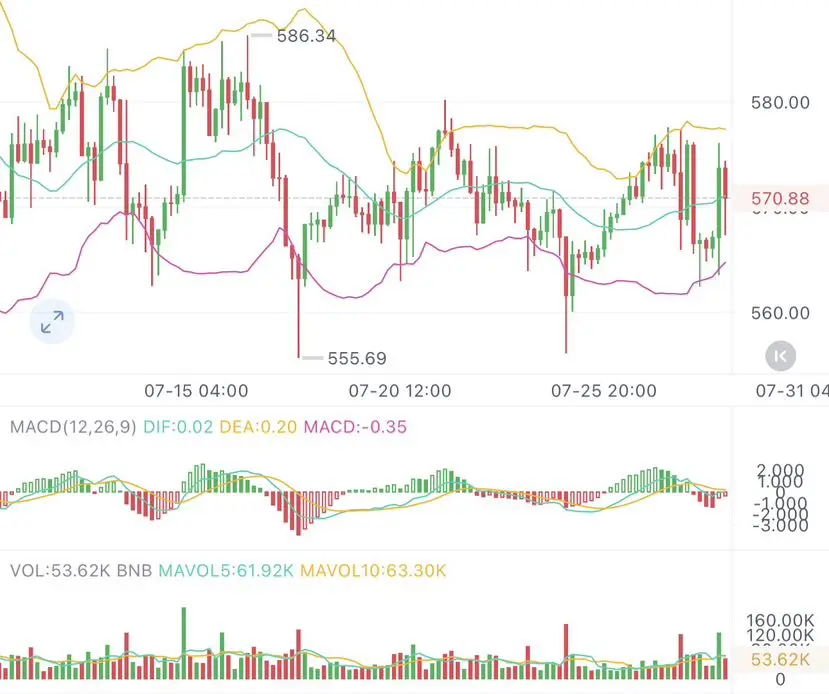
The crypto market has once again fallen into a stalemate of volatility! As of press time, Bitcoin's current price is $80,927.71, with a 24-hour high of $81,080.00, just a step away from the critical threshold of $81,000, but unable to break through effectively, and a low of $80,234.00. The day’s fluctuation is less than 1%, showing a pattern of “rising to resistance, range-bound tug-of-war.” On one side are positive signals from institutional accumulation and the early signs of a bull market; on the other are pressures on miners’ profits and long-term security risks. Amidst the battle between bulls and bears, why is Bitcoin struggling to break through $81,000? Combining four recent key news stories, we analyze the logic behind the price movements, current situation, and forecast future trends to help you see the opportunities and risks in the crypto market (not investment advice).
1. Current Market: $81,000 as “Roadblock,” 24H Volatility Highlights Bull-Bear Divergence
From a short-term trend perspective, since stabilizing above $80,000, Bitcoin has failed to break the critical resistance at $81,000, showing a “rise-fall-oscillation” cycle: 24H high: $81,080.00 (quickly retreated after touching the $81,000 mark, unable to stabilize); 24H low: $80,234.00 (limited pullback, support below is relatively strong); current price: $80,927.71 (back above $80,900, with a clear oscillation pattern). Behind this oscillation is fierce competition between bulls and bears—positive factors support Bitcoin maintaining high levels, while negative risks suppress its breakthrough of the key threshold. The latest four major news stories reflect the core contradictions in the current market.
2. Analysis of Four Key News Stories: Good and Bad News Intertwined, Influencing Bitcoin’s Direction
Recently, four core news items in the crypto space, from institutional deployment, miner ecology, technical security, and market judgment, are affecting Bitcoin’s short-term volatility and long-term trend. These include strong momentum supporting prices and potential risks that cannot be ignored.
Positive: Institutions Continue to Accumulate, Mining Giants Hit New Production Highs
According to CoinWeb, Eric Trump’s US Bitcoin company performed impressively in Q1 2026, setting multiple records: mined 817 Bitcoins in the quarter, achieving a new quarterly production high; Bitcoin reserves increased by about 30%, reaching 7,300 coins. Additionally, through strategic treasury purchases, the company bought an extra 803 Bitcoins. Notably, the company explicitly stated that it did not sell any Bitcoin in Q1 and maintained over 50% mining profit margins. Behind this continued institutional deployment is recognition of the long-term value of crypto assets. As a key player in mining, US Bitcoin’s “buy-and-hold” approach not only reduces market selling pressure but also sends a positive signal to the market—that institutions remain optimistic about Bitcoin’s future prospects at current prices. This is a crucial support for Bitcoin maintaining above $80,000.
Based on Tom Lee, Chairman of Bitmine, since the US-Iran conflict erupted, cryptocurrencies have become leading assets, with institutional interest continuously rising.
Negative 1: Miner Rewards Under Pressure, Nearly 20% of Miners in Loss
Contrasting with institutional optimism, Bitcoin miners are facing unprecedented pressure. Emin Gün Sirer, founder of Avalanche, recently warned that long-term security issues may stem from the continuous decline in miner rewards—after each halving, block rewards decrease, raising concerns about whether miners can earn enough to secure the network. This could be a bigger threat than quantum computing or competing tokens. CoinShares’ latest report further confirms this concern: 15-20% of global Bitcoin miners may be operating at a loss under current conditions, especially those with outdated equipment and high electricity costs. The fourth quarter of 2025 will be the most difficult since the April 2024 halving, with an average cash cost of about $79,995 per Bitcoin, close to current trading prices. Profit pressures could trigger chain reactions: some loss-making miners might shut down equipment and exit the market, leading to a decline in hash rate, which could impact network security; fluctuations in hash rate will also intensify Bitcoin’s price volatility. This is one of the key reasons Bitcoin struggles to break through $81,000—market fears that miner exits could threaten stability.
Negative 2: Quantum Attacks Approaching, Migration Takes a Decade
Beyond miner ecosystem pressures, Bitcoin also faces long-term technical security risks. According to reports, quantum attacks could arrive before 2030, and migrating Bitcoin to post-quantum secure systems may take up to ten years. More alarmingly, over $3 trillion in crypto assets, protected by elliptic curve cryptography, could face quantum threats within 4 to 7 years. The critical point is that Bitcoin’s post-quantum migration is complex, requiring coordination among users, exchanges, custodians, and miners, and could take 5 to 10 years. Although quantum attacks are not yet a reality, this long-term risk has attracted market attention. Some funds, for hedging, are hesitant to chase high prices, which also suppresses Bitcoin’s upside potential. Recent industry developments include proposals for quantum-resistant upgrades (BIP), but no clear timeline exists for mainnet activation. A full migration is estimated to take 3 to 7 years.
Key judgment: Tom Lee signals a bull market, with an important milestone at the end of May. Amid the complex bull-bear landscape, Tom Lee provides a clear market outlook, injecting confidence. He stated at the Consensus Miami conference in 2026 that if Bitcoin closes above $76k by the end of May, the bear market will be definitively over. This is not unfounded—since Bitcoin’s inception, there has never been a case of “three consecutive months of gains still in a bear market.” Currently, Bitcoin is showing a continuous upward trend. As long as it holds above $76k at month-end, the bear market can be broken.
Tom Lee also predicts that the next bull market’s core drivers will be “AI proxy and tokenization,” with tokenization potentially creating a $300 trillion market. Additionally, blockchain-based settlement will reduce costs and improve efficiency, making crypto firms’ per capita profits far surpass traditional finance. In the future, half of the world’s large financial institutions will be digital-native. He emphasizes that cryptocurrencies are excellent diversification tools, with a small ETH exposure providing hedge-like resilience comparable to gold.
3. Future Trend Forecast: Short-term Volatility, Mid-term May End as Key Node, Long-term Three Variables
Based on current price movements, four core news stories, and industry updates, we rationally forecast Bitcoin’s future trend from short, medium, and long-term perspectives, balancing opportunities and risks:
1. Short-term (1-4 weeks): Range-bound consolidation, difficult to break $81,000
In the short term, Bitcoin is expected to continue oscillating within a range, with $81,000 as a tough resistance. Two main reasons: first, profit pressures on miners may lead to some exiting, causing hash rate fluctuations and increased volatility; second, the long-term quantum attack risk keeps some funds cautious, preventing a strong breakout. Meanwhile, support at $80,000 remains relatively strong—institutions like US Bitcoin are “buy-and-hold,” providing a floor. Expect Bitcoin to fluctuate between $80,000 and $81,000, with a volatility of about 1-2%, similar to current narrow-range oscillations.
2. Mid-term (1-6 months): May end as a critical node, breakout signals bull market
In the mid-term, Bitcoin’s trend will revolve around the “$76k at end of May” milestone set by Tom Lee. If Bitcoin closes above $76k, the bear market will be confirmed over, and market sentiment will improve significantly. Institutional deployment will accelerate, and Bitcoin could break through $81,000, aiming for higher prices or even a new rally. Conversely, if it fails to hold above $76k, sentiment may weaken, and Bitcoin could retreat to $75,000–$78,000, seeking support again. Changes in miner ecology—such as lower costs for steel, electricity, and other inputs—could improve miner profits and hash rate, providing additional support. If more miners exit, hash rate declines, further suppressing prices. The correlation between software stocks and Bitcoin, as mentioned by Tom Lee, will also be an important reference.
3. Long-term (1-3 years): Opportunities and risks coexist, driven by three key variables
Long-term, Bitcoin’s trajectory depends on three core factors, with both opportunities and risks:
- Institutional deployment: Continued accumulation by firms like US Bitcoin and Bitmine can sustain and boost prices, especially with tokenization market explosion potentially adding new growth drivers.
- Miner ecosystem stability: If Bitcoin can implement technical adjustments (e.g., Emin Gün Sirer’s proposed pre-consensus layer) to mitigate reward decline and ensure profitability and security, the long-term foundation will be solid. Otherwise, ongoing miner exits and hash rate drops could undermine confidence and security.
- Post-quantum migration progress: Accelerating migration to post-quantum systems will eliminate long-term security threats, boosting market confidence. Slow progress or delays could keep quantum risks alive, constraining long-term growth. Although related BIP proposals are in testing, full migration may take years, making it a key long-term variable.
All data and analysis in this article are sourced from CoinWeb, public industry reports, and the latest market data, and do not constitute any investment advice.
The crypto market has once again fallen into a stalemate of volatility! As of press time, Bitcoin's current price is $80,927.71, with a 24-hour high of $81,080.00, just a step away from the critical threshold of $81,000, but unable to break through effectively, and a low of $80,234.00. The day’s fluctuation is less than 1%, showing a pattern of “rising to resistance, range-bound tug-of-war.” On one side are positive signals from institutional accumulation and the early signs of a bull market; on the other are pressures on miners’ profits and long-term security risks. Amidst the battle between bulls and bears, why is Bitcoin struggling to break through $81,000? Combining four recent key news stories, we analyze the logic behind the price movements, current situation, and forecast future trends to help you see the opportunities and risks in the crypto market (not investment advice).
1. Current Market: $81,000 as “Roadblock,” 24H Volatility Highlights Bull-Bear Divergence
From a short-term trend perspective, since stabilizing above $80,000, Bitcoin has failed to break the critical resistance at $81,000, showing a “rise-fall-oscillation” cycle: 24H high: $81,080.00 (quickly retreated after touching the $81,000 mark, unable to stabilize); 24H low: $80,234.00 (limited pullback, support below is relatively strong); current price: $80,927.71 (back above $80,900, with a clear oscillation pattern). Behind this oscillation is fierce competition between bulls and bears—positive factors support Bitcoin maintaining high levels, while negative risks suppress its breakthrough of the key threshold. The latest four major news stories reflect the core contradictions in the current market.
2. Analysis of Four Key News Stories: Good and Bad News Intertwined, Influencing Bitcoin’s Direction
Recently, four core news items in the crypto space, from institutional deployment, miner ecology, technical security, and market judgment, are affecting Bitcoin’s short-term volatility and long-term trend. These include strong momentum supporting prices and potential risks that cannot be ignored.
Positive: Institutions Continue to Accumulate, Mining Giants Hit New Production Highs
According to CoinWeb, Eric Trump’s US Bitcoin company performed impressively in Q1 2026, setting multiple records: mined 817 Bitcoins in the quarter, achieving a new quarterly production high; Bitcoin reserves increased by about 30%, reaching 7,300 coins. Additionally, through strategic treasury purchases, the company bought an extra 803 Bitcoins. Notably, the company explicitly stated that it did not sell any Bitcoin in Q1 and maintained over 50% mining profit margins. Behind this continued institutional deployment is recognition of the long-term value of crypto assets. As a key player in mining, US Bitcoin’s “buy-and-hold” approach not only reduces market selling pressure but also sends a positive signal to the market—that institutions remain optimistic about Bitcoin’s future prospects at current prices. This is a crucial support for Bitcoin maintaining above $80,000.
Based on Tom Lee, Chairman of Bitmine, since the US-Iran conflict erupted, cryptocurrencies have become leading assets, with institutional interest continuously rising.
Negative 1: Miner Rewards Under Pressure, Nearly 20% of Miners in Loss
Contrasting with institutional optimism, Bitcoin miners are facing unprecedented pressure. Emin Gün Sirer, founder of Avalanche, recently warned that long-term security issues may stem from the continuous decline in miner rewards—after each halving, block rewards decrease, raising concerns about whether miners can earn enough to secure the network. This could be a bigger threat than quantum computing or competing tokens. CoinShares’ latest report further confirms this concern: 15-20% of global Bitcoin miners may be operating at a loss under current conditions, especially those with outdated equipment and high electricity costs. The fourth quarter of 2025 will be the most difficult since the April 2024 halving, with an average cash cost of about $79,995 per Bitcoin, close to current trading prices. Profit pressures could trigger chain reactions: some loss-making miners might shut down equipment and exit the market, leading to a decline in hash rate, which could impact network security; fluctuations in hash rate will also intensify Bitcoin’s price volatility. This is one of the key reasons Bitcoin struggles to break through $81,000—market fears that miner exits could threaten stability.
Negative 2: Quantum Attacks Approaching, Migration Takes a Decade
Beyond miner ecosystem pressures, Bitcoin also faces long-term technical security risks. According to reports, quantum attacks could arrive before 2030, and migrating Bitcoin to post-quantum secure systems may take up to ten years. More alarmingly, over $3 trillion in crypto assets, protected by elliptic curve cryptography, could face quantum threats within 4 to 7 years. The critical point is that Bitcoin’s post-quantum migration is complex, requiring coordination among users, exchanges, custodians, and miners, and could take 5 to 10 years. Although quantum attacks are not yet a reality, this long-term risk has attracted market attention. Some funds, for hedging, are hesitant to chase high prices, which also suppresses Bitcoin’s upside potential. Recent industry developments include proposals for quantum-resistant upgrades (BIP), but no clear timeline exists for mainnet activation. A full migration is estimated to take 3 to 7 years.
Key judgment: Tom Lee signals a bull market, with an important milestone at the end of May. Amid the complex bull-bear landscape, Tom Lee provides a clear market outlook, injecting confidence. He stated at the Consensus Miami conference in 2026 that if Bitcoin closes above $76k by the end of May, the bear market will be definitively over. This is not unfounded—since Bitcoin’s inception, there has never been a case of “three consecutive months of gains still in a bear market.” Currently, Bitcoin is showing a continuous upward trend. As long as it holds above $76k at month-end, the bear market can be broken.
Tom Lee also predicts that the next bull market’s core drivers will be “AI proxy and tokenization,” with tokenization potentially creating a $300 trillion market. Additionally, blockchain-based settlement will reduce costs and improve efficiency, making crypto firms’ per capita profits far surpass traditional finance. In the future, half of the world’s large financial institutions will be digital-native. He emphasizes that cryptocurrencies are excellent diversification tools, with a small ETH exposure providing hedge-like resilience comparable to gold.
3. Future Trend Forecast: Short-term Volatility, Mid-term May End as Key Node, Long-term Three Variables
Based on current price movements, four core news stories, and industry updates, we rationally forecast Bitcoin’s future trend from short, medium, and long-term perspectives, balancing opportunities and risks:
1. Short-term (1-4 weeks): Range-bound consolidation, difficult to break $81,000
In the short term, Bitcoin is expected to continue oscillating within a range, with $81,000 as a tough resistance. Two main reasons: first, profit pressures on miners may lead to some exiting, causing hash rate fluctuations and increased volatility; second, the long-term quantum attack risk keeps some funds cautious, preventing a strong breakout. Meanwhile, support at $80,000 remains relatively strong—institutions like US Bitcoin are “buy-and-hold,” providing a floor. Expect Bitcoin to fluctuate between $80,000 and $81,000, with a volatility of about 1-2%, similar to current narrow-range oscillations.
2. Mid-term (1-6 months): May end as a critical node, breakout signals bull market
In the mid-term, Bitcoin’s trend will revolve around the “$76k at end of May” milestone set by Tom Lee. If Bitcoin closes above $76k, the bear market will be confirmed over, and market sentiment will improve significantly. Institutional deployment will accelerate, and Bitcoin could break through $81,000, aiming for higher prices or even a new rally. Conversely, if it fails to hold above $76k, sentiment may weaken, and Bitcoin could retreat to $75,000–$78,000, seeking support again. Changes in miner ecology—such as lower costs for steel, electricity, and other inputs—could improve miner profits and hash rate, providing additional support. If more miners exit, hash rate declines, further suppressing prices. The correlation between software stocks and Bitcoin, as mentioned by Tom Lee, will also be an important reference.
3. Long-term (1-3 years): Opportunities and risks coexist, driven by three key variables
Long-term, Bitcoin’s trajectory depends on three core factors, with both opportunities and risks:
- Institutional deployment: Continued accumulation by firms like US Bitcoin and Bitmine can sustain and boost prices, especially with tokenization market explosion potentially adding new growth drivers.
- Miner ecosystem stability: If Bitcoin can implement technical adjustments (e.g., Emin Gün Sirer’s proposed pre-consensus layer) to mitigate reward decline and ensure profitability and security, the long-term foundation will be solid. Otherwise, ongoing miner exits and hash rate drops could undermine confidence and security.
- Post-quantum migration progress: Accelerating migration to post-quantum systems will eliminate long-term security threats, boosting market confidence. Slow progress or delays could keep quantum risks alive, constraining long-term growth. Although related BIP proposals are in testing, full migration may take years, making it a key long-term variable.
All data and analysis in this article are sourced from CoinWeb, public industry reports, and the latest market data, and do not constitute any investment advice.