



Share crypto content and earn up to 60% commissions through content mining.
placeholder
gatefun
AI optical communications boom! FOTO jumps 9 as capital flows back into the photonics sector
gate liveLIVE
325
  • Reward
  • 1
  • Repost
  • Share
SanamOGCryptoQueen:
2026 GOGOGO 👊
#BTCBreaks66000
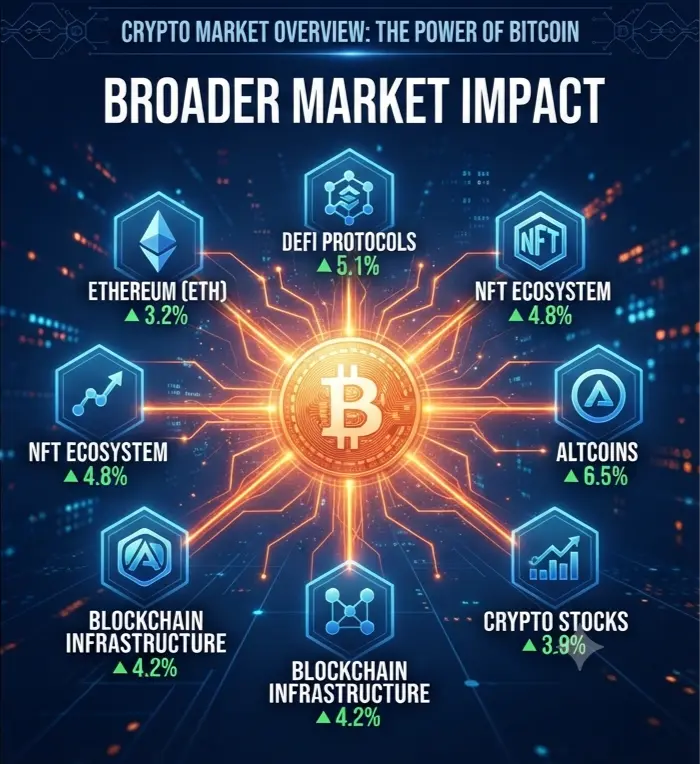
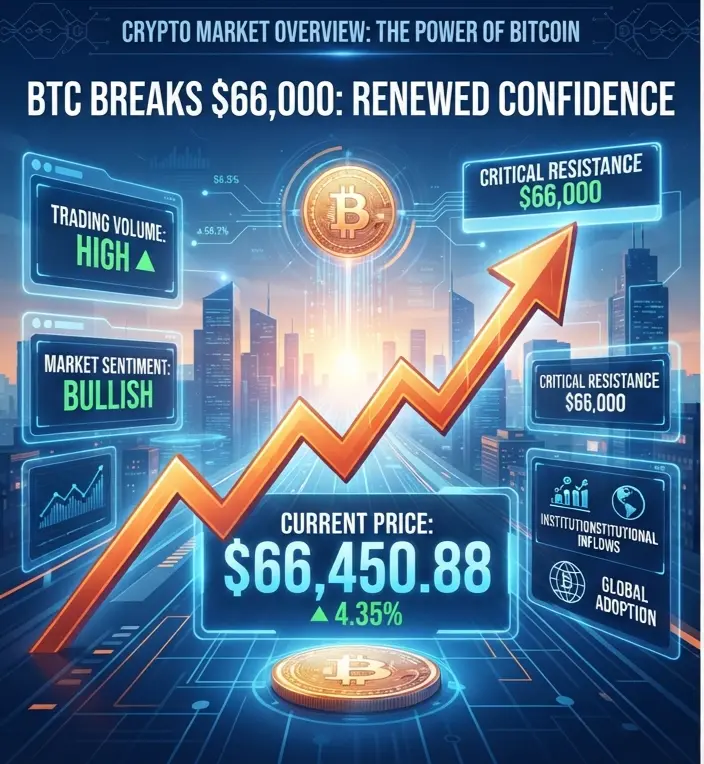
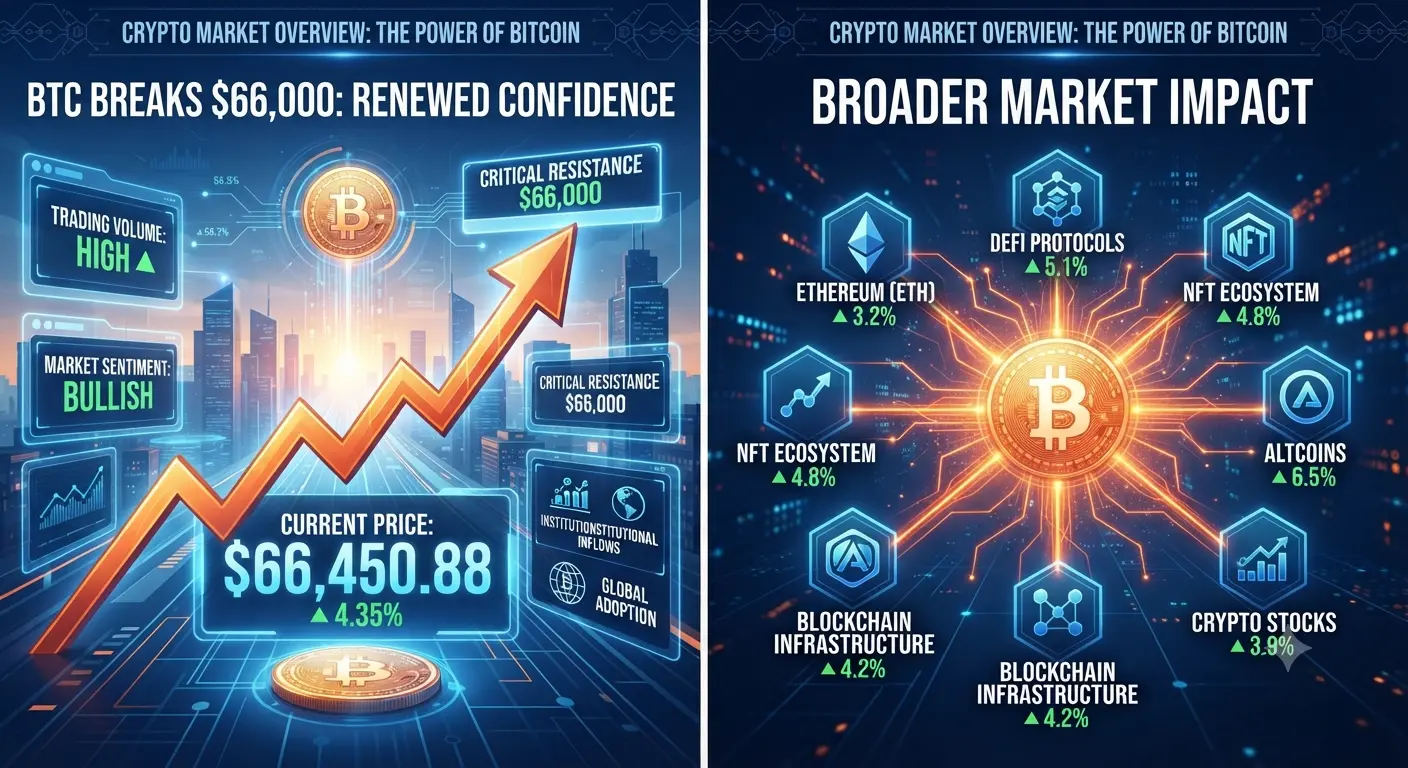
BTC Breaks $66,000, Bitcoin Strength Signals Renewed Confidence Across the Crypto Market
Introduction
Bitcoin has once again captured global attention after breaking above the $66,000 level, a milestone that reinforces its position as the world's leading digital asset. Major price movements in Bitcoin often influence the entire cryptocurrency market, affecting investor sentiment, institutional participation, trading activity, and capital flows into digital assets.
Crossing an important psychological price level is about more than the number itself. It reflects growing confiden
post-image
post-image
post-image
  • Reward
  • 6
  • Repost
  • Share
Yusfirah:
To The Moon 🌕
View More
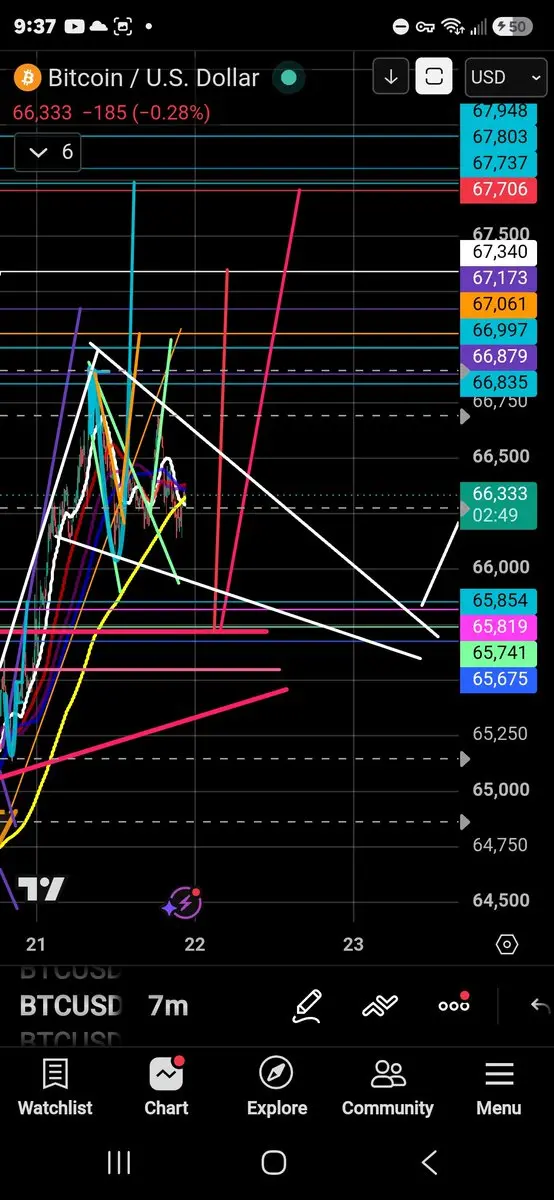
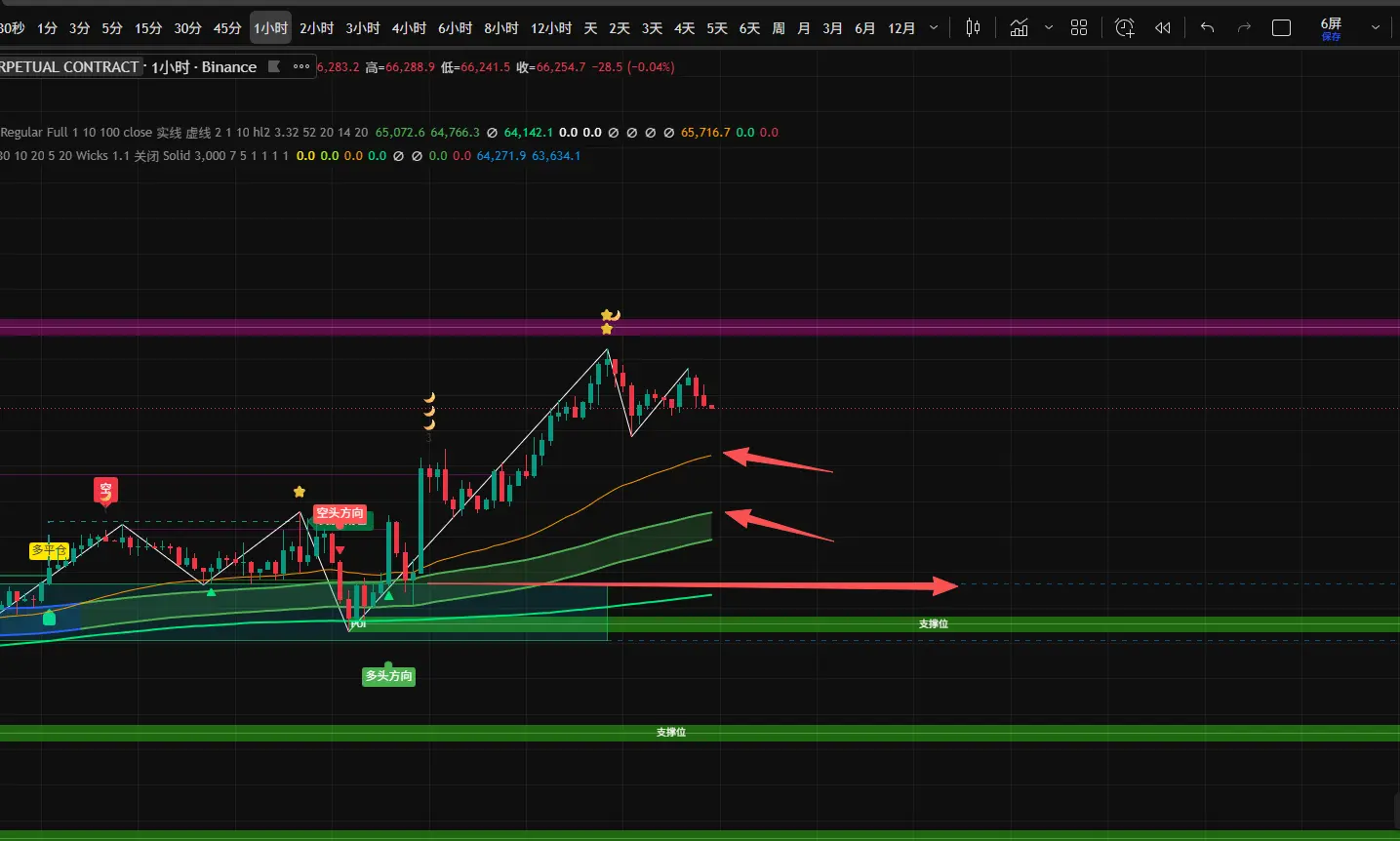
Today’s BTC short-term watch: There are still signs of a pullback; for now, treat it as range-bound trading. Resistance levels: 67,200 — first resistance; 68,800 — strong resistance. Support levels below: 65,800 — first support; 65,200 — second support; 64,700 — deep support. If the price can regain and hold above 67,200, only then will there be a chance to continue testing 68,800 in the short term. If 67,200 keeps coming under pressure, the price may continue to fluctuate within the range; if it breaks below 65,800, watch how 65,200 and 64,700 support holds. First confirm the position, don’t
BTC1.25%
View Original
post-image
  • Reward
  • Comment
  • Repost
  • Share
The full picture of stablecoin yield has been unlocked 💡
Reject idle funds—one-stop shop to maximize your stablecoin yield!
🔹 Holding benefits: $GUSD Enjoy 3.8% annualized, deposit and withdraw anytime, with 0 redemption fee
🔹 Annualized boost: $USDT VIP exclusive wealth management, enjoy 4.0% annualized for a limited time
🔹 Layered mining and airdrops: at #Launchpool zero-threshold staking $USDT / $BTC / $ETH / $GUSD
🔹 All-in-one benefits: 3.8% $GUSD annualized + 4.0% boost + zero-threshold staking—one asset delivers three layers of returns
Balance liquidity and high ret
GUSD0.03%
USDT0.00%
BTC1.26%
ETH0.58%
View Original
post-image
  • Reward
  • 1
  • Repost
  • Share
Yajing:
To The Moon 🌕
#EsportsTradingSeason
Esports Trading Season, Where Competitive Gaming Meets the Future of Digital Asset Trading
Introduction
The worlds of esports and digital asset trading are both built on speed, strategy, discipline, and continuous improvement. While one arena rewards players for quick decision-making and teamwork, the other rewards traders who understand market trends, manage risk effectively, and make informed investment decisions. The concept of Esports Trading Season brings these two exciting industries together, creating an environment where competition, education, and financial inno
post-image
post-image
  • Reward
  • 5
  • Repost
  • Share
Yusfirah:
2026 GOGOGO 👊
View More
#夏日创作营
Bitcoin ETF sees five consecutive inflows! First time since April—how high can this rebound go?
In late July, while everyone was still stuck in the lingering aftertaste of the World Cup, smart money had quietly changed direction. On July 20, US spot Bitcoin ETFs recorded a daily net inflow of about $227 million, marking the fifth consecutive trading day of positive net fund flows—for the first time since late April. Over the five days, total inflows pulled in about $727 million, the longest stretch of sustained buying after June’s record-setting capital exodus. The total assets under
ETH1.35%
View Original
post-image
LittleGodOfWealthPlutus
#夏日创作营
Bitcoin ETF sees five straight days of inflows! First since April—how high can this rebound go?
In late July, while everyone was still stuck in the afterglow of the World Cup, smart money quietly shifted direction. On July 20, US spot Bitcoin ETFs recorded about $227 million in net inflow in a single day—this is the fifth consecutive trading day with positive fund flows, and the first time since late April. Over the five days, total net inflows pulled in about $727 million. After June’s record-breaking capital exodus, this is the longest stretch of sustained buying. The total assets under management for Bitcoin ETFs also quietly climbed back from the early-July trough of nearly $75 billion to about $79 billion. Meanwhile, Ethereum ETFs were not idle either: daily net increase of about $38 million, with BlackRock’s ETHA leading the way. At the same time, both Bitcoin and Ethereum have started to rebound—last night they both broke above the 66,000 and 1,950 levels, respectively. So why is capital flowing back to Bitcoin, and what’s behind this rally? Where will the rebound go? Let “Little Caishen” chat with you:
1. Why does this rebound happen?
1. Demand for a rebound after a major selloff. This is the most direct reason. After Bitcoin’s brutal drop in June, it fell a full 25,000 points from May’s 82,000 peak. On the macro cycle technical indicators, it became severely oversold. Even the price broke below the 200-week moving average—an important long-term support level—driving strong rebound demand. Cheap coins also attracted arbitrage capital, forming the most solid foundation for this rebound.
2. ETF buying reappears to fill the most critical gap.‌ During the past quarter of persistent outflows, the market’s biggest missing piece was continuous, institutional-grade buying. Now that there have been net inflows for five straight days—even though the volume isn’t especially staggering, it sends a clear signal: institutions have not completely exited; they’re just waiting for better prices. When panic fades and valuations return to a reasonable range, allocation-oriented capital begins to test the waters again.
3. The “World Cup effect” logic also applies to the crypto market.‌ Whenever there are major global events, speculative capital naturally contracts—whether in China’s A-shares or the coin space. Attention gets diverted and risk appetite declines—this is a shared trait. When the event ends, suppressed short-term funds immediately look for an exit channel. Crypto markets are open 24/7, making this kind of return even more direct: capital doesn’t need to wait for market open, doesn’t need to deal with time zones. Once risk events land and sentiment repairs, buying can surge instantly. In late July, as the World Cup dust settled—right as Bitcoin was consolidating and building strength at low levels—the two created a subtle timing resonance.
4. A subtle shift in macro policy expectations.‌ The market had been betting that the Federal Reserve would start cutting rates in 2026, but due to geopolitical developments, inflation pressure surged and the rate-cut expectations reversed. However, because uncertainty is being gradually digested—whether it’s partial easing in the US–Iran situation or policy signals like the 401(k) plan loosening its allocation to crypto assets—the market’s biggest “unknown fear” is cooling down. When the worst case doesn’t happen, funds dare to re-enter.
2. Why did the funds choose Bitcoin?
The most direct and fundamental reason is that Bitcoin is cheap! This selloff began after Bitcoin hit an all-time high of 12W+ in October 2025. By June 2026’s low, it had fallen to around 57,700. Bitcoin’s drawdown is close to 60%, while Ethereum’s is over 60%. In the same period, the Dow rose nearly 20%, the Nasdaq rose over 25%, the South Korean stock market rose close to 150%, and even though gold had a decline in 2026, it still ended up with gains. If you’re long-term capital, would you choose assets at high levels or choose a low-priced but bullish-in-the-long-run Bitcoin? The answer is obvious.
3. How sustainable is this rally?
How far this rally can go depends on three key variables:
‌Test one: Can ETF inflows turn from a “pulse” into a “trend”?‌ Five days and $727 million sounds like a lot, but compared with the first half’s net outflow of $5.4 billion, it’s just a drop in the bucket. The real turning point requires seeing sustained net inflows at the weekly level, not emotional fund-repair over one or two weeks. If inflows pause again, this rebound is likely just a dead-cat bounce.
‌Test two: The battle between longs and shorts at $69,000–$70,000.‌ From a technical perspective, Bitcoin had been range-bound around $75k for a long time. $65,000 is the line the bulls must defend. If it can hold above $69,000 with increased volume, it may open the door to a mid-term rebound. If it breaks back below $65,000 again, the next stop would be $60,000. Above the $80,000 level, there’s liquidity from massive short liquidations—those are the real “hard bones.”
‌Test three: Can Ethereum keep up with the pace?‌ Ethereum is currently around $1,880. Over the past 30 days it’s up about 10%, but over the past year it’s still down nearly 48%. If Bitcoin rises while Ethereum remains weak, it indicates that funds only dare to embrace the “safest” assets and that risk appetite hasn’t truly recovered. Only when ETH breaks out in sync with a surge in volume can we confirm this is a real market recovery—not just a Bitcoin-only show.
4. Where should we look for targets in this rebound?
Although large funds have started to flow back into the crypto market, don’t get blindly optimistic. Remember: in the first half of 2026, the total net outflow from Bitcoin ETFs reached $5.4 billion. This is the first time since the product launched it has recorded a half-year net outflow. From May 15 to June 3—during a streak of 13 consecutive trading days—capital fled the market, and to date it remains the longest-ever “bleeding” record for spot ETFs. The $4.4 billion selling pressure wiped out the rebound gains from April. BlackRock’s IBIT—once a top cash magnet—saw $5 billion in redemptions in just May and June, exceeding the total of all outflow months in its history. So rather than calling these five days of net inflows a “victory of buying,” it’s better described as “successful bleeding control.” The market is nowhere near time to celebrate, but at least the most panicked phase may be behind us.
As for rebound targets, Little Caishen also mentioned this in an earlier article: on the weekly chart, pay attention to the resistance around 72,500. This is both the position of the 30-week moving average and the bull-bear boundary—the strong resistance zone of the 200-day moving average. If it can break through, it would suggest the bear market has fully ended and a bull market has returned. Of course, that’s a longer-term topic. Looking at the present, with institutional funds quietly returning and coins remaining cheap, getting on this rebound’s tailwind is the top priority. Before the price reaches 72,500, you should hold and wait for gains. Never short based on a hunch. Moving alongside smart money is always your most correct choice!
How are you all viewing the upcoming market? Institutions are buying, buying, buying—are you still holding short positions? It’s not easy to create original work—drop a comment and chat!

repost-content-media
  • Reward
  • 1
  • Repost
  • Share
HighAmbition:
good information 👍👍👍
Yesterday, every time someone gets scammed, they go public in the news asking for money—“m, m,” or telling people to report it to the police, saying the reason is that they transferred money by mistake, because there have been cases where people who did this ended up going to jail. But no one ever reports it. The law is so strict and suffocating—yet, if we’re being fair, it’s also a good thing: if you’ve been tricked and your money is gone, just submit an application/complaint, guys. Even if you can’t get the money back, at least it puts a criminal record into those people’s mouths, and that’s
View Original
post-image
  • Reward
  • Comment
  • Repost
  • Share
#PI#EGY

Sun God
We are all intersecting with gods from thousands of years of culture.
Because in the digital age,
Lá, the Sun God, is using it
View Original
post-image
post-image
EGY
EGYEgypt
MC:$281.38KHolders:1199
100.00%
GoldenWisdomPagoda
$PI
Which big shot can take me up
Little Princess
Sis Little Princess 👸👸👸👸👸👸👸👸👸👸👸👸👸👸
Can you let us be happy all day long?
Please accept a bow from Little Princess.
Energy blessing
Love you—muah muah ^3^
repost-content-media
  • Reward
  • Comment
  • Repost
  • Share
𝗚𝗮𝘁𝗲 𝗘𝗧𝗛 𝗦𝘁𝗮𝗸𝗶𝗻𝗴 𝗢𝗽𝗲𝗻𝘀 𝗮 𝗡𝗲𝘄 𝗪𝗮𝘆 𝗳𝗼𝗿 𝗣𝗮𝗿𝘁𝗶𝗰𝗶𝗽𝗮𝘁𝗶𝗼𝗻 𝗶𝗻 𝘁𝗵𝗲 𝗘𝘁𝗵𝗲𝗿𝗲𝘂𝗺 𝗘𝗰𝗼𝘀𝘆𝘀𝘁𝗲𝗺

Ethereum has gradually evolved from a smart-contract platform into one of the most important infrastructure layers in the digital-asset economy. As the ecosystem grows, the role of ETH is also expanding beyond simply buying, holding, or trading the asset.

𝗧𝗵𝗶𝘀 𝗶𝘀 𝘄𝗵𝗲𝗿𝗲 𝗘𝗧𝗛 𝘀𝘁𝗮𝗸𝗶𝗻𝗴 𝗯𝗲𝗰𝗼𝗺𝗲𝘀 𝗶𝗻𝘁𝗲𝗿𝗲𝘀𝘁𝗶𝗻𝗴.

Staking allows ETH holders to participate in the economic mechanism that supports Ethereum's proof-of-stake net
ETH0.58%
post-image
post-image
post-image
  • Reward
  • 2
  • Repost
  • Share
HighAmbition:
Go for it 👊
View More
Cat God’s “Joy of Life,” “Choosing the Sky,” “The Way of the Night,” and “Da Dao Chao Tian” already have film, TV, and anime adaptations.
But personally, I think his best work, “Interstellar Traveler,” why isn’t there an adaptation?
Is it because sci-fi is too hard to film?
Or because it contains subtle allusions to the Cultural Revolution, making it hard to produce?
Also, here are some recommendations for these works:
“Joy of Life” is too hot right now—I won’t waste words introducing it; you can watch the TV series on Tencent.
“Choosing the Sky” is an anime; it’s airing on iQIYI,
View Original
post-image
post-image
post-image
post-image
  • Reward
  • Comment
  • Repost
  • Share
Bitcoin is proving once again why it remains the leader of the crypto market. After weeks of uncertainty, BTC has recovered above the $65,000 level, showing renewed strength as buyers return. Technical indicators are improving, market confidence is gradually recovering, and many analysts are now watching the $67,000 to $68,000 zone as the next major resistance. A successful breakout above this range could open the door for a stronger bullish trend.
Institutional interest continues to play a key role. Spot Bitcoin ETF activity and improving market sentiment have helped restore confidence after
BTC2.03%
post-image
post-image
post-image
  • Reward
  • 4
  • Repost
  • Share
Yusfirah:
2026 GOGOGO 👊
View More
Gold Gains Investor Attention Ahead of the Fed!
gate liveLIVE
1,131
live-coin
  • Reward
  • Comment
  • Repost
  • Share
#电竞巅峰交易季 Gate eSports Peak Trading Season is an ongoing trading-type event. Key information:
Event period: July 14, 2026 ~ August 8, 2026
Event highlights: Predict global eSports matchups and share a 200,000 USDT prize pool!
Event type: Trading-type event
Current status: Ongoing
Registration steps:
1、Log in to your Gate account and make sure your identity verification (KYC) is completed
2、Go to the event page—click the activity card at the top to jump directly, or use the page navigation bar to enter “Benefits Center” and find the event
3、On the event page, click “Apply Now” to complete regist
View Original
post-image
  • Reward
  • 4
  • Repost
  • Share
PrinceMagsi786:
LFG 🔥
View More
#SummerCreationCamp 🌞 | Knowledge Creates Value, Consistency Creates Success 🚀
The crypto market rewards more than just traders—it rewards creators who educate, analyze, and inspire. Through Gate Square's Summer Creation Camp, every quality post becomes an opportunity to build your reputation, engage with a global audience, and compete for exclusive rewards.
Whether you're sharing technical analysis, blockchain education, AI developments, or macroeconomic insights, your knowledge can help shape the Web3 community while strengthening your own presence as a crypto creator.
✨ Why Summer Creatio
BTC1.26%
ETH0.58%
post-image
  • Reward
  • 1
  • Repost
  • Share
HighAmbition:
good 👍👍👍👍👍👍
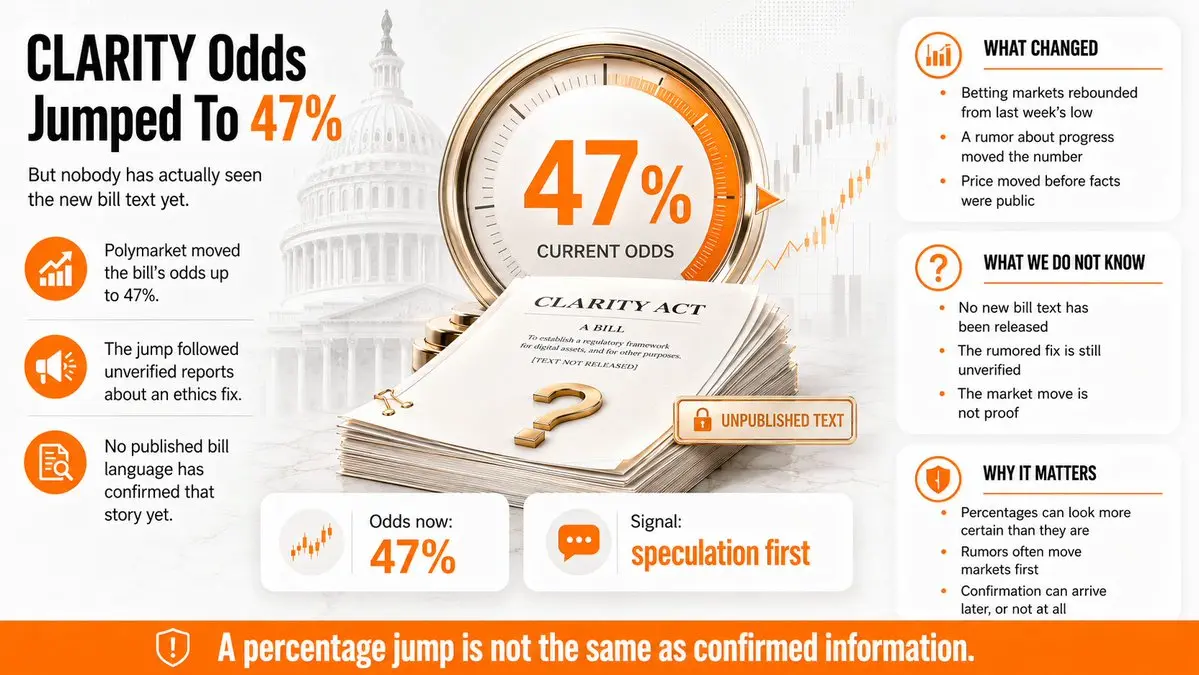
Odds on a major crypto bill passing just jumped to 47% on Polymarket, and nobody has actually seen the new text yet.
Betting markets moved the CLARITY Act's chances up from a record low last week, based entirely on unverified reports that a key ethics provision got resolved.
No bill language has been published. The move so far is pure speculation about what might be true, not confirmation of anything.
This happens constantly in markets. A rumor moves the number first, and the actual facts catch up later, if they ever do. Worth remembering before treating any single percentage jump as settled i
post-image
  • Reward
  • Comment
  • Repost
  • Share
$LAB dares greatly and fears greatly
LAB47.74%
View Original
post-image
  • Reward
  • 2
  • Repost
  • Share
GateUser-1ea6a223:
Get on board now! 🚗
View More
Why do so many traders like soaking their feet?
View Original
post-image
  • Reward
  • Comment
  • Repost
  • Share
Those 333's striking again like they own the timeline.
3:33 on the clock, $3.33 at the store, random plate ending in 333…
Universe sliding into my DMs like “hey, create something cool and trust the process.”
Angel numbers or just my brain doing the most?
Who else is getting spammed by the 333's!?
post-image
  • Reward
  • Comment
  • Repost
  • Share
#夏日创作营 US stock market trend analysis: The key for the next year is not simply to judge whether the US stocks will rise or fall
RBC’s latest US equities outlook: Technology becomes the main line again; S&P 500 target 8,150 points in the next 12 months
In its latest published US stock strategy report, RBC Capital Markets has made a clear shift in its allocation recommendations across S&P 500 sectors.
The core signal released by the report is: RBC still favors the US stock market over the coming year, but the market’s upside path will not be smooth. The investment focus may shift again—from valu
GS2.88%
MS2.57%
View Original
post-image
ShizukaKazu
#夏日创作营 US stock market trend analysis: The key for the next year isn’t simply deciding whether US stocks will rise or fall
RBC latest US equities outlook: Tech becomes the main theme again; S&P 500 target of 8,150 points for the next 12 months
In its latest published US stock strategy report, RBC Capital Markets made clear adjustments to its allocation recommendations across major S&P 500 sectors.
The report’s core signal is: RBC still likes the US stock market over the next year, but the path of market gains will not be smooth. The investment mainline may shift again from value stocks, small caps, and non-US markets back to US large-cap tech, artificial intelligence, and mega-cap growth stocks.
On sector allocation, RBC raised the Information Technology sector from “neutral” to “overweight,” while lifting Consumer Discretionary from “underweight” to “neutral.” In contrast, Communication Services was cut from “overweight” to “neutral,” and Utilities was reduced from “neutral” to “underweight.”
After the adjustments, the three sectors RBC currently has at “overweight” are Information Technology, Financials, and Materials.
Tech returns as the preferred growth segment. RBC’s most important change this time is to re-establish Information Technology as the preferred growth segment. Over the past month or more, the tech sector has lagged the S&P 500 at times due to profit-taking in AI bellwethers, semiconductor valuation pressure, and rotations in market style. But from a fundamentals perspective, tech companies’ earnings and revenue expectations remain among the strongest across all sectors, and capital has started flowing back into tech funds.
More importantly, RBC believes that although the tech sector’s overall valuation is not cheap, it is only slightly above its long-term average and has not reached an out-of-control level. Given that tech stocks’ market-cap share in the S&P 500 is already above one third, if investors remain bullish on the S&P 500’s performance over the next year, it is difficult to be bearish on the tech sector at the same time. Opportunities within tech are also not identical.
RBC thinks Software, IT services, and tech hardware, storage, and peripherals currently have both favorable earnings-revision trends and attractive relative valuations. Among them, the Software sector’s valuation is close to historical lows, but earnings expectations remain strongly upward; its risk-reward is improving. By comparison, the semiconductor industry still has very strong earnings growth, but valuations remain at historical highs. Even with recent pullbacks, RBC reminds investors that there is no guarantee within the year that profit-taking won’t happen again in AI and semiconductor “hot” stocks.
Consumer sentiment may be overly pessimistic. RBC lifted Consumer Discretionary from underweight to neutral, but that does not mean RBC thinks US consumers have fully recovered. Instead, RBC believes market pessimism about the consumer sector may already be excessive.
At present, US consumer confidence is still relatively weak, but some survey data show signs of stabilizing. Historical experience suggests that when University of Michigan consumer confidence starts to rise, both consumer discretionary and consumer staples tend to capture relatively favorable returns. From an earnings perspective, the earnings revisions in the consumer discretionary sector are roughly balanced. Valuation is not low, but it is not clearly so expensive that it must remain underweighted.
RBC also believes that in sub-sectors such as auto parts, diversified consumer services, and specialty retail, there are starting to be more opportunities worth watching. Therefore, this adjustment looks more like a “repair” from excessive pessimism rather than a strong bullish call on the consumer cycle.
Financials and Materials remain overweight. Other than tech, RBC continues to overweight Financials and Materials. Financials is one of the best-rated sectors in RBC analysts’ surveys.
Analysts generally like the financial industry’s outlook for the next 6 to 12 months and hold a positive view on sector valuations, demand, and the US domestic policy environment. At the same time, earnings and revenue expectations for the financial sector are improving, and capital flows have turned positive. Banks, insurance, and consumer finance are the sub-segments RBC considers relatively most attractive.
For capital markets businesses at investment banks such as Goldman Sachs and Morgan Stanley, RBC is comparatively cautious.
Capital markets is not the most attractive direction within the financial industry right now, but its valuation is already clearly below last year and is no longer in an obviously expensive state. If M&A, IPOs, securities issuance, and private credit activity continue to pick up, capital markets business could still benefit.
Materials also remains overweight. Its main advantage is relatively lower valuation, with earnings and revenue expectations turning positive again, and capital flows starting to stabilize. Metals and mining, and chemicals are among the more watched directions. Energy fundamentals are strong, but capital flows remain a constraint. Energy was at one point an object RBC considered upgrading to overweight.
From a fundamentals perspective, the energy sector has strong earnings and revenue revisions, relatively cheap valuation, and analysts generally take a positive view of demand, the policy environment, and future performance. Meanwhile, amid ongoing global geopolitical uncertainty, energy stocks can also provide some portfolio “insurance” effect. However, RBC ultimately keeps the energy sector at neutral allocation, mainly because there have been notably clear capital outflows from energy funds recently. That means RBC is not denying the energy sector; rather, it believes there is currently insufficient confirmation from the capital-flow side. Once capital flows improve again, energy could become one of the next sectors to be upgraded.
The industrial sector has good fundamentals, but valuation is already too high. Industrial sector earnings and revenue expectations remain robust; manufacturing activity, infrastructure investment, supply-chain reshaping, and AI infrastructure capital expenditures all provide long-term support for related companies. However, the industrial sector has already become one of the most expensive sectors by valuation within the S&P 500, and the previously strong capital inflows have started to weaken.
Therefore, while RBC acknowledges its fundamentals, it temporarily maintains neutral allocation and does not recommend chasing upside at these elevated valuation levels.
Within industrials, the professional services industry has relatively more attractive valuation and earnings-revision dynamics. Areas such as electrical equipment and building & engineering still have strong earnings trends, but valuations have clearly risen. Utilities was cut to underweight. Utilities is the clearest underweight direction in this round of adjustments. Although utilities’ earnings and revenue expectations continue to improve, RBC believes the sector currently faces three main problems: valuation is too high, capital flows are too weak, and analysts lack sufficient confidence in future performance.
In addition, as US midterm elections approach, the affordability of electricity prices and living costs could become a policy focus, which may create potential pressure on utilities companies’ pricing power and earnings expectations. As a result, RBC cut utilities from neutral to underweight. Within the sector, only independent power producers and renewable energy producers are relatively more attractive in terms of valuation and earnings revisions.
S&P 500 target of 8,150 points remains. On the overall market view, RBC maintains its S&P 500 target of 8,150 points for the next 12 months. Based on the index level at the time the model locks, this implies roughly 10.8% upside potential.
RBC’s core logic is that over the next year, US corporate earnings growth—especially for AI-related companies—can, to some extent, offset the negative impacts from rising interest rates, inflation pressure, and valuation contraction. Its valuation model assumes that the S&P 500 P/E ratio gradually falls to about 24x, and it applies a 5% haircut to market consensus earnings expectations. Under assumptions of inflation around 3%, one Fed rate hike, and a 10-year US Treasury yield of about 4.5%, the model yields a reasonable value for the S&P 500 of about 8,162 points, which is broadly consistent with the official target of 8,150 points.
Therefore, RBC’s view for the coming year is not “valuations expand indefinitely,” but rather that earnings growth can push the index higher even as valuations contract slightly.
Second-quarter earnings growth still strong. The market currently expects S&P 500 constituent companies’ earnings per share in 2Q 2026 to grow year over year by about 24%. While this is lower than the roughly 30% pace in 1Q, it is still at a very strong level. Among companies that have reported early, about 94% had earnings above market expectations, up from 84% in 1Q. However, the proportion of companies with revenues above expectations is about 65%, down from 80% in 1Q. This result suggests that US corporate profits remain strong, but the breadth of growth is not as optimistic as the earnings numbers alone might indicate. Some companies may deliver upside earnings through cost control, margin improvement, or capital-structure optimization, rather than relying entirely on rapid revenue growth.
More worth noting is that the trend of upward revisions to overall S&P 500 earnings expectations has recently weakened, though this weakening is mainly concentrated among the other 490 companies outside the top 10. For the S&P 500’s top 10 by market value, the upward revision proportion for earnings expectations is currently about 90%, already near historical highs. This indicates that mega-cap companies still have a clear earnings advantage.
Market leadership may return to large growth stocks. Since the start of this year, the market has gone through multiple style switches. Value stocks, small caps, non-US markets, and companies with relatively lower weights in the S&P 500 have all outperformed large tech and mega-cap growth stocks at various times. RBC believes this kind of “market breadth” rally may still persist in the short term, but it looks more like episodic trading rather than a fundamental change in long-term leadership.
Conditions for large growth stocks to regain leadership are gradually forming.
First, earnings growth over the next few years for AI-related companies and the “Magnificent Seven” is expected to remain higher than for other companies in the S&P 500.
Second, earnings expectations for the top 10 companies in the S&P 500 have improved again, while earnings revisions for other companies are starting to cool.
Third, after recent pullbacks, valuation pressure on large tech stocks has eased noticeably compared with earlier levels.
RBC’s valuation model shows that the relative P/E for the S&P 500’s top 10 companies can now be explained by their long-term earnings-growth advantage, and they are no longer as clearly overvalued as they were earlier. As a result, RBC is on alert that the market could shift back toward US stocks, the tech sector, AI themes, and mega-cap growth stocks.
The small-cap rally may continue, but its durability needs monitoring. Russell 2000 has recently clearly outperformed the S&P 500, and small caps have broken upward out of the prior trading range. Factors supporting small caps include improved manufacturing and employment data, high levels of short positioning in the market, and an expectation that earnings growth in 2027 could accelerate meaningfully. According to market consensus expectations, small-cap profit growth in 2027 is expected to exceed both the overall S&P 500 and some AI bellwethers. Still, RBC does not fully pivot to small caps. After the Russell 2000 index annual adjustment, its valuation has already fallen back from the high end, but it is currently only near the long-term average and has not reached a level that is extremely attractive. At the same time, small caps are more sensitive to financing costs and changes in interest rates. If the market reprices the risk of additional Fed hikes, or capital returns to mega-cap tech stocks, the relative performance of small caps could be pressured. Therefore, small caps still have cyclical opportunities, but for now they are unlikely to replace large tech as the long-term core mainline.
Pullbacks may be capped at 5% to 10%. While RBC continues to like the market’s outlook for the next year, it does not think the upside path will be a straight line. As long as the US economy does not fall into recession and the Fed does not launch a large-scale rate-hike cycle, RBC expects the typical correction range for the S&P 500 is likely to be between 5% and 10%. Risks that could trigger a pullback include worsening Middle East geopolitical conditions, downward revisions to 2027 earnings forecasts, overly optimistic AI and semiconductor earnings expectations, policy repricing triggered by midterm elections, and further increases in US Treasury yields. Of particular note is the 10-year US Treasury yield. If yields merely stay near current high levels, the equity market still has the capacity to absorb them. But if yields continue breaking above 5%, or the Fed enters a stronger rate-hike cycle, the market adjustment could exceed the ordinary 5% to 10% range.
Conclusion
The core takeaways from RBC’s latest report can be summarized as: the logic behind the US stock bull market is not over, but investors need to re-emphasize earnings quality and sector selection. Tech, Financials, and Materials remain RBC’s top three preferred sectors. Pessimistic expectations for Consumer Discretionary may already be excessive and there is some room for a rebound. Energy has attractive fundamentals and valuation, but investors still need to wait for improved capital flows. Industrials have strong earnings, but valuation is too high. Utilities has been cut to underweight due to valuation and policy risks. From the perspective of market style, the sector rotation among small caps, value stocks, and non-US markets over the past period may not be fully finished yet, but the earnings advantage of large tech, AI, and mega-cap growth stocks remains clear.
As tech stock valuations continue to correct, market leadership is approaching a new turning point. For investors, the key for the next year isn’t just deciding whether US stocks will go up or down, but rather finding sectors and companies where earnings can be sustained and delivered, valuations remain relatively reasonable, and there is supportive capital behind them while the index still has room to rise.
repost-content-media
  • Reward
  • 1
  • Repost
  • Share
HighAmbition:
Ape In 🚀
JUST IN: Samsung in talks to invest in Mistral, potentially valuing the French AI startup at around €20B, with a plan to invest ~€1B. If confirmed, this could signal stronger ties between hardware supply and AI model contenders outside the U.S. $AI?
post-image
  • Reward
  • Comment
  • Repost
  • Share
Load More

Join 40 M users in our growing community

⚡️ Join 40 M users in the crypto craze discussion
💬 Engage with your favorite top creators
👍 See what interests you
  • Pinned