#IranUSConflictEscalates
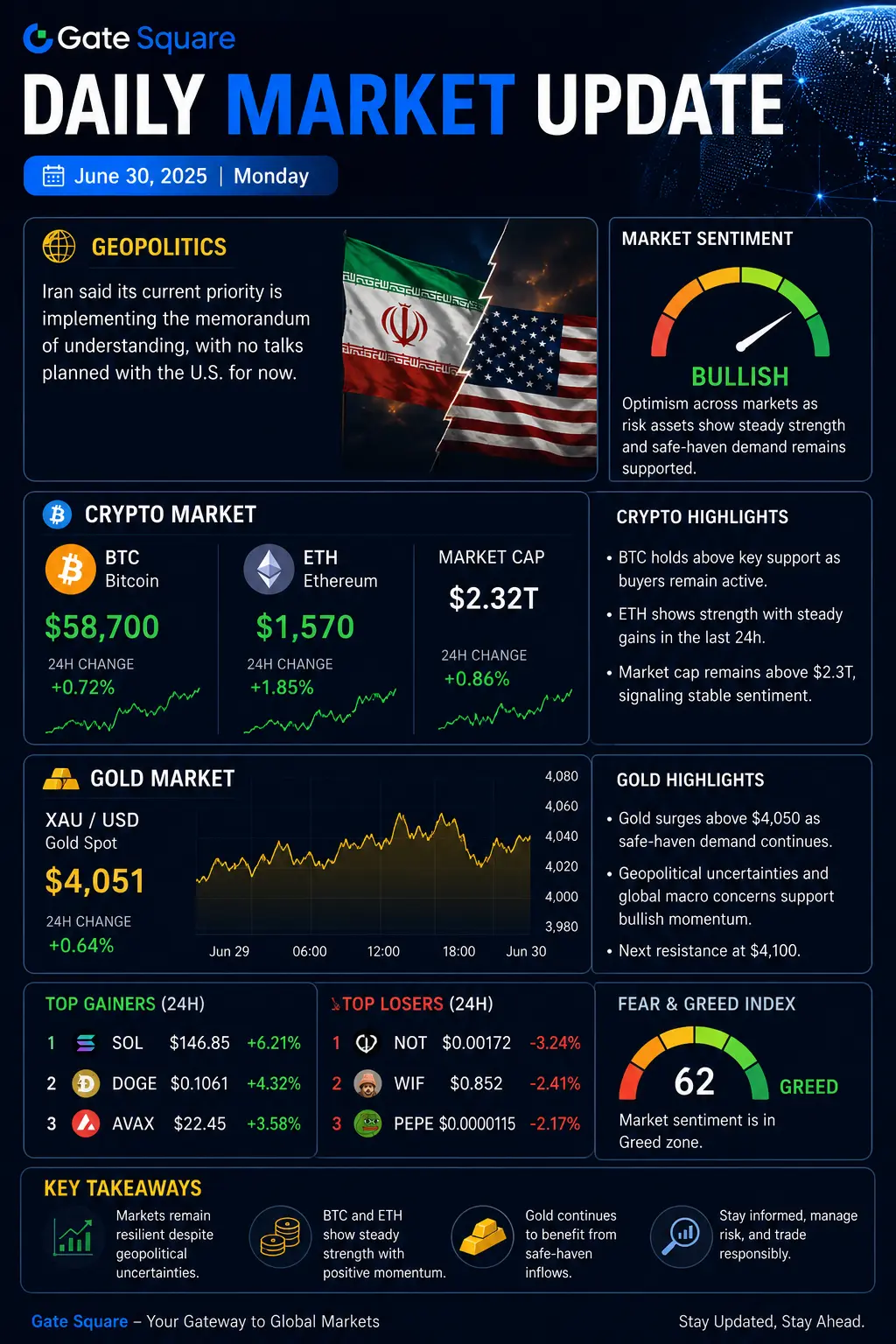
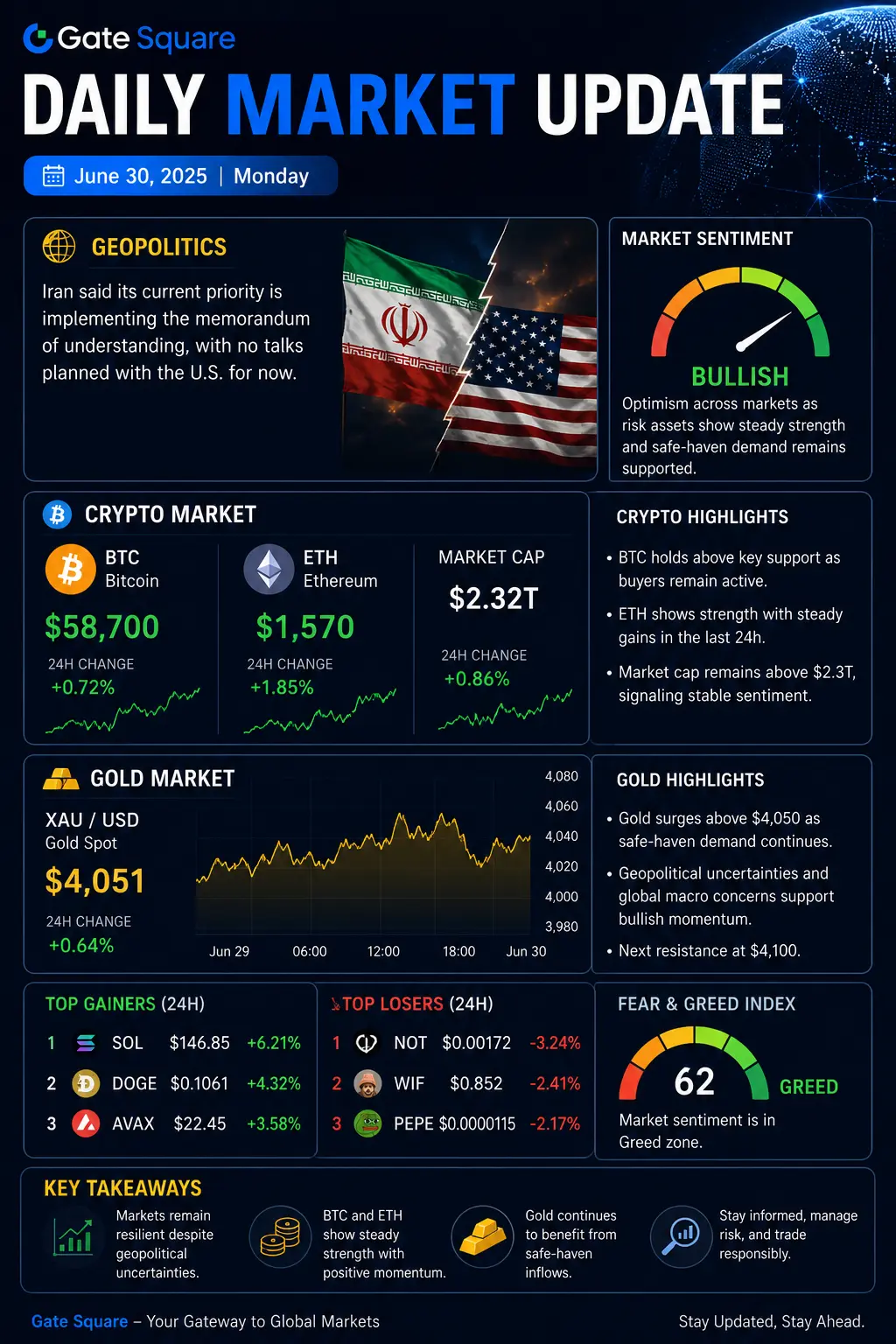
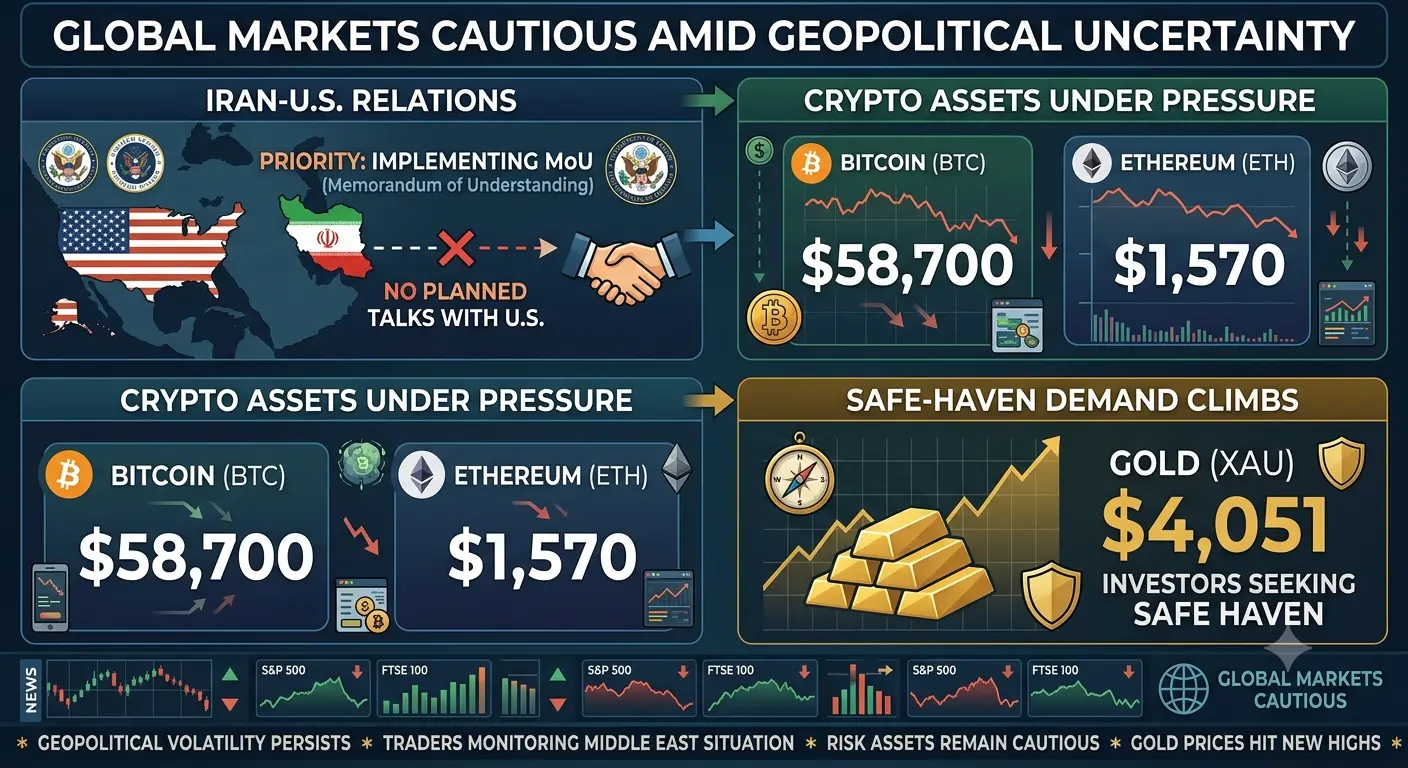
The current global financial landscape is experiencing a dramatic divergence between risk assets and traditional safe havens, with the ongoing tensions between Iran and the United States serving as the primary catalyst for this shift. As of late June 2026, Bitcoin is trading at approximately $58,700, representing a significant decline from recent highs around $66,000, while Ethereum has also faced downward pressure trading near $1,570. In stark contrast, gold has surged to approximately $4,051 per ounce, marking historic highs, and crude oil prices have shown considerable volatility with Brent crude trading around $72-75 per barrel and West Texas Intermediate hovering near $68-70 per barrel.
Geopolitical Context: Iran's Strategic Position and Market Impact
Iran's recent statement that its current priority is implementing the memorandum of understanding with no immediate talks planned with the United States represents a critical inflection point in Middle Eastern geopolitics. This development signals a continuation of the confrontational stance that has characterized Iran-U.S. relations, with significant implications for global markets. The memorandum of understanding likely refers to ongoing diplomatic arrangements or regional agreements that Iran is pursuing independently of direct American engagement, potentially involving other regional powers or multilateral frameworks.
The absence of planned talks between Tehran and Washington removes a key avenue for de-escalation, maintaining the elevated risk premium that investors have been pricing into various asset classes. This diplomatic impasse comes against the backdrop of recurring tensions in the Middle East that have already weighed on risk assets in recent weeks. The persistence of these tensions creates an environment where safe haven assets command premium valuations while risk assets, including cryptocurrencies, face sustained selling pressure.
Bitcoin Market Analysis: Technical Weakness and Structural Concerns
Bitcoin's current price of $58,700 represents a significant technical breakdown, having fallen well below the critical $66,000 resistance level that market participants had been monitoring closely. This decline reflects multiple converging factors that have created a challenging environment for the world's largest cryptocurrency. According to recent market analysis, Bitcoin has been experiencing persistent ETF outflows, with spot Bitcoin ETFs recording net outflows over consecutive trading sessions. These outflows have totaled hundreds of millions of dollars in recent weeks, bringing cumulative net inflows down to approximately $102.67 billion.
The technical picture for Bitcoin shows concerning weakness across multiple timeframes. The cryptocurrency has broken below key moving averages and is trading in a zone that previously served as support but has now flipped to resistance. The Crypto Fear and Greed Index has remained at elevated levels of fear, with readings around 24 indicating extreme fear sentiment among market participants. This extreme fear reading typically coincides with capitulation events where weak hands exit positions, potentially creating conditions for a bottoming process but also risking further downside if selling pressure accelerates.
From a derivatives perspective, Bitcoin open interest had rebounded alongside previous price recovery attempts, but the failure to sustain gains above $66,000 has resulted in renewed pressure. The 25-day skew and DVOL metrics have been normalizing, suggesting that demand for downside protection and volatility expectations have eased from peak levels, but this normalization may also reflect reduced speculative interest rather than genuine bullish conviction.
The structural concerns for Bitcoin extend beyond technical factors. Market research indicates that May was defined by weakening spot demand alongside active leveraged trading, creating an unsustainable dynamic where price appreciation was driven more by derivatives activity than genuine accumulation. Although on-chain liquidity remained abundant, persistent ETF outflows, insufficient aggressive buying, and elevated perpetual futures activity caused many upside breakouts to fail. This pattern appears to be continuing into the current period, with Bitcoin primarily serving as a barometer of overall market risk appetite rather than an independent value driver.
Ethereum Market Dynamics: Correlated Weakness
Ethereum's price of $1,570 reflects similar pressures to Bitcoin, though the second-largest cryptocurrency has shown slightly more resilience in certain market conditions. The Ethereum ecosystem continues to benefit from developments in restaking and liquid staking derivatives, with projects advancing amid growing momentum in Ethereum restaking. However, these positive developments have been insufficient to offset the broader risk-off sentiment affecting the cryptocurrency market.
The Solana ecosystem has been outperforming Ethereum in recent weeks, suggesting a rotation of capital within the cryptocurrency space rather than net inflows. This rotation indicates that while some investors remain committed to crypto exposure, they are becoming more selective about which assets they hold during periods of elevated uncertainty. The ETH/BTC ratio has also come under pressure, reflecting Bitcoin's relative strength within the crypto ecosystem despite its overall weakness.
Gold Market Analysis: Safe Haven Dominance at $4,051
Gold's surge to approximately $4,051 per ounce represents a remarkable display of safe haven strength in the current environment. This price level places gold at or near all-time highs, reflecting the metal's traditional role as a store of value during periods of geopolitical uncertainty and market stress. The divergence between gold and Bitcoin prices highlights the different investor behaviors toward these assets during crisis periods.
Several factors are driving gold's outperformance. First, the traditional relationship between geopolitical risk and gold demand remains intact, with investors seeking the stability and centuries-long track record of the precious metal. Second, central bank demand for gold has remained robust, with various monetary authorities continuing to diversify their reserves away from dollar-denominated assets. Third, the persistence of inflationary pressures, despite Federal Reserve efforts to contain them, has supported gold's appeal as an inflation hedge.
The technical picture for gold is strongly bullish, with the metal breaking above previous resistance levels and establishing new support zones. Unlike Bitcoin, gold is benefiting from genuine accumulation rather than speculative trading, with physical demand from both institutional and retail sources supporting prices. The gold-to-Bitcoin ratio has expanded dramatically, indicating that the traditional safe haven is outperforming the digital alternative by a substantial margin.
Crude Oil Market Dynamics: Supply Risk Premium
Crude oil prices have experienced significant volatility in response to Middle Eastern tensions, with both Brent and West Texas Intermediate benchmarks showing considerable price swings. The current oil market is characterized by a delicate balance between supply concerns related to potential disruptions in the Strait of Hormuz and demand considerations related to global economic growth prospects.
The Strait of Hormuz remains a critical chokepoint for global oil supplies, with approximately one-fifth of global petroleum consumption passing through this narrow waterway. Any escalation of tensions between Iran and the United States raises the risk of supply disruptions, which would have immediate and significant impacts on global oil prices. Iran's strategic position along this vital shipping lane gives it considerable leverage in any confrontation, even without direct military engagement.
However, the oil market has also been contending with demand-side concerns related to slowing global economic growth. Recent market commentary has noted that oil is fading as an inflation concern, with the Federal Reserve watching closely to see whether artificial intelligence infrastructure costs might replace oil as the primary inflation driver. This shift in inflation dynamics suggests that the traditional relationship between oil prices and monetary policy may be evolving.
Market Interconnections and Portfolio Implications
The current market environment highlights important interconnections between asset classes that investors must understand. The negative correlation between safe havens like gold and risk assets like Bitcoin has been particularly pronounced, with capital flowing out of speculative digital assets and into traditional stores of value. This dynamic suggests that the narrative of Bitcoin as digital gold remains incomplete, at least during periods of acute geopolitical stress.
For portfolio construction, the current environment favors defensive positioning with increased allocations to precious metals and reduced exposure to high-beta assets like cryptocurrencies. The persistence of Middle Eastern tensions suggests that this defensive posture may be warranted for an extended period, particularly if diplomatic efforts remain stalled.
Outlook and Key Levels to Watch
Looking ahead, several key variables will determine the trajectory of these markets. For Bitcoin, the critical level to watch remains the $66,000 resistance zone, with a sustained break above this level potentially signaling a return to bullish conditions. Conversely, a break below $55,000 could trigger accelerated selling as technical support levels give way. ETF flow trends will be particularly important, as sustained inflows would provide the demand necessary to absorb selling pressure.
For gold, the current uptrend appears sustainable as long as geopolitical tensions remain elevated and real interest rates remain relatively low. The $4,000 level has now become support rather than resistance, with the next psychological target at $4,500 coming into view if current conditions persist.
Oil prices will remain sensitive to any developments in the Iran-U.S. relationship, with supply disruption scenarios potentially driving prices substantially higher. However, demand concerns related to global growth may limit upside unless actual supply disruptions occur.
Conclusion
The current market environment represents a stress test for the digital asset ecosystem, with Bitcoin and Ethereum facing significant headwinds while traditional safe havens like gold thrive. Iran's decision to prioritize implementation of existing agreements over direct talks with the United States maintains the geopolitical risk premium that has been driving asset flows. For investors, this period underscores the importance of diversification and the continued relevance of traditional safe haven assets even in an era of digital innovation. The divergence between gold at $4,051 and Bitcoin at $58,700 tells a clear story about market preferences during uncertain times, with centuries of history trumping technological promise in the current risk-off environment.@Gate_Square
The current global financial landscape is experiencing a dramatic divergence between risk assets and traditional safe havens, with the ongoing tensions between Iran and the United States serving as the primary catalyst for this shift. As of late June 2026, Bitcoin is trading at approximately $58,700, representing a significant decline from recent highs around $66,000, while Ethereum has also faced downward pressure trading near $1,570. In stark contrast, gold has surged to approximately $4,051 per ounce, marking historic highs, and crude oil prices have shown considerable volatility with Brent crude trading around $72-75 per barrel and West Texas Intermediate hovering near $68-70 per barrel.
Geopolitical Context: Iran's Strategic Position and Market Impact
Iran's recent statement that its current priority is implementing the memorandum of understanding with no immediate talks planned with the United States represents a critical inflection point in Middle Eastern geopolitics. This development signals a continuation of the confrontational stance that has characterized Iran-U.S. relations, with significant implications for global markets. The memorandum of understanding likely refers to ongoing diplomatic arrangements or regional agreements that Iran is pursuing independently of direct American engagement, potentially involving other regional powers or multilateral frameworks.
The absence of planned talks between Tehran and Washington removes a key avenue for de-escalation, maintaining the elevated risk premium that investors have been pricing into various asset classes. This diplomatic impasse comes against the backdrop of recurring tensions in the Middle East that have already weighed on risk assets in recent weeks. The persistence of these tensions creates an environment where safe haven assets command premium valuations while risk assets, including cryptocurrencies, face sustained selling pressure.
Bitcoin Market Analysis: Technical Weakness and Structural Concerns
Bitcoin's current price of $58,700 represents a significant technical breakdown, having fallen well below the critical $66,000 resistance level that market participants had been monitoring closely. This decline reflects multiple converging factors that have created a challenging environment for the world's largest cryptocurrency. According to recent market analysis, Bitcoin has been experiencing persistent ETF outflows, with spot Bitcoin ETFs recording net outflows over consecutive trading sessions. These outflows have totaled hundreds of millions of dollars in recent weeks, bringing cumulative net inflows down to approximately $102.67 billion.
The technical picture for Bitcoin shows concerning weakness across multiple timeframes. The cryptocurrency has broken below key moving averages and is trading in a zone that previously served as support but has now flipped to resistance. The Crypto Fear and Greed Index has remained at elevated levels of fear, with readings around 24 indicating extreme fear sentiment among market participants. This extreme fear reading typically coincides with capitulation events where weak hands exit positions, potentially creating conditions for a bottoming process but also risking further downside if selling pressure accelerates.
From a derivatives perspective, Bitcoin open interest had rebounded alongside previous price recovery attempts, but the failure to sustain gains above $66,000 has resulted in renewed pressure. The 25-day skew and DVOL metrics have been normalizing, suggesting that demand for downside protection and volatility expectations have eased from peak levels, but this normalization may also reflect reduced speculative interest rather than genuine bullish conviction.
The structural concerns for Bitcoin extend beyond technical factors. Market research indicates that May was defined by weakening spot demand alongside active leveraged trading, creating an unsustainable dynamic where price appreciation was driven more by derivatives activity than genuine accumulation. Although on-chain liquidity remained abundant, persistent ETF outflows, insufficient aggressive buying, and elevated perpetual futures activity caused many upside breakouts to fail. This pattern appears to be continuing into the current period, with Bitcoin primarily serving as a barometer of overall market risk appetite rather than an independent value driver.
Ethereum Market Dynamics: Correlated Weakness
Ethereum's price of $1,570 reflects similar pressures to Bitcoin, though the second-largest cryptocurrency has shown slightly more resilience in certain market conditions. The Ethereum ecosystem continues to benefit from developments in restaking and liquid staking derivatives, with projects advancing amid growing momentum in Ethereum restaking. However, these positive developments have been insufficient to offset the broader risk-off sentiment affecting the cryptocurrency market.
The Solana ecosystem has been outperforming Ethereum in recent weeks, suggesting a rotation of capital within the cryptocurrency space rather than net inflows. This rotation indicates that while some investors remain committed to crypto exposure, they are becoming more selective about which assets they hold during periods of elevated uncertainty. The ETH/BTC ratio has also come under pressure, reflecting Bitcoin's relative strength within the crypto ecosystem despite its overall weakness.
Gold Market Analysis: Safe Haven Dominance at $4,051
Gold's surge to approximately $4,051 per ounce represents a remarkable display of safe haven strength in the current environment. This price level places gold at or near all-time highs, reflecting the metal's traditional role as a store of value during periods of geopolitical uncertainty and market stress. The divergence between gold and Bitcoin prices highlights the different investor behaviors toward these assets during crisis periods.
Several factors are driving gold's outperformance. First, the traditional relationship between geopolitical risk and gold demand remains intact, with investors seeking the stability and centuries-long track record of the precious metal. Second, central bank demand for gold has remained robust, with various monetary authorities continuing to diversify their reserves away from dollar-denominated assets. Third, the persistence of inflationary pressures, despite Federal Reserve efforts to contain them, has supported gold's appeal as an inflation hedge.
The technical picture for gold is strongly bullish, with the metal breaking above previous resistance levels and establishing new support zones. Unlike Bitcoin, gold is benefiting from genuine accumulation rather than speculative trading, with physical demand from both institutional and retail sources supporting prices. The gold-to-Bitcoin ratio has expanded dramatically, indicating that the traditional safe haven is outperforming the digital alternative by a substantial margin.
Crude Oil Market Dynamics: Supply Risk Premium
Crude oil prices have experienced significant volatility in response to Middle Eastern tensions, with both Brent and West Texas Intermediate benchmarks showing considerable price swings. The current oil market is characterized by a delicate balance between supply concerns related to potential disruptions in the Strait of Hormuz and demand considerations related to global economic growth prospects.
The Strait of Hormuz remains a critical chokepoint for global oil supplies, with approximately one-fifth of global petroleum consumption passing through this narrow waterway. Any escalation of tensions between Iran and the United States raises the risk of supply disruptions, which would have immediate and significant impacts on global oil prices. Iran's strategic position along this vital shipping lane gives it considerable leverage in any confrontation, even without direct military engagement.
However, the oil market has also been contending with demand-side concerns related to slowing global economic growth. Recent market commentary has noted that oil is fading as an inflation concern, with the Federal Reserve watching closely to see whether artificial intelligence infrastructure costs might replace oil as the primary inflation driver. This shift in inflation dynamics suggests that the traditional relationship between oil prices and monetary policy may be evolving.
Market Interconnections and Portfolio Implications
The current market environment highlights important interconnections between asset classes that investors must understand. The negative correlation between safe havens like gold and risk assets like Bitcoin has been particularly pronounced, with capital flowing out of speculative digital assets and into traditional stores of value. This dynamic suggests that the narrative of Bitcoin as digital gold remains incomplete, at least during periods of acute geopolitical stress.
For portfolio construction, the current environment favors defensive positioning with increased allocations to precious metals and reduced exposure to high-beta assets like cryptocurrencies. The persistence of Middle Eastern tensions suggests that this defensive posture may be warranted for an extended period, particularly if diplomatic efforts remain stalled.
Outlook and Key Levels to Watch
Looking ahead, several key variables will determine the trajectory of these markets. For Bitcoin, the critical level to watch remains the $66,000 resistance zone, with a sustained break above this level potentially signaling a return to bullish conditions. Conversely, a break below $55,000 could trigger accelerated selling as technical support levels give way. ETF flow trends will be particularly important, as sustained inflows would provide the demand necessary to absorb selling pressure.
For gold, the current uptrend appears sustainable as long as geopolitical tensions remain elevated and real interest rates remain relatively low. The $4,000 level has now become support rather than resistance, with the next psychological target at $4,500 coming into view if current conditions persist.
Oil prices will remain sensitive to any developments in the Iran-U.S. relationship, with supply disruption scenarios potentially driving prices substantially higher. However, demand concerns related to global growth may limit upside unless actual supply disruptions occur.
Conclusion
The current market environment represents a stress test for the digital asset ecosystem, with Bitcoin and Ethereum facing significant headwinds while traditional safe havens like gold thrive. Iran's decision to prioritize implementation of existing agreements over direct talks with the United States maintains the geopolitical risk premium that has been driving asset flows. For investors, this period underscores the importance of diversification and the continued relevance of traditional safe haven assets even in an era of digital innovation. The divergence between gold at $4,051 and Bitcoin at $58,700 tells a clear story about market preferences during uncertain times, with centuries of history trumping technological promise in the current risk-off environment.@Gate_Square