# AaveSuesToUnfreeze73MInETH

2.81M

On May 4, Aave filed an emergency motion in federal court to lift the freeze on approximately $73 million in ETH. These funds were recovered after the April 18 Kelp DAO exploit, but a May 1 court order approved their seizure to satisfy decades-old terrorism judgments against North Korea. Aave’s founder stated: “A thief does not own what he steals.” At the heart of the dispute is whether recovered stolen assets belong to the original users or can be claimed by outside creditors based on an alleged national link to the hacker. The DeFi community’s recovery efforts are now clashing with the U.S. judicial process, and the final ruling could reshape asset ownership rules in crypto.

#AaveSuesToUnfreeze73MInETH
What is happening around Aave and the attempt to unfreeze ~$73M in ETH is not just another DeFi headline. It is a structural moment that exposes how fragile the “fully decentralized” narrative becomes when real money, legal systems, and adversarial behavior collide.
At the surface, this looks like a recovery/legal dispute. But underneath, it is a deeper stress test of three forces pulling in opposite directions:
1) code-based execution (smart contracts)
2) governance-based intervention (protocol decisions)
3) legal-based enforcement (cou
AAVE-1.15%
ETH-3.28%
Yusfirah
#AaveSuesToUnfreeze73MInETH
What is happening around Aave and the attempt to unfreeze ~$73M in ETH is not just another DeFi headline. It is a structural moment that exposes how fragile the “fully decentralized” narrative becomes when real money, legal systems, and adversarial behavior collide.
At the surface, this looks like a recovery/legal dispute. But underneath, it is a deeper stress test of three forces pulling in opposite directions:
1) code-based execution (smart contracts)
2) governance-based intervention (protocol decisions)
3) legal-based enforcement (courts, regulators, external systems)
The uncomfortable truth is that DeFi does not operate in isolation anymore. Once capital scales into tens or hundreds of millions, pure “code is law” stops being sufficient in practice. Not because the ideology is wrong, but because the economic stakes force interaction with off-chain systems.
This is exactly why the Aave situation matters so much.
If protocols cannot recover or route stolen/contested assets under extreme scenarios, institutional participation remains structurally limited. On the other hand, if protocols begin relying too heavily on intervention mechanisms, then DeFi slowly converges toward semi-centralized financial infrastructure with a blockchain interface.
This is the core tension the market is refusing to fully acknowledge.
What makes this case more aggressive is timing. The broader crypto market is already under macro pressure: rising Treasury yields, liquidity tightening, and increased sensitivity to geopolitical risk. In such environments, confidence becomes the most valuable asset. And confidence in DeFi is directly tied to one question:
Can the system protect or recover capital when things go wrong?
Right now, the answer is not clean.
From a market structure perspective, incidents like this do not immediately crash prices, but they reshape risk premiums. Institutions do not react emotionally—they adjust exposure slowly. That means capital allocators begin demanding higher compensation for risk in DeFi positions, which ultimately impacts liquidity depth, borrowing demand, and yield competitiveness across protocols.
This is the silent damage most retail traders never see.
Another important layer is governance fatigue. DeFi governance was designed as a decentralized decision engine, but in high-stress events, governance becomes slow, politically influenced, and sometimes inconsistent. That creates uncertainty not just for attackers and victims, but for neutral capital sitting inside the system. And uncertainty is the enemy of scalable financial infrastructure.
My view is that we are entering a phase where DeFi must evolve beyond ideology and into operational realism.
That means:
- stronger legal bridges between on-chain and off-chain systems
- clearer recovery frameworks for exploit scenarios
- more robust governance execution under stress
- and realistic assumptions about adversarial behavior
Because attackers are not theoretical. They are increasingly organized, well-funded, and fast. Every major protocol now operates in an environment where exploits are not rare edge cases—they are expected stress scenarios.
And this is the part most traders miss:
Every incident like this quietly affects liquidity pricing across the entire sector. Even if BTC or ETH do not react immediately, capital providers update their internal risk models. Over time, that shapes funding rates, stablecoin deployment, and DeFi TVL resilience.
So while this looks like a single protocol dispute, it is actually part of a broader transition phase where DeFi is being forced to grow up under institutional pressure.
My opinion is simple:
DeFi is not failing.
But it is losing the luxury of being purely ideological.
Survivability now depends on how well protocols can integrate security, governance speed, and legal compatibility without destroying decentralization entirely.
That balance is not solved yet.
And until it is, every major incident like this will keep reshaping how global capital evaluates risk inside crypto.
repost-content-media
  • Reward
  • 14
  • Repost
  • Share
SoominStar:
LFG 🔥
View More
#AaveSuesToUnfreeze73MInETH
Aave Sues to Unfreeze 73M in ETH: A Defining Clash Between DeFi Governance and Traditional Law
The legal battle surrounding Aave’s attempt to unfreeze approximately 73 million dollars worth of ETH has become one of the most important moments in the ongoing evolution of decentralized finance. What initially began as a recovery effort tied to the KelpDAO exploit has now transformed into a larger debate about ownership, governance authority, legal jurisdiction, and the future relationship between DeFi protocols and traditional legal systems.
At the center of the issu
AAVE-1.15%
ETH-3.28%
ARB2.99%
post-image
post-image
post-image
  • Reward
  • Comment
  • Repost
  • Share
#AaveSuesToUnfreeze73MInETH The Core Event
A major legal battle has emerged as Aave moves to recover $73 million worth of ETH that has been frozen. This situation instantly caught attention across the DeFi ecosystem because it involves both legal systems and decentralized finance principles.
2. What Actually Happened
The funds in question were locked due to regulatory or legal intervention, likely tied to compliance issues or investigations. Instead of resolving purely on-chain, the matter has escalated into traditional legal territory.
3. Why This Case Matters
This is not just about money — i
ETH-3.28%
AAVE-1.15%
ShainingMoon
#AaveSuesToUnfreeze73MInETH The Core Event
A major legal battle has emerged as Aave moves to recover $73 million worth of ETH that has been frozen. This situation instantly caught attention across the DeFi ecosystem because it involves both legal systems and decentralized finance principles.
2. What Actually Happened
The funds in question were locked due to regulatory or legal intervention, likely tied to compliance issues or investigations. Instead of resolving purely on-chain, the matter has escalated into traditional legal territory.
3. Why This Case Matters
This is not just about money — it’s about control.
DeFi was built on the idea that users control their assets, yet this case shows that external authorities can still intervene, raising serious questions.
4. DeFi vs Legal Systems
The clash here is clear:
DeFi = decentralized, permissionless
Legal systems = centralized, controlled
Aave stepping into court highlights a growing trend: DeFi protocols cannot fully escape real-world regulations.
5. Impact on Ethereum Ecosystem
Since the frozen assets are in Ethereum (ETH), this directly affects:
Liquidity pools
Lending markets
Market confidence
Large frozen funds can reduce capital efficiency across the network.
6. Investor Sentiment
News like this often creates:
Short-term fear
Uncertainty in DeFi platforms
Increased caution among institutional players
However, it can also lead to stronger legal clarity in the long run.
7. Risk Exposure in DeFi
This event highlights hidden risks:
Smart contract exposure
Regulatory intervention
Third-party custody dependencies
Even decentralized systems are not 100% risk-free.
8. Aave’s Strategic Move
By filing a lawsuit, Aave is:
Defending user funds
Protecting its reputation
Setting a precedent for future DeFi cases
This could become a landmark moment for DeFi legal rights.
9. Possible Outcomes
There are three main scenarios:
Funds are fully released
Partial recovery after legal settlement
Long-term freeze due to regulatory enforcement
Each outcome will shape how DeFi operates moving forward.
10. Bigger Picture for Crypto
This situation signals a key shift: 👉 DeFi is entering a phase where law + blockchain must coexist
Future protocols may need:
Built-in compliance layers
Legal frameworks
Hybrid decentralization models
Final Insight
The #AaveSuesToUnfreeze73MInETH case is more than a dispute — it’s a turning point.
It shows that while DeFi aims for freedom, real-world systems still have influence.
Smart investors will watch this closely because it could define the next era of decentralized finance.
repost-content-media
  • Reward
  • Comment
  • Repost
  • Share
#AaveSuesToUnfreeze73MInETH #AaveSuesToUnfreeze73MInETH
🚨 Major DeFi Legal Clash: Aave Moves to Recover $73M in ETH
Aave has officially taken legal action to unfreeze approximately $73 million worth of ETH, marking one of the most significant disputes in the DeFi ecosystem this year.
What Happened?
The dispute centers around funds that were locked or restricted due to a protocol-level or governance-related issue. Aave claims these assets are rightfully part of its protocol reserves and should not remain inaccessible.
Why This Matters:
Sets a precedent for DeFi legal enforcement
Highlights
ETH-3.28%
AAVE-1.15%
post-image
  • Reward
  • 2
  • Repost
  • Share
HighAmbition:
good 💯💯
View More
#AaveSuesToUnfreeze73MInETH
What is happening around Aave and the attempt to unfreeze ~$73M in ETH is not just another DeFi headline. It is a structural moment that exposes how fragile the “fully decentralized” narrative becomes when real money, legal systems, and adversarial behavior collide.
At the surface, this looks like a recovery/legal dispute. But underneath, it is a deeper stress test of three forces pulling in opposite directions:
1) code-based execution (smart contracts)
2) governance-based intervention (protocol decisions)
3) legal-based enforcement (courts, regulators, external sy
AAVE-1.15%
ETH-3.28%
post-image
  • Reward
  • 9
  • Repost
  • Share
Vortex_King:
LFG 🔥
View More
#AaveSuesToUnfreeze73MInETH highlights a groundbreaking legal battle in May 2026 that tests the intersection of decentralized governance and traditional law. Aave LLC has filed an emergency motion in a New York federal court to vacate a restraining order that froze 30,766 ETH—roughly $73 million. These funds, originally stolen during the April 18 Kelp DAO exploit, were successfully intercepted and moved by the Arbitrum Security Council into a DAO-controlled wallet.
The legal tension arises from a claim by plaintiffs holding terrorism-related judgments against North Korea. They argue that bec
ETH-3.28%
AAVE-1.15%
ARB2.99%
post-image
post-image
  • Reward
  • 1
  • Repost
  • Share
Vortex_King:
To The Moon 🌕
#AaveSuesToUnfreeze73MInETH
The crypto market is closely watching the ongoing situation where nearly $73 million worth of ETH remains frozen after the recent Kelp DAO exploit and cross-chain bridge incident. With Ethereum trading around $2,420–$2,480, this frozen amount equals almost 30,000 ETH, making it one of the biggest DeFi recovery stories of 2026.
Aave is now pushing legal and recovery efforts to unlock the frozen ETH because those funds are connected to liquidity pools, lending activity, and broader DeFi market stability. The incident created temporary pres
ETH-3.28%
AAVE-1.15%
HighAmbition
#AaveSuesToUnfreeze73MInETH
The crypto market is closely watching the ongoing situation where nearly $73 million worth of ETH remains frozen after the recent Kelp DAO exploit and cross-chain bridge incident. With Ethereum trading around $2,420–$2,480, this frozen amount equals almost 30,000 ETH, making it one of the biggest DeFi recovery stories of 2026.
Aave is now pushing legal and recovery efforts to unlock the frozen ETH because those funds are connected to liquidity pools, lending activity, and broader DeFi market stability. The incident created temporary pressure across Ethereum-based protocols and increased volatility in several DeFi tokens.
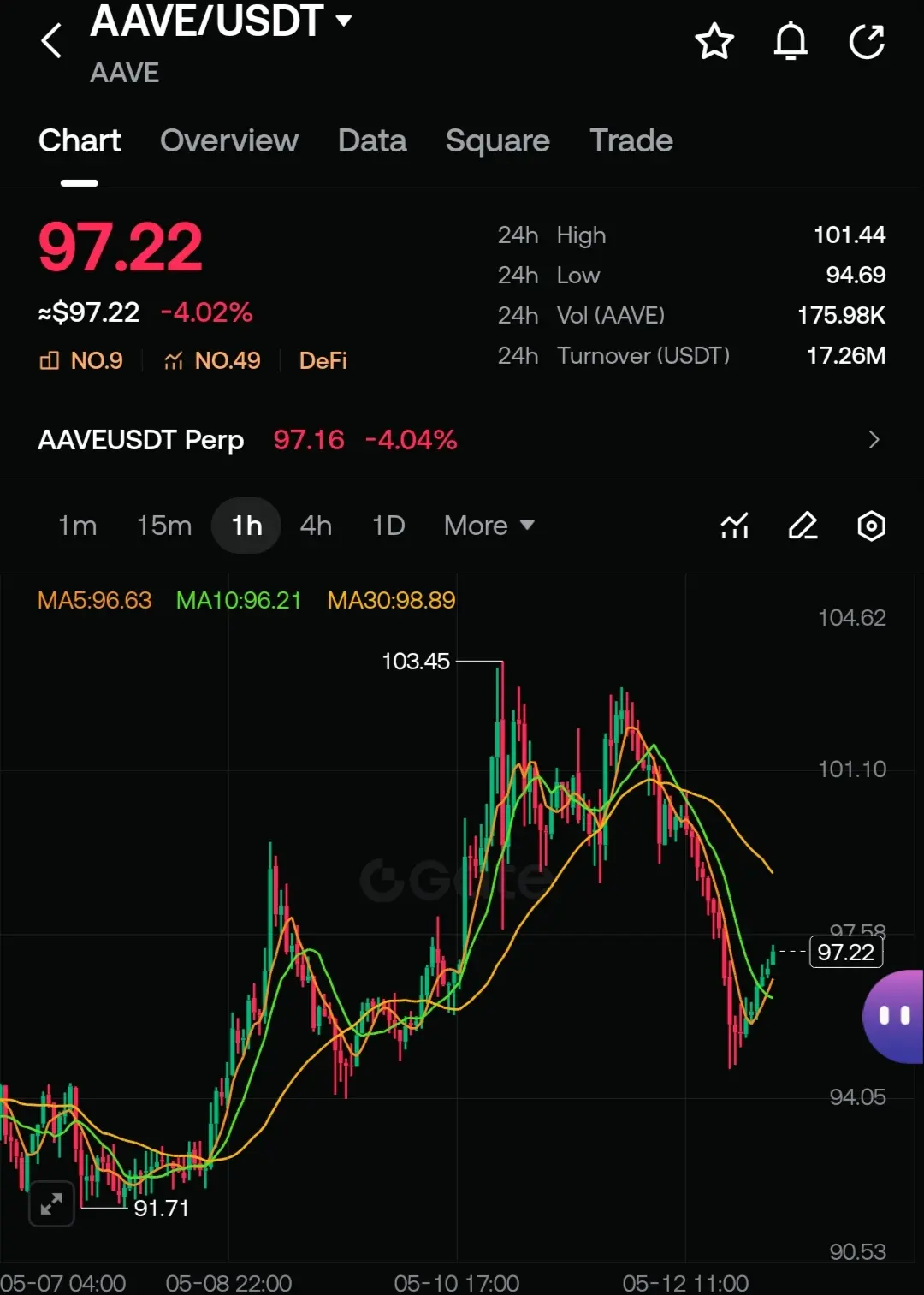
After the exploit news spread, ETH moved between $2,350 support and $2,550 resistance. Trading volume increased rapidly while AAVE traded around $86–$94 during peak market reactions. Many traders started watching DeFi protocols more carefully as concerns about bridge security returned to the spotlight.
The issue started on April 18, 2026, when attackers exploited vulnerabilities connected to cross-chain infrastructure used by Kelp DAO. Security teams later tracked and froze large amounts of ETH to stop further movement of funds. While the freeze protected assets from additional transfers, it also locked capital connected to ecosystem liquidity.
Now the market is focused on three major questions and possible outcomes:
• Will the frozen ETH eventually return to affected protocols?
Most analysts believe a large portion of the ETH could eventually be recovered or released after legal and technical reviews. If recovery efforts succeed, confidence across Ethereum DeFi markets could improve and liquidity pressure may decrease.
• Can DeFi security improve after another major exploit?
Yes, many protocols are already increasing bridge audits, improving monitoring systems, and strengthening risk controls. The market is moving toward stronger infrastructure because repeated bridge-related exploits continue affecting investor confidence.
• Will Ethereum DeFi liquidity recover if delays continue?
Liquidity may remain unstable in the short term, but Ethereum still holds one of the strongest DeFi ecosystems in crypto. If ETH stays above the $2,300 support zone and Bitcoin remains above $82,000, the broader market could continue recovering despite temporary uncertainty.
From a trading perspective, ETH maintaining strength above $2,300 keeps bullish momentum active. A breakout above $2,550 could open movement toward $2,700–$2,850. However, if uncertainty increases again, traders may watch lower support near $2,200.
AAVE also remains one of the strongest lending protocols in the market despite recent pressure. If DeFi confidence improves and liquidity returns, AAVE could revisit the $100 psychological zone and possibly target $110–$125 later in 2026.
This situation is another reminder that crypto adoption is growing rapidly, while infrastructure security and liquidity protection remain critical for the future of DeFi markets.
repost-content-media
  • Reward
  • Comment
  • Repost
  • Share
#AaveSuesToUnfreeze73MInETH
The crypto market is closely watching the ongoing situation where nearly $73 million worth of ETH remains frozen after the recent Kelp DAO exploit and cross-chain bridge incident. With Ethereum trading around $2,420–$2,480, this frozen amount equals almost 30,000 ETH, making it one of the biggest DeFi recovery stories of 2026.
Aave is now pushing legal and recovery efforts to unlock the frozen ETH because those funds are connected to liquidity pools, lending activity, and broader DeFi market stability. The incident created temporary pres
ETH-3.28%
AAVE-1.15%
HighAmbition
#AaveSuesToUnfreeze73MInETH
The crypto market is closely watching the ongoing situation where nearly $73 million worth of ETH remains frozen after the recent Kelp DAO exploit and cross-chain bridge incident. With Ethereum trading around $2,420–$2,480, this frozen amount equals almost 30,000 ETH, making it one of the biggest DeFi recovery stories of 2026.
Aave is now pushing legal and recovery efforts to unlock the frozen ETH because those funds are connected to liquidity pools, lending activity, and broader DeFi market stability. The incident created temporary pressure across Ethereum-based protocols and increased volatility in several DeFi tokens.
After the exploit news spread, ETH moved between $2,350 support and $2,550 resistance. Trading volume increased rapidly while AAVE traded around $86–$94 during peak market reactions. Many traders started watching DeFi protocols more carefully as concerns about bridge security returned to the spotlight.
The issue started on April 18, 2026, when attackers exploited vulnerabilities connected to cross-chain infrastructure used by Kelp DAO. Security teams later tracked and froze large amounts of ETH to stop further movement of funds. While the freeze protected assets from additional transfers, it also locked capital connected to ecosystem liquidity.
Now the market is focused on three major questions and possible outcomes:
• Will the frozen ETH eventually return to affected protocols?
Most analysts believe a large portion of the ETH could eventually be recovered or released after legal and technical reviews. If recovery efforts succeed, confidence across Ethereum DeFi markets could improve and liquidity pressure may decrease.
• Can DeFi security improve after another major exploit?
Yes, many protocols are already increasing bridge audits, improving monitoring systems, and strengthening risk controls. The market is moving toward stronger infrastructure because repeated bridge-related exploits continue affecting investor confidence.
• Will Ethereum DeFi liquidity recover if delays continue?
Liquidity may remain unstable in the short term, but Ethereum still holds one of the strongest DeFi ecosystems in crypto. If ETH stays above the $2,300 support zone and Bitcoin remains above $82,000, the broader market could continue recovering despite temporary uncertainty.
From a trading perspective, ETH maintaining strength above $2,300 keeps bullish momentum active. A breakout above $2,550 could open movement toward $2,700–$2,850. However, if uncertainty increases again, traders may watch lower support near $2,200.
AAVE also remains one of the strongest lending protocols in the market despite recent pressure. If DeFi confidence improves and liquidity returns, AAVE could revisit the $100 psychological zone and possibly target $110–$125 later in 2026.
This situation is another reminder that crypto adoption is growing rapidly, while infrastructure security and liquidity protection remain critical for the future of DeFi markets.
repost-content-media
  • Reward
  • Comment
  • Repost
  • Share
#AaveSuesToUnfreeze73MInETH
The crypto market is closely watching the ongoing situation where nearly $73 million worth of ETH remains frozen after the recent Kelp DAO exploit and cross-chain bridge incident. With Ethereum trading around $2,420–$2,480, this frozen amount equals almost 30,000 ETH, making it one of the biggest DeFi recovery stories of 2026.
Aave is now pushing legal and recovery efforts to unlock the frozen ETH because those funds are connected to liquidity pools, lending activity, and broader DeFi market stability. The incident created temporary pres
ETH-3.28%
AAVE-1.15%
HighAmbition
#AaveSuesToUnfreeze73MInETH
The crypto market is closely watching the ongoing situation where nearly $73 million worth of ETH remains frozen after the recent Kelp DAO exploit and cross-chain bridge incident. With Ethereum trading around $2,420–$2,480, this frozen amount equals almost 30,000 ETH, making it one of the biggest DeFi recovery stories of 2026.
Aave is now pushing legal and recovery efforts to unlock the frozen ETH because those funds are connected to liquidity pools, lending activity, and broader DeFi market stability. The incident created temporary pressure across Ethereum-based protocols and increased volatility in several DeFi tokens.
After the exploit news spread, ETH moved between $2,350 support and $2,550 resistance. Trading volume increased rapidly while AAVE traded around $86–$94 during peak market reactions. Many traders started watching DeFi protocols more carefully as concerns about bridge security returned to the spotlight.
The issue started on April 18, 2026, when attackers exploited vulnerabilities connected to cross-chain infrastructure used by Kelp DAO. Security teams later tracked and froze large amounts of ETH to stop further movement of funds. While the freeze protected assets from additional transfers, it also locked capital connected to ecosystem liquidity.
Now the market is focused on three major questions and possible outcomes:
• Will the frozen ETH eventually return to affected protocols?
Most analysts believe a large portion of the ETH could eventually be recovered or released after legal and technical reviews. If recovery efforts succeed, confidence across Ethereum DeFi markets could improve and liquidity pressure may decrease.
• Can DeFi security improve after another major exploit?
Yes, many protocols are already increasing bridge audits, improving monitoring systems, and strengthening risk controls. The market is moving toward stronger infrastructure because repeated bridge-related exploits continue affecting investor confidence.
• Will Ethereum DeFi liquidity recover if delays continue?
Liquidity may remain unstable in the short term, but Ethereum still holds one of the strongest DeFi ecosystems in crypto. If ETH stays above the $2,300 support zone and Bitcoin remains above $82,000, the broader market could continue recovering despite temporary uncertainty.
From a trading perspective, ETH maintaining strength above $2,300 keeps bullish momentum active. A breakout above $2,550 could open movement toward $2,700–$2,850. However, if uncertainty increases again, traders may watch lower support near $2,200.
AAVE also remains one of the strongest lending protocols in the market despite recent pressure. If DeFi confidence improves and liquidity returns, AAVE could revisit the $100 psychological zone and possibly target $110–$125 later in 2026.
This situation is another reminder that crypto adoption is growing rapidly, while infrastructure security and liquidity protection remain critical for the future of DeFi markets.
repost-content-media
  • Reward
  • Comment
  • Repost
  • Share
#AaveSuesToUnfreeze73MInETH #AaveSuesToUnfreeze73MInETH refers to a legal dispute involving Aave, a major decentralized finance (DeFi) platform, and a large amount of frozen funds—about $73 million worth of Ethereum (ETH).
Here’s the situation in plain terms:
What happened:
Aave is reportedly pursuing legal action to unfreeze ETH that became stuck or inaccessible, likely due to a smart contract issue, exploit, sanctions-related controls, or a third-party platform intervention (exact cause depends on the specific case tied to the hashtag).
Why funds get “frozen” in crypto:
Even though DeFi is d
AAVE-1.15%
ETH-3.28%
post-image
  • Reward
  • 24
  • Repost
  • Share
MrSTAR:
LFG 🔥
View More
Load More