


Share crypto content and earn up to 60% commissions through content mining.
placeholder
gatefun
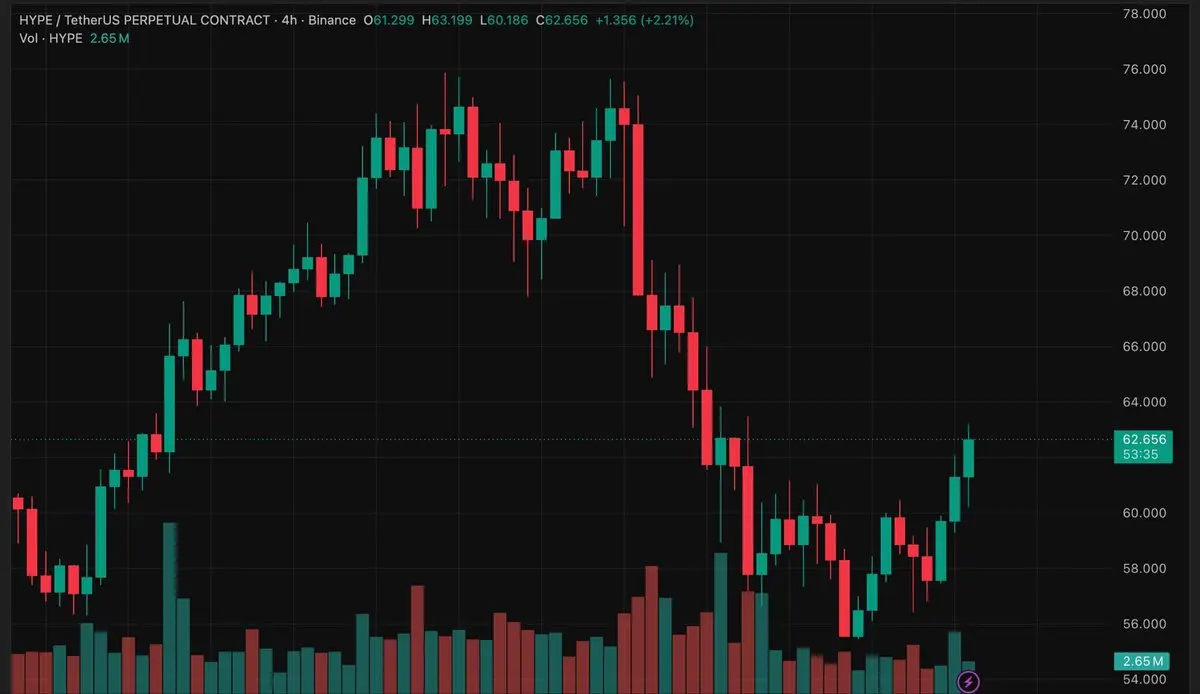
Hyperliquid Token Pumps above $65
New ATHs for $HYPE
HYPE14.26%
post-image
  • Reward
  • Comment
  • Repost
  • Share
$HYPE Little Kong brothers, take your time to catch up.
HYPE14.26%
View Original
post-image
  • Reward
  • 2
  • Repost
  • Share
RepeatedlyHarvested:
It's over.
View More
$rari buy now 🚀 big pump 🐶 coming $0.18 +
#nft will make a comeback
They will combine #ai tek with #nfts 🚀🚀🚀🚀
$mu $dell $intc #crypto $btc
RARI-0.37%
MU28.51%
DELL4.89%
INTC-1.7%
post-image
  • Reward
  • Comment
  • Repost
  • Share
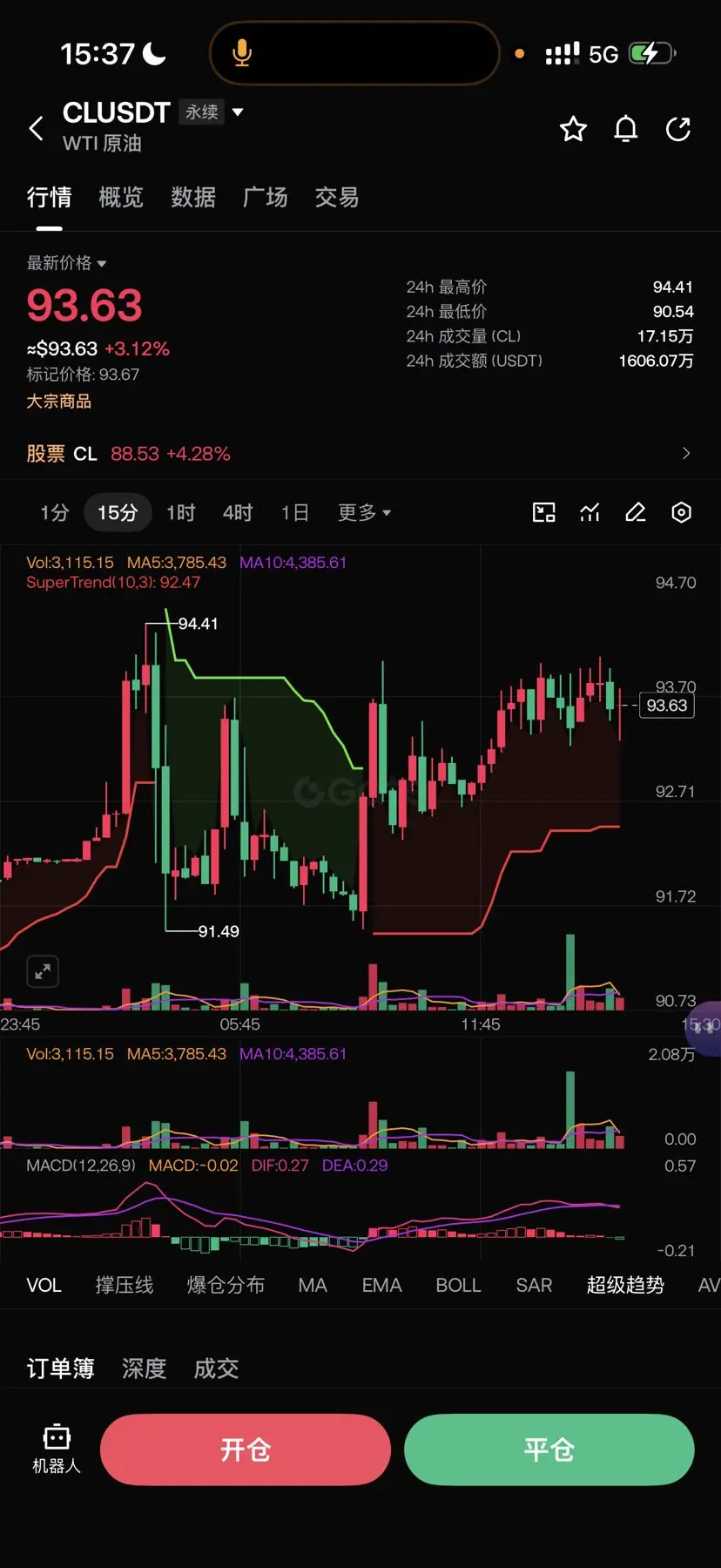
The recent crude oil market has shown wide fluctuations: on May 27, WTI futures settlement price briefly fell below the $90 mark to $88.68 per barrel, while Brent also dropped to $94.29 per barrel, hitting the lowest settlement price since April 17; however, the next day, stimulated by renewed US-Iran clashes, oil prices quickly rebounded, with WTI briefly recovering to $95 during trading. In terms of market pricing mechanisms, a noteworthy phenomenon is unfolding—the market’s desire for a deal has overshadowed the scrutiny of information authenticity.
US-Iran Situation: The anticipation of an
GAS0.91%
View Original
post-image
post-image
  • Reward
  • Comment
  • Repost
  • Share
#BTCMarketAnalysis
Bitcoin is currently trading around $72,900 to $75,800 depending on the exchange and timing of the market snapshot. On May 28, 2026, BTC traded close to $72,899 after falling nearly 3.6 percent within 24 hours. The overall crypto market capitalization dropped toward $2.53 trillion while Ethereum declined to nearly $1,975.59 with a 4.8 percent loss. Just two days earlier Bitcoin was trading near $77,274 before slipping toward $75,824 and then collapsing into the $73,000 zone. CME Bitcoin futures for May 2026 traded near $77,710 while June contracts hovered around $77,985, sh
BTC1.67%
ETH2.63%
post-image
  • Reward
  • Comment
  • Repost
  • Share
$BTC | Nice sweep. Nice follow up
BTC1.67%
post-image
  • Reward
  • Comment
  • Repost
  • Share
$PLTR
It made the breakout 💥 and got stuck at fibo resistance
As I said, after the people who discovered PLTR later and claimed to be phenomenon exited the stock, the stock relaxed
PLTR3.2%
post-image
  • Reward
  • Comment
  • Repost
  • Share
Let everyone know these two days will take off!! Words are law. And today’s subscription updates for long/short on Bitcoin, Ethereum, and SOL are all double-play—everyone has already gotten on board. Hahaha. Old Wang will never let you down!
Bitcoin 72,700+, Ethereum 1,976+, SOL 80.5+—all of them are being bought at the bottom!
BTC1.67%
ETH2.63%
SOL2.55%
View Original
post-image
post-image
  • Reward
  • Comment
  • Repost
  • Share
#WTI原油失守90美元 Regarding WTI crude oil falling below $90 on May 28, the White House denied that the market had amplified risks after the U.S.-Iran memorandum of understanding, instead focusing on the suppressive effect of high interest rates on demand—this phenomenon reflects that the current core driver of oil prices has shifted from geopolitical premiums to macroeconomic and supply-demand battles.
Follow-up development of the U.S.-Iran situation: Although there are claims of "consensus" at the negotiation level, the White House's urgent denial indicates that there are still significant disagr
View Original
post-image
  • Reward
  • 2
  • Repost
  • Share
HighAmbition:
Buy to make money 💎
View More
New and existing users can receive a 10 USDT subsidy by participating in ETF trading. Complete trading and referral tasks to earn lucky draw entries. Every mystery box is a guaranteed win, with rewards of up to 88 USDT. Meet the trading requirements to unlock the corresponding prize pool tier and share a total prize pool of 30,000 USDT worth of XAUT, with up to 500 USDT worth of XAUT per user. https://www.gate.com/campaigns/4881?ch=2911&ref=UFRFAQ0M&ref_type=132&utm_cmp=uzg4ptRp
XAUT1.94%
post-image
  • Reward
  • 1
  • Repost
  • Share
ProfitQueen:
Ape In 🚀
#WTI原油失守90美元 May 28, 2026, Thursday, is a watershed moment worth remembering in the global oil market and shipping industry—WTI crude oil futures settlement price plummeted 5.55%, breaking below the $90 mark again after nearly a month. However, behind the retreat in oil prices triggered by "peace talks signals," container spot freight rates have continued to rise for four consecutive weeks with a "off-season not off-season" stance. Even more concerning is the simultaneous pressure on the supply chain from the repeated negotiations between the US and Iran, severe congestion at ports in India a
BZ-2.21%
GAS0.91%
View Original
post-image
Ryakpanda
#WTI原油失守90美元 May 28, 2026, Thursday, marks a watershed moment in the global oil market and shipping industry—WTI crude oil futures settlement prices plummeted 5.55%, breaking below the $90 mark for the first time in nearly a month. However, behind the retreat in oil prices driven by "peace signals," container spot freight rates have continued to rise for four consecutive weeks with a "seasonally strong" stance. Even more concerning is the simultaneous pressure on the supply chain from the repeated negotiations between the US and Iran, severe congestion at ports in India and Pakistan, and labor disputes at ports along the US East Coast and the Gulf of Mexico!
Recently, the international crude oil market has experienced a rollercoaster: previously driven higher by Middle East geopolitical conflicts, international oil prices suddenly reversed course, with NYMEX WTI and Brent crude futures prices both sharply falling from their highs. Since the peak on May 18, the maximum declines have exceeded 14 percentage points; as of May 26, both prices rebounded within the day. Industry insiders say that short-term changes in Middle East geopolitical tensions remain the core dominant factor influencing international oil prices. Currently, global crude oil supply has shrunk sharply, inventories continue to decline, demand reductions are limited, and supply-demand imbalances are becoming more pronounced. The strong fundamentals from a medium- to long-term perspective provide solid support for oil prices at the bottom, with limited downside potential in the short term. Future attention should focus on changes in Middle East geopolitics and the navigation situation through the Strait of Hormuz.
Short-term market volatility has been intensified by news related to Middle East geopolitical negotiations. Recently, international crude oil futures prices have experienced significant declines, with NYMEX WTI briefly falling below $90 per barrel, and Brent crude futures also declining, with a low around $94 per barrel. Data shows that on May 25, during intraday trading, NYMEX WTI and Brent futures prices dipped to $89.41 and $93.21 per barrel, respectively, representing cumulative declines of 15.02% and 14.56% from the peak on May 18. However, prices later recovered due to renewed support. As of 3 PM Beijing time on May 26, NYMEX WTI and Brent futures were at $91.68 and $95.27 per barrel, up 1.53% and 1.98%. Yang An, head of energy research at Haitong Futures, stated that uncertainties in Middle East geopolitics make international oil prices prone to sharp fluctuations.
Since the outbreak of the US-Israel-Iran conflict in late February, the oil market has been heavily influenced by geopolitical negotiation news, with four key moments triggering sharp drops: April 7, April 17, May 6, and May 25. Using Brent crude futures as a reference, the data shows that on these four days, the single-day declines were 5.78%, 7.01%, 7.20%, and 6.56%. Analyzing these movements, Guotou Futures oil analyst Wang Yingmin summarized a common pattern: the underlying logic of these four rounds of price declines is highly consistent, all stemming from market expectations that negotiations between the US and Iran will make substantial progress and that the Strait of Hormuz will reopen, leading the market to actively unwind the risk premiums previously built in due to geopolitical conflicts. She also added that the US-Iran conflict has lasted nearly three months, with both sides increasingly eager to seek negotiations and reconciliation; combined with previous high oil prices, Brent and NYMEX WTI futures once exceeded $110 and $105 per barrel, respectively.
High oil prices combined with easing geopolitical expectations have significantly heightened market sensitivity to negotiation-related news. Although short-term geopolitical negotiation news has temporarily pressured international oil prices due to supply-demand imbalances, the fundamental supply and demand outlook suggests no sustained downward trend. On the supply side, global oil supply elasticity remains limited. Wang Yingmin pointed out that the blockade of the Strait of Hormuz has caused unprecedented shocks to the global oil industry, directly altering the global supply pattern. According to OPEC data, in April, OPEC member countries reduced their crude oil output by nearly 10 million barrels per day compared to February; IEA data also shows that global oil supply has decreased by about 13 million barrels per day due to the conflict, with Gulf countries reducing output by 14 million barrels per day compared to pre-conflict levels. Additionally, Russia’s oil facilities have been hit by drone attacks, with April production down by 300k barrels per day month-on-month; if attacks continue, output could decrease another 500k barrels per day in the second half of the year.
On the demand side, high oil prices have somewhat suppressed consumption, but the demand reduction is far less than the supply decrease. Wang Yingmin explained that, according to IEA estimates, global oil demand in Q2 this year decreased by about 2.4 million barrels per day year-on-year, while refinery crude processing also fell by about 5 million barrels per day, a much larger decline than the drop in end-user demand. Moreover, shortages of refined products are more severe than crude oil shortages; US gasoline inventories have fallen below five-year seasonal lows, and crack spreads remain at historically extreme highs, directly reflecting structural shortages in the industry. Inventory data more intuitively shows the tightness of the market. Wang Yingmin cited data from IEA and EIA, indicating that from March to April, global observable crude inventories decreased by 246 million barrels, with OECD countries alone reducing onshore inventories by 146 million barrels in April, setting a monthly record for drawdowns. Furthermore, EIA has significantly raised its inventory drawdown expectations, increasing the projected global daily crude oil drawdown in 2026 from 300k barrels to 2.6 million barrels, with peak quarterly drawdowns reaching 8.5 million barrels—an all-time high.
From the perspective of crude oil logistics and transportation, the market is unlikely to see large-scale new supply in the short term. Guotou Futures shipping analyst Li Haiqun noted that since the outbreak of Middle East conflicts, the Strait of Hormuz shipping volume has been the key indicator for oil market trading. Before the conflict, the Strait saw an average of 120 ships per day, with 60 ships entering and leaving the bay, including 10 oil tankers each, transporting about 16.5 million barrels daily. After the conflict erupted on February 28, shipping volume sharply declined. Clarkson Research data shows that in mid-April, volume temporarily rebounded, but since May, no further growth has been observed, and shipping remains severely restricted, with only scattered oil tankers leaving the bay. According to ShipView data, as of early morning May 25, there were 2,602 ships in the Persian Gulf, accounting for 1.39% of the global fleet, including 101 crude oil tankers (3.07% of the global total). Once navigation resumes, a concentrated release of shipping volume is expected. On the day the conflict broke out, only 10 oil tankers had left the bay, so subsequent daily outbound volumes are unlikely to exceed this level; it would take about 10 days to clear the backlog of tankers in the Gulf. Additionally, navigation is likely to be managed with differentiated controls, constrained by Iran’s navigation rules, meaning initial actual throughput may be lower than expected. Overall, logistics recovery will be gradual, and large-scale increases in crude supply are unlikely in the short term.
Geopolitical factors remain the key short-term variable.
Considering the fundamentals of supply and demand, logistics, and geopolitical factors, industry experts believe that short-term geopolitical developments will continue to dominate oil price fluctuations. Due to fundamental support, prices are unlikely to fall sharply. Regarding the core variables influencing prices, Wang Yingmin stated that the progress of US-Iran negotiations and the reopening of the Strait of Hormuz are critical in the short term. Since the core demands of the US and Iran are fundamentally at odds, negotiations remain highly uncertain. Longzhong Information crude analyst Li Yan believes that the US is currently facing dual challenges of high inflation and weak economic growth, making it unsustainable for oil prices to remain high long-term. Conversely, if the blockade of the Strait of Hormuz cannot be fully resolved, international oil prices are unlikely to see a significant decline. Therefore, promoting negotiations between the US and Iran and easing Middle East tensions are the general trends, likely reaching a turning point between June and July, when oil prices may truly begin to fall. However, from a fundamental perspective, Wang Yingmin believes that the news of easing Middle East tensions temporarily suppresses international crude prices, but the basic logic of "supply collapsing, demand slowly declining, and inventories rapidly depleting" is unlikely to change in the short term. The supply-demand gap will be slow to close, fundamentally supporting prices and limiting downside. From the perspective of supply disruption duration, Yide Futures energy and chemical analyst Xu Pengyan also noted that the Strait of Hormuz has been blocked for nearly three months, with a daily loss of 13 million barrels, and downstream refineries are increasingly facing shortages, prompting the entire industry chain to accelerate destocking, indirectly boosting crude valuations. According to Yide Futures’ proprietary crude valuation model, if the Strait of Hormuz cannot be fully reopened, Brent crude futures near $90 per barrel have strong support.
repost-content-media
  • Reward
  • 13
  • Repost
  • Share
HighAmbition:
Buy to make money 💎
View More
The Bitcoin Rainbow Chart is a tool that uses color zones to visualize Bitcoin‘s long-term price trends and market sentiment. From blue to red, the zones range from “buy zone“ and ”hold zone“ to ”bubble zone.” The current price is near the “accumulate” and “still cheap” areas, reflecting a cooler market mood. The Rainbow Chart is not for short-term timing but helps long-term investors understand cycle positioning.
#LearnWithGateSquare
BTC1.67%
post-image
Gate_Square
The Bitcoin Rainbow Chart is a tool that uses color zones to visualize Bitcoin‘s long-term price trends and market sentiment. From blue to red, the zones range from “buy zone“ and ”hold zone“ to ”bubble zone.” The current price is near the “accumulate” and “still cheap” areas, reflecting a cooler market mood. The Rainbow Chart is not for short-term timing but helps long-term investors understand cycle positioning.
#LearnWithGateSquare
repost-content-media
  • Reward
  • Comment
  • Repost
  • Share
Mainstream Hot Coins Exclusive Carnival, Trade $1 to Unlock Up to 10× Reward Boost https://www.gate.com/campaigns/4971?ch=3222&ref=VLFAXA0JVQ&ref_type=132
UP1.61%
post-image
  • Reward
  • 1
  • Repost
  • Share
HighAmbition:
Buy to make money 💎
$IN This bullish momentum was very straightforward, no hesitation, profits immediately widened.
Earlier, I was watching the 0.09209 level for a while, after some consolidation at the low, it suddenly surged with increased volume, a clear sign of rebound, so I went long directly.
Now the price has reached 0.10376, with a profit of +610.71%, the rhythm has already delivered the result.
Next, don’t be greedy, take profit at 70%, use the remaining 30% to see if the trend can continue.
For those still in the car, remember to set your stop-loss, as this coin is highly volatile and may retrace at an
IN7.85%
View Original
post-image
  • Reward
  • Comment
  • Repost
  • Share
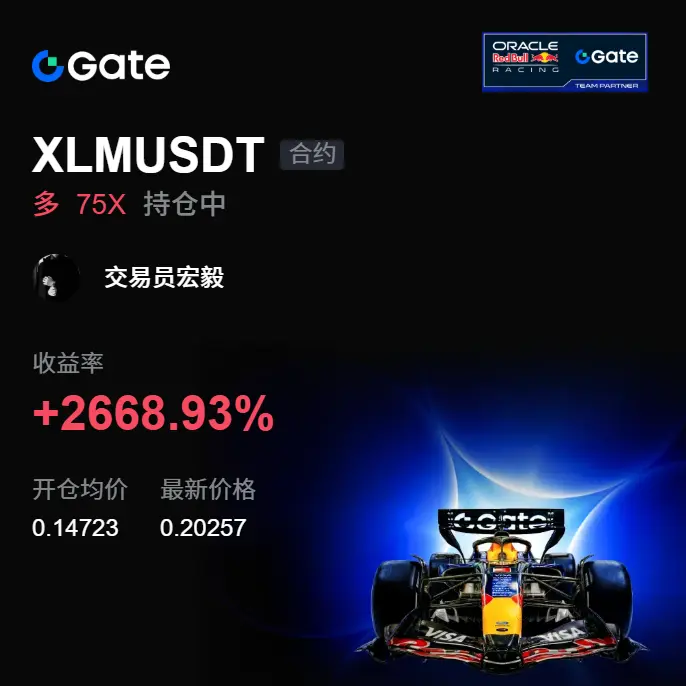
$SUI Coin Short Strategy Update: Entry Price 1.0296 → Current Price 0.8942, Profit Reached +634.71%. Congratulations to friends who followed, some friends have gained $7,000. Due to the high volatility and susceptibility to sudden spikes of this coin, it is recommended to take profits on dips. I will send signals for better entry points later. Recently, many volatile coins have appeared; be patient and wait for the next opportunity.
$BTC $ETH
SUI1.53%
BTC1.67%
ETH2.63%
View Original
post-image
  • Reward
  • Comment
  • Repost
  • Share
#USIranNegotiationGame
US–IRAN NEGOTIATION GAME: WHY DIPLOMACY, STRATEGY, AND GLOBAL MARKETS REMAIN DEEPLY INTERCONNECTED
The ongoing narrative surrounding the US–Iran Negotiation Game reflects far more than a traditional diplomatic process between two nations. It represents a complex strategic interaction where diplomacy, military signaling, economic pressure, and geopolitical calculation operate simultaneously, influencing not only regional stability but also global markets and international expectations. Relations between the United States and Iran have long remained among the most closely
post-image
post-image
  • Reward
  • Comment
  • Repost
  • Share
$NEAR 2.7663 Positioning a short, now reporting 2.4395, capturing +828.23% increase, someone previously made a profit of $14,900 in a single trade. Strategy adjustment: recommend taking 80% profit, remaining position to gamble on key levels later; stop loss to be executed as planned. Current price is no longer suitable for chasing in, those who didn't follow should wait and see, and wait for my next clear signal.
$BTC $ETH
NEAR9.93%
BTC1.67%
ETH2.63%
View Original
post-image
  • Reward
  • Comment
  • Repost
  • Share
Happy ATH to those who celebrate
post-image
  • Reward
  • Comment
  • Repost
  • Share
Just took a quick look at the market and was stunned, $LIT This wave of long orders was executed directly.
Earlier, I noticed around 1.18, I found the price stabilizing at a key level and starting to strengthen, the bullish momentum gradually opened up. I didn't hesitate at the time and went long directly.
The market has already reached 1.313, with a +551.35% profit, so I’m holding onto it, the previous judgment was not wrong.
No need to hard hold here, take out 75% first, and keep 25% to see if there are further opportunities.
For those who have already followed, set your stop-loss properly.
LIT19.13%
BTC1.67%
ETH2.63%
View Original
post-image
  • Reward
  • Comment
  • Repost
  • Share
Every time I curse the market, it tends to get a little better.
Cryptocurrency is a huge masochist.
View Original
post-image
  • Reward
  • Comment
  • Repost
  • Share
Load More