#分享美股交易赢英伟达股票 AI & Semiconductor Sector Rotation
AI Semiconductor Sector Rotation: Identifying Winners in the $725 Billion Buildout
The global semiconductor market is experiencing unprecedented transformation as AI demand permanently rewires traditional chip cycles. With global semiconductor sales hitting $298.5 billion in Q1 2026, representing a 79% surge driven by AI chip demand, investors must navigate a complex landscape of winners, laggards, and emerging opportunities.
Nvidia: The Undisputed Leader
Nvidia accounts for approximately 15.8% of global semiconductor market revenue and dominates the AI accelerator segment. The company's fiscal 2026 revenue reached $215.9 billion, with AI semiconductor revenue expected to exceed $30 billion. Nvidia's networking division is requesting suppliers increase indium phosphide laser capacity 20x through 2030 to support AI cluster networking, indicating the massive scale of infrastructure deployment underway.
The company's collaboration with TSMC brings AI into semiconductor fabrication facilities, applying accelerated computing and AI models across lithography, transistor simulation, and process optimization. This integration reinforces Nvidia's technological moat while improving manufacturing efficiency for the entire industry.
TSMC: The Manufacturing Backbone
Taiwan Semiconductor Manufacturing Company accounts for 70-72% of the global foundry market revenue and produces approximately 90% of the most advanced chips at 3 nanometers and below. TSMC's Q1 2026 net profit increased 58% year-over-year, demonstrating the structural demand shift toward advanced process nodes required for AI applications.
The company's market capitalization has reached $2.17 trillion, representing 13.33% of the semiconductor sector. TSMC's strategic partnership with Nvidia for AI-enhanced manufacturing processes positions it to capture value from both design and production sides of the AI chip ecosystem.
AMD: The Challenger
Advanced Micro Devices continues pursuing market share in the AI accelerator space, though facing execution challenges and competitive pressure from Nvidia's ecosystem advantages. Recent sector weakness has affected AMD alongside peers, with the stock experiencing volatility as investors reassess AI chip demand sustainability.
Broadcom: Custom Silicon Opportunity
Broadcom delivered $10.26 billion in free cash flow in its recent quarter, with CEO Hock Tan reiterating AI semiconductor revenue guidance exceeding $100 billion for fiscal year 2027. However, Q3 AI chip guidance of $16 billion missed analyst estimates of $17.2 billion, causing significant stock pressure and dragging down sector sentiment.
The company's custom AI chip business for hyperscalers represents a strategic alternative to Nvidia's general-purpose GPUs, though execution risks remain elevated.
Micron: Memory Renaissance
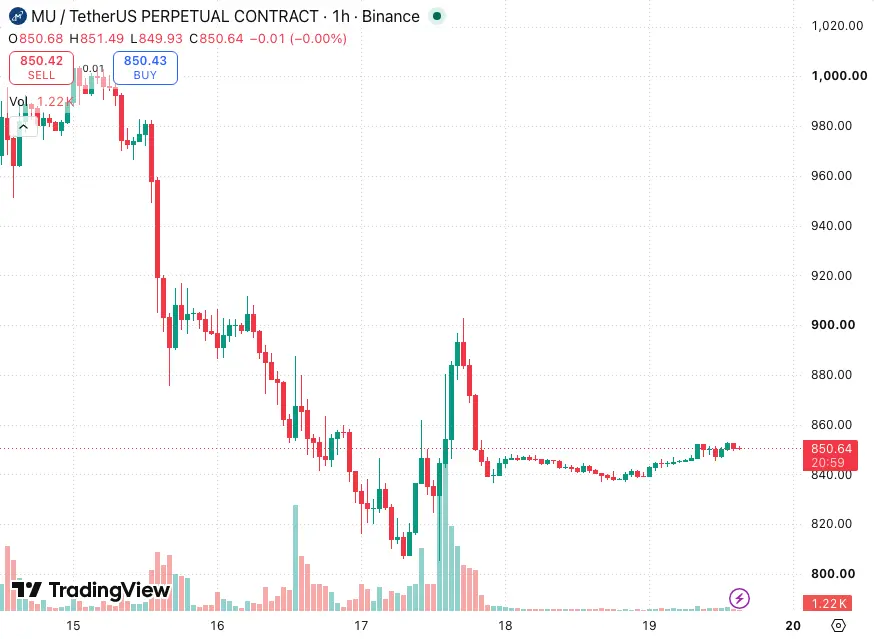
Micron Technology has achieved a $1 trillion valuation as AI demand for high-bandwidth memory (HBM) remains insatiable. The company's entire 2026 HBM capacity is already sold out, enabling higher margins and pricing power compared to traditional DRAM cycles. Unlike previous semiconductor cycles where supply overexpansion collapsed prices, AI demand is growing faster than new manufacturing capacity can be built.
AI Spending Trends and Outlook
Hyperscalers are projected to spend an estimated $725 billion in 2026 on data centers and AI infrastructure. The global semiconductor market is projected to reach approximately $975 billion in 2026, up from $792 billion in 2025. This structural demand shift suggests the traditional semiconductor cycle may have been permanently altered by AI requirements.
Sector Rotation Strategy
Investors should focus on companies with demonstrated AI revenue exposure and technological differentiation. Nvidia and TSMC offer the highest confidence exposure to AI chip demand, while memory players like Micron benefit from HBM supply constraints. Custom silicon vendors face execution risks but offer potential upside if hyperscalers accelerate internal chip development programs.
The AI semiconductor boom is lifting the entire sector, but not equally. Companies lacking AI revenue exposure face challenging comparisons as capital flows toward AI-enabling technologies. Disciplined sector rotation toward AI-leveraged names remains the prudent strategy for 2026.
AI Semiconductor Sector Rotation: Identifying Winners in the $725 Billion Buildout
The global semiconductor market is experiencing unprecedented transformation as AI demand permanently rewires traditional chip cycles. With global semiconductor sales hitting $298.5 billion in Q1 2026, representing a 79% surge driven by AI chip demand, investors must navigate a complex landscape of winners, laggards, and emerging opportunities.
Nvidia: The Undisputed Leader
Nvidia accounts for approximately 15.8% of global semiconductor market revenue and dominates the AI accelerator segment. The company's fiscal 2026 revenue reached $215.9 billion, with AI semiconductor revenue expected to exceed $30 billion. Nvidia's networking division is requesting suppliers increase indium phosphide laser capacity 20x through 2030 to support AI cluster networking, indicating the massive scale of infrastructure deployment underway.
The company's collaboration with TSMC brings AI into semiconductor fabrication facilities, applying accelerated computing and AI models across lithography, transistor simulation, and process optimization. This integration reinforces Nvidia's technological moat while improving manufacturing efficiency for the entire industry.
TSMC: The Manufacturing Backbone
Taiwan Semiconductor Manufacturing Company accounts for 70-72% of the global foundry market revenue and produces approximately 90% of the most advanced chips at 3 nanometers and below. TSMC's Q1 2026 net profit increased 58% year-over-year, demonstrating the structural demand shift toward advanced process nodes required for AI applications.
The company's market capitalization has reached $2.17 trillion, representing 13.33% of the semiconductor sector. TSMC's strategic partnership with Nvidia for AI-enhanced manufacturing processes positions it to capture value from both design and production sides of the AI chip ecosystem.
AMD: The Challenger
Advanced Micro Devices continues pursuing market share in the AI accelerator space, though facing execution challenges and competitive pressure from Nvidia's ecosystem advantages. Recent sector weakness has affected AMD alongside peers, with the stock experiencing volatility as investors reassess AI chip demand sustainability.
Broadcom: Custom Silicon Opportunity
Broadcom delivered $10.26 billion in free cash flow in its recent quarter, with CEO Hock Tan reiterating AI semiconductor revenue guidance exceeding $100 billion for fiscal year 2027. However, Q3 AI chip guidance of $16 billion missed analyst estimates of $17.2 billion, causing significant stock pressure and dragging down sector sentiment.
The company's custom AI chip business for hyperscalers represents a strategic alternative to Nvidia's general-purpose GPUs, though execution risks remain elevated.
Micron: Memory Renaissance
Micron Technology has achieved a $1 trillion valuation as AI demand for high-bandwidth memory (HBM) remains insatiable. The company's entire 2026 HBM capacity is already sold out, enabling higher margins and pricing power compared to traditional DRAM cycles. Unlike previous semiconductor cycles where supply overexpansion collapsed prices, AI demand is growing faster than new manufacturing capacity can be built.
AI Spending Trends and Outlook
Hyperscalers are projected to spend an estimated $725 billion in 2026 on data centers and AI infrastructure. The global semiconductor market is projected to reach approximately $975 billion in 2026, up from $792 billion in 2025. This structural demand shift suggests the traditional semiconductor cycle may have been permanently altered by AI requirements.
Sector Rotation Strategy
Investors should focus on companies with demonstrated AI revenue exposure and technological differentiation. Nvidia and TSMC offer the highest confidence exposure to AI chip demand, while memory players like Micron benefit from HBM supply constraints. Custom silicon vendors face execution risks but offer potential upside if hyperscalers accelerate internal chip development programs.
The AI semiconductor boom is lifting the entire sector, but not equally. Companies lacking AI revenue exposure face challenging comparisons as capital flows toward AI-enabling technologies. Disciplined sector rotation toward AI-leveraged names remains the prudent strategy for 2026.