Triple witching is a quarterly market event when stock options, stock index options, and stock index futures expire simultaneously. It occurs on the third Friday of March, June, September, and December, often leading to significantly higher trading volume and short-term market volatility as traders close, roll, or settle derivative positions before the market closes.
2026-08-10 03:40:25
Moving Average Ribbon is generally more useful for evaluating trend structure and strength across several time horizons, while EMA offers a faster and simpler reference for trend direction, pullbacks, and momentum changes. For swing trading, the better choice depends on whether the strategy prioritizes broader confirmation or responsive entry signals.
2026-08-10 03:31:50
A crypto card is a debit- or credit-style payment card linked to a cryptocurrency wallet or exchange balance. At checkout, the issuer typically converts supported crypto into fiat and settles the purchase over Visa or Mastercard. Products differ mainly by fees, rewards, KYC, regional availability, and whether they offer virtual and physical cards.
2026-08-10 02:41:02
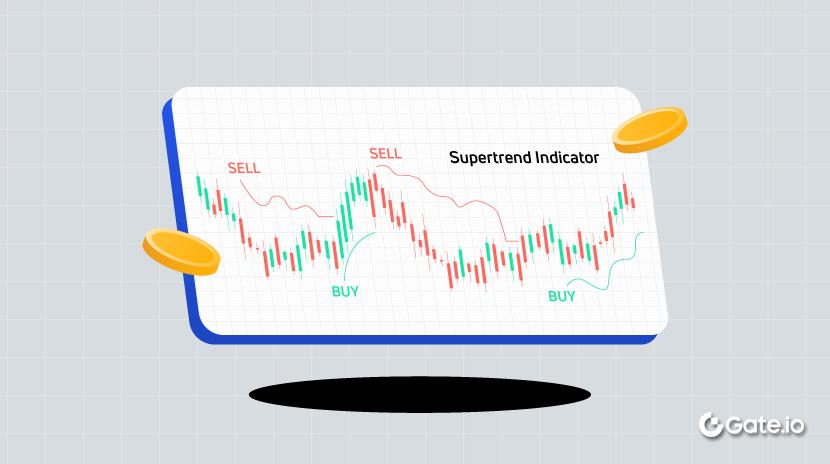
The Supertrend Indicator is a widely used technical analysis tool for intraday trading that provides clear signals of the underlying trend. It generates buy and sell signals by considering the average price and volatility of the market and can be used in combination with other indicators for a more comprehensive analysis.
2026-08-10 02:36:28
The ETH/BTC ratio is Ethereum (ETH) price divided by Bitcoin (BTC) price, showing how many BTC one ETH is worth. A rising ratio usually means ETH is outperforming BTC; a falling ratio usually means BTC is relatively stronger. Traders watch it for capital rotation between BTC and ETH (and broader altcoins), but it is not a standalone buy or sell signal.
2026-08-10 01:42:54
TRC-20 USDT runs on TRON; ERC-20 USDT runs on Ethereum—same issuer stablecoin in different on-chain forms. For deposit, withdraw, or external wallet transfer, network name must match the recipient address chain. In-exchange spot trading without on-chain in/out usually does not require choosing TRC-20 or ERC-20 each time.
2026-08-10 01:19:15
Parabolic SAR is generally better for trailing exits during an established swing, while SuperTrend is usually better for confirming overall trend direction. In a Parabolic SAR vs. SuperTrend comparison, the stronger choice depends on whether a trader needs a responsive position-management tool or a volatility-adjusted trend filter.
2026-08-10 01:17:46
SuperTrend is generally better for clear volatility-adjusted trend signals, while EMA is more suitable for reading trend direction, momentum, and pullback structure. In a SuperTrend vs. EMA comparison, the stronger choice depends on whether a swing trader prioritizes direct signal changes or a flexible view of price behaviour.
2026-08-07 14:31:59
MACD is generally more useful for identifying trend direction and momentum shifts, while RSI is more responsive when evaluating short-term momentum and potentially overbought or oversold conditions. In a macd vs rsi comparison, neither indicator is universally better for swing trading. The stronger choice depends on whether the trader needs trend confirmation, entry timing, or reversal evidence.
2026-08-07 14:31:25
SMA vs EMA comes down to speed and smoothing: SMA is generally better for confirming a stable underlying trend because it gives equal weight to all prices in the period, while EMA reacts faster to recent price changes and is often better suited to active swing-trading entries in crypto and other digital assets. Neither moving average is universally superior. The better choice depends on whether you need smoother trend filtering, quicker entry signals, or confirmation across multiple time horizons.
2026-08-07 14:31:04
VTI (Vanguard Total Stock Market ETF) is a U.S. ETF stock issued by Vanguard. It tracks the CRSP US Total Market Index and uses index sampling to hold a basket of securities that approximate total-market characteristics. According to Vanguard’s Overview disclosure, the expense ratio is about 0.03% (as of April 28, 2026). Understanding VTI means separating total-market coverage from S&P 500 boundaries, then verifying the ticker and order fields on Gate Stocks.
2026-08-07 14:29:59
To trade AEON on Gate, users need a Gate account and sufficient USDT, then enter the AEON/USDT spot market and place either a market order or a limit order. Once the order is filled, the purchased AEON appears in the account balance and can be held, sold, or transferred on-chain when deposits and withdrawals are available on a supported network.
2026-08-07 14:28:56
The leading global crypto hubs are increasingly the jurisdictions that combine competitive tax treatment with regulatory clarity, licensed crypto exchanges, banking access and deep digital-asset infrastructure. The UAE, Switzerland, Singapore, Hong Kong, Malta and the Cayman Islands stand out for different reasons. For crypto investors, entrepreneurs and digital asset businesses, however, the most tax-friendly country is not automatically the best place to invest, trade or operate.
2026-08-07 10:11:15
ROC is generally more useful when a trader wants to track price velocity, momentum acceleration, and zero-line breakouts, while RSI is often easier to use for overbought and oversold conditions, momentum reversals, and range trading. For traders choosing between ROC vs. RSI, the better momentum indicator depends on whether the priority is responsiveness or smoother, bounded signals.
2026-08-07 08:51:13
Crypto capital gains tax generally applies when a person disposes of cryptocurrency for more than its tax cost basis, but the tax treatment depends heavily on jurisdiction, holding period, transaction type, and taxpayer status. Selling, swapping, or spending crypto may trigger tax, while simply holding or transferring assets between personal wallets usually does not. These distinctions matter to crypto investors, traders, miners, stakers, and anyone receiving digital assets as income.
2026-08-07 08:41:44