A crypto card is a debit- or credit-style payment card linked to a cryptocurrency wallet or exchange balance. At checkout, the issuer typically converts supported crypto into fiat and settles the purchase over Visa or Mastercard. Products differ mainly by fees, rewards, KYC, regional availability, and whether they offer virtual and physical cards.
A crypto card is a payment card linked to a cryptocurrency wallet or exchange balance. It lets holders spend digital assets at everyday merchants by converting those assets into fiat for Visa or Mastercard settlement. Direct crypto acceptance at merchants is still limited, so most real-world spending still depends on card-network rails.
For holders who already keep value in crypto, the practical questions matter more than the label: where the card works, which fees apply, which assets and chains are supported, and how KYC and regional rules constrain use. The sections below explain how crypto cards work, how Gate Card compares with other crypto cards, and how rewards, fees, compliance, and security fit together. For a closer look at product forms, see mainstream crypto card types.
What Crypto Cards Look Like Today
The core idea has stayed stable: funding comes from on-chain assets or platform balances, while spending exits through a card network. What has improved is the surrounding experience—broader asset and chain support, conversion closer to the moment of purchase, clearer spending limits and alerts, and faster virtual-card issuance after approval.
Gate Card feature focus
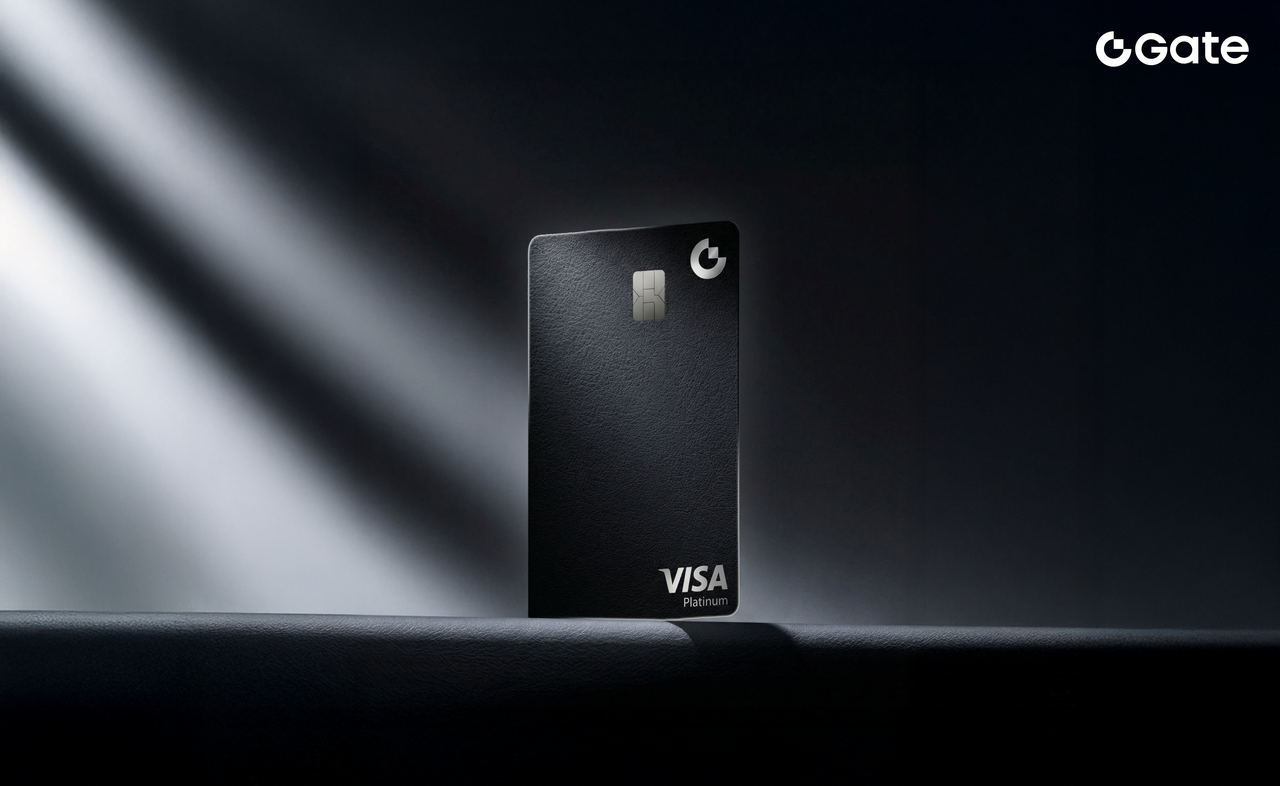
According to Gate’s July 2026 coverage update, eligible users can apply for Gate Card after completing Gate KYC, with a simplified path that the announcement describes as no proof of address and no second KYC (always confirm on the live application page). Gate Card connects to both Visa and Mastercard, supports Apple Pay and Google Pay, and targets everyday spend, cross-border travel, online shopping, and subscriptions. Virtual cards are typically available quickly after approval; physical cards cover in-store use and ATM access where offered. Regions, supported assets, and fees should be checked against the current product page.
Rewards versus real cost
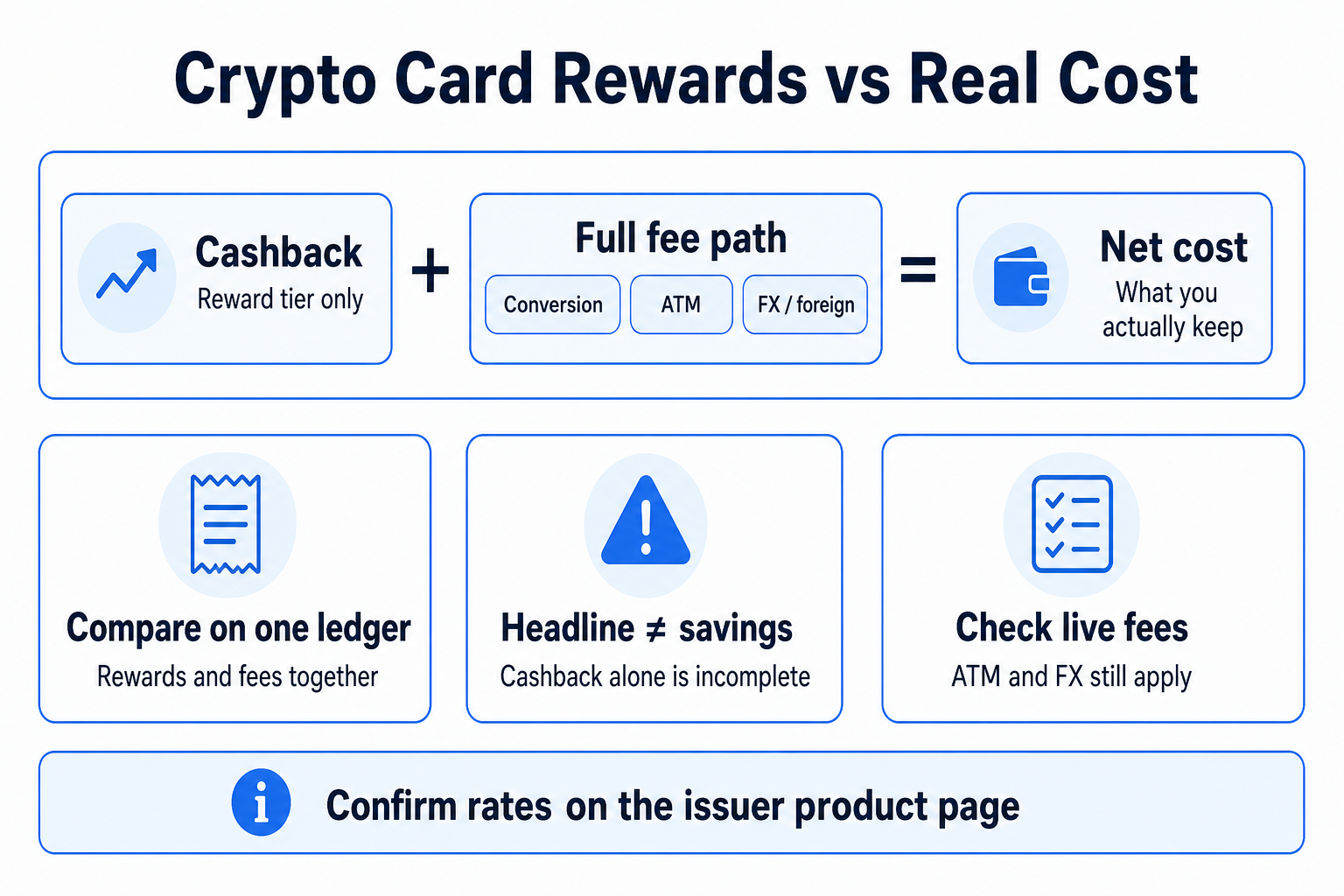
Reward tiers can offset part of everyday spending cost, but cashback only helps if conversion fees, ATM fees, and foreign-transaction fees are also clear. Compare rewards and the full fee path on the same ledger before treating a cashback headline as a net saving.
Acceptance and wallet experience
Whether a purchase clears depends on card-network coverage and the issuer’s program rules—not on the logo alone. Some products can be added to Apple Pay or Google Pay; others lean on exchange-app tooling such as live transaction lists, spending analytics, and push alerts. Marketing often cites very large merchant counts; actual availability still follows network rules, issuer geography, and merchant risk controls.
How to compare products
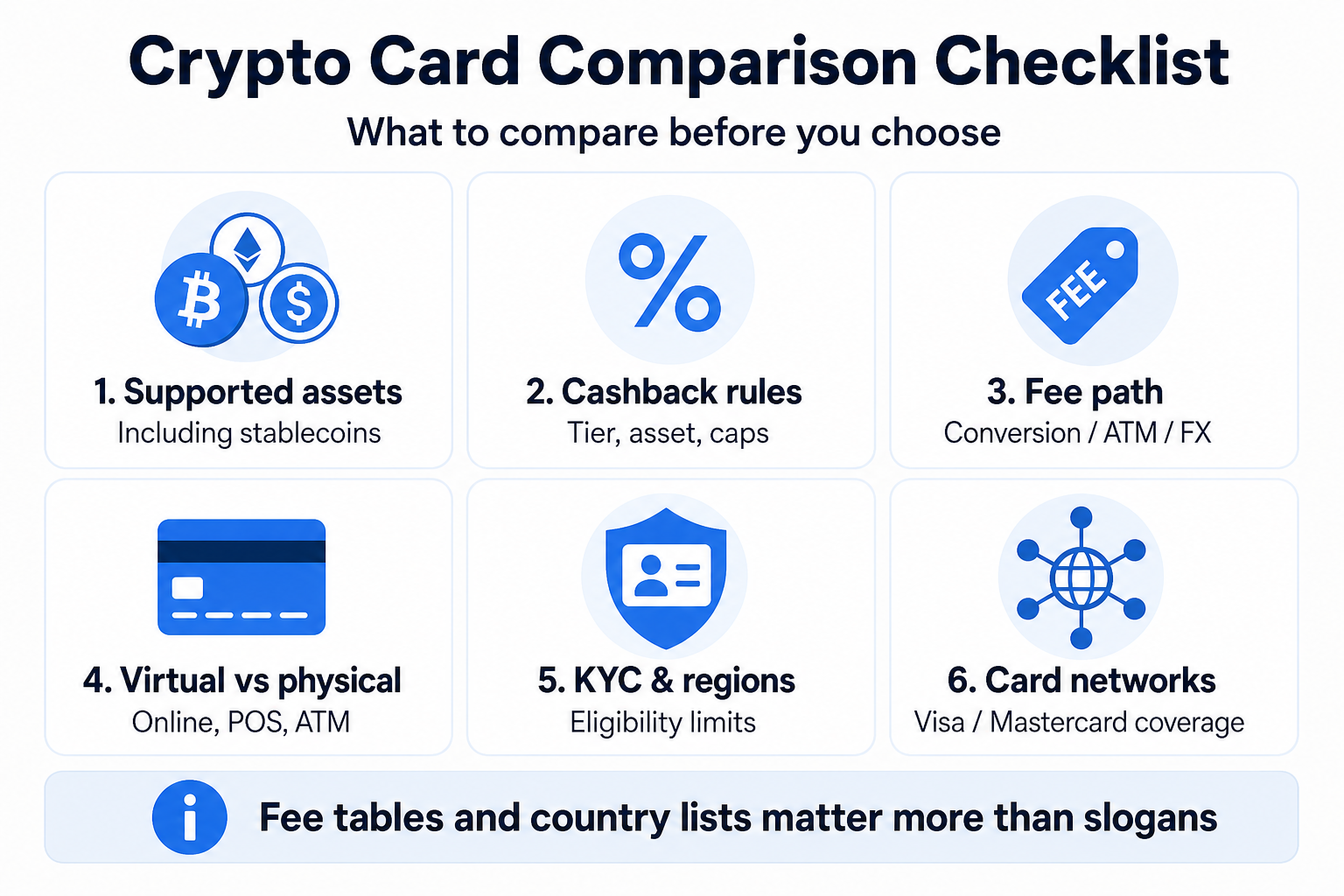
Compare supported assets (including stablecoins), cashback rules, conversion / ATM / FX fees, virtual versus physical form factors, wallet tooling, and Visa or Mastercard coverage. Fee tables and regional lists usually matter more than slogans. “Zero fees” claims often apply only inside a monthly cap, loyalty tier, or specific funding path.
Compliance and program rules
Issuers have generally tightened KYC/AML checks and disclosed conversion, ATM, and network fees more clearly so programs can remain operable across regions such as the European Economic Area (EEA). Converting crypto to fiat at the point of spend may create tax obligations in some jurisdictions. Local rules should be reviewed before regular use.
Why Crypto Cards Exist
Retail, subscriptions, and travel still run largely on card networks and local payment habits. Crypto cards connect “holding crypto” to “paying at checkout”: the wallet is debited, the merchant receives fiat, and the issuer or partner handles conversion and settlement.
Most products behave more like prepaid or debit instruments than full bank credit accounts. Available spend is usually capped by loaded or convertible balances. Revolving credit or collateralized borrowing, if offered at all, is product-specific and should not be assumed.
Gate Card vs. Other Crypto Cards
The three products below are all crypto cards: debit- or prepaid-style cards funded from a crypto wallet or exchange balance, then settled on Visa or Mastercard. They are not regular bank debit cards, even when the network logo looks the same.
Use the table as a side-by-side checklist for everyday cost and usability. Rates, asset lists, and country coverage change by region and card tier—confirm details on each issuer’s product page before you rely on any row.
Dimension
Gate Card
Coinbase Card
Crypto.com Visa Card
Product type
Crypto debit card linked to Gate balances
Crypto debit card linked to Coinbase balances
Crypto debit card linked to a Crypto.com wallet
Network
Visa and Mastercard
Card network debit (varies by issuer and region)
Visa
How you fund spending
Spend directly from Gate Pay, spot, or earn balances (for example USDT, BTC, ETH, GT), or load a prepaid fiat-equivalent balance first
Convert from Coinbase wallet / exchange balance when you pay
Convert or top up from the Crypto.com wallet when you pay; reward tiers often depend on CRO staking
Supported assets
Wide list of Gate-listed assets (see the live support list)
Selected Coinbase-supported assets
Selected Crypto.com-supported assets (such as BTC and ETH, depending on tier)
Virtual and physical
Instant virtual card; physical card for in-store and ATM use where offered
Virtual and/or physical, depending on market
Virtual and physical options, depending on market
Mobile wallets
Apple Pay and Google Pay
Apple Pay / Google Pay where available
Apple Pay / Google Pay where available
Application / KYC
Apply after Gate KYC; announcement describes no proof of address and no second KYC (confirm on the live page)
Varies by product and region
Varies by product and region; rewards often tied to CRO staking
Rewards
Cashback up to about 8%; official materials highlight USDT and GT rewards
Cashback and rewards vary by product and region
High headline cashback when CRO staking and card-tier rules are met
Fees
Official materials describe free application with no annual or monthly fee; ATM and FX fees may still apply
Conversion, ATM, and FX fees vary by market
ATM, FX, and foreign-transaction fees often follow card tier
ATM withdrawals
Physical card required; issuer and ATM fees apply where supported
Available where supported, subject to issuer limits
Free ATM allowance by tier is common, then fees apply
Coverage
Expanding eligibility and global payment scenarios for qualifying users
Selected supported countries
Selected supported countries
Account setup
Built around Gate trading and payment accounts, so you may not need to withdraw to a bank before everyday spending
Built around the Coinbase app and wallet
Built around the Crypto.com app; rewards often depend on holding CRO
Where Gate Card differs most
Spend from Gate balances directly. Instant-spend mode can use Gate payment or trading-related balances. If you already hold assets on Gate, the path from holding to paying usually has fewer off-platform steps than withdrawing to a bank first.
Dual networks and mobile wallets. Visa plus Mastercard, with Apple Pay and Google Pay, covers a wider set of online, offline, and travel checkout paths.
Simpler application path. After Gate KYC, official materials describe no proof of address and no second KYC—still confirm on the live application page.
Cashback in crypto. Spending rewards of up to about 8% can be paid in USDT or GT, so returns stay in digital-asset balances rather than only as fiat statement credit.
Clearer headline fees. Free application with no annual or monthly fee is highlighted officially; ATM and FX costs still need a separate check.
Coinbase Card is a useful reference for early mass-market crypto debit design. Crypto.com Visa Card is a useful reference for staking-linked reward tiers and ATM allowances. Before regular use, still check Gate Card live fees, asset lists, and eligibility—see the coverage update announcement.
How Does a Crypto Card Work?
In outline, users fund a wallet or load value from an exchange or bank path, complete identity checks, and then use debit-like or prepaid credentials for each purchase. Merchants still see a normal card transaction. Fee schedules, asset choice, and virtual versus physical credentials determine how smoothly that path clears.
At checkout, authorization runs over Visa or Mastercard rails. Providers typically debit a prepaid wallet balance or exchange-linked assets; some also issue a virtual card for online spending and a physical card for POS. Fees usually appear as conversion, FX, ATM, or network charges, and they vary with the funding asset and merchant currency. Programs that advertise free ATM withdrawals usually set a monthly cap, then charge above that limit. Paying with stablecoins generally keeps spending power steadier than paying with volatile assets for the same purchase size.
How to use a crypto card
Sign up with the issuer and complete KYC.
Link a crypto wallet or exchange balance; some programs also allow fiat funding first.
Activate a virtual card for online payments, or wait for a physical card to be issued, shipped, and activated.
Pay at a Visa or Mastercard merchant, enter card details online, or add the card to Apple Pay / Google Pay where supported.
Confirm sufficient balance; a successful purchase debits assets and settles fiat to the merchant.
ATM cash-out, daily limits, and ATM fees follow issuer rules. Conversion or spending may count as a taxable disposal in some places.
When conversion happens
Most programs convert wallet assets to fiat at purchase time and charge conversion or FX fees. Others require a prepaid fiat balance first. Rate quality and fee disclosure decide whether a Visa or Mastercard purchase keeps its expected value. ATM withdrawals often carry separate fees and caps.
Benefits of Using a Crypto Card
The main benefit is spending access: holders can use existing digital assets for online and in-person purchases without first moving everything through a conventional bank debit card. Virtual cards fit subscriptions and remote checkout; physical cards fit in-store and travel use. Fee transparency, spending limits, and whether both form factors are available usually matter more than cashback slogans. Conversion at checkout can still count as selling crypto for tax purposes.
Convenience and accessibility
For people who already hold crypto but lack a local bank debit tool, a crypto card shortens the path from assets to merchant payment. Global merchant figures in marketing describe network reach in theory; crypto-linked BIN ranges can still be blocked by some merchants or regions.
Security and privacy
Authorization still runs through Visa or Mastercard controls, often plus app alerts or biometric checks. A leaked virtual-card number can be spent as quickly as a cloned physical card, so credential hygiene matters. Privacy marketing does not replace KYC: compliant programs still require identity verification.
Rewards and incentives
Cashback, points, or token rewards can lower net cost, but they should rank behind disclosed fees, asset choice, and reliable acceptance. High rewards do not offset hidden conversion drag or unsupported regions.
Risks and Drawbacks of Using a Crypto Card
Spending risk starts with volatility. If the wallet balance is marked in crypto, a price move between authorization and settlement can change the effective cost of the same purchase. Stablecoins usually make budgeting easier, but they do not remove conversion spreads or fees.
Compliance freezes, unsupported regions, and merchant-category blocks can stop a purchase even when a Visa or Mastercard logo is visible. Fees also stack across conversion, ATM cash-out, and network charges; unclear ATM withdrawal fees make cash access hard to plan. Virtual cards add convenience and also expand exposure if credentials leak.
Volatility
Paying directly from volatile balances makes budgeting harder. Users who mainly want spending power often prefer stablecoins or convert first, then spend.
Regulations and compliance
Supported countries, travel use, and source-of-funds checks differ by issuer. Before funding a wallet for everyday use, confirm that your location is supported, that virtual credentials work in target countries, and that the fee table is complete.
The Future of Crypto Cards
Competition is likely to stay focused on asset and wallet support, readable fees, virtual and physical form factors, and usable spending controls on Visa or Mastercard rails. Products that explain how funds move, what each fee covers, and where the card works tend to stay more useful than marketing-led launches.
Summary
Crypto cards use card networks to turn wallet assets into merchant-ready everyday payments. A practical checklist is short: which assets are supported, what the full fee path looks like, whether virtual and physical cards are both available, whether your region is supported, and whether compliance and tax treatment are acceptable. Fees, volatility, and geographic limits remain real. With those constraints checked, a crypto card is a spending bridge for crypto balances—not a full replacement for a bank account.
FAQ
What is a crypto card?
A crypto card is a debit-, prepaid-, or credit-style payment card linked to a cryptocurrency wallet or exchange balance. At checkout, the issuer typically converts supported assets and settles fiat to the merchant over Visa or Mastercard.
How does a crypto card work?
You fund a wallet, complete verification, and use the card while the issuer authorizes the purchase, converts supported assets, and settles fiat over card-network rails. Some programs also allow bank funding or ATM withdrawals. Virtual cards focus on online spending; physical cards support POS and, where allowed, ATM cash-out subject to fees.
How should I compare crypto cards?
Start with conversion, ATM, and FX fees; whether you spend instantly or from a prepaid balance; which assets are supported; virtual versus physical options; regional availability; KYC requirements; and how tightly the card links to an exchange wallet. Cashback headlines come later. For a side-by-side view of exchange-linked products, use the Gate Card comparison table above, then confirm free ATM limits and Apple Pay / Google Pay support on each product page.
Can I use a crypto card anywhere Visa or Mastercard is accepted?
Not always. Acceptance follows both the network and the issuer’s program rules. Some merchants or countries block crypto-linked BIN ranges even when the network logo is displayed.
What fees matter most when I use a crypto card?
For frequent spending, conversion fees, foreign-transaction fees, ATM fees, and network fees usually matter more than whether an annual fee is advertised as zero. Free ATM allowances are often capped monthly. Spending may also create tax obligations if assets are sold for fiat at purchase time.
Author: Matheus
Translator: cedar
Reviewer(s): Matheus、Hugo、Jayne
Disclaimer
* The information is not intended to be and does not constitute financial advice or any other recommendation of any sort offered or endorsed by Gate.
* This article may not be reproduced, transmitted or copied without referencing Gate. Contravention is an infringement of Copyright Act and may be subject to legal action.
In the Web3 ecosystem of 2026, Non-Fungible Tokens (NFTs) have evolved far beyond basic digital art into multi-chain dynamic assets, tokenized Real-World Assets (RWAs), cross-chain gaming items, and Bitcoin Ordinals. Navigating today’s hyper-connected market requires real-time data precision, algorithmic anti-wash trading filtering, and sophisticated cross-chain intelligence.
The top crypto airdrops to watch in 2026 include confirmed token launches such as OpenSea’s SEA, active rewards ecosystems such as MetaMask, and potential future distributions from projects including Base, Hyperliquid and Abstract.
TronScan is the primary blockchain explorer for the TRON network. It allows users to check TRX and TRC-20 transactions, inspect wallet balances, analyze smart contracts, monitor tokens, and view network activity without logging in. By connecting a compatible wallet such as TronLink, users can also transfer assets, stake TRX, vote for Super Representatives, and interact with TRON ecosystem applications.
In the fast-paced Web3 landscape, Meme coins have transformed from speculative internet culture into one of the highest-yield narrative pillars of crypto trading. Driven by explosive token launches on launchpads like Pump.fun and SunPump, as well as the rise of AI-driven Meme agents across Solana, Base, and Ethereum, manual DEX trading is no longer viable. Network congestion, slippage errors, and front-running bots often turn profitable trades into failed transactions or costly losses.