

#我的七夕交易分享 US stocks diverge amid geopolitical turmoil: Major indexes close lower overall, while semiconductor and memory sectors break out against the trend
As geopolitical conflicts once again become the market focus, global capital markets endured another volatile night. The US-Iran ceasefire agreement expired, talks between the two sides reached an impasse, and tensions in the Middle East continued to escalate, directly driving up international oil prices and quickly spreading risk aversion. On Monday, US Eastern Time, all three major US stock indexes closed lower, but the market’s internal structure showed a major split: major indexes came under pressure, while optical communications, memory chips, and semiconductor stocks posted independent gains. Crude oil, gold, silver, and other safe-haven assets also strengthened, fully reflecting the current complex global market landscape.
01
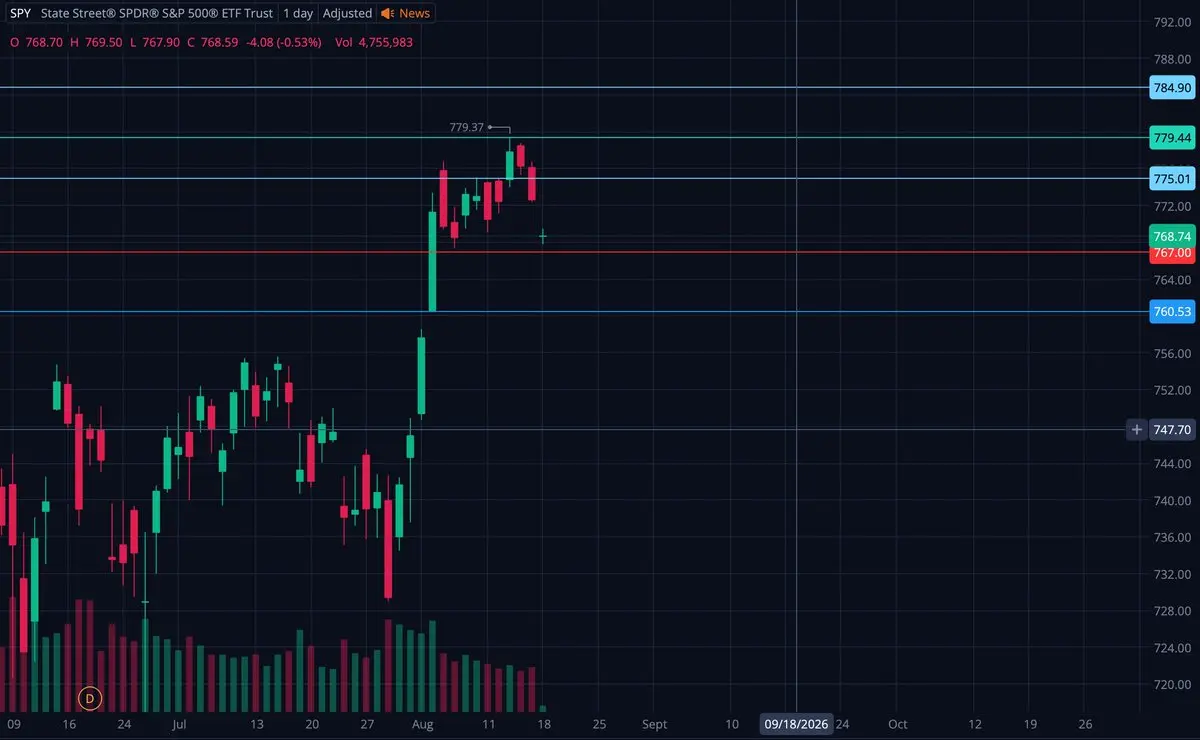
Major indexes all close lower: Geopolitical risks disrupt global risk appetiteAt Monday’s close in the US, the Dow Jones Industrial Average fell 0.51%, the Nasdaq fell 0.32%, and the S&P 500 fell 0.52%. The situation in the Middle East was the core trigger for this market volatility. After the ceasefire agreement expired, negotiations failed to reach a consensus, fueling concerns that regional conflict could escalate further and prompting a rise in safe-haven sentiment. As risk appetite contracted, major US stock indexes came under pressure simultaneously, but the decline in the indexes could not conceal the huge divergence between sectors. Funds did not withdraw from the stock market across the board, but instead rotated between sectors within the market.
European markets also weakened in tandem with risk sentiment, with the UK, French, and German benchmark indexes all closing lower as overseas equity markets were broadly engulfed by a risk-off atmosphere.
02
A stark contrast: Semiconductor and memory stocks surge against the trend, while major technology stocks pull back
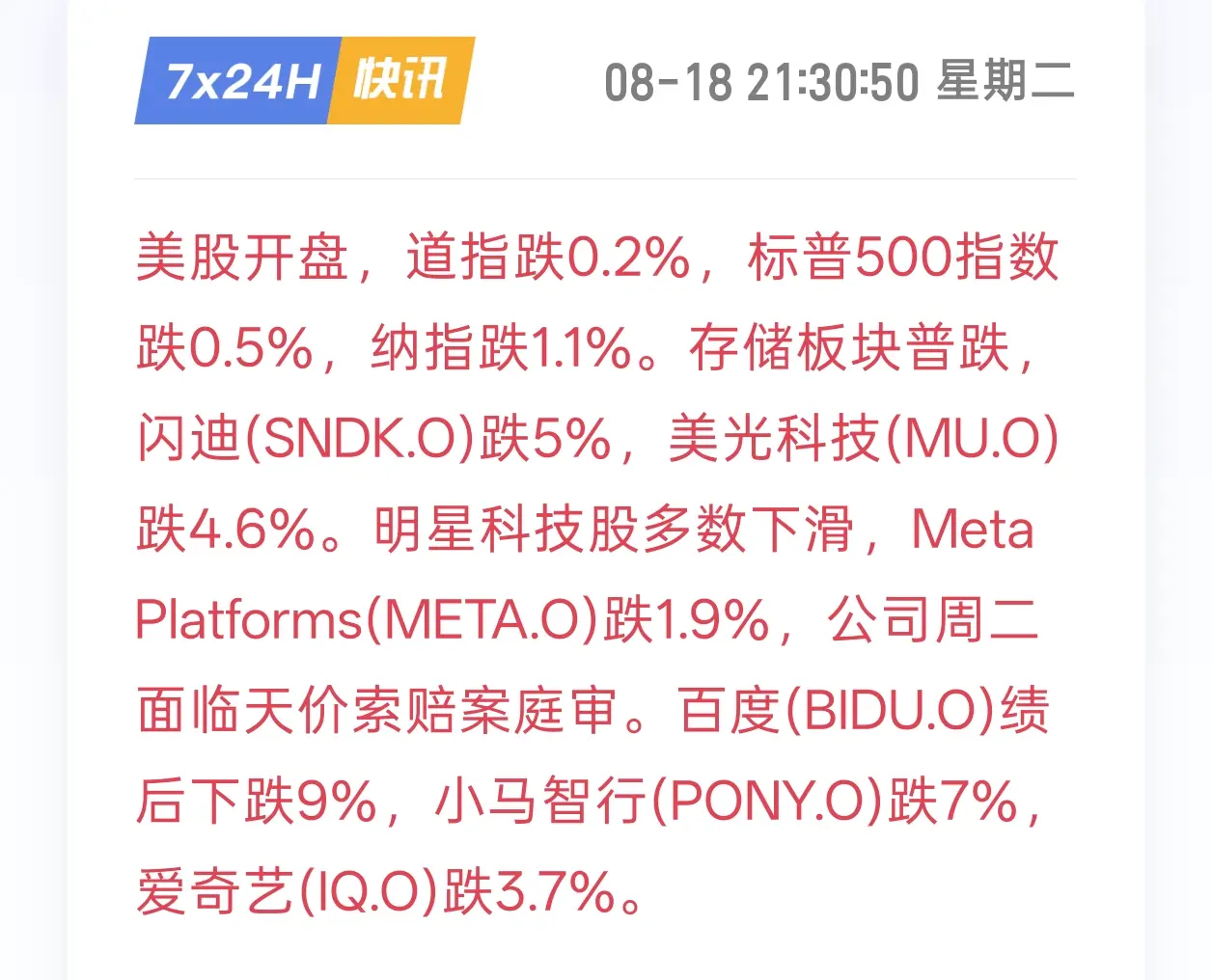
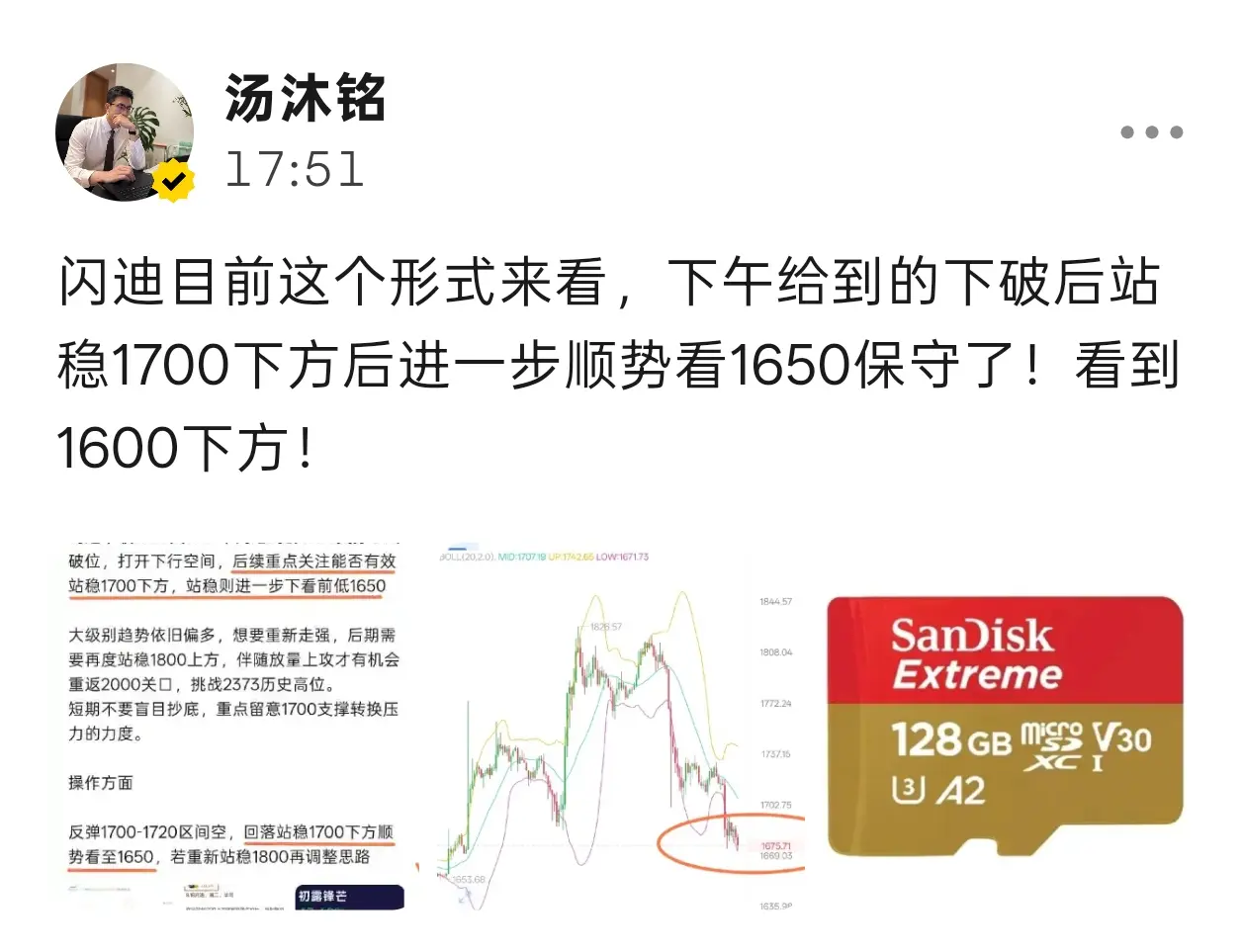
Against a backdrop of weakening major indexes, semiconductors, optical communications, and the memory industry chain became the biggest highlights of the session. The Philadelphia Semiconductor Index surged 1.64%. Individual stocks performed particularly well: SanDisk jumped more than 8%, Coherent rose more than 7%, and Western Digital, Applied Materials, and Marvell Technology gained more than 5%; Corning and Micron Technology rose more than 4%.
The strength of the hardware sector this time rests on two practical factors. First, long-term demand for AI computing power continues to provide support. Global AI server construction is advancing, and optical modules and memory chips, as computing infrastructure, continue to see resilient downstream demand. Second, the memory industry is undergoing a cyclical reversal. After capacity adjustments over the past few years, chip prices have gradually bottomed out and rebounded, improving corporate earnings expectations. Gains were not universal within the sector: ARM, Qualcomm, and other stocks declined, also highlighting the divergence within high-growth sectors.
In contrast, major technology giants broadly pulled back. Meta and Microsoft fell more than 3%, while Tesla, Google, and Amazon edged lower; Apple and Nvidia also closed slightly lower. The retreat among the giants was largely short-term profit-taking. After a sustained rally, the market capitalizations and valuations of leading technology stocks had reached relatively high levels, prompting investors to lock in gains as geopolitical uncertainty emerged. This does not mean the AI thesis has ended; funds are merely shifting from downstream software giants to upstream hardware manufacturing, representing an internal rotation within the market’s main theme.
03
Resources split in two: Energy rises sharply, while airlines come under pressure
The most direct impact of geopolitical conflict was concentrated in commodity markets. The energy sector benefited directly from rising oil prices, with Occidental Petroleum and Chevron gaining more than 1%. New York crude rose 2.55%, while Brent crude rose 2.65%. Any disruption on the supply side in the Middle East would prompt a rapid response in oil prices.
Rising oil prices also triggered a chain of negative effects, with the airline sector coming under pressure across the board. Boeing, American Airlines, Southwest Airlines, and several other airline stocks fell more than 2%. Fuel is the largest cost item for airlines, and higher oil prices directly erode corporate profits, becoming the key negative factor weighing on the sector.
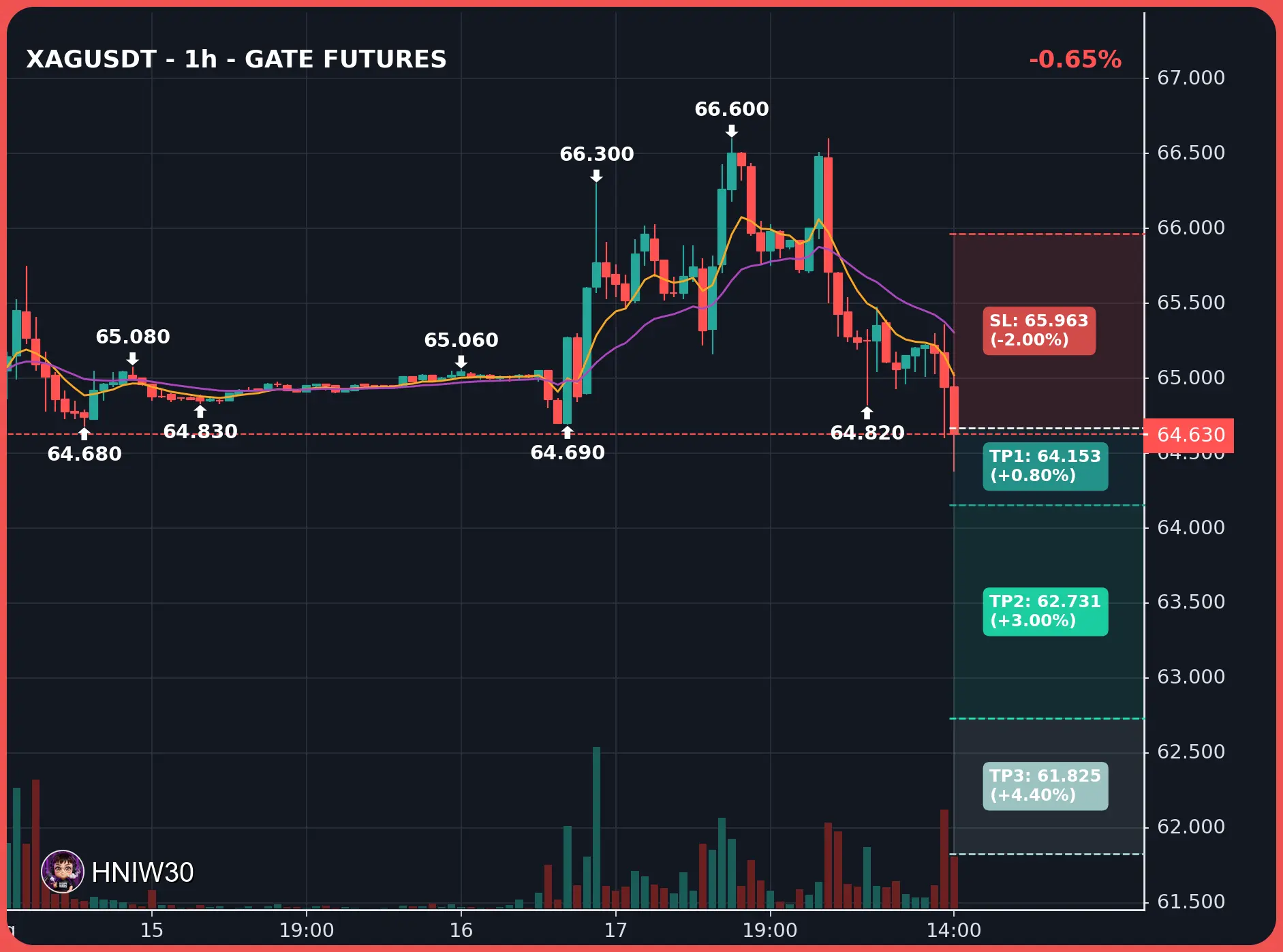
Safe-haven precious metals also rose in tandem, with spot gold and silver both gaining. As uncertainty increases, gold and silver, as traditional safe-haven assets, become havens for capital. The modest decline in the US Dollar Index also supported precious-metal prices.
04
Chinese stocks listed in the US close slightly higher, with divergent individual-stock performance
The Nasdaq Golden Dragon China Index closed up 0.37%, modestly outperforming the broader US stock market, but individual stocks diverged significantly. Consumer and services stocks performed strongly, with H World Group surging more than 11%, while XPeng, VNET Group, and several other stocks also rose. Youdao and Miniso plunged more than 8%, while Yatsen E-commerce, Xunlei, and Dingdong (Cayman) Limited saw notable pullbacks. Chinese stocks listed in the US are influenced by overseas market risk sentiment on one hand, and by their own industry fundamentals and news flow on the other, further widening the performance gap between companies in different sectors.
05
Market takeaway: How should investors view sector rotation in an uncertain environment?
The overseas markets on this night offered investors a clear lesson: the arrival of geopolitical risks does not mean that all assets will fall across the board. Capital will actively make trade-offs, selling high-valued profitable positions and moving into cyclical-recovery sectors and safe-haven commodities.
Short-term changes in geopolitical conditions are difficult to predict, and news can trigger sharp market volatility. Ordinary investors do not need to chase rallies or sell in panic based on short-term news; they should distinguish between short-term event disruptions and long-term industry fundamentals. The cyclical recovery in semiconductor and memory stocks and demand for AI computing hardware are medium- to long-term themes, while oil and gold prices are driven more by geopolitical events and therefore tend to be more volatile.
$SNDK This article is solely a compilation of market information and does not constitute any investment advice.
As geopolitical conflicts once again become the market focus, global capital markets endured another volatile night. The US-Iran ceasefire agreement expired, talks between the two sides reached an impasse, and tensions in the Middle East continued to escalate, directly driving up international oil prices and quickly spreading risk aversion. On Monday, US Eastern Time, all three major US stock indexes closed lower, but the market’s internal structure showed a major split: major indexes came under pressure, while optical communications, memory chips, and semiconductor stocks posted independent gains. Crude oil, gold, silver, and other safe-haven assets also strengthened, fully reflecting the current complex global market landscape.
01
Major indexes all close lower: Geopolitical risks disrupt global risk appetiteAt Monday’s close in the US, the Dow Jones Industrial Average fell 0.51%, the Nasdaq fell 0.32%, and the S&P 500 fell 0.52%. The situation in the Middle East was the core trigger for this market volatility. After the ceasefire agreement expired, negotiations failed to reach a consensus, fueling concerns that regional conflict could escalate further and prompting a rise in safe-haven sentiment. As risk appetite contracted, major US stock indexes came under pressure simultaneously, but the decline in the indexes could not conceal the huge divergence between sectors. Funds did not withdraw from the stock market across the board, but instead rotated between sectors within the market.
European markets also weakened in tandem with risk sentiment, with the UK, French, and German benchmark indexes all closing lower as overseas equity markets were broadly engulfed by a risk-off atmosphere.
02
A stark contrast: Semiconductor and memory stocks surge against the trend, while major technology stocks pull back
Against a backdrop of weakening major indexes, semiconductors, optical communications, and the memory industry chain became the biggest highlights of the session. The Philadelphia Semiconductor Index surged 1.64%. Individual stocks performed particularly well: SanDisk jumped more than 8%, Coherent rose more than 7%, and Western Digital, Applied Materials, and Marvell Technology gained more than 5%; Corning and Micron Technology rose more than 4%.
The strength of the hardware sector this time rests on two practical factors. First, long-term demand for AI computing power continues to provide support. Global AI server construction is advancing, and optical modules and memory chips, as computing infrastructure, continue to see resilient downstream demand. Second, the memory industry is undergoing a cyclical reversal. After capacity adjustments over the past few years, chip prices have gradually bottomed out and rebounded, improving corporate earnings expectations. Gains were not universal within the sector: ARM, Qualcomm, and other stocks declined, also highlighting the divergence within high-growth sectors.
In contrast, major technology giants broadly pulled back. Meta and Microsoft fell more than 3%, while Tesla, Google, and Amazon edged lower; Apple and Nvidia also closed slightly lower. The retreat among the giants was largely short-term profit-taking. After a sustained rally, the market capitalizations and valuations of leading technology stocks had reached relatively high levels, prompting investors to lock in gains as geopolitical uncertainty emerged. This does not mean the AI thesis has ended; funds are merely shifting from downstream software giants to upstream hardware manufacturing, representing an internal rotation within the market’s main theme.
03
Resources split in two: Energy rises sharply, while airlines come under pressure
The most direct impact of geopolitical conflict was concentrated in commodity markets. The energy sector benefited directly from rising oil prices, with Occidental Petroleum and Chevron gaining more than 1%. New York crude rose 2.55%, while Brent crude rose 2.65%. Any disruption on the supply side in the Middle East would prompt a rapid response in oil prices.
Rising oil prices also triggered a chain of negative effects, with the airline sector coming under pressure across the board. Boeing, American Airlines, Southwest Airlines, and several other airline stocks fell more than 2%. Fuel is the largest cost item for airlines, and higher oil prices directly erode corporate profits, becoming the key negative factor weighing on the sector.
Safe-haven precious metals also rose in tandem, with spot gold and silver both gaining. As uncertainty increases, gold and silver, as traditional safe-haven assets, become havens for capital. The modest decline in the US Dollar Index also supported precious-metal prices.
04
Chinese stocks listed in the US close slightly higher, with divergent individual-stock performance
The Nasdaq Golden Dragon China Index closed up 0.37%, modestly outperforming the broader US stock market, but individual stocks diverged significantly. Consumer and services stocks performed strongly, with H World Group surging more than 11%, while XPeng, VNET Group, and several other stocks also rose. Youdao and Miniso plunged more than 8%, while Yatsen E-commerce, Xunlei, and Dingdong (Cayman) Limited saw notable pullbacks. Chinese stocks listed in the US are influenced by overseas market risk sentiment on one hand, and by their own industry fundamentals and news flow on the other, further widening the performance gap between companies in different sectors.
05
Market takeaway: How should investors view sector rotation in an uncertain environment?
The overseas markets on this night offered investors a clear lesson: the arrival of geopolitical risks does not mean that all assets will fall across the board. Capital will actively make trade-offs, selling high-valued profitable positions and moving into cyclical-recovery sectors and safe-haven commodities.
Short-term changes in geopolitical conditions are difficult to predict, and news can trigger sharp market volatility. Ordinary investors do not need to chase rallies or sell in panic based on short-term news; they should distinguish between short-term event disruptions and long-term industry fundamentals. The cyclical recovery in semiconductor and memory stocks and demand for AI computing hardware are medium- to long-term themes, while oil and gold prices are driven more by geopolitical events and therefore tend to be more volatile.
$SNDK This article is solely a compilation of market information and does not constitute any investment advice.