Square
Following
Hot
News
Profile

MulhamTrading

vip
Active for: 3.4y
Peak Tier 0
No content yet
0
Following
5
Followers
36
Liked
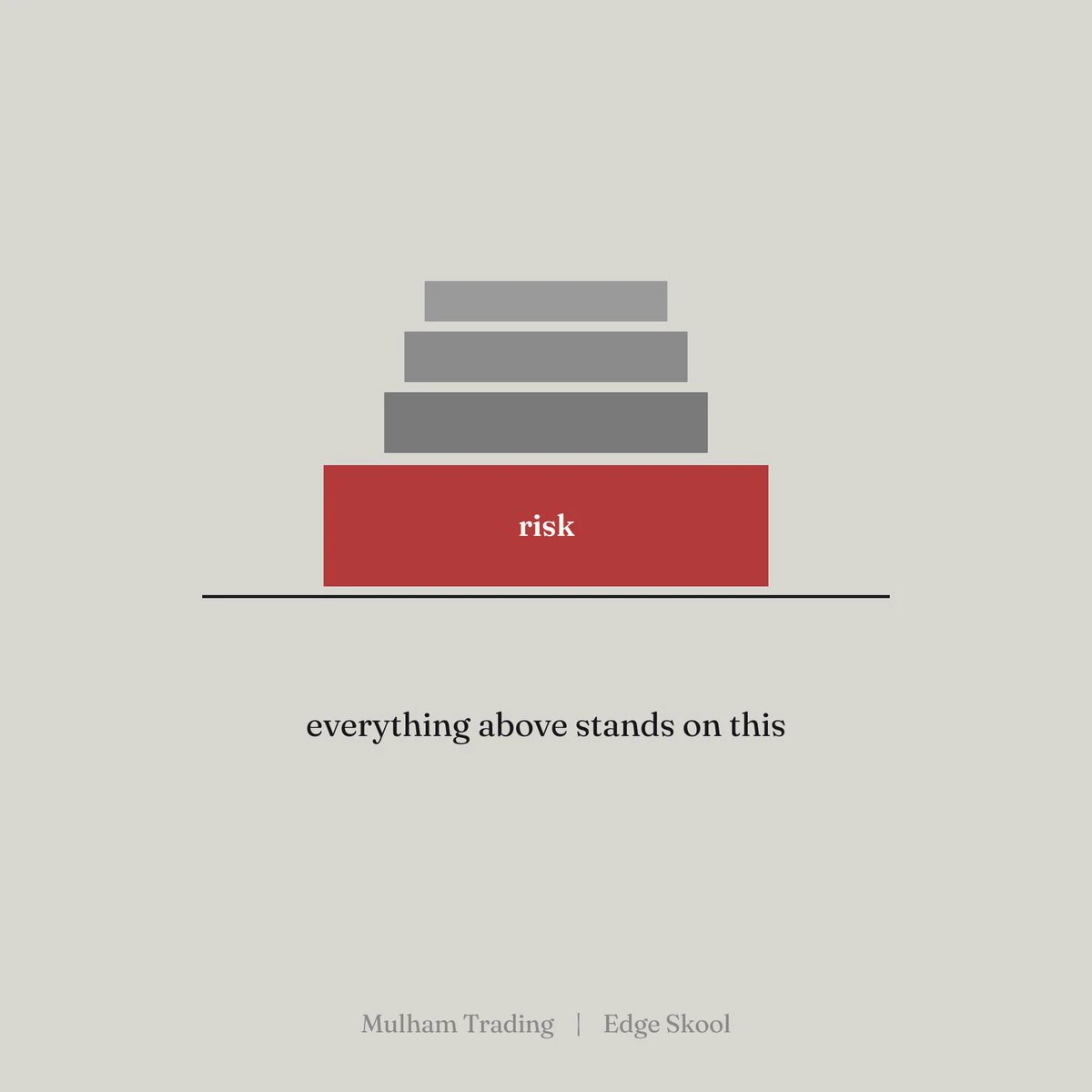
Day 29 of 30. One day left. Everything you have learned this month stands on one thing. Risk.
Think back over the challenge. Discipline. Patience. Certainty. Sizing. Emotions. Every idea has been sitting on top of one foundation, and that foundation is how you manage risk. It is the base block of the whole pyramid. Take it away, and everything above it falls.
Here is why. A great strategy means nothing if one bad trade can wipe you out. All the patience and discipline in the world cannot save an account that risked too much on one idea. But get risk right, and everything else has room to work.
post-image
Long time 🫡
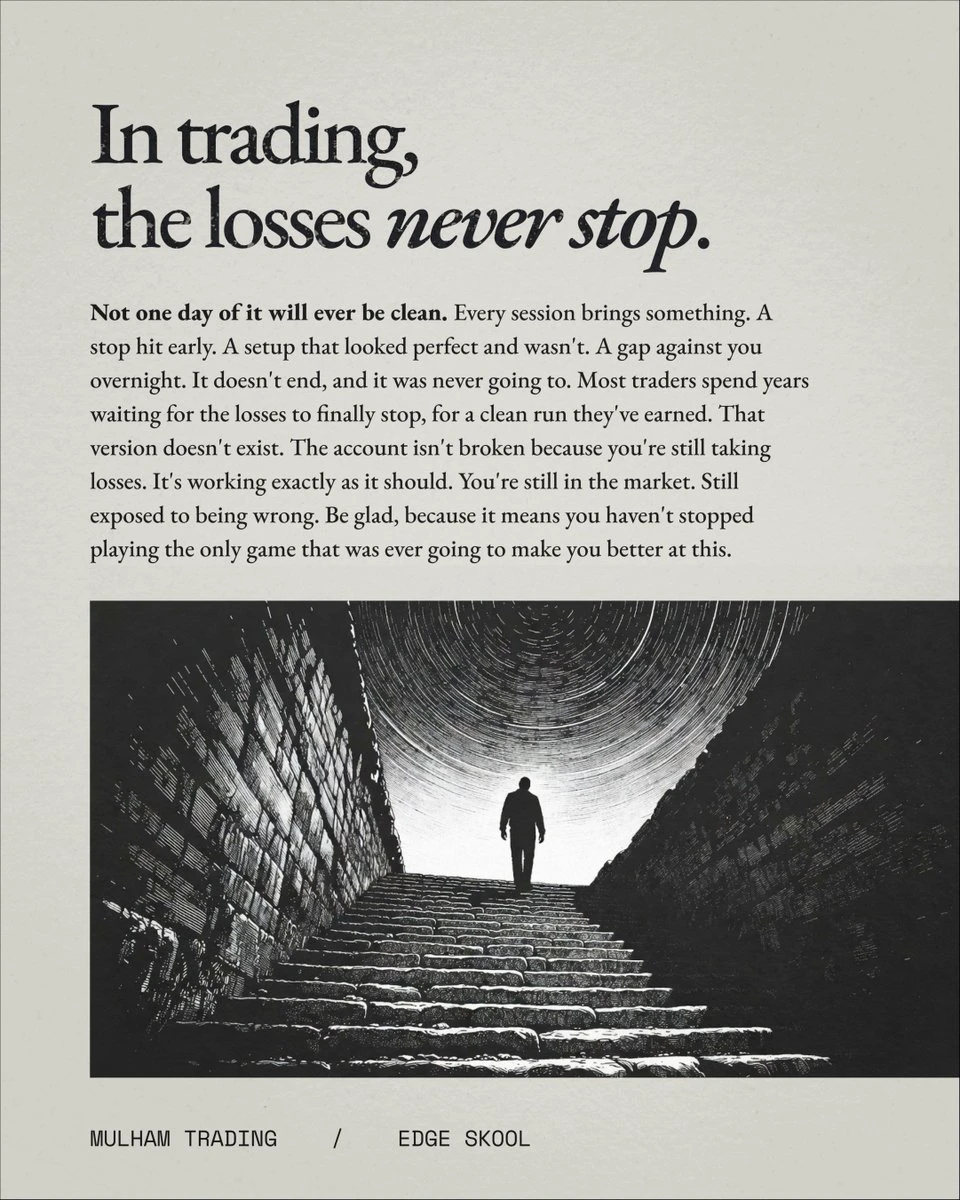
Day 28 of 30. Nearly there. Sit with something that will never change. In trading, the losses never stop.
Not one day of it will ever be completely clean. Every session brings something. A stop hit early. A setup that looked perfect and wasn't. A gap against you overnight. It doesn't end, and it was never going to. Most traders spend years waiting for the version of trading where the losses finally stop showing up. That version doesn't exist. The account isn't broken because you're still taking losses.
This is the reframe that saves people from quitting at the exact wrong moment. Losses are no
post-image
  • 1
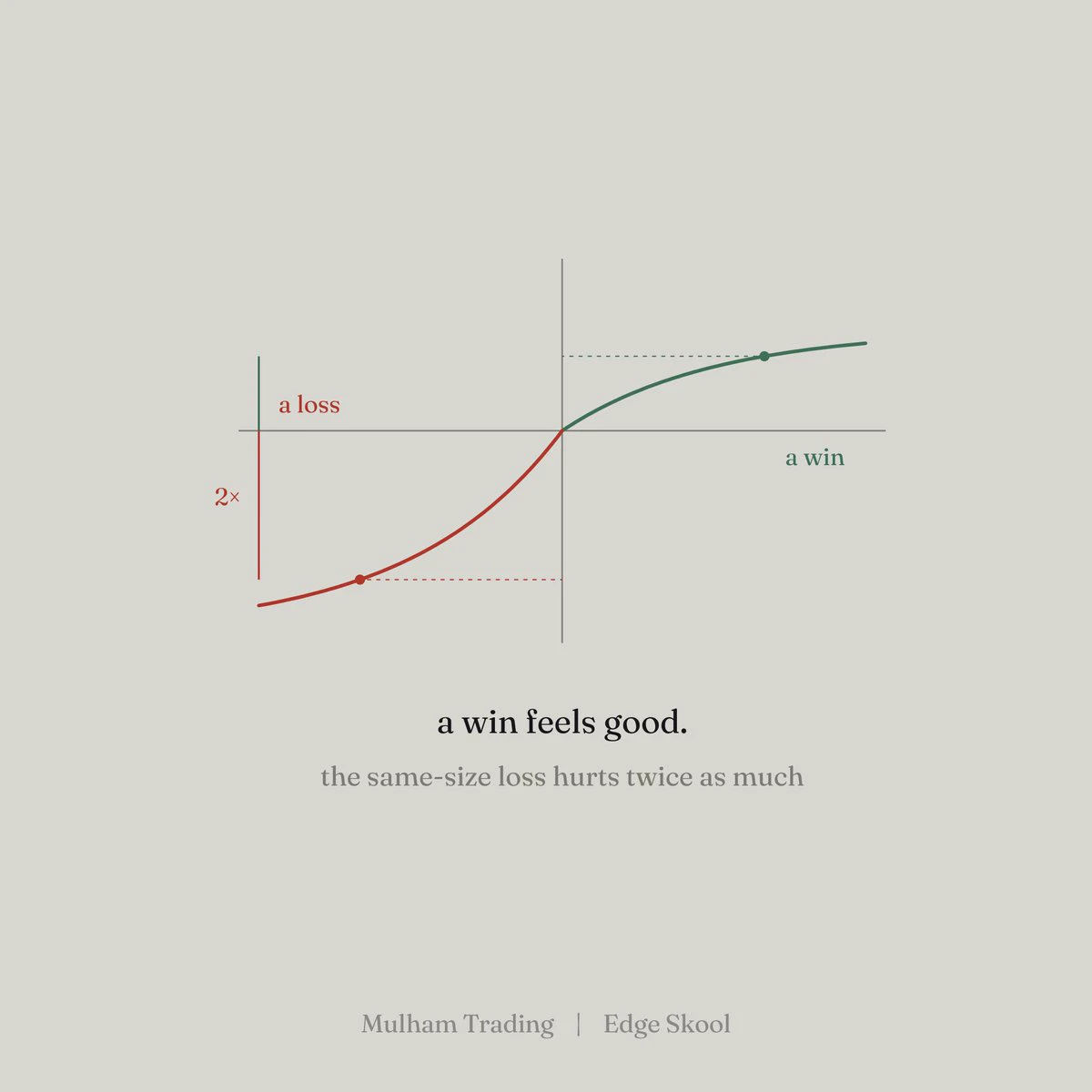
Day 27 of 30. A quiet wiring problem behind your bad exits. A win feels good, but the same size loss hurts twice as much.
Lose a hundred dollars and it stings hard. Make a hundred dollars and it feels nice, but nowhere near as strong. Same money. Very different feeling. The pain of a loss is about twice the joy of an equal win, and this quietly warps every decision you make.
Because losing hurts so much more, you do everything to avoid feeling it. You hold losers too long, hoping to escape the pain of taking the loss. You grab winners too early, locking in the small good feeling before it can
post-image
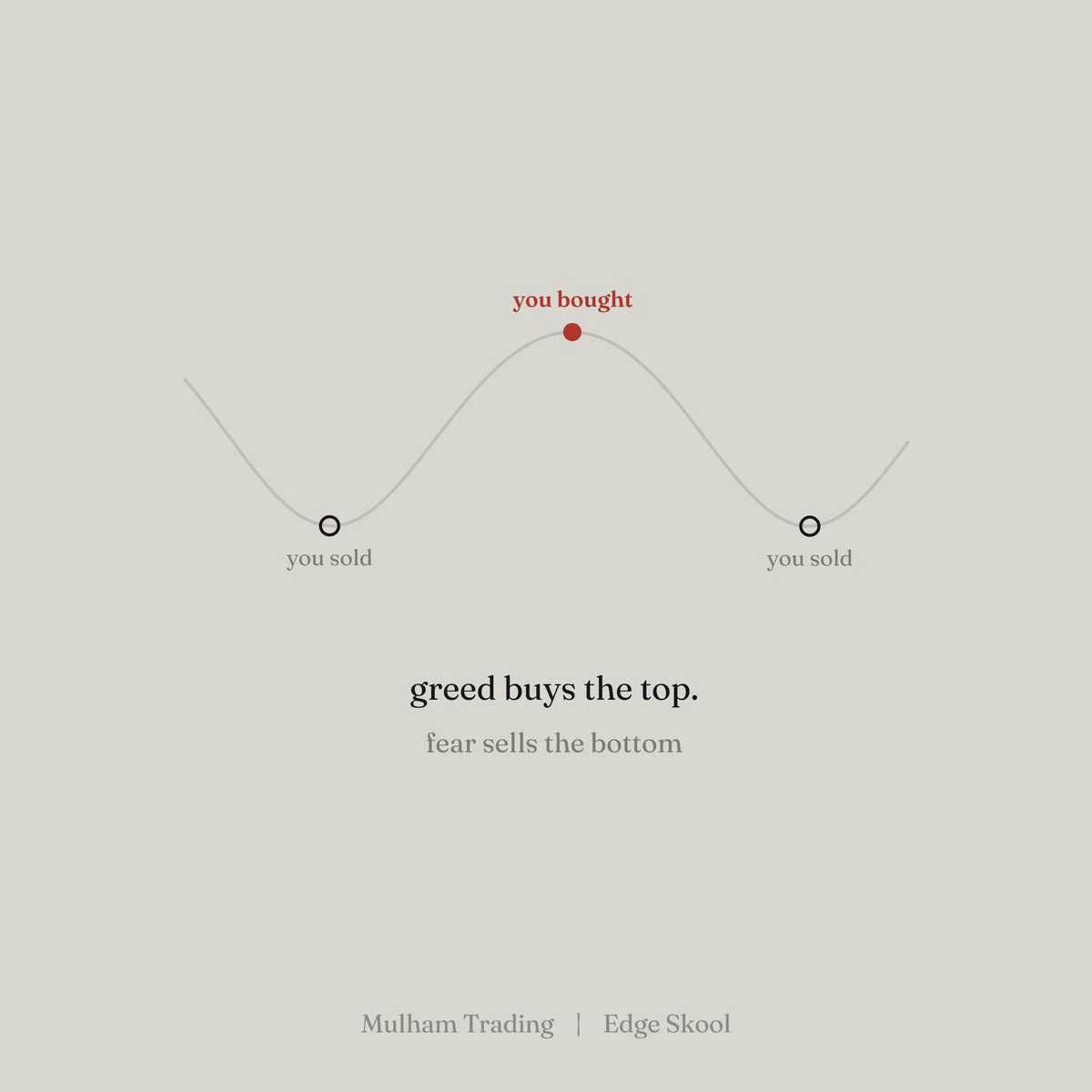
Day 26 of 30. The oldest mistake, and you have made it. Greed buys the top. Fear sells the bottom.
Watch the pattern. When price is flying up and everyone is excited, that is when buying feels safest. It feels obvious, like free money. So you buy, near the top, because greed told you it was safe. Then price falls. It keeps falling. And near the very bottom, when it feels the most hopeless, fear tells you to get out. So you sell, right at the low.
Buy high, sell low. The exact opposite of the plan. And you did not do it because you are dumb. You did it because your emotions are wired to feel sa
post-image
  • 3
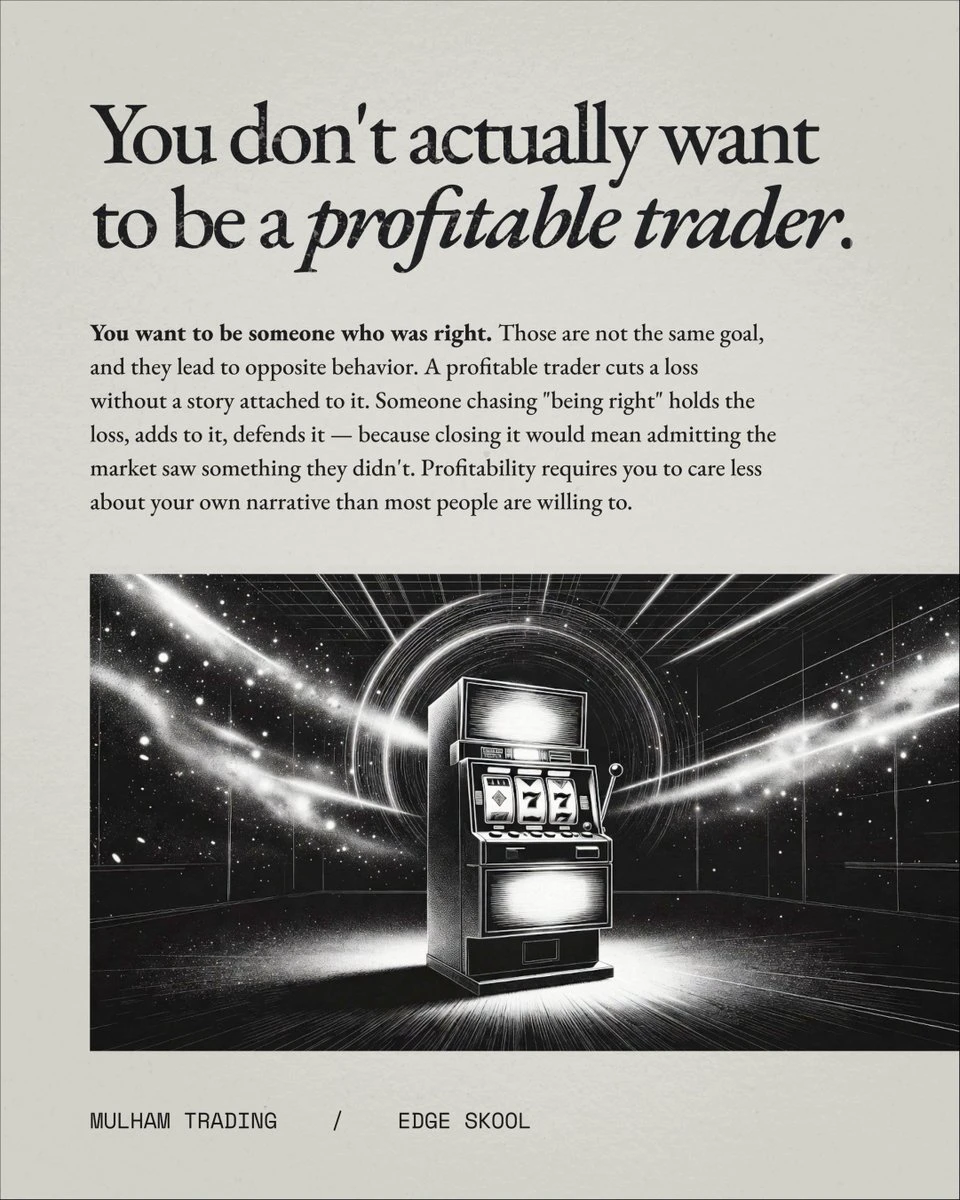
Day 25 of 30. This one might sting more than any other day. You don't actually want to be a profitable trader.
You want to be someone who was right. Those are not the same goal, and they lead to opposite behavior. A profitable trader cuts a loss without a story attached to it. Someone chasing "being right" holds the loss, adds to it, defends it, because closing it would mean admitting the market saw something they didn't. Profitability requires you to care less about your own narrative than most people are willing to.
That is the quiet trade off nobody tells you about. Being profitable means y
post-image
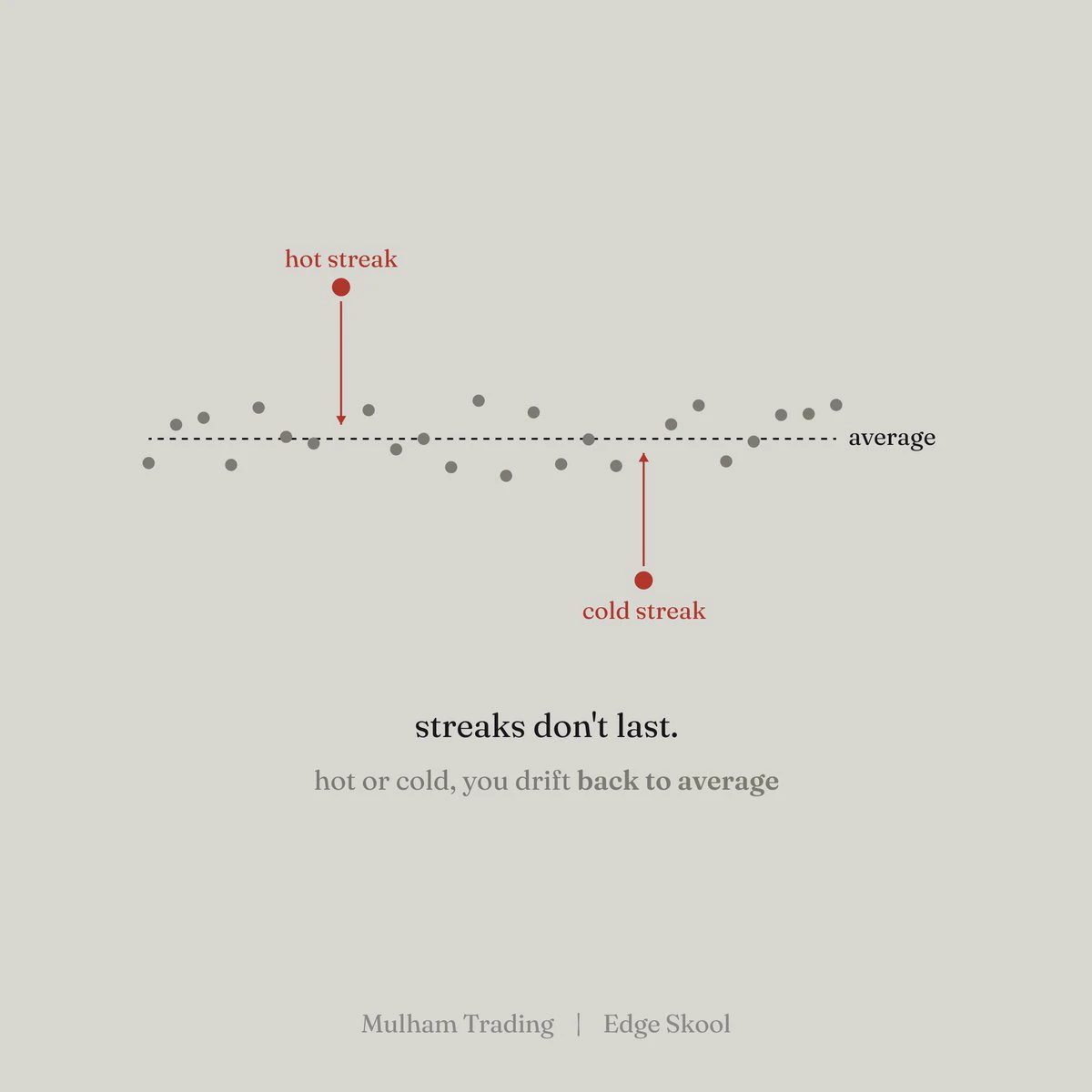
Day 24 of 30. Streaks don't last. Hot or cold, you drift back to average.
You go on a hot streak. Everything works. You feel like a genius and start thinking this is the new normal. Or you go cold. Nothing works, and you feel like you have lost it forever. Both feelings are traps, because both streaks end. Over time, results pull back toward your true average, every time.
This matters for how you act during a streak. When you are hot, the pull is to size up huge, to believe the magic will continue. But the streak is about to fade toward normal, and the biggest size at the top of a hot streak i
post-image
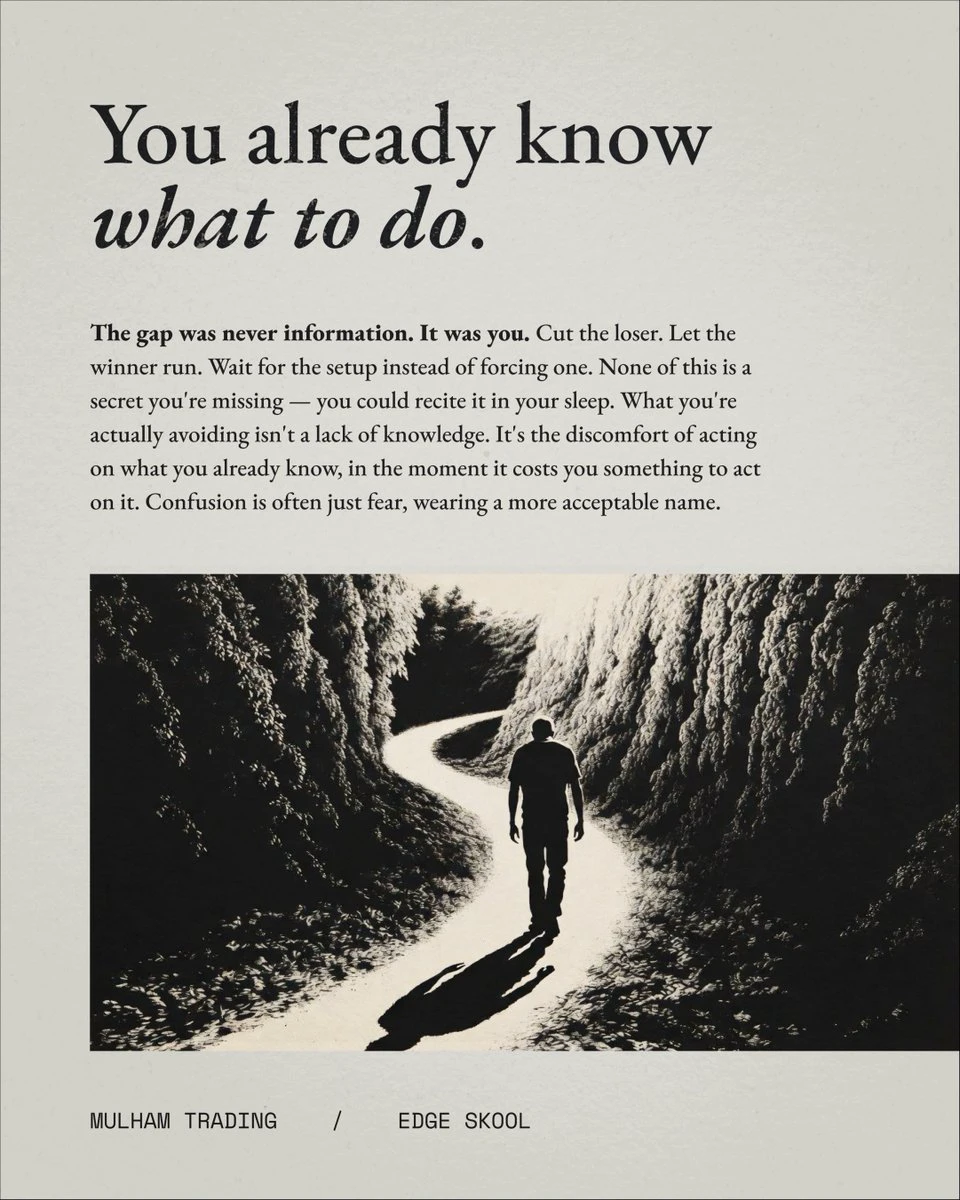
Day 22 of 30. Here is the uncomfortable one. You already know what to do.
The gap was never information. It was you. Cut the loser. Sit through the boring stretch of having done nothing. Wait for the setup instead of forcing one out of thin air. None of this is a mystery you're missing. You could explain the right move to a beginner right now, in plain words, without hesitating.
So if you already know, why don't you do it? Because knowing was never the hard part. Doing it while your hands are shaking and your ego is loud is the hard part. That's not a lack of knowledge. It's a lack of acting o
post-image
Day 21 of 30. The losses you don't study are the ones you'll repeat.
A loss happens. What do you do with it? Most traders do one of two things. They rage at it, or they run from it. They feel bad for an hour, then bury it and move on, hoping the next trade erases the memory. And because they never looked at it, the same loss comes back. Same setup, same mistake, same sting, months later.
A loss you ignore is a lesson you refused to learn. And the market is patient. It will teach you the same thing again and again until you finally sit down and look.
Studying a loss is uncomfortable, because it
post-image
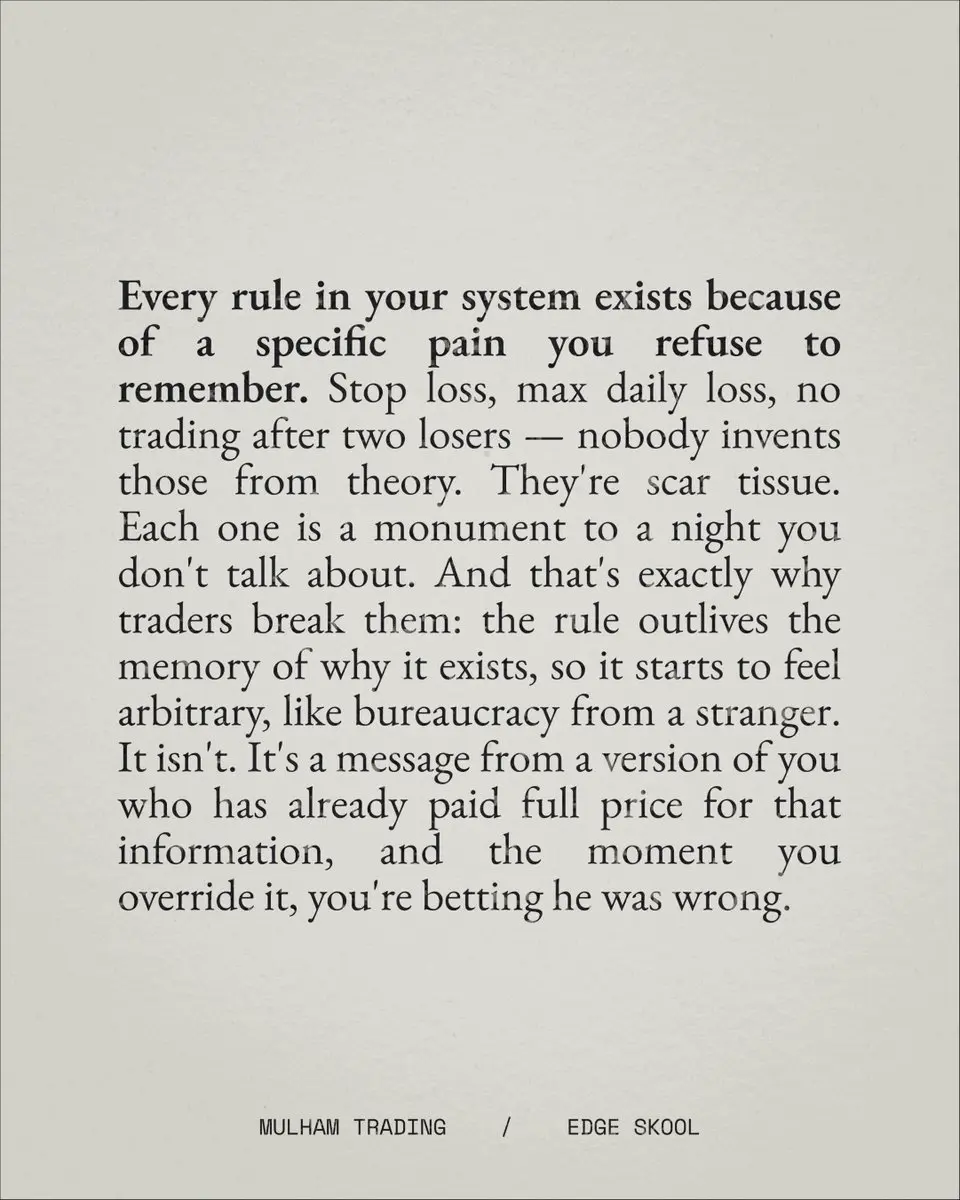
Day 19 of 30. Look at your rules differently today. Every rule in your system exists because of a specific pain you refuse to remember.
Stop loss. Max daily loss. No trading after two losers. Those numbers did not come from a textbook. They are scar tissue. Each one is a monument to a night you do not talk about. A blow-up. A tilt spiral. A loss that took weeks to earn back. You wrote the rule so it would never happen again.
And that is exactly why you break them. The rule outlives the memory of why it exists. Time passes, the pain fades, and the rule starts to feel arbitrary, like pointless p
post-image
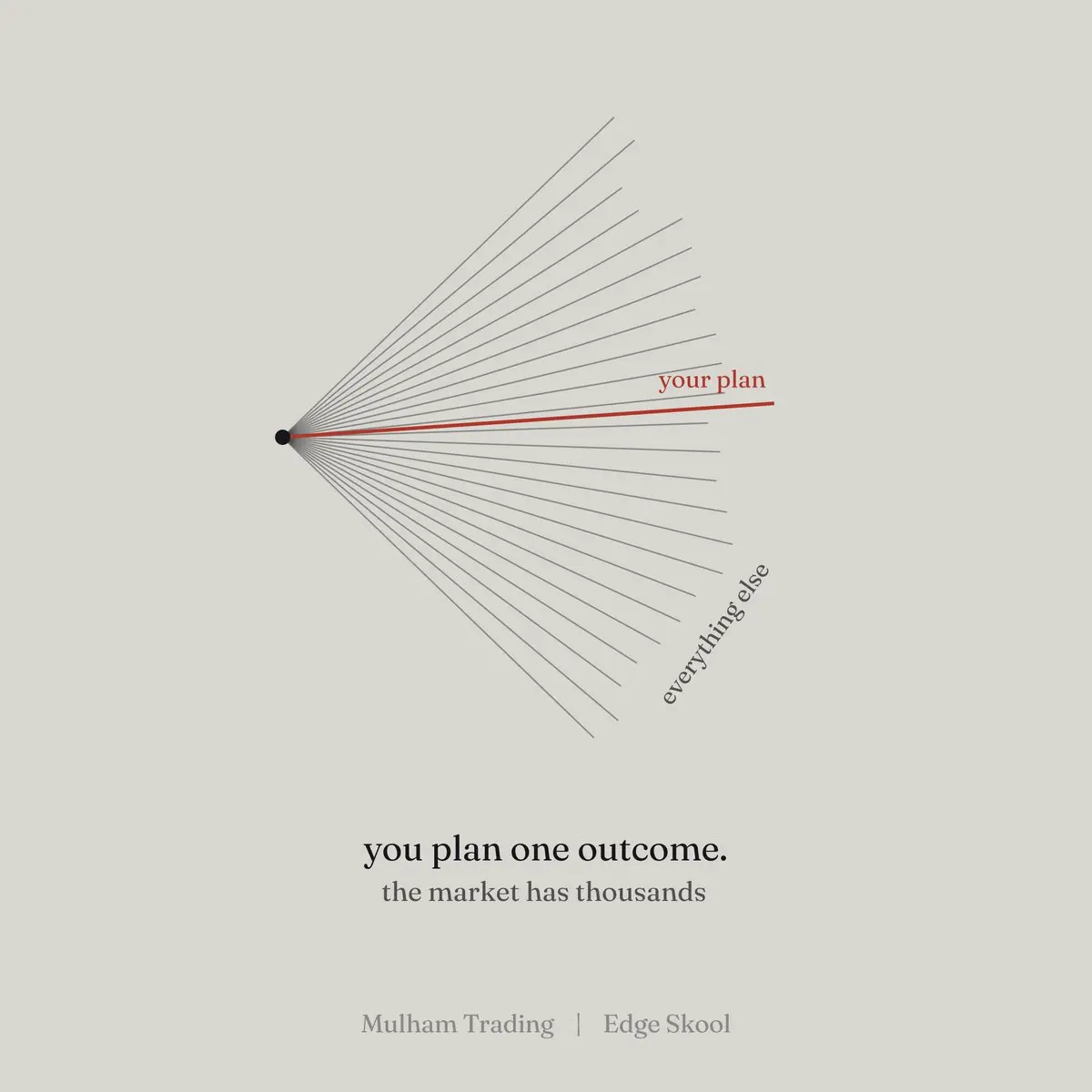
Day 18 of 30. You plan one outcome. The market has thousands.
In your head, you already know how the trade goes. It hits your entry, moves your way, tags your target. You have played the movie. It feels almost real. And that is the problem, because the market never agreed to your movie. It has thousands of paths, and yours is just one.
When the market picks a different path, and it usually does, you are not ready. You planned for one future, so anything else feels like betrayal. You freeze. You hold too long because this is not how it was supposed to go. You argue with the price instead of res
post-image
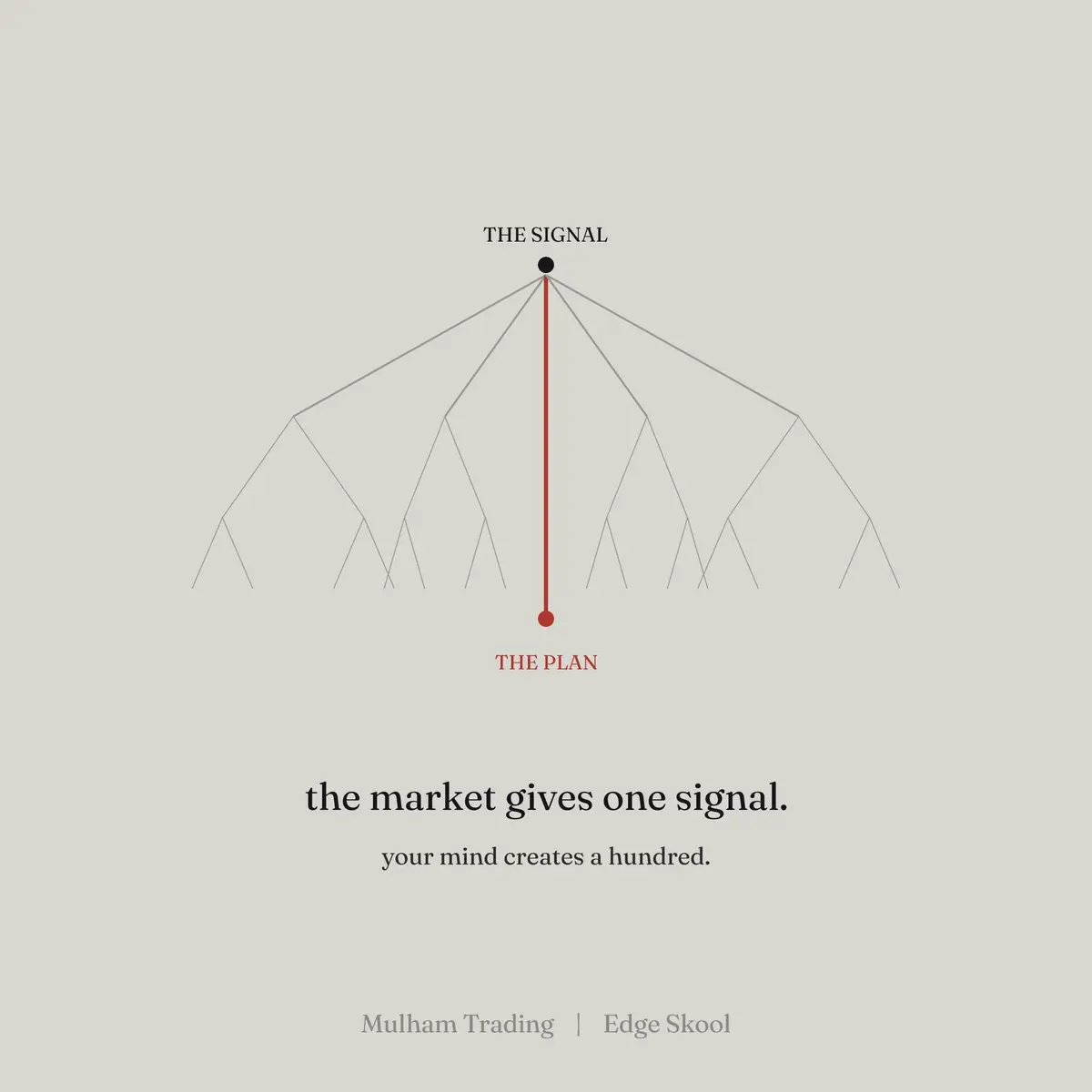
Day 17 of 30. The market gives one signal. Your mind creates a hundred.
The market is simple. Price is here. Your level is there. The signal, when it comes, is one clear thing. But look at what your mind does with it. It spins up a hundred stories. What if it reverses. What if this is the big one. What if I miss it. What if I am wrong again. What did that guy online say. One clean signal, buried under a hundred made-up scenarios.
That noise is not analysis. It is anxiety wearing a costume. The market did not send you a hundred messages. It sent one. Your fear and imagination made the other nin
post-image
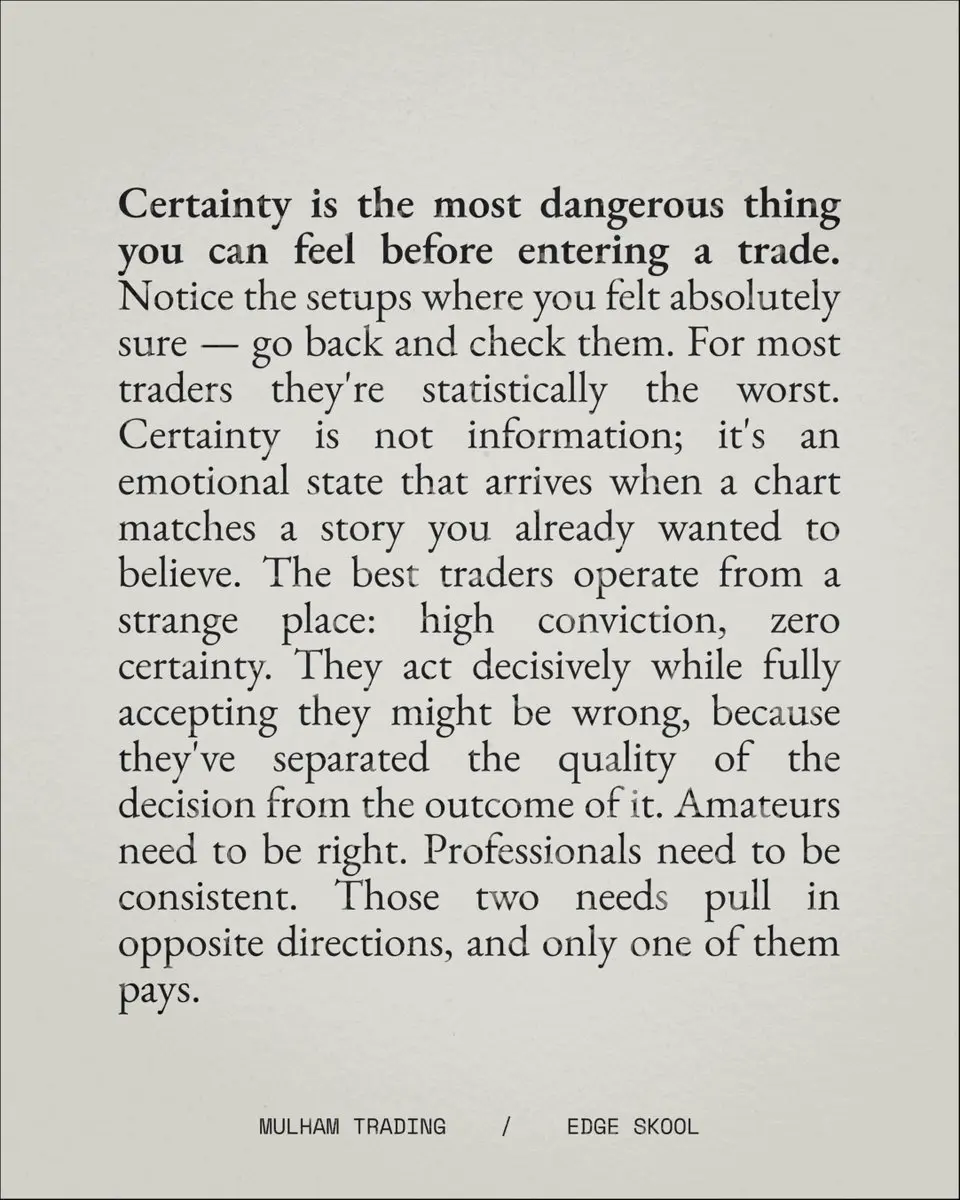
Day 16 of 30. The feeling you trust the most is the one that hurts you the most. Certainty is the most dangerous thing you can feel before entering a trade.
Go back and check the setups where you felt absolutely sure. For most traders, they are statistically the worst. That feels backwards, but here is why. Certainty is not information. It is an emotional state that shows up when a chart matches a story you already wanted to believe. It is your bias, feeling like a fact.
The best traders operate from a strange place. High conviction, zero certainty. They act decisively while fully accepting th
post-image
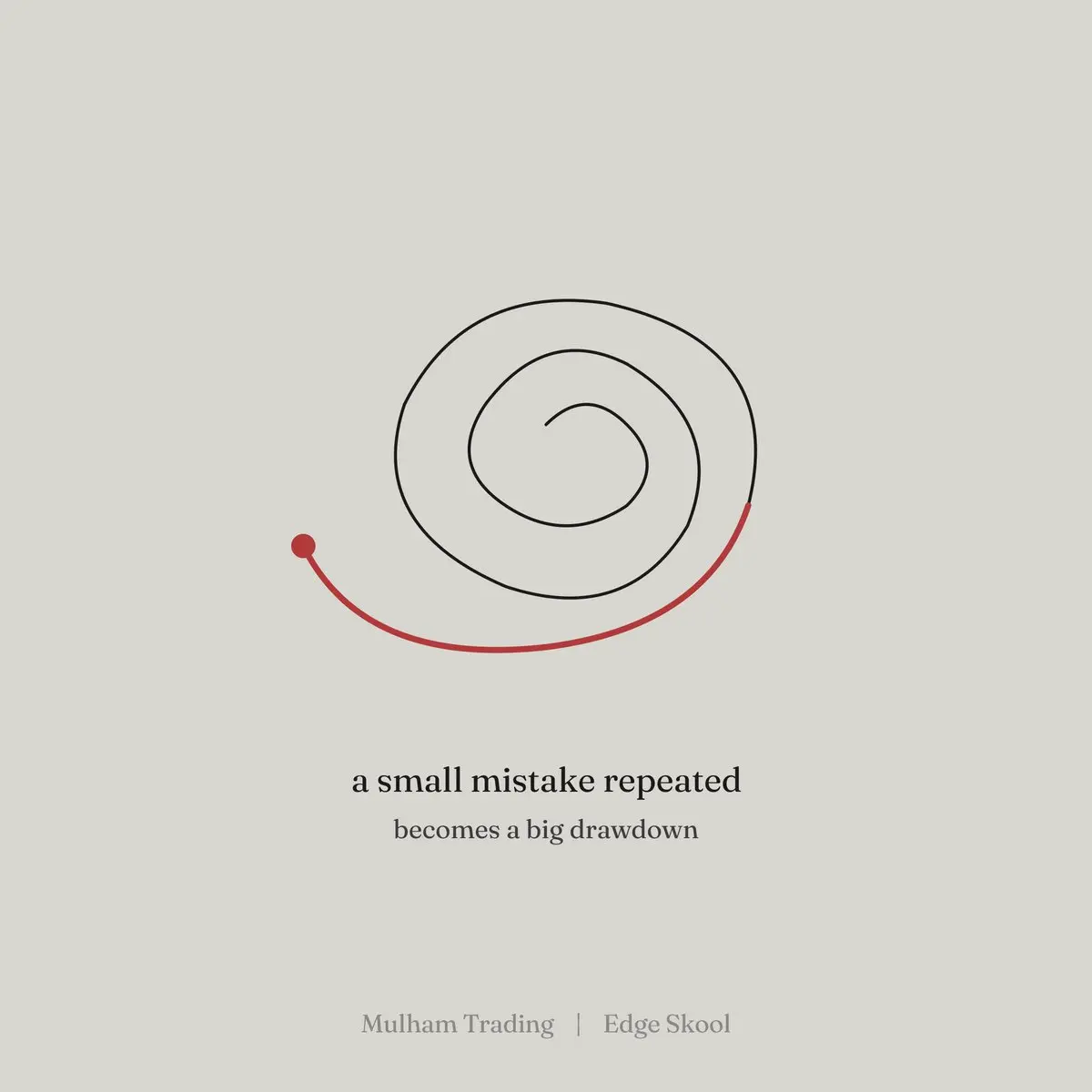
Day 15 of 30. Halfway. A small mistake repeated becomes a big drawdown.
No one blows up in one move. That is the myth. The truth is quieter and scarier. You blow up from a small bad habit done again and again. Sizing a little too big. Skipping the stop just this once. Adding to a loser because it feels cheap. On its own, each one barely hurts. That is exactly why it is dangerous. It does not hurt enough to make you stop.
But small bleeds add up. The tiny mistake you shrug off on Monday is the same one on Tuesday and Wednesday, and by Friday the pile is a real hole. A drawdown is rarely one dis
post-image
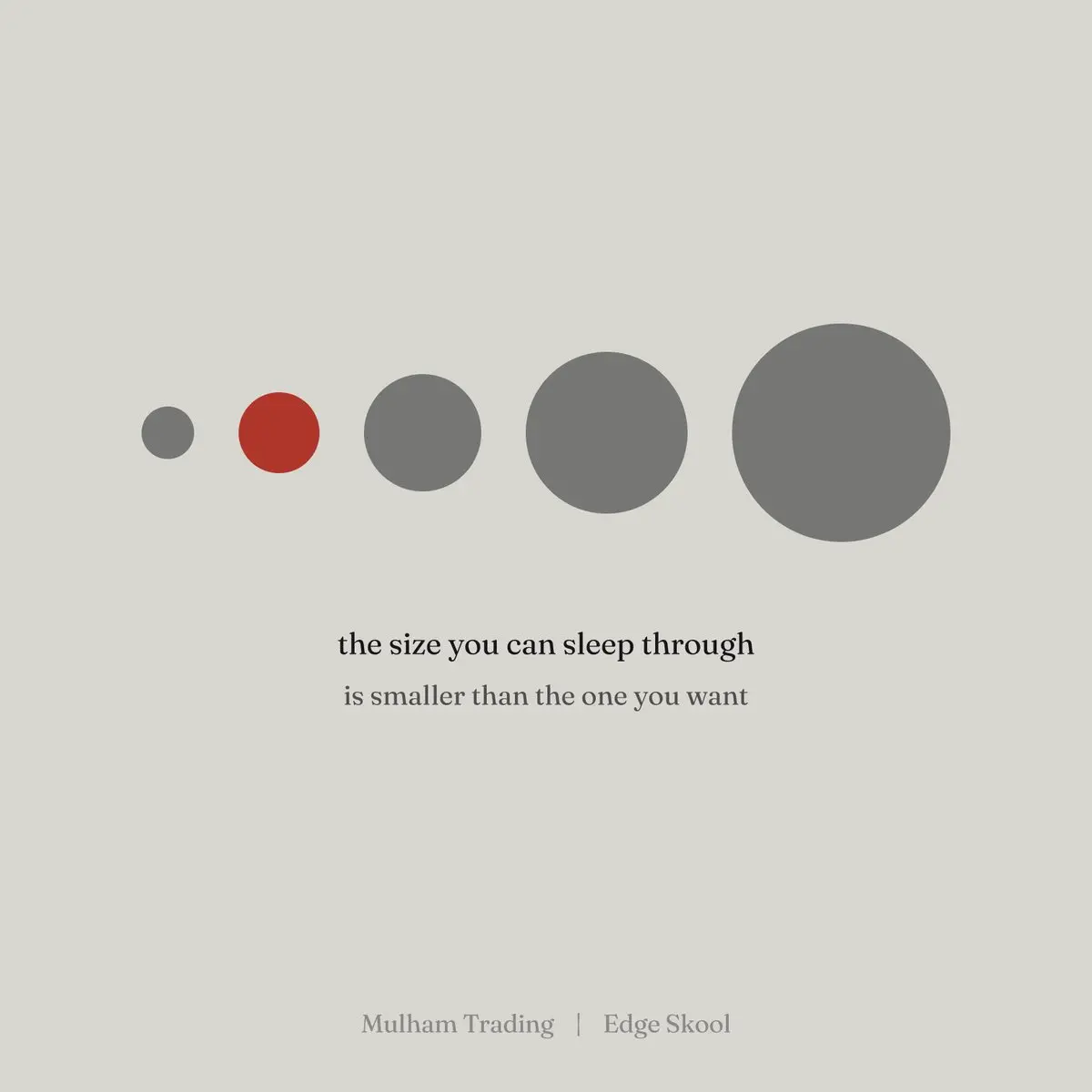
Day 14 of 30. Yesterday was about the size your self-worth allows. Today, the size your sleep allows.
The size you can sleep through is smaller than the size you want. Your greedy self always wants the bigger position. Bigger size, bigger win, faster. But there is another number. The size where, if the trade goes against you overnight, you can still close your eyes and rest. That number is smaller. Much smaller than feels exciting.
Here is why it matters. When your size is too big, fear takes the wheel. You watch every tick. You cannot hold winners because the swings scare you out. You move yo
post-image
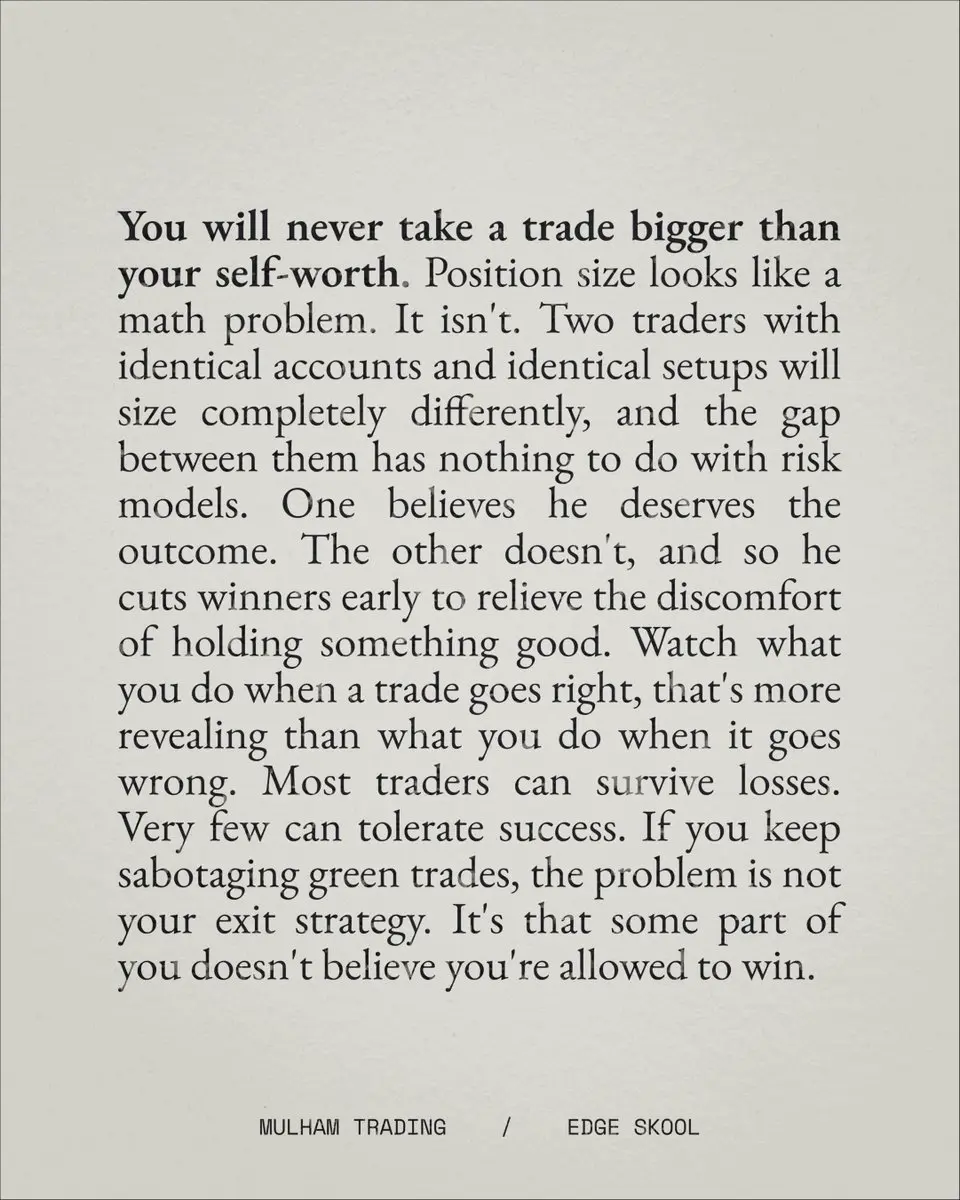
Day 13 of 30. Almost halfway. This one goes deeper than sizing math. You will never take a trade bigger than your self-worth.
Position size looks like a math problem. It is not. Two traders with identical accounts and identical setups will size completely differently, and the gap has nothing to do with risk models. One believes he deserves the outcome. The other does not, so he cuts winners early to escape the discomfort of holding something good.
Watch what you do when a trade goes right. That is more revealing than what you do when it goes wrong. Most traders can survive losses. Very few can
post-image
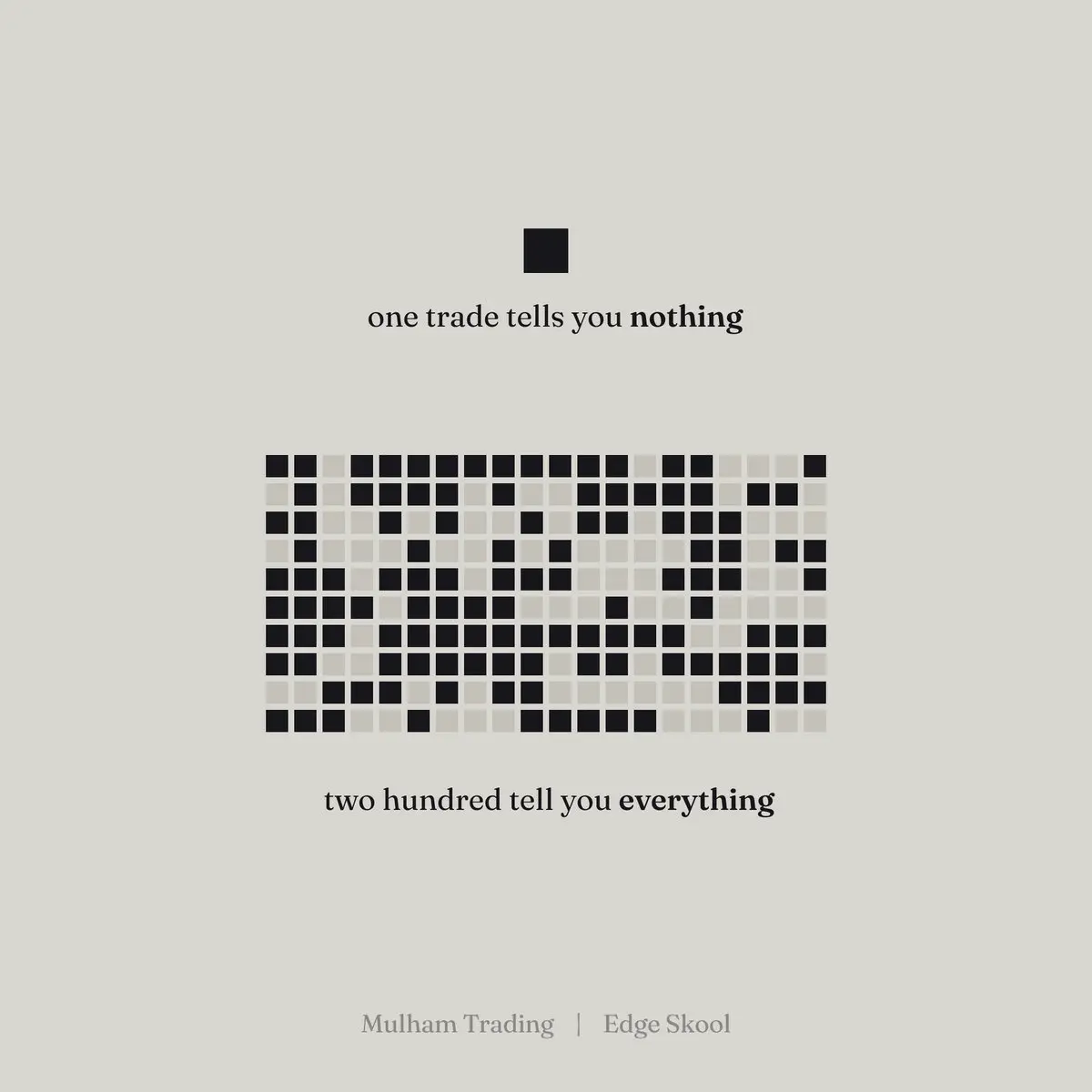
Day 12 of 30. One trade tells you nothing. Two hundred tell you everything.
You lost today, so you feel like a bad trader. You won today, so you feel like a genius. Both feelings are lies, because one trade is pure noise. Anything can happen in a single trade. A coin can land heads five times. A great setup can lose. A terrible one can win. Judging yourself on one result is like judging a whole book by one letter.
Zoom out. Your edge only shows up across many trades, not one. Two hundred trades of the same process start to form a clear picture, the way a mess of tiny squares becomes a readable
post-image
Day 11 of 30. Every trade is unique. Your process should not be.
Different day, different mood, different setup, different news. No two trades are ever the same. That is true. But here is where traders go wrong. They let their process be as unique as the trade. New trade, new rules. They improvise. Every trade becomes a decision made from scratch.
That is how you get random results. If the process changes every time, you can never tell what actually works. You cannot fix what you cannot repeat.
The trades will always be unique. Your process should not be. Same checklist. Same sizing. Same way
post-image
Day 9 of 30. You think more screen time makes you better. Often it makes you worse.
Here is the pattern nobody warns you about. Early in the session you are fresh and your calls are clean. Then the hours pile up. You get tired, then bored, then itchy. And your decisions quietly get worse without you noticing. The longer you stare, the more you start seeing trades that are not really there.
More hours does not mean more edge. Past a point it means more mistakes. Tired traders force setups. Bored traders invent them. The extra hours you thought were dedication were actually where you gave the ga