MarginMom

vip
Age 0.3 Year
Peak Tier 0
Manage your positions like you would care for a child: set stop-losses, reduce your holdings, and don’t stay up all night. Sometimes gently advise against high leverage, but occasionally you might still get the itch to open a trade.
Just saw something and it made my heart skip a beat. It’s the kind of dApp you used to grant contract approvals for, where the allowance is written as unlimited. If the project runs into any trouble, they can directly wipe your position. Put simply, it’s the same as falling asleep without locking the door—one day you wake up to find your money is gone, and you don’t even know who to cry to.
Anyway, I check my authorizations every month. If I can revoke it, I revoke it. Don’t嫌麻烦. I’m going to put the line “one-click lock the door before bed” up on the wall.
Recently, all that hot debate about r
View Original
  • Reward
  • Comment
  • Repost
  • Share
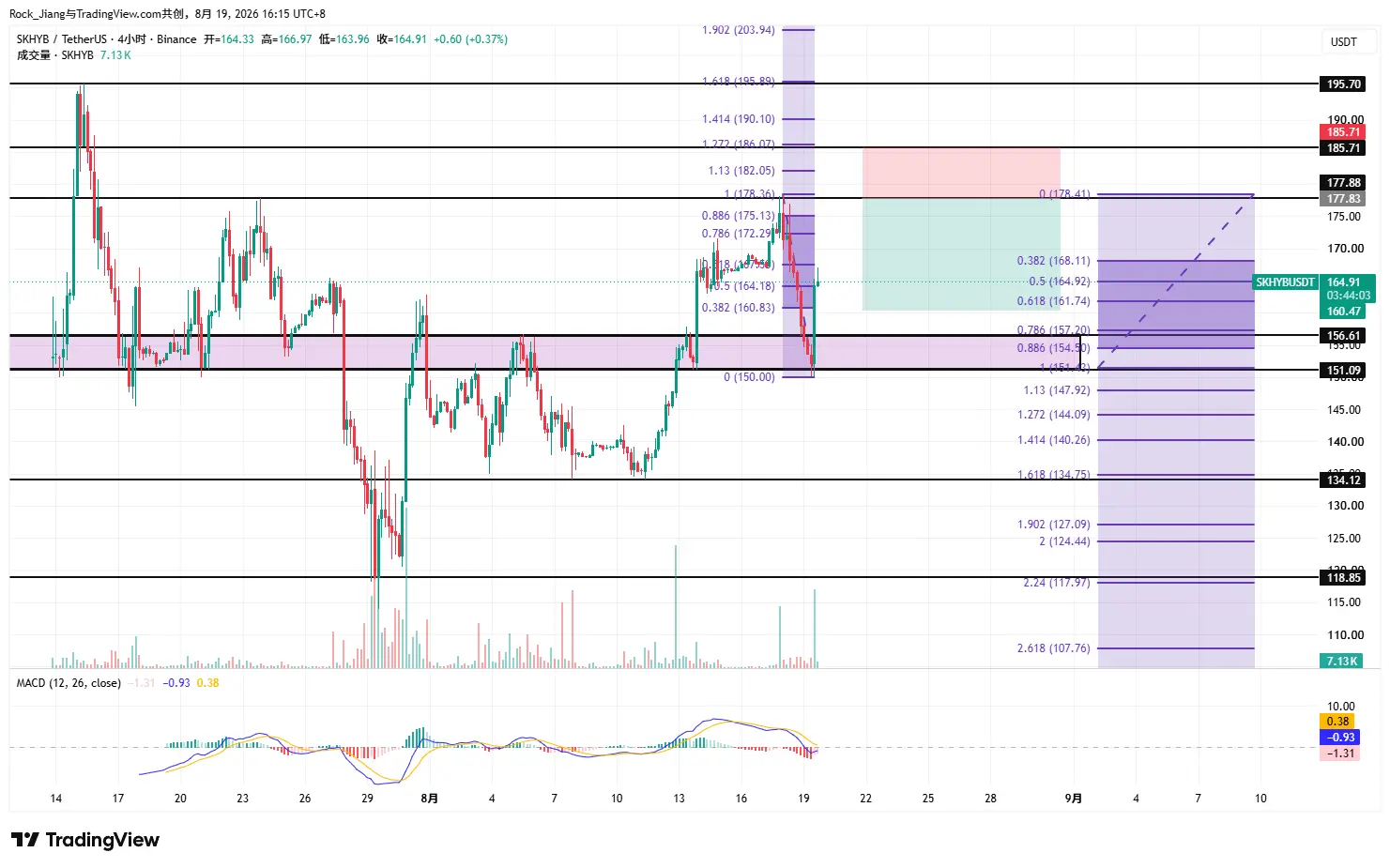
SK Hynix surged 13% right after listing—and then took a sharp hit; the chip-cycle roller coaster really isn’t something to take lightly.
SK Hynix-11.52%
SKHY0.89%
SKHYV-0.98%
View Original
CoinNetwork
SK Hynix shares fall, dragging the entire chip industry lower
Coinjiejie News: SK Hynix’s stock fell 6% on Monday, triggering a broader pullback across the chip industry. Investors, worried that the market was overheated, chose to take profits; SK Hynix’s share price in Asian markets fell 15%. A brokerage report from South Korea showed that SK Hynix’s operating profit in this quarter may be lower than expected, weighing on market sentiment. Rival Samsung Electronics’ stock also fell accordingly. In the United States, AI memory stocks Micron, SanDisk, and Western Digital all fell by about 5%. In addition, chip-related stocks Intel, AMD, Broadcom, and Arm Holdings also dropped by about 2% alongside the broader market. The semiconductor sector’s downturn occurred after SK Hynix’s U.S. listing last Friday, when its U.S. depositary shares rose nearly 13% in their first trading. The company raised 265 billion in this listing.
  • Reward
  • Comment
  • Repost
  • Share
$1 trillion+ plus top AI chips in freely circulating supply—Washington is laying out the Gulf as the next-generation computing hub. NVIDIA is laughing, while Iran is having a headache.
NVDA-2.32%
View Original
CoinNetwork
According to a report by BiJie.com, the United Arab Emirates has recently been granted the right to access U.S. AI technology without a license, making it one of the top U.S. trading partners. The U.S. allows UAE companies to freely transport advanced AI chips, servers, satellites, and military technology, because the UAE provided support during its conflict with Iran. This move enables companies including NVIDIA, OpenAI, Google, Meta, Microsoft, Oracle, Amazon, Apple, and XAI to freely ship cutting-edge computing equipment to the Gulf region, as Washington pledges to continue its $1 trillion investment commitment.
  • Reward
  • Comment
  • Repost
  • Share
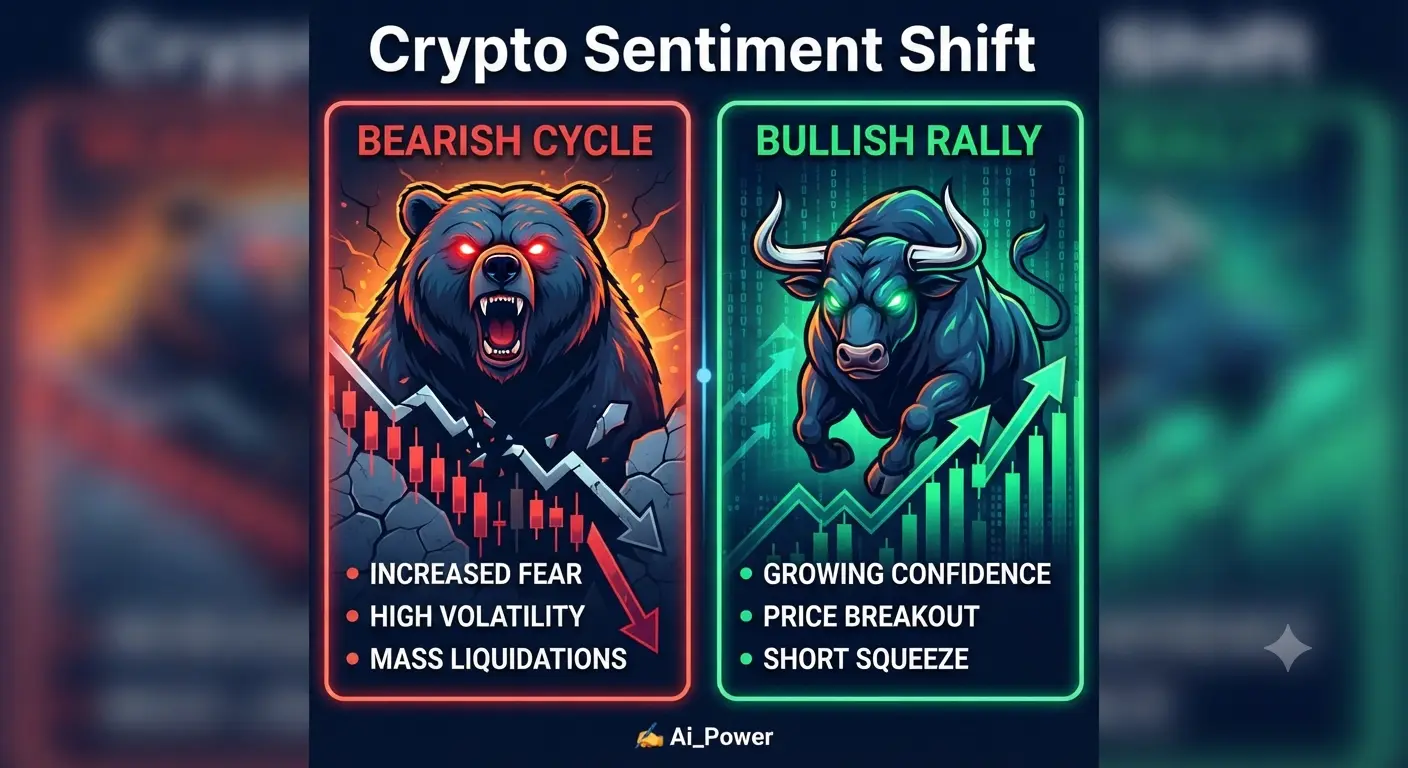
ETF capital flows are indeed a window to observe institutional sentiment, but don't take it as the only indicator; combine it with on-chain data and technical analysis to be steady.
View Original
Ai_Power
#ETFFlowsWatch 📊🚀.
ETF Flows Continue to Shape the Crypto Market: Why Every Trader Should Pay Attention
Institutional money remains one of the biggest forces driving the cryptocurrency market, and Bitcoin ETF flows are once again in the spotlight. Every major inflow or outflow has the potential to influence market sentiment, liquidity, and short-term price direction.
When ETFs receive strong inflows, it signals growing confidence from institutional investors. This fresh capital often supports Bitcoin's price and can create positive momentum across the broader crypto market, including Ethereum and leading altcoins.
On the other hand, sustained ETF outflows may indicate weakening institutional demand. This can increase selling pressure, reduce market confidence, and slow the pace of any bullish rally. For this reason, professional traders closely monitor ETF data alongside technical analysis rather than relying on price action alone.
Why ETF Flows Matter
📈 Strong inflows can strengthen bullish momentum.
📉 Large outflows may trigger increased market volatility.
💰 Institutional participation often influences long-term market trends.
📊 Combining ETF data with technical indicators provides a clearer trading strategy.
What Traders Should Watch
- Daily ETF inflow and outflow reports.
- Bitcoin's reaction around major support and resistance levels.
- Trading volume and market sentiment.
- Confirmation from the 4H and Daily candle close before entering new positions.
Final Thoughts
ETF flows have become one of the most important indicators in today's crypto market. While short-term price movements create opportunities, institutional capital often determines the strength and sustainability of the overall trend. Smart traders stay informed, manage risk carefully, and avoid making emotional decisions based on a single market move.
#Bitcoin
repost-content-media
  • Reward
  • Comment
  • Repost
  • Share
Recently, I've been seeing a lot of people drawing arrows between stablecoin minting and ETF net inflows, saying "money is coming, so prices will rise." I'm not so quick to buy into that... Correlation is correlation, but using it as a reason to open a position is like reading the weather from clouds—sometimes it works, sometimes it screws you over.
In short, whether off-exchange capital has entered the market and how much has entered—what you can see on-chain is that the market cap of stablecoins has risen, but who holds the capital, whether it will move, and when it will move—nobody knows. I
MEME-2.24%
View Original
  • Reward
  • Comment
  • Repost
  • Share
Solana’s activity level is directly reminiscent of February—tokenized stocks + DeFi + stablecoins are the three-horse carriage again, and the on-chain narrative is getting back on its feet.
SOL1.53%
View Original
CoinNetwork
CoinWorld News, according to Santiment data, the number of active addresses on the Solana blockchain has risen to 4.51 million since Saturday, reaching the highest level since February, driven by tokenized stocks, DeFi usage, stablecoins, and retail applications.
  • Reward
  • Comment
  • Repost
  • Share
In a bear market, you can still earn $26 million a month. The Physical TCG track has something going for it.
View Original
WuSaidBlockchainW
Wu Shuo learned that, according to DeFiLlama data, the Physical TCG protocol generated more than $26.0 million in fees in the past 30 days, becoming one of the most active emerging tracks during the crypto downturn. Among them, Collector Crypt generated about $15.5 million in fees, Courtyard reached $5.65 million, Beezie reached $1.96 million, and Phygitals reached $1.72 million, among others.
  • Reward
  • Comment
  • Repost
  • Share
Celsius founder's selling pace, cutting at an average price of $1,548 quite decisively, pocketing $27.24 million.
View Original
CoinNetwork
Gate.io News: According to onchain lens, two wallets suspected to be associated with Alex Mashinsky sold 17,598 ETH at an average price of $1,548, for a total value of approximately $27.24 million.
  • Reward
  • Comment
  • Repost
  • Share
The data met expectations but the previous reading was revised upward, inflation is falling slower than anticipated, so don't rush into risk assets just yet.
View Original
WuSaidBlockchainW
U.S. May core PCE price index year-over-year rate 3.4%, expected 3.40%, prior 3.30%. U.S. Q1 core PCE price index annualized quarter-over-quarter final rate 4.4%, expected 4.40%, prior 4.40%. U.S. May core PCE price index month-over-month rate 0.3%, expected 0.30%, prior revised from 0.20% to 0.3%.
  • Reward
  • Comment
  • Repost
  • Share
Anthropic's move to issue employee badges and assign permissions to AI sounds nice, but Kenton Varda is right—when it really scales up, who takes the blame?
View Original
CoinNetwork
Anthropic Launches Intelligent Agent Identity Security Mechanism to Block AI Leaking Backdoors
CoinWorld News reports that Anthropic has introduced an agent identity security mechanism for Claude Tag, assigning independent permission packages to each channel and directly allocating a dedicated AI account exclusively, to eliminate privilege-escalation and data-leakage backdoors in multi-person collaboration. It adopts dynamic policy configuration to replace borrowed credentials. Security expert Kenton Varda criticized the approach as difficult to handle large-scale tasks and undermining human accountability, arguing for a capability-based security model to ensure that AI actions can be traced back to specific initiators.
  • Reward
  • Comment
  • Repost
  • Share
Solana has finally integrated the data layer, with 9 mainstream providers unified for access. From now on, research won't require scraping data everywhere, and the ecosystem transparency is raised to a new level.
SOL1.53%
View Original
WuSaidBlockchainW
Wu says he learned that the Solana Foundation has launched an on-chain data platform that integrates key metrics from the Solana ecosystem and presents them using a unified open framework. When the platform went live, it connected to 9 data providers, covering metrics such as stablecoin supply, DEX trading volume, fees, active addresses, and transaction counts, and it published the corresponding data methodologies, queries, tables, and APIs. Participants include Dune, Artemis, Allium Labs, Blockworks, Token Terminal, DefiLlama, and so on.
  • Reward
  • Comment
  • Repost
  • Share
From general L2 to compliant privacy infrastructure—the team’s DNA has been completely overhauled. Brothers who got laid off, take your package and hang on to it.
View Original
WuSaidBlockchainW
zkSync developer Matter Labs’ CEO Alex Gluchowski said the company has laid off some employees. He said that since 2024, after beginning to build products for regulated financial institutions, the company has now fully focused on Prividium and institutional on-chain privacy infrastructure business. As customer needs change, the company needs to adjust its skills structure and job staffing, so it made the decision to lay off employees. The departing employees will receive financial support and assistance with relocating to new roles.
  • Reward
  • Comment
  • Repost
  • Share
Paradigm and HPC's joint letter makes a lot of sense. Locking compliance pressure on the primary market is the right approach. If secondary DeFi trading also makes issuers take the blame, on-chain innovation will really have no room to play.
View Original
WuSaidBlockchainW
Hyperliquid Policy Center (HPC) and Paradigm jointly send a letter to the U.S. Department of the Treasury, calling for revisions to the anti-money laundering rules proposed by FinCEN and OFAC to implement the GENIUS Act. The two parties support limiting the compliance obligations of stablecoin issuers primarily to the primary market but believe that OFAC's proposal to extend responsibility to secondary market transactions driven by smart contracts could make issuers liable for transactions they cannot practically control, thereby undermining the use of regulated stablecoins in DeFi and open blockchain environments. Both organizations recommend further narrowing the relevant definitions and re-evaluating the regulatory requirements for smart contract interactions. (The Block)
  • Reward
  • Comment
  • Repost
  • Share
Recently, I’ve been seeing a bunch of PFPs waving banners of “membership” and “brand” to pull people in, and I just feel pretty uncomfortable about it. To put it simply, if a PFP really can turn into long-term value, it has to deliver consistently: the benefits have to be usable, the community has to stay alive, and the team can’t just be a passing fad… Otherwise, it’s nothing more than a profile picture trading for a burst of attention—once the heat dies down, everyone goes back to their own lives.
And these past few days, around that mainstream public chain upgrade/maintenance, everyone in t
View Original
  • Reward
  • Comment
  • Repost
  • Share
Traditional banks can no longer sit still. In 2027, they will launch a tokenized deposit network, aiming for the convenience of 24-hour transfers while fearing customers will turn to crypto companies. Their plans are quite ambitious.
View Original
CoinNetwork
CoinWorld News reports that major U.S. banks such as JPMorgan Chase, Citibank, and Bank of America plan to roll out a shared tokenized deposit network in mid-2027, aiming to keep customer deposits within traditional banking channels while providing payment speeds similar to stablecoins. The network will convert traditional bank deposits into blockchain tokens, allowing customers to make 24-hour transfers within a regulated banking system. This move is intended to address the rapid growth of the stablecoin market and prevent customers from moving their funds to crypto companies.
  • Reward
  • Comment
  • Repost
  • Share
Hardware wallets, multi-signature, and social recovery—put simply, it’s about “how much you can afford to lose right now and whether you’re willing to deal with the hassle.” For small amounts and lots of day-to-day interactions, a hardware wallet is enough. Just sign once, and you can stay calm for half a second to stop yourself from clicking impulsively. As your assets grow a bit and you still love tinkering with DeFi, multi-signature feels even safer—but it’s really quite a pain. When you need to operate while you’re out and about, it’s easy to get restless, feel like cutting corners, and go
MEME-2.24%
View Original
  • Reward
  • Comment
  • Repost
  • Share
Recently, I saw a bunch of yield aggregators claiming APYs that seem like free money. Frankly, my first thought isn't "how much can I earn," but "which contract is this yield coming from, and who is on the other side." Some put money into layered strategies, which might involve lending pools, market making, or even cross-chain bridges. Any hiccup in any of these links is not something you can just hit pause on.
Lately, people have also been talking about interest rate cuts, the US dollar index, and how risk assets rise and fall together... When emotions run high, it's easier to overlook that "
View Original
  • Reward
  • Comment
  • Repost
  • Share
Recently, I’ve been asked again what LST/re-staking actually earns… To put it simply, it’s taking “the portion that was originally locked” and using it to do something else. So where does the money come from? From other people who are willing to pay you for the sense of security/liquidity. But the risks are also very straightforward: once something goes wrong with the underlying layer, or if an additional layer of rules gets stacked on top, you could be the last one to realize you’re being implicated/held liable by association.
And now, those on-chain data tools and tagging systems are also be
View Original
  • Reward
  • Comment
  • Repost
  • Share
From 1 million to 20 years of lock-up, Beijiqi's version is obviously watered down, Lummis's bill is more hardcore.
View Original
CoinNetwork
Crypto World News reports that the U.S. Bitcoin Reserve blueprint is expected to be announced in July 2026. Since President Trump signed an executive order to establish a strategic Bitcoin reserve on March 6, 2025, the project has finally shifted from verbal commitments to actual implementation. The White House outlined the policy blueprint in a report released in July 2025. In May 2026, Patrick Witte, a member of the Digital Asset Advisory Committee, called the latest progress a "breakthrough" and stated that a specific announcement is imminent. Currently, there are two competing bills in Congress: Senator Cynthia Lummis's Bitcoin bill, which plans to begin actual Bitcoin purchases in Q4 2026, and Representative Nick Bostrom's U.S. Reserve Modernization Act, which quietly abandoned the goal of purchasing 1 million Bitcoins in favor of a 20-year lock-up period.
  • Reward
  • Comment
  • Repost
  • Share
How does Aurora speed up weather forecasting by several thousand times? If Microsoft’s latest lab breakthrough can be rolled out, agricultural insurance and logistics scheduling will both be turned on their heads.
View Original
Original content no longer visible
  • Reward
  • Comment
  • Repost
  • Share
  • Pinned