

# USEndsLatestStrikesOnIran

1.57M

CENTCOM concluded a 90-minute night strike on Iran on July 15, targeting command centers, air defense sites, missile and drone facilities, and coastal surveillance systems across multiple locations including Bandar Abbas. Trump warned of expanding strikes to bridges and power plants if Iran does not return to negotiations. Iran has already launched retaliatory strikes on U.S. targets in Bahrain and Kuwait.

$TIA /USDT 📈
Market View: $TIA is building a base after its recent correction. Buyers continue defending the demand zone, keeping the bullish setup valid.
Entry: $0.350–$0.356
Targets: $0.370 | $0.390 | $0.410
Stop Loss: $0.340
Trend: Neutral
Outlook: A move above resistance could start the next leg higher.
#PreIPOsSeason2OpenAISubscription #GateDEXIntegratesWithRobinhoodChain #USDTDepositEarningsDoublePlay #USEndsLatestStrikesOnIran
$TIA ‌
TIA-0.55%
  • Reward
  • Comment
  • Repost
  • Share
#USEndsLatestStrikesOnIran
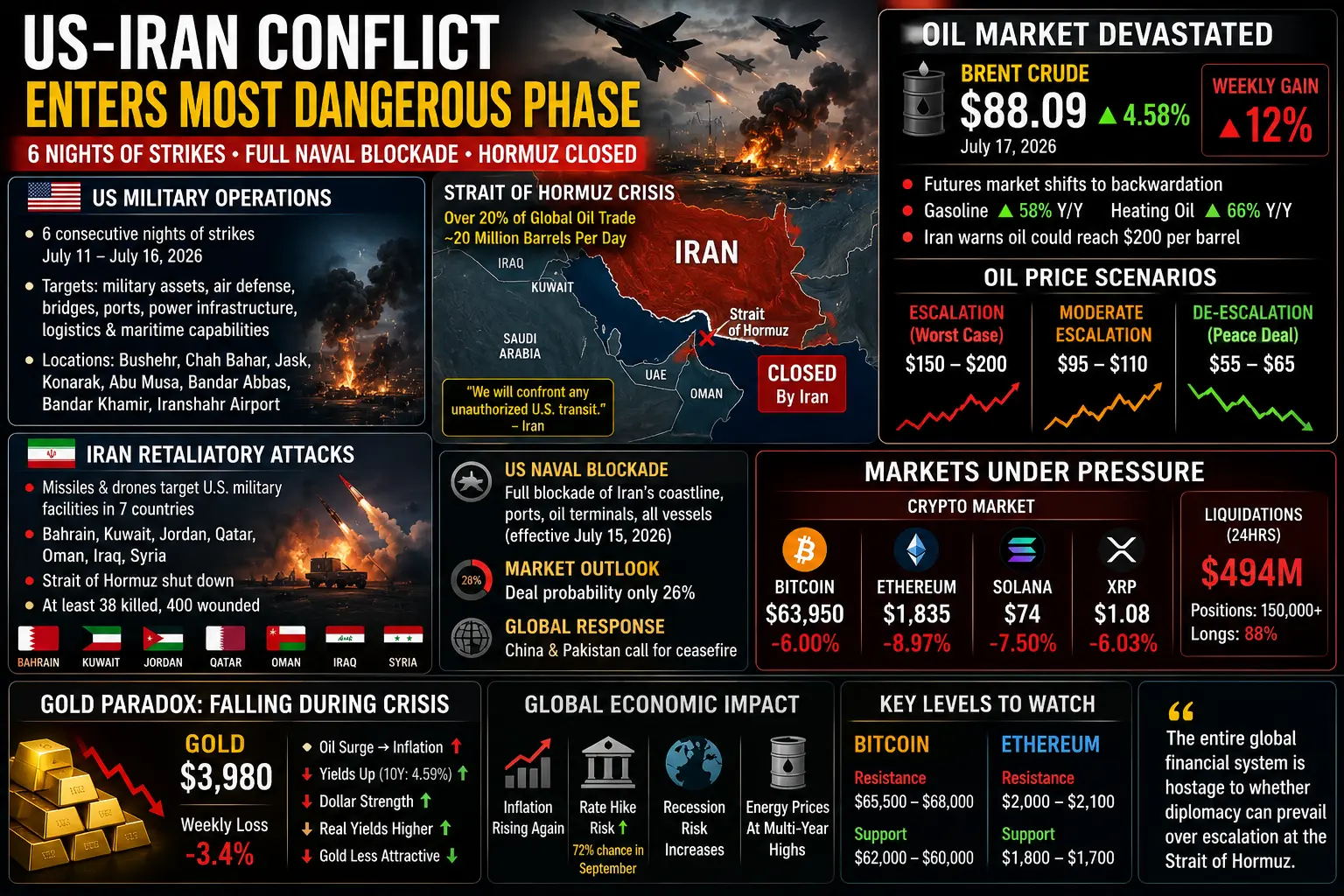
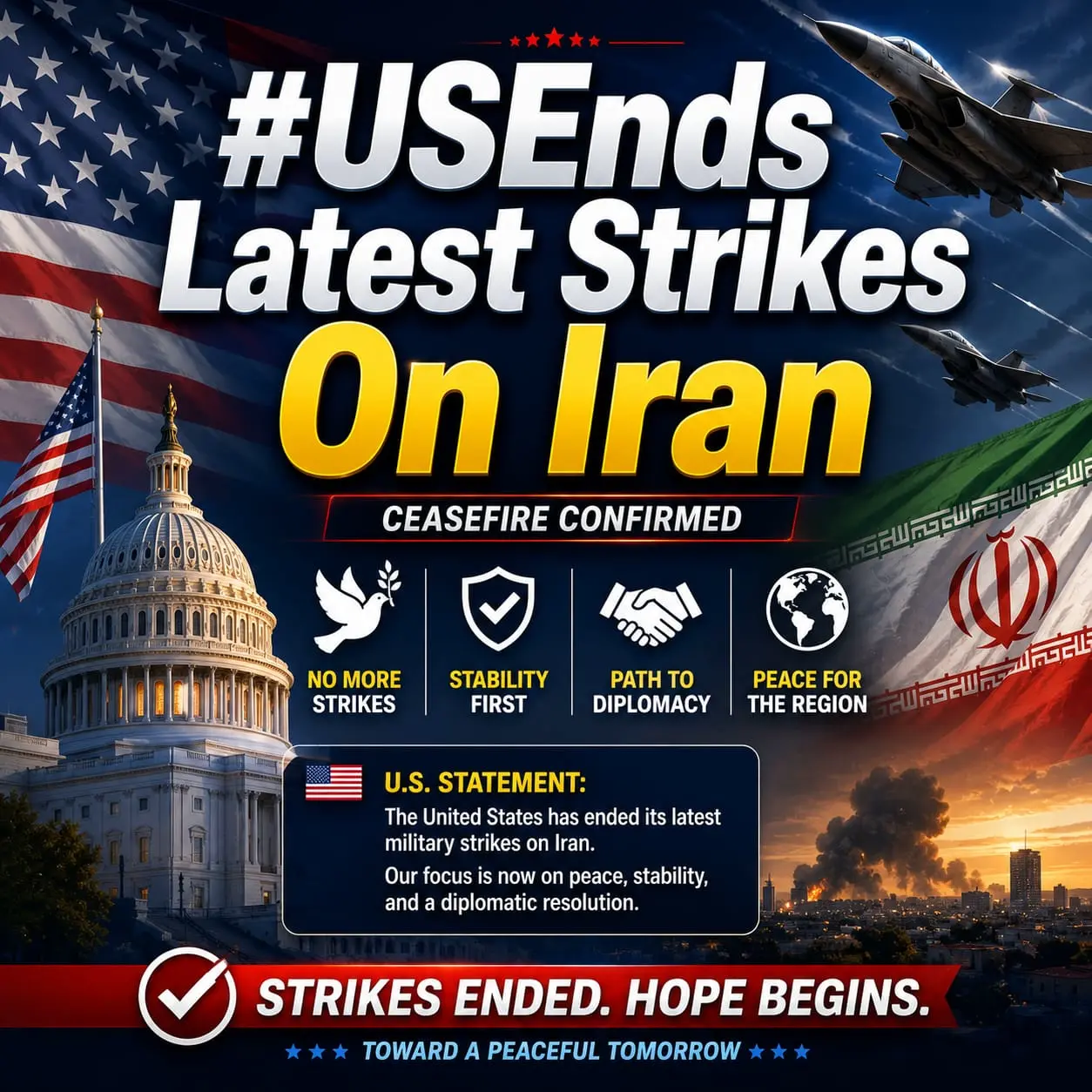
The United States has completed its latest round of air strikes on Iran, marking six consecutive nights of military operations from July 11 through July 16, 2026. CENTCOM confirmed the sixth night of strikes at 9:40 p.m. ET on July 16, carried out at President Trump's direction. These strikes targeted Iranian military assets including coastal surveillance, air defense sites, logistics infrastructure, bridges, port facilities, and maritime capabilities across Bushehr, Chah Bahar, Jask, Konarak, Abu Musa, Bandar Abbas, Bandar Khamir, and Iranshahr Airport. The latest
  • Reward
  • 2
  • Repost
  • Share
SoominStar:
LFG 🔥
View More
#USEndsLatestStrikesOnIran
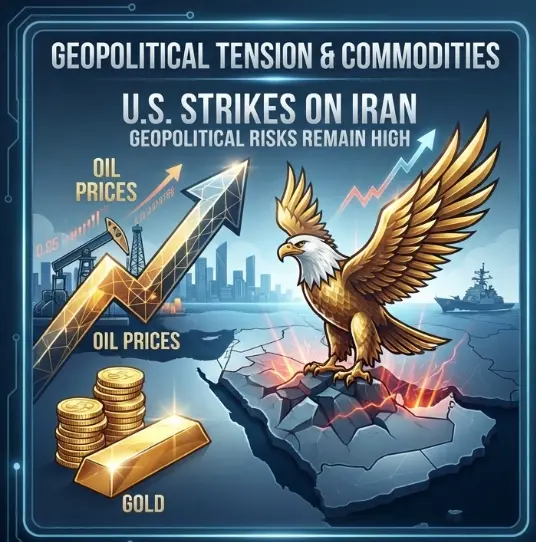
U.S. Announces Completion of Latest Strikes on Iran, Geopolitical Risks Remain High
The United States has announced the completion of its latest round of military strikes targeting Iran, marking another significant development in the ongoing regional conflict. According to official statements, the operation has concluded for now, but tensions across the Middle East remain elevated as both sides continue to monitor the security situation closely.
Global financial markets reacted cautiously to the news. Oil prices, gold, and other traditional safe-haven assets remaine
BTC0.67%
ETH1.66%
post-image
post-image
  • Reward
  • 5
  • Repost
  • Share
MrFlower_XingChen:
To The Moon 🌕
View More
#USEndsLatestStrikesOnIran
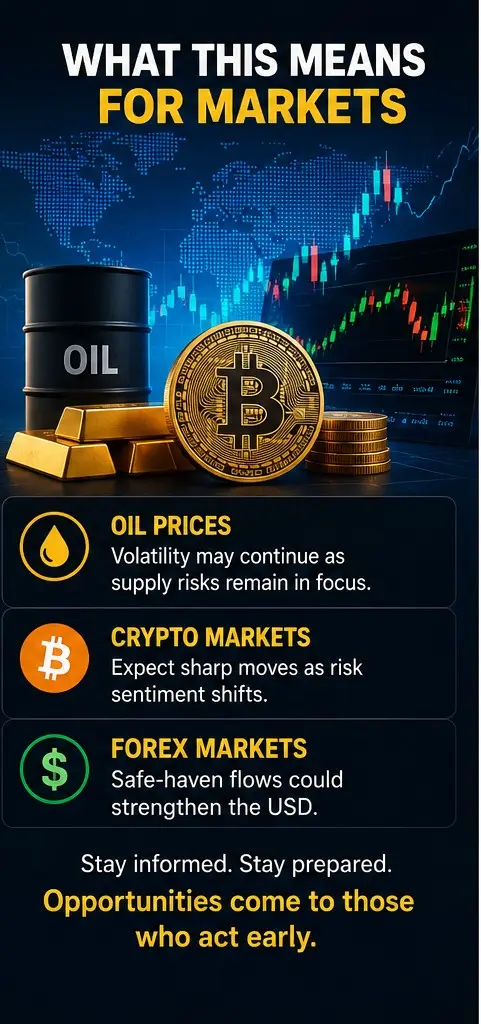
US ENDS LATEST STRIKES ON IRAN — WHAT THIS MEANS FOR MARKETS AND YOUR NEXT MOVE.
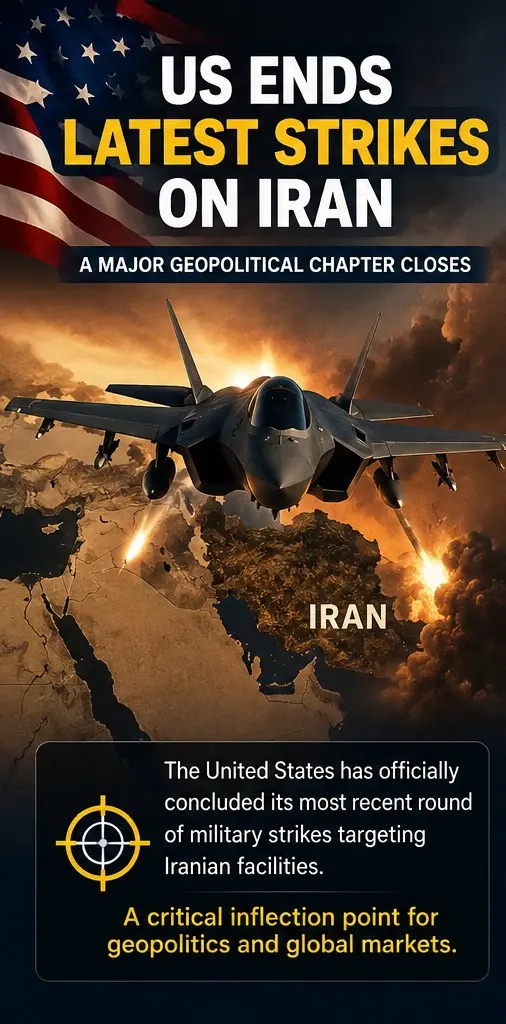
The United States has officially concluded its most recent round of military strikes targeting Iranian acilities.
This development marks a critical inflection point not just for geopolitics, but for global financial markets — including crypto, commodities, and forex.
Whether you are tracking Bitcoin's next direction, monitoring oil price volatility, or reassessing your portfolio risk, one thing is certain: information speed and community insight are your most valuable assets right now.
BTC0.67%
ETH1.66%
post-image
post-image
post-image
  • Reward
  • 14
  • Repost
  • Share
MrFlower_XingChen:
To The Moon 🌕
View More
#USEndsLatestStrikesOnIran
US Pauses Iran Strikes After Major Hormuz Operation What You Need to Know
The United States has ended its latest military operation against Iran after a series of coordinated strikes targeting around 90 locations linked to threats against shipping through the Strait of Hormuz. According to U.S. Central Command (CENTCOM), the final phase lasted roughly five hours and followed an earlier 90-minute operation conducted the same day.
Where the Strikes Took Place
You should know that the operation covered a wide range of strategic locations, including:
- Bandar Abbas
- Bu
BTC0.67%
ETH1.66%
SOL1.91%
SDyahaya
#USEndsLatestStrikesOnIran
US Pauses Iran Strikes After Major Hormuz Operation What You Need to Know
The United States has ended its latest military operation against Iran after a series of coordinated strikes targeting around 90 locations linked to threats against shipping through the Strait of Hormuz. According to U.S. Central Command (CENTCOM), the final phase lasted roughly five hours and followed an earlier 90-minute operation conducted the same day.
Where the Strikes Took Place
You should know that the operation covered a wide range of strategic locations, including:
- Bandar Abbas
- Bushehr
- Chabahar
- Jask
- Konarak
- Abu Musa
- Khormuj
- Ahvaz
- Qeshm
- Tunb
- Kuh-e Stak
- Sirik
Released footage reportedly showed damaged runways and destroyed missile launch positions. The primary objective was to weaken Iran's ability to threaten commercial tankers and cargo vessels operating through the Strait of Hormuz.
Dispute Over Civilian Targets
You also need to note that conflicting reports emerged on July 14.
Iranian media claimed a wheat silo in Hoveyzeh was struck, while CENTCOM rejected the allegation, stating the operation focused exclusively on military facilities in Bandar Abbas, Bushehr, Khormuj, Ahvaz, Qeshm, Tunb and Kuh-e Stak to reduce Iran's maritime strike capabilities.
Iran responded by claiming attacks on U.S. military bases across the Gulf and temporarily disrupting traffic through the Strait of Hormuz.
Why the Conflict Escalated
The latest escalation followed the collapse of a ceasefire.
Although the U.S. and Iran agreed to a temporary truce beginning June 28, renewed attacks on shipping reportedly broke the agreement. The U.S. then launched successive operations on July 11, 12, 13, 14, and 15.
President Trump informed Congress that hostilities had resumed on July 7 activating a 60-day authorization for military action aimed at protecting American personnel and strategic interests. The U.S. also reinstated a maritime blockade on selected Iranian ports on July 15.
Why the U.S. Stopped
Several factors likely influenced the decision to halt operations:
- Rising financial and military costs.
- Increasing risk of a broader regional conflict.
- Diplomatic pressure from Gulf allies.
- Concern over disruptions to global oil supplies.
- Signs of renewed back-channel diplomacy.
Iran's Response
Iran maintained a firm public stance, promising retaliation and claiming successful strikes against U.S. positions.
Privately, however, the release of Dena Karari, a U.S.-Iran dual national detained since 2024, was viewed as a possible goodwill gesture. President Trump publicly welcomed the development.
What It Means for Markets
You may notice that financial markets reacted positively after news of the pause.
- Oil prices eased slightly but remained supported by ongoing Hormuz risks.
- Tanker shipping costs stayed elevated.
- Gold pulled back.
- Global equities gained modest relief.
- Crypto sentiment improved.
Bitcoin remained above key support levels while Ethereum, Solana and several major altcoins attracted fresh buying interest. Stablecoin activity increased, perpetual funding remained relatively balanced and ETF inflows continued to show strength.
What You Should Watch Next
Keep an eye on:
- Shipping activity through the Strait of Hormuz.
- Any signs of renewed U.S.-Iran negotiations.
- Future CENTCOM briefings and maritime security measures.
- Iran's military claims and official U.S. responses.
- Oil prices, the U.S. Dollar Index (DXY), and Treasury yields.
Trading Perspective
If you're navigating the current market:
- Keep your core spot positions.
- Avoid excessive leverage.
- Use disciplined stop-loss orders.
- Consider grid strategies during sideways volatility.
- Maintain cash reserves for potential pullbacks.
- Put idle stablecoins to work through yield products instead of chasing sudden price spikes.
For now the U.S. says its objective has been achieved after striking approximately 90 targets linked to maritime threats. However, the situation around the Strait of Hormuz remains highly sensitive, meaning geopolitical and market risks have not disappeared.

repost-content-media
  • Reward
  • 10
  • Repost
  • Share
MrFlower_XingChen:
To The Moon 🌕
View More
#USEndsLatestStrikesOnIran
Six Nights Of U.S. Strikes Have Changed The Global Market Narrative
The geopolitical landscape has entered another critical phase after the United States completed its sixth consecutive night of military strikes against Iran between July 11 and July 16, 2026. According to CENTCOM, the operations targeted Iran's military infrastructure, including air defense systems, surveillance facilities, logistics hubs, bridges, port infrastructure, maritime assets, and power facilities across Bandar Abbas, Bushehr, Chah Bahar, Jask, Konarak, Abu Musa, Bandar Khamir, and Iranshah
BTC0.67%
ETH1.66%
SOL1.91%
XRP0.78%
post-image
post-image
  • Reward
  • 7
  • Repost
  • Share
Spexialist:
To The Moon 🌕
View More
#USEndsLatestStrikesOnIran
The conflict between the United States and Iran has entered another critical stage after the latest round of U.S. airstrikes, extending days of sustained military operations targeting Iranian military infrastructure. The campaign has focused on degrading Iran's ability to threaten commercial shipping through the Strait of Hormuz, one of the world's most strategically important energy corridors. Recent reports indicate the strikes have continued beyond the sixth night, highlighting that the confrontation remains active rather than resolved.
The Strait of Hormuz carr
BTC-0.17%
ETH-1.67%
  • Reward
  • 7
  • Repost
  • Share
Venüs_:
2026 GOGOGO 👊
View More
#USEndsLatestStrikesOnIran
The United States has completed its latest round of air strikes on Iran, marking six consecutive nights of military operations from July 11 through July 16, 2026. CENTCOM confirmed the sixth night of strikes at 9:40 p.m. ET on July 16, carried out at President Trump's direction. These strikes targeted Iranian military assets including coastal surveillance, air defense sites, logistics infrastructure, bridges, port facilities, and maritime capabilities across Bushehr, Chah Bahar, Jask, Konarak, Abu Musa, Bandar Abbas, Bandar Khamir, and Iranshahr Airport. The latest
post-image
post-image
post-image
  • Reward
  • 33
  • Repost
  • Share
My_Power:
To The Moon 🌕
View More
#USEndsLatestStrikesOnIran
Recent reports that the United States has ended its latest round of military strikes on Iran have drawn significant attention from global markets, geopolitical analysts, and investors. While tensions in the Middle East remain elevated, the suspension of new military action is being viewed by many as a potential step toward reducing the immediate risk of further escalation.
The Middle East plays a vital role in global energy production and international trade. Any military conflict in the region can influence oil prices, shipping routes, inflation, and investor confi
BTC0.67%
ETH1.66%
post-image
post-image
  • Reward
  • 12
  • Repost
  • Share
BeautifulDay:
To The Moon 🌕
View More
#USEndsLatestStrikesOnIran
The United States has completed six consecutive nights of strikes on Iran, the longest sustained bombing campaign since the February 2026 conflict began. CENTCOM confirmed strikes on air defense sites, coastal surveillance, military logistics, and maritime capabilities across Bushehr, Chah Bahar, Jask, Konarak, Abu Musa, and Bandar Abbas. The July 16-17 strikes also hit bridges near Bandar Khamir and Iranshahr Airport, killing at least seven people. Defense Secretary Hegseth released footage of an Iranian military tower collapsing.
The trigger was Iran closing the S
BTC0.67%
ETH1.66%
XAG-0.11%
CL1.36%
HighAmbition
#USEndsLatestStrikesOnIran
The United States has completed six consecutive nights of strikes on Iran, the longest sustained bombing campaign since the February 2026 conflict began. CENTCOM confirmed strikes on air defense sites, coastal surveillance, military logistics, and maritime capabilities across Bushehr, Chah Bahar, Jask, Konarak, Abu Musa, and Bandar Abbas. The July 16-17 strikes also hit bridges near Bandar Khamir and Iranshahr Airport, killing at least seven people. Defense Secretary Hegseth released footage of an Iranian military tower collapsing.
The trigger was Iran closing the Strait of Hormuz on July 12 after attacks on commercial vessels including Saudi and Qatari tankers. The US reimposed a naval blockade of all Iranian ports, initially proposed a 20% Hormuz transit fee, then replaced it with Gulf state investment deals while keeping the blockade active. Iran has retaliated with seven series of drone and missile strikes on US bases in Bahrain, Kuwait, Qatar, and for the first time on July 17, a US base in Syria, claiming fatalities. Iran's military warned on Telegram that if the US strikes critical Iranian infrastructure, "everything still intact in the region will be crushed." The June 17 ceasefire is effectively dead. Trump declared it "over" and called negotiating with Iran a waste of time. Market pricing for a deal has dropped to just 26% probability.
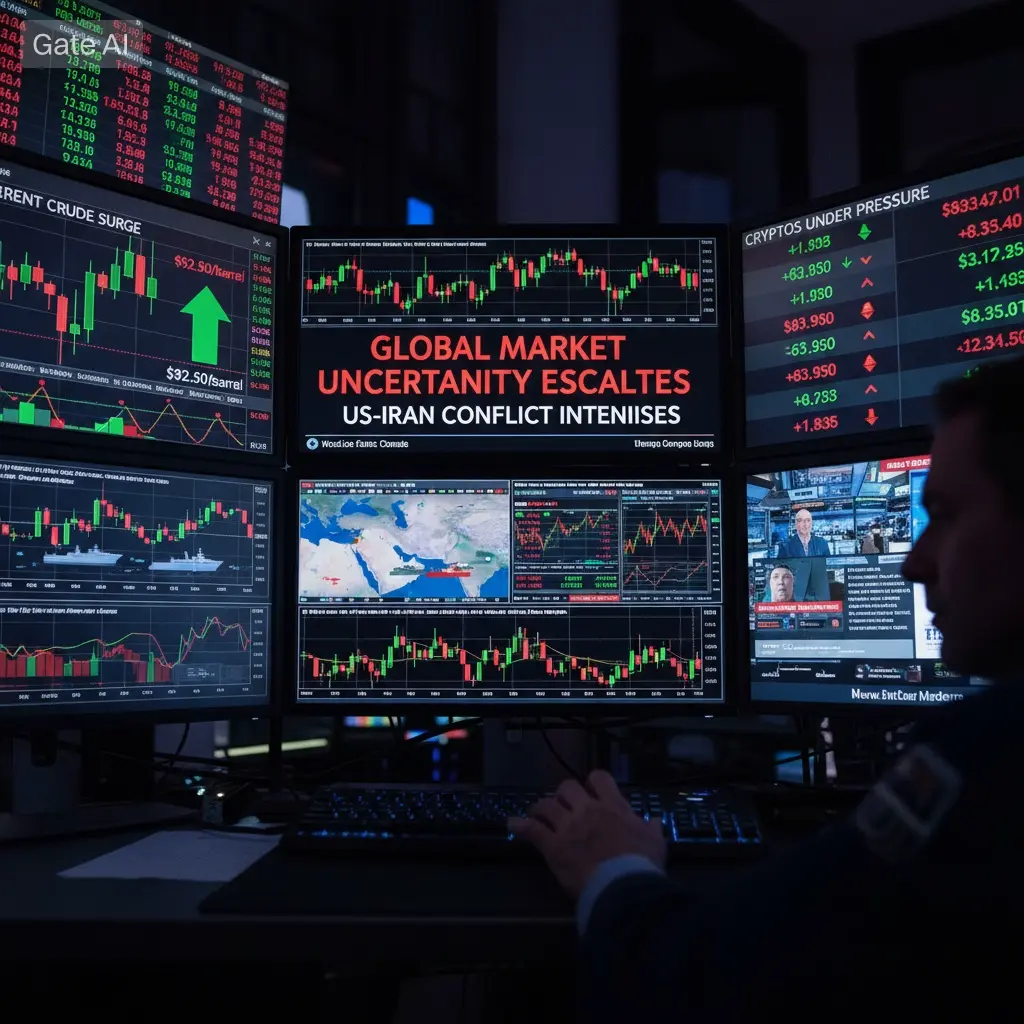
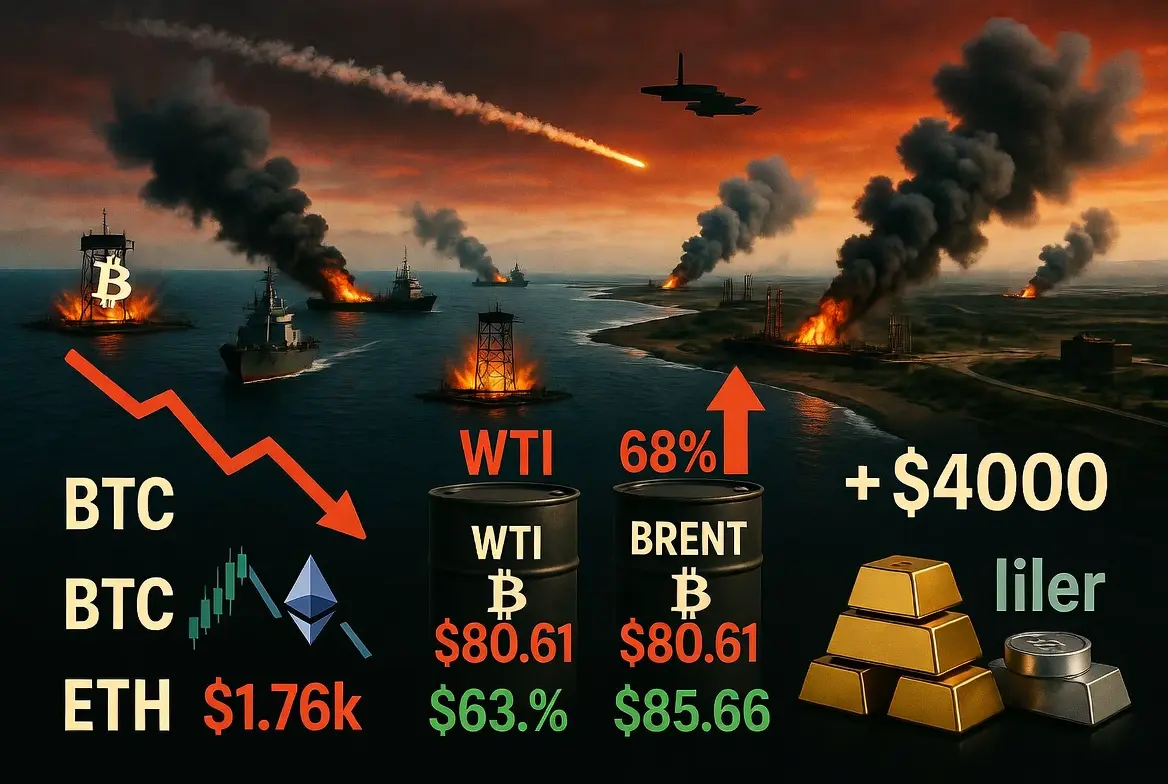
Bitcoin dropped from approximately $65,000 to around $63,479, a decline of roughly 3.0% to 3.2%. Bitcoin is on track for its fifth consecutive weekly loss, its longest losing streak in years. The percentage decline over the past month is 3.25% from $66,210, and year-over-year BTC is down 46% from $118,640. The reason BTC falls despite safe haven narrative: oil-driven inflation fears strengthen the case for Fed rate hikes, higher rates hurt non-yielding assets, the dollar strengthens as capital flees risk, and institutional futures traders cut leveraged positions. Over $450 million in crypto positions were liquidated on July 8 alone, with altcoins bearing the brunt. Key BTC support levels are $62,000 then $58,000. If $62,000 breaks convincingly, $58,000 to $60,000 becomes likely.
Ethereum dropped from $1,967 to approximately $1,760, a decline of roughly 10.5%, making ETH's correction over three times deeper than BTC in percentage terms. ETH is down 9.8% over the past month and 40% year-over-year from $2,972. Altcoins suffer more in risk-off environments because capital exits them first and fastest. ETH dominance reached an overbought warning earlier in July, and the pullback has been sharp. However, ETH's OBV moving average remains strongly bullish, meaning the underlying accumulation trend has not broken. If the situation stabilizes, ETH could recover faster than BTC. Downside targets if conflict worsens: $1,700 then $1,600.
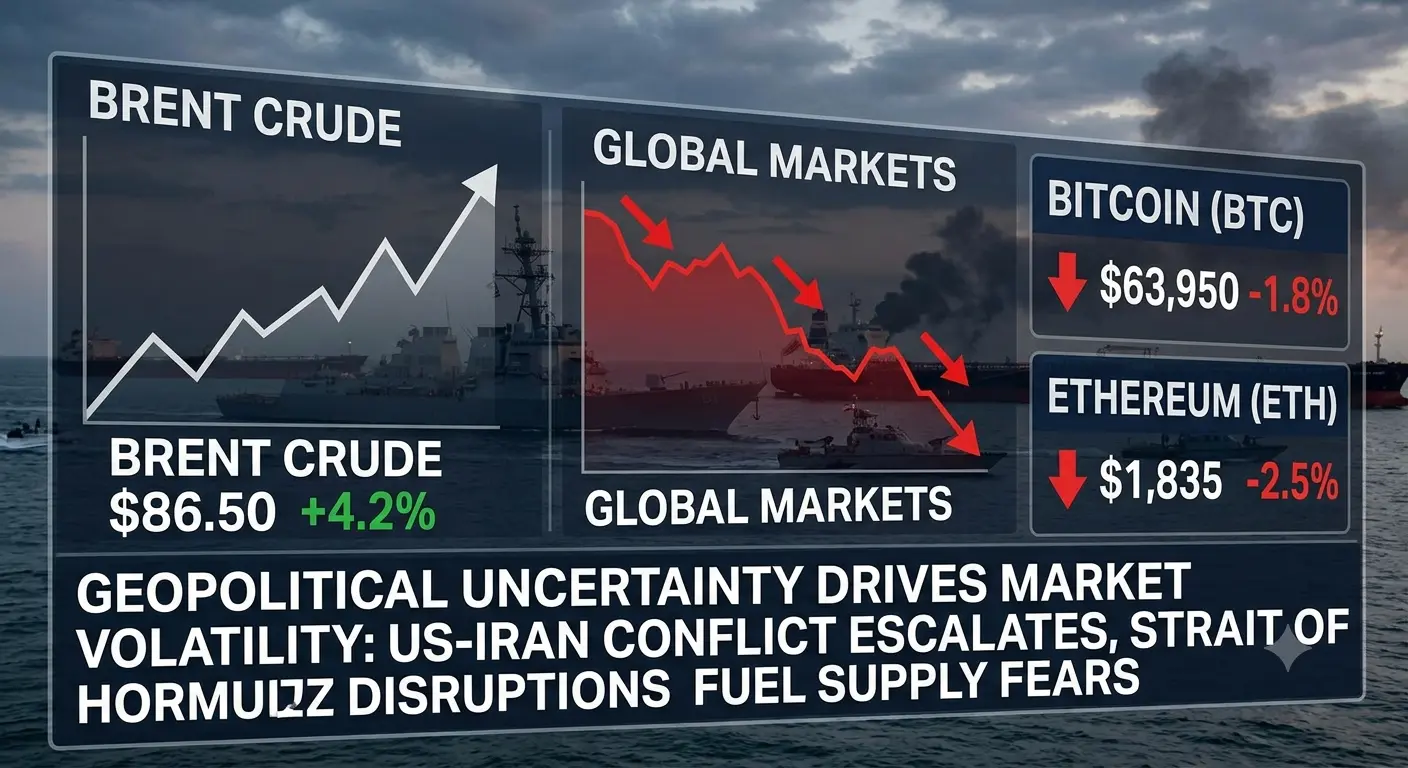
WTI Crude Oil currently at $80.61 per barrel, up 2.10% today. Brent Crude Oil at $85.66 per barrel, up 1.70% today. Both have climbed approximately 12% over the past week. Before escalation, Brent was around $73 to $75. On July 7 it surged 3%. On July 13, Trump announced the blockade, Brent jumped 9.6% to $83.30, the largest daily gain since May 2020. By July 15 Brent touched $87.08 and briefly reached $89. Current levels represent approximately 16% gains from pre-escalation. The Strait of Hormuz carried about 20% of global oil and gas shipments before the war. With Iran closing it and the US blockading Iranian ports, supply is severely disrupted. Oil market structure has shifted into backwardation, signaling tight near-term supply, contrasting with early July contango indicating ample supply. Iran has asked the Houthis to stand ready to shut the Red Sea route too. If both Hormuz and Red Sea are disrupted simultaneously, Brent could exceed $100. Analysts expect Brent to test $88 to $92 and WTI to push toward $83 to $87 next week, with spikes above $95 possible if infrastructure is hit. A single successful strike on a Gulf export facility could add $10 to $15 in hours.
Gold is around $3,980 to $4,038 per ounce, on track for its biggest weekly loss in six weeks, down approximately 3.4% this week. From its July 14 peak near $4,100, gold has fallen roughly 2.9%. Over the past month gold is down 5.9% but up 21.9% year-over-year. Why gold falls during this crisis: rising oil fuels inflation expectations, strengthening rate hike probability, higher rates hurt non-yielding gold, and the dollar strengthens. June CPI showed 3.5% inflation and core 2.6%, both below forecasts, which briefly lifted gold. But those figures do not yet reflect the oil surge. When July data incorporates $85+ oil, inflation expectations will rise again. This creates a stagflationary setup: growth slowing while inflation stays high, which is gold's ideal long-term environment. But the transition period where rate hike fears dominate before stagflation becomes obvious is gold's weakest zone. Silver at approximately $57, down 1.34% today, down 20.6% over the past month. Gold-silver ratio near 71 suggests silver is oversold relative to gold. Key gold level is $3,985. Holding above this keeps medium-term bullish structure intact. If rate fears intensify, gold could test $3,950 to $3,900. If stagflation narrative takes hold, gold could push toward $4,200 to $4,500. Extreme conflict scenarios project gold reaching $5,000+.
Crypto Outlook Next Few Days: BTC likely trades $60,000 to $64,000 with bias toward lower end. If strikes intensify or Iran hits infrastructure, BTC could break below $62,000 and test $58,000 to $60,000. ETH likely trades $1,700 to $1,850 with downside toward $1,600. Altcoins face 5 to 10% drops possible per escalation session. Further liquidation events of $300 to $500 million are realistic. The turning point would be either a diplomatic breakthrough reopening Hormuz, or a macro narrative shift from rate hikes to stagflation. Currently the negative feedback loop dominates: oil up drives inflation up, inflation up drives rate hikes up, rate hikes up drives dollar up, dollar up drives crypto and gold down.
Oil Outlook Next Few Days: Almost certainly continues rising. No resolution for Hormuz closure, both sides escalating, Iran threatening regional infrastructure destruction. Expect Brent toward $88 to $92, WTI toward $83 to $87. If Iran hits Gulf oil infrastructure, Brent could spike $95 to $100+. Houthi Red Sea activation adds 5 to 10% premium on top. The only ceiling scenario is a diplomatic breakthrough, probability approximately 25 to 30%.
Gold Outlook Next Few Days: Tug-of-war between rate hike fears pushing it down and stagflation hedge demand pushing it up. Likely trades $3,950 to $4,050, volatile and uncertain. If Fed signals July inflation will be problematic, gold leans toward $3,950. If growth data deteriorates alongside high oil, the stagflation flip pushes gold toward $4,100 to $4,200. Longer term, this conflict is structurally bullish for gold toward $4,200 to $4,500 and potentially much higher.
Key Price Summary: BTC approximately $63,479 down 3.0% from $65,000, down 3.25% monthly, down 46% yearly. ETH approximately $1,760 down 10.5% from $1,967, down 9.8% monthly, down 40% yearly. WTI $80.61 up 2.10% daily, up 12% weekly, up 4.7% monthly. Brent $85.66 up 1.70% daily, up 12% weekly, up 16% from pre-escalation. Gold approximately $3,980 down 2.9% from peak, down 3.4% weekly, down 5.9% monthly, up 21.9% yearly. Silver approximately $57 down 1.34% daily, down 20.6% monthly.
@Gate_Square
repost-content-media
  • Reward
  • 6
  • Repost
  • Share
BeautifulDay:
To The Moon 🌕
View More
Load More

Join 40 M users in our growing community

⚡️ Join 40 M users in the crypto craze discussion
💬 Engage with your favorite top creators
👍 See what interests you
  • Pinned