1 Trillion AI Agents to Transact with Bitcoin
We've long known that the next major revolution in artificial intelligence lies in a world of "agents" that go beyond chatty conversationbots and directly participate in the economy. However, the clearest vision of what the payment rails of this revolution will be comes from Paolo Ardoino, CEO of Tether and a key figure in the crypto ecosystem. In his recent statement, Ardoino made a striking prediction: In the future, 1 trillion AI agents without bank accounts will use Bitcoin as their primary currency and autonomously perform trillions of microtransactions daily.
This statement points to a fundamental problem often overlooked at the intersection of traditional finance and artificial intelligence. As Ardoino points out, banks will not open accounts for software bots. Traditional banking infrastructure is built on human identity, physical addresses, and manual verification processes. However, AI agents that perform tasks autonomously and need to make instant payments for resources must operate so quickly and anonymously that they cannot have a normal credit card or IBAN number. This is where Bitcoin and its second-layer solution, the Lightning Network, come into play.
Bitcoin's positioning as a medium of exchange, going beyond the "digital gold" narrative, forms the basis of this agentic economy. As Ardoino points out, the Lightning Network has the capacity to process millions of transactions per second in milliseconds and at virtually zero cost. This means an AI agent can pay a fee well under a cent for an API call in a fraction of a second. Research also supports this vision: over 9,000 simulations conducted by the Bitcoin Policy Institute on 36 different AI models show that AI overwhelmingly prefers Bitcoin for long-term store of value and stablecoins for daily spending. Traditional fiat currencies are almost never chosen.
The infrastructure for this transformation is also rapidly taking shape. Companies like LQWD Technologies are already developing live endpoints and private wallets (like SaturnZap) to enable AI agents to manage liquidity and route payments on Lightning. Similarly, tools released by Lightning Labs enable agents to operate on a "pay and access" basis via the L402 protocol. In this system, when an AI wants to access a database, it detects the bill without human intervention, pays, and continues its work.
Tether's strategic investments in this area are transforming Arduino's vision from a mere prophecy into a commercial reality. The company is developing decentralized AI solutions like the QVAC SDK, which can run on user devices, while also enabling the programmable management of Bitcoin and USDT by AI agents with the Tether Wallet Development Kit. It seems that the agentic economy is no longer a matter of "if," but of "when." And the financial backbone of this new economy will not be bank accounts, but cryptographic keys and Lightning bills.
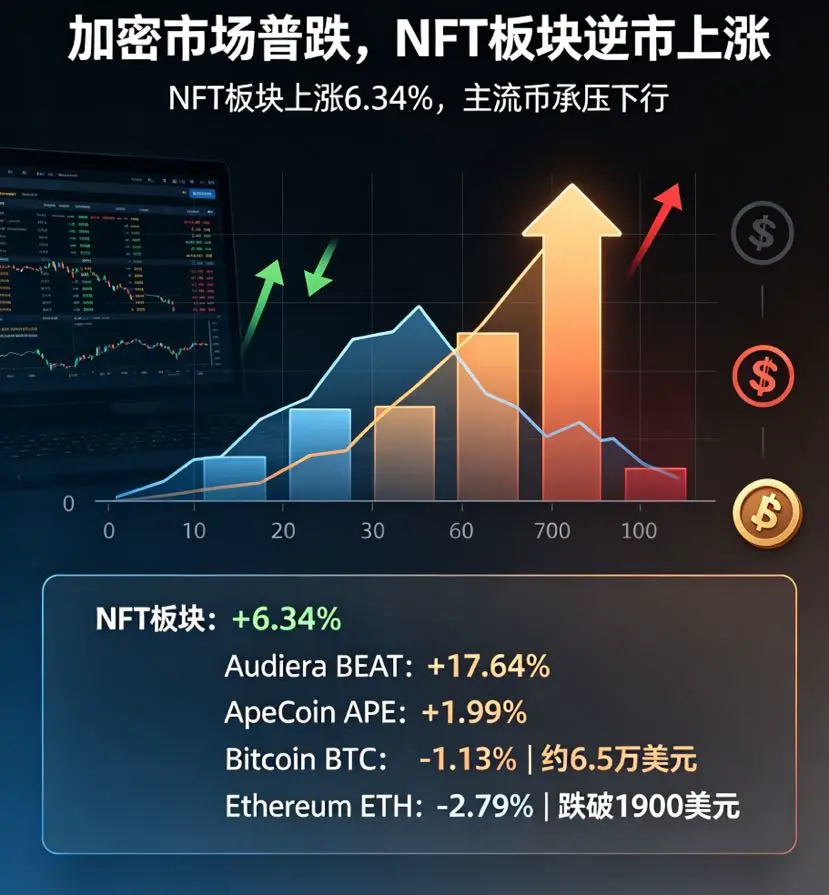
#CryptoMarketsDipSlightly
#CryptoNews
#Gate广场 #创作者狂欢 #内容挖矿
We've long known that the next major revolution in artificial intelligence lies in a world of "agents" that go beyond chatty conversationbots and directly participate in the economy. However, the clearest vision of what the payment rails of this revolution will be comes from Paolo Ardoino, CEO of Tether and a key figure in the crypto ecosystem. In his recent statement, Ardoino made a striking prediction: In the future, 1 trillion AI agents without bank accounts will use Bitcoin as their primary currency and autonomously perform trillions of microtransactions daily.
This statement points to a fundamental problem often overlooked at the intersection of traditional finance and artificial intelligence. As Ardoino points out, banks will not open accounts for software bots. Traditional banking infrastructure is built on human identity, physical addresses, and manual verification processes. However, AI agents that perform tasks autonomously and need to make instant payments for resources must operate so quickly and anonymously that they cannot have a normal credit card or IBAN number. This is where Bitcoin and its second-layer solution, the Lightning Network, come into play.
Bitcoin's positioning as a medium of exchange, going beyond the "digital gold" narrative, forms the basis of this agentic economy. As Ardoino points out, the Lightning Network has the capacity to process millions of transactions per second in milliseconds and at virtually zero cost. This means an AI agent can pay a fee well under a cent for an API call in a fraction of a second. Research also supports this vision: over 9,000 simulations conducted by the Bitcoin Policy Institute on 36 different AI models show that AI overwhelmingly prefers Bitcoin for long-term store of value and stablecoins for daily spending. Traditional fiat currencies are almost never chosen.
The infrastructure for this transformation is also rapidly taking shape. Companies like LQWD Technologies are already developing live endpoints and private wallets (like SaturnZap) to enable AI agents to manage liquidity and route payments on Lightning. Similarly, tools released by Lightning Labs enable agents to operate on a "pay and access" basis via the L402 protocol. In this system, when an AI wants to access a database, it detects the bill without human intervention, pays, and continues its work.
Tether's strategic investments in this area are transforming Arduino's vision from a mere prophecy into a commercial reality. The company is developing decentralized AI solutions like the QVAC SDK, which can run on user devices, while also enabling the programmable management of Bitcoin and USDT by AI agents with the Tether Wallet Development Kit. It seems that the agentic economy is no longer a matter of "if," but of "when." And the financial backbone of this new economy will not be bank accounts, but cryptographic keys and Lightning bills.
#CryptoMarketsDipSlightly
#CryptoNews
#Gate广场 #创作者狂欢 #内容挖矿