Moemate was a decentralized AI ecosystem for creating and interacting with custom multimodal AI agents with chat, voice, memory, and 3D avatars, but its consumer app shut down in February 2025 and the original product is no longer operational.
2026-08-31 11:32:17
Prom (PROM) is a modular ZK Layer 2 network built on Polygon CDK. It is designed to improve blockchain scalability through zero-knowledge proofs, EVM compatibility, and cross-chain technology, while providing infrastructure for asset and application interactions across blockchain ecosystems. Unlike Layer 2 networks dedicated to a single ecosystem, Prom has prioritized multichain connectivity from the outset and has gradually expanded its focus to include a range of Web3 application areas, including DeFi, GameFi, RWA, and AI.
2026-08-31 09:54:54
Prom is a ZK Layer 2 network built on Polygon CDK. Its core architecture uses zero-knowledge proofs to batch-execute large numbers of Traders on Layer 2, then uses cryptographic proofs to verify the validity of state transitions to the underlying network. This enhances blockchain throughput and lowers the cost per Trader while preserving verifiability. Prom positions itself as a high-performance, scalable network based on Polygon CDK, with a focus on ZK Proof, EVM compatibility, and efficient Trader processing.
2026-08-31 09:40:22
Gate AI is a general-purpose AI assistant developed by Gate, capable of conversational Q&A, information search, data insights, and task execution, enabling users to efficiently obtain answers and complete tasks via natural language. By integrating platform content, real-time information, and intelligent recommendations, Gate AI delivers a seamless experience for information retrieval and solution generation, and is evolving into the unified entry point for the Gate AI ecosystem.
2026-08-31 09:32:18
ECB tokenized finance refers to the European Central Bank and Eurosystem's work on adapting financial market infrastructure so tokenized financial assets recorded on distributed ledger technology (DLT) can interact with and settle in central bank money. The focus is primarily wholesale finance between banks and other eligible market participants, not creating a cryptocurrency for everyday consumers.
2026-08-31 09:20:38
Chaikin Money Flow (CMF) is a volume-weighted technical analysis indicator that measures buying pressure and selling pressure by combining an asset’s closing price with trading volume over a set period. Developed by Marc Chaikin, the CMF indicator typically uses a 20- or 21-period lookback and fluctuates above and below a zero line. Positive CMF points to net buying pressure, while negative CMF points to net selling pressure.
2026-08-31 09:10:33
Truflation is a blockchain-enabled financial data service that publishes independent, real-time inflation and macroeconomic indexes, updated daily to give markets a faster reading of price changes than monthly government releases such as the U.S. Consumer Price Index (CPI). It was launched in December 2021 as an alternative data source for traders, analysts, researchers, institutions, and on-chain users who need economic data before official releases and revisions arrive.
2026-08-31 09:10:08
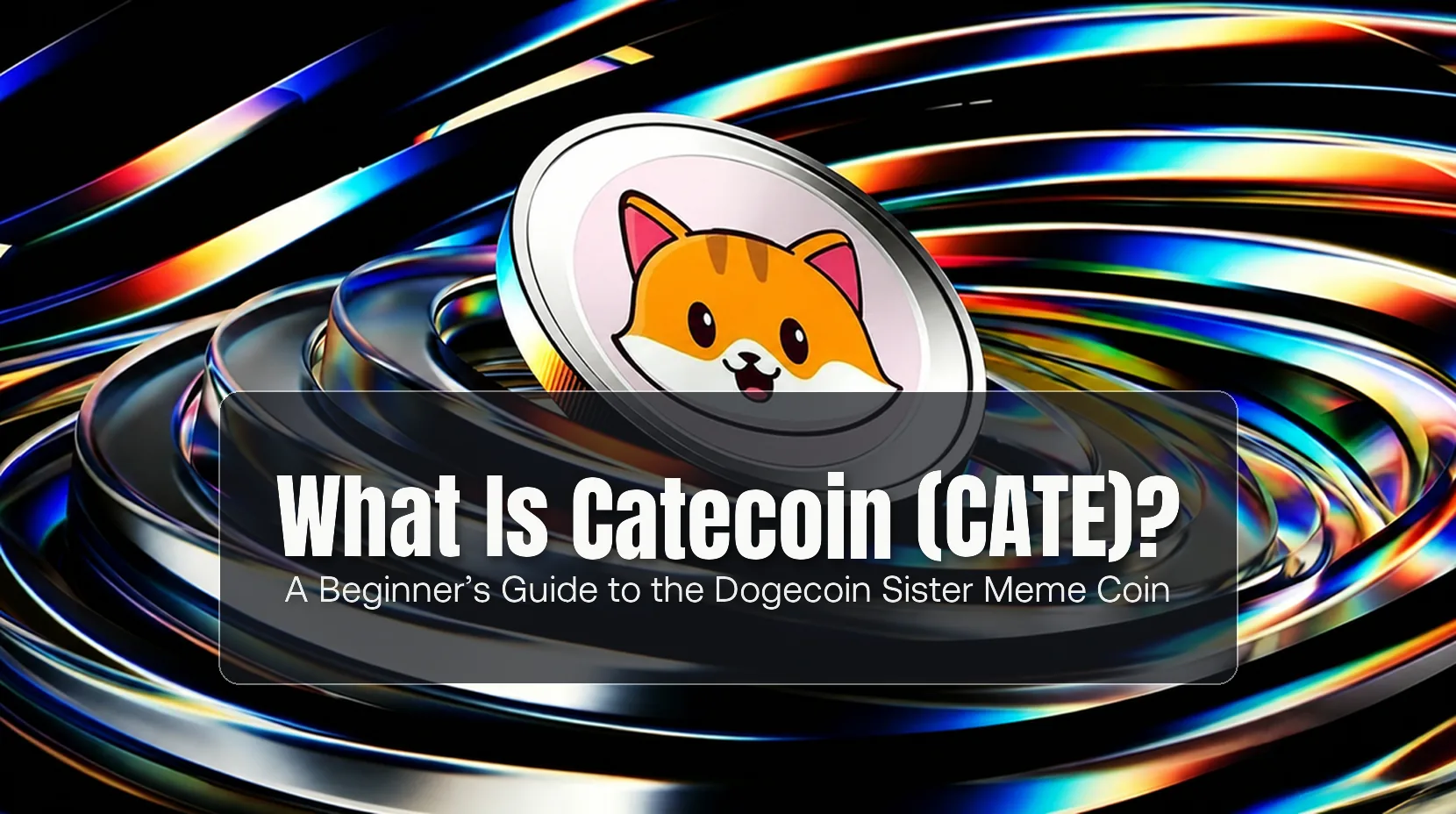
Catecoin (CATE) is a Solana-based meme coin that presents itself as the “cat sister of Dogecoin.” Its narrative draws a playful parallel between DOGE and CATE, using the idea of “Dog + E” and “Cat + E” to position CATE within the broader meme coin culture. The project was inspired by a rescued kitten shared by Atsuko Sato, the owner of Dogecoin’s original inspiration, Kabosu.
2026-08-31 08:02:15
Converting USDT to USDC means exchanging one U.S. dollar-pegged stablecoin for another. Because both are designed to maintain a value close to $1, the exchange rate is usually near 1:1. However, the amount of USDC you actually receive can still vary slightly because of the quoted conversion rate, trading fees, spreads and network costs.
2026-08-31 08:00:29
Re.xyz is a blockchain-based reinsurance platform that uses smart contracts, tokenization, and a multi-role marketplace to match insurance risk with capital more transparently than traditional reinsurance intermediaries. Built with Avalanche infrastructure and a Regulation 114 trust custody model, it aims to cut operational friction while expanding who can fund reinsurance capacity.
2026-08-31 05:41:27
A Tarkov Bitcoin Farm is a Hideout module in Escape from Tarkov that produces Physical Bitcoins when powered and stocked with graphics cards. Level 1 holds 10 GPUs, level 2 holds 25, and level 3 holds 50; Solar Power cuts generator fuel use by about 50%.
2026-08-31 05:25:28
Support and resistance levels are key price zones where buying or selling interest has repeatedly slowed or reversed a move. A support level is where demand often absorbs selling; a resistance level is where supply often caps buying. Traders map these zones with prior swing highs/lows, volume nodes, trendlines, and moving averages, then use them for range, breakout, and trendline setups—always with stops, because any level can break.
2026-08-31 02:55:43
The Money Flow Index (MFI) is a momentum indicator that combines price and trading volume to estimate buying and selling pressure. Like the Relative Strength Index (RSI), MFI moves between 0 and 100, but its use of volume gives traders another layer of information about the strength behind price movements.
2026-08-28 11:01:09
The Accumulation Distribution indicator, commonly called the A/D line or Accumulation Distribution Line, is a volume-based technical analysis tool that estimates buying and selling pressure by combining trading volume with where each period’s closing price sits inside its high-low range. An A/D line trending upward generally points to buying pressure, while a declining line points to selling pressure.
2026-08-28 11:00:16
Dual Investment is a short-term structured crypto product on Gate that pairs two assets—often a cryptocurrency such as BTC and a stablecoin such as USDT. Users lock an investment currency, choose a target price and maturity date, earn a stated APR, and receive settlement in crypto or stablecoins based on how the settlement price compares with the target price.
2026-08-28 10:28:35