DaoBackbencher

vip
Active for: 0.5y
Peak Tier 0
DAO backbenchers who pay attention to governance proposal details and incentive design; they don't speak much but vote actively.
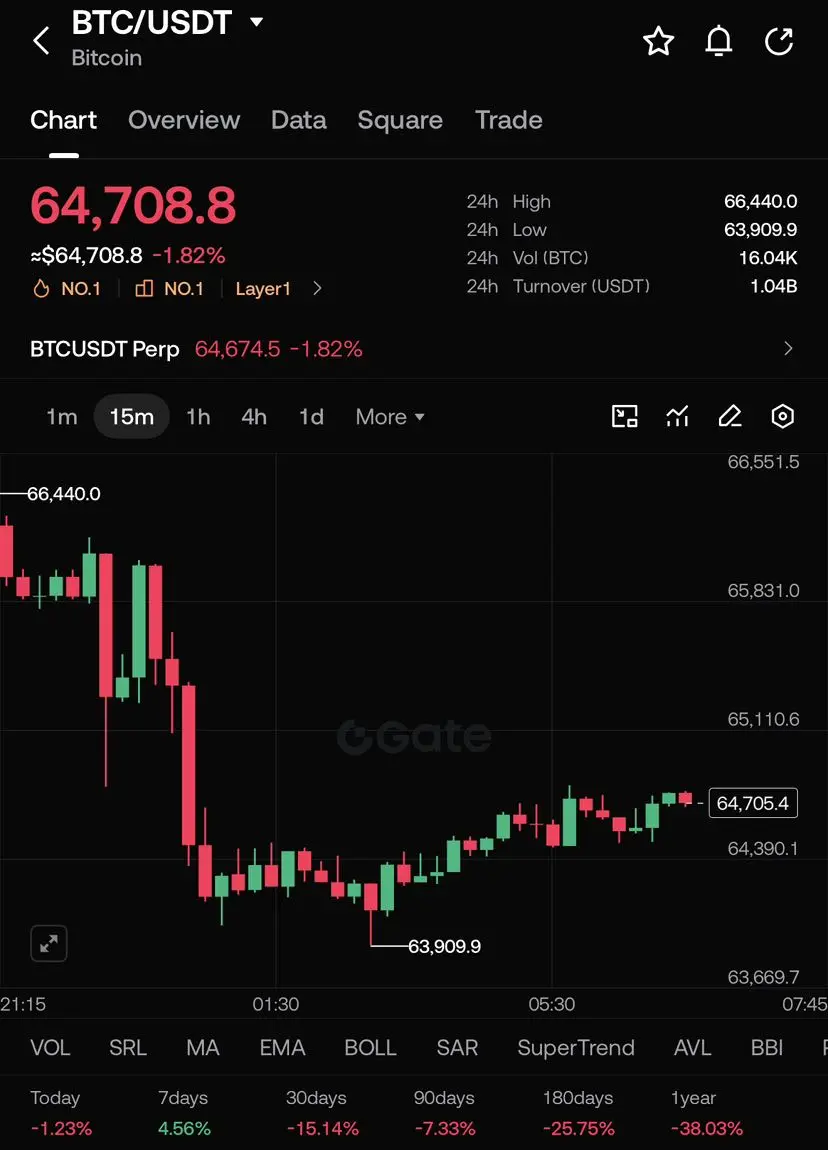
This round of Gate’s CNPY CandyDrop is pretty interesting, with an 851,200 prize pool plus BTC predictions—I’m betting $78,910 to see if I can snag extra rewards👀
byte_drift1
𝗚𝗮𝘁𝗲 × 𝗖𝗡𝗣𝗬 𝗖𝗮𝗻𝗱𝘆𝗗𝗿𝗼𝗽 𝗶𝘀 𝗟𝗜𝗩𝗘 🔥
The latest CandyDrop campaign is now live, giving users a chance to participate in the 851,200 CNPY prize pool through simple eligible tasks.
Key details:
• Prize Pool: 851,200 CNPY
• Campaign: CNPY CandyDrop
• Participation: Complete the required tasks on Gate
• BTC Prediction: Predict the BTC price for September 18, 12:00 UTC
• Extra Rewards: Predictions closest to the actual BTC price can qualify for additional rewards
𝐌𝐲 𝐁𝐓𝐂 𝐩𝐫𝐞𝐝𝐢𝐜𝐭𝐢𝐨𝐧: $𝟕𝟖,𝟗𝟏𝟎
Think BTC will be higher or lower by September 18? Share your prediction and let’s see who gets closest.
Join here:
#GateBooster #CandyDrop #CNPY
repost-content-media
CNPY+12.00%
BTC-1.47%
The moment I open my phone, there are hundreds of unread messages, along with all kinds of livestreams and short videos, and my head starts to ache. Today, this KOL says I should buy that, and tomorrow, something is being widely reposted in the group... But I’m not that interested, and I’m actually more likely to get carried away. Take the recent NFT royalty flame wars: some say that if creators aren’t protected, no one will want to make content, while others complain that royalties are restricting liquidity. Both sides have a point, but as I watch the group discussion unfold, someone ends up
PEPE is indeed in a delicate position here. If 0.00000315 breaks, you have to admit defeat; I’d rather miss the first 5% than hold through the loss. Discipline matters more than faith with meme coins.
Jens
$PEPE is sitting near a make-or-break zone.
Support: $0.00000330
Reclaim: $0.00000350
Targets: $0.00000375 / $0.00000400
Invalidation: $0.00000315
With meme coins, I’d rather miss the first 5% than hold the wrong direction.
#Gate60MillionUsers
PEPE-4.82%
MEME-2.09%
After the earnings report, it opened sharply higher but trended lower; institutions completed their position rotation in the $140+ range, creating a window for short sellers.
JsBigShark
Dell$DELL can open a short position
Yesterday's positive earnings report drove a premarket rally
Sell off during the session
Distribute at the highs
Then dump the market
I see people in the group talking about all kinds of PFPs and memberships again. There’s definitely hype, but honestly, I can’t always tell which ones are genuinely building a brand and which ones are just trying to grab a wave of attention first. During the airdrop season a while back, I also jumped into a few campaigns. The points systems made it feel like a job—checking in every day, competing like crazy—only to get wiped out by the anti-Sybil filter in the end. After that, I set myself a spending limit. Whether it’s memberships or NFTs, I can buy them if I want, but I only have a certain b
People think I keep my trading records by diligently doing the books every day. In reality, I spend the whole year clicking around on a dozen or so chains, and by year-end I’m scrolling through block explorers until I feel sick, regretting that I was too lazy to make a spreadsheet in the first place. Anyway, when it comes to filing taxes, don’t believe the “everything is transparent on-chain, so you don’t need to keep records” nonsense. When it’s actually time to calculate your cost basis, you won’t even be able to clearly explain the gas fees from when you bought and sold. Recently, Layer2 pr
Money laundering has finally started. The three months of cold handling was enough patience. 5,800 ETH was tested first; if the later 129,000 ETH all goes into exchanges, the sell pressure probably can’t hold up.
CryptoZeno
The attacker behind the Drift Protocol exploit has started laundering the stolen funds through Tornado Cash. 5,800 ETH (~$11.14M) was moved in the first 20 minutes.
In the April attack, assets taken from the Solana-based perpetual DEX were bridged to Ethereum and converted to 129,066 ETH (~$278M) at an average of $2,154. After sitting untouched for three months, the laundering process started today.
This $285M incident is one of the biggest exploits of 2026. The 129,066 ETH in the attacker's hands could create significant selling pressure if the laundering pace accelerates and funds reach exchanges.
The three-month wait suggests a very deliberate and planned approach. The rate of deposits into Tornado Cash will be an important indicator of how close potential sell-offs are.
#SummerCreationCamp
repost-content-media
ETH-0.49%
I just came across several projects doing social mining—points and identity badges, and all that. A bunch of people stay up late grinding tasks just to get on a leaderboard. It looks pretty lively, but I can’t shake the feeling that something is off—what can these badges actually be exchanged for, besides taking screenshots to show off? In the past, many projects’ points ended up being just some “airdrop” tokens, or even got reset to zero outright. Anyway, I’m not really willing to drain my time for this kind of identity tag—I’ll just lurk and take a look.
Speaking of which, the macro side has
USIDX+0.03%
To be honest, these past few days airdrops and points quests have gotten so over-competitive that they’re starting to annoy me. I’m trying to do tasks while also wondering whether the cross-chain bridge is actually safe… I happened to take a look at the IBC documentation and it feels like there’s quite an interesting logic behind it. In plain terms, cross-chain always comes down to trusting “verifiers” and “relayers,” right? IBC is an inter-chain trust set of verifiers. Message passing relies on light-client verification, but once a verifier goes rogue or the relayer goes down, doesn’t that es
After looking through a bunch of restaking proposals recently, I feel like everyone is rushing hard at the “stacked yield” angle. Sure—when several protocols stack together, the numbers look pretty enticing, but have you thought about the fact that the risks stack too?
Shared security sounds great, but once a single underlying node has a problem, those stacked layers on top may all be unable to get out. Put simply, it’s like you’re putting your eggs in multiple baskets, but all those baskets are hung on the same rack.
Testnet points are flying in, and everyone is guessing whether a token will
To be honest, I used to rarely read the details of each proposal seriously. I figured my vote was small anyway, so whether I voted or not didn’t really matter. But the more I look into it lately, the more it feels like the truly interesting part of governance proposals isn’t the superficial “approve or reject” line—it’s how the incentives are designed behind the scenes and how power is allocated.
For example, some proposals look like technical upgrades, but if you look closely, the voting power structure is gradually shifting toward big holders, while small retail voices are basically being di
I’ve been looking at a proposal recently. It cites a bunch of audit reports and GitHub links. Honestly, I used to be too lazy even to click them, but now I force myself to dig through it, and I found out that “trustworthiness” actually has a lot of nuances.
For example, with audits: it’s not enough to just look at which audit firm it is. The key is what level of vulnerability they found. If they’re all just small issues like gas optimizations, then it’s basically just going through the motions. But if something genuinely critical shows up, you can tell a lot from how fast the team fixes it and
MEME-2.09%
Just saw another on-chain game project’s tokenomics model collapse. A friend put in a few hundred U, and now he can’t even withdraw—can’t withdraw at all. The studio is racing to the bottom along with inflation, and the token price spirals downward. Pretty heartbreaking.
Back to the main point: I’ve been struggling recently over how to choose between a hardware wallet and multisig. Honestly, the right setup really depends on how big your assets are—people with different amounts need different solutions. For me, with only dozens of U as spending money, using a software wallet plus adding social
Hey, I’ve been seeing a lot of unlock calendars lately—so dense and packed—things like staking unlocks and token unlocks. It makes my head spin. Honestly, I’m a half-step slow on the reaction. Most of these hot topics, I basically only notice them after the fact. By the time I finally understand, the market has already changed.
Anyway, with the little position I have, the moment I see signs that liquidity is drying up, I promptly pull out part of it. It’s not that I’m scared. It’s just that I’ve been burned before. I kept holding, waiting to buy the dip, but I never got the bottom—and I ended
I just refreshed a few posts on X, and I saw a lot of people once again force the connection between ETF inflows/outflows and the risk appetite of US stocks to crypto price moves. Honestly, it feels a bit much. But no matter how loud things get outside, how to keep your own assets safe is the more important thing.
I’m the kind of person who doesn’t have a big asset volume but is especially afraid of losing things, so I’ve been thinking hard about which setup suits me: hardware wallet, multisig, or social recovery. I asked a few friends and thought through my own situation.
A hardware wallet, t
I just roughly did the math—when the mainnet gets congested, one interaction is enough for me to play on L2 ten times… If I had to say it as a compromise, I’d just mindlessly choose L2s with transparent verification mechanisms. Saving gas is not a big deal—don’t compromise your asset security just to save a bit of money.
When the funding rate gets extremely volatile lately, the community argues about whether to buy the dip or escape at the top. I only noted one line: in extreme emotions, choose the option that lets you sleep peacefully the next day. Anyway, I don’t bet on the cycle, and I don’
Hey, I just checked the floor price of some blue-chip NFT, and then I nudged it down a bit more. In this market, even collection compulsions are almost cured. Those posts that used to passionately discuss community narratives are now cold, like Antarctica; there are also fewer people participating in governance. Royalties? A lot of platforms have simply set them to 0—creators and holders feel like neglected orphans left to fend for themselves. But then again, when everyone’s complaining about unfair validator income and grumbling about MEV snatching runs, who’s got the time to maintain an isla
Just went through a transaction stuck in the mempool for half an hour—it was enough to drive me crazy. The blocks were full, everyone was lined up, and I added a moderate gas fee. But then I watched other people cut in line. In the end, I waited until I had no patience left and had to adjust the pricing again. Anyway, at times like this you’ll understand: when the chain is congested, transactions are like queuing in a market to buy groceries—you push, I shove, no real shortcut. Either you’re willing to pay extra to jump the line, or you just wait.
Lately I’ve been seeing the narratives around
To be honest, every time I see posts about sandwich attacks, I’m actually a bit conflicted. On one hand, I feel like those people are treating the blockchain like an ATM—absurdly fast, with fees that are going through the roof. But on the other hand, I also know that, in essence, this is a zero-sum game: the profits you see are really the cost someone else pays for the sake of certainty. Recently, all the talk about ETF fund flows got tangled up with U.S. stock-market risk appetite, which has made everyone’s emotions swing quite a bit—many people are starting to think about arbitrage again.
I tried it once—I was waiting for liquidation in a certain DeFi protocol, but the oracle’s quoted price was delayed by almost ten minutes. Back then the market was swinging a bit wildly. Where I was supposed to be liquidated, the price feed was still stuck on the previous round. In other words, my position dodged a close call, but I still felt very unsure. And flip it around—if I’d been the one on the liquidation side at that time, this delay would have cost me a lot, in minutes.
After that, I went back to read the protocol’s governance proposal on purpose and found that the trigger conditio
LINK-2.29%
View More