jolestar

vip
Active for: 8.6y
Peak Tier 5
No content yet
During summer vacation, I installed a coding agent on both kids’ computers and watched how they used it.
My older son has experience with Scratch programming, has ideas of his own, and has made several creative Scratch games. After trying a few times, he gave up on having AI generate applications directly. His main reasons were that what AI generated wasn’t what he wanted and that he couldn’t clearly explain the ideas in his head to AI. He also felt that what AI made wasn’t really his own work, so he couldn’t experience the feeling of creation.
In the end, he had AI modify his Scratch files. S
After using AI a lot, I’ve found that I don’t really feel like talking much anymore, even online. I haven’t posted a tweet in ages.
Back when I programmed the old-fashioned way, writing too much code would make me feel pent-up, so I’d write articles or chat in groups. But after using AI, writing code is basically chatting, and it seems I’ve used up my output quota—I no longer feel the urge to produce anything.
I’ve also lost patience for chatting with people. After just a couple of exchanges, I want to say, “Why don’t you go chat with AI instead?” or “I think I’ll go chat with AI.”
But after a
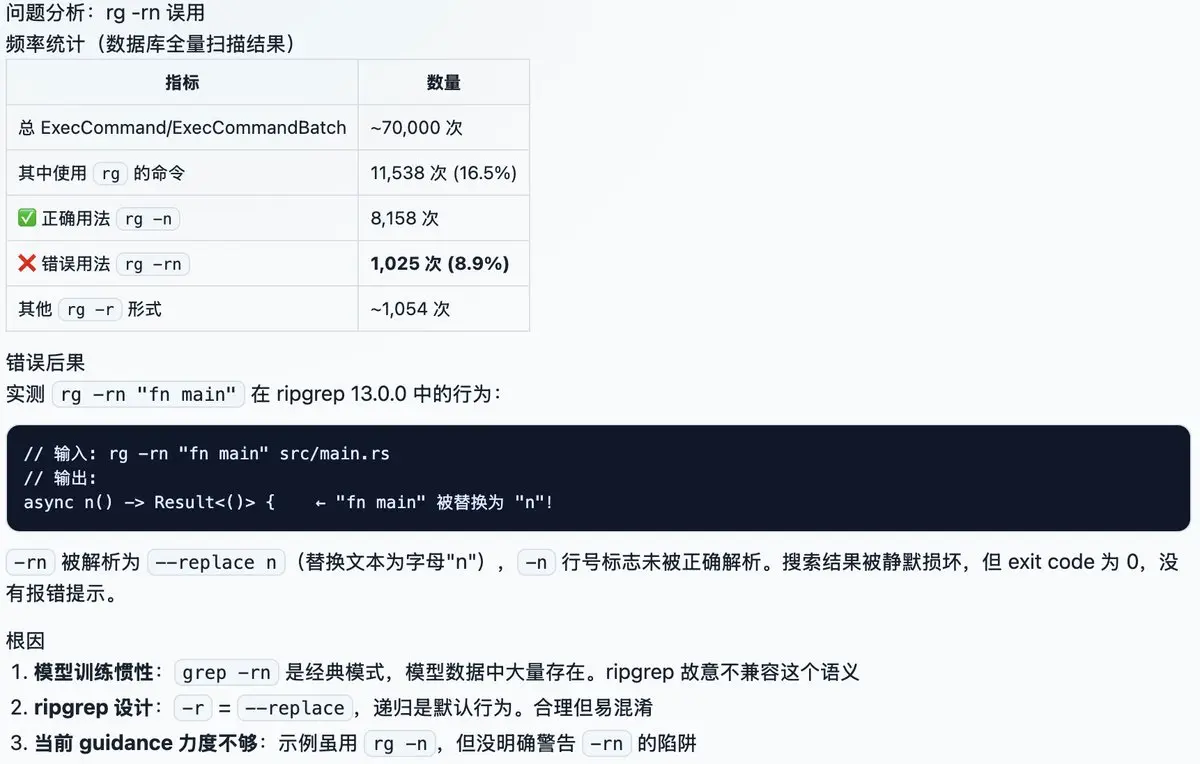
The model often makes mistakes when using `rg`, with an error rate of about 10%. The issue is that `rg`'s handling of `-rn` is inconsistent with `grep`, and the model is more familiar with `grep`, so it frequently uses it incorrectly. In the AI era, new tools replacing old ones should seamlessly accept all inputs from the old tools, especially those that LLMs are familiar with.
post-image
GPT's subscription was inexplicably canceled by Google Play, and now it seems there is no subscription entry on the Android version of GPT? Has anyone encountered a similar issue?
holon v0.19.0 has been released
This version includes an integrated web UI, and also completely reconstructed the underlying storage system, the API, and the event system, filling many AI-driven gaps.
Originally, it used JSONL, but as the data volume grew, it became difficult to maintain.
Coupled with AI programming habits of grepping and adding when not found, resulting in many redundant APIs and events.
So everything was moved into an SQLite database, but unexpectedly, as data accumulated, the database exceeded 4GB, leading to performance issues.
Therefore, further optimization was
Codex device token login suddenly requires phone number verification? And I found that the OpenAI phone number can't be found in account settings? It seems there's no place to change it.
What Basic Toolset Does an Agent Need
Seeing everyone discussing the question of Agent toolsets—does providing a shell solve everything? After working on holon, I realize it's not that simple.
Read: Why abandon Read/Glob, switch entirely to shell
holon’s toolset has gone through several versions, ultimately discarding specialized tools like Read (file reading) and Glob (pattern search) provided by Claude Code, relying entirely on shell for reading and searching. This aligns with Codex’s approach—Codex’s ExecCommand is straightforward: reading files with cat, searching code with rg, witho
Assign a milestone to the Codex plan, then keep adding issues into it, and it will keep working. Unfortunately, my pace of adding issues can't keep up with its implementation speed 😅
After communicating with GPT more and more, I’ve gotten used to using the word “wrap up” too. Once some tasks are done, but there are still a few leftover bits and pieces that haven’t been handled, telling it to wrap up the remaining things feels very natural. I even forgot how I used to say it before I started using the word “wrap up” 😅.
How do these kinds of words get inserted? Although GPT 5.5 is already powerful enough, issues like this always make people doubt its reliability😅
Codex Plus's weekly limit is approaching, having multiple windows open for a long time without closing caused iTerm to consume dozens of GB of memory, and the disk was also filled up by the Agent's worktree, constantly prompting to clean up the window. So I was forced to restart my computer, opened a Codex to use the remaining quota to clean up the disk, planning to take a break and rest. As a result, I found that Codex reset the limit!!😅
post-image
In the AI Coding era, good programming habits still matter
Recently, I was working on an Agent benchmark and found that you can't simply evaluate the complexity of a programming task for AI from a developer's perspective.
For example, a refactoring task: splitting a large file of several thousand lines into more than ten small modules based on functionality.
This task isn't really difficult for a developer; the main work involves moving code, organizing imports, and verifying compilation, which even beginners can handle.
So I thought of using a simple task for benchmarking, but the res
Seeing the interaction between two Agents' PRs is quite interesting.
The dev agent completed an optimization issue for CI and submitted a PR.
The reviewer agent found a modification to the default timeout value, thought it was outside the scope of the issue, and rejected it.
The dev agent removed that default timeout value, but as a result, the CI failed, and one test case reported an error. It then adjusted the sleep duration in the test to pass.
The reviewer agent believed that this test was meant to check the scenario of asynchronous task timeout cancellation, and changing it meant
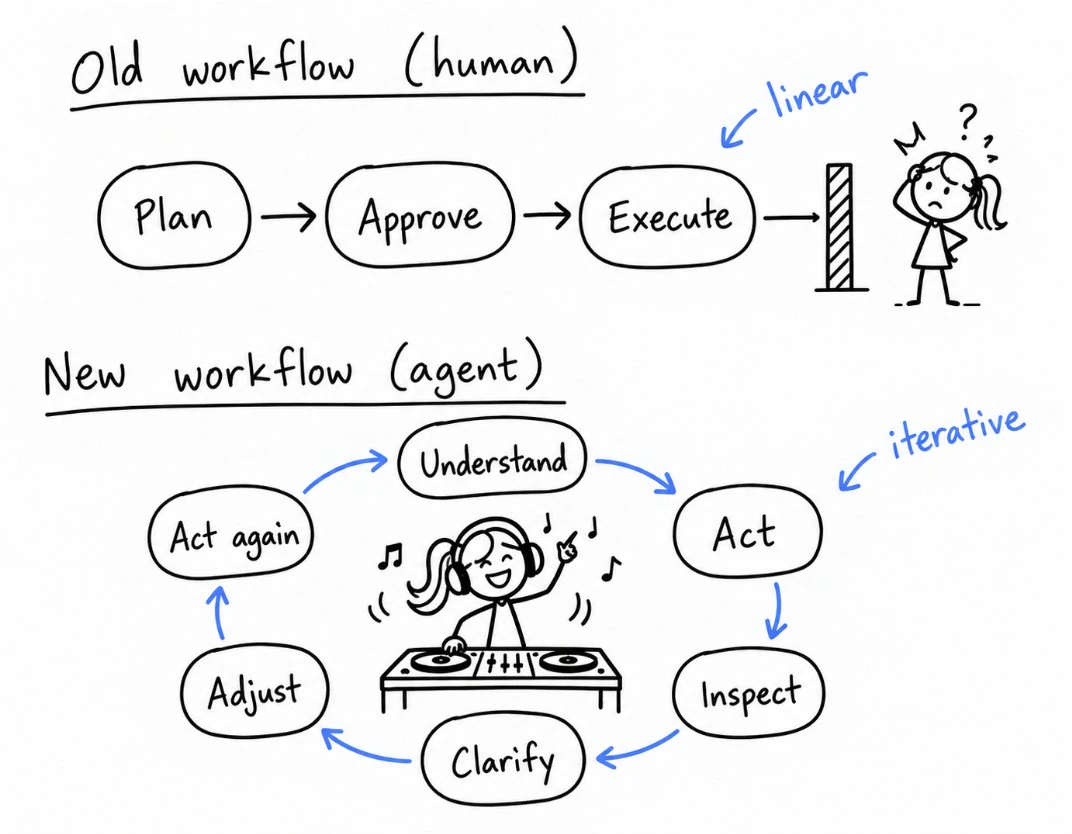
When designing agent-like products with AI, AI often underestimates an agent’s capabilities, so it ends up adding constraint conditions in the form of a lot of code or prompt text, which leaves the agent with insufficient freedom and makes it feel very rigid. Later, I thought maybe this has something to do with the training materials used for today’s AI being based on people’s experience with the previous generation of AI.
Let the two agents collaborate: the developer submits a PR, and architector is responsible for reviewing and merging the PR. Have them trigger actions by subscribing to GitHub events. But since both are using my account, they’re often mistaken as actions I took and get filtered out. The agents need dedicated GitHub accounts registered; going forward, internet services should offer a quick way to create agent accounts. How are people currently setting up multi-agent collaboration?
Create a tool with Codex that sends messages to Codex running in iTerm. The tool was built, but it can only write messages to the input box and cannot send them. I tried various string concatenations like "\r" and other combinations, but none worked.
Then I looked into iTerm's source code and searched online, and ultimately concluded that it's not possible.
iTerm's API only allows sending text; it cannot directly send keyboard events, so sending messages automatically isn't feasible. I was advised to only support tmux and give up on iTerm.
But I didn't give up. I experimented a few more
UXC v0.13.1 Official Release
This release consolidates updates from two versions of v0.13.x, further improving UXC's stability and experience during remote tool runtime.
Core Features:
1. Support for directly generating TypeScript client code for remote capabilities explored and tested in the command line, enabling the generation of strongly typed code integrated into local applications without rewriting client interfaces. AI not only needs CLI but also code invocation capabilities.
2. Automatic discovery and import of existing MCP configurations, allowing MCP developers to seamlessly
Worktree is better suited as a one-time execution directory.
A common practice recently has been to prepare a worktree first, then open Codex / Claude Code within that directory. Because early models had limited context and memory, if you let it create a worktree directly in the main workspace, it’s easy for the current directory and the created worktree directory to get mixed up after context compression, leading to confusion.
However, this approach also has a side effect: it gradually turns the worktree into a long-term workspace. The problem is, worktrees are inherently tied to branches
I migrated my blog to mdorigin. With AI, I feel like I can revive my blog.
I told Codex, "Based on my content, recommend a blog style for me."
Codex provided me with two versions, opened two ports for preview, and explained the reasons clearly.
So I deleted the built-in template style system of mdorigin. Templates are originally a product of the pre-Agent era, mainly to lower the barrier to changing styles.
Now that we have Agent, providing extension capabilities is enough. The site style can be customized by Agent, and mdorigin only handles the HTML / Markdown structure, routing, and content
View More