
Yunna

vip
Age 0.4 Year
Peak Tier 5
No content yet
Crypto Crash or Rally?
live-cover
0 views
Ended • No Replay
  • Reward
  • 3
  • Repost
  • Share
MasterChuTheOldDemonMasterChu:
Chong Chong GT 🚀
View More
#IranUSConflictEscalates The evolving tensions between Iran and the United States have once again moved into a critical phase, with diplomatic channels under strain and regional security conditions becoming increasingly unpredictable. What was once a pattern of contained rivalry has now expanded into a more complex geopolitical confrontation involving energy security, maritime control, proxy networks, cyber activity, and global market reactions. The situation is not defined by a single incident, but rather by a gradual accumulation of pressure points that have now converged into a broader esca
post-image
post-image
  • Reward
  • 7
  • Repost
  • Share
EagleEye:
Discipline over emotion is powerful here
View More
#StablecoinReserveDrops Stablecoin Reserve Drops and the Hidden Liquidity Signal Behind Bitcoin’s Strength
Bitcoin is currently trading in the $81,000 range, holding a strong multi-month uptrend with solid gains across the 7-day, 30-day, and 90-day windows. On the surface, this looks like a healthy bullish continuation phase driven by institutional demand, ETF inflows, and broader macro acceptance of digital assets. But beneath this price stability, a more subtle and potentially more important signal is emerging from the stablecoin liquidity structure that supports the entire crypto market.
Th
BTC-1.85%
post-image
post-image
  • Reward
  • 7
  • Repost
  • Share
EagleEye:
Discipline over emotion is powerful here
View More
#DailyPolymarketHotspot
The rise of prediction markets has introduced a new layer of real-time sentiment analysis into the global financial and political landscape, and platforms like Polymarket are now at the center of this transformation. Unlike traditional markets where price reflects past performance and projected earnings, prediction markets aggregate crowd expectations about future events—ranging from elections and economic policy decisions to crypto price movements and global conflicts. This makes them uniquely positioned to act as a “living forecast engine,” continuously updating proba
BTC-1.85%
ETH-1.71%
post-image
post-image
  • Reward
  • 12
  • Repost
  • Share
EagleEye:
Discipline over emotion is powerful here
View More
#CLARITY法案推进受阻
The global digital asset market is entering a decisive phase where regulation is no longer a background factor—it has become the central force shaping the future of crypto. The ongoing developments around the CLARITY Act in the United States highlight a deeper transformation underway: a direct collision between traditional financial systems and the rapidly evolving world of blockchain-based finance.
What was once viewed as a routine legislative process has now turned into a high-stakes structural event. The debate surrounding the bill is not just about rules or compliance—it is
BTC-1.85%
ETH-1.71%
post-image
post-image
  • Reward
  • 7
  • Repost
  • Share
EagleEye:
Discipline over emotion is powerful here
View More
#BTCPullback Wall Street Goes Crypto: The Institutional Hiring Surge Reshaping Digital Assets
The cryptocurrency market is entering a new phase—one that is no longer driven purely by retail speculation or early adopter enthusiasm, but by calculated, large-scale institutional commitment. In 2026, some of the most powerful financial institutions in the world are not just experimenting with crypto—they are actively building teams, allocating capital, and laying down the infrastructure for long-term dominance in the digital asset space.
This shift is best reflected in the aggressive hiring activit
BTC-1.85%
ETH-1.71%
post-image
post-image
  • Reward
  • 6
  • Repost
  • Share
CryptoDiscovery:
good information for sharing 💯
View More
#GateSquareMayTradingShare
LAB has rapidly transformed from a relatively under-the-radar asset into one of the most explosive and चर्चा-worthy tokens in the current crypto cycle. Trading near $4.46 with a modest daily gain, the surface-level price action barely reflects the magnitude of what has unfolded behind the scenes. The real story is not the percentage gain in a single day—it is the extreme, almost chaotic volatility that has defined LAB’s behavior over recent weeks.
In just 30 days, LAB delivered a staggering surge of over +969%, and when zooming out to a 90-day perspective, the perfor
LAB1.19%
post-image
post-image
  • Reward
  • 7
  • Repost
  • Share
MasterChuTheOldDemonMasterChu:
Chong Chong GT 🚀
View More
#CryptoStocksRal #CryptoStocksRal
The surge in crypto-related equities—often referred to as the Crypto Stocks Rally—continues to capture attention across global markets, even as its momentum evolves and reshapes itself. While short-term fluctuations are inevitable, the broader movement signals a deeper structural shift in how investors engage with the digital asset economy. This rally is no longer just about speculative hype; it reflects growing confidence in the long-term integration of blockchain technology into mainstream finance.
At the core of this trend is the performance of leading digi
BTC-1.85%
ETH-1.71%
MrFlower_XingChen
#CryptoStocksRally
The recent surge in crypto-related equities has drawn significant attention from both retail traders and institutional investors, not because of isolated price movements, but because of what these movements represent at a structural level. When companies like MicroStrategy, Coinbase Global, and Circle Internet Group rally alongside broader U.S. equity markets, it signals a strengthening connection between traditional financial systems and the digital asset economy. This is not simply a “crypto bounce” — it is a reflection of evolving capital allocation strategies across Wall Street.
The standout theme in today’s market action is correlation strengthening between crypto equities and macro risk assets. Historically, crypto was often treated as a disconnected, high-volatility alternative asset class. However, the increasing integration of publicly listed crypto companies into major indices and institutional portfolios is changing that perception. When the S&P 500 and Nasdaq trend upward and crypto stocks outperform, it indicates that digital asset exposure is increasingly being embedded within mainstream risk-on portfolios rather than being treated as a speculative side allocation.
Among the key movers, MicroStrategy remains the most direct proxy for Bitcoin sentiment in traditional markets. Because its balance sheet is heavily exposed to Bitcoin holdings, its stock performance effectively acts as leveraged sentiment tracking for BTC itself. A strong move in MSTR typically reflects rising institutional confidence in Bitcoin’s medium-term direction, especially through regulated equity exposure rather than direct spot purchases.
Coinbase, on the other hand, represents something different — infrastructure confidence. As one of the largest regulated crypto exchanges, Coinbase’s valuation is tied less to Bitcoin direction alone and more to trading activity, regulatory clarity, and overall market participation. When Coinbase rallies, it generally reflects expectations of increased trading volumes and improved regulatory conditions, both of which are essential for sustained crypto market expansion.
Circle’s performance adds an entirely different layer to the narrative. As a major issuer of regulated stablecoins, its valuation is closely tied to the adoption trajectory of dollar-backed digital assets. With stablecoin regulation becoming a central policy discussion in the United States, investor interest in Circle reflects forward pricing of a potential structural expansion in on-chain dollar liquidity. In simple terms, the market is not just betting on crypto prices — it is betting on the expansion of the digital dollar ecosystem itself.
The most aggressive move of the session came from TRON, which posted a sharp single-day surge. While such moves can be influenced by a combination of liquidity dynamics, speculative positioning, and short-term catalysts, they also highlight a recurring feature of crypto markets: when risk appetite returns, capital rotation into higher-beta assets accelerates quickly. These types of moves often appear in the early or mid-stages of broader sentiment recovery phases.
From a macro perspective, the most important development is not the size of individual gains but the synchronization between asset classes. When crypto equities move in alignment with broader equity indices, it suggests that institutional investors are no longer isolating crypto as a separate speculative category. Instead, it is being integrated into multi-asset portfolio frameworks, where it behaves similarly to high-growth technology sectors.
This integration has two major consequences. First, it improves liquidity stability over time, because crypto exposure becomes embedded in long-term institutional allocation models. Second, it amplifies feedback loops between traditional markets and digital assets. A rally in equities can now indirectly support Bitcoin sentiment, while crypto momentum can reinforce risk-on behavior in equity markets.
For Bitcoin itself, this environment is particularly relevant. As BTC consolidates near key psychological levels, sentiment-driven flows become increasingly important in determining breakout probability. Strength in crypto equities often acts as a leading indicator for renewed spot demand, as it reflects institutional willingness to increase exposure to the sector in regulated formats before rotating into direct crypto positions.
However, it is also important to recognize that correlation is not permanent. During periods of macro stress or liquidity tightening, crypto equities can decouple sharply from digital assets, especially when equity market risk aversion increases. This means that while the current alignment is bullish in tone, it should not be interpreted as a guaranteed directional signal, but rather as a reflection of current risk appetite conditions.
Ultimately, what the market is observing is a gradual normalization of crypto within the broader financial system. Companies like MicroStrategy, Coinbase, and Circle are no longer being viewed as isolated crypto plays — they are becoming structural components of digital finance infrastructure within public markets. This shift is one of the clearest signs that the asset class is moving beyond its early speculative phase into a more institutionally integrated phase.
The key question now is not whether crypto equities can continue to rally in isolation, but whether this alignment with traditional markets can persist long enough to support a sustained expansion in Bitcoin and broader digital asset valuations. If it does, then today’s rally will be remembered not as a short-term move, but as another step in the long-term convergence of crypto and global capital markets.
#Gate13thAnniversaryLive
#GateSquareMayTradingShare
#TopCopyTradingScout
repost-content-media
  • Reward
  • 12
  • Repost
  • Share
MasterChuTheOldDemonMasterChu:
DYOR 🤓
View More
#CLARITYAct#CLARITYActStalled
The momentum behind the proposed CLARITY Act has hit a significant roadblock, and the implications are rippling across the digital asset industry. Designed to bring long-awaited regulatory clarity to the cryptocurrency space in the United States, the bill was expected to define jurisdictional boundaries, establish compliance frameworks, and reduce uncertainty for both innovators and investors. However, with progress now stalled, the market finds itself once again navigating a landscape shaped more by ambiguity than structure.
At its core, the CLARITY Act was inten
BTC-1.85%
ETH-1.71%
MrFlower_XingChen
#CLARITYActStalled
The debate around the CLARITY Act has become one of the most closely watched developments in global crypto regulation, not just in the United States but across the entire digital asset ecosystem. As the Senate moves toward its May 11 review window, the discussion is no longer limited to technical policy details. Instead, it has evolved into a broader struggle between traditional banking interests, emerging decentralized finance systems, and the geopolitical race for digital financial dominance.
At the center of the controversy is a fundamental question: how far should regulated stablecoins be allowed to compete with traditional banking products? The so-called “member rewards” or yield-bearing stablecoin structures have triggered strong resistance from banking lobbies. Their argument is straightforward — if users can hold dollar-pegged digital assets that generate returns comparable to savings accounts or money market funds, then traditional deposit systems could face significant outflows. This concern is not purely theoretical. Even modest capital migration from banks into stablecoins could reshape liquidity dynamics across the financial system.
However, the political reality is more complex than a simple banking-versus-crypto conflict. Within Congress, there is a growing recognition that digital asset regulation is now a strategic issue rather than a niche financial debate. Lawmakers increasingly view stablecoin infrastructure as part of the United States’ broader monetary influence in the digital age. If the U.S. fails to define clear rules, other jurisdictions — particularly the European Union and parts of Asia — are positioned to establish competing regulatory frameworks that could reduce dollar dominance in on-chain finance.
This geopolitical layer is one of the strongest arguments in favor of bipartisan cooperation. Even lawmakers who are cautious about crypto speculation often acknowledge that stablecoin infrastructure is already deeply embedded in global payment flows. From cross-border remittances to institutional settlement layers, dollar-backed tokens are increasingly functioning as programmable extensions of the U.S. financial system. The question is no longer whether they should exist, but whether they should be regulated domestically or shaped offshore.
Still, the path to consensus is unlikely to be smooth. The most realistic outcome, according to many policy observers, is not a clean legislative approval but a heavily negotiated compromise. Adjustments to yield mechanisms, stricter reserve requirements, and tighter compliance frameworks are all expected to be part of the final version. These modifications are designed to reduce systemic risk concerns while preserving the innovation potential of the stablecoin sector.
From a market perspective, the anticipation surrounding the CLARITY Act is already influencing investor sentiment. Institutional players tend to price regulatory clarity in advance, especially when it reduces long-term uncertainty. If the bill progresses meaningfully through the Senate, it could act as a catalyst for increased institutional participation, particularly in regulated stablecoin products and tokenized financial instruments.
Beyond stablecoins, the broader impact on decentralized finance could be even more significant. Clear legal definitions would likely encourage traditional financial institutions to explore blockchain-based settlement systems more aggressively. This could accelerate the integration of tokenized real-world assets, on-chain treasury management, and programmable payment infrastructure. In such a scenario, DeFi would gradually transition from a retail-driven experimental sector to a hybrid institutional ecosystem.
At the same time, traditional banks would face a dual pressure: innovation demand from customers and competitive pressure from digital yield-bearing instruments. However, it is unlikely that banks would be displaced in the short term. Instead, they would likely adapt by integrating stablecoin services, offering hybrid accounts, and participating in regulated digital asset custody and settlement networks.
Globally, the stakes extend beyond financial markets. Stablecoin regulation in the United States has implications for the future structure of the international monetary system. A well-regulated dollar-backed digital ecosystem could reinforce USD dominance in a tokenized economy. Conversely, regulatory delays or fragmentation could create openings for alternative currency blocs to expand their influence in digital finance.
In summary, the CLARITY Act represents more than just a regulatory update — it is a foundational decision about how digital money will operate within and beyond the traditional banking system. While passage before August remains uncertain due to strong lobbying resistance and legislative complexity, momentum is clearly building toward some form of eventual approval, albeit with significant amendments.
The coming months will likely determine whether the United States sets the global standard for stablecoin regulation or enters a more fragmented competitive environment where multiple jurisdictions shape the rules of digital finance independently.
#Gate13thAnniversaryLive
#GateSquareMayTradingShare
#TopCopyTradingScout
#WCTCTradingKingPK
repost-content-media
  • Reward
  • 13
  • Repost
  • Share
MasterChuTheOldDemonMasterChu:
DYOR 🤓
View More
#BTCPullback BTCPullback
MrFlower_XingChen
#BTCPullback
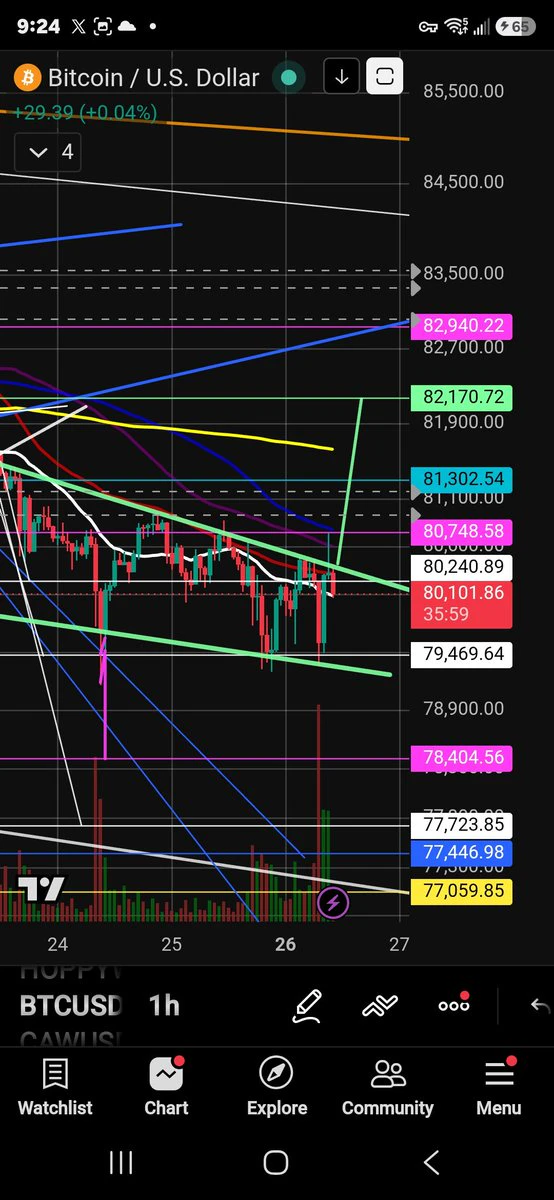
BTC keeps holding above 80K after a deep drop from 126K highs. Price flow still looks solid as big wallets keep adding while sell pressure on exchanges keeps fading. ETF cash flow stays strong, leverage remains low, plus fear levels sit far below peak bull-cycle hype.
80K-81K is still key for bulls. If buyers keep this floor safe, BTC could push back toward 84K-88K very fast. A clear move over 90K may pull fresh cash back into crypto. If 77K fails, price could dip into 72K-75K where heavy buy flow showed up before.
Derivs data also looks far healthier versus prior overheated rallies. Funding stays low, liquidations slowed, plus open interest growth looks steady instead of reckless. This setup points more toward a cool reset inside a bigger bull cycle instead of a full macro top.
#Gate13thAnniversaryLive
#GateSquareMayTradingShare
#TopCopyTradingScout
repost-content-media
  • Reward
  • 7
  • Repost
  • Share
MasterChuTheOldDemonMasterChu:
Steadfast HODL💎
View More
#GateSquareMayTradingShare GateSquareMayTradingShare
MrFlower_XingChen
#CryptoStocksRally
The recent surge in crypto-related equities has drawn significant attention from both retail traders and institutional investors, not because of isolated price movements, but because of what these movements represent at a structural level. When companies like MicroStrategy, Coinbase Global, and Circle Internet Group rally alongside broader U.S. equity markets, it signals a strengthening connection between traditional financial systems and the digital asset economy. This is not simply a “crypto bounce” — it is a reflection of evolving capital allocation strategies across Wall Street.
The standout theme in today’s market action is correlation strengthening between crypto equities and macro risk assets. Historically, crypto was often treated as a disconnected, high-volatility alternative asset class. However, the increasing integration of publicly listed crypto companies into major indices and institutional portfolios is changing that perception. When the S&P 500 and Nasdaq trend upward and crypto stocks outperform, it indicates that digital asset exposure is increasingly being embedded within mainstream risk-on portfolios rather than being treated as a speculative side allocation.
Among the key movers, MicroStrategy remains the most direct proxy for Bitcoin sentiment in traditional markets. Because its balance sheet is heavily exposed to Bitcoin holdings, its stock performance effectively acts as leveraged sentiment tracking for BTC itself. A strong move in MSTR typically reflects rising institutional confidence in Bitcoin’s medium-term direction, especially through regulated equity exposure rather than direct spot purchases.
Coinbase, on the other hand, represents something different — infrastructure confidence. As one of the largest regulated crypto exchanges, Coinbase’s valuation is tied less to Bitcoin direction alone and more to trading activity, regulatory clarity, and overall market participation. When Coinbase rallies, it generally reflects expectations of increased trading volumes and improved regulatory conditions, both of which are essential for sustained crypto market expansion.
Circle’s performance adds an entirely different layer to the narrative. As a major issuer of regulated stablecoins, its valuation is closely tied to the adoption trajectory of dollar-backed digital assets. With stablecoin regulation becoming a central policy discussion in the United States, investor interest in Circle reflects forward pricing of a potential structural expansion in on-chain dollar liquidity. In simple terms, the market is not just betting on crypto prices — it is betting on the expansion of the digital dollar ecosystem itself.
The most aggressive move of the session came from TRON, which posted a sharp single-day surge. While such moves can be influenced by a combination of liquidity dynamics, speculative positioning, and short-term catalysts, they also highlight a recurring feature of crypto markets: when risk appetite returns, capital rotation into higher-beta assets accelerates quickly. These types of moves often appear in the early or mid-stages of broader sentiment recovery phases.
From a macro perspective, the most important development is not the size of individual gains but the synchronization between asset classes. When crypto equities move in alignment with broader equity indices, it suggests that institutional investors are no longer isolating crypto as a separate speculative category. Instead, it is being integrated into multi-asset portfolio frameworks, where it behaves similarly to high-growth technology sectors.
This integration has two major consequences. First, it improves liquidity stability over time, because crypto exposure becomes embedded in long-term institutional allocation models. Second, it amplifies feedback loops between traditional markets and digital assets. A rally in equities can now indirectly support Bitcoin sentiment, while crypto momentum can reinforce risk-on behavior in equity markets.
For Bitcoin itself, this environment is particularly relevant. As BTC consolidates near key psychological levels, sentiment-driven flows become increasingly important in determining breakout probability. Strength in crypto equities often acts as a leading indicator for renewed spot demand, as it reflects institutional willingness to increase exposure to the sector in regulated formats before rotating into direct crypto positions.
However, it is also important to recognize that correlation is not permanent. During periods of macro stress or liquidity tightening, crypto equities can decouple sharply from digital assets, especially when equity market risk aversion increases. This means that while the current alignment is bullish in tone, it should not be interpreted as a guaranteed directional signal, but rather as a reflection of current risk appetite conditions.
Ultimately, what the market is observing is a gradual normalization of crypto within the broader financial system. Companies like MicroStrategy, Coinbase, and Circle are no longer being viewed as isolated crypto plays — they are becoming structural components of digital finance infrastructure within public markets. This shift is one of the clearest signs that the asset class is moving beyond its early speculative phase into a more institutionally integrated phase.
The key question now is not whether crypto equities can continue to rally in isolation, but whether this alignment with traditional markets can persist long enough to support a sustained expansion in Bitcoin and broader digital asset valuations. If it does, then today’s rally will be remembered not as a short-term move, but as another step in the long-term convergence of crypto and global capital markets.
#Gate13thAnniversaryLive
#GateSquareMayTradingShare
#TopCopyTradingScout
repost-content-media
  • Reward
  • 7
  • Repost
  • Share
MasterChuTheOldDemonMasterChu:
Hop on now!🚗
View More
#Web3SecurityGuide Web3 Security Guide: Protecting Your Assets in the Decentralized Future
Web3 represents the next evolution of the internet, where users regain control over their data, identity, and digital assets through decentralized systems. Built on blockchain technology, Web3 enables peer-to-peer transactions, decentralized finance (DeFi), NFTs, DAOs, and a wide range of permissionless applications. However, with this freedom comes a major responsibility: security is no longer handled by centralized institutions. Instead, every user becomes their own bank, custodian, and security office
post-image
post-image
  • Reward
  • 7
  • 1
  • Share
MasterChuTheOldDemonMasterChu:
Chong Chong GT 🚀
View More
#AaveSuesToUnfreeze73MInETH — The DeFi Liquidity Battle That Could Shape Ethereum’s Future
The crypto market is currently focused on one of the most important DeFi recovery situations of 2026, involving approximately $73 million worth of frozen ETH tied to the Kelp DAO exploit and cross-chain bridge disruption. This event has quickly become more than just another security incident—it is now a test case for how decentralized finance responds when liquidity, legality, and protocol governance collide.
At the center of this situation is the frozen Ethereum pool, estimated at nearly 30,000 ETH, loc
ETH-1.71%
AAVE-0.04%
post-image
post-image
  • Reward
  • 10
  • 1
  • Share
MasterChuTheOldDemonMasterChu:
Steadfast HODL💎
View More
#TreasuryYieldBreaks5PercentCryptoUnderPressure U.S. 30-Year Yield Above 5% — Global Liquidity Shock and Crypto Market Pressure Cycle
The global financial system is currently moving through one of its most sensitive macro phases in recent years. The breakout of the U.S. 30-year Treasury yield above the 5% level is not just a technical move in bond markets—it represents a deeper shift in global capital behavior, risk appetite, and liquidity conditions. Historically, whenever long-term yields rise aggressively, speculative markets such as crypto, tech equities, and high-beta assets tend to enter
BTC-1.85%
ETH-1.71%
post-image
post-image
  • Reward
  • 10
  • Repost
  • Share
MasterChuTheOldDemonMasterChu:
Chong Chong GT 🚀
View More
#WCTCTradingKingPK In today’s fast-moving financial landscape, trading is no longer just about buying low and selling high. It has evolved into a complete discipline that combines psychology, risk management, technical understanding, and the ability to read market structure in real time. The concept behind represents this modern approach to trading—where consistency, patience, and strategy matter far more than emotional decision-making or random entries.
The cryptocurrency market, in particular, is one of the most volatile and opportunity-rich environments in the world. Prices can move aggress
post-image
post-image
  • Reward
  • 9
  • Repost
  • Share
MasterChuTheOldDemonMasterChu:
Chong Chong GT 🚀
View More
  • Pin