WhyFay

vip
Peak Tier 0
Diamond Hands
Crypto Market Researcher
I'm back
🔥 $MRVL Earnings Are Coming — Can the AI Chip Rally Continue?
Google’s AI chip partnership is heating up as MRVL earnings approach. Can expectations be met, or is the good news already priced in? 👀
⏳ The Gate Square Stock Insights Challenge is entering its final countdown!
There’s still time to join 👇
Post your original view with #GateStockInsightsChallenge + $MRVL to join today’s challenge
🎁 First-time participants get a guaranteed first-post reward
🔥 Post daily to win USDT, Gate merch, and exposure boosts
🌟 Keep participating to share a 10,000 USDT prize pool + VIP5 trial access
👉 Jo
MRVL-1.49%
Gate_Square
🔥 $MRVL Earnings Are Coming — Can the AI Chip Rally Continue?
Google’s AI chip partnership is heating up as MRVL earnings approach. Can expectations be met, or is the good news already priced in? 👀
⏳ The Gate Square Stock Insights Challenge is entering its final countdown!
There’s still time to join 👇
Post your original view with #GateStockInsightsChallenge + $MRVL to join today’s challenge
🎁 First-time participants get a guaranteed first-post reward
🔥 Post daily to win USDT, Gate merch, and exposure boosts
🌟 Keep participating to share a 10,000 USDT prize pool + VIP5 trial access
👉 Join now:
https://www.gate.com/zh/campaigns/5935
📄 Event details:
https://www.gate.com/zh/announcements/article/101239
repost-content-media
  • Reward
  • Comment
  • Repost
  • Share
📈 Quality TSE Prime Market Assets, All on Gate Stocks!
Gate Japan Stocks covers 300+ popular TSE assets with leading market caps and strong liquidity, giving you one-click access to quality assets such as Toyota and Sony.
✅ Trade directly with USDT, no need to convert to JPY yourself
✅ Covers leading industries such as technology, automobiles, consumer goods, and finance
✅ Unified account management for U.S., Hong Kong, Korean, and Japanese stocks
✅ Buy, sell, manage holdings, and check P&L all in one place
🌏 New Japanese stock opportunities, one step with USDT.
Log in to Gate now and seize
Gate_Square
📈 Quality TSE Prime Market Assets, All on Gate Stocks!
Gate Japan Stocks covers 300+ popular TSE assets with leading market caps and strong liquidity, giving you one-click access to quality assets such as Toyota and Sony.
✅ Trade directly with USDT, no need to convert to JPY yourself
✅ Covers leading industries such as technology, automobiles, consumer goods, and finance
✅ Unified account management for U.S., Hong Kong, Korean, and Japanese stocks
✅ Buy, sell, manage holdings, and check P&L all in one place
🌏 New Japanese stock opportunities, one step with USDT.
Log in to Gate now and seize quality global asset opportunities!
👉 Try now:
https://www.gate.com/announcements/article/101271
Stock investing involves market risks. Specific tradable assets and service rules are subject to the latest platform page.
repost-content-media
  • Reward
  • Comment
  • Repost
  • Share
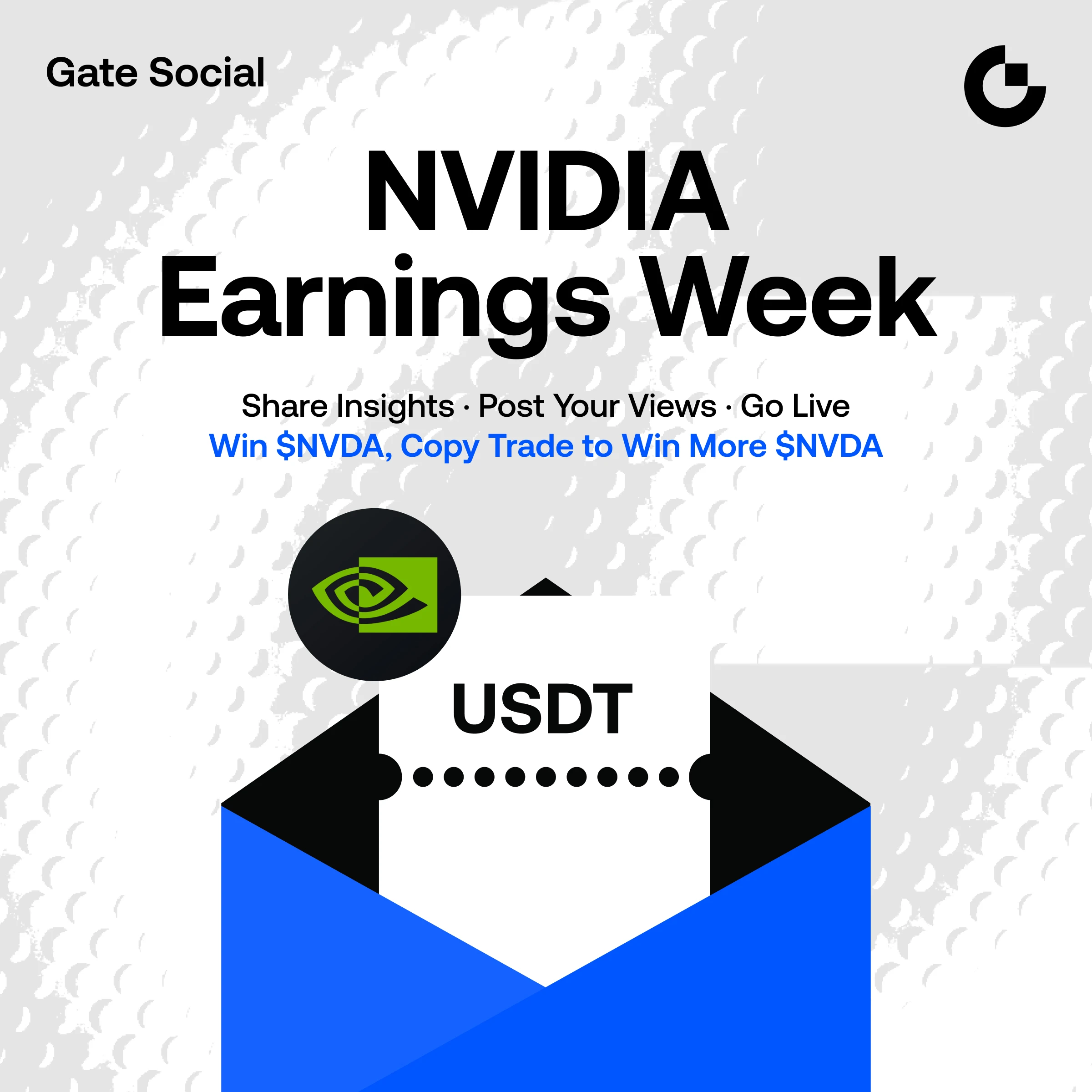
🔥 NVIDIA Earnings Are Out—Post to Win $NVDA!
Quarterly revenue reached $96.2 billion, up 106% YoY. With strong results in, what’s next for $NVDA?
Share your post-earnings insights, trade recaps, or market outlook on Gate Square.
It’s easy to join: just post, then go live to unlock bigger rewards!
🎁 Register to claim a 10 USDT NVDAXUSDT Position Voucher
🏆 Post + Go Live to compete for bigger $NVDA rewards
🍀 Copy trade 500 USDT+ for a chance to win 0.5 $NVDA
👉 Register Now: https://www.gate.com/zh/campaigns/6013
📄 Event Details: https://www.gate.com/announcements/article/101352
NVDAG8.53%
NVDA8.55%
Gate_Square
🔥 NVIDIA Earnings Are Out—Post to Win $NVDA!
Quarterly revenue reached $96.2 billion, up 106% YoY. With strong results in, what’s next for $NVDA?
Share your post-earnings insights, trade recaps, or market outlook on Gate Square.
It’s easy to join: just post, then go live to unlock bigger rewards!
🎁 Register to claim a 10 USDT NVDAXUSDT Position Voucher
🏆 Post + Go Live to compete for bigger $NVDA rewards
🍀 Copy trade 500 USDT+ for a chance to win 0.5 $NVDA
👉 Register Now: https://www.gate.com/zh/campaigns/6013
📄 Event Details: https://www.gate.com/announcements/article/101352
repost-content-media
  • Reward
  • Comment
  • Repost
  • Share
$NVDA #gate
#NVIDIAEarnings
📊 NVDA After the Blowout: Where Does the Price Go Next?
The numbers are in and they were exceptional $96.2 billion in quarterly revenue (up 106% YoY), Data Center up 117% to $89 billion, GAAP EPS of $2.46, and a next-quarter guide of ~$108 billion. Now the hard part: after a stock rips ~4.5% after hours and roughly 7% more in premarket, what does the technicals and sentiment map look like for the coming sessions?
Let's start with the technical picture. NVDA pushed into the ~$224 area in premarket a zone that has acted as a major battleground over the past several
NVDA8.55%
MU-0.77%
YamahaBlue
$NVDA #gate
#NVIDIAEarnings
📊 NVDA After the Blowout: Where Does the Price Go Next?
The numbers are in and they were exceptional $96.2 billion in quarterly revenue (up 106% YoY), Data Center up 117% to $89 billion, GAAP EPS of $2.46, and a next-quarter guide of ~$108 billion. Now the hard part: after a stock rips ~4.5% after hours and roughly 7% more in premarket, what does the technicals and sentiment map look like for the coming sessions?
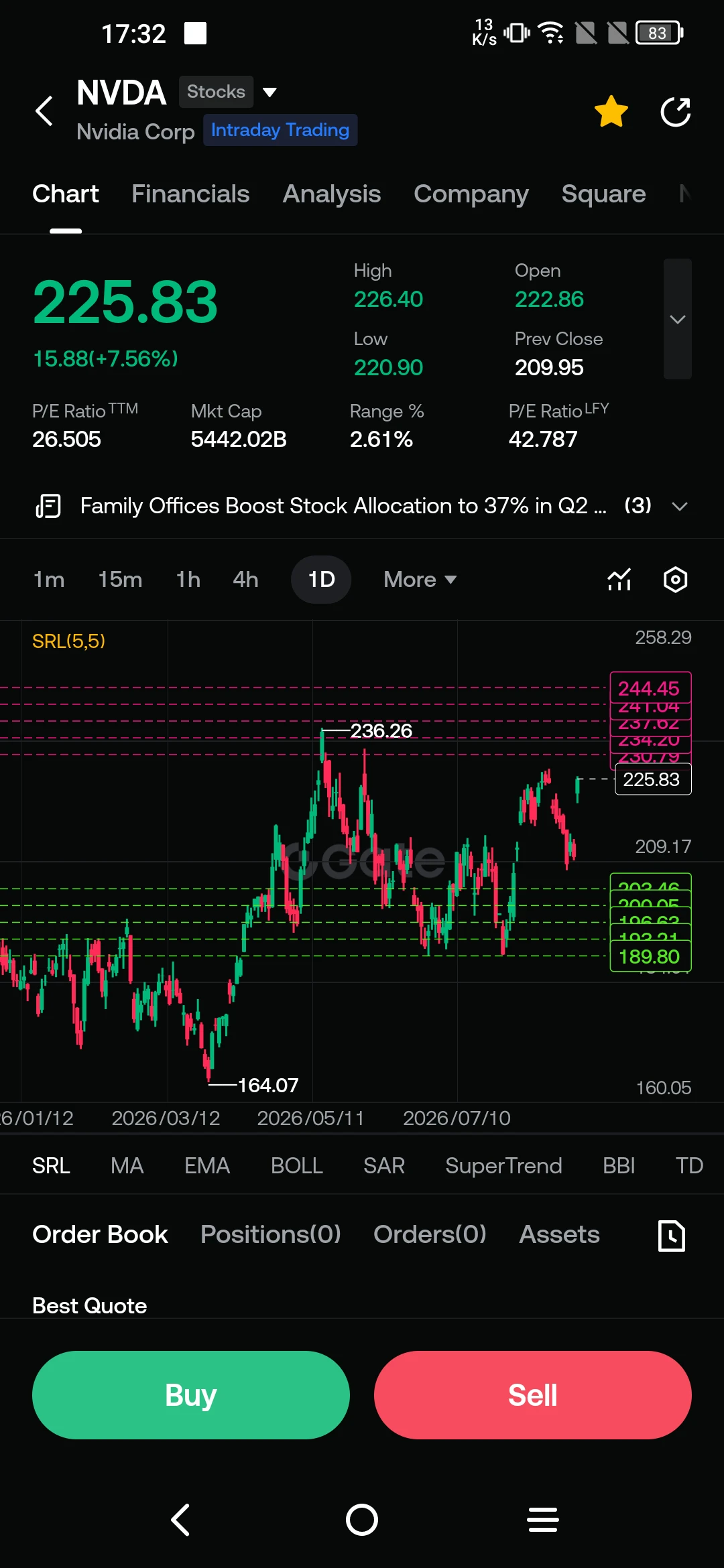
Let's start with the technical picture. NVDA pushed into the ~$224 area in premarket a zone that has acted as a major battleground over the past several weeks after the stock spent time in a correction. The key levels to watch now: immediate support sits around $215–217, which analysts flagged as the confirmation line for further upside and for lifting the broader AI trade. Above that, reclaiming and holding $224–228 would open the door toward the prior highs and a retest of the all-time-high region. On the downside, a failure to hold $215 would signal that this is a classic "sell the news" fade rather than a durable breakout and would likely drag the whole semiconductor complex with it.
Fundamentally, the valuation story has actually improved. Even after the post-earnings jump, trailing P/E sits near 31 versus a five-year average of roughly 65. That's the unusual setup here: accelerating earnings plus compression in the multiple. Analysts largely framed the $108 billion guide as clearing even the most bullish whisper numbers, which is a strong tailwind for follow-through. The one thing to watch on the supply side: Nvidia acknowledged a scarcity of memory chips on the call due to high AI demand, which rippled into names like Micron (+4% in premarket). That's a positive read-through for the memory complex but a potential cost/supply risk downstream.
Sentiment-wise, the options market had priced in a large expected move, and an after-hours reversal from $205 back to $219 a roughly 4.5% swing shows buyers stepping in aggressively at the first sign of weakness. That "buy the weakness" reflex is typically a sign of a strong, structurally supported uptrend rather than a fragile one.
So how do I read it from a trading standpoint? The beat is real, the guidance is strong, and the market's biggest fear an AI spending slowdown has been directly answered. The bias here is cautiously constructive so long as $215–217 holds on any pullback. A close back above the $224 premarket level would likely accelerate momentum and pull the broader AI/chip complex higher with it. My approach: let the early-price action confirm the level before adding, respect $215 as the line in the sand, and size positions around the idea that volatility in either direction will be elevated for a few sessions.
Remember, earnings-week moves can be noisy in both directions. This is my personal analysis, not financial advice the levels and the data are public market information, but your entry, size, and stop are your own decisions. Watch the close, not just the open. @Gate_Square
#Gate股票观点挑战
  • Reward
  • Comment
  • Repost
  • Share
$OKTA ‌Okta's Transformation in Identity Security: Opportunities and Risks in the Age of AI
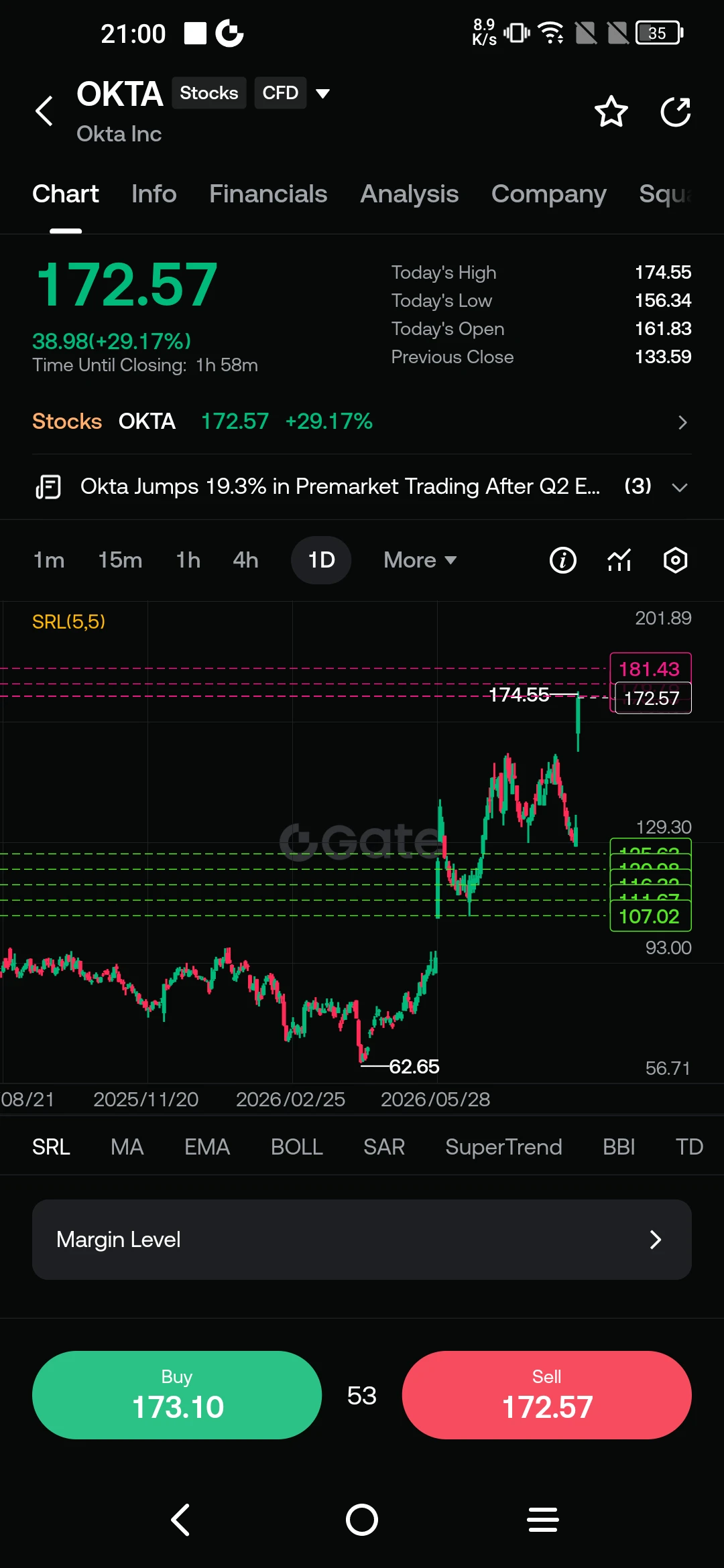
Okta's Q2 FY2027 earnings report exceeded expectations, resulting in a 29% increase in its stock price. With revenue of $8.05 billion and earnings per share of $1.05, the company surpassed market expectations, clearly demonstrating its goal of becoming the new center of identity security in the age of artificial intelligence.
Highlights of the Financial Report
• Revenue: $8.05 billion (up +10.6% year-over-year)
• GAAP Net Profit: $116 million (up $67 million last year)
• Adjusted EPS: $1.05 (expected
OKTA28.19%
User_any
$OKTA ‌Okta's Transformation in Identity Security: Opportunities and Risks in the Age of AI
Okta's Q2 FY2027 earnings report exceeded expectations, resulting in a 29% increase in its stock price. With revenue of $8.05 billion and earnings per share of $1.05, the company surpassed market expectations, clearly demonstrating its goal of becoming the new center of identity security in the age of artificial intelligence.
Highlights of the Financial Report
• Revenue: $8.05 billion (up +10.6% year-over-year)
• GAAP Net Profit: $116 million (up $67 million last year)
• Adjusted EPS: $1.05 (expected $0.96)
• Remaining Performance Liabilities: $25.9 billion (up +14% year-over-year)
• Fiscal Year 2027 Guidance: $32.2-32.3 billion in revenue, $3.90-3.94 EPS
The New Role of Identity in the Age of AI
At the heart of Okta’s growth story is its strategic positioning on the security of AI agents. As CEO Todd McKinnon stated: “As AI transforms every layer of technology, every agent needs a trusted identity and access controls.”
Okta for AI Agents Core is the company's most ambitious move in this area. This product enables the management of AI agents operating in highly regulated environments such as FedRAMP and HIPAA. The company has also secured Level 5 (IL5) certification from the US Department of Defense, opening doors for defense agencies preparing for the 2027 Zero Trust mandate.
Okta's transformation further solidifies its market leadership position:
• Identity Management Market Share: 41%
• Single Sign-On (SSO) Market Share: 34.6%
• Number of Customers: Over 20,000 organizations
New Products and Acquisition Strategy
The company's growth strategy is based on a combination of organic innovation and tuck-in acquisitions:
Spera Acquisition: This recently completed acquisition strengthens Okta's ability to monitor the behavior of AI agents and provide real-time controls. Spera integrates with Okta’s existing Identity Threat Protection and Identity Security Posture Management solutions, offering holistic security covering human, non-human, and agent identities.
Contribution of New Products: New products accounted for approximately 30% of total orders in Q2. Okta Identity Governance was the largest contributor in this segment.
Okta’s stock has a very premium valuation with a market capitalization exceeding $27 billion and a P/E multiple above 119. According to GuruFocus’s GF Value™ metric, the stock is trading 58% above its intrinsic value.
Analyst Opinions: Institutions such as Needham ($200 target), BTIG ($187), and KeyCorp ($190) maintain a "buy" recommendation. However, high valuation and slowing growth (around 9-10%) could put pressure on Okta’s stock performance.
Summary
Okta is on track to become an indispensable provider of identity security in the age of artificial intelligence. Its early moves in securing AI agents, government approvals, and strong customer base are elements that could make the company successful in the long term. However, high valuation and slowing growth are highlighted as risks that investors should be aware of. Okta's biggest challenge in this new era will be the extent to which it can monetize the AI security opportunity.
All assessments and comments here are purely my personal opinions. This is not investment advice.
#GateStockInsightsChallenge
repost-content-media
  • Reward
  • Comment
  • 1
  • Share
$NVDA #NVIDIAEarnings
Nvidia's Q2 2027 Earnings Report: Record Revenue, Cash Flow Pressure
In its earnings report released on August 26th, NVDA exceeded its own guidance ($91 billion) with revenue of $96.2 billion, representing a 106% year-over-year increase. Data center revenue grew 117% year-over-year to $89 billion, accounting for almost all of the total. Gross margins remained at 75%, while guidance for Q3 was set at 74% – signaling a slight easing in margins.
The main focus was on cash flow: Cash flow from operations fell 52% quarter-over-quarter, and free cash flow decreased by 56%; a
NVDA8.55%
User_any
$NVDA #NVIDIAEarnings
Nvidia's Q2 2027 Earnings Report: Record Revenue, Cash Flow Pressure
In its earnings report released on August 26th, NVDA exceeded its own guidance ($91 billion) with revenue of $96.2 billion, representing a 106% year-over-year increase. Data center revenue grew 117% year-over-year to $89 billion, accounting for almost all of the total. Gross margins remained at 75%, while guidance for Q3 was set at 74% – signaling a slight easing in margins.
The main focus was on cash flow: Cash flow from operations fell 52% quarter-over-quarter, and free cash flow decreased by 56%; a $22.3 billion increase in receivables and inventory buildup delayed cash conversion. Long-term debt increased from $7.5 billion to $32.4 billion, with $24.9 billion in borrowing during the quarter.
Post-Earnings Strategic Moves:
• Strategic partnership and minority stake investment with Cloverleaf Infrastructure – focusing on cooling and energy infrastructure
• Multi-year partnership with SB Energy for the PORTS Technology Campus – $105 billion guaranteed obligation for ~4.25 GW of capacity where OpenAI will be a tenant
• CEO Jensen Huang: “We have entered the AI infrastructure era. Now, computing power itself is revenue.”
👉 The growth story continues unabated. However, the balance to watch in the coming quarters will be whether accounts receivable and inventory accumulation are converted to cash and whether the decline in margin guidance is permanent. Although the stock experienced sharp volatility after the earnings report, the momentum in data center demand is the main supporting factor.
DYOR 🔎 NFA ✔️
#GateStockInsightsChallenge #NVIDIAEarnings
#Gate
repost-content-media
  • Reward
  • Comment
  • 1
  • Share
$NVDA $NVDAX #NVIDIAEarnings
Nvidia's Secret Weapon: "Bank of Nvidia"? 🤔
Everyone was talking about the record $96 billion in revenue reported on August 26th. But the real story is the financial architecture behind CEO Jensen Huang's "computational power = revenue" motto.
Behind the scenes of the balance sheet: Nvidia is no longer just selling chips; it's financing the entire AI ecosystem. The company has $99 billion in equity investments and $108 billion in commitments. Receivables surged to $63 billion; DSO (time to collect) increased from 45 days to 60 days. CFO Colette Kress explained
NVDA8.55%
User_any
$NVDA $NVDAX #NVIDIAEarnings
Nvidia's Secret Weapon: "Bank of Nvidia"? 🤔
Everyone was talking about the record $96 billion in revenue reported on August 26th. But the real story is the financial architecture behind CEO Jensen Huang's "computational power = revenue" motto.
Behind the scenes of the balance sheet: Nvidia is no longer just selling chips; it's financing the entire AI ecosystem. The company has $99 billion in equity investments and $108 billion in commitments. Receivables surged to $63 billion; DSO (time to collect) increased from 45 days to 60 days. CFO Colette Kress explained this as "extended payment terms for large investing customers."
So what does this mean? Nvidia is financing its own demand by offering large customers a "buy first, pay later" option. Operational cash flow fell 52% quarter-on-quarter. This indicates that growth is being supported by a "financial subsidy."
New move: Hugging Face acquisition — Nvidia is reportedly acquiring the open-source AI platform for $12.9 billion. This could be a shift towards its "AI cloud" strategy and an insurance plan to assess the capacity it finances.
👉👉👉Growth is incredible. However, the critical indicator to watch is the free cash flow conversion. Analysts note that this financing model will become structural if the conversion doesn't reach 70% of adjusted earnings. Gross margins are expected to bottom out at 71-72% in Q4 and then recover. 🧐
DYOR 🔎 NFA ✔️
#GateStockInsightsChallenge #GATE #STOCKS
repost-content-media
  • Reward
  • Comment
  • 2
  • Share
$NVDA 🧐
NVIDIA's $160 Billion Move: Inventory and Supply Revolution
Everyone Focused on the Record $96 Billion Revenue in the Financial Statement, But the Real Bomb Was the Supply and Inventory Figures
In NVIDIA's second-quarter financial statement, attention was drawn to the record revenue of $96.2 billion. However, two data points hidden deep within the financial statements reveal the true scale of the company's strategic move.
Huge Leap in Supply Obligations
In one quarter, supply obligations jumped from $119 billion to $279 billion. This represents a net $160 billion in new commitments,
NVDA8.55%
User_any
$NVDA 🧐
NVIDIA's $160 Billion Move: Inventory and Supply Revolution
Everyone Focused on the Record $96 Billion Revenue in the Financial Statement, But the Real Bomb Was the Supply and Inventory Figures
In NVIDIA's second-quarter financial statement, attention was drawn to the record revenue of $96.2 billion. However, two data points hidden deep within the financial statements reveal the true scale of the company's strategic move.
Huge Leap in Supply Obligations
In one quarter, supply obligations jumped from $119 billion to $279 billion. This represents a net $160 billion in new commitments, 66% more than a single quarter's revenue. Of this amount, $92 billion will be paid this fiscal year, with the remainder spread over the next two years.
Striking Change in Inventory Dynamics
The change in inventory items clearly demonstrates NVIDIA's production strategy. Raw material inventory has increased from $3.8 billion in January to $11.3 billion – almost threefold. Work-in-process inventory rose to $13.4 billion, while finished-in-shipment inventory fell from $8.8 billion to $6.9 billion. This shows that the company sells what it produces immediately but has stockpiled record levels of raw materials for upcoming production.
Margin Dynamics and Future Guidance
Gross margin remained stable at 75%, while the company provided guidance of 74% for the next quarter. This marks the first conscious margin decline in the current cycle. The main reasons cited for the decline are rising memory prices and the Rubin platform transition process.
The Strategic Vision Behind the Move
At the heart of all these commitments is CEO Jensen Huang's clear vision: "These systems are no longer PCs or phones, they are revenue-generating assets." NVIDIA sees capital and infrastructure as the only constraints hindering demand and is working to remove this bottleneck with all its financial tools.
Growing Ecosystem
With strategic moves announced after the earnings report, the company is building a massive ecosystem in the triangle of "financing + supply chain + software." The $105 billion guarantee to SB Energy, the hundreds of millions of dollars investment in Cloverleaf, and the $12.9 billion acquisition of Hugging Face stand out as concrete steps in this strategy.
Critical Indicators to Watch
The most critical indicator for investors to watch in the coming period will be the speed at which these supply obligations are converted into cash. Furthermore, whether the 60-day DSO trend in receivables continues will be decisive for the company's cash flow health. With these strategic moves, NVIDIA is not only meeting current demand but also taking steps to secure future growth.
DYOR 🔎 NFA ✔️
#NVIDIAEarnings #GateStockInsightsChallenge
repost-content-media
  • Reward
  • Comment
  • 1
  • Share
NVIDIA's Silent Invasion: Expanding Its Kingdom by Acquiring Rivals
NVIDIA's Real Move Beyond Revenue Figures: A Strategy to Turn Rivals into "Friends"
While everyone focused on NVIDIA's record revenue of $96.2 billion in its second-quarter earnings report, the company's real strategic move is happening far beyond the financial statements. NVIDIA continues to expand its ecosystem by acquiring rivals or forming strategic partnerships.
1. Hugging Face: A $12.9 Billion Open Source Acquisition
NVIDIA is reportedly agreeing to acquire the open-source AI platform Hugging Face for $12.9 billion. This
User_any
NVIDIA's Silent Invasion: Expanding Its Kingdom by Acquiring Rivals
NVIDIA's Real Move Beyond Revenue Figures: A Strategy to Turn Rivals into "Friends"
While everyone focused on NVIDIA's record revenue of $96.2 billion in its second-quarter earnings report, the company's real strategic move is happening far beyond the financial statements. NVIDIA continues to expand its ecosystem by acquiring rivals or forming strategic partnerships.
1. Hugging Face: A $12.9 Billion Open Source Acquisition
NVIDIA is reportedly agreeing to acquire the open-source AI platform Hugging Face for $12.9 billion. This will be one of the company's largest acquisitions to date.
Strategic Significance:
Hugging Face is at the heart of the developers' ecosystem, housing approximately 3 million open models and 1 million datasets. While closed-source companies like NVIDIA, OpenAI, and Anthropic develop their own chips, NVIDIA aims to connect independent developers to its hardware by investing in the open-source ecosystem. The price tag (86 times the annualized revenue of approximately $150 million) suggests NVIDIA is making this acquisition for strategic control, not revenue.
Critical Point: Hugging Face currently supports AMD and Intel chips as well. Whether the platform can maintain its neutrality after the acquisition is the biggest question mark.
2. Rebellions: Secret Meetings with South Korea's Favorite
According to Bloomberg, NVIDIA CEO Jensen Huang has personally met with South Korean AI chip startup Rebellions. Possibilities include a technical partnership, investment, or a direct acquisition.
Who is Rebellions?
The company is valued at $2.3 billion and its investors include SK Hynix and Samsung Ventures. Developing AI inference-focused NPUs – this represents a large-volume market that will complement NVIDIA's strength in training. It also utilizes Samsung's 4nm manufacturing – potentially opening a second supply chain for NVIDIA besides TSMC.
Regulatory Risk: South Korea considers semiconductors a strategic asset; the US Department of Justice could also scrutinize NVIDIA's dominance from an antitrust perspective.
3. The Big Picture: The "Transform the Enemy" Strategy
In 2025, NVIDIA made a similar deal with Groq, absorbing its engineering team while leaving the company independent. It is now applying the same pattern with Rebellions and Hugging Face.
CEO Jensen Huang's secret formula: Instead of eliminating competitors, make them part of the ecosystem. This will:
• Send a message to regulators: "We are not monopolizing, we are cooperating"
• Expand the talent pool
• Reduce the need for customers to seek alternatives
Investor Note
The company announced a commitment to $18 billion in equity investments by fiscal year 2027. This shows that NVIDIA is taking determined steps towards becoming not just a chip vendor, but also the financier and architect of the entire AI ecosystem.
Risk to Watch: The integration of these acquisitions and the reaction of the open-source community will be the most critical points to watch in the coming period.
All assessments and comments here are purely personal and are absolutely not investment advice.
#NVIDIAEarnings #GateStockInsightsChallenge
repost-content-media
  • Reward
  • Comment
  • Repost
  • Share
$NVDA #NVIDIAEarnings
NVIDIA's $800 Billion Wave: The Flow of Money and New Competitors
Big Cloud Companies' Investment Spending of $800 Billion in 2026 and $1.3 Trillion in 2027 is Flowing to NVIDIA, But the Money Doesn't Stop There
2026 marks a period when capital spending on AI infrastructure reaches its highest level in history. The total investment of the five largest cloud providers rose from $162.3 billion in 2022 to $448.3 billion in 2025. Analysts expect this figure to reach approximately $750-800 billion in 2026 and $1.3 trillion in 2027.
Nvidia: A Giant Generating $1 Billion a Da
NVDA8.55%
TSLA2.51%
INTC4.31%
User_any
$NVDA #NVIDIAEarnings
NVIDIA's $800 Billion Wave: The Flow of Money and New Competitors
Big Cloud Companies' Investment Spending of $800 Billion in 2026 and $1.3 Trillion in 2027 is Flowing to NVIDIA, But the Money Doesn't Stop There
2026 marks a period when capital spending on AI infrastructure reaches its highest level in history. The total investment of the five largest cloud providers rose from $162.3 billion in 2022 to $448.3 billion in 2025. Analysts expect this figure to reach approximately $750-800 billion in 2026 and $1.3 trillion in 2027.
Nvidia: A Giant Generating $1 Billion a Day
NVIDIA's second-quarter revenue reached $96.2 billion, with the company generating over $1 billion in revenue per day. The data center segment accounted for 92% of total revenue, at $89 billion.
However, the truly shocking figure was NVIDIA's first-ever guidance of 70% growth for fiscal year 2028. CEO Jensen Huang emphasized that this figure was not based on a 70% increase in demand, but rather on the maximum growth capacity of supply capacity. "Our actual demand is well over 70%, but current supply guarantees this growth," said Huang, adding that "the entire supply chain is operating at full capacity."
The Distribution of Money: An Ecosystem from Memory to Energy
The money flowing into NVIDIA doesn't stop there. The company's supplier commitments jumped from $119 billion to $279 billion in a single quarter. A large portion of this money flows into the supply chain, primarily memory.
Huang notes that the revenue opportunity per data center increases with each new architecture: $180 billion for Hopper, $250 billion for Grace Blackwell, and $400 billion for Vera Rubin. This shows that growth is not just about selling more GPUs, but about each new generation of AI data centers generating more revenue for NVIDIA.
Apple's Challenge: Targeting the H100 with the M7 Ultra
Apple has declared itself a rival to NVIDIA. Its new M7 Ultra chip promises performance that can compete with the NVIDIA H100. Combining two M7 Max dies, the M7 Ultra offers 800 GB/s bandwidth and the capacity to run models with 70 billion parameters.
However, Apple's own AI server chip, Baltra, has been delayed until 2026. This situation makes Apple dependent on NVIDIA H100 and H200 GPUs via Google Cloud for the most demanding AI tasks. Apple's shift towards semiconductor acquisitions demonstrates the company's strategic transformation in this area.
Tesla's Ambitious Entry: AI5 and TeraFab
Tesla is also joining the race. Elon Musk claims that the AI5 chip will offer "2-3 times better" performance compared to NVIDIA and will cost around 10% less. Musk states that he has memorized the chip's physical design and that all of Tesla is tied to this chip.
Tesla, along with SpaceX and Intel, launched the TeraFab project, described as "the largest chip manufacturing facility in history." However, analysts point out that NVIDIA's dominance not only in hardware but also in software and the entire ecosystem is the biggest obstacle for Tesla.
The flow of money is clear: from large cloud companies to NVIDIA, and from there to memory manufacturers, optical connectivity, cooling, and energy. Hardware still has a long way to go. While the entry of new competitors like Apple and Tesla challenges NVIDIA's dominance, the company's strategic moves in its supply chain and its 70% growth guidance demonstrate just how strong the demand for AI infrastructure is.
DYOR 🔎 NFA ✔️
repost-content-media
  • Reward
  • Comment
  • Repost
  • Share
NVIDIA's Poetic Growth and the Market's Question: Sustainability or Peak Growth?
A company generating over $1 billion in revenue daily, doubling its income year after year… This is NVIDIA's current reality. However, markets sometimes look at the price tag rather than the rhyme of this poetic growth, asking: How long will this growth last, and can today's high expectations be met?
The New Paradox of Growth: Supply, Not Demand, Limits Growth
NVIDIA's latest financial statement has shifted the fundamental dynamic in the AI ecosystem. Today, the company is forced to limit its growth not due to dem
NVDAG8.53%
NVDA8.55%
NVDAX8.49%
TSLA2.51%
User_any
NVIDIA's Poetic Growth and the Market's Question: Sustainability or Peak Growth?
A company generating over $1 billion in revenue daily, doubling its income year after year… This is NVIDIA's current reality. However, markets sometimes look at the price tag rather than the rhyme of this poetic growth, asking: How long will this growth last, and can today's high expectations be met?
The New Paradox of Growth: Supply, Not Demand, Limits Growth
NVIDIA's latest financial statement has shifted the fundamental dynamic in the AI ecosystem. Today, the company is forced to limit its growth not due to demand, but due to production capacity. CEO Jensen Huang revealed that current demand is at approximately 100%, well above the 70% growth the company can confidently commit to. In other words, if NVIDIA could produce more, it could sell more. It's not a lack of demand, but the world's physical production capacity that is determining the pace of the AI revolution.
Limits to Growth: Challenges of the Physical World
So, how long will these obstacles to growth last, and is it sustainable?
Supply Chain Bottlenecks and Cost Pressure: NVIDIA's biggest obstacle is the procurement of critical components, primarily High Bandwidth Memory (HBM). Chief Financial Officer Colette Kress states that they are facing an "extremely high memory price environment," which is putting pressure on gross profit margins. This pressure is so strong that NVIDIA predicts margins will fall to 71-72% in the coming quarters. This demonstrates the transparency of the company's own cost structure, as well as the magnitude of the challenge it faces.
Increasing Competition and New Players: NVIDIA is not alone in this world. Apple has declared that it can directly compete with its own chips, while companies like Tesla are entering the market with ambitious plans. However, experts believe that this competition will not immediately shake NVIDIA's dominance. Because the company differentiates itself from its competitors not only with its hardware but also with its CUDA software ecosystem, to which thousands of developers are connected. Analysts note that this “convert the enemy” strategy (acquisitions like Hugging Face and Rebellions) has actually further strengthened the company’s ecosystem.
Conclusion: Sustainable or Peak?
NVIDIA’s story is a reflection of the enormous demand for AI infrastructure. To meet this demand, the company is pushing its entire supply chain and making strategic investments for the future. The answer to the market’s question, “how long will this growth last?”, depends on two key factors: First, when the supply bottlenecks in HBM and other critical components will be overcome. Second, to what extent these cost increases can be passed on to customers and whether the temporary decline in gross margins will be permanent.
Today, NVIDIA is not just a chip vendor; it functions like a “central bank,” financing an entire industry, building its infrastructure, and even incorporating its competitors into its ecosystem. Whether this strategy succeeds will depend on how quickly the company can ease its supply chain and balance costs in the coming period. For now, the poetic growth story continues, but the market is now reading the subtitles rather than the rhyme.
DYOR 🔎 NFA ✔️
#NVIDIAEarnings #GateStockInsightsChallenge
$NVDAG $NVDAX $NVDA ‌
repost-content-media
  • Reward
  • Comment
  • 1
  • Share
#WarshJacksonHolePreviewMarketsFocusOnRates
Warsh's Jackson Hole Test: What Will the New Fed Chairman Tell the Market?
With inflation clinging to 3.7%, the bond market under pressure, and the Fed Chairman's first major speech becoming a critical test.
Federal Reserve Chairman Kevin Warsh will face the markets this Friday with his first speech at Jackson Hole. However, his appearance is taking place under unusually challenging circumstances for his predecessors.
Inflation is well above the Fed's target, the Treasury Department is intervening in the bond market, and Warsh's communication style
User_any
#WarshJacksonHolePreviewMarketsFocusOnRates
Warsh's Jackson Hole Test: What Will the New Fed Chairman Tell the Market?
With inflation clinging to 3.7%, the bond market under pressure, and the Fed Chairman's first major speech becoming a critical test.
Federal Reserve Chairman Kevin Warsh will face the markets this Friday with his first speech at Jackson Hole. However, his appearance is taking place under unusually challenging circumstances for his predecessors.
Inflation is well above the Fed's target, the Treasury Department is intervening in the bond market, and Warsh's communication style is struggling to satisfy market participants.
Behind the Scenes: What Do the Markets Expect?
Warsh's preferred "ambiguity" approach in previous press conferences has created unease in the markets. Investors say they are struggling to understand Warsh's policy framework, as he avoids providing "forward guidance."
The expectation is that the Chairman will give clearer signals about his approach to fighting inflation in this speech. Specifically:
• Anti-Inflation Strategy: The PCE data for July, exceeding expectations at 3.7% year-on-year, once again demonstrated the persistence of inflation. Markets are eager to hear how Warsh interprets this data and what potential policy steps he might take. • Bond Market Tension: The rise of 30-year bond yields to their highest levels since 2007 has pushed Treasury Secretary Scott Bessent to increase long-term bond purchases. This creates an interesting tension between the Treasury's efforts to lower interest rates and the Fed's tight stance. How Warsh will assess this contradiction is a matter of curiosity. • Signal of Independence: President Trump's calls for interest rate cuts are raising questions about the Fed's political independence. This speech will be an opportunity for Warsh to demonstrate his distance from political interference.
Conclusion: A Turning Point for the Fed
The new Fed Chairman's Jackson Hole speech is not just about seeking clues for the next interest rate decision. It is also seen as a test of whether Warsh can combine his own vision of how markets and the economy function with an independent and credible policy framework. The tone and content of the speech could determine the direction of both bond markets and broader financial markets in the coming period.
repost-content-media
  • Reward
  • Comment
  • Repost
  • Share
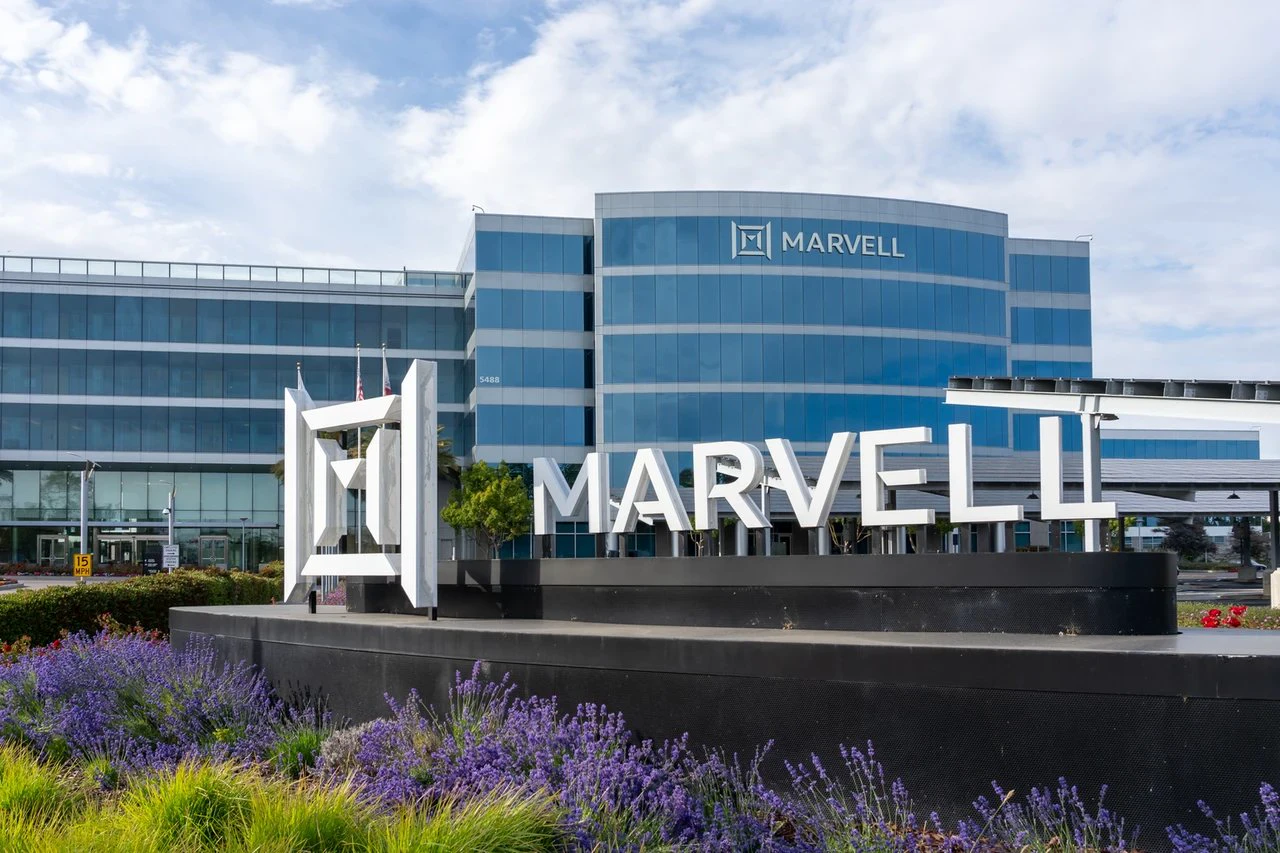
HSBC Gives Strong Support to Marvell: $325 Target, Renewing Confidence in AI Infrastructure
HSBC has raised its target price for MRVL to $325, forecasting a 42% upside from current levels. The bank argues that the market is still underestimating growth in optical interconnect and dedicated ASICs.
Near-Term Figures in Line with Expectations
HSBC analysts expect Marvell's second-quarter (FY2Q27) revenue, to be announced on August 27, to be around $2.74 billion. This estimate is close to the company's official guidance of $2.70 billion and the market consensus expectation of $2.71 billion. For th
MRVL-1.49%
AMZN-1.55%
MSFT1.71%
User_any
HSBC Gives Strong Support to Marvell: $325 Target, Renewing Confidence in AI Infrastructure
HSBC has raised its target price for MRVL to $325, forecasting a 42% upside from current levels. The bank argues that the market is still underestimating growth in optical interconnect and dedicated ASICs.
Near-Term Figures in Line with Expectations
HSBC analysts expect Marvell's second-quarter (FY2Q27) revenue, to be announced on August 27, to be around $2.74 billion. This estimate is close to the company's official guidance of $2.70 billion and the market consensus expectation of $2.71 billion. For the third quarter (FY3Q27), HSBC's forecast is approximately $3.03 billion. The figures are in line with the company's own trajectory.
The Real Story: Long-Term Infrastructure Transformation
HSBC's optimism is based on Marvell's strategic position in AI infrastructure. Accordingly:
• Optical Interconnect and 1.6T Transition: As AI clusters grow, data flow between chips and servers is becoming a critical bottleneck. Marvell's optical interconnect solutions (especially 1.6T PAM4 DSPs) are designed to solve this problem and are growing at approximately 70% annually. HSBC believes the optical transceiver market will expand by 70% in 2027, and Marvell will directly benefit from this wave. • Custom ASIC/XPU Market: Marvell is a key player in the design of custom chips (ASICs) developed for the specific needs of hyperscalers such as Amazon, Google, and Microsoft. HSBC predicts that custom XPUs will account for 53% of the total AI accelerator market by 2027, and Marvell will benefit from this growth.
• Custom ASIC/XPU Market: According to HSBC, the market hasn't fully priced in the growth potential in areas like optical interconnect and CXL. As CEO Matt Murphy noted, AI infrastructure is "still in very early stages," and interconnect stands out as the next major bottleneck.
The $325 target reflects confidence in Marvell's strategic role in the next phase of AI infrastructure, rather than its near-term balance sheet figures. The real focus for investors will be on how well the company can cash in on this long-term opportunity.
All assessments and comments here are purely personal opinions. This is not investment advice.
#GateStockInsightsChallenge 👉 $MRVL
  • Reward
  • Comment
  • Repost
  • Share
$MRVL is releasing its Q2 FY2027 earnings at market close today. Market expectations are for $2.71 billion in revenue and $0.93 in earnings per share. But the real story goes far beyond today's numbers: NVIDIA's $2 billion investment and Marvell's strategic partnerships with three major cloud providers.
1. NVIDIA's $2 Billion Move: Not Just an Investment, But a Vision
With its $2 billion investment in Marvell, NVIDIA has taken a significant step in its strategy to transform from a GPU giant into a "full-stack AI infrastructure architect." This move is not just a capital injection; it's part
MRVL-1.49%
NVDA8.55%
AMZN-1.55%
MSFT1.71%
GOOGL-0.42%
User_any
$MRVL is releasing its Q2 FY2027 earnings at market close today. Market expectations are for $2.71 billion in revenue and $0.93 in earnings per share. But the real story goes far beyond today's numbers: NVIDIA's $2 billion investment and Marvell's strategic partnerships with three major cloud providers.
1. NVIDIA's $2 Billion Move: Not Just an Investment, But a Vision
With its $2 billion investment in Marvell, NVIDIA has taken a significant step in its strategy to transform from a GPU giant into a "full-stack AI infrastructure architect." This move is not just a capital injection; it's part of NVIDIA's goal to make Marvell the "invisible backbone" connecting its GPU clusters.
Strategic Significance: Marvell's capabilities, such as optical interconnects, dedicated network chips (ASICs), and memory controllers, are critical to the success of NVIDIA's Rubin platform. NVIDIA aims to provide its customers with a "pre-optimized" AI infrastructure solution by integrating Marvell's technology into its own reference designs. CEO Jensen Huang's statement that "Marvell is the next trillion-dollar company" is the clearest indication of how seriously this strategic partnership is taken.
2. Strategic Partnerships with the Three Major Cloud Providers
Marvell has positioned itself as an indispensable partner to Amazon, Microsoft, and Google in the dedicated AI chip (ASIC) market.
Amazon (AWS): The main driver of Marvell's dedicated chip business with its Trainium 3 project. A Wells Fargo analyst predicts that AWS Trainium deployment capacity could exceed 2 gigawatts annually between 2027-2029, potentially driving Marvell's Trainium-related revenue to $5.5-6 billion annually. JPMorgan notes that Trainium 3 shipments will accelerate significantly in the second half of the year.
Microsoft (MSFT): Marvell plays a critical role in the 3nm version of Microsoft’s Maia AI XPU program. JPMorgan confirms that Maia 3nm will begin initial deployment in the second half of 2026, with significant volume shipments expected in 2027, and that the next generation of Maia with 2nm/3nm chiplet technology is already in the design phase. The order book for Maia 3nm for the 2027 calendar year already looks solid.
Google (GOOGL): The newest and perhaps most strategic partnership. Google’s expanded agreement with Marvell for custom chips connecting to its TPU ecosystem involves a 240-slice warrant structure. Each slice opens with Google purchasing $500 million worth of custom chips from Marvell, potentially creating a purchasing route that could reach $120 billion by fiscal year 2033. JPMorgan notes that this agreement further reinforces Marvell’s strategic value in the cloud provider custom chip ecosystem.
3. Margin Pressure and Valuation Risks: Is Everything Priced In?
Marvell's stock has gained over 180% this year and is trading well above the industry average with a forward P/E ratio of 74x and a forward P/S ratio of 17x. This premium valuation leaves little room for error in whether the company meets or exceeds expectations.
Key risks identified by analysts:
• Customer Concentration: A large portion of revenue is tied to three hyperscalers
• Competition: Broadcom remains a strong competitor in the ASIC market
• Margin Pressure: Custom chip (ASIC) manufacturing costs may temporarily pressure gross margins
• China Dependence: 44% of revenue last quarter came from China, and this percentage is increasing
Will Marvell's earnings report, to be released today, justify the company's current high valuation, or will the market see a correction? JPMorgan believes the company's data center growth algorithm has strengthened further in the last 90 days and argues that the market hasn't fully priced in the fact that all three major cloud providers are Marvell customers. Rosenblatt, meanwhile, is maintaining its fiscal year 2029 EPS forecast at $10.50 and its $300 target price.
Critical Indicator to Watch: Q3 guidance. JPMorgan expects revenue guidance of approximately $3.1 billion for the October quarter, above the consensus of $3.028 billion, which could signal that the first tranches of the Google acquisition are beginning to roll over.
All assessments and comments here are purely my personal opinions. This is not investment advice.
#GateStockInsightsChallenge
repost-content-media
  • Reward
  • Comment
  • 1
  • Share
NVIDIA's Growth Story: The Financial Dimension of the AI Revolution and Future Vision
Data Center Revenues Reach $89 Billion, Growth Continues Unabated with the New Rubin Platform
NVIDIA's financial performance has become one of the most concrete indicators of the AI revolution. The company's second-quarter results reveal the scale of the transformation in the sector. With quarterly revenue of $96.2 billion, representing a 106% year-on-year growth, NVIDIA generated $89 billion in revenue in its data center segment. This figure represents 92% of the company's total revenue and demonstrates the
NVDA8.55%
NVDAX8.49%
Venüs_
NVIDIA's Growth Story: The Financial Dimension of the AI Revolution and Future Vision
Data Center Revenues Reach $89 Billion, Growth Continues Unabated with the New Rubin Platform
NVIDIA's financial performance has become one of the most concrete indicators of the AI revolution. The company's second-quarter results reveal the scale of the transformation in the sector. With quarterly revenue of $96.2 billion, representing a 106% year-on-year growth, NVIDIA generated $89 billion in revenue in its data center segment. This figure represents 92% of the company's total revenue and demonstrates the strength of demand for AI infrastructure.
The Source of Demand and Future Goals
The most significant driving force behind NVIDIA's growth is the high demand for GPUs used in the training and inference processes of AI models. The company's third-quarter revenue target was set at $108 billion, significantly exceeding market expectations. Analysts note that this strong guidance is the most important indicator that AI infrastructure investments are continuing unabated.
Rubin Platform: The Architecture of the Future
Shipments of NVIDIA’s next-generation Rubin platform begin this quarter. This platform will take the company’s leadership in AI hardware to the next level. The Rubin architecture includes next-generation GPUs optimized specifically for large language models and complex AI workloads. The company requested 16-layer next-generation HBM (High Bandwidth Memory) from manufacturers for the fourth quarter. Each additional layer means more silicon wafer share, strengthening NVIDIA’s strategic position over its memory suppliers.
Transformation in the AI Ecosystem
NVIDIA’s growth story is no longer just about hardware sales. The company offers a comprehensive platform addressing every stage of the AI lifecycle. Offering solutions across a wide range, from training to inference, from cloud to edge computing, NVIDIA has become an indispensable part of the AI ecosystem. Developments in the field of agentic AI, in particular, are ushering in a new era in token consumption, and NVIDIA's hardware and software solutions in this area are among the key factors supporting the company's future growth.
Global Competition and Market Dynamics
While competition in the AI chip market is intensifying, NVIDIA's holistic platform approach sets it apart from its competitors. Despite the existence of customers developing custom chips, NVIDIA continues to offer flexible and powerful solutions covering all AI workloads, from training to inference. Company officials note that while customers have the option of assembling different components, most companies lack this capability, and NVIDIA's integrated platform will continue to be preferred.
NVIDIA's growth story reveals the financial dimension of the AI revolution in all its starkness. Data center revenues ranging from $1 billion to $89 billion are the most striking example of this transformation. The new Rubin platform, the increase in HBM demand, and the expansion of the AI ecosystem show that NVIDIA's growth story is still in its early stages. The main question for investors will be how this growth will evolve in the coming period and into which new areas the demand for AI infrastructure will shift.
$NVDA$NVDAX ‌$NVDA ‌#NVIDIAEarnings
DYOR 🔎 NFA ✔️
  • Reward
  • Comment
  • Repost
  • Share
⚽ Pre-Match Prediction Today · Round 08
Mourinho returns to Real Madrid and will lead the team in their first home match of the season at Real Madrid's home stadium. Can Real Madrid continue their strong momentum and secure back-to-back victories?
Can struggling Real Sociedad pull off an upset away from home and create trouble for the hosts?
Come share your original prediction and win rewards!
⏰ The match will officially kick off on August 26 at 19:00 (UTC). Please make sure to publish your original prediction post before the match starts.
👉 Event Details: https://www.gate.com/campaigns/5901
Venüs_
⚽ Pre-Match Prediction Today · Round 08
Mourinho returns to Real Madrid and will lead the team in their first home match of the season at Real Madrid's home stadium. Can Real Madrid continue their strong momentum and secure back-to-back victories?
Can struggling Real Sociedad pull off an upset away from home and create trouble for the hosts?
Come share your original prediction and win rewards!
⏰ The match will officially kick off on August 26 at 19:00 (UTC). Please make sure to publish your original prediction post before the match starts.
👉 Event Details: https://www.gate.com/campaigns/5901
repost-content-media
  • Reward
  • Comment
  • 1
  • Share
NVIDIA's 7-Year Transformation
Seven Years Ago, the Company Generated $1 Billion in Revenue in a Single Quarter; Now, it Reports $89 Billion in Data Center Revenue
NVIDIA's financial performance has become one of the most tangible indicators of the AI revolution. Seven years ago, in Q4 2019, total company revenue was around $1 billion, while today, the data center segment alone generates $89 billion in revenue. This transformation is not only a company's growth story but also a reflection of the evolution of the entire technology ecosystem.
Revenue Growth by Year: The Anatomy of the Leap
2019-
NVDA8.55%
M谋ngYueZen
NVIDIA's 7-Year Transformation
Seven Years Ago, the Company Generated $1 Billion in Revenue in a Single Quarter; Now, it Reports $89 Billion in Data Center Revenue
NVIDIA's financial performance has become one of the most tangible indicators of the AI revolution. Seven years ago, in Q4 2019, total company revenue was around $1 billion, while today, the data center segment alone generates $89 billion in revenue. This transformation is not only a company's growth story but also a reflection of the evolution of the entire technology ecosystem.
Revenue Growth by Year: The Anatomy of the Leap
2019-2021: A Calm Start and the First Steps
The journey, which began with $1 billion in Q4 2019, progressed steadily throughout 2020. The company reached $1.9 billion in Q4 2020, and surpassed $2 billion in the first quarter of 2021. Revenues rose to $3.3 billion in Q4 2021, reflecting the impact of gaming and data center demand during the pandemic.
2022: A Period of Stagnation
2022 was a transitional year for NVIDIA. Revenue remained relatively flat at $3.8 billion from Q1 to Q3, before falling to $3.6 billion in Q4. This period reflected the effects of the decline in cryptocurrency mining and the slowdown in the gaming market.
2023: The AI Wind Blows
2023 was a turning point for NVIDIA. Starting with $4.3 billion in Q1, the year jumped to $10.3 billion in Q2. This leap was a direct result of GPUs becoming indispensable in training AI models. With $14.5 billion in Q3 and $18.4 billion in Q4, the year closed with growth exceeding 300%.
2024: Growth Gains Momentum
2024 saw a new record in every quarter. With $22.6 billion in Q1, $26.3 billion in Q2, $30.8 billion in Q3, and $35.6 billion in Q4, the year ended with total revenue exceeding $115 billion.
2025: Economies of Scale Come into Play
2025 was a year of continued growth. With $39.1 billion in Q1, $41.1 billion in Q2, $51.2 billion in Q3, and $62.3 billion in Q4, the company demonstrated the scale of its AI infrastructure investments.
2026: The Inference Era Begins
Revenues reached $75.2 billion in the first quarter of 2026, peaking at $89 billion in the second quarter, specifically for the data center segment. This figure is considered a financial reflection of the transition of AI workloads from the training phase to the inference phase.
Dynamics Behind the Digital Transformation
Data Center Revolution
The data center segment became NVIDIA's largest revenue source from the second quarter of 2023 onwards. Its share of total revenue reached approximately 92% in the second quarter of 2026. The increasing complexity of AI models and the computing power required for training made GPUs indispensable in data centers.
Product Transitions and Market Strategy
NVIDIA's transitions in product architecture (from Ampere to Hopper, then to Blackwell and Vera Rubin) each brought a new leap in performance and efficiency. The launch of the Blackwell platform in 2025 accelerated enterprise adoption, particularly with Blackwell GPUs designed for large language models.
Global Market Dynamics
The global semiconductor market is expected to surpass the $1 trillion mark in 2026 and reach $1.5 trillion in 2030. Approximately 55% of this growth is driven by high-performance computing and AI applications, with NVIDIA holding the largest share. In this environment, where 2026 is described as "a true semiconductor supercycle witnessed for the first time in the industry's 18-year career," NVIDIA's market leadership is solidifying day by day.
Inference Economy and Tokenization
The shift of AI workloads from the training phase to the inference phase is considered a true turning point in terms of the industry's monetization capabilities. The token economy is emerging as a new way to create economic value from AI raw materials. With token consumption projected to increase 20-30 times by 2030, NVIDIA's role in this transformation is critically important.
Conclusion
NVIDIA's 7-year revenue journey, from $1 billion to $89 billion, reveals the financial dimension of the AI revolution in all its starkness. Setting new records every quarter, the company is solidifying its position as a sector leader, while potential contributions from the Chinese market, the success of the Vera Rubin transition, and the new dynamics of the inference economy will shape the next chapter of its growth story.
$NVDA#NVIDIAEarnings
#GateStockInsightsChallenge
DYOR 🔎 NFA ✔️
  • Reward
  • Comment
  • 1
  • Share
The Financial Dimension of the AI Revolution
Quarterly Revenue Reaches $96 Billion Today, Up from $1 Billion Seven Years Ago
NVIDIA's second-quarter financial results, announced on August 26, 2026, revealed the scale of the AI revolution. Seven years ago, the company generated $1 billion in revenue in a single quarter. This quarter, it reached $96.2 billion, exceeding analysts' expectations of $92.2 billion by approximately $4 billion. This represents a 106% growth compared to the same quarter last year.
Data Center Segment: The Main Engine of Growth
At the heart of the company's growth story
NVDA8.55%
M谋ngYueZen
The Financial Dimension of the AI Revolution
Quarterly Revenue Reaches $96 Billion Today, Up from $1 Billion Seven Years Ago
NVIDIA's second-quarter financial results, announced on August 26, 2026, revealed the scale of the AI revolution. Seven years ago, the company generated $1 billion in revenue in a single quarter. This quarter, it reached $96.2 billion, exceeding analysts' expectations of $92.2 billion by approximately $4 billion. This represents a 106% growth compared to the same quarter last year.
Data Center Segment: The Main Engine of Growth
At the heart of the company's growth story is the data center segment. This quarter, data center revenue reached $89 billion, exceeding the consensus expectation of $85.8 billion and representing a 117% increase compared to the same period last year. The data center segment now accounts for approximately 92% of total revenue.
Other Dimensions of Financial Performance
Adjusted earnings per share were $2.22, exceeding the $2.10 expectation. The adjusted gross profit margin was 75%, while operating income reached $63.7 billion. The company's free cash flow was reported at $21.3 billion. NVIDIA also delivered approximately $26 billion in shareholder returns in the second quarter and announced a remaining share repurchase authorization of $99 billion.
Third Quarter Guidance: Exceeding Expectations
NVIDIA's third-quarter revenue guidance was set at $108 billion, compared to market expectations of $104.2 billion. This signals a strong performance that could be described as a "beat + raise." The adjusted gross profit margin expectation for the third quarter is 74%.
The China Factor and Future Potential
One of the most notable details in the report is that the guidance still does not assume data center computing revenue from China. This situation shows that the company experienced a quarterly revenue loss of approximately $4.6 billion due to export restrictions targeting the Chinese market. However, the fact that the current strong performance was achieved without this loss suggests that a potential expansion into China offers additional upside potential.
Vera Rubin: The Platform of the Future
CEO Jensen Huang's statement, "Vera Rubin is going full production, massive production is coming," significantly reduced concerns about the product transition process. This is a critical reassurance for the company, which aims for a total sales target of $1 trillion from Blackwell and Vera Rubin by 2027.
Industry Perspective
NVIDIA's performance demonstrates that the construction of AI infrastructure continues unabated. In this context, where 2026 is described by the industry as "a true semiconductor supercycle witnessed for the first time in their 18-year career," NVIDIA's position as an industry leader is solidified. The global semiconductor market is expected to reach $1.5 trillion by 2030, with 55% of this growth driven by high-performance computing and artificial intelligence applications.
Conclusion
NVIDIA's quarterly results reveal the financial reality of the AI revolution in all its starkness. The company not only exceeded current expectations but also painted an optimistic picture for the future. The real question for investors will be how this growth story evolves in the coming period and how the supply constraints, energy costs, and geopolitical risks facing the sector will shape this narrative.
$NVDA#NVIDIAEarnings #GateStockInsightsChallenge
DYOR 🔎
  • Reward
  • Comment
  • Repost
  • Share
NVIDIA Q2 2027 Earnings Report: Market Expectations and Actual Results
Financial Results and Market Reaction
NVIDIA announced its second-quarter results for fiscal year 2027 after market close on August 26, 2026. The company reported EPS of $2.39, exceeding analyst expectations of $2.09 per share by $0.30. This result comes at a time when NVIDIA's revenue nearly doubled; the consensus revenue expectation was approximately $92 billion.
Financially, the company remains strong. Net profit margin is 62.97% and return on equity is 96.94%. The company also announced a new $80 billion share buyback p
NVDA8.55%
M谋ngYueZen
NVIDIA Q2 2027 Earnings Report: Market Expectations and Actual Results
Financial Results and Market Reaction
NVIDIA announced its second-quarter results for fiscal year 2027 after market close on August 26, 2026. The company reported EPS of $2.39, exceeding analyst expectations of $2.09 per share by $0.30. This result comes at a time when NVIDIA's revenue nearly doubled; the consensus revenue expectation was approximately $92 billion.
Financially, the company remains strong. Net profit margin is 62.97% and return on equity is 96.94%. The company also announced a new $80 billion share buyback program covering approximately 1.5% of existing shares.
However, market reaction remained cautious. Over the past four quarters, NVIDIA shares have fallen by an average of 3% to 5% despite exceeding expectations. This indicates that the market no longer considers "exceeding expectations" sufficient and has set a higher benchmark. As of today, the stock is trading at $209.69 with a market capitalization of approximately $5.07 trillion.
The Picture Behind Expectations
Prior to these results, options markets were pricing in a 5.4% move in the stock, indicating a market capitalization fluctuation of approximately $280 billion. This rate is below the average of 7.4% over the last 12 quarters and suggests that the market expected a more predictable outcome.
Analysts note that the expected third-quarter revenue is around $104 billion, and this figure will be the most important indicator of whether NVIDIA can maintain its growth rate. The data center segment continues to be the main driver of the company's growth, accounting for approximately 92% of total revenue.
Key Factors for the Upcoming Period
Analysts highlight that the following factors will be decisive for the market in the upcoming period:
• Vera Rubin Transition: The production and delivery schedule of the next-generation Vera Rubin chips
• Margin Pressure: The impact of rising high-bandwidth memory costs on gross profit margins
• China Market: Developments in approved shipments of H200 chips to China
• Infrastructure Financing: Market perception of NVIDIA's $500 billion financing package for customers
In conclusion, while NVIDIA continues its strong financial performance, the market is now focused on the sustainability of the company's growth story. The stock's consolidation in the $190-$230 range and recent declines indicate that investors are hesitant about whether AI infrastructure spending has peaked.
DYOR 🔎 NFA ✔️
#NVIDIAEarnings #GateStockInsightsChallenge
  • Reward
  • Comment
  • 1
  • Share
Artificial Intelligence and the Semiconductor Industry: Milestones and Global Outlook for 2026
The artificial intelligence and semiconductor industry is experiencing one of the fastest transformations in its history in 2026. Bernstein analysts describe this year as "a true semiconductor supercycle they are witnessing for the first time in their 18-year career." The industry's revenue, which was $800 billion in 2025, is projected to skyrocket to $1.3 trillion in 2026, creating supply constraints across all segments.
Global Market Size and Expectations
According to TSMC's announcement at the 202
M谋ngYueZen
Artificial Intelligence and the Semiconductor Industry: Milestones and Global Outlook for 2026
The artificial intelligence and semiconductor industry is experiencing one of the fastest transformations in its history in 2026. Bernstein analysts describe this year as "a true semiconductor supercycle they are witnessing for the first time in their 18-year career." The industry's revenue, which was $800 billion in 2025, is projected to skyrocket to $1.3 trillion in 2026, creating supply constraints across all segments.
Global Market Size and Expectations
According to TSMC's announcement at the 2026 European Technology Symposium, the global semiconductor market will surpass the $1 trillion mark in 2026 and is expected to reach approximately $1.5 trillion by 2030. Approximately 55% of this growth is driven by high-performance computing and AI applications, while smartphones account for 20%, and automotive and the Internet of Things each contribute around 10%.
According to Morgan Stanley's report, the global AI semiconductor market will reach approximately $485 billion in 2026 and rise to approximately $75-30 billion in 2030, representing roughly half of the total semiconductor market. Cloud computing spending will approach $811 billion in 2026.
The Evolution of AI: The Shift from Training to Inference
The most significant transformation in the sector is the shift of AI workloads from the training phase to the inference phase. This transition is critical for the commercialization of AI; the training phase does not generate revenue, while the use of models does. Anthropic's annual revenue skyrocketing from $9 billion in December 2025 to $30 billion in April 2026 is a concrete example of this transformation.
According to Morgan Stanley, token demand is expected to exceed installed transaction capacity in the second half of 2026. This is considered a true turning point in terms of the sector's monetization potential. The token economy is emerging as a new way to create economic value from the raw material of artificial intelligence, and token consumption is projected to increase 20-30 times by 2030.
Structural Challenges of the Sector: Supply Tightness and Energy Crisis
The semiconductor sector is experiencing one of the most severe supply tightnesses in its history. HBM memory occupies more than 85% of the silicon area in AI chips, and producing 1 GB of HBM requires approximately four times the silicon area of standard DRAM. This means that even with increased production capacity, actual storage capacity remains limited. Even Intel's previously depreciated stocks have been consumed by customers.
The next major bottleneck for the sector will be energy infrastructure. If NVIDIA's projected annual infrastructure investment of $3-4 trillion materializes, the US power grid would need to grow by approximately 5% annually, a goal considered nearly impossible by energy sector analysts. This makes investments in power generation, cooling, and nuclear sectors critical for the next phase of AI growth.
NVIDIA and its Competitors: A New Balance in the Global Competition Arena
NVIDIA's Market Position and Transformation
NVIDIA remains a leader in the AI processor market, but the evolution of the sector is leading to significant changes in the company's strategy. As senior executives have stated, "not all tokens are created equal; low-latency tokens have higher value, and GPUs are not the best option for every task." This understanding is further reinforced by NVIDIA's acquisitions of AI inference startups like Groq.
The Rise of New Competitors: The ASIC and XPU Era
The AI processor market is no longer limited to GPUs. Dedicated ASIC chips, spearheaded by companies like Broadcom, are rapidly gaining market share in the AI processor market. While Broadcom's AI revenue is expected to reach $100 billion next year, ASICs currently account for approximately 10-15% of the AI chip market revenue, projected to rise to 25-30% in the coming period.
However, analysts note that ASICs will not completely replace GPUs, but rather the growing market share will offer opportunities for both sides. The critical point is whether the opportunity continues to grow; if it is large enough, both areas will thrive.
Efficiency and Production Capacity Competition
Another notable trend in the AI hardware sector is increased efficiency and workforce optimization. In the last 12 months, technology hardware companies recorded a net efficiency gain of 8.6%, while semiconductor firms saw a gain of 8.2%, with approximately 5-8% job losses during the same period. This indicates that companies are increasing operational efficiency through AI automation.
On the Intel front, the new CEO's pragmatic strategy with low expectations, better-than-expected yield rates in the 18A production process, and investments from the government and NVIDIA have significantly eased concerns about the company's balance sheet.
The Chinese AI Chip Market and New Dynamics
The shift of AI workloads from education to inference is also creating new opportunities for China's AI chip ecosystem. According to a Morgan Stanley report, the Chinese AI GPU market is expected to reach approximately $910 billion by 2030, with domestic AI chip production reaching 70%. This signals a significant restructuring in the global semiconductor supply chain.
The Future of the Industry: New Challenges and Opportunities
The investment world anticipates continued capital expenditure on AI infrastructure. JPMorgan's 2026 technology budget is approximately $200 billion, with about $23 billion (25%) allocated to AI. According to Edmond de Rothschild strategists, the sector is "not a bubble or a reversal, but a mid-level expansion phase approaching maturity."
However, it is emphasized that the era of unlimited expansion in the sector is over, and investors now need to be selective. While memory manufacturers, equipment manufacturers, and foundries with strong pricing power are expected to stand out, rising energy and production costs are expected to put margin pressure on GPU and ASIC designers.
DYOR 🔎 NFA ✔️
#NVIDIAEarnings
#GateStockInsightsChallenge
$NVDA ‌
  • Reward
  • Comment
  • Repost
  • Share
  • Pinned