MyCypto

vip
Age 0 Year
Peak Tier 0
No content yet
ICP/USDT Analysis: Strong Recovery Bounce with Volatility Expansion
Internet Computer $ICP is trading at 3.199 USDT, up +8.44%, showing a strong rebound after recent weakness with increased volatility and active short-term participation.
Market Structure
Price is attempting to recover from a corrective phase and reclaim lost levels. The structure is improving, but full trend confirmation is not yet established.
Key Levels
Resistance: 3.40 – 3.65
Support: 3.00 – 2.85
A breakout above 3.65 could extend momentum toward 3.90–4.20, while losing 2.85 may return price to deeper consolidation near 2.6
ICP12.52%
CryptoSelf
ICP/USDT Analysis: Strong Recovery Bounce with Volatility Expansion
Internet Computer $ICP is trading at 3.199 USDT, up +8.44%, showing a strong rebound after recent weakness with increased volatility and active short-term participation.
Market Structure
Price is attempting to recover from a corrective phase and reclaim lost levels. The structure is improving, but full trend confirmation is not yet established.
Key Levels
Resistance: 3.40 – 3.65
Support: 3.00 – 2.85
A breakout above 3.65 could extend momentum toward 3.90–4.20, while losing 2.85 may return price to deeper consolidation near 2.60.
Indicators
RSI is rising strongly, indicating improving momentum but approaching overbought conditions.
MACD is turning bullish with increasing histogram strength.
EMA structure is flattening upward, suggesting early recovery phase.
Market Interpretation
Volume expansion supports the rebound, but continuation depends on whether inflows persist. Market is shifting from correction toward recovery but still needs confirmation.
$ICP ‌ ‌
#GateSquareMayTradingShare #GateSquare #CreatorCarnival #ContentMining

repost-content-media
  • Reward
  • 5
  • Repost
  • Share
discovery:
To The Moon 🌕
View More
📢 Gate Square | 5/8 Hot Discussion: #美伊冲突再升级
The prospects for US-Iran talks have suddenly taken a major hit. On May 8, the U.S. Central Command confirmed that U.S. forces intercepted and retaliated against an Iranian attack in the Strait of Hormuz. Owing to this geopolitical conflict, U.S. stocks promptly dropped below their highs, BTC fell through the $80,000 level, and oil prices saw a sharp V-shaped reversal. With tonight’s non-farm payroll data about to be released, can the bulls regain their ground?
🎁 Predict the market trend and draw 5 lucky Koi fish winners to share a $1,000 positio
BTC0.12%
Yusfirah
📢 Gate Square | 5/8 Hot Discussion: #美伊冲突再升级
The prospects for US-Iran talks have suddenly taken a major hit. On May 8, the U.S. Central Command confirmed that U.S. forces intercepted and retaliated against an Iranian attack in the Strait of Hormuz. Owing to this geopolitical conflict, U.S. stocks promptly dropped below their highs, BTC fell through the $80,000 level, and oil prices saw a sharp V-shaped reversal. With tonight’s non-farm payroll data about to be released, can the bulls regain their ground?
🎁 Predict the market trend and draw 5 lucky Koi fish winners to share a $1,000 position experience voucher!
💬 This episode’s discussion:
1️⃣ Will the US-Iran situation further escalate? What key news have you been paying attention to?
2️⃣ Can Bitcoin withstand the pressure and move back above $80,000?
3️⃣ Do you think tonight’s data will be bullish or bearish? How will it affect rate-cut expectations?
🔗 Share now: https://www.gate.com/post
📅 Deadline: 5/10 18:00 (UTC+8)
  • Reward
  • 5
  • Repost
  • Share
CryptoSelf:
To The Moon 🌕
View More
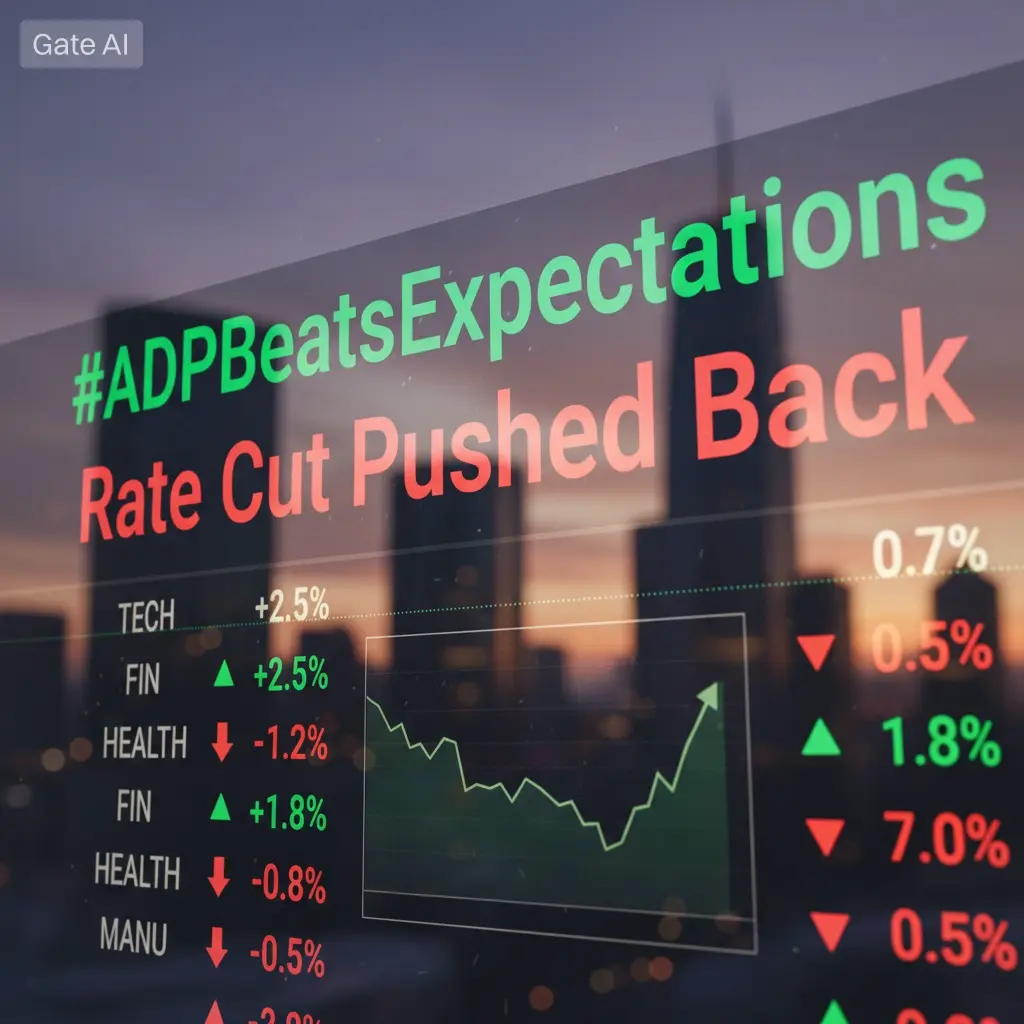
#ADPBeatsExpectationsRateCutPushedBack
In today’s macro-driven financial environment, every single data release is no longer just a number—it’s a signal, a trigger, and sometimes a complete narrative shift for global markets. The latest ADP employment report has once again reminded traders, investors, and institutions that the U.S. economy is not moving in a straight line, and neither is the Federal Reserve’s path toward policy easing. Expectations were priced in aggressively. A rate cut narrative was building momentum. Risk assets were starting to breathe in anticipation. But the latest nu
SoominStar
#ADPBeatsExpectationsRateCutPushedBack
In today’s macro-driven financial environment, every single data release is no longer just a number—it’s a signal, a trigger, and sometimes a complete narrative shift for global markets. The latest ADP employment report has once again reminded traders, investors, and institutions that the U.S. economy is not moving in a straight line, and neither is the Federal Reserve’s path toward policy easing. Expectations were priced in aggressively. A rate cut narrative was building momentum. Risk assets were starting to breathe in anticipation. But the latest numbers disrupted that comfort zone, forcing the entire market to recalibrate its assumptions in real time.
What we are witnessing right now is not just a reaction to one data point—it’s a broader repricing of liquidity expectations. ADP came in stronger than expected, signaling that the labor market is still showing resilience despite tighter financial conditions. And in macro terms, a strong labor market is a double-edged sword. On one side, it reflects economic strength and stability. On the other, it delays the very thing risk markets are desperate for: monetary easing.
This is exactly where the tension begins.
Markets had started front-running a scenario where inflation cools fast enough, growth slows gradually, and the Fed is forced into a rate cut cycle sooner rather than later. That narrative was fueling risk appetite across equities, crypto, and high-beta assets. But strong employment data disrupts that entire chain of assumptions. Because if jobs remain solid, wage pressure persists. And if wage pressure persists, inflation doesn’t die as quickly as the market wants it to.
The immediate implication is simple but powerful: rate cuts get pushed back.
And when rate cuts get pushed back, liquidity expectations shift. When liquidity expectations shift, valuations across risk assets get questioned. This is not emotional—it’s mechanical. Every trader who was positioned for early easing suddenly finds themselves re-evaluating timing, exposure, and risk management.
From a trading perspective, this is where volatility expands. Not because the economy is collapsing, but because expectations are being violently realigned. Overleveraged positions start getting flushed. Weak hands exit first. Strong hands reposition. And smart capital waits for confirmation rather than prediction.
In crypto markets especially, this kind of macro shift creates a very specific behavior pattern. Initial downside reactions are often emotional, driven by leverage unwinds. But the real trend direction only becomes clear after liquidity expectations stabilize again. That is why experienced participants don’t chase the first move—they observe the structure that forms after the shock.
Another important angle here is psychology. The market hates uncertainty more than it hates bad news. A delayed rate cut introduces uncertainty into timelines that were previously being priced with confidence. That uncertainty alone is enough to slow momentum, even if the broader economic picture is not necessarily negative.
However, this is not a one-directional story.
A stronger-than-expected ADP report also reinforces the idea that the economy still has underlying strength. That means any eventual rate cuts—when they do come—could land in a more stable macro environment rather than during a rapid downturn. In other words, this delay might actually extend the cycle rather than break it.
For aggressive traders, this is where opportunity and danger coexist.
On one hand, liquidity expectations are being pushed further out, which can create short-term pressure on risk assets. On the other hand, these same corrections often reset leverage, reset sentiment, and create cleaner entry zones for the next expansion phase. The market doesn’t move in straight lines—it moves in waves of expectation and disappointment.
Right now, we are in a recalibration phase.
The narrative has shifted from “rate cuts are near” to “rate cuts are conditional.” That single shift changes everything—from positioning to sentiment to volatility structure. And in such environments, survival depends more on patience and positioning discipline than prediction accuracy.
In conclusion, the ADP report has done more than just beat expectations. It has delayed a widely anticipated macro pivot and forced the market to reprice the timeline of monetary easing. Whether this becomes a temporary pause in bullish liquidity expectations or the beginning of a deeper macro reassessment will depend on upcoming inflation and Fed signals.
But one thing is clear: the market is no longer operating on certainty—it is operating on reaction.
And in reactive markets, only those who adapt faster than the narrative survive.
repost-content-media
  • Reward
  • 2
  • Repost
  • Share
CryptoSelf:
To The Moon 🌕
View More
#CLARITYActStalled
In the evolving battlefield of global crypto regulation, every legislative movement is more than just policy—it is a signal of power, control, and the future architecture of digital finance. The so-called CLARITY Act was expected to bring structure, definition, and long-awaited regulatory certainty to the U.S. crypto ecosystem. Instead, what we are seeing now is hesitation, fragmentation, and a clear stall that speaks louder than any official statement.
This is not just a delay in paperwork. This is a delay in direction.
Markets were already pricing in the possibility tha
SoominStar
#CLARITYActStalled
In the evolving battlefield of global crypto regulation, every legislative movement is more than just policy—it is a signal of power, control, and the future architecture of digital finance. The so-called CLARITY Act was expected to bring structure, definition, and long-awaited regulatory certainty to the U.S. crypto ecosystem. Instead, what we are seeing now is hesitation, fragmentation, and a clear stall that speaks louder than any official statement.
This is not just a delay in paperwork. This is a delay in direction.
Markets were already pricing in the possibility that the U.S. would finally take a more structured approach toward digital assets—something that could reduce uncertainty, attract institutional participation, and unlock a new phase of capital inflow. The CLARITY Act was positioned as a bridge between innovation and regulation, a framework that could separate securities from commodities and define jurisdictional boundaries once and for all.
But when that clarity gets stalled, uncertainty doesn’t just return—it multiplies.
From a market perspective, regulatory ambiguity is one of the most powerful suppressors of long-term capital. Institutions don’t move on narratives—they move on rules. And when those rules remain undefined, capital becomes defensive. That is exactly what this stall represents: not just political delay, but capital hesitation at a systemic level.
My personal reading of this situation is simple: the system is not ready to fully define crypto because defining it means controlling it—and control always comes with internal conflict. Different regulatory bodies, different political incentives, and different economic interests are all pulling in different directions. The result is gridlock, and in that gridlock, innovation continues—but under pressure.
What makes this even more important is the timing. We are at a stage where crypto is no longer a fringe market. It is deeply integrated with global liquidity cycles, institutional portfolios, and macro risk sentiment. Any delay in regulatory clarity now doesn’t just affect builders—it affects global capital allocation strategies.
The CLARITY Act stall creates three immediate market consequences.
First, uncertainty premiums rise. When rules are unclear, risk increases—even if fundamentals remain strong. That risk premium gets priced into valuations across the board.
Second, institutional hesitation strengthens. Large capital prefers predictable environments. Without legal clarity, exposure remains limited or heavily hedged.
Third, narrative momentum slows. Crypto thrives on forward-looking expectations. When regulatory progress stalls, sentiment loses one of its strongest catalysts.
However, this is not purely bearish—it is structural. And structure in markets often creates accumulation phases disguised as frustration.
In my view, the most important thing to understand here is that regulatory delay does not equal regulatory rejection. It simply means the system is still negotiating its own boundaries. And those negotiations always take longer than markets expect.
Historically, every major financial innovation has gone through this phase—rapid adoption, regulatory confusion, political pushback, and then eventual normalization. Crypto is currently still inside that transition zone. The CLARITY Act was supposed to accelerate that exit. Its stall simply extends the transition timeline.
For traders, this environment demands a shift in mindset. This is not a clean trend market driven by policy clarity. This is a reactive market driven by headlines, expectations, and sentiment swings. In such conditions, positioning becomes more important than prediction.
For long-term participants, however, the message is different. Regulatory delay often builds the foundation for stronger future moves because it shakes out speculative excess and forces real builders to continue operating under pressure. When clarity eventually arrives—because it will in some form—it will land on a more mature, more resilient ecosystem.
My final thought is this: the CLARITY Act stalling is not the end of regulation progress, but a reminder that financial systems do not evolve in straight lines. They evolve through friction, delay, and negotiation.
And in that friction lies both risk and opportunity.
Because while policy makers debate definitions, markets continue to build reality.
repost-content-media
  • Reward
  • 3
  • Repost
  • Share
CryptoSelf:
To The Moon 🌕
View More
#StablecoinReserveDrops
The current shift in stablecoin reserves is not just another on-chain metric flashing red or green on dashboards—it is a deeper reflection of liquidity behavior, investor confidence, and the underlying stress structure of the crypto market. When stablecoin reserves across exchanges and on-chain ecosystems start to decline, it is rarely an isolated event. It usually signals a change in positioning, a redistribution of capital, and sometimes a quiet warning that market participants are becoming more defensive than aggressive.
Right now, the drop in stablecoin reserves
BTC0.12%
ETH1.15%
SoominStar
#StablecoinReserveDrops
The current shift in stablecoin reserves is not just another on-chain metric flashing red or green on dashboards—it is a deeper reflection of liquidity behavior, investor confidence, and the underlying stress structure of the crypto market. When stablecoin reserves across exchanges and on-chain ecosystems start to decline, it is rarely an isolated event. It usually signals a change in positioning, a redistribution of capital, and sometimes a quiet warning that market participants are becoming more defensive than aggressive.
Right now, the drop in stablecoin reserves is telling us something important: dry powder is being deployed, or more concerningly, it is being withdrawn from active circulation. In simple terms, stablecoins are the lifeblood liquidity layer of crypto markets. They are the waiting capital—the fuel that sits idle until opportunity appears. So when that fuel starts shrinking instead of building, it forces a critical question: is sidelined capital losing patience, or is it exiting risk entirely?
From my perspective, this is where the market narrative starts to shift from expansion to caution.
Stablecoin reserves declining can often indicate that participants are either moving funds into real assets like Bitcoin, Ethereum, or altcoins, or pulling capital off-exchange entirely due to uncertainty. Both scenarios carry very different implications. The first suggests rotation within the ecosystem—capital is still engaged but repositioning. The second suggests risk reduction—capital is stepping away from exposure.
And in the current macro-sensitive environment, this distinction matters more than ever.
We are operating in a market where liquidity expectations, interest rate assumptions, and global risk sentiment are tightly interconnected. Stablecoins act as the bridge between traditional finance hesitation and crypto-native opportunity. When that bridge starts thinning, market depth becomes more fragile, and price movements become more reactive to smaller flows.
What makes this situation more critical is the timing. Markets have already been navigating a complex environment of delayed monetary easing, shifting macro signals, and inconsistent risk appetite. In such conditions, stablecoin accumulation is usually expected as investors wait for clarity. But instead, we are seeing a contraction in reserves, which suggests that patience is either being replaced by action—or exhaustion.
There is also a psychological layer to this. Stablecoin reserves often represent “future intent.” When reserves are high, it means participants are preparing for deployment. When they drop, it often means that conviction is being tested. Either capital is being put to work aggressively, or it is quietly leaving the system. Both outcomes increase volatility, but only one supports sustained upside momentum.
From a structural standpoint, declining stablecoin reserves can reduce immediate buying pressure available in the system. That doesn’t necessarily mean prices must fall, but it does mean that upside moves require stronger external inflows or renewed issuance of stable liquidity. Without that, rallies can become thinner, faster, and more vulnerable to reversals.
My personal interpretation of this shift is that we are entering a more selective liquidity phase. This is not a broad expansion environment where capital floods every asset. This is a phase where liquidity is being deployed with precision, hesitation, and increasing sensitivity to macro signals. That alone changes how trends develop.
In aggressive market phases, stablecoin reserves build silently before explosive expansion. In corrective or uncertain phases, those reserves either stagnate or decline as participants lose confidence in timing the next major move. What we are seeing now leans closer to the second behavior pattern, which naturally increases the importance of risk management and position sizing.
However, this is not a purely bearish signal by default. Markets often behave in cycles of contraction before expansion. A drop in stablecoin reserves can also mean that dormant capital is finally being activated—fuel being used rather than stored. The real question is whether that activation is broad-based across the ecosystem or concentrated in short-term rotations.
If it is rotation, the market can remain active but choppy. If it is withdrawal, then liquidity conditions tighten significantly and trends become more fragile.
The key takeaway here is simple but powerful: stablecoin reserves are not just numbers—they are sentiment in liquidity form. And right now, that sentiment is shifting away from accumulation confidence and toward either deployment urgency or cautious exit behavior.
For traders, this environment demands attention to flow, not just price. For investors, it demands patience and awareness of liquidity cycles. And for the broader market, it serves as a reminder that every rally or correction is ultimately powered not by headlines, but by available capital waiting in the system.
In conclusion, the decline in stablecoin reserves is a structural signal that the market is moving into a more sensitive liquidity phase. Whether this becomes a prelude to stronger deployment or a warning of capital exhaustion will depend on how quickly new inflows return to stabilize the system.
But one thing is clear: liquidity is no longer expanding quietly in the background—it is being actively reallocated. And whenever that happens, the market stops being predictable and starts becoming reactive.
repost-content-media
  • Reward
  • 3
  • Repost
  • Share
CryptoSelf:
To The Moon 🌕
View More
#GateSquareDaily
#USIranTension #HormuzStrait
US Iran Tense Rise
Per US media reports, US forces hit Qeshm Isle and Bandar Abbas zones in Iran. Many blasts were told in the south of Iran. No formal claim came from the US yet.
News From the Field
Iran joint army rule said the US broke the truce by hitting an Iran oil ship and one more vessel. It also said air raids took place on Qeshm Isle in the Hormuz Strait and on the Bandar Khamir-Sirik shore on the main land. Iran’s force said that, in reply, it hit US army ships east of the Hormuz Strait and south of Chabahar port.
US Core Command sa
discovery
#GateSquareDaily
#USIranTension #HormuzStrait
US Iran Tense Rise
Per US media reports, US forces hit Qeshm Isle and Bandar Abbas zones in Iran. Many blasts were told in the south of Iran. No formal claim came from the US yet.
News From the Field
Iran joint army rule said the US broke the truce by hitting an Iran oil ship and one more vessel. It also said air raids took place on Qeshm Isle in the Hormuz Strait and on the Bandar Khamir-Sirik shore on the main land. Iran’s force said that, in reply, it hit US army ships east of the Hormuz Strait and south of Chabahar port.
US Core Command said Iran hit three navy destroyers with rockets, drones, and small boats. In reply, rocket and drone sites plus more goals were struck. Centcom said no US item was hit and they do not want rise, but they stand to guard US troops.
Rule Replies
Trump said the truce still holds and tried to ease the news. Iran state press also said things were back to calm after the raids.
In the House, unease grows. GOP Rep Tom Barrett gave a bill that grants Trump a brief and bound army right to stop Iran from getting a nuke. The bill bans ground troops and a rule change goal.
Market Hit
Oil rose after the clash news. US crude went to 96.8 dollars. S&P 500 futures fell 0.2 percent. The Hormuz Strait moves about 20 percent of world oil, so each event in the zone brings swings in fuel markets.
Talk Path
Talks go on between Washington and Tehran on a one-page pact note to end the fight. Sources say the deal is not firm yet but the sides are close as ever. The plan has a firm truce, open flow via the Hormuz Strait, lift of US bans, and curbs on Iran’s atomic work.
Sum Up
The US Iran truce stays weak. Claims of raids on Qeshm Isle and Bandar Abbas lift stress. No formal proof came, yet fire was clear on the field. The Hormuz Strait and the atomic plan are at the core of talks. Moves in the zone will keep a direct sway on oil and risky goods.
#GateSquareMayTradingShare
#Gate广场五月交易分享
repost-content-media
  • Reward
  • 8
  • Repost
  • Share
CryptoSelf:
2026 GOGOGO 👊
View More
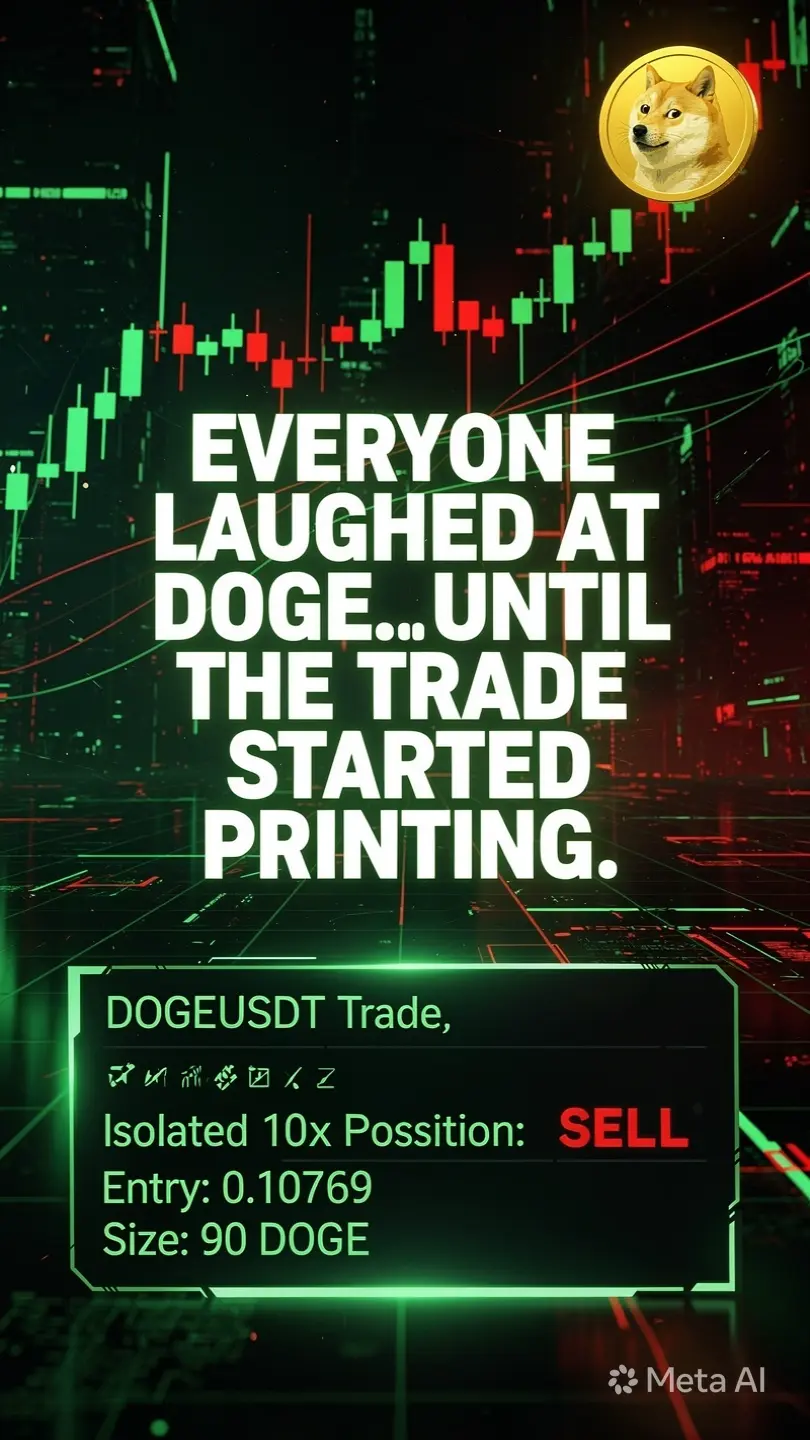
EVERYONE LAUGHED AT DOGE… UNTIL THE TRADE STARTED PRINTING.🔥

Most traders only enter after the market already pumps.
They wait for social media hype.
They wait for influencers to confirm the move.
They wait until emotions take over… and by then, smart money is already preparing the opposite direction.
That’s not how I trade.
I trade psychology.
I trade reactions.
I trade the emotions hidden behind every candle.
DOGEUSDT Trade ⚡
Isolated 10x
Position: SELL
Entry: 0.10769
Size: 90 DOGE
When everyone started becoming too greedy on DOGE, I didn’t see opportunity to buy higher.
I saw exhaustion.
DOGE0.92%
EagleEye
EVERYONE LAUGHED AT DOGE… UNTIL THE TRADE STARTED PRINTING.🔥

Most traders only enter after the market already pumps.
They wait for social media hype.
They wait for influencers to confirm the move.
They wait until emotions take over… and by then, smart money is already preparing the opposite direction.
That’s not how I trade.
I trade psychology.
I trade reactions.
I trade the emotions hidden behind every candle.
DOGEUSDT Trade ⚡
Isolated 10x
Position: SELL
Entry: 0.10769
Size: 90 DOGE
When everyone started becoming too greedy on DOGE, I didn’t see opportunity to buy higher.
I saw exhaustion.
I saw emotional traders chasing momentum without a plan.
I saw liquidity waiting to be taken.
That’s where my strategy comes in.
I don’t blindly follow candles.
I study behavior.
My strategy is built around:
• Identifying emotional market moves
• Watching momentum weaken after hype
• Tracking liquidity and reactions
• Entering with controlled risk
• Staying patient while others panic
Most traders lose because they cannot control themselves.
They overtrade after one win.
They revenge trade after one loss.
They panic sell support.
They FOMO buy resistance.
Then they blame the market.
But the market isn’t the problem.
Emotions are.
Trading forced me to realize something painful:
You can have the best setup in the world and still lose if your mindset is weak.
That’s why discipline matters more than indicators.
Patience matters more than predictions.
Risk management matters more than confidence.
Anyone can make money in one lucky trade.
Very few people can survive long enough to become consistently profitable.
That’s the real challenge.
People see profits on screenshots and think trading is easy.
They don’t see the stress behind the scenes.
The waiting.
The self-doubt.
The nights studying charts while everyone else sleeps.
The emotional control it takes not to panic during volatility.
Trading changes you mentally.
It exposes every weakness inside you:
Greed.
Fear.
Impatience.
Ego.
And if you cannot control those emotions, the market will humble you again and again.
I’ve stopped chasing fast money.
Now I focus on building a mindset that can survive every market condition.
That means:
• Protecting capital first
• Taking calculated risks
• Accepting losses calmly
• Trusting the process
• Staying consistent no matter what
Because consistency builds confidence.
And confidence built through discipline becomes dangerous.
This is only the beginning for me.
Every trade teaches me something new.
Every mistake sharpens my thinking.
Every setback builds experience.
I’m still learning.
Still improving.
Still hungry.
And one day…
the same people laughing now will ask how I stayed consistent while everyone else kept blowing accounts. 🔥
#GateSquareMayTradingShare
repost-content-media
  • Reward
  • 6
  • Repost
  • Share
CryptoSelf:
To The Moon 🌕
View More
📢 Gate Square | 5/8 Hot Discussion: #美伊冲突再升级
The prospects for US-Iran talks have suddenly taken a major hit. On May 8, the U.S. Central Command confirmed that U.S. forces intercepted and retaliated against an Iranian attack in the Strait of Hormuz. Owing to this geopolitical conflict, U.S. stocks promptly dropped below their highs, BTC fell through the $80,000 level, and oil prices saw a sharp V-shaped reversal. With tonight’s non-farm payroll data about to be released, can the bulls regain their ground?
🎁 Predict the market trend and draw 5 lucky Koi fish winners to share a $1,000 positio
BTC0.12%
Gate广场_Official
📢 Gate Square | 5/8 Hot Discussion: #美伊冲突再升级
The prospects for US-Iran talks have suddenly taken a major hit. On May 8, the U.S. Central Command confirmed that U.S. forces intercepted and retaliated against an Iranian attack in the Strait of Hormuz. Owing to this geopolitical conflict, U.S. stocks promptly dropped below their highs, BTC fell through the $80,000 level, and oil prices saw a sharp V-shaped reversal. With tonight’s non-farm payroll data about to be released, can the bulls regain their ground?
🎁 Predict the market trend and draw 5 lucky Koi fish winners to share a $1,000 position experience voucher!
💬 This episode’s discussion:
1️⃣ Will the US-Iran situation further escalate? What key news have you been paying attention to?
2️⃣ Can Bitcoin withstand the pressure and move back above $80,000?
3️⃣ Do you think tonight’s data will be bullish or bearish? How will it affect rate-cut expectations?
🔗 Share now: https://www.gate.com/post
📅 Deadline: 5/10 18:00 (UTC+8)
repost-content-media
  • Reward
  • 3
  • Repost
  • Share
discovery:
To The Moon 🌕
View More
#StablecoinReserveDrops 💸⚠️
THE MARKET IS STARTING TO SHOW ONE OF THE MOST IMPORTANT WARNING SIGNALS IN CRYPTO: LIQUIDITY IS QUIETLY LEAVING THE SIDELINES.
Most retail traders focus only on price charts, candles, and social media hype. But experienced market participants watch something far more important — stablecoin reserves. Because stablecoins are not just digital dollars anymore. They are the fuel system of the entire crypto economy. When reserves expand, liquidity enters the market. When reserves shrink, risk appetite weakens, leverage tightens, and momentum starts losing strength benea
USDC0.01%
BTC0.12%
ETH1.15%
post-image
post-image
  • Reward
  • 4
  • 1
  • Share
discovery:
To The Moon 🌕
View More
#CLARITYActStalled ⚖️🔥
THE BIGGEST THREAT TO CRYPTO IS NO LONGER TECHNOLOGY — IT IS REGULATORY UNCERTAINTY.
The crypto industry has spent years building faster blockchains, scalable ecosystems, decentralized finance protocols, AI integrations, and trillion-dollar liquidity networks. But while innovation keeps accelerating, regulation continues moving at political speed. That gap is becoming one of the most dangerous pressure points for the entire market.
Now, with the CLARITY Act facing delays and political resistance, the market is once again being reminded of a brutal reality: institutions
BTC0.12%
ETH1.15%
XRP2.45%
SOL4.76%
post-image
  • Reward
  • 4
  • Repost
  • Share
discovery:
To The Moon 🌕
View More
#ADPBeatsExpectationsRateCutPushedBack 📊🔥
THE MARKET JUST RECEIVED A POWERFUL REMINDER THAT THE FEDERAL RESERVE IS NOT FINISHED CONTROLLING LIQUIDITY YET.
For months, traders were aggressively positioning for rate cuts, expecting economic weakness to force the Federal Reserve into a softer stance. But the latest ADP employment data has disrupted that narrative hard. Stronger-than-expected job numbers are sending a clear signal to markets: the U.S. economy is still showing resilience, inflation pressure may remain sticky, and hopes for rapid monetary easing could now be delayed much longer th
BTC0.12%
ETH1.15%
post-image
  • Reward
  • 5
  • Repost
  • Share
discovery:
To The Moon 🌕
View More
#ArthurHayesBullishOnAltcoins 🚀🔥
THE MARKET IS QUIETLY ENTERING THE MOST IMPORTANT LIQUIDITY ROTATION PHASE SINCE THE LAST MAJOR CRYPTO EXPANSION.
Most people still think altcoins are dying every time the market enters a volatility reset. But history keeps proving the same thing again and again: speculative capital never disappears — it evolves, rotates, and rebuilds around stronger narratives. That is exactly why the current market structure is becoming so important.
The crypto market is no longer operating in a simple “bull market vs bear market” environment. It is now moving through a dee
BTC0.12%
ETH1.15%
HYPE2.23%
ZEC2.58%
post-image
  • Reward
  • 5
  • Repost
  • Share
ybaser:
To The Moon 🌕
View More
#WCTCTradingKingPK 🔥🏆
The biggest misconception in trading is that large capital automatically creates superior traders. In reality, markets consistently prove the opposite. Money can increase position size, but it cannot buy discipline, emotional control, precision timing, or strategic execution. That is exactly why the WCTC S8 Trading King PK format has become one of the most respected competitive environments in the crypto industry — because it rewards performance efficiency, not account size.
This competition transforms trading into a real battlefield of intelligence, risk control, and p
post-image
  • Reward
  • 7
  • Repost
  • Share
ybaser:
Just charge forward 👊
View More
#DailyPolymarketHotspot 🔥
THE MARKET IS NO LONGER WAITING FOR CERTAINTY — IT IS PRICING THE FUTURE IN REAL TIME.
Every cycle creates a moment where information becomes more valuable than capital itself. Right now, prediction markets are becoming one of the clearest reflections of crowd psychology, political expectations, economic fear, and speculative conviction across the internet. While traditional analysts are still debating possibilities, platforms like Polymarket are already showing where global attention, money flow, and probability sentiment are moving aggressively.
This is why the Dai
BTC0.12%
ETH1.15%
post-image
  • Reward
  • 4
  • Repost
  • Share
SoominStar:
1000x VIbes 🤑
View More
DOGE IS NOT JUST A COIN FOR ME… IT’S A GAME OF PATIENCE, DISCIPLINE, AND REAL TRADING SKILL. 🔥
I want to be completely honest in this post because my journey in trading was not easy and it was not clean. I started like most beginners do, with excitement, confusion, and high expectations. At that time, I believed trading was simple. I thought it was just about buying low, selling high, and making money every day. When I saw people posting profits online, it looked very easy from the outside. It felt like anyone could do it. But the real market is completely different from what people show on
DOGE0.92%
EagleEye
DOGE IS NOT JUST A COIN FOR ME… IT’S A GAME OF PATIENCE, DISCIPLINE, AND REAL TRADING SKILL. 🔥
I want to be completely honest in this post because my journey in trading was not easy and it was not clean. I started like most beginners do, with excitement, confusion, and high expectations. At that time, I believed trading was simple. I thought it was just about buying low, selling high, and making money every day. When I saw people posting profits online, it looked very easy from the outside. It felt like anyone could do it. But the real market is completely different from what people show on social media.
The market does not care about emotions. It does not care about hope. It does not care about your plan or your prediction. It only rewards discipline, patience, and control. And I learned this truth the hard way through real experience, not theory. There were times I entered trades without proper thinking. There were moments I chased price because I was afraid of missing out. There were situations where I held losing trades hoping the market would reverse. And in all those moments, I was not really trading… I was gambling.
That is when I understood something very important. Trading is not about predicting the market. Trading is about controlling yourself inside the market. The real battle is not with charts or candles, the real battle is with your own emotions.
Now let me talk about my DOGEUSDT trade. Current DOGE price is around $0.10. My position is DOGEUSDT, isolated 10x leverage, SELL trade, entry at 0.10769 with a size of 90 DOGE. This was not an emotional decision and it was not a random entry. It was based on observation, patience, and structure.
Before entering this trade, I watched the market carefully. I noticed price was moving up but without strong strength behind it. Momentum was slowing down quietly. Buyers were becoming emotional and late entries were increasing. At the same time, I saw people everywhere saying “DOGE TO THE MOON.” But when I see too much excitement in the market, I don’t feel comfort… I feel caution. Because when the crowd becomes too emotional at the same time, the market usually does the opposite move.
My trading strategy is very simple. I don’t follow hype. I don’t chase pumps. I don’t enter because of fear of missing out. I wait for emotional moves, I observe market behavior, I look for weakness after hype, and I enter with controlled risk. I always protect capital first and I always stay patient. This simple structure keeps me consistent in the long run.
Most traders fail not because they don’t know strategy, but because they cannot control emotions. When price goes up, they become greedy. When price goes down, they become scared. When they lose a trade, they try to recover immediately and overtrade. This emotional cycle destroys accounts slowly over time.
Trading taught me something very powerful. Big wins do not come from luck. They come from patience, discipline, and consistency. People only see the profit screenshots. They don’t see the waiting, the stress, the analysis, and the emotional pressure behind every decision. They don’t see the hours of watching charts silently while nothing happens.
Every trade I take is teaching me something new. Every loss makes me more careful. Every win teaches me not to become overconfident. Slowly I started realizing that consistency is more important than any single big win. One good trade does not define a trader. A long-term mindset does.
Now I focus more on process than profit. I focus on discipline more than excitement. I focus on survival more than aggression. Because in trading, survival is everything. If you survive long enough with discipline, profits come naturally over time.
This journey changed my mindset completely. Earlier I used to think winning means I am good and losing means I am bad. Now I understand every trade is just data. Every result is feedback. Winning is validation and losing is information. Nothing is emotional anymore, everything is part of learning.
I still make mistakes. I still learn every day. I still improve step by step. But one thing is clear in my mind now… I will not quit. Because trading is not about speed, it is about consistency over time.
I don’t rush anymore. I don’t chase anymore. I wait for clarity. I wait for opportunity. And when the market shows me the right moment, I execute with confidence.
This is only the beginning for me. And one day I know I will look back at this phase and realize that every loss, every win, every lesson, and every struggle was building me into a stronger trader.
I am still learning. I am still growing. And I am not stopping. 🔥
#GateSquareMayTradingShare
repost-content-media
  • Reward
  • 2
  • Repost
  • Share
SoominStar:
LFG 🔥
View More
#OilPriceRollerCoaster 🛢️⚠️
The oil market has officially entered chaos mode again. Prices are swinging aggressively, traders are reacting emotionally to every geopolitical headline, and global markets are starting to feel the pressure from unpredictable energy volatility. This is no longer a normal commodity fluctuation — this is a high-stakes battle between fear, supply pressure, political tension, and global liquidity.
Every major move in oil changes the behavior of financial markets worldwide. When oil spikes aggressively, inflation fears return immediately. Transportation costs rise, man
BTC0.12%
ETH1.15%
PAXG0.35%
post-image
  • Reward
  • 2
  • Repost
  • Share
SoominStar:
Ape In 🚀
View More
#GateSquareMayTradingShare
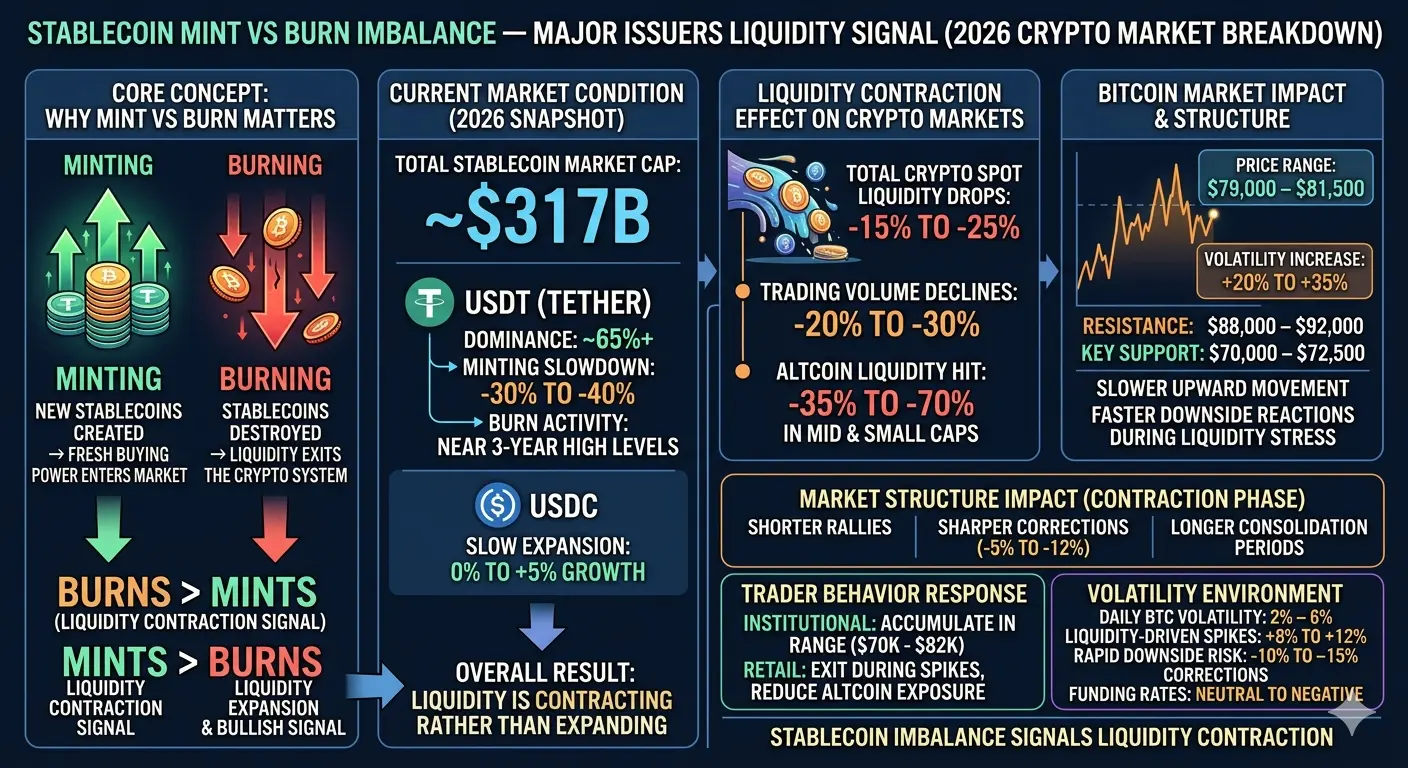
Stablecoin Mint vs Burn Imbalance — Major Issuers Liquidity Signal
1. Core Concept — Why Mint vs Burn Matters
Stablecoin minting and burning activity is one of the strongest real-time signals of crypto liquidity conditions.
Minting = new stablecoins created → fresh buying power enters market
Burning = stablecoins destroyed → liquidity exits the crypto system
When burning exceeds minting, it signals liquidity contraction. When minting dominates, it signals liquidity expansion and stronger bullish conditions.
2. Current Market Condition (2026 Snapshot)
The stablecoin
BTC0.12%
USDC0.01%
HighAmbition
#GateSquareMayTradingShare
Stablecoin Mint vs Burn Imbalance — Major Issuers Liquidity Signal
1. Core Concept — Why Mint vs Burn Matters
Stablecoin minting and burning activity is one of the strongest real-time signals of crypto liquidity conditions.
Minting = new stablecoins created → fresh buying power enters market
Burning = stablecoins destroyed → liquidity exits the crypto system
When burning exceeds minting, it signals liquidity contraction. When minting dominates, it signals liquidity expansion and stronger bullish conditions.
2. Current Market Condition (2026 Snapshot)
The stablecoin market is currently showing a clear imbalance:
Total stablecoin market cap: ~$317B
USDT dominance: ~65%+
USDT minting slowdown: -30% to -40%
Burn activity: near 3-year high levels
USDC growth: 0% to +5% slow expansion
Overall result: liquidity is contracting rather than expanding.
3. Liquidity Contraction Effect on Crypto Markets
When burns exceed mints:
Total crypto spot liquidity drops: -15% to -25%
Trading volume declines: -20% to -30%
Altcoin liquidity hit: -35% to -70% in mid and small caps
Bitcoin is more stable but still affected through reduced momentum.
4. Bitcoin Market Impact
BTC price range: $79,000 – $81,500
Key support: $70,000 – $72,500
Resistance: $88,000 – $92,000
Volatility increase: +20% to +35%
Market effect:
Slower upward movement
Faster downside reactions during liquidity stress
Strong dependence on stablecoin inflows
5. USDT vs USDC Behavior Split
USDT (Tether):
Minting decline: -30% to -40%
Burn spikes during risk-off phases
Exchange reserve reduction: ~$9B net contraction trend
Impact:
Lower speculative liquidity
Reduced aggressive market inflows
More sideways BTC structure
USDC:
Stable regulated growth
Expansion: 0% to +5%
Institutional allocation increase: +10% to +15%
Impact:
More stable liquidity but slower market reaction
6. Market Structure Impact
Stablecoin imbalance creates a clear cycle pattern:
When burns dominate:
Liquidity contraction phase
Shorter rallies
Sharper corrections (-5% to -12% moves)
Longer consolidation periods
When mints dominate:
Liquidity expansion phase
Strong breakout cycles
Potential BTC upside: +25% to +50% expansion zones
7. Altcoin Sensitivity
Altcoins are heavily impacted by liquidity changes:
Large caps: -25% to -40% range pressure
Mid caps: -40% to -65% declines
Small caps: -60% to -85% drawdowns
Reason: They depend heavily on fresh stablecoin inflows for momentum.
8. Trader Behavior Response
Institutional traders:
Accumulate during contraction phases
Focus on BTC range: $70K – $82K
Position for long-term expansion cycles
Retail traders:
Exit during volatility spikes
Reduce altcoin exposure by -20% to -35%
React strongly to 2% – 6% BTC swings
9. Volatility Environment
Current market conditions:
Daily BTC volatility: 2% – 6%
Liquidity-driven spikes: +8% to +12% moves
Rapid downside risk: -10% to -15% corrections
Funding rates: neutral to slightly negative range
Final Insight
Stablecoin mint vs burn imbalance is currently signaling a liquidity contraction phase across the entire crypto market. This leads to weaker rallies, sharper corrections, and stronger dependence on inflows for direction.
If minting activity increases again and overtakes burns, the market could transition into a liquidity expansion phase, supporting a potential BTC move toward $100K – $120K (+25% to +50% upside cycle range) along with broader altcoin recovery.
repost-content-media
  • Reward
  • 2
  • Repost
  • Share
SoominStar:
DYOR 🤓
View More
#IranUSConflictEscalates 🌍⚠️
Global markets are entering a dangerous phase where geopolitics is starting to move faster than investor confidence. Every time tensions rise between Iran and the United States, financial markets immediately react because the risk is no longer regional — it becomes global. Oil prices spike, investors rush toward safe-haven assets, liquidity becomes unstable, and risk markets like crypto suddenly face intense volatility pressure.
What makes this situation critical is the speed at which fear spreads across interconnected markets. One military escalation, one strateg
BTC0.12%
ETH1.15%
LINK4.71%
post-image
  • Reward
  • 2
  • Repost
  • Share
SoominStar:
DYOR 🤓
View More
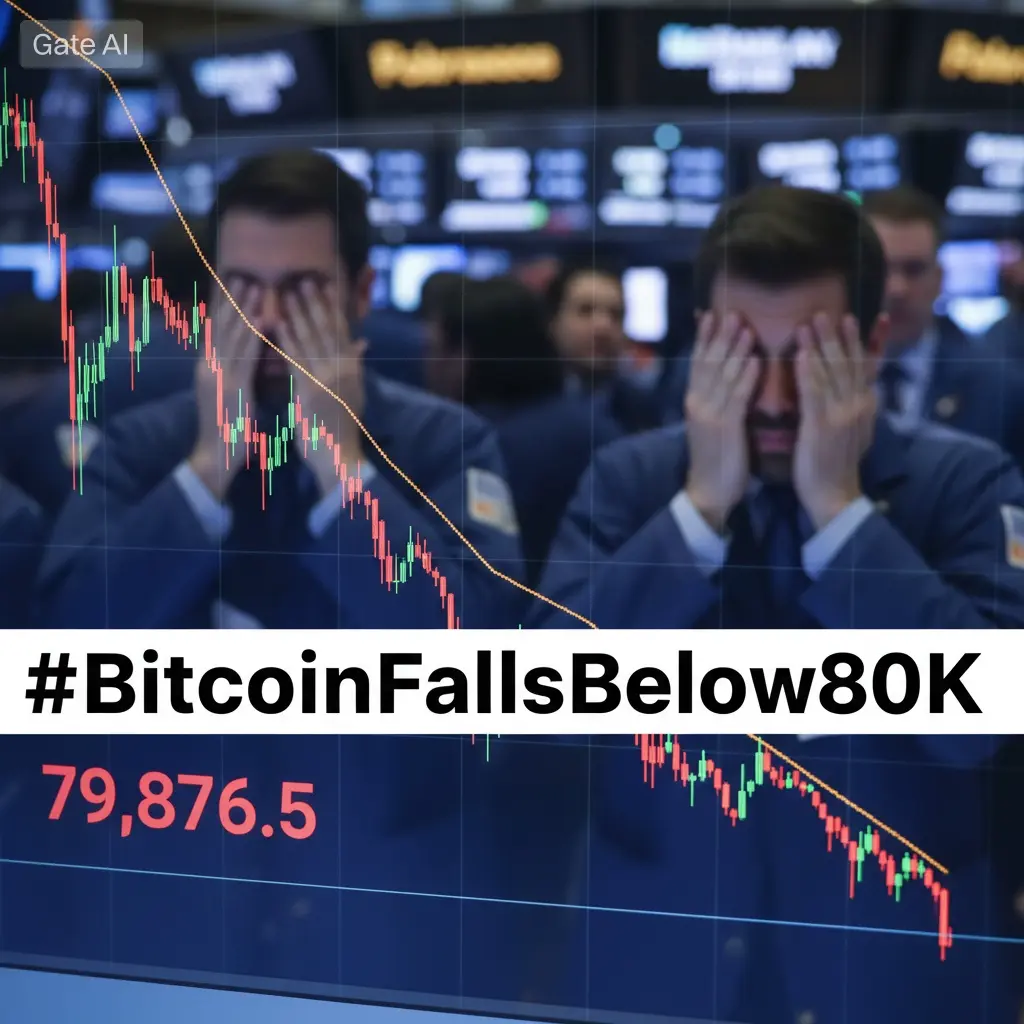
#BitcoinFallsBelow80K ⚠️
The market just delivered another reminder that crypto does not reward weak conviction. When volatility enters aggressively, emotional traders panic first, disciplined traders adapt first. Bitcoin dropping below the $80K level is not just a price movement — it is a stress test for every trader who claimed they were ready for real market pressure.
Bitcoin falling under $80,000 has instantly shifted sentiment across the entire market. Fear spreads fast when major psychological levels break because most retail traders build confidence during green candles but lose discipl
BTC0.12%
post-image
  • Reward
  • 6
  • Repost
  • Share
Yusfirah:
To The Moon 🌕
View More
#GateSquareMayTradingShare Most traders keep waiting for the “perfect” market while smart money keeps building positions quietly in the background. That is the difference between people who chase momentum late and people who actually understand how wealth is created in crypto. Every major cycle rewards conviction before confirmation, and right now the market is once again separating emotional traders from disciplined participants.
The reality is simple: volatility is not the enemy. Weak positioning is. The traders who panic during corrections are usually the same people who become exit liquidi
BTC0.12%
MEME3.16%
post-image
  • Reward
  • 5
  • Repost
  • Share
SoominStar:
LFG 🔥
View More
  • Pin