
Share crypto content and earn up to 60% commissions through content mining.
placeholder
gatefun
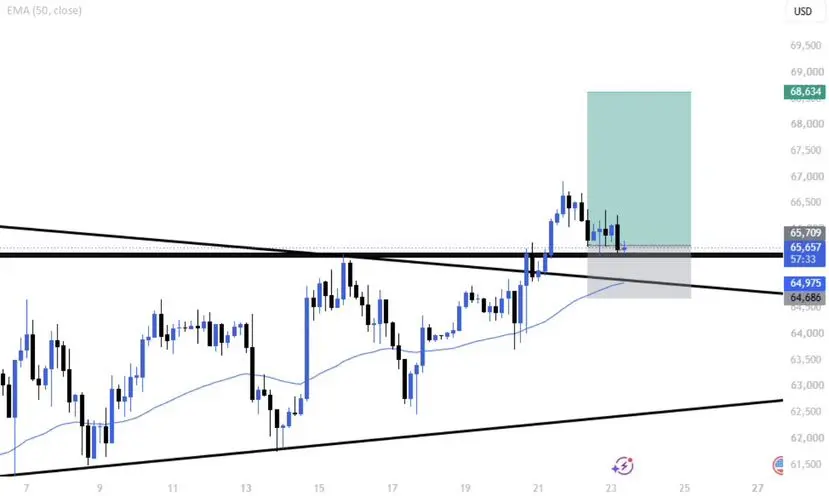
$BTC setup is looking interesting.
Price has broken above the descending trendline and is now holding near the $65.6K area. If this breakout holds, the next move could target $68.6K.
Key level to watch: $64.7K-$65K. A clean hold above this zone keeps the bullish structure alive. A breakdown below it could invalidate the setup.
Big moves often start with a simple retest. 👀
#BTC #Crypto
BTC-0.51%
post-image
  • Reward
  • Comment
  • Repost
  • Share
#SEC警告链上借贷或涉证券监管 The SEC (U.S. Securities and Exchange Commission) regulatory warning for on-chain lending (DeFi lending) essentially applies traditional securities laws (the Howey Test) to on-chain finance, attempting to determine whether it constitutes a “security” or an “unregistered security.” This regulatory pressure has a profound “double-edged sword” impact on the DeFi sector: it brings opportunities for compliance-driven restructuring and value reappraisal, while also posing challenges of business model reshaping and short-term market volatility.
I. Negative impacts on the DeFi sector
ZK0.76%
View Original
post-image
ThisIsTranslateContent:
#SEC警告链上借贷或涉证券监管 The SEC’s (U.S. Securities and Exchange Commission) regulatory warning about on-chain lending (DeFi lending) is essentially applying traditional securities law (the Howey test) to on-chain finance, attempting to determine whether it constitutes a “security” or an unregistered security. This regulatory pressure has a far-reaching “double-edged sword” impact on the DeFi sector: it brings opportunities for compliance restructuring and value reappraisal, but also challenges in reshaping business models and causing short-term market volatility.
I. Negative impacts on the DeFi sector (compliance and business shocks) 1. Heightened legal and compliance risks
The SEC’s warning makes clear that “code is law” cannot fully evade regulation. If on-chain lending products involve a “common enterprise” or “rely on the efforts of a team to generate profits,” they may still be deemed securities, facing enforcement actions (such as fines and business shutdowns) and litigation risks, which increases compliance costs for project teams.
2. Business model faces reconstruction
Traditional “high-interest deposit solicitation” or “yield vault” models (such as certain lending/yield protocols that allow operators to flexibly reallocate assets) face regulatory challenges, forcing teams to reassess the legality of their yield models, adjust asset allocation, interest rate setting, and liquidation mechanisms to meet “functionality alignment” regulatory requirements.
3. Market sentiment and short-term volatility
Regulatory uncertainty will trigger market concerns, leading to short-term declines in related tokens (such as lending protocol tokens), and may also cause some “pseudo-DeFi” projects lacking compliance readiness to be delisted, diverting market capital in the short term.
II. Positive impacts on the DeFi sector (industry shakeout and compliance upgrades)
1. Industry shakeout and compliance premium
Regulation is forcing the DeFi industry to move from “wild growth” to “compliant and orderly” development. Top-tier protocols with high levels of decentralization, pure on-chain execution, and clear compliance architecture (such as embedded KYC/AML and on-chain compliance monitoring) will gain a “compliance premium,” attracting more compliant institutional capital, while low-quality projects without a compliance mindset will be weeded out faster.
2. Business model shifts toward “compliant intermediaries”
Regulatory pressure has given rise to “compliant intermediaries.” Middleware and infrastructure that provide on-chain KYC, compliant custody, compliant oracles, and on-chain compliance monitoring will receive greater regulatory tolerance and development space, driving DeFi ecosystems toward a new paradigm of “embedded compliance.”
3. Valuation logic returns to “real yield”
As the regulatory boundary becomes gradually clearer, DeFi project valuation logic is shifting from “pure speculative expectations” to “real cash flows” and “compliance capability.” Protocols with genuine on-chain revenues, solid collateral models, and compliant governance will regain capital market valuation repair, pushing DeFi closer to traditional finance’s credit pricing logic.
4. Driving the integration of regulation and technology
Regulatory pressure is prompting the industry to explore the integration of “regulatory technology” (RegTech), such as ZK-KYC (zero-knowledge proofs for KYC) enabling compliance verification while protecting privacy, as well as applying “regulatory sandbox” models, helping DeFi find a balance between protecting investor interests and technological innovation, and laying an institutional foundation for DeFi’s sustainable development. #夏日创作营

repost-content-media
  • Reward
  • 2
  • Repost
  • Share
ThisIsTranslateContent::
Go for it, 👊
View More
#SECWarnsOnChainLendingMayFallUnderSecuritiesLaw Is DeFi Entering Its Biggest Regulatory Test Yet?
For years, decentralized finance (DeFi) has promoted a simple but revolutionary idea: financial services without banks, brokers, or centralized intermediaries. Anyone with a crypto wallet could lend assets, earn yield, or borrow capital through smart contracts operating 24/7 across the globe.
However, that vision is now facing one of its most significant regulatory challenges.
The U.S. Securities and Exchange Commission (SEC) has warned that certain on-chain lending activities may fall under U.S
post-image
  • Reward
  • 2
  • Repost
  • Share
ybaser:
2026 GOGOGO 👊
View More
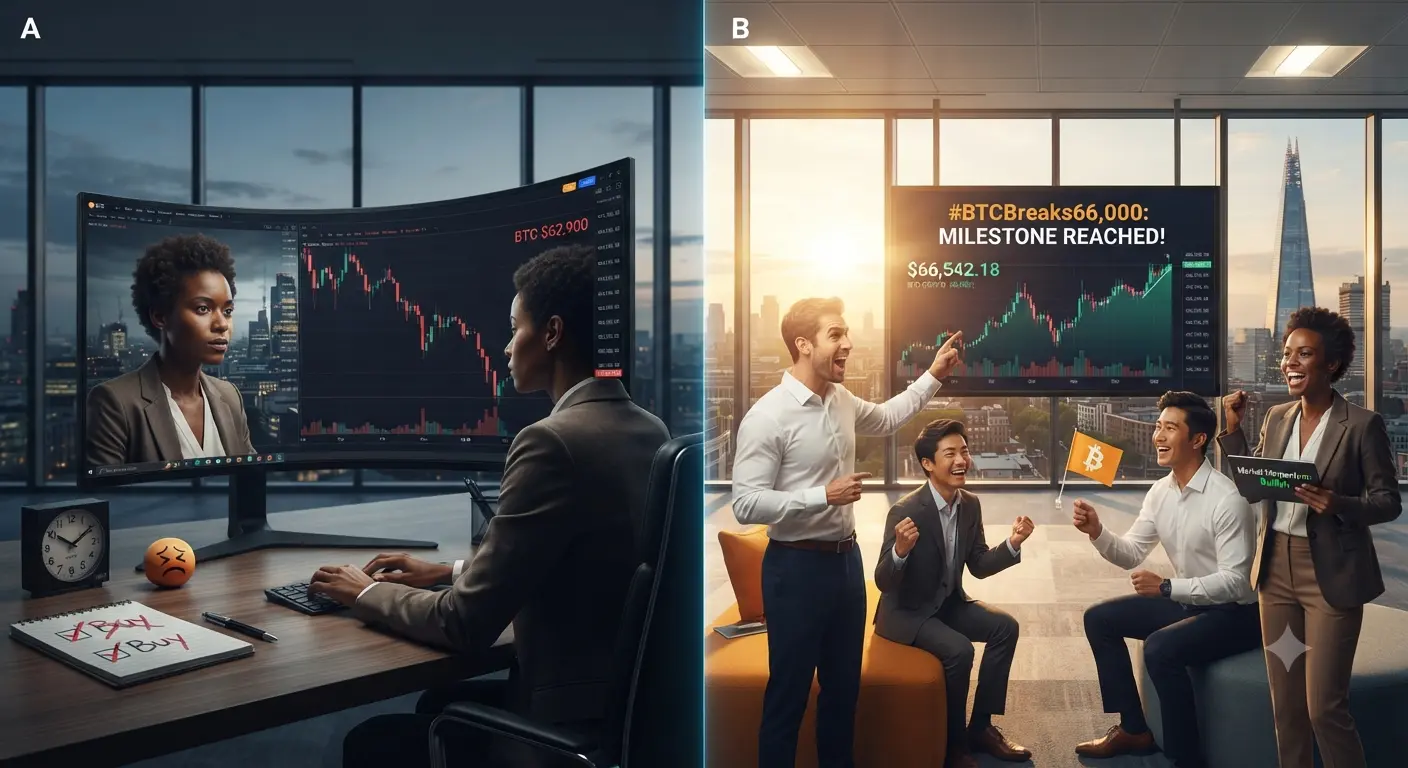
#BTCBreaks66000
#BTCBreaks66000
Bitcoin has reclaimed the 66,000 dollar level, marking another important milestone for the cryptocurrency market. Breaking through this psychological resistance reflects renewed investor confidence and growing market momentum. While a single price level does not confirm a long-term trend, it often attracts increased attention from traders, institutions, and long-term investors.
The move above 66,000 suggests that buying pressure has strengthened after a period of consolidation. Rising trading activity and improving market sentiment indicate that participants ar
BTC-0.51%
post-image
post-image
  • Reward
  • 4
  • Repost
  • Share
AirdropOrganizer:
66k is a psychological threshold; after breaking it, market sentiment clearly improves. However, based on on-chain data, short-term holders are starting to realize substantial profits, which may trigger selling pressure. It’s recommended to watch whether trading volume can continue to hold up; if prices rise while volume shrinks, be careful. For long-term players, it’s still possible to DCA at this level.
View More
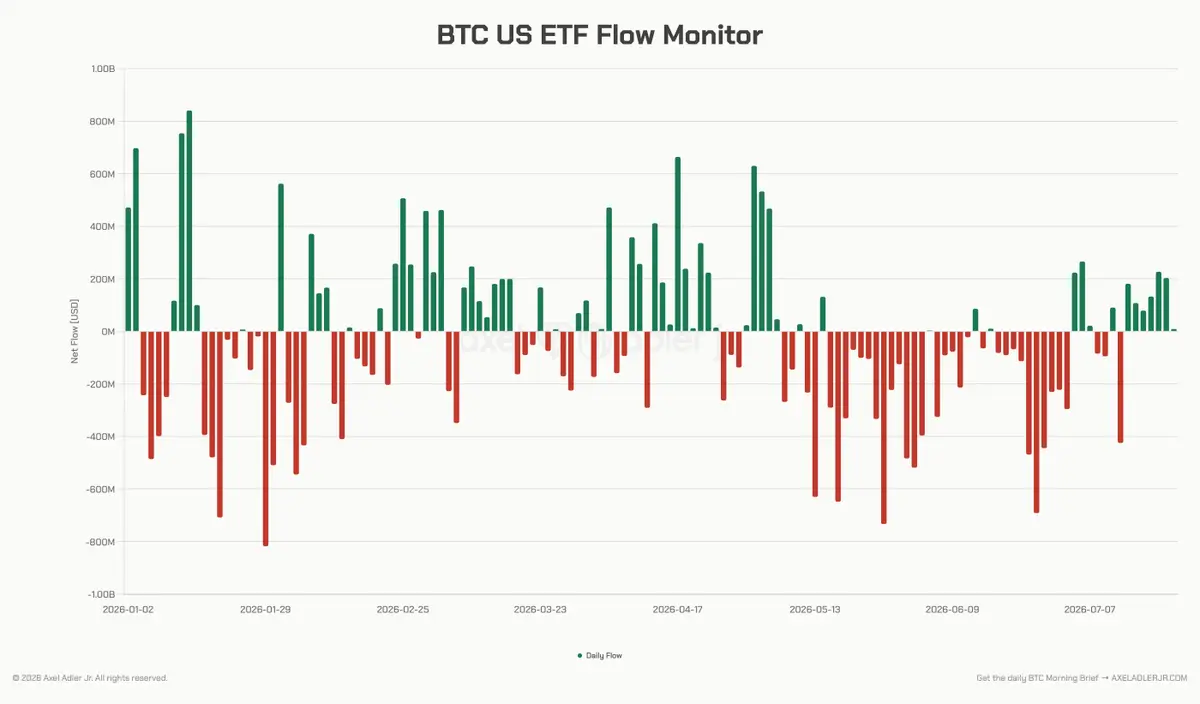
US investors are buying Bitcoin again: ETFs have attracted $439M so far this week.
The Coinbase discount has persisted for 78 days, but it is narrowing. Pressure is easing faster than demand is returning.
bitcoin:native Morning Brief #219 - what will confirm the reversal 👇
BTC-0.80%
COIN-5.57%
post-image
  • Reward
  • Comment
  • Repost
  • Share
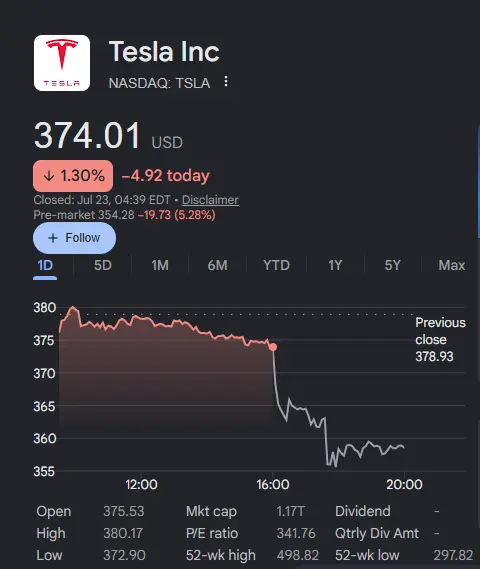
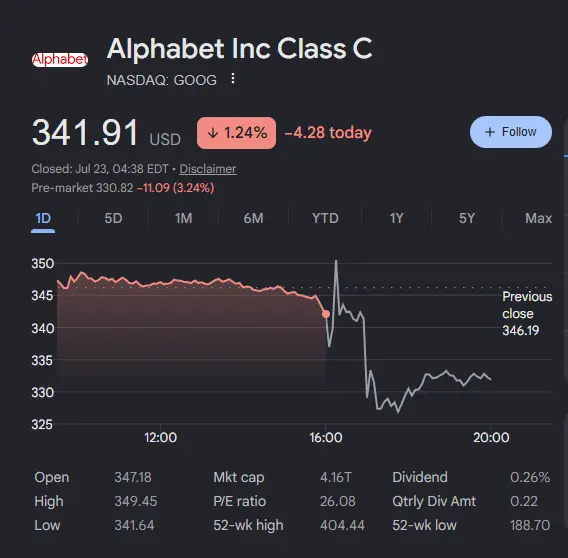
🚨 Shares of Alphabet and Tesla fell in premarket trading after both companies announced higher AI spending.
Alphabet dropped around 4% after raising its 2026 capital expenditure forecast to $195B-$205B, while Tesla fell over 5% after reporting a 142% jump in capex to $5.79B in Q2.
Investors are growing more concerned about the rising cost of the AI race.
TSLA-1.27%
post-image
post-image
  • Reward
  • Comment
  • Repost
  • Share
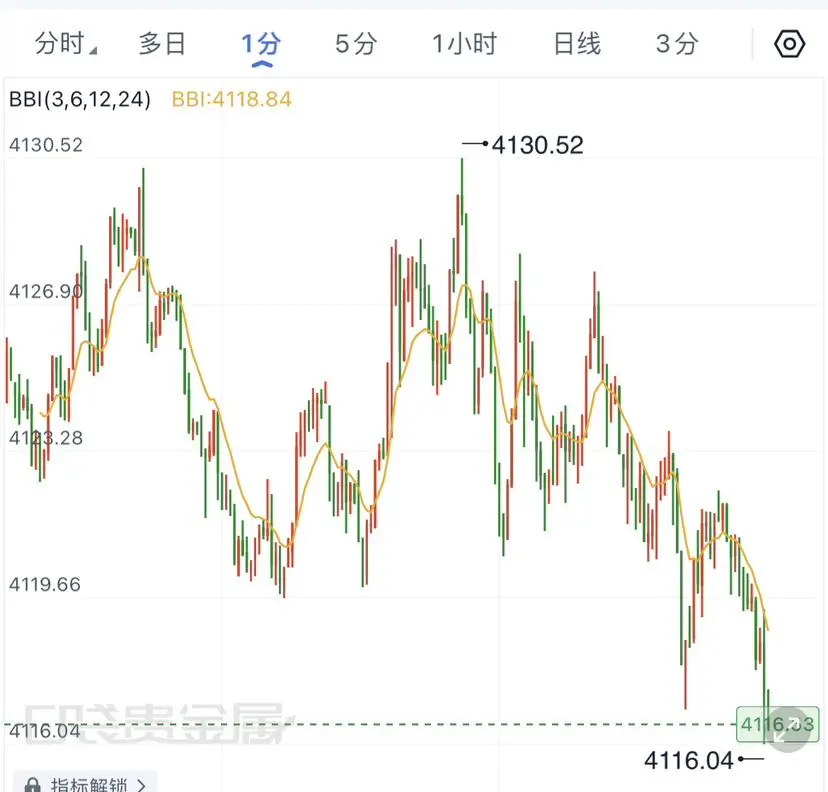
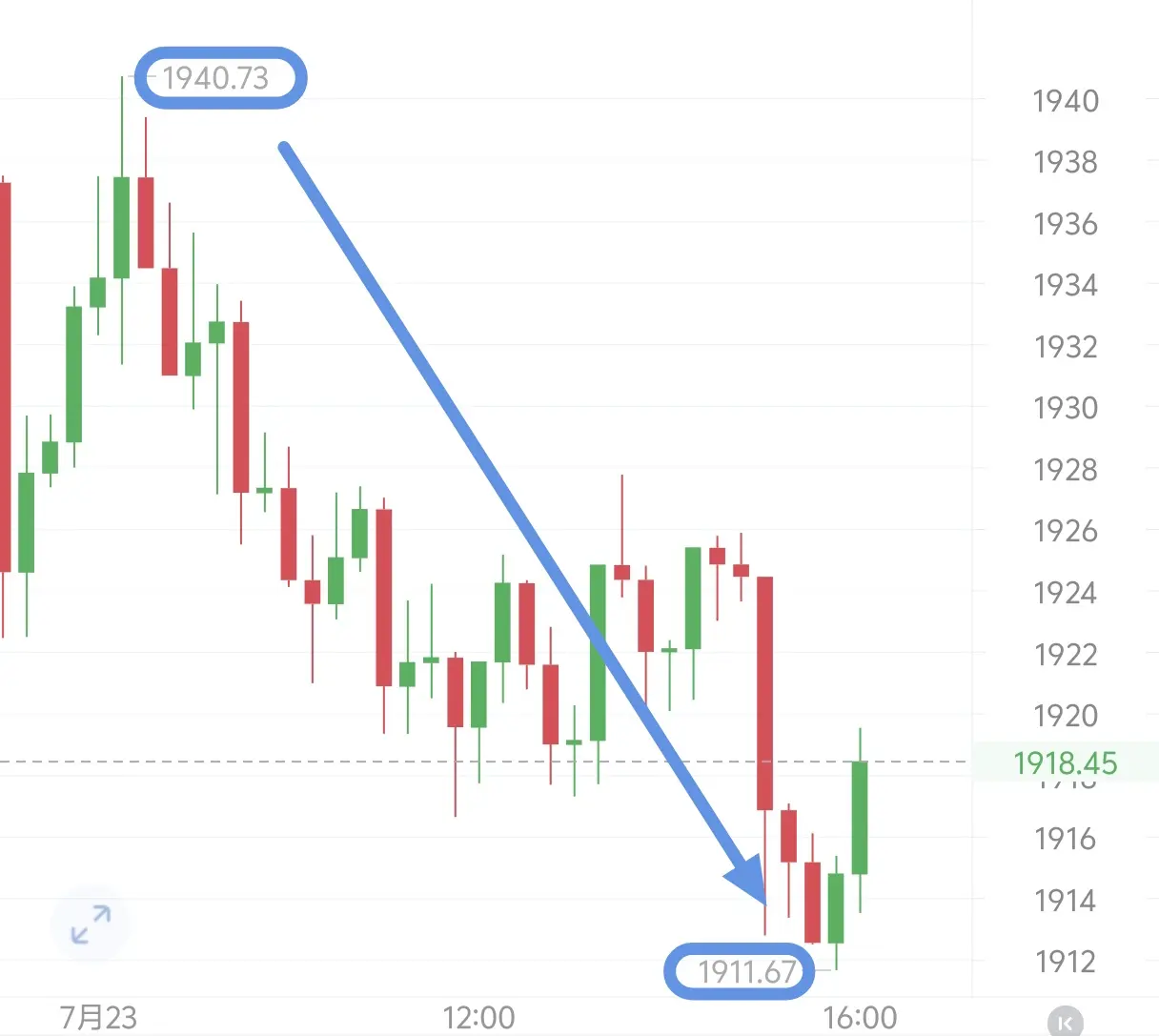
7.23 Gold afternoon Silk Road analysis
After an early rally, longs took profit and pulled back; price action continues to trade within a range, with the Bollinger Bands tightening as bulls and bears fall into a stalemate.
4080 is the line between strength and weakness. If it holds, the short-term bias remains bullish; if it breaks, the market turns weaker.
Pull back to 4090-4100 to go long, targeting 4160-4180, with a defense at 4080. If 4080 is lost, the downside opens up—adjust your approach in time.
Note:
The above analysis is my personal assessment of the market, which can change in an ins
XAUT-0.53%
View Original
post-image
  • Reward
  • Comment
  • Repost
  • Share
I miss solana
SOL0.10%
post-image
  • Reward
  • Comment
  • Repost
  • Share
#夏日创作营 Impact on the market after the passage of the U.S. crypto market structure bill (Clarity Act)!
First, we need to clarify what the U.S. crypto market structure bill (Digital Asset Market Clarity Act) is actually intended to do, so we can determine which industries will benefit and which assets will be favored.
1. Re-dividing the regulatory scope of the SEC and CFTC
Securities and tokenized securities remain under the SEC; network tokens, digital commodities, and their spot trading markets that meet the conditions are mainly handed over to the CFTC. The Senate version also adds the conce
View Original
post-image
ThisIsTranslateContent:
#夏日创作营 The impact on the market after the U.S. crypto market structure bill (Clarity Act) is passed!
First, we need to clarify what the U.S. crypto market structure bill (Digital Asset Market Clarity Act) is actually for, before we can know which industries and which assets will benefit.
1. Redefine the regulatory scope of the SEC and CFTC
Securities and tokenized securities will continue to be regulated by the SEC. Network tokens, digital commodities, and their spot trading markets that meet the conditions will mainly be handed to the CFTC. The Senate version also adds the concepts of “network tokens” and “ancillary assets,” allowing projects to prove, through disclosure and certification procedures, that the tokens no longer depend on the project team’s ongoing operations—moving step by step from securities regulation to digital commodity regulation.
This part is definitely beneficial for some “altcoins,” especially public-chain projects, which can go from being inherently regulated by the SEC to being regulated by the CFTC. But for a purely “token-issuing” project, does that matter?
2. Provide a legal route for token fundraising
Project teams can obtain a waiver under the new Regulation Crypto (crypto asset regulatory rules framework). The maximum funding per year is $50 million, with a four-year cumulative cap of $200 million in principle, and it also requires submitting initial and semi-annual disclosures. This will greatly reduce the risk that, when U.S. projects raise funds through token financing, the SEC will determine it to be an illegal securities offering.
The benefit here is a legitimate “ICO” for the project, and whether the project team will pump the price doesn’t really have any fundamental benefit either. For token launch platforms, there’s also not much benefit, because compliant ICO companies will most likely conduct launches on compliant launch platforms.
3. Establish a regulatory framework for U.S. spot crypto exchanges
Digital commodity exchanges, brokers, and market makers need to register with the CFTC, and be required to implement customer asset segregation, conflict-of-interest management, market surveillance, information disclosure, anti-money laundering, and sanctions compliance. When digital commodities held by customers are subject to an exchange bankruptcy, they will also be explicitly recognized as customer property, reducing the risk of another FTX-style mixing of assets.
This is beneficial for compliant U.S. trading platforms like Coinb and Robinhood, but the actual impact on Coinb is very low. Coinb’s compliance is already sufficient; everything that needed to be registered has been registered. Also, Coinb is a publicly listed company, and the market cares even more about performance. So you could say that, on the compliance front, Coinb is already at the top among crypto exchanges in the U.S. Of course, it’s beneficial for platforms like Coinb and Robinhood to launch new businesses—for example, tokenized securities—because it indeed expands the scope. And for other exchanges that are preparing to enter the U.S., or exchange branches that are operating in the U.S., the difficulty has increased.
4. DeFi developers, people running self-custody and non-custodial infrastructure who only develop software, run nodes, validate transactions, or provide non-custodial services will not automatically be deemed securities brokers or funds transmitters just because their code is used by others. Federal agencies also may not generally prohibit individuals from using self-custody wallets. However, teams that can freeze users, control protocols, and have special permissions may still be viewed as centralized controllers, and would need to assume AML, sanctions, and financial institution obligations.
This sounds like a benefit for DeFi, but in reality, if it’s purely DeFi or decentralized wallets, it’s still fine. But if a DeFi project on-chain involves protocols that may have money-laundering risk—like Tornado Cash earlier, and many privacy protocols—it will still be taken seriously. Also, you could say this “benefit” is something that wasn’t really considered before, and now it probably still won’t be considered. Back then it was risk, and now the risk is greater. Would it become a reason for DeFi projects to pump?
5. Stablecoin yield is restricted
At the moment, the biggest controversy in the market is this clause. Exchanges and service providers may not simply pay passive yield similar to bank deposit interest just because users hold stablecoins. But rewards that come from actual payments, trading, or activities are still allowed. Stablecoin issuance regulation is mainly handled by the already passed GENIUS Act (Clarity Act). CLARITY (Clarity Act) focuses more on how stablecoins are used on trading platforms and across the overall market structure.
Many friends think the biggest benefit after the Clarity Act passes is stablecoins—like $CRCL or $USD1 . But in fact, based on current progress, the Clarity Act imposes limitations on stablecoin development, especially for interest-bearing or subsidy schemes that were likely not allowed to continue after the Clarity Act passes. In other words, Coinb’s 3.5% interest to USDC, and USD1’s airdrop of $WLFI to users—fundamentally, both are prohibited by the Clarity Act. This is not a benefit for stablecoin development. While it saves some capital, it may limit market expansion. Of course, if stablecoins and exchanges can find more suitable subsidy schemes and route around the Clarity Act, there is still a chance.
So personally, I think if the Clarity Act includes restrictions on stablecoin subsidies, you won’t find reasons for a boost to Circle. If it’s only about compliance, honestly, Circle is already sufficiently compliant in the U.S. The problems it faces are the same as Coinb’s: for a listed company, the market cares mostly about performance.
6. Banks can participate more clearly in blockchain business
Banks, bank holding companies, and credit unions can conduct blockchain payments, custody, lending, and trading within existing business permissions, while also enabling combination margin between securities, futures, and digital commodity accounts.
Banks may collateralize certain cryptocurrencies or tokenized securities for loans and lending. This is definitely a positive for certain parts, and for some bank stocks it should be good as well—but which ones will benefit from yield, it’s hard to say for sure.
So overall, U.S. compliant exchanges are the most affected in terms of business expansion— the more compliance advantages they have, the easier it will be for them to enter new tracks quickly. So if the Clarity Act is passed, I think it would give $COIN relatively bigger advantages. But for certain decentralized exchanges, it may cause trouble. Custody, RWA, and tokenized infrastructure are positive on a medium- to long-term basis; especially in areas related to tokenized securities.
However, with the compliance of major exchanges’ U.S. listed stocks, on-chain RWA demand or on-chain demand for U.S. listed stocks will gradually be compressed. Next, there will be some help for public-chain categories—at the very least, they won’t be called out and attacked by the SEC. But public chains are more like listed companies. It’s not the case that if the SEC stops regulating them, they will definitely be able to pump. The best example is $ETH : spot ETFs have passed, and the SEC has acknowledged that they are not securities. But now they’re still kind of stuck in limbo—so the policy may have a push effect, yet how long that effect can last is still not something to be optimistic about.
Then DeFi, wallets, and developer infrastructure can also benefit. But personally, I feel it’s more targeted at developers than at any specific field or project. Especially for DeFi projects, whether they pump still depends on the dog-parkers.
As for stablecoins, I believe that when it’s passed, it may let $CRCL get pulled up a bit—but that would be purely emotion-driven. In reality, if there’s no change to the restrictions on stablecoin subsidies, I think the Clarity Act is actually negative for stablecoins.
repost-content-media
  • Reward
  • 2
  • Repost
  • Share
ThisIsTranslateContent::
Just do it. 👊
View More
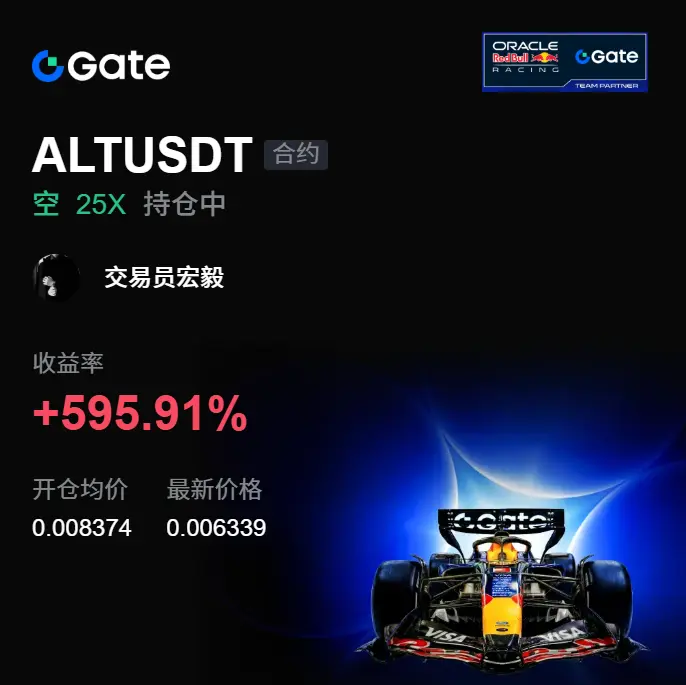
I originally wanted to cut my losses and sacrifice to the heavens, but I couldn’t get the heavens to be sacrificed—my “meat” ended up cooking itself.
Right at the start of the session when $ALT finally smashed the market, he finally tore off the top-layer disguise, and the short-sell rhythm immediately went smoothly.
A few days ago in the afternoon, I watched ALT. I noticed the price kept pushing higher repeatedly, but there was no sustained buy-side demand behind it. As soon as selling pressure showed up, it shrank back—an increasingly obvious sign of a weak rebound. Back then, the advice wa
ALT0.28%
BTC-0.53%
ETH0.27%
View Original
post-image
  • Reward
  • Comment
  • Repost
  • Share
market update
gate liveLIVE
1,777
live-coin
  • Reward
  • Comment
  • Repost
  • Share
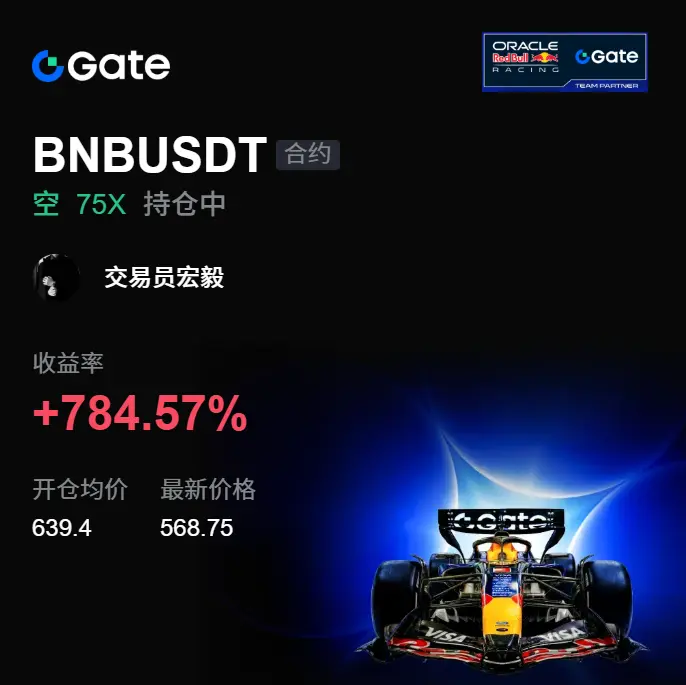
Did nothing. Just went to get a cup of water, and when I came back, the candlestick chart had already cleanly broken the high zone. When the morning dump first hit, $BNB ’s rebound was clearly lacking in strength—every time it tried to push upward, it was pushed back down. Even BNB didn’t show any decent follow-through. My judgment was simple: trading volume was low, the rally had no backbone, and the “bull trap” flavor was too strong—so around 639.40, I executed a long following the rhythm and didn’t chase those few illusory upward pops.
Now the price is at 568.7, and the short-trade review r
BNB0.16%
BTC-0.53%
ETH0.27%
View Original
post-image
  • Reward
  • Comment
  • Repost
  • Share
So spicy! Did Fengge buy $SPCX ?
The future technology: space computing—launch the entire AI server data center into near-Earth space. Electricity and energy come from space-based solar power generation, with costs close to 0. Space is very cold, so there’s no need to give the data center extra cooling, saving the liquid cooling costs. All computation is done in the space computing center—the Earth-side processing center only sends requests and receives the results.
SPCX-6.18%
View Original
post-image
  • Reward
  • Comment
  • Repost
  • Share
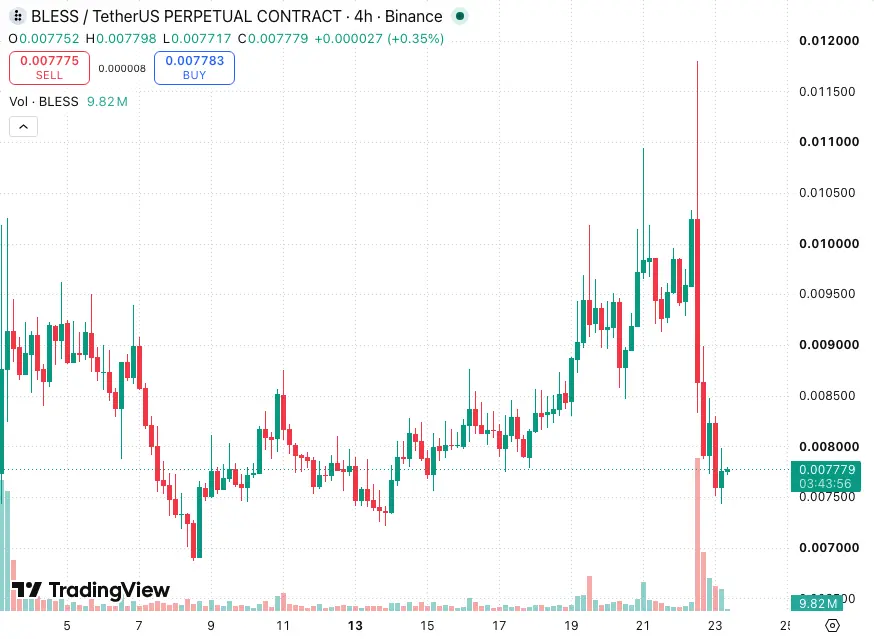
$BLESS is preparing to take more!
Even though the market is still drifting lower, the rebound potential from this low level is just too attractive—you should definitely pay attention.
You can watch the 0.007559 - 0.007753 range. The first upside target is 0.008073, and if things go smoothly, it may even reach 0.008407.
But don’t go all-in—watch the risk! If the 0.007433 support breaks, the hourly-level bearish trend could continue. For defense, you can place it around 0.007257.
Also, $ZAMA and $XAU can be followed along as well. Keep your position size under control—don’t overextend by chas
BLESS-20.27%
View Original
post-image
  • Reward
  • Comment
  • Repost
  • Share
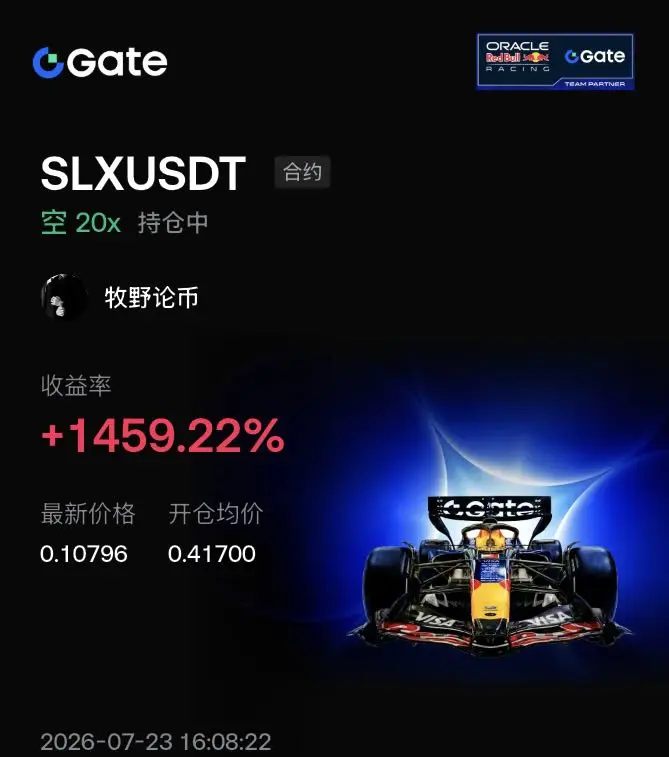
$SLX In trading, the most satisfying thing isn’t opening leverage as high as possible—it’s being able to turn a short trap into a cash machine.
📉 This SLX move has drifted down from 0.417 to 0.107 with a continuous bearish run, with not even one decent rebound along the way. Holding a 20x short, no matter how it pokes up and down like needles, I remain unmoved. Now the account is up by +1459% in unrealized profit—if you ask me, it’s less a technical bull and more a steady mindset.
If you can’t make sense of the market, don’t trade. If you can understand it, hold on—that’s the risk-control bo
SLX-3.15%
BTC-0.53%
ETH0.27%
View Original
post-image
SLXUSDT
Short
Cross 20X
Return %
+1459.22%
Entry Price(USDT)
0.417
Mark Price(USDT)
0.10802
  • Reward
  • Comment
  • Repost
  • Share
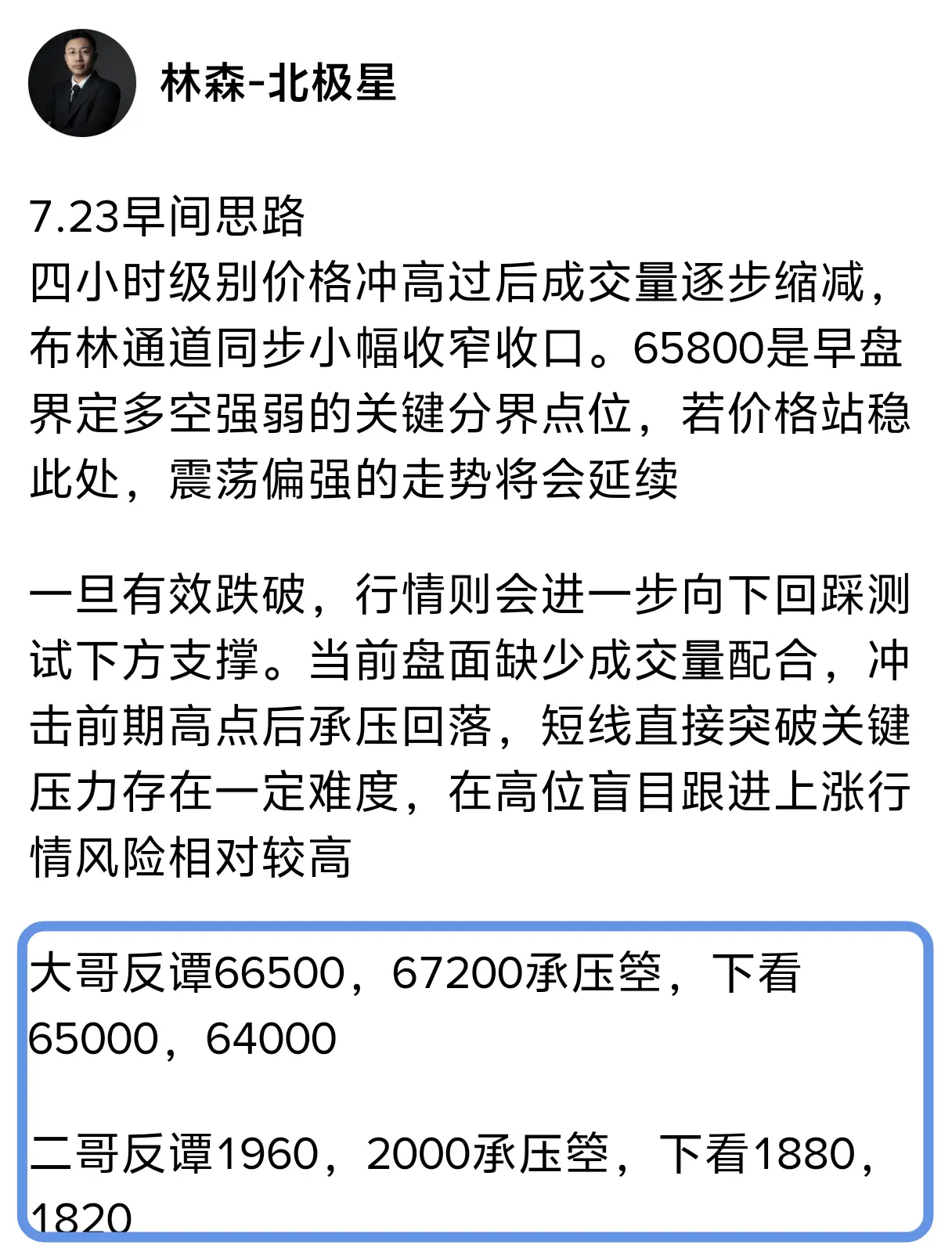
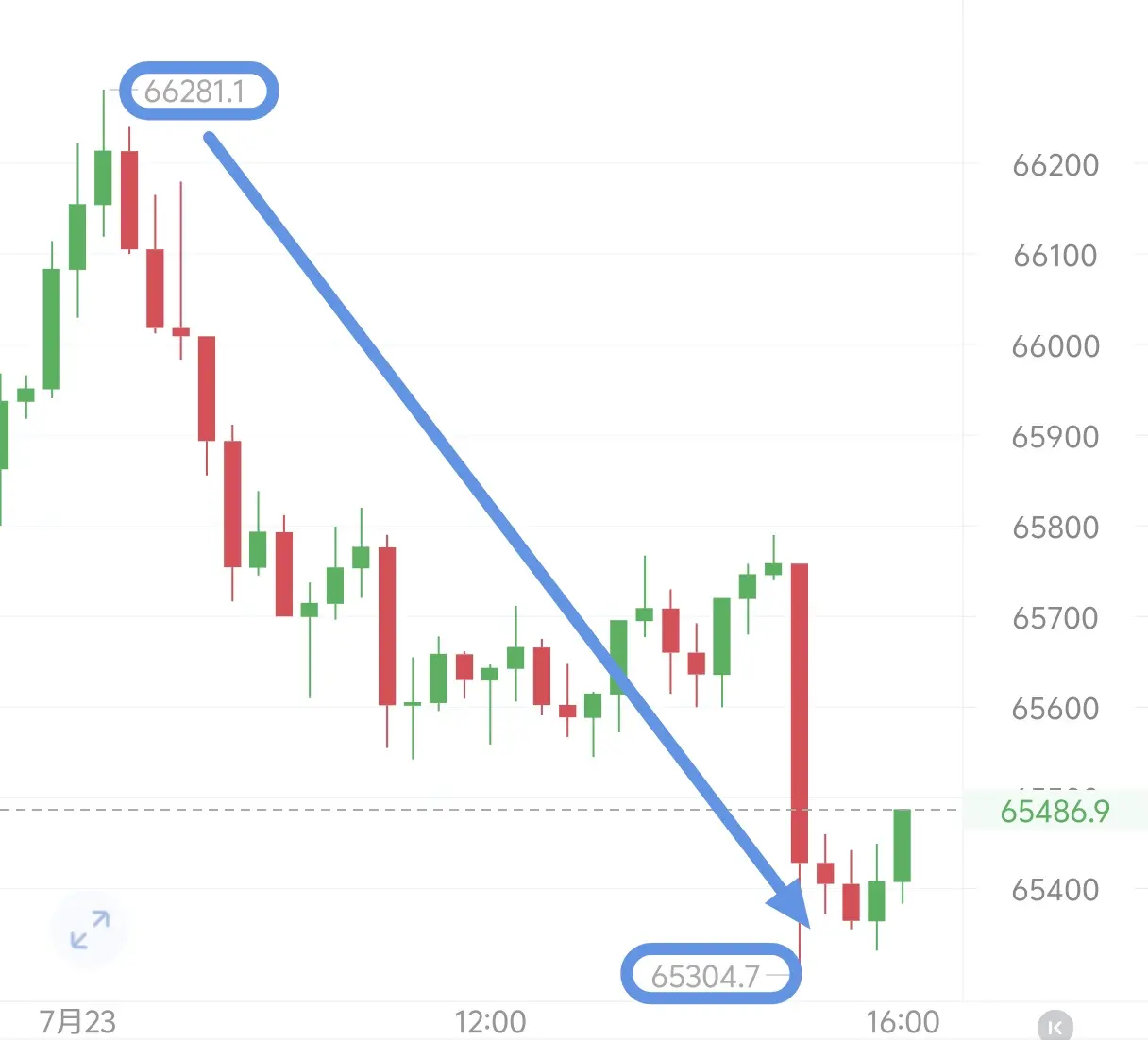
Isn’t Wumu everyone’s North Star?
This is the guiding light—Zhilu Mingdeng!
While everyone is still chasing Duo!
The North Star has already keenly sensed Kuangtou’s power is about to break out!
QianDian takes it, and Yitian is also 30Dian!
$BTC #Gate事件合约首发狂欢 $ETH
BTC-0.53%
ETH0.27%
View Original
post-image
post-image
post-image
  • Reward
  • Comment
  • Repost
  • Share
📊🚀 #GOOGLEarningsBeatButStockDrops3% 🚀📊
Strong earnings don't always guarantee a higher stock price. 📉💼
Google delivered results that exceeded expectations, yet the stock slipped 3% as investors weighed future growth, market sentiment, and broader economic factors. 🌍📈
💡 Key Takeaways:
✅ Strong financial performance
📊 Market expectations matter
⚖️ Investor sentiment drives short-term moves
🚀 Long-term innovation remains in focus
Market reactions often reflect more than just earnings—they also factor in guidance, valuation, and future opportunities. Smart investors know that every mar
post-image
  • Reward
  • 3
  • Repost
  • Share
AylaShinex:
Ape In 🚀
View More
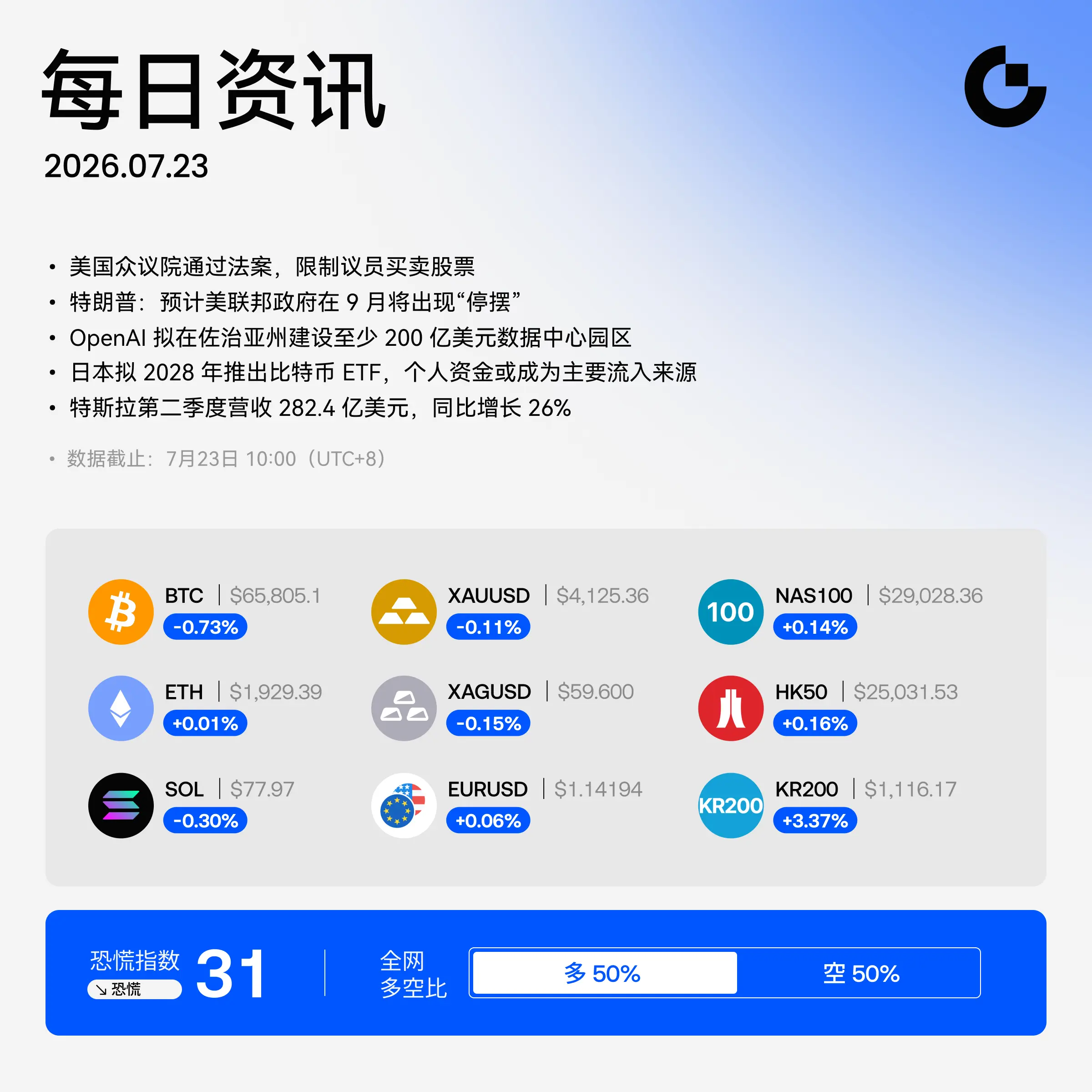
📰 Gate Square Daily|July 23
Today’s crypto market highlights, major news, and fund flow—everything in one chart👇
post-image
  • Reward
  • Comment
  • Repost
  • Share
Load More

Join 40 M users in our growing community

⚡️ Join 40 M users in the crypto craze discussion
💬 Engage with your favorite top creators
👍 See what interests you
  • Pinned