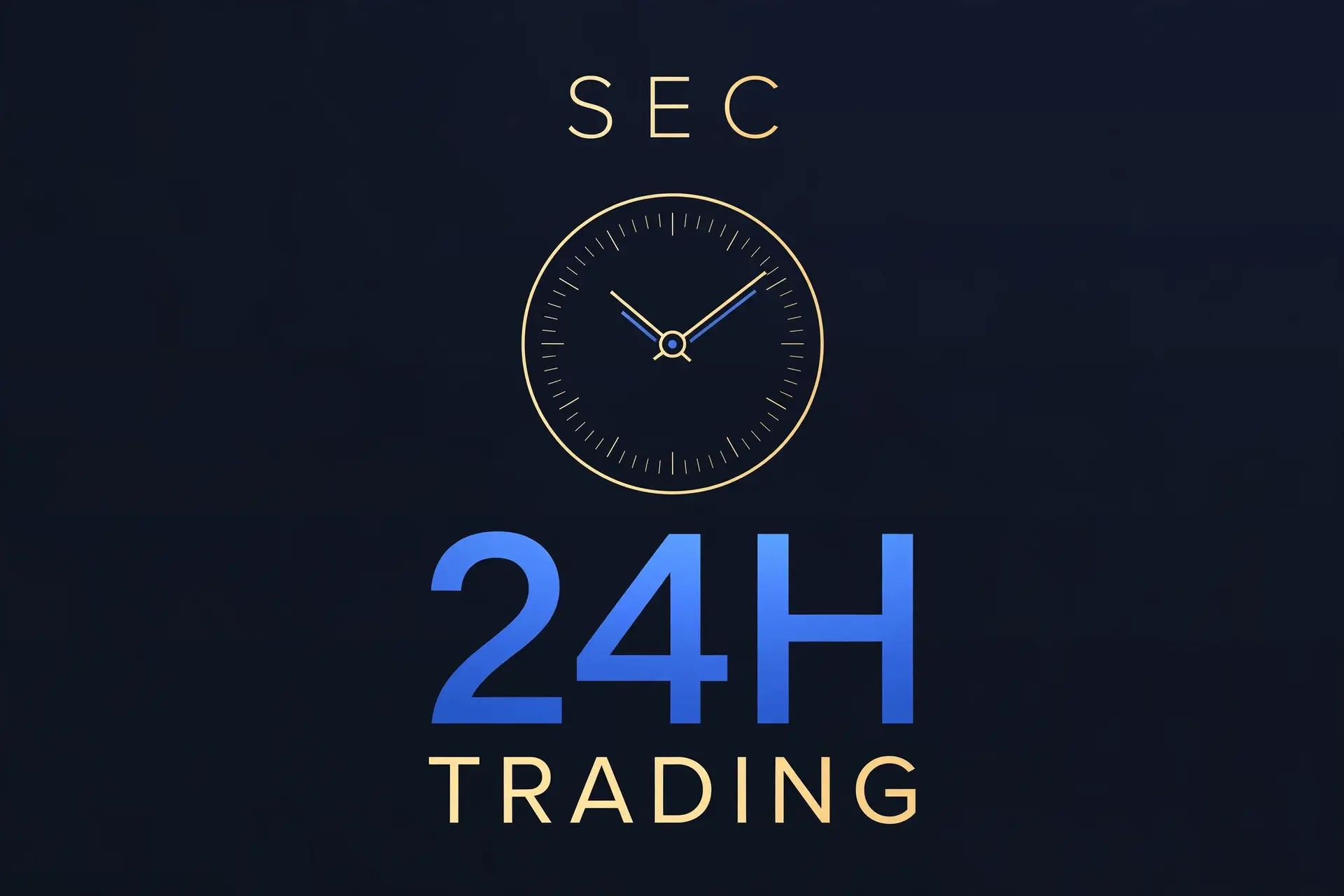



#SECPushesFor24HourTrading
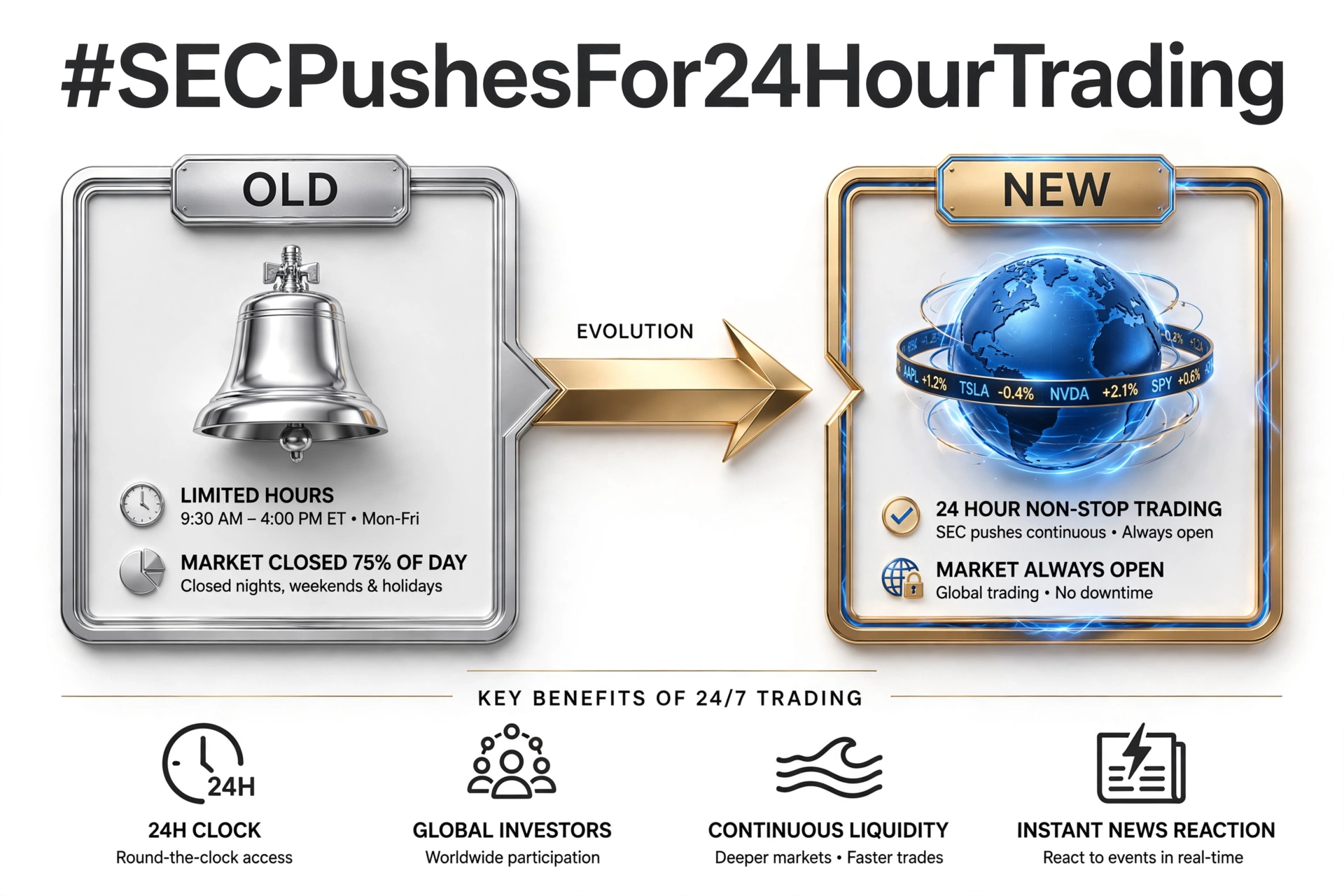
For decades, investors have planned their day around the opening and closing bells of stock exchanges.
Crypto changed that expectation.
Bitcoin doesn't sleep. Ethereum doesn't close for the weekend. Digital assets continue trading every hour of every day, creating a financial system that never pauses.
Now, the conversation around 24-hour trading is moving beyond crypto and into traditional financial markets.
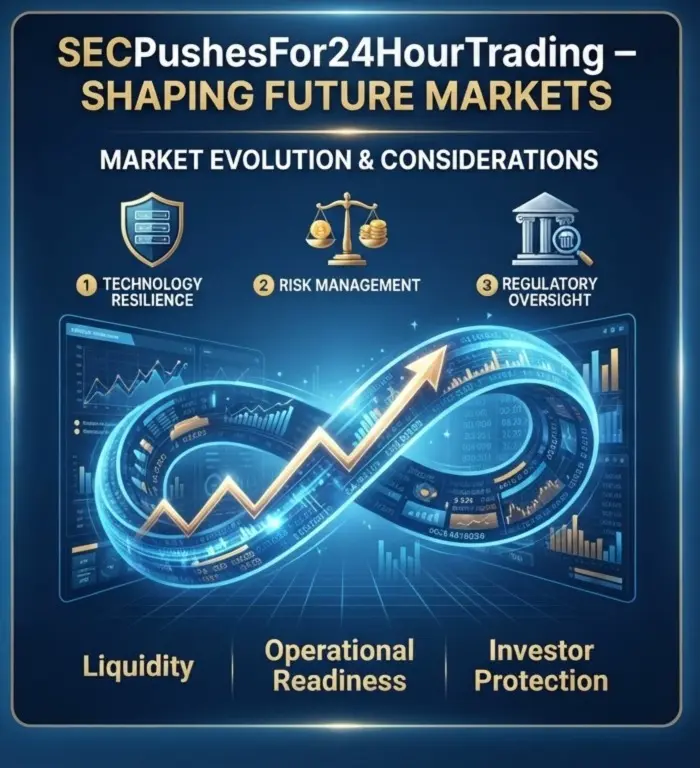
If regulators and exchanges continue exploring extended trading models, the change could represent one of the biggest structural shifts in modern investing. The question is no longer whether technology can support continuous markets—it already can. The real question is how investors, institutions, and market infrastructure will adapt.
Around-the-clock trading offers clear advantages.
Global investors would no longer need to wait for market openings to react to breaking news. Major economic announcements, geopolitical developments, or corporate events could be reflected in prices almost immediately, reducing the gap between information and market action.
For international investors, it could also create a more accessible financial system by allowing participation regardless of local time zones.
However, longer trading hours also introduce new challenges.
Liquidity may not remain consistent throughout the day. During quieter sessions, lower trading activity can lead to wider spreads and sharper price swings. A relatively small order may have a much larger impact when fewer buyers and sellers are active.
This is a reality that crypto traders understand well.
The digital asset market has shown that a 24/7 environment creates opportunity, but it also demands discipline. Successful traders don't stay in front of their screens all day. Instead, they rely on clear strategies, defined risk limits, and careful planning.
Technology will play an increasingly important role.
Automation, algorithmic trading, AI-powered analysis, and smart order management are likely to become even more valuable if markets operate continuously. Investors may depend more on technology to monitor opportunities while reducing emotional decision-making.
For crypto, this shift is another sign that traditional finance is gradually adopting ideas that digital assets introduced years ago.
The gap between traditional markets and blockchain-based markets continues to narrow.
As financial systems become more connected, investors may eventually experience a world where stocks, commodities, digital assets, and tokenized real-world assets trade with far fewer interruptions than they do today.
But one principle will never change.
More trading hours do not automatically create more profitable opportunities.
Success will still depend on patience, preparation, and disciplined risk management—not simply having more time to trade.
Markets may evolve.
Technology will continue advancing.
Trading hours may become longer.
Yet the investors who consistently succeed will remain the ones who focus on strategy instead of emotion.
The future of finance may never close—but smart decision-making should always remain open.
Do you believe 24-hour trading will make financial markets more efficient, or could it increase volatility and pressure on investors?
#SECPushesFor24HourTrading #SummerCreationCamp @Gate_Square @GateSquare
For decades, investors have planned their day around the opening and closing bells of stock exchanges.
Crypto changed that expectation.
Bitcoin doesn't sleep. Ethereum doesn't close for the weekend. Digital assets continue trading every hour of every day, creating a financial system that never pauses.
Now, the conversation around 24-hour trading is moving beyond crypto and into traditional financial markets.
If regulators and exchanges continue exploring extended trading models, the change could represent one of the biggest structural shifts in modern investing. The question is no longer whether technology can support continuous markets—it already can. The real question is how investors, institutions, and market infrastructure will adapt.
Around-the-clock trading offers clear advantages.
Global investors would no longer need to wait for market openings to react to breaking news. Major economic announcements, geopolitical developments, or corporate events could be reflected in prices almost immediately, reducing the gap between information and market action.
For international investors, it could also create a more accessible financial system by allowing participation regardless of local time zones.
However, longer trading hours also introduce new challenges.
Liquidity may not remain consistent throughout the day. During quieter sessions, lower trading activity can lead to wider spreads and sharper price swings. A relatively small order may have a much larger impact when fewer buyers and sellers are active.
This is a reality that crypto traders understand well.
The digital asset market has shown that a 24/7 environment creates opportunity, but it also demands discipline. Successful traders don't stay in front of their screens all day. Instead, they rely on clear strategies, defined risk limits, and careful planning.
Technology will play an increasingly important role.
Automation, algorithmic trading, AI-powered analysis, and smart order management are likely to become even more valuable if markets operate continuously. Investors may depend more on technology to monitor opportunities while reducing emotional decision-making.
For crypto, this shift is another sign that traditional finance is gradually adopting ideas that digital assets introduced years ago.
The gap between traditional markets and blockchain-based markets continues to narrow.
As financial systems become more connected, investors may eventually experience a world where stocks, commodities, digital assets, and tokenized real-world assets trade with far fewer interruptions than they do today.
But one principle will never change.
More trading hours do not automatically create more profitable opportunities.
Success will still depend on patience, preparation, and disciplined risk management—not simply having more time to trade.
Markets may evolve.
Technology will continue advancing.
Trading hours may become longer.
Yet the investors who consistently succeed will remain the ones who focus on strategy instead of emotion.
The future of finance may never close—but smart decision-making should always remain open.
Do you believe 24-hour trading will make financial markets more efficient, or could it increase volatility and pressure on investors?
#SECPushesFor24HourTrading #SummerCreationCamp @Gate_Square @GateSquare