#夏日创作营 CZ: Is the bear market about to end?
CZ joked on X: “Is the bear market almost over?” This seemingly casual question instantly sparked intense debate in the community.
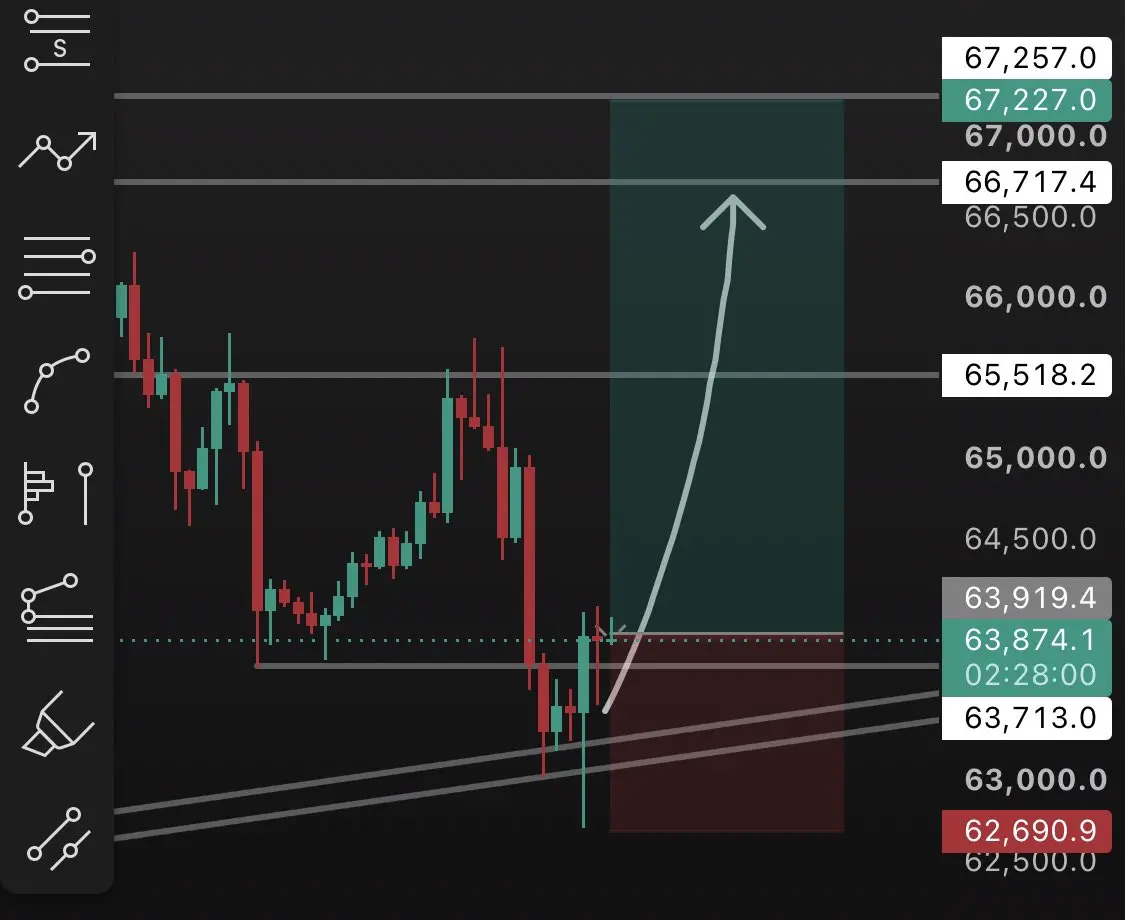
Crypto market sentiment has been at a freezing low for a long time. After falling from the historical high of about $124k at the start of 2025, Bitcoin has pulled back all the way, with a maximum drawdown of over 50%. It is currently hovering in the $60k to $65k range. The bear market has lasted for 9 months, and both short-term holders (STH, holding <6 months) and long-term holders (LTH, holding >6 months) have been under heavy pressure.
At this moment, CryptoQuant analyst Darkfost’s latest analysis has triggered widespread discussion: the market is entering the final stage of the bear market, and a key STH/LTH cost-basis downward cross signal has just been triggered (a 3-day confirmation window is required for validation).
Do they have “insider information”? The answer is most likely no. This looks more like a rational observation based on on-chain data and historical cycles, rather than insider intel. Bitcoin’s cyclicality has never been a secret—it is repeatedly verified by investor behavior.
Cost-basis cross: a classic signal for the bear market’s finale
Cost basis (Realized Price) is essentially the on-chain reflection of holders’ average entry price. Darkfost points out that the STH cost basis has fallen sharply from $112.5k to about $69k, reflecting their process of continuously buying at lower levels and averaging down their holdings. When the STH cost basis crosses below the LTH cost basis, historical data shows that it often marks the bear market entering its tail end, rather than an immediate bottom.
It indicates that speculative short-term holders have sold at losses in large numbers or been washed out, and that coins are shifting toward more steadfast long-term holders. The market has completed a “painful cleansing,” laying a foundation for the next round of accumulation. Conversely, when the STH cost basis crosses above the LTH cost basis, it usually confirms the start of a bull market.
This isn’t mysticism—it mirrors Bitcoin investors’ behavioral patterns. In bull markets, FOMO (fear of missing out) pulls in new capital and lifts the STH cost basis; in bear markets, panic selling pushes it down until equilibrium.
The current cycle is highly similar to prior major down cycles such as 2018 and 2022: STHs buy dips and gradually lower the cost basis to below “active” LTHs. Institutional entry has not significantly changed this underlying behavior pattern—Bitcoin is still driven by the transfer of holdings from “weak hands” to “strong hands”.
9-month stress test: who is holding on, and who has already exited?
Over the past 9 months, Bitcoin has kept trading below the STH cost basis, which is a typical characteristic of bear markets historically.
Recent data shows that younger LTH cohorts (for example, 6–12 months and 12–18 months) are deeply underwater. More seasoned high-conviction holders from the 2–3 year range have a cost basis around $50k, becoming a potential solid line of defense. The 30-day moving average of LTH SOPR (Spent Output Profit Ratio) has fallen below 1, showing that some long-term holders have started realizing losses, though it has not yet reached the level of extreme capitulation. Realized losses have accumulated to nearly $200 billion, which may set a record, but it is also a necessary process for the bottom to form.
Notably, the drawdown magnitude in this bear market has been relatively moderate (about 51%), helped by increased institutional participation and improved market maturity. However, the duration has already entered the upper ranks in history. CoinGecko data shows this is the fourth-longest bear market since 2014.
Does this mean buying the dip right away?
Rationally viewing the signal’s limitations
Darkfost clearly reminds: a signal triggering does not mean the bear market ends instantly. Bottom formation still takes time, and prices may continue to dip further or trade sideways for months. Historical bottoms are often accompanied by more extreme panic, higher realized losses, and deeper unrealized losses for LTHs.
Reference potential support levels (not predictions, just data observation): around the overall realized price (about $50,000–$55k, once viewed as the “ultimate” bear market bottom). Older LTH cost basis. Long-term technical supports such as the 350-week moving average.
Optimistic factors include: whales continuing to accumulate (recent purchases on the order of 2,700 BTC), signs of ETF fund inflows returning, and the long-term growth potential of infrastructure like stablecoins (CZ has also mentioned this multiple times).
Is it a “terminal” signal for DCA strategies? For everyday players, this STH/LTH cross can serve as a reference “end-point” signal for a DCA (dollar-cost averaging) strategy—once the signal is confirmed, gradually reduce or pause mechanical buying and shift to watching for signs that the bull market is starting (when the STH cost basis crosses upward). But any strategy must be combined with individual risk tolerance and diversification—never a one-and-done solution.
Bitcoin’s cycle has never died; it just keeps repeatedly validating human nature: the loop of greed and fear. More institutions have changed the surface liquidity, but the underlying holding/position behavior pattern remains highly stable. That’s exactly where its appeal lies—transparent data, verifiable, and learnable.
Outlook: patience and preparation for the final stage
CZ’s question may reflect what many people are thinking: is the bear market really about to end? Based on on-chain signals, we are in the final stage. But “about to” is a relative concept. History tells us that real turning points often happen quietly when people are at their most desperate.
Action suggestions (for reference only): keep an eye on the STH/LTH cost-basis confirmation window. Monitor whether indicators like LTH SOPR, the scale of realized losses, and MVRV enter extreme bear-market territory.
Keep a long-term perspective: Bitcoin has recovered from every bear market and has set new highs. The market will always be volatile, but cycle rotations never stop. Stay rational and data-driven—perhaps the next bull-market starting point is hidden right here in the current “final stage.”