CryptoSuperMan

vip
Active for: 0.4y
Peak Tier 0
No content yet
Pin
Gate Square #股票交易分享挑战 is live!
Show your trades and share strategies to split the $150,000+ prize pool!
🎁 Top trade sharers/analysts can win up to $3,000 in CFD position experience vouchers
🎁 10 lucky users can split $500 in CFD position experience vouchers every day
How to participate:
1️⃣ Add #股票交易分享挑战 ➕ stock/coin tags or a profit and loss card
2️⃣ Share the corresponding trading strategy
Share my profit and loss for today now: https://www.gate.com/post
Event details: https://www.gate.com/announcements/article/101038
  • 3
market update
live-cover
0 views
Ended • No Replay
Compliance is no longer a back-office function; it is the primary engine of institutional adoption in the digital asset era.
The recent announcement that Gate US has secured its Money Transmitter License (MTL) in Massachusetts, bringing its total count of state-level compliant licenses to 37 across the United States, marks a pivotal shift in the operational strategy of global cryptocurrency exchanges. This milestone is not merely a bureaucratic checkbox; it represents a fundamental restructuring of how international platforms approach the American market. In an industry historically characteri
EagleEye
Compliance is no longer a back-office function; it is the primary engine of institutional adoption in the digital asset era.
The recent announcement that Gate US has secured its Money Transmitter License (MTL) in Massachusetts, bringing its total count of state-level compliant licenses to 37 across the United States, marks a pivotal shift in the operational strategy of global cryptocurrency exchanges. This milestone is not merely a bureaucratic checkbox; it represents a fundamental restructuring of how international platforms approach the American market. In an industry historically characterized by rapid growth and regulatory ambiguity, the accumulation of 37 distinct state licenses signals a transition from aggressive expansion to sustainable, compliance-first infrastructure building.
To understand the magnitude of this development, one must look beyond the headline number and analyze the underlying business mechanics. The United States does not have a unified federal framework for digital asset transmission. Instead, it operates under a fragmented patchwork of state-level regulations, each with its own application processes, capital reserve requirements, and auditing standards. Securing licenses in 37 jurisdictions requires immense legal resources, financial liquidity for bonding, and operational rigor. For a global platform, this level of penetration indicates a long-term commitment to the US market that transcends short-term trading cycles. It suggests that Gate US is positioning itself not just as a trading venue, but as a regulated financial infrastructure provider capable of serving institutional clients, corporate treasuries, and risk-averse retail investors who prioritize security and legal clarity over marginal fee advantages.
From a market perspective, this expansion addresses the most significant barrier to entry for mainstream capital: trust. Institutional investors, including hedge funds, family offices, and potentially future ETF issuers, operate under strict fiduciary duties. They cannot engage with platforms that lack clear regulatory standing. By securing licenses in key states like Massachusetts, which is known for its stringent consumer protection laws, Gate US effectively widens its addressable market to include these high-value participants. This moves the competitive moat away from pure product features or temporary liquidity incentives toward structural reliability. In mature financial markets, reliability is the ultimate product.
However, the strategic implications extend beyond mere access. Localization is the critical companion to compliance. Holding a license is insufficient if the platform’s operations, customer support, and product offerings are not tailored to local expectations. The US market demands robust anti-money laundering (AML) protocols, know-your-customer (KYC) verification, and transparent reporting. By integrating these requirements into its core infrastructure, Gate US is demonstrating an ability to localize its global technology stack. This dual focus on compliance and localization creates a defensive barrier against competitors who may offer lower fees but lack the regulatory depth to serve enterprise-grade clients.
Economically, this trend reflects a broader maturation of the crypto sector. The era of "move fast and break things" is being replaced by "build slowly and verify everything." For investors, this shift reduces systemic risk. Platforms with comprehensive licensing are less likely to face sudden shutdowns, asset freezes, or enforcement actions that can wipe out user funds. This stability attracts long-term capital, which in turn enhances liquidity depth and reduces volatility—a virtuous cycle that benefits the entire ecosystem. Furthermore, as traditional finance continues to tokenize real-world assets, the need for compliant on-ramps and off-ramps becomes non-negotiable. Gate US’s footprint positions it to capture value from this convergence of traditional and digital finance.
Yet, risks remain. Regulatory landscapes are dynamic. State laws can change, and federal interventions could alter the compliance burden overnight. Maintaining 37 licenses requires continuous monitoring, auditing, and adaptation. Any lapse in compliance in even one jurisdiction could trigger reputational damage that cascades across the entire network. Additionally, the cost of compliance is high. These expenses must be balanced against revenue generation, requiring efficient operational scaling. There is also the competitive risk: other major players are pursuing similar strategies. The race is not just to acquire licenses, but to leverage them into superior user experiences and innovative financial products that justify the regulatory overhead.
From a technological standpoint, supporting such a complex regulatory framework requires sophisticated backend systems. Automated compliance checks, real-time transaction monitoring, and seamless integration with local banking partners are essential. This drives innovation in reg-tech, forcing platforms to build more resilient and transparent architectures. For users, this means better security, faster dispute resolution, and greater confidence in the integrity of the platform.
The question of what constitutes the most important moat for a global trading platform—compliance, products, liquidity, or localization—is increasingly answered by the intersection of all four. Products attract users initially, but compliance retains them. Liquidity ensures efficient pricing, but localization ensures relevance. In the current environment, compliance acts as the foundation upon which the other three pillars rest. Without it, products cannot be legally offered, liquidity providers will hesitate to commit capital, and localization efforts will fail to gain traction among serious market participants.
Gate US’s achievement of 37 state-level licenses is a testament to the viability of this integrated approach. It demonstrates that global platforms can successfully navigate the complexities of the US regulatory environment without sacrificing their international scale. For the industry, this sets a new benchmark. Future entrants will be judged not only by their trading volumes but by their regulatory footprint. Investors and users alike should view this expansion as a signal of increasing maturity and stability in the digital asset space.
As the market evolves, the platforms that thrive will be those that view regulation not as a hurdle, but as a competitive advantage. By embedding compliance into their DNA, they build trust—the most scarce and valuable commodity in finance. Gate US’s continued expansion suggests a future where digital asset trading is indistinguishable from traditional financial services in terms of safety, transparency, and reliability.
What do you believe is the most critical factor for long-term success in this evolving landscape? Is it the breadth of regulatory coverage, the depth of product innovation, or the strength of local partnerships? Join the discussion using #GateUS全美合规牌照增至37张 and share your perspective on the future of compliant global trading.
#GateUS全美合规牌照增至37张
Compliance is no longer a back-office function; it is the primary engine of institutional adoption in the digital asset era.
The recent announcement that Gate US has secured its Money Transmitter License (MTL) in Massachusetts, bringing its total count of state-level compliant licenses to 37 across the United States, marks a pivotal shift in the operational strategy of global cryptocurrency exchanges. This milestone is not merely a bureaucratic checkbox; it represents a fundamental restructuring of how international platforms approach the American market. In an industry historically characteri
EagleEye
Compliance is no longer a back-office function; it is the primary engine of institutional adoption in the digital asset era.
The recent announcement that Gate US has secured its Money Transmitter License (MTL) in Massachusetts, bringing its total count of state-level compliant licenses to 37 across the United States, marks a pivotal shift in the operational strategy of global cryptocurrency exchanges. This milestone is not merely a bureaucratic checkbox; it represents a fundamental restructuring of how international platforms approach the American market. In an industry historically characterized by rapid growth and regulatory ambiguity, the accumulation of 37 distinct state licenses signals a transition from aggressive expansion to sustainable, compliance-first infrastructure building.
To understand the magnitude of this development, one must look beyond the headline number and analyze the underlying business mechanics. The United States does not have a unified federal framework for digital asset transmission. Instead, it operates under a fragmented patchwork of state-level regulations, each with its own application processes, capital reserve requirements, and auditing standards. Securing licenses in 37 jurisdictions requires immense legal resources, financial liquidity for bonding, and operational rigor. For a global platform, this level of penetration indicates a long-term commitment to the US market that transcends short-term trading cycles. It suggests that Gate US is positioning itself not just as a trading venue, but as a regulated financial infrastructure provider capable of serving institutional clients, corporate treasuries, and risk-averse retail investors who prioritize security and legal clarity over marginal fee advantages.
From a market perspective, this expansion addresses the most significant barrier to entry for mainstream capital: trust. Institutional investors, including hedge funds, family offices, and potentially future ETF issuers, operate under strict fiduciary duties. They cannot engage with platforms that lack clear regulatory standing. By securing licenses in key states like Massachusetts, which is known for its stringent consumer protection laws, Gate US effectively widens its addressable market to include these high-value participants. This moves the competitive moat away from pure product features or temporary liquidity incentives toward structural reliability. In mature financial markets, reliability is the ultimate product.
However, the strategic implications extend beyond mere access. Localization is the critical companion to compliance. Holding a license is insufficient if the platform’s operations, customer support, and product offerings are not tailored to local expectations. The US market demands robust anti-money laundering (AML) protocols, know-your-customer (KYC) verification, and transparent reporting. By integrating these requirements into its core infrastructure, Gate US is demonstrating an ability to localize its global technology stack. This dual focus on compliance and localization creates a defensive barrier against competitors who may offer lower fees but lack the regulatory depth to serve enterprise-grade clients.
Economically, this trend reflects a broader maturation of the crypto sector. The era of "move fast and break things" is being replaced by "build slowly and verify everything." For investors, this shift reduces systemic risk. Platforms with comprehensive licensing are less likely to face sudden shutdowns, asset freezes, or enforcement actions that can wipe out user funds. This stability attracts long-term capital, which in turn enhances liquidity depth and reduces volatility—a virtuous cycle that benefits the entire ecosystem. Furthermore, as traditional finance continues to tokenize real-world assets, the need for compliant on-ramps and off-ramps becomes non-negotiable. Gate US’s footprint positions it to capture value from this convergence of traditional and digital finance.
Yet, risks remain. Regulatory landscapes are dynamic. State laws can change, and federal interventions could alter the compliance burden overnight. Maintaining 37 licenses requires continuous monitoring, auditing, and adaptation. Any lapse in compliance in even one jurisdiction could trigger reputational damage that cascades across the entire network. Additionally, the cost of compliance is high. These expenses must be balanced against revenue generation, requiring efficient operational scaling. There is also the competitive risk: other major players are pursuing similar strategies. The race is not just to acquire licenses, but to leverage them into superior user experiences and innovative financial products that justify the regulatory overhead.
From a technological standpoint, supporting such a complex regulatory framework requires sophisticated backend systems. Automated compliance checks, real-time transaction monitoring, and seamless integration with local banking partners are essential. This drives innovation in reg-tech, forcing platforms to build more resilient and transparent architectures. For users, this means better security, faster dispute resolution, and greater confidence in the integrity of the platform.
The question of what constitutes the most important moat for a global trading platform—compliance, products, liquidity, or localization—is increasingly answered by the intersection of all four. Products attract users initially, but compliance retains them. Liquidity ensures efficient pricing, but localization ensures relevance. In the current environment, compliance acts as the foundation upon which the other three pillars rest. Without it, products cannot be legally offered, liquidity providers will hesitate to commit capital, and localization efforts will fail to gain traction among serious market participants.
Gate US’s achievement of 37 state-level licenses is a testament to the viability of this integrated approach. It demonstrates that global platforms can successfully navigate the complexities of the US regulatory environment without sacrificing their international scale. For the industry, this sets a new benchmark. Future entrants will be judged not only by their trading volumes but by their regulatory footprint. Investors and users alike should view this expansion as a signal of increasing maturity and stability in the digital asset space.
As the market evolves, the platforms that thrive will be those that view regulation not as a hurdle, but as a competitive advantage. By embedding compliance into their DNA, they build trust—the most scarce and valuable commodity in finance. Gate US’s continued expansion suggests a future where digital asset trading is indistinguishable from traditional financial services in terms of safety, transparency, and reliability.
What do you believe is the most critical factor for long-term success in this evolving landscape? Is it the breadth of regulatory coverage, the depth of product innovation, or the strength of local partnerships? Join the discussion using #GateUS全美合规牌照增至37张 and share your perspective on the future of compliant global trading.
#GateUS全美合规牌照增至37张

#每周来晒
I’m watching SKHYNIXUSDT differently after the recent rejection. The Gate screen shows price around 1,244.15 USDT, down 0.76%, with 0.0000% funding and the visible order book leaning about 65% sell / 35% buy. That combination tells me sellers have the immediate edge, but funding is not showing an overcrowded long or short trade.
I would not force a 24h or 7d percentage here because the exact live Gate statistics are not independently verifiable from the available data at this moment. The broader perpetual market is clearly liquid, however: recent cross-venue data put SKHYNIX perpetual
MrFlower_XingChen
#每周来晒
I’m watching SKHYNIXUSDT differently after the recent rejection. The Gate screen shows price around 1,244.15 USDT, down 0.76%, with 0.0000% funding and the visible order book leaning about 65% sell / 35% buy. That combination tells me sellers have the immediate edge, but funding is not showing an overcrowded long or short trade.
I would not force a 24h or 7d percentage here because the exact live Gate statistics are not independently verifiable from the available data at this moment. The broader perpetual market is clearly liquid, however: recent cross-venue data put SKHYNIX perpetual volume around $800M+ in 24h, with aggregate open interest in the hundreds of millions of dollars.
The chart is now sitting at a decision point. 1,225–1,230 is the first area I care about. It is close enough to the current price to act as an immediate demand test. If buyers defend it and start producing higher lows, the correction can remain healthy. If price starts accepting below it, I would expect another round of deleveraging.
Above the market, 1,250–1,255 is the first real confirmation zone. I don't want to call a reversal before that level is recovered. A clean break followed by a successful retest would shift momentum back toward buyers, with 1,275, 1,300, and then 1,320–1,330 becoming the next areas where sellers could appear.
The derivatives picture also deserves respect. Recent cross-market data showed open interest rising while SKHYNIX was falling, which is usually more concerning than a decline accompanied by falling OI. It suggests leverage is participating in the move rather than the entire decline being simple spot selling. Funding, however, has not been uniformly extreme across venues, so I would not call this a pure long-liquidation event.
There is no meaningful on-chain whale-flow signal for SKHYNIX because this is an equity perpetual, not a native blockchain token. For this market, I would trust OI, funding, basis, volume and the underlying Korean share price far more than pretending there is an on-chain accumulation signal.
Fundamentally, the story has two sides. SK hynix remains deeply exposed to the HBM/AI-memory cycle, and its Q2 numbers were exceptionally strong, including about ₩79.3T revenue and ₩60.5T operating profit. But today's concern is that memory-price momentum may be slowing. BNK Securities recently cut its DRAM ASP-growth assumption and lowered its earnings estimates, while keeping a Hold rating.
That explains why I don't want to blindly buy weakness. The long-term AI-memory thesis can remain intact while the short-term valuation gets repriced.
The macro backdrop isn't helping either. U.S. Treasury yields have moved above 5%, oil is rising, and markets are becoming more cautious about AI spending. BTC is also trading around the upper-$70K area ahead of the CLARITY Act vote and the Fed decision, keeping overall risk appetite sensitive to headlines.
My bullish setup: reclaim 1,250–1,255, hold the level on a retest, then look for 1,275 → 1,300 → 1,320/1,330. Losing the reclaimed zone would invalidate the breakout thesis.
My bearish setup: break 1,225 with strong selling, then fail to recover 1,225–1,230. In that case I would watch 1,200, followed by 1,165–1,160. A fast reclaim above 1,230 would weaken the bearish setup.
For trading, I prefer confirmation over prediction. At 20x leverage, even a normal SKHYNIX move can become expensive very quickly, so I would keep account risk around 1%, maximum 2%, and calculate position size from the invalidation level.
My verdict: neutral-to-bearish short term, but not structurally broken yet.
For me, 1,225 is the line sellers need to break, while 1,255 is the line buyers need to reclaim. Until one of those levels gives way, SKHYNIXUSDT is a range to trade carefully — not a market to chase.
#RobinhoodEcosystemReboundsPONSUp23.6% #GateSquareMidAutumnReunion
$SKHYNIX
repost-content-media
Q: It has broken above the previous high here. What would you do?
You have three seconds—tell us your choice and why.
#交易学习 #K线 #Trading Thoughts$MU $NVDA $SNDK $TSLA
PreacherEnlighteningOneself
Q: It has broken above the previous high here. What would you do?
You have three seconds—tell us your choice and why.
#交易学习 #K线 #Trading Thoughts$MU $NVDA $SNDK $TSLA
MU+2.79%
NVDA0.00%
SNDK+7.81%
TSLA-0.64%
#每周来晒 #每周来晒 #美联储加息会议 FOMC Preview: A September Rate Hike Alone Will No Longer Be Enough to Calm the Credibility Crisis
The Federal Reserve will announce its September policy decision in the early hours of Thursday, September 17, Beijing time. Given the recent strength of US fundamentals, recurring tensions in the Middle East, and lingering risks at the long end of the US Treasury curve, we believe the Fed’s credibility would struggle to withstand the “blow” of not hiking rates in September, making a September hike a “must” for the Fed. More importantly, market pricing for the continuity and ov
Usmanali140793
#每周来晒 #每周来晒 #美联储加息会议 FOMC Preview: A September Rate Hike Alone Will No Longer Be Enough to Calm the Credibility Crisis
The Federal Reserve will announce its September policy decision in the early hours of Thursday, September 17, Beijing time. Given the recent strength of US fundamentals, recurring tensions in the Middle East, and lingering risks at the long end of the US Treasury curve, we believe the Fed’s credibility would struggle to withstand the “blow” of not hiking rates in September, making a September hike a “must” for the Fed. More importantly, market pricing for the continuity and overall magnitude of Fed rate hikes has risen significantly recently. From the perspective of fundamentals and risk premia, we believe the Fed may need to hike rates three times cumulatively over this year and next. Therefore, the implementation of a September hike may only bring temporary stability. Given that Warsh will most likely refuse to provide forward guidance, markets will continue to repeatedly test the Fed’s credibility after the September FOMC meeting. If the Fed subsequently fails to signal further rate hikes, or even if the tail risk of no September hike materializes, the term premium on US Treasuries could rise again, “anti-fiat” trades could heat up rapidly, and US equities could come under significant pressure.
The Fed’s credibility would struggle to withstand the “blow” of not hiking rates in September, making a September hike a “must” for the Fed.
Since Warsh took office, the Fed’s credibility has been strengthened at the June FOMC meeting, damaged at the July FOMC meeting, and repaired at the August Jackson Hole central banking symposium. This has not only exhausted the market’s “patience,” but also pushed the Fed into a position where it seemingly has no choice but to deliver on its “promise.” Specifically, at the August Jackson Hole meeting, Warsh sent a clear hawkish signal to the market to make up for his “evasive” remarks at the July FOMC meeting. Although Governor Waller’s subsequent remarks calling for more patience on inflation briefly guided market rate-hike expectations toward a more balanced level, the August payrolls report far exceeded expectations, August CPI and PPI inflation picked up, and the ongoing conflict in the Middle East continued to push up oil prices. Even though there is room to debate the data—for example, the August payrolls report may have reflected an unusual subsequent catch-up, the rebound in housing costs in August CPI came from the highly volatile hotel accommodation component, and the rise in the communications component of August CPI resulted from a one-off disturbance caused by carriers collectively adjusting prices—the Fed’s credibility may struggle to withstand the “blow” of not hiking rates in September. We expect the Fed to initiate a rate hike in September.
Regarding the dot plot and economic projections, we expect the Fed to raise its projected number of rate hikes in 2026 and increase its inflation forecast.
In the dot plot, among the officials who submitted projections in June, nine expected at least one rate hike in 2026, while nine expected rates to remain unchanged or decline, with the median pointing to a modest rate hike. We expect the median number of rate hikes in 2026 in the September dot plot to rise to two. Regarding the economic projections, given that the Middle East conflict has lasted longer than expected, the Fed may make modest adjustments, lowering its 2026 growth forecast and raising its 2026 inflation forecast, while keeping its unemployment forecast unchanged or revising it slightly lower.
But even a September rate hike would not be enough to calm market doubts about the Fed’s credibility—or stabilize long-end US Treasury yields. Changes in market pricing have raised the cost of rebuilding the Fed’s credibility. The market is now pricing in an almost complete probability of a 25bp September hike, with the probability priced in the federal funds futures market close to 90%, and is pricing in three to four cumulative rate hikes by next June—effectively reversing all three preventive cuts made last year. Compared with the roughly two cumulative hikes priced in by next June in late August, market pricing is increasingly tilting toward a continuous hiking cycle. The structural contradictions behind the current rise in long-end yields also cannot be alleviated by a single rate hike.
Strong US nominal growth—with nominal growth still above the 10-year US Treasury yield—the Middle East energy shock, the crowding-out effect of long-duration financing by private-sector companies represented by AI firms, and the erosion of credibility in US macroeconomic policy—an unclear monetary-policy reaction function, weakened fiscal discipline, and buybacks “backfiring”—have all driven the current rise in long-end US Treasury yields. Structural problems such as fiscal sustainability and fiscal interventionism are particularly difficult to reverse. By contrast, given that Warsh will most likely continue to refuse to provide forward guidance, we believe the implementation of a September hike may bring only temporary stability. It is still unlikely to fully calm market anxiety over the Fed’s credibility, nor will it necessarily be sufficient to anchor long-end US Treasury yields. Whether subsequent consecutive hikes will materialize may continue to disturb markets intermittently.
The Fed may need to hike rates consecutively, and may need to reverse at least the three “preventive” cuts made in 2025; if it hikes only in September, the rate level will remain too low relative to nominal growth, while the Fed’s credibility will continue to be repeatedly “tested” by the market. We proposed as early as May this year that the Fed needed to hike rates, and our assessment at the time was that the Fed needed to hike twice by the middle of next year.
From the framework of fundamentals and risk premia, the Fed needs to hike rates three times consecutively. Fundamentally, US economic growth has remained relatively strong, with nominal growth reaching 6.9% in the first half of the year and US corporate earnings guidance remaining relatively high. In addition, the risk of a slowdown in the disinflation process has risen recently, as US-Iran tensions push up energy prices, low inventories of oil products heighten concerns over oil prices, and the transmission of the AI-driven wave of hardware price increases to downstream sectors becomes increasingly evident. AI capital expenditure expectations have also been revised higher following second-quarter earnings reports. We believe the number of rate hikes needed for the Fed to anchor inflation expectations should therefore be raised—that is, above two.
From a risk-premium perspective, given that Warsh has still not used “action” to prove the hawkish inclination he first expressed, and that the communication failure and “inconsistency between words and actions” at the July FOMC have begun to raise market doubts about the independence of his decisions—specifically, whether he is under pressure from the president—the number of hikes the Fed “should” deliver may be around three in order to repair its credibility to some extent. In other words, if the actual number of hikes is significantly lower than the number the Fed should deliver, it will fall further behind the curve, making long-end yields difficult to anchor and further damaging the Fed’s credibility.
If the Fed does not signal further rate hikes after September, or even if the tail risk of no September hike materializes, the term premium on US Treasuries could rise sharply and disorderly, “anti-fiat” trades could heat up rapidly, and short-term stock-market volatility could increase. In our preview of the August Jackson Hole meeting, we provided a scenario-analysis framework under which the only path for the Fed to repair its credibility or ease market concerns in the short term was “a hawkish Jackson Hole meeting plus a September FOMC hike.” But as analyzed above, whether due to recent marginal changes in fundamentals, shifts in the intensity of the Middle East situation, or the growing visibility of structural problems such as US fiscal issues, all factors point to an increase in both the continuity and magnitude of the rate hikes needed for the Fed to rebuild credibility. Therefore, if the Fed cannot provide guidance on subsequent rate hikes in September, or even remains on hold at the September meeting, the disorderly rise in long-end US Treasury yields may recur, rapidly heating up “anti-fiat” trades and driving the dollar lower and gold higher. For equities, rising long-end yields would create pressure on the denominator—the valuation side—while the numerator is unlikely to be revised significantly higher in the short term. If rates rise gradually and relatively orderly, the market may be pricing in more of an increase in the neutral rate driven by improving fundamentals, leaving room for the pressure to ease. But if the market prices in damage to the Fed’s credibility or uncertainty over the policy path, disorderly fluctuations in long-end yields could place even greater pressure on US equities.
repost-content-media
#SpaceXMarketCapBackto$2Trillion 🚀 SPACEX EXPOSURE JUST WENT 24/7
$SPCX is now live on Gate.io 👀
Not just another ticker—the narrative is real-world exposure meets on-chain markets.
🌌 SpaceX-linked exposure
⏰ 24/7 trading
⛓️ On-chain access
🏦 CEX access
🔥 One ticker, a massive space-tech narrative
The bigger question isn’t whether SpaceX is one of the most watched private companies in the world.
It’s this:
What happens when access to that narrative becomes tradable around the clock? 👀
Crypto is turning traditionally hard-to-access assets into marketable, liquid narratives.
$SPCX could be
Yajing
#SpaceXMarketCapBackto$2Trillion 🚀 SPACEX EXPOSURE JUST WENT 24/7
$SPCX is now live on Gate.io 👀
Not just another ticker—the narrative is real-world exposure meets on-chain markets.
🌌 SpaceX-linked exposure
⏰ 24/7 trading
⛓️ On-chain access
🏦 CEX access
🔥 One ticker, a massive space-tech narrative
The bigger question isn’t whether SpaceX is one of the most watched private companies in the world.
It’s this:
What happens when access to that narrative becomes tradable around the clock? 👀
Crypto is turning traditionally hard-to-access assets into marketable, liquid narratives.
$SPCX could be an interesting one to watch.
🚀 Would you trade $SPCX, or stay on the sidelines?
Drop your view: BULLISH 🚀 / BEARISH
#SpaceXMarketCapBackto$2Trillion
SPCX-2.00%
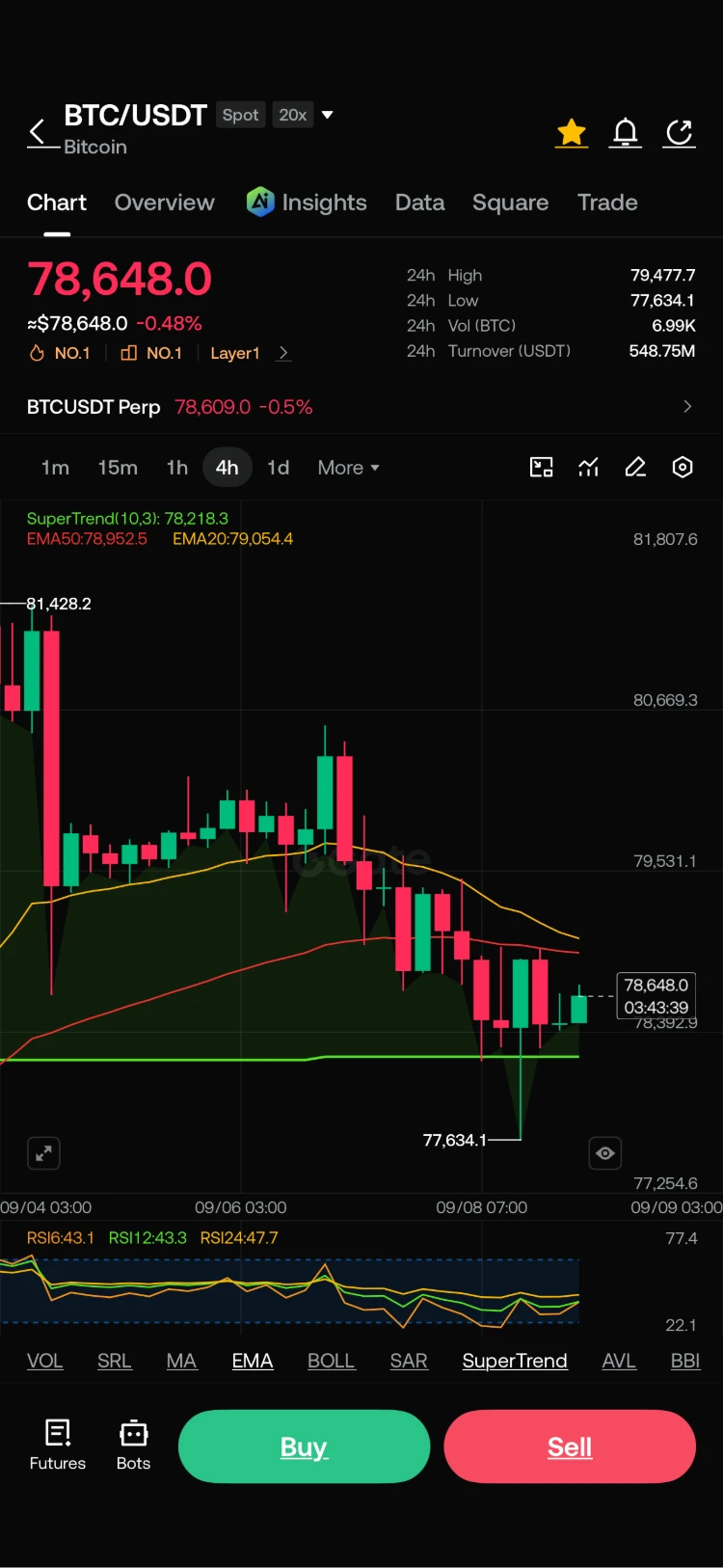
Bitcoin is back near $80K, but something important is missing: a major spike in large exchange deposits.
$BTC closed at $78,450 on September 8, while the top-10 exchange inflows were 5,442 BTC.
That’s higher than the previous day, but still close to normal levels. The 7-day average is 4,678 BTC/day.
So far, the recovery isn’t showing unusually high large-holder deposits to exchanges.
Less evidence of strong selling pressure from whales.
The key thing to watch now:
If BTC starts weakening while the 7-day inflow average keeps rising, that could be a warning sign.
$BTC ‌
GregMiller
Bitcoin is back near $80K, but something important is missing: a major spike in large exchange deposits.
$BTC closed at $78,450 on September 8, while the top-10 exchange inflows were 5,442 BTC.
That’s higher than the previous day, but still close to normal levels. The 7-day average is 4,678 BTC/day.
So far, the recovery isn’t showing unusually high large-holder deposits to exchanges.
Less evidence of strong selling pressure from whales.
The key thing to watch now:
If BTC starts weakening while the 7-day inflow average keeps rising, that could be a warning sign.
BTC+5.52%
$LITE ‌ is knocking on $1,000 – but the MACD is screaming ‘rejection incoming’!"
Litecoin is up +9.75% today to $971.88, after hitting a 24h high of $1,000.13 and a low of $877.27. The move has been fueled by a strong rally in the crypto market, but there's a catch. EMA5 ($971.93) and EMA10 ($974.10) are slightly above current price, while EMA30 ($960.23) is below – the short-term trend is showing weakness. MACD is negative at -4.69, with DIF (10.04) below DEA (14.74) – momentum is clearly fading. Volume is moderate, with MA5 (480.13) above MA10 (348.18), so there's still some buying interest
CryptoJourney1
$LITE ‌ is knocking on $1,000 – but the MACD is screaming ‘rejection incoming’!"
Litecoin is up +9.75% today to $971.88, after hitting a 24h high of $1,000.13 and a low of $877.27. The move has been fueled by a strong rally in the crypto market, but there's a catch. EMA5 ($971.93) and EMA10 ($974.10) are slightly above current price, while EMA30 ($960.23) is below – the short-term trend is showing weakness. MACD is negative at -4.69, with DIF (10.04) below DEA (14.74) – momentum is clearly fading. Volume is moderate, with MA5 (480.13) above MA10 (348.18), so there's still some buying interest.
Here's the real story behind this move:
Litecoin is riding the broader crypto rally, but it's facing a massive resistance level at $1,000.13 – that's a psychological barrier that could reject price. The news of Lumenium's surge and optical communications hype is also driving speculation, but the fundamentals haven't changed significantly.
Key levels to watch:
· Resistance: $1,000.13 (today's high), $1,012.41 (next level)
· Support: $938.70, $901.84, $867.27
· A break below $938.70 could trigger a drop to $901.84 and $867.27.
Trading Plan:
· Entry: $971.88 – $972.00
· Stop Loss: $990.00
· TP1: $940.00
· TP2: $910.00
· TP3: $880.00
👇 Do you think LITE will break above $1,000 or get rejected? Drop your analysis below!
LITE+1.73%
$LITE ‌ is knocking on $1,000 – but the MACD is screaming ‘rejection incoming’!"
Litecoin is up +9.75% today to $971.88, after hitting a 24h high of $1,000.13 and a low of $877.27. The move has been fueled by a strong rally in the crypto market, but there's a catch. EMA5 ($971.93) and EMA10 ($974.10) are slightly above current price, while EMA30 ($960.23) is below – the short-term trend is showing weakness. MACD is negative at -4.69, with DIF (10.04) below DEA (14.74) – momentum is clearly fading. Volume is moderate, with MA5 (480.13) above MA10 (348.18), so there's still some buying interest
CryptoJourney1
$LITE ‌ is knocking on $1,000 – but the MACD is screaming ‘rejection incoming’!"
Litecoin is up +9.75% today to $971.88, after hitting a 24h high of $1,000.13 and a low of $877.27. The move has been fueled by a strong rally in the crypto market, but there's a catch. EMA5 ($971.93) and EMA10 ($974.10) are slightly above current price, while EMA30 ($960.23) is below – the short-term trend is showing weakness. MACD is negative at -4.69, with DIF (10.04) below DEA (14.74) – momentum is clearly fading. Volume is moderate, with MA5 (480.13) above MA10 (348.18), so there's still some buying interest.
Here's the real story behind this move:
Litecoin is riding the broader crypto rally, but it's facing a massive resistance level at $1,000.13 – that's a psychological barrier that could reject price. The news of Lumenium's surge and optical communications hype is also driving speculation, but the fundamentals haven't changed significantly.
Key levels to watch:
· Resistance: $1,000.13 (today's high), $1,012.41 (next level)
· Support: $938.70, $901.84, $867.27
· A break below $938.70 could trigger a drop to $901.84 and $867.27.
Trading Plan:
· Entry: $971.88 – $972.00
· Stop Loss: $990.00
· TP1: $940.00
· TP2: $910.00
· TP3: $880.00
👇 Do you think LITE will break above $1,000 or get rejected? Drop your analysis below!
ETH+5.80%
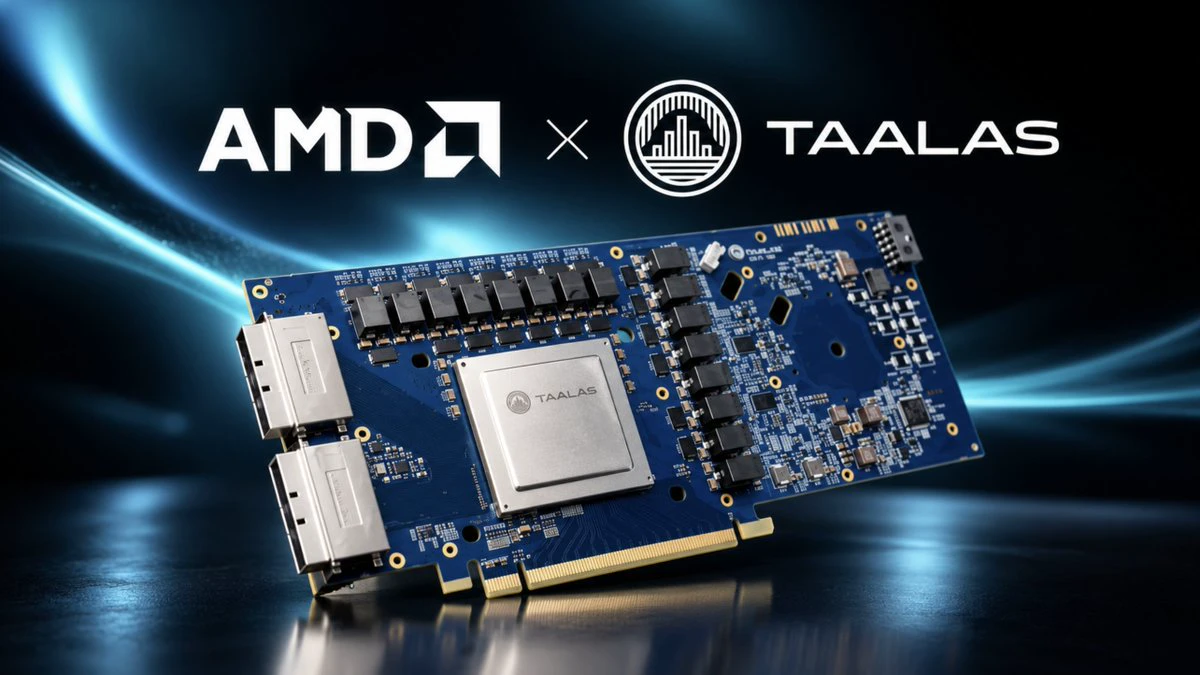
$AMD ‌ at the Citi Global TMT Conference
“We haven't given a ton of details yet, but we do have some of our own internal silicon ambitions for ultra-low-latency inference that would fit into our architecture via chiplets.”
The Taalas acquisition and the Cerebras partnership are just $AMD’s baby steps into ultra-low-latency inference
The goal is to develop this silicon in-house going forward, and the trend we’ll likely see is increasingly specialized ASICs designed for specific workloads
DanielRomero
$AMD at the Citi Global TMT Conference
“We haven't given a ton of details yet, but we do have some of our own internal silicon ambitions for ultra-low-latency inference that would fit into our architecture via chiplets.”
The Taalas acquisition and the Cerebras partnership are just $AMD’s baby steps into ultra-low-latency inference
The goal is to develop this silicon in-house going forward, and the trend we’ll likely see is increasingly specialized ASICs designed for specific workloads
repost-content-media
AMD-0.54%
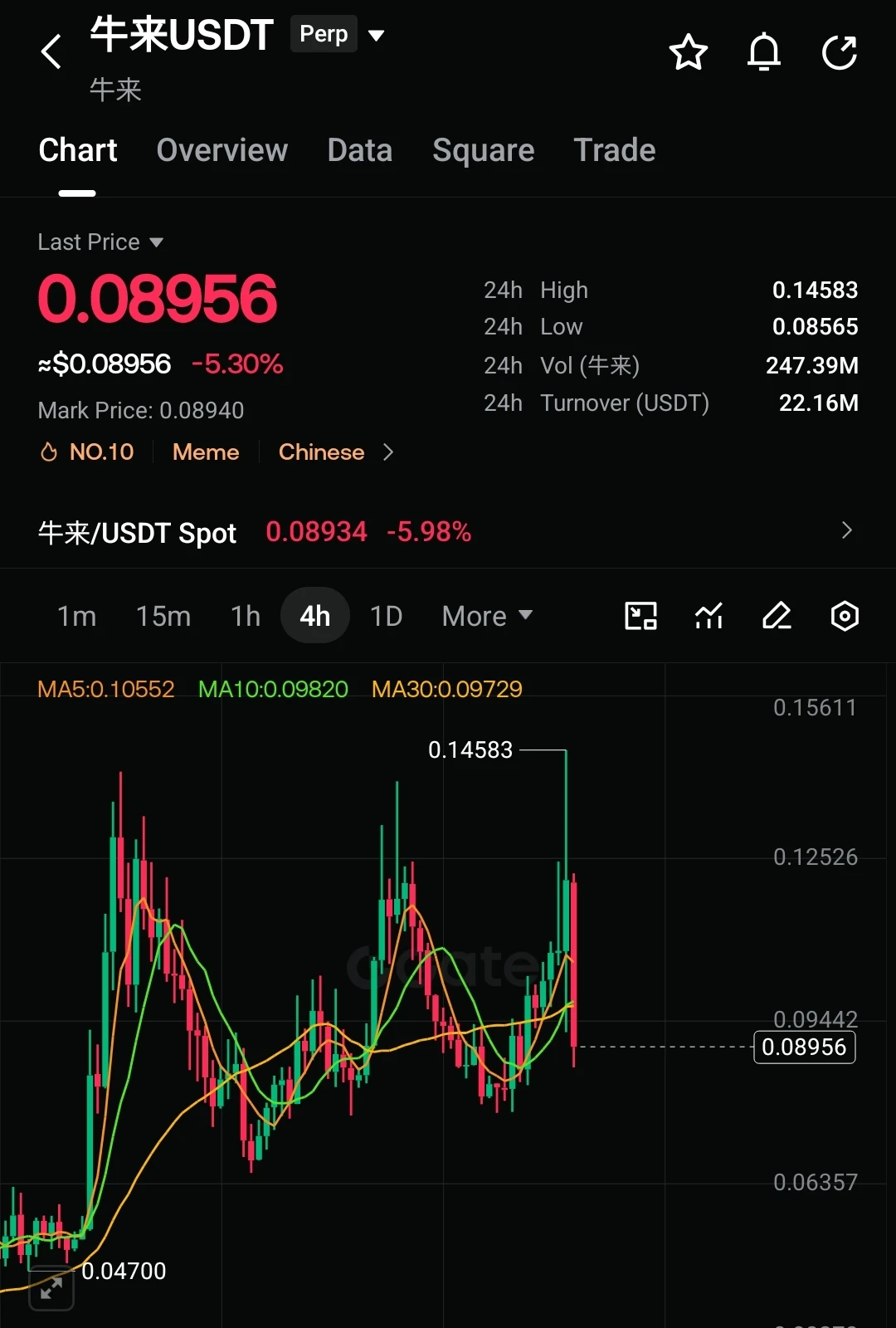
$牛来 ‌ is just got heavily rejected from 0.1465 and the reversal is aggressive.
Price has now fallen back toward 0.0900, showing clear selling pressure after the spike.
Resistance: 0.1025 – 0.1180
Key support: 0.0840
Losing 0.0840 could open the door to another leg lower
DilbaTheGreat
$牛来 is just got heavily rejected from 0.1465 and the reversal is aggressive.
Price has now fallen back toward 0.0900, showing clear selling pressure after the spike.
Resistance: 0.1025 – 0.1180
Key support: 0.0840
Losing 0.0840 could open the door to another leg lower
repost-content-media
牛来+12.10%
#Gate用户突破6000万 I thought I had made a smart trade… until I watched the chart continue without me. 😂
It was one of those BTC trades where everything suddenly started looking bullish. The price was moving strongly, candles were turning green, and for once I felt like I had entered at the right time. I didn't want to get greedy, so I decided to take a small profit and close the position.
My profit?
Around +$5.
At that moment, I genuinely felt like a professional. 😂 I looked at the green P&L and thought, “Perfect. Profit is profit.”
So I sold.
And then BTC decided to teach me a lesson.
Literally
Falcon_Official
#Gate用户突破6000万 I thought I had made a smart trade… until I watched the chart continue without me. 😂
It was one of those BTC trades where everything suddenly started looking bullish. The price was moving strongly, candles were turning green, and for once I felt like I had entered at the right time. I didn't want to get greedy, so I decided to take a small profit and close the position.
My profit?
Around +$5.
At that moment, I genuinely felt like a professional. 😂 I looked at the green P&L and thought, “Perfect. Profit is profit.”
So I sold.
And then BTC decided to teach me a lesson.
Literally shortly after I closed the trade, the price started pushing higher again. One green candle became another, then another. I was sitting there watching the chart thinking, “Okay… maybe this is just a small move.”
It wasn't.
The market kept climbing.
The funniest part was that I had just closed my position because I was afraid of losing the $5 profit. Now I was watching the market make a move that could have turned that small profit into something much larger.
That feeling was painful. 😂
I wasn't losing money anymore, but somehow watching the trade continue without me felt worse than taking a small loss.
I remember looking at the chart and thinking:
“Why did I sell so early?”
At the time, my mindset was simple: if the trade is green, take the money before the market changes direction.
There was nothing wrong with taking profit. The problem was that I had no actual plan behind the decision.
I didn't have a target.
I didn't have a resistance level where I expected the move to slow down.
I didn't have a trailing stop.
I simply saw a small profit and became afraid of giving it back.
That was the real mistake.
The market didn't force me to sell.
My emotions did.
After that trade, I started looking at profit-taking completely differently. I realized that the goal isn't to sell at the exact top because nobody consistently knows where the exact top is.
The goal is to have a plan before the trade starts.
If I enter BTC or ETH because I expect a move toward a specific resistance zone, then I should already know what I want to do when price reaches that area.
Maybe I take 25% or 30% profit at the first target.
Maybe I move my stop-loss closer after the market confirms the direction.
Maybe I leave part of the position open for a bigger move.
The important thing is that the decision should come from the trading plan, not from the emotion of seeing a green number on the screen.
My old mindset was:
“I'm up $5. Take it before it's gone.”
My current mindset is:
“Why am I taking profit here, and what does the chart say?”
That difference sounds small, but it completely changed how I approach trades.
I also learned that there are two different mistakes a trader can make.
One is refusing to take profit when the setup is clearly weakening.
The other is taking profit too quickly simply because you're scared the market might reverse.
I was guilty of the second one.
And BTC made sure I remembered it. 😂
The funny thing is that taking a small profit wasn't actually a bad result. +$5 is still better than -$5. The lesson wasn't “never take profit early.”
The lesson was: don't make your exit decision randomly.
Sometimes the market will reverse immediately after you sell, and you'll look like a genius.
Sometimes it will continue another 10% and you'll feel like you just sold the winning lottery ticket.
You can't control that.
What you can control is whether your entry, target, stop-loss and position size were planned before the trade.
That's what I eventually started doing with BTC and ETH.
Instead of trying to catch the entire move, I started thinking in levels. First target. Second target. Invalidation. Risk/reward. Then I could take partial profit without completely abandoning the position.
That removed a lot of the emotional pressure.
And honestly, it also made trading much less stressful.
Today, if I take a small profit and BTC suddenly pumps afterward, I still laugh at myself a little. 😂 But I don't immediately chase the market to get back into the position.
That's another lesson I learned from that trade.
Missing a move is not the same as losing money.
The old me would have watched BTC pump after selling and immediately wanted to buy back higher.
The current me would rather wait for the next setup.
Because the market doesn't owe me the continuation of a trade I already closed.
There will always be another opportunity.
That one early exit taught me something I couldn't learn from a chart alone: profit-taking is good, but profit-taking with a plan is better.
I started that trade thinking I had finally become a smart trader because I locked in $5.
Then BTC continued higher without me and humbled me in real time. 😂
But that frustration became useful.
Now I don't ask only, “How much profit can I take?”
I ask:
“Where is my target, what confirms the move, and what is my plan if BTC keeps going?”
That little difference turned one of my funniest trading mistakes into one of my most useful lessons.
Sometimes you take profit.
Sometimes you leave money on the table.
The important thing is to make sure your next decision is based on a strategy not on fear, greed, or one very tempting green candle. 😂
repost-content-media
BTC+5.52%
ETH+5.80%
#GateEventContractChallenge
BTC/USDT 2H DEEP DIVE — Breakout or Breakdown? 📊
Bitcoin is currently trading around $79.3K, and this is one of those areas where I would rather wait for confirmation than blindly choose LONG or SHORT.
Looking at the 2H chart, BTC is sitting inside an interesting structure. Price has been respecting the rising trendline underneath while repeatedly struggling around the $81K–$82K resistance zone.
So for me, the next move is going to depend heavily on how price reacts at these two important areas.
📈 The Bullish Scenario
The first thing I’m watching is the $81K–$82K
Crypto_Buzz_with_Alex
#GateEventContractChallenge
BTC/USDT 2H DEEP DIVE — Breakout or Breakdown? 📊
Bitcoin is currently trading around $79.3K, and this is one of those areas where I would rather wait for confirmation than blindly choose LONG or SHORT.
Looking at the 2H chart, BTC is sitting inside an interesting structure. Price has been respecting the rising trendline underneath while repeatedly struggling around the $81K–$82K resistance zone.
So for me, the next move is going to depend heavily on how price reacts at these two important areas.
📈 The Bullish Scenario
The first thing I’m watching is the $81K–$82K resistance zone.
BTC has already tested this region and faced rejection, so I don’t want to call a breakout before it actually happens.
If Bitcoin can push above this resistance with a strong 2H candle and, more importantly, hold above the breakout area, that would give me much stronger confirmation that buyers are taking control again.
In that situation, I would start watching for continuation toward the next higher resistance/liquidity areas.
The key point is:
Breakout + confirmation + successful retest = much stronger bullish setup.
I would rather enter after confirmation than chase the first candle through resistance.
📉 The Bearish Scenario
The other side of the setup is the rising trendline underneath price.
BTC has been making higher lows while this trendline continues to provide support. As long as that structure holds, I don’t want to become aggressively bearish.
However, if price loses the trendline and starts closing below the important support structure, the current bullish setup would become much weaker.
A confirmed breakdown followed by a failed retest of the broken support would be the signal I would watch for a potential short-side opportunity.
So the bearish confirmation for me would be:
Trendline break → 2H confirmation → failed retest → downside continuation.
☁️ Ichimoku Cloud Is Also Important
Another thing standing in front of the bulls is the Ichimoku Cloud.
Price is currently dealing with the cloud around the current structure, which makes this area important for confirmation.
If BTC can reclaim the cloud and maintain price above it, that would improve the bullish picture.
But if price continues getting rejected around the cloud while also failing to break the $81K–$82K resistance, that would tell me buyers still haven't gained enough strength.
🧠 My Current View
Right now, I’m neutral and waiting for confirmation.
I don't see a reason to force a trade in the middle of the range.
My main levels are:
🔴 $81K–$82K: Major resistance / breakout area
🟢 ~$78K: Important rising trendline support area
☁️ Ichimoku Cloud: Key confirmation zone
📍 Current price: ~ $79.3K
If BTC breaks and holds above the resistance, I will start looking for the bullish continuation setup.
If BTC loses the rising trendline and confirms the breakdown, I will start looking for the bearish setup.
Until one of these scenarios confirms, I’m waiting.
🎯 Trade Philosophy
This is exactly why I like to mark my levels before entering.
I don't need to predict every Bitcoin candle.
I just need to know:
Where buyers need to prove themselves.
Where sellers need to prove themselves.
Where the structure becomes invalid.
If the breakout comes, I’ll look for confirmation.
If the breakdown comes, I’ll look for confirmation.
If neither happens, I simply stay out.
No FOMO. No guessing. No chasing.
The market will eventually show its hand. My job is to be ready when it does. 👀📈
What are you watching here — BTC breakout above $82K or breakdown below the rising trendline?
I’ll be watching the next 2H candles closely. 📊
#Gate事件合约晒单挑战 #BTC #CryptoTrading $BTC
repost-content-media
BTC+5.52%
Good coins are about to go vertical.
💹
$FLOKI 💹
#HYDRACHAIN 💹
$WIF 💹
$PEPE 💹
$PENGU 💹
$CKOM 💹
$XRP 💹
$DOGE 💹
Some will pump more than others.
What are you buying on a Wednesday ?
DROVER
DROVERDustyRover
Pump.Fun
MC:$2.39KHolders:1
0%
CryptoThro
Good coins are about to go vertical.
$DROVER 💹
$FLOKI 💹
#HYDRACHAIN 💹
$WIF 💹
$PEPE 💹
$PENGU 💹
$CKOM 💹
$XRP 💹
$DOGE 💹
Some will pump more than others.
What are you buying on a Wednesday ?
FLOKI+5.17%
WIF+9.64%
PEPE+5.66%
PENGU+6.64%
XRP+6.89%
$BTC : The $80K Battle Is Turning Into a Macro Test
Bitcoin is trading around $78.7K, after failing to hold the $80K area. The bigger picture is more interesting than the daily red candle: BTC recently reached $82,164, its highest level in more than three months, before the market started aggressively reducing risk.
The pressure isn’t coming from crypto alone.
Oil has moved toward $100, the U.S. 10-year yield is around 4.8%, and markets have sharply increased expectations for a Fed rate hike at the September 16 meeting. That combination is exactly the kind of macro environment that can tempora
Surrealist5N1K
$BTC : The $80K Battle Is Turning Into a Macro Test
Bitcoin is trading around $78.7K, after failing to hold the $80K area. The bigger picture is more interesting than the daily red candle: BTC recently reached $82,164, its highest level in more than three months, before the market started aggressively reducing risk.
The pressure isn’t coming from crypto alone.
Oil has moved toward $100, the U.S. 10-year yield is around 4.8%, and markets have sharply increased expectations for a Fed rate hike at the September 16 meeting. That combination is exactly the kind of macro environment that can temporarily suppress BTC liquidity.
But there is an important counter-signal:
Bitcoin ETF flows have remained positive. Recent data showed roughly $1.01 billion of net inflows over three trading days.
That tells me the current weakness isn’t automatically the beginning of a structural reversal.
My BTC map 👇
$80K–$82.2K → major supply / breakout zone
$78K → immediate pivot
$76.5K–$77K → first important downside defense
$74K–$75K → deeper correction zone
If BTC reclaims $80K and subsequently breaks $82.2K with volume, the market can quickly shift from “correction” back into price discovery.
On the other hand, losing $76.5K–$77K would make the recent breakout considerably weaker and increase the probability of a move toward the mid-$70Ks.
What I’m watching most closely isn’t simply price.
It’s whether BTC can hold while yields and oil remain elevated.
If it can, that’s actually constructive.
Because it would mean Bitcoin is absorbing a fairly hostile macro environment rather than collapsing under it.
And if oil eventually cools and rate expectations reverse, the liquidity environment could become a completely different story.
For me, $77K is the line in the sand right now.
Above it, I still treat this as a high-volatility pullback inside the broader structure.
Below it, I start preparing for a much deeper reset. 👀 $BTC ‌
repost-content-media
BTC+5.52%
Bears are still waiting for Bitcoin to drop below $50k this fall. Their scenario could play out if BTC does not move above $83k in the near future 🐼
Bears are also gaining optimism from bearish divergences on the 4H and 1D timeframes.
#BTC | #Bitcoin | $BTC
TopCryptoNews
Bears are still waiting for Bitcoin to drop below $50k this fall. Their scenario could play out if BTC does not move above $83k in the near future 🐼
Bears are also gaining optimism from bearish divergences on the 4H and 1D timeframes.
#BTC | #Bitcoin | $BTC
BTC+5.52%
#GateStockInsightsChallenge + $MRVL
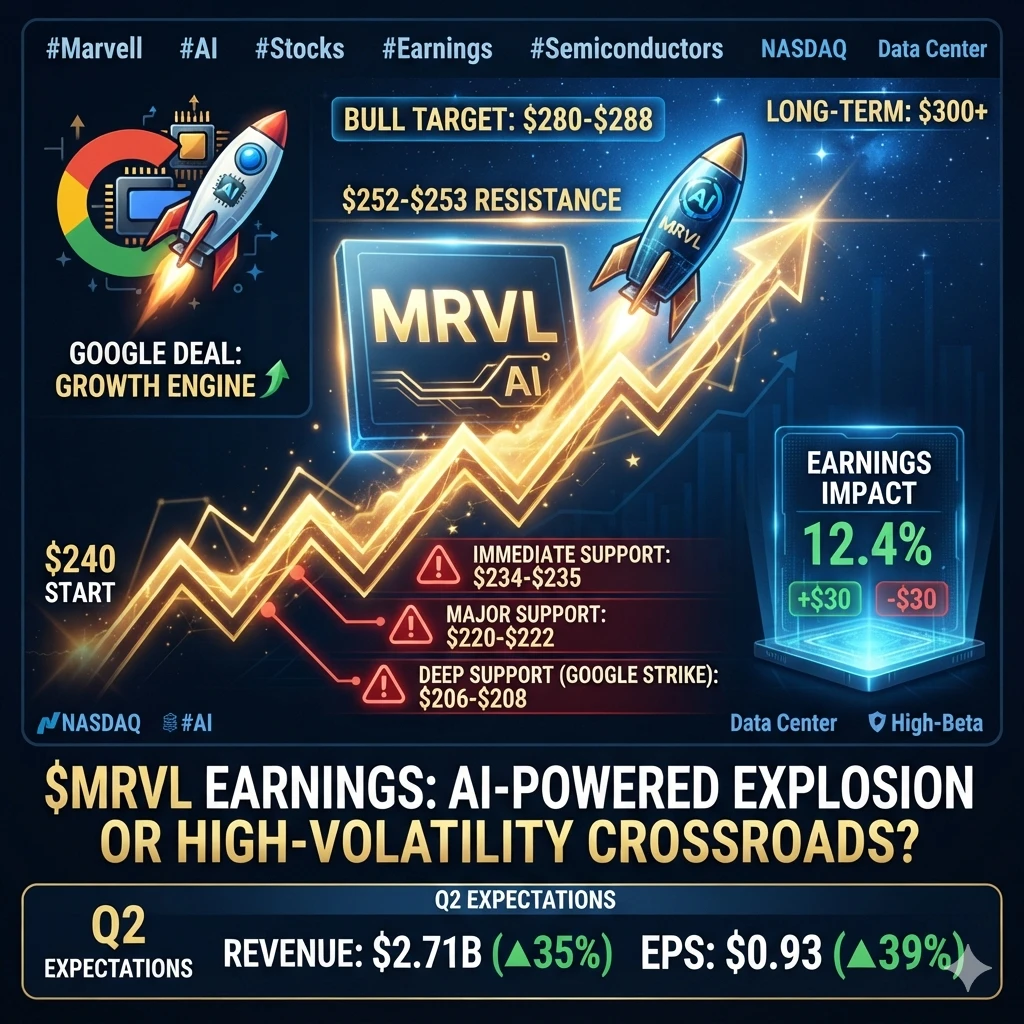
🚨 $MRVL Earnings Are Here: Is Marvell Ready for Another AI-Powered Explosion?
Marvell Technology is heading into one of the biggest earnings moments in the semiconductor sector, and the setup is absolutely fascinating. 🔥
After an incredible AI-driven rally, $MRVL is currently trading around $240, putting investors at a critical crossroads: can strong AI demand and the Google partnership justify even higher prices, or have expectations become too aggressive?
📈 The Rally Has Already Been Massive
MRVL has delivered extraordinary gains, rising nearly 196% ye
CryptoChampion
#GateStockInsightsChallenge + $MRVL
🚨 $MRVL Earnings Are Here: Is Marvell Ready for Another AI-Powered Explosion?
Marvell Technology is heading into one of the biggest earnings moments in the semiconductor sector, and the setup is absolutely fascinating. 🔥
After an incredible AI-driven rally, $MRVL is currently trading around $240, putting investors at a critical crossroads: can strong AI demand and the Google partnership justify even higher prices, or have expectations become too aggressive?
📈 The Rally Has Already Been Massive
MRVL has delivered extraordinary gains, rising nearly 196% year to date and more than 253% over the past twelve months. The stock has also surged around 23% in the past month, showing that investor enthusiasm remains extremely strong.
But this is not a low-risk momentum story anymore.
The stock has already experienced huge swings, previously falling roughly 50% from its highs before recovering strongly. That tells us one important thing: MRVL is a high-beta AI stock, and volatility can move extremely fast in both directions. ⚡
🤝 The Google Deal Changed Everything
The biggest reason behind the renewed excitement is Marvell's expanding AI relationship with Google.
Marvell issued Google a warrant allowing it to purchase up to 58.97 million shares at $206.58, with vesting tied to future revenue generated from custom AI products, networking solutions and memory technologies.
This partnership could become a major long-term growth engine. 🚀
The real opportunity is custom AI silicon. Analysts believe Marvell's custom AI accelerator and ASIC business could potentially exceed $4 billion next year and move toward $10 billion by 2028 if hyperscaler demand continues accelerating.
That is why the market is watching guidance almost more closely than the quarterly numbers.
📊 What Wall Street Expects
For fiscal Q2 2027, expectations are approximately:
💰 Revenue: $2.71 billion
📈 Revenue Growth: Around 35% YoY
💵 Non-GAAP EPS: Around $0.93
📊 EPS Growth: Around 39% YoY
Management has also pointed toward roughly $3 billion in quarterly revenue for fiscal Q3, which would represent another major step forward.
The data center business remains the heart of the Marvell story, contributing roughly 74%–76% of total revenue. AI accelerators, optical networking and custom silicon are now the key engines investors are betting on.
🎯 The Market Is Pricing a Huge Move
Options traders are expecting roughly a 12.4% earnings move, equal to approximately a $30+ swing.
Starting near $240, that creates two major scenarios:
🚀 Bull Case: Strong revenue beat + raised guidance + powerful Google commentary could push MRVL toward $252, then $265–$268, with a major breakout potentially targeting $280–$288.
🐻 Bear Case: Weak margins, cautious guidance or slower custom-chip growth could send the stock back toward $234, then the important $220–$222 support zone.
A deeper disappointment could even bring the stock toward the $206–$208 area, which is especially important because it sits close to Google's warrant strike price.
📍 Key Levels To Watch
🔹 Immediate Support: $234–$235
🔹 Major Support: $220–$222
🔹 Deep Support: $206–$208
🔸 First Resistance: $252–$253
🔸 Next Resistance: $265–$268
🔸 Bull Target: $280–$288
🔸 Long-Term Major Zone: $300+
📈 My Outlook
At $240, MRVL remains one of the most exciting AI infrastructure stocks in the market, but expectations are now extremely high.
For me, the most important things to watch are:
👀 Data center growth
👀 Gross margin trends
👀 Google custom-chip revenue
👀 New hyperscaler design wins
👀 Fiscal Q3 guidance
My view is cautiously bullish. 💡 The long-term AI story remains powerful, and a strong earnings report could put $280–$300 back into focus. However, with such a massive rally already behind it, even a small disappointment could trigger aggressive profit-taking.
$MRVL at $240 is not a simple bet anymore — it is a high-growth, high-expectation, high-volatility AI opportunity. 🚀⚠️
📍 Not financial advice. Always do your own research.
#Gate股票观点挑战 @Gate_Square #GateSquare #TopFiveLeaguesPreMatchPredictor
#GateEventContractsPointsLeaderboard
repost-content-media
MRVL-1.51%
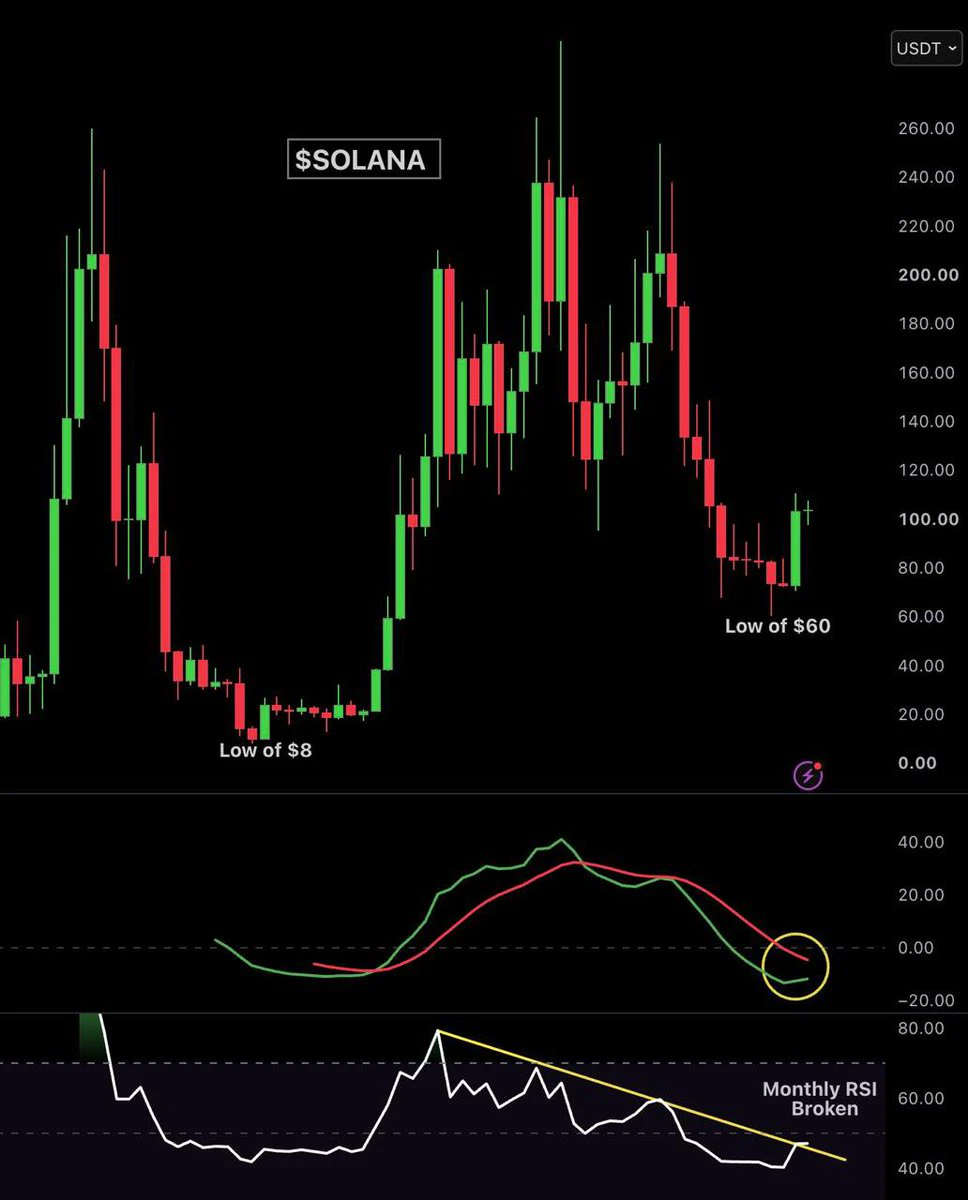
$SOL is showing signs of a potential major bullish reversal.
After months of weakness, the chart is starting to shift:
• First green monthly candle in 10 months
• Monthly MACD is nearing a bullish crossover
• Monthly RSI has broken its 2-year downtrend
• Price has bounced strongly from the ~$60 low
If MACD confirms the crossover, SOL could be entering a much bigger trend reversal.
Is this the start of SOL’s next major move?
GregMiller
$SOL is showing signs of a potential major bullish reversal.
After months of weakness, the chart is starting to shift:
• First green monthly candle in 10 months
• Monthly MACD is nearing a bullish crossover
• Monthly RSI has broken its 2-year downtrend
• Price has bounced strongly from the ~$60 low
If MACD confirms the crossover, SOL could be entering a much bigger trend reversal.
Is this the start of SOL’s next major move?
repost-content-media
SOL+10.72%
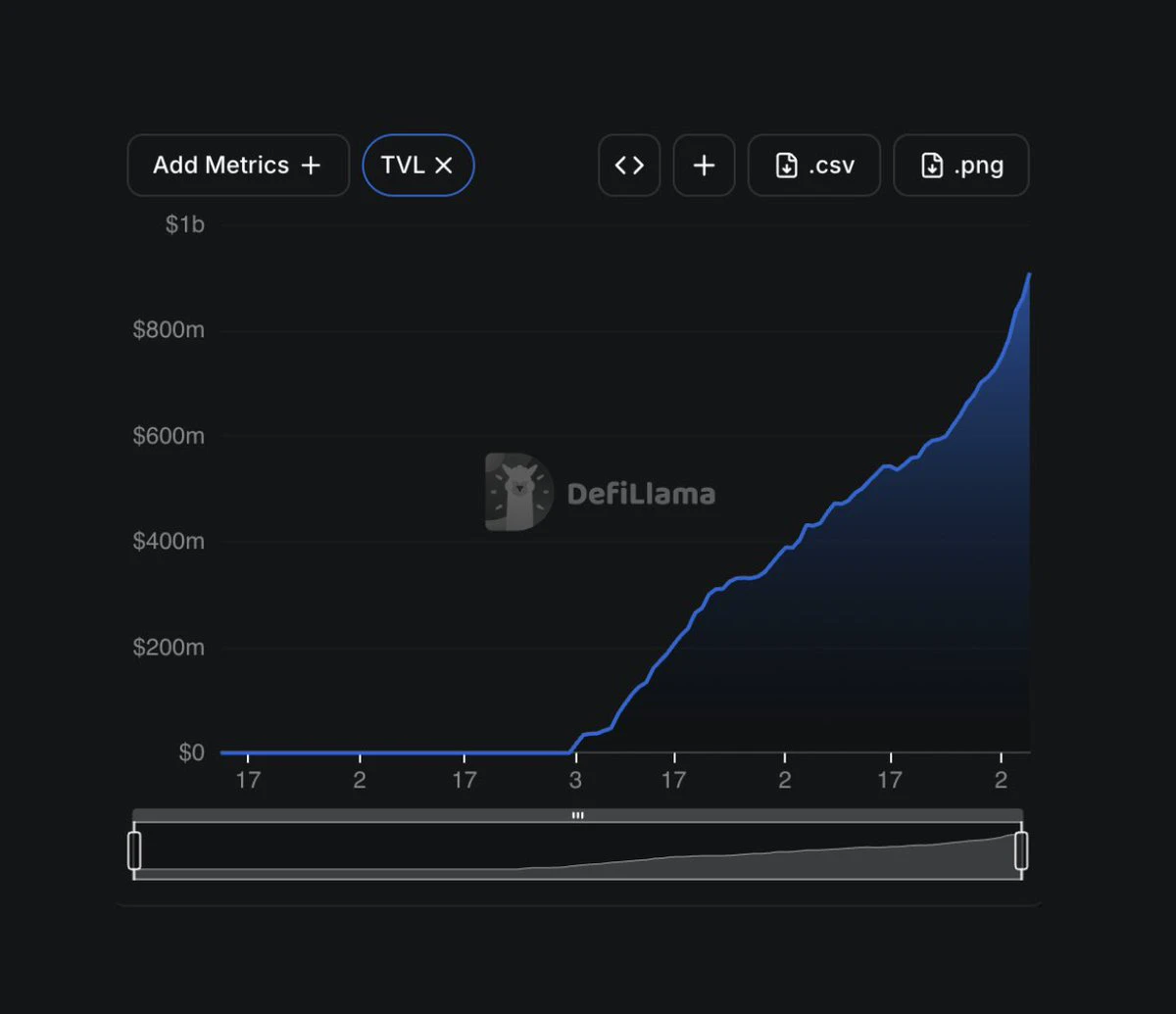
🚨 ROBINHOOD’S STABLECOIN SUPPLY IS NEARING $1 BILLION.
Capital is rapidly moving on-chain through the platform.
RananjaySingh
🚨 ROBINHOOD’S STABLECOIN SUPPLY IS NEARING $1 BILLION.
Capital is rapidly moving on-chain through the platform.
repost-content-media
  • 2