As the Web3 industry develops, blockchain applications are gradually shifting from tools built for crypto-native users to services designed for ordinary internet users. Traditional DApps can provide functions such as decentralized trading, digital assets, and on-chain finance, but wallet installation, Gas fees, and complex interaction flows remain major barriers for many users entering Web3.
The emergence of Kaia Mini DApps reflects the broader direction of Web3 infrastructure moving toward integration with super app ecosystems. Kaia aims to embed on-chain functions into familiar application environments through large internet platforms such as LINE, allowing users to access Web3 services much like they would use ordinary mobile apps.
What Is a Kaia Mini DApp?
As a lightweight Web3 application built on the Kaia network, a Kaia Mini DApp is mainly defined by its ability to run directly within super app ecosystems, such as LINE Messenger.
Compared with traditional DApps, Mini DApps are closer to “mini programs” or in-app services in the Web2 world. Users do not need to actively visit a standalone website, and they may not need complex wallet configuration to complete certain on-chain actions inside a messaging app.
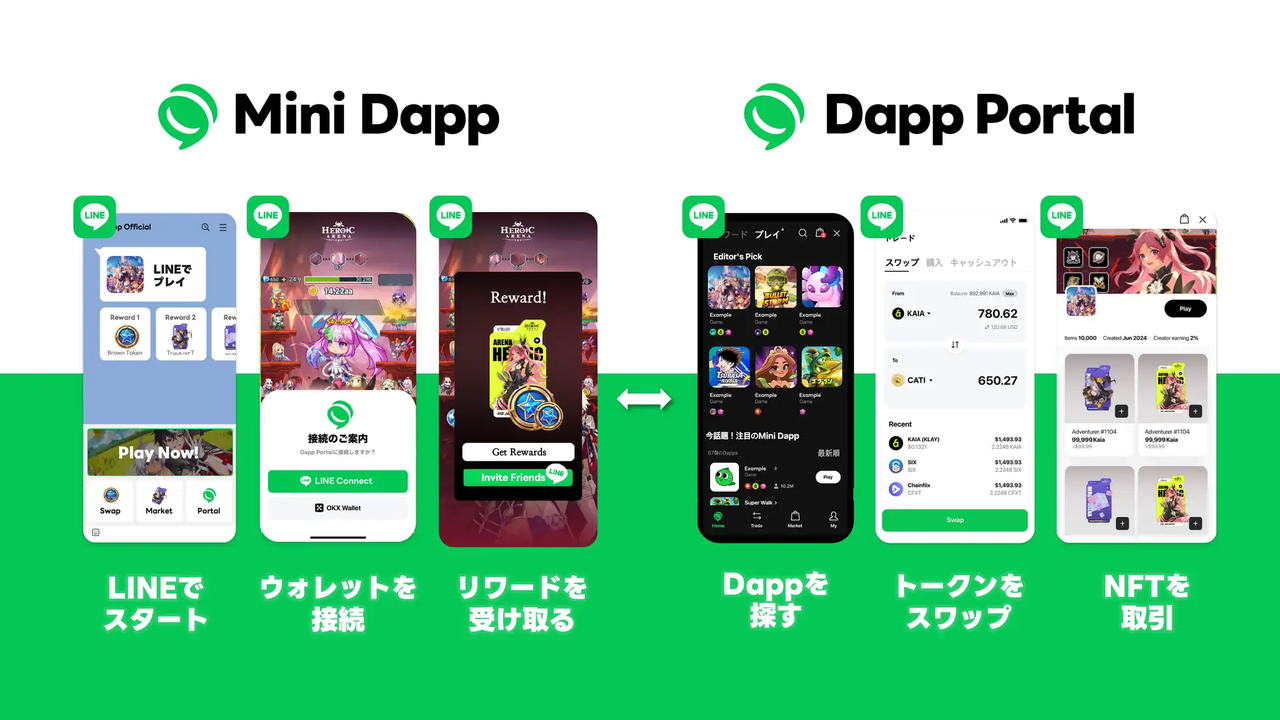
Kaia Mini DApps usually combine payments, blockchain games, NFTs, social interactions, or digital content services, using low-barrier interactions to help ordinary internet users experience blockchain functions.
This design also reflects Kaia’s broader ecosystem direction. Rather than simply building a high-performance public blockchain, Kaia is trying to create an entry layer that brings Web2 users into Web3.
How Are Mini DApps Different From Traditional DApps?
Traditional DApps usually rely on browser wallets or standalone wallet apps. Users need to manually create a wallet, store a seed phrase, and pay Gas Fees. This model is better suited to crypto-native users, but it comes with a relatively high learning curve for ordinary internet users.
Mini DApps, by contrast, emphasize a lightweight experience and a low barrier to entry. Users can usually open a service directly inside applications such as LINE and interact through custodial account systems or simplified wallets.
One of the biggest differences between the two lies in user experience design. Traditional DApps place more emphasis on decentralization and user control over assets, while Mini DApps focus more on reducing the barrier to first-time use.
In addition, Mini DApps often work together with Kaia’s Gas Fee Delegation mechanism, allowing the application provider to pay part of the on-chain transaction fees on behalf of users, so users do not have to hold KAIA tokens before trying the service for the first time.
How Do Users Access Kaia Mini DApps?
Entry points for Kaia Mini DApps usually come from super app ecosystems, such as service pages, chat windows, or app menus inside LINE Messenger.
After users tap an entry point, the system automatically loads the corresponding Mini DApp page. Unlike traditional Web3 applications, users do not necessarily need to install a browser wallet first or jump to an external website.
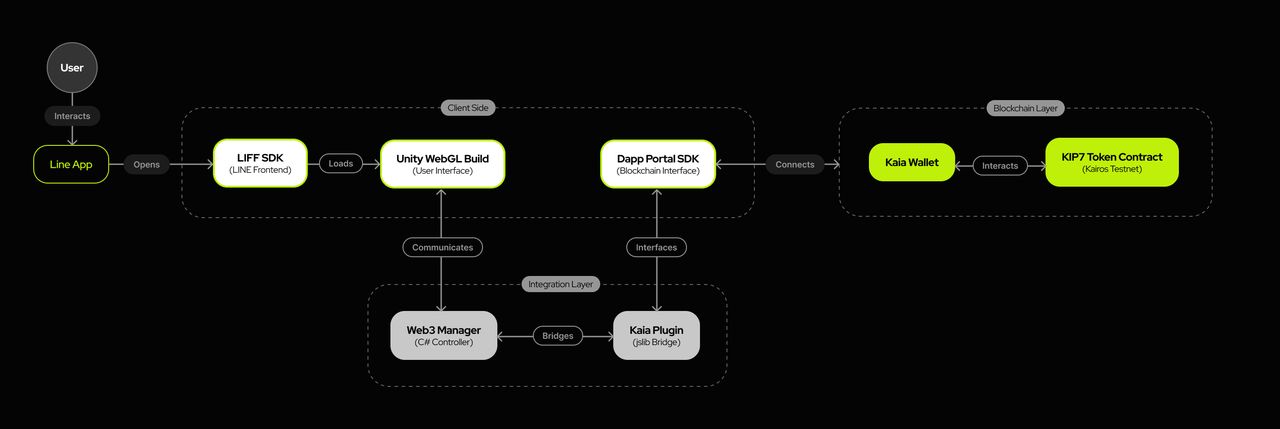
Some Mini DApps automatically create a custodial account on the first visit, or link identity through a social account. This reduces the need to manage seed phrases or configure wallets, allowing users to enter the application flow more quickly.
For ordinary internet users, this interaction feels closer to a traditional mobile app, making Web3 easier to approach.
How Does the Wallet System of Kaia Mini DApps Work?
The wallet system is one of the core components of a Mini DApp, because all on-chain actions ultimately require account signatures and transaction confirmation.
In traditional DApps, wallets are usually controlled entirely by the user, such as browser wallets like MetaMask. In the Mini DApp model, some applications may use custodial wallets, embedded wallets, or social account binding.
The goal of this design is to reduce the learning curve. For example, users can receive digital assets and complete transactions without manually switching networks, copying wallet addresses, or understanding the concept of private keys.
However, different Mini DApps may use different account management models. Some applications place more emphasis on user control over assets, while others prioritize a smoother interaction experience.
How Does Gas Fee Delegation Lower the Barrier to Entry?
Gas Fee Delegation is an important part of the user experience improvements offered by Kaia Mini DApps.
On most blockchain networks, users must first hold the native token before they can pay on-chain transaction fees. For example, Ethereum users need ETH, while Solana users need SOL.
Kaia allows application developers or service providers to pay Gas Fees on behalf of users. This means users can complete certain on-chain actions even if they do not hold KAIA.
From a user experience perspective, this mechanism can significantly reduce the barrier to first-time use. Many ordinary users who are new to Web3 do not need to first learn how to buy tokens or transfer funds for Gas before they can try an on-chain application.
This is also one of the key reasons Kaia Mini DApps can feel closer to Web2 products.
How Is an On-Chain Transaction Completed in a Kaia Mini DApp?
When users perform an action in a Mini DApp, such as claiming an NFT, buying a digital item, or making an on-chain payment, the system generates the corresponding on-chain transaction request.
The wallet module then signs the transaction. Depending on the application design, the signing process may require user confirmation, or it may use a custodial signing mechanism in the background.
After the transaction is broadcast to the Kaia network, validators confirm it and write it to the blockchain. Because the Kaia network emphasizes fast confirmation and low-cost transactions, users can usually receive feedback quickly.
Once the transaction is completed, the Mini DApp updates the front-end page, such as showing that a payment was successful, an NFT has arrived, or points have been updated.
Throughout this process, users may not directly notice the complex on-chain interaction logic. This is one of the biggest differences between Mini DApps and traditional DApps.
What Challenges Do Kaia Mini DApps Face?
Although Mini DApps can lower the barrier to Web3 adoption, their development still faces several challenges.
First, custodial wallets and simplified account systems may raise questions about asset control and the degree of decentralization. Some users may prefer to fully control their private keys rather than rely on platform services.
Second, while super app ecosystems can bring user traffic, application growth may also depend on platform rules and ecosystem policies.
In addition, the long-term competitiveness of Mini DApps depends not only on user entry points, but also on application quality, the developer ecosystem, and real use cases. Without continuously active applications and sustained on-chain demand, user growth may be difficult to maintain over the long term.
Conclusion
Kaia Mini DApps are an important part of the Kaia ecosystem’s effort to connect Web2 and Web3. Their core goal is to lower the barrier for ordinary internet users to access blockchain services.
Through super app entry points such as LINE, Gas Fee Delegation, and lightweight wallet design, Mini DApps hide complex on-chain interactions behind a familiar internet-style experience, allowing users to access Web3 services much like they would use ordinary mobile apps.
FAQs
How Are Kaia Mini DApps Different From Traditional DApps?
Mini DApps place more emphasis on a low-barrier, lightweight experience, while traditional DApps usually rely on standalone wallets and complex on-chain interaction flows.
Do Users Need a Wallet to Use Kaia Mini DApps?
Some Mini DApps automatically create custodial accounts or embedded wallets, so users do not necessarily need to manually configure a traditional wallet.
What Is Gas Fee Delegation?
Gas Fee Delegation is Kaia’s Gas payment delegation mechanism, allowing applications to pay on-chain transaction fees on behalf of users.
What Can Kaia Mini DApps Be Used For?
They can be used for blockchain games, NFTs, digital payments, points systems, social interactions, and on-chain content services.
What Is the Relationship Between Kaia Mini DApps and LINE?
Some Kaia Mini DApps can run directly inside the LINE ecosystem, using super app traffic entry points to reach more users.
Are Kaia Mini DApps Fully Decentralized?
Different Mini DApps use different account management models. Some applications may use custodial wallets to improve the user experience.







