Square
Following
Hot
News
Notifications
Profile
Share your thoughts
placeholder
Article
#ShareWeekly #BTC #WCTCS9

Bitcoin's latest correction is a reminder that leverage can turn an ordinary market decline into a much larger sell-off. When BTC loses an important support level, traders using high leverage can face forced liquidations, creating additional selling pressure and making recovery more difficult.

The reported $600 million liquidation risk deserves attention, but I believe the most important question is not simply how much money could be liquidated. It is where those liquidations may accelerate and whether buyers are prepared to defend the next support zones.

1. The $
BTC-0.67%
  • 2
  • 1
Why Can Failing to Set a Stop-Loss Cause a Major Account Drawdown From a Single Mistake?

In cryptocurrency trading, many people know how important stop-losses are, but when faced with a loss, they often make the opposite decision.

When the price falls, they tell themselves to wait a little longer; when the market keeps falling, they think it will rebound any moment; by the time the loss grows larger, the original trading plan has long since been abandoned.

The problem is this: making a wrong call on one trade is not what’s frightening. The real danger is failing to limit the cost of that mi
post-image
Trenches
Max
M
bade
b
Max
5qaP...pump
Market Cap
$.
Change
.
24h Vol
$.
Holders
.
mihao
m
bade
b
mihao
4Cxj...pump
Market Cap
$.
Change
.
24h Vol
$.
Holders
.
AGT
A
bade
b
AGT
0x5d...e274
Market Cap
$.
Change
.
24h Vol
$.
Holders
.
DacityCoin
D
bade
b
DacityCoin
DKYc...pump
Market Cap
$.
Change
.
24h Vol
$.
Holders
.
Max
M
bade
b
Max
HPSp...h53z
Market Cap
$.
Change
.
24h Vol
$.
Holders
.
Why Can Trading More Frequently Actually Make It Harder to Achieve Stable Returns?

Many traders believe that the more trades they make, the more likely they are to seize opportunities.

They see prices rising and want to enter; they see prices pull back and want to buy the dip; after a stop-loss, they rush to look for the next opportunity.

By the end of the day, they have more trades on record and have paid more in fees, but their account returns may not have grown accordingly.

The problem is that more trading opportunities do not mean more worthwhile opportunities.

I. Trading Costs Keep A
post-image
#USIranTalksShowNewProgress
Diplomatic Momentum vs. Supply Risk: Decoding Crude Oil Volatility as US–Iran Talks Take Center Stage

Global energy markets are caught in one of the sharpest geopolitical tug-of-wars of 2026. With WTI Crude (XTI) trading around $86.11 and Brent Crude (XBR) near $94.54, oil prices are digesting a massive November repricing. Both benchmarks have pulled back roughly 17% to 21% from their early-November peaks as diplomatic signals around US–Iran negotiations compete directly against unresolved maritime supply threats in the Persian Gulf.
For commodity and macro trader
post-image
Why do well-written trading plans still tend to fall apart in live trading?

Many traders do have a plan.

Entry conditions, stop-loss levels, profit targets, and position sizes have all been set in advance.

But once they enter the market, things change: when prices rise, they worry about missing out; when prices fall, they are reluctant to stop out; after a string of losses, they rush to make their money back; after a string of wins, they become overconfident.

In the end, they are no longer following the original trading plan, but a different set of rules that keeps being rewritten by their
post-image
Why can trading strategies that perform excellently in backtests fail in real markets?

A trading strategy may show strong historical returns, a high win rate, and a maximum drawdown within an acceptable range. So why might the results be completely different once it is deployed in the real market?

This does not necessarily mean backtesting is worthless. Rather, performance on historical data does not equal replicable returns in live trading.

To determine whether a strategy is truly effective, you need to understand several key issues behind its backtest results.

I. Data bias: The foundatio
post-image
Why do more detailed trading records make it easier to spot problems in a strategy?

Many traders have a habit of reviewing their trades, but an effective review is not simply a record of how much money they made or lost that day.

If a trading record only includes the entry price, exit price, and final profit or loss, you may know that you lost money, but it will be hard to know why.

The value of trading records lies not in preserving the past, but in helping you identify recurring problems.

I. Why is recording only profit and loss far from enough?

Suppose two trades both lost $100.

For t
post-image
Why can trading more frequently actually make it harder to earn stable returns?

Many traders believe that the more trades they make, the more likely they are to catch opportunities.

They see prices rising and want to enter; see prices pull back and want to buy the dip; after a stop-loss, they rush to look for the next opportunity.

By the end of the day, the number of trades has increased, as have fees, but account returns have not necessarily grown in step.

The problem is that more trading opportunities do not mean more worthwhile opportunities.

I. Trading costs keep accumulating

Each tr
post-image
🚨 BREAKING: 🇺🇸 MSCI OFFICIALLY CONFIRMS $MSTR’S REMOVAL FROM ITS INDEXES!
The decision takes effect after the market closes on November 30, potentially triggering billions of dollars in forced selling by index-tracking funds.
JPMorgan previously estimated potential outflows of around $2.8 BILLION.
This puts fresh pressure on Strategy’s stock and raises concerns for the wider crypto treasury sector.
#Bitcoin #BTC #MSTR #Strategy #Crypto
post-image
MSCI+0.71%
MSTR+1.10%
BTC-0.67%
Why Can Actual Losses Still Exceed Expectations After Setting a Stop-Loss?

Many traders believe that setting a stop-loss is enough to keep losses within a predetermined range.

But in the cryptocurrency market, that is not always the case.

A sudden market decline, insufficient liquidity, or order execution slippage can all cause the actual execution price to differ from expectations.

A stop-loss is a risk management tool, not a guarantee of execution at a specific price.

I. Why Might a Stop-Loss Not Execute at the Expected Price?

1. Price gaps or rapid volatility

When the market falls ra
post-image
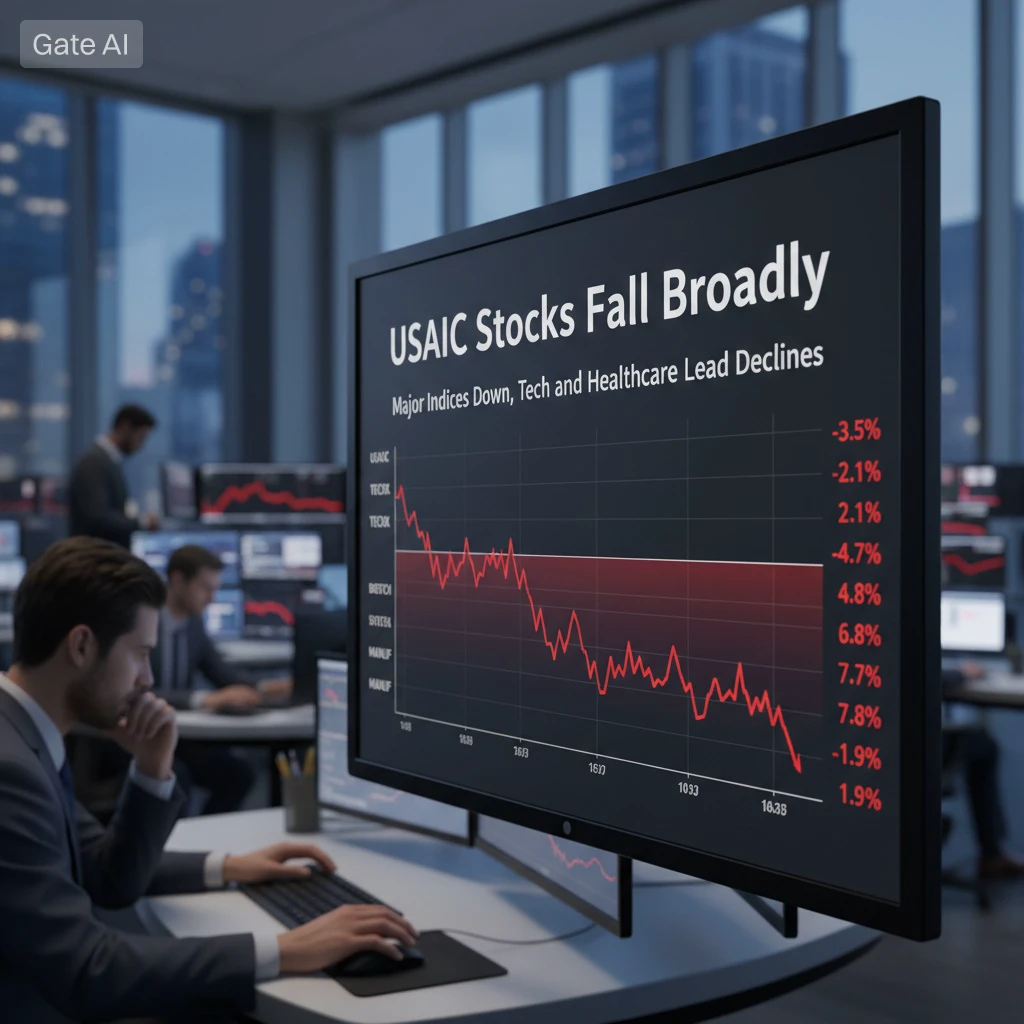
U.S. stocks just rebounded across the board, but rumors of Jensen Huangs ouster have sparked another
live-cover
LIVE2,071
Stablecoins look like digital dollars, but why aren't they the same as dollars in a bank?

In the cryptocurrency market, stablecoins are often used for trade settlement, temporarily holding assets, and on-chain payments. Many people believe that as long as a token’s price stays close to $1 over time, it can be treated as cash.

But a similar price does not mean the same risks.

I. Why can stablecoins maintain a stable price?

Different stablecoins rely on different mechanisms to maintain their price. Three common types are:

1. Fiat-backed

The issuer holds reserve assets such as cash and shor
post-image
#Gate直通IPO第三期Anthropic Jump in big—could the AI sector create another fortune? Anthropic’s IPO valuation is targeting $1.4 trillion. Can 100 USDT get you in?

The AI world is truly buzzing lately! Anthropic, the company behind Claude, is officially moving forward with its IPO, with a reference fully diluted valuation of up to $1.4 trillion and an indicative offering price of $70–78 per share. Those numbers make you exclaim: AI hasn’t taken over the world yet, but its valuation has already taken over our wallets! 😂
Gate is now launching its third IPO subscription, accepting USDT with a minimum
post-image
BTC-0.65%
SPCX-2.32%
The little fairy is begging to be believed.
Xiaohei is never short of girls wherever he goes.
post-image
Connecting a DApp Doesn’t Mean You’ve Completed an Operation: What Exactly Is Your Web3 Wallet Authorizing?

In the Web3 world, a wallet is not only used to receive and send digital assets, but is also an important gateway for users to interact with decentralized applications (DApps).

You may have connected to DeFi platforms, NFT marketplaces, or on-chain games. Clicking “Connect Wallet” may seem like a small step, but connecting, signing, and authorizing transactions are actually different operations.

I. Can an App Take Your Assets Just Because You Connected Your Wallet?

In most cases, sim
post-image
AI is changing how companies make money! Could the most profitable companies of the future be non-tech companies?

When people talked about AI in the past, they first thought of chip giants, model developers, and major technology platforms.
But as commercialization advances, AI's value may gradually spread to traditional industries.
A manufacturing company using AI to optimize its supply chain may reduce inventory and waste; a retailer analyzing consumer behavior with AI may improve sales conversion rates; a logistics company using an intelligent dispatch system may lower transportation costs.
AMD+7.27%
  • 13
Why does trading more frequently make it easier to underestimate the impact of costs on long-term returns?

When reviewing their performance, many traders focus only on buy prices, sell prices, and profit or loss, while overlooking a factor that continuously affects account performance: trading costs.

The cost of a single trade may seem small, but as the number of trades keeps increasing, these costs can gradually erode an already limited profit margin.

I. Small per-trade costs do not mean a small long-term impact

Suppose a trader completes one buy-and-sell trade each time, with fees and sl
post-image
$QNT Open another large short position—then make big profits. Entry price: 182 - 236. Stop loss: 253. Take-profit: 173. Take-profit: 128. Take-profit: 76. Execution and deployment delays: Implementing traditional banking services still requires multiple stages, and major expansion hubs such as Singapore have yet to complete full operational deployment. Short here $QNT 👇
post-image
QNT+4.79%
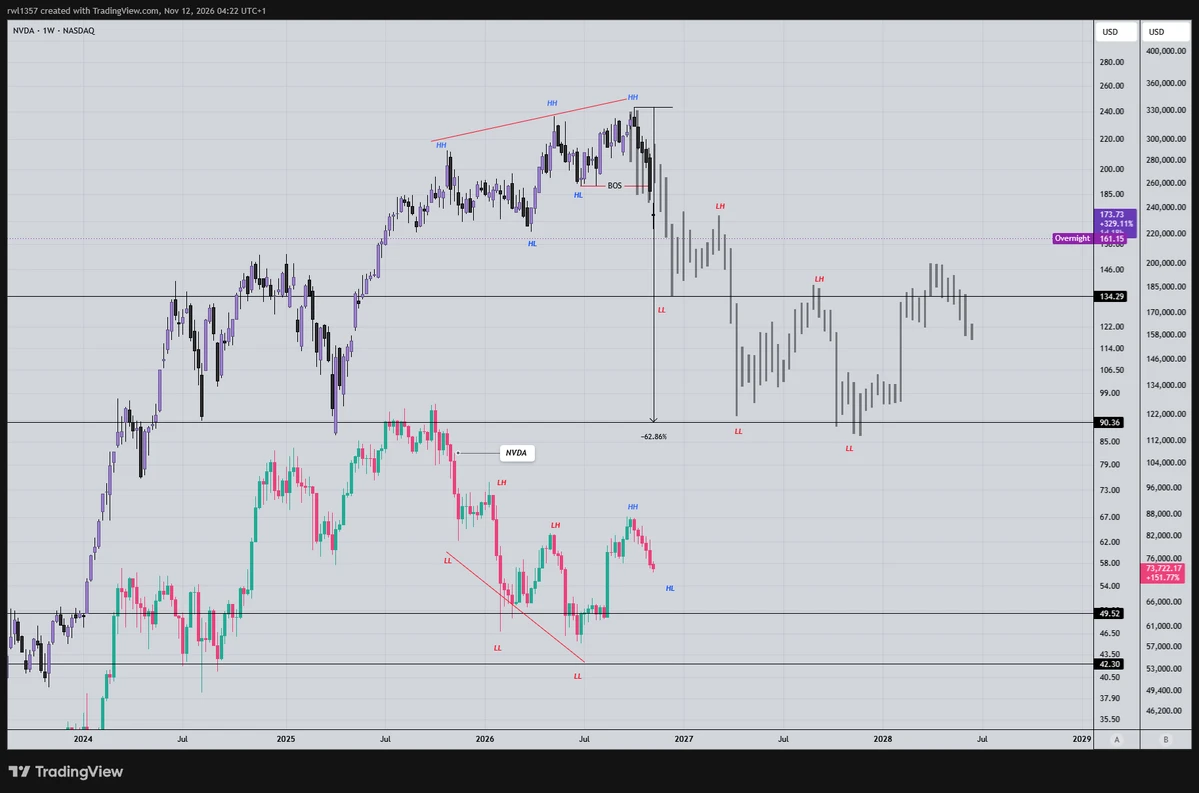
Let’s be fair, nothing is random and if you think this NVDA shenanigan was real, you’re a bum. Everything was already meant to be this way, but they needed a narrative to justify the selling. It’s the same every time an asset breaks structure they need a narrative to justify it.
As we know, crypto will always predict the future of any asset above it on the risk curve, because crypto dumps first, starting with altcoins, then Bitcoin, and eventually the domino effect moves forward into the stock market, the metals market, the bond market, and so on, until everything gets a reset and a new cycle
post-image
NVDA+2.99%
BTC-0.67%
U.S. stocks just rebounded across the board, but rumors of Jensen Huangs ouster have sparked another
live-cover
LIVE2,632
Load More

Join 40 M users in our growing community

⚡️ Join 40 M users in the crypto craze discussion

💬 Engage with your favorite top creators

👍 See what interests you

Trending Topics

GateIPOAccessAnthropic

247.65k Views2.31k Discussing

Gate IPO Access Phase 3 features Anthropic (ANT), with USDT subscription interest starting from 100 USDT. Successful allocations will be delivered as real shares to Gate Stock Accounts. Indicative price: $70–$78/share Subscription: Nov 12–17 (UTC+8) Allocation is not guaranteed. Please manage risk accordingly.

USJoblessClaimsTonight

165.72k Views32.81k Discussing

JensenHuangCouldFaceRemoval

219.19k Views2.43k Discussing

View More