InvestingWithBrandon

vip
Age 1.7 Year
Peak Tier 0
No content yet
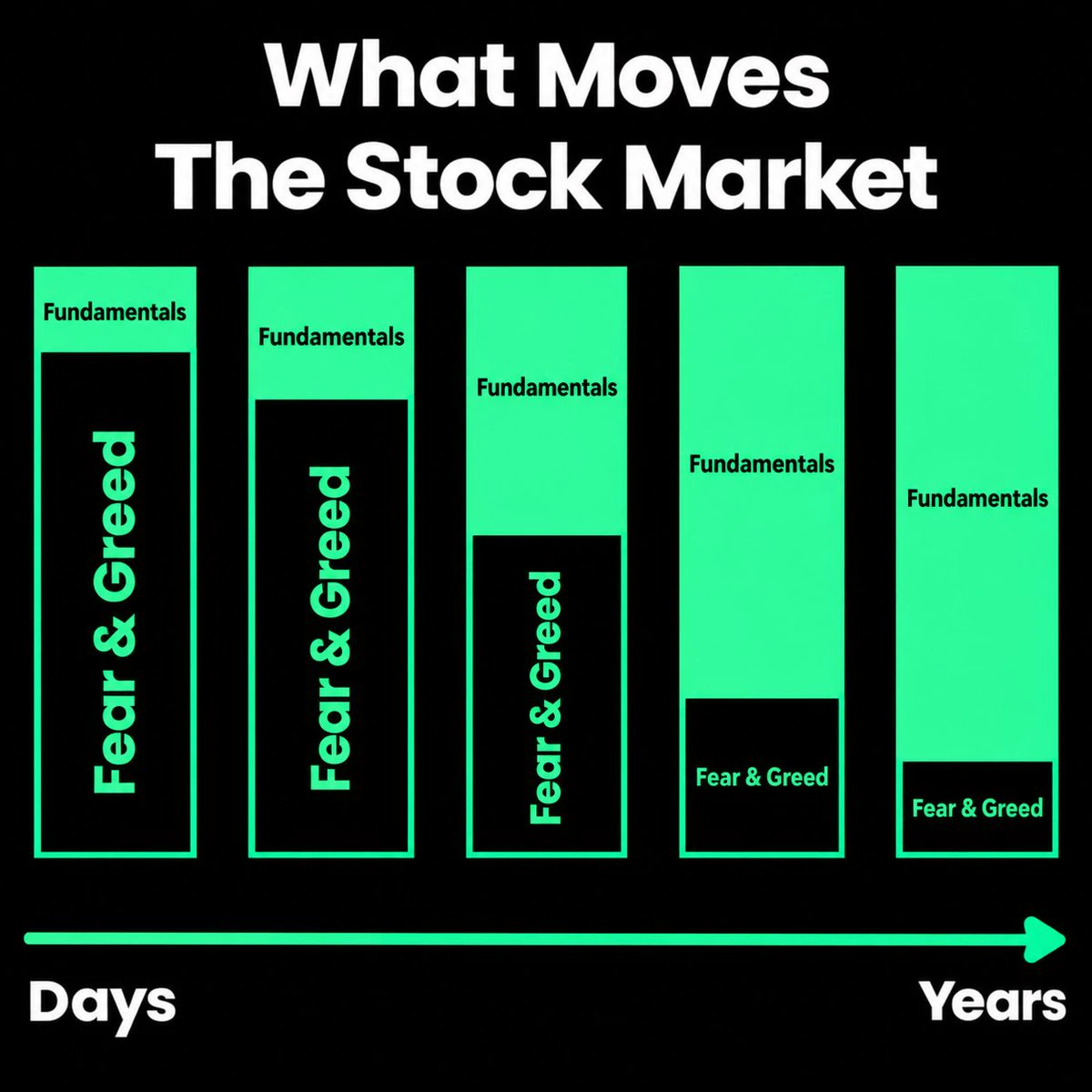
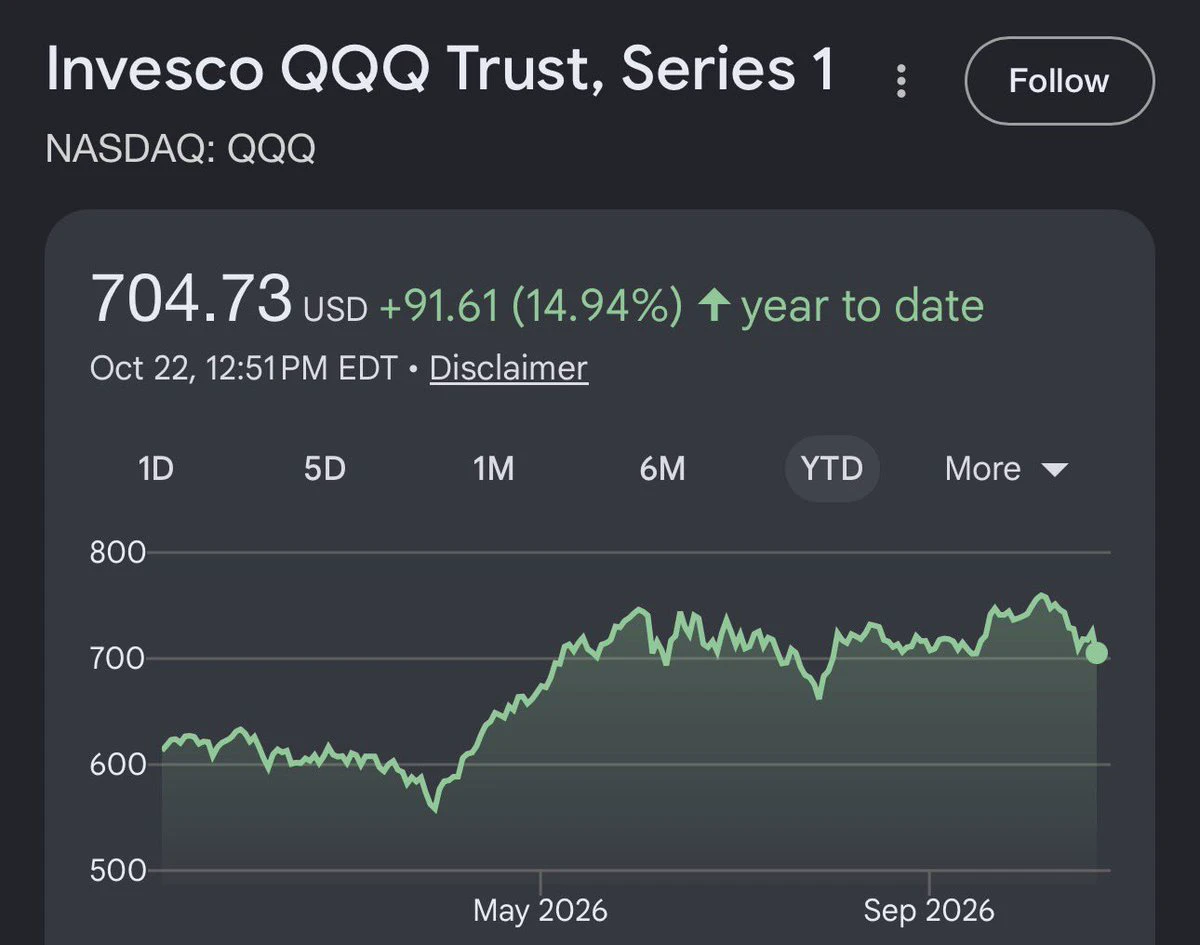
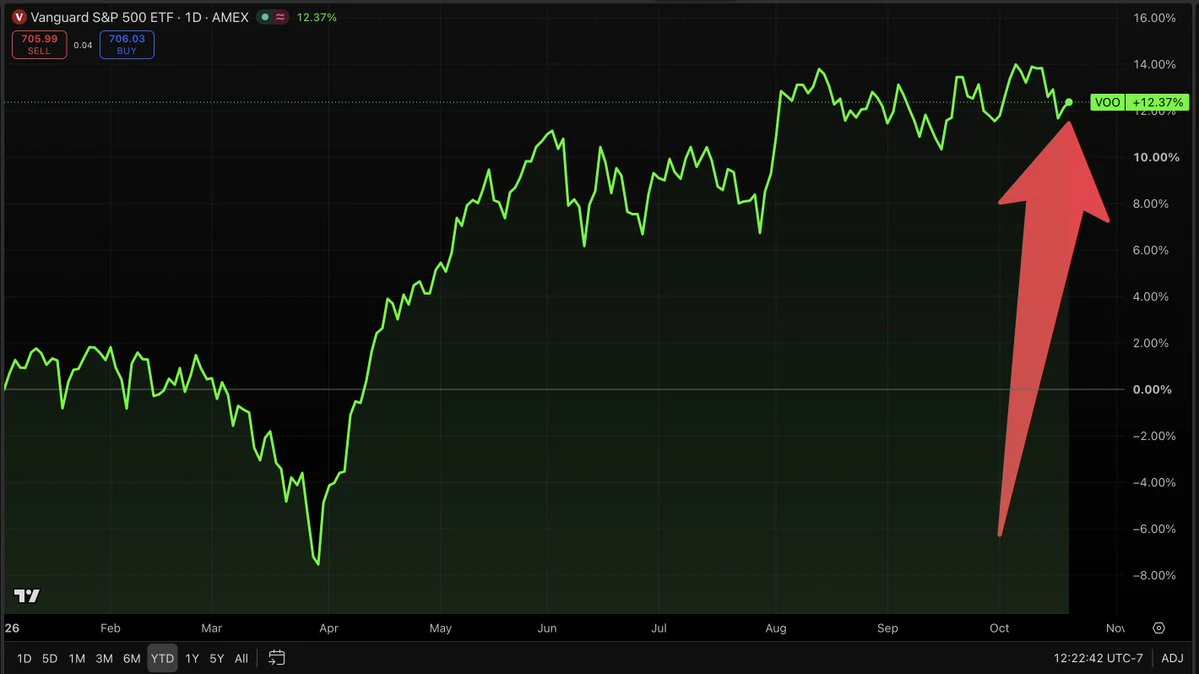
We will ALWAYS have something "bad happening" and something to "worry about"
But the "this time is different" saying has yet to be correct 1 single time...
Market will likely continue to climb a wall of worry in the long run!
  • Reward
  • Comment
  • Repost
  • Share
Let's put real numbers on this.
Say you've got $100k sitting in $VOO and $Q.
That base alone does its ~10% a year. Roughly $10k.
Now you use that SAME base as collateral to sell puts on quality companies when they're cheap.
Conservatively another ~10%. Call it $10k.
Same $100k. Now around $20k is working for you instead of $10k.
You didn't add a single new dollar.
You didn't go on margin.
You kept your ratios in check to be fine in any DEEP market crash
You just stopped letting your collateral do one job when it could easily do two.
Compound that gap for 30 years and it's the difference betwee
VOO0.31%
  • Reward
  • Comment
  • Repost
  • Share
Retail investor: I always take profits when I'm up 20-30%. Lock in the gains.
Me: On your best companies too?
Retail investor: Especially those. Don't want to get greedy.
Me: So you sell your WINNERS... the elite companies actually carrying your portfolio?
Retail investor: I mean, a gain isn't real till you sell, right?
Me: & then it triples after you're out, you pay taxes on the sale, & you're sitting in cash wondering what to buy next.
Retail investor: ...I've literally done that.
Me: I never sell my winners just to sell them... I often hold them for years & sell portfolio secured puts to pu
  • Reward
  • Comment
  • Repost
  • Share
Retail investor: I just buy and hold index funds. Slow and steady.
Me: Good. Seriously. That's the base. I do the exact same thing with
$VOO and $Q
Retail investor: Wait, you hold index funds too?
Me: Of course. The only difference is I don't let them just sit there. I use them as collateral and sell puts against them for another 15% ish on top.
Retail investor: So you're not replacing index investing… you're stacking on it?
Me: Exactly. You're doing step one perfectly. You just stopped before step two.
Retail investor: What if he market crashes with he portfolio secured put?
Me: Ratios are al
VOO0.31%
  • Reward
  • Comment
  • Repost
  • Share
I mean this in the nicest way possible but it does get a little noisy on my X feed when all ppl post is the share prices of stocks.
We don’t need you to tell us lol…
We are all aware.
Instead, maybe post the share price then your thesis about the company and how to capitalize on it.
Meaningless price posts are just that… meaningless. We all have apps to check.
  • Reward
  • Comment
  • Repost
  • Share
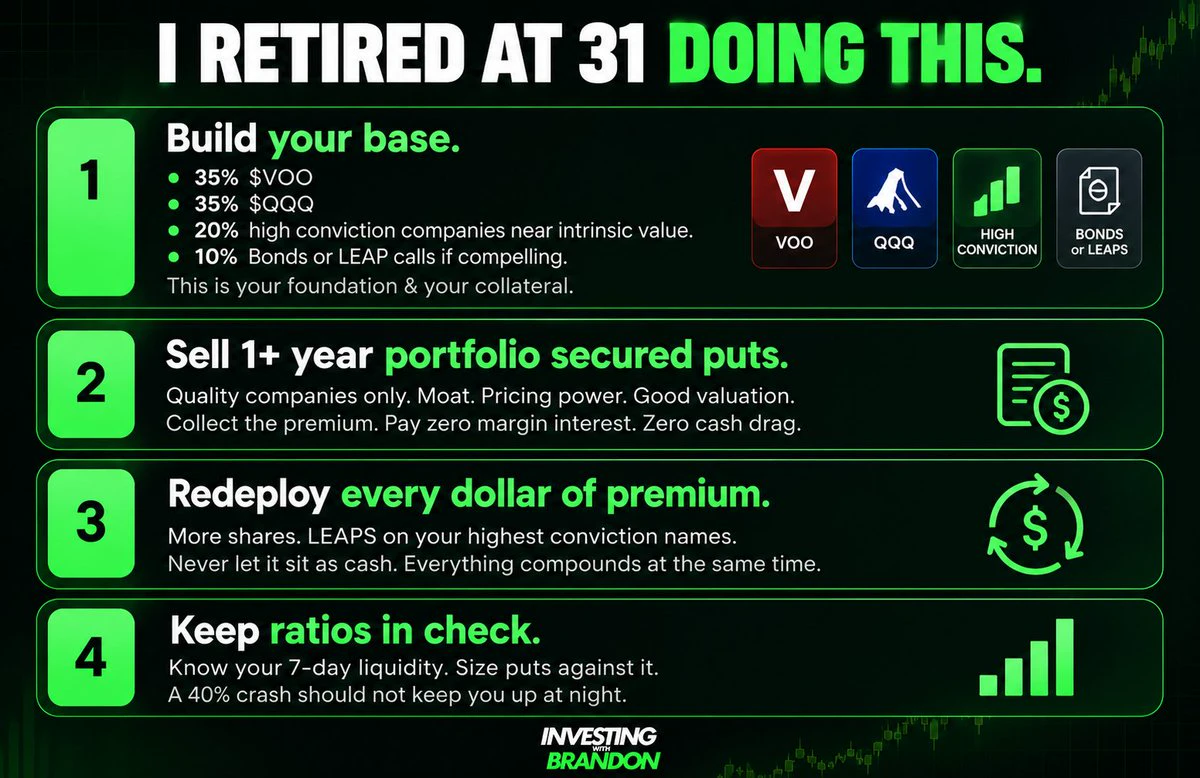
Retired at 31 selling options. No inheritance. No lucky coin flip. No rich parents.
I don't day trade. I don't read charts. I couldn't tell you what the market did this morning & I don't care
I buy great companies for less than they're worth & use long duration options to magnify the most bullish setups
Then I sell portfolio secured puts & take the cashflow to buy more shares & calls
10 minutes a day
It's not complicated
It's just the opposite of everything they taught you
Fibonacci that
post-image
  • Reward
  • Comment
  • Repost
  • Share
I'm a private pilot.
In flight training they drill the "5 hazardous attitudes" into you... the mindsets that get pilots killed.
Three of them are EXACTLY why "traders" blow up:
ANTI-AUTHORITY: "Nobody can tell me anything." You stop learning, you start losing. Every great investor is a permanent student.
IMPULSIVITY: See a hot ticker, buy it instantly. No research, no plan. In a plane that kills you fast. In options... same thing.
MACHO: Win one trade & suddenly you're a genius. Double the size next day. Get smoked. Repeat until zero.
Pilots learn to catch these BEFORE they touch the controls.
  • Reward
  • Comment
  • Repost
  • Share
Let's put real numbers on this.
Say you've got $100k sitting in $VOO and $Q.
That base alone does its ~10% a year. Roughly $10k.
Now you use that SAME base as collateral to sell puts on quality companies when they're cheap.
Conservatively another ~10%. Call it $10k.
Same $100k. Now around $20k is working for you instead of $10k.
You didn't add a single new dollar.
You didn't go on margin.
You kept your ratios in check to be fine in any DEEP market crash
You just stopped letting your collateral do one job when it could easily do two.
Compound that gap for 30 years and it's the difference betwee
VOO0.31%
  • Reward
  • Comment
  • Repost
  • Share
I remember starting this account with NOTHING about 6 years ago...
No day trading.
No Fibonacci's
No VWAPs
No crazy margin.
No luck.
No BS.
Just a simple strategy of buying great companies at good prices & using options to magnify ULTRA high confidence plays.
It works guys...
post-image
  • Reward
  • Comment
  • Repost
  • Share
If you get value from my posts, you'll love my 10 Day Stock & Options Transformation Training.
No day trading.
No swing trading.
No BS.
Just Stocks & Options the right way + access to my mastermind Discord community
Get set up here:
  • Reward
  • Comment
  • Repost
  • Share
Walk into a casino.
Win $1,000... feels good. Lose $1,000... feels TERRIBLE.
Same amount... But the pain of losing hits way harder than the joy of winning. That's human nature.
Now here's what that quirk does to options pricing:
People are terrified of the DOWNSIDE.
So they'll overpay for puts...
Especially when the market is volatile.
Selling them those puts portfolio secured with 1+ year durations is how you capitalize on this human flaw.
  • Reward
  • Comment
  • Repost
  • Share
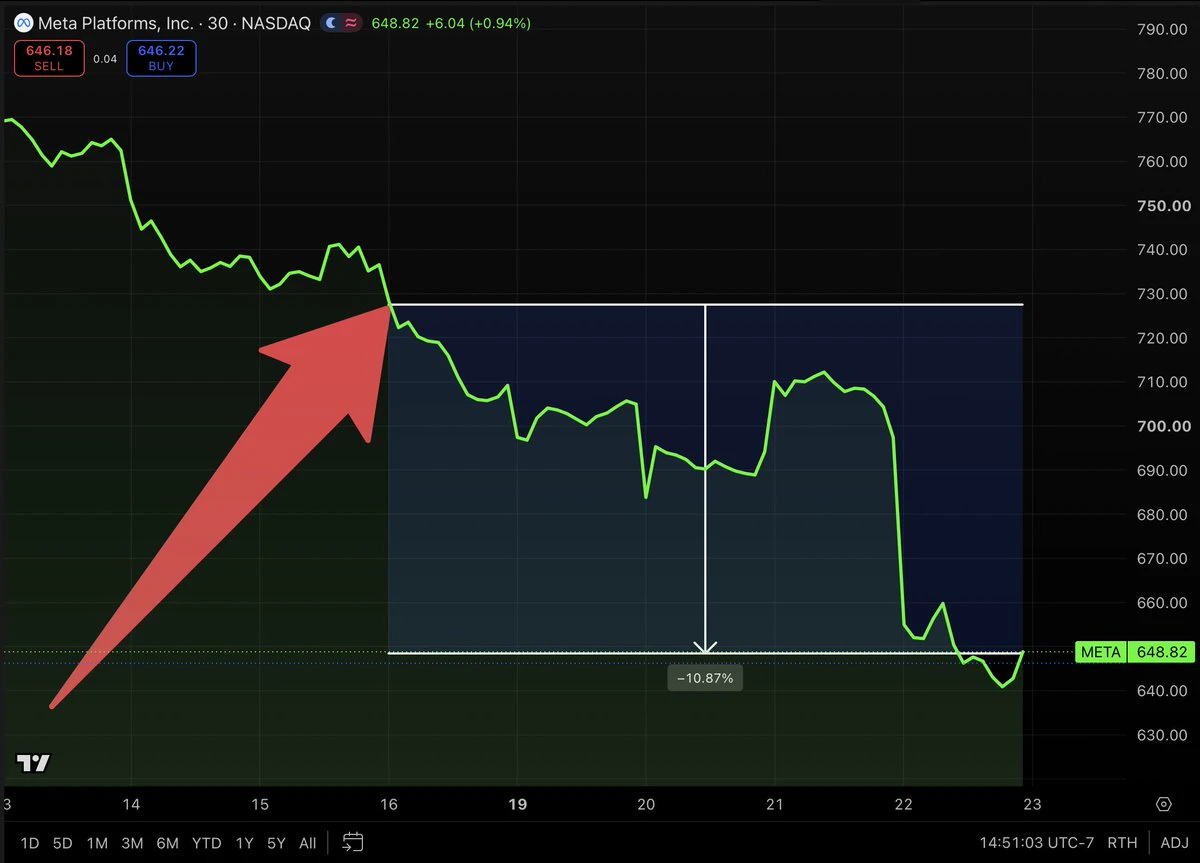
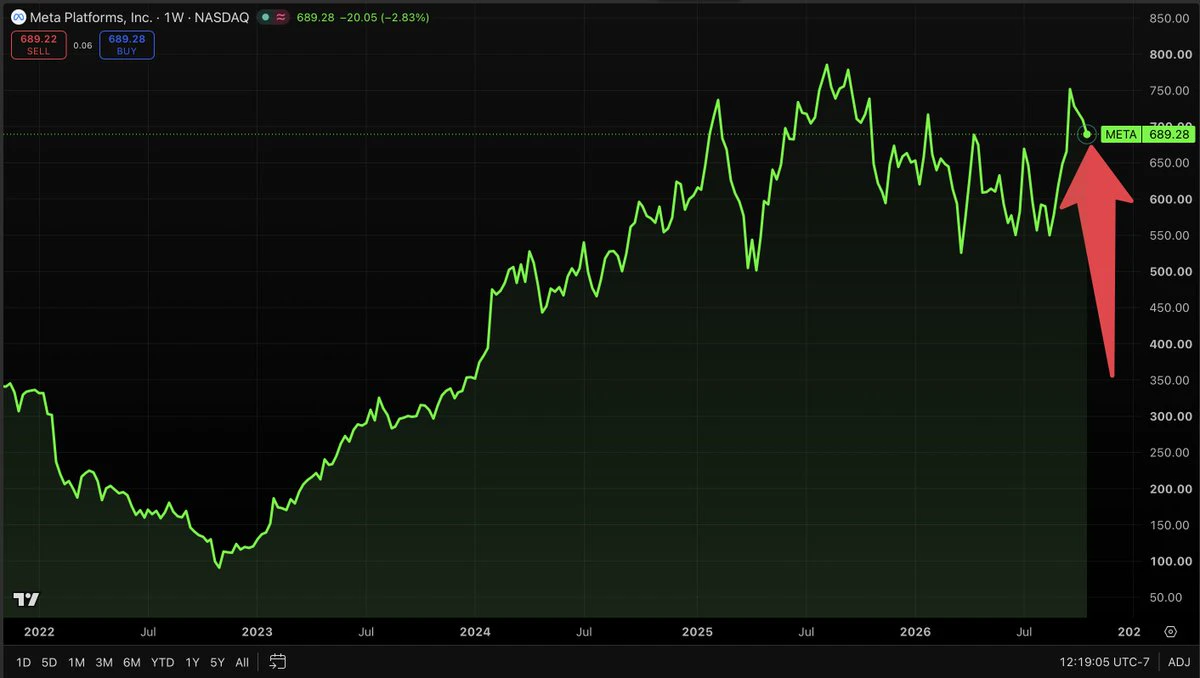
I sold puts on Meta.
Collected $46,000 instantly.
My cash balance? $232.
Cash secured put on the same trade would have required $280,000 sitting in cash doing nothing.
Instead I used my base portfolio as collateral.
Took that $46k & bought Meta LEAP calls.
Took the rest & bought VOO, Q & META shares.
Zero margin interest.
Zero cash drag.
Full upside intact.
Ratios in check to be fine in any downturn.
It is exactly like a HELOC on your house.
Except you pay nothing in interest.
That gap = $280k working vs $280k sleeping
This is a MAJOR difference.
META3.05%
post-image
  • Reward
  • Comment
  • Repost
  • Share
Retail investor: I tried options once. Lost 80% on a call in two weeks. Never again.
Me: What was the trade?
Retail investor: A 3 week call on an earnings play. Seemed like easy money.
Me: So you took the hardest trade in the entire options market... short duration, binary event, inflated premium... & concluded ALL options are bad?
Retail investor: ...I mean, that's what everyone around me was buying.
Me: exactly... you didn't fail at options. You succeeded at proving the gambling version doesn't work. Which I could've told you.
Retail investor: So there's a version that isn't that?
Me: The op
  • Reward
  • Comment
  • Repost
  • Share
If you get value from my posts, you'll love my 10 Day Stock & Options Transformation Training.
No day trading.
No swing trading.
No BS.
Just Stocks & Options the right way + access to my mastermind Discord community
Get set up here:
  • Reward
  • Comment
  • Repost
  • Share
Before I sell ANY put...5 boxes. All 5. No exceptions.
1. Elite company... moat, pricing power, competitive advantage
2. Valuation must be good
3. Strike ~10% below that. Discount on top of discount
4. A year+ duration... so EPS has time to grow
5. Ratios in check... my base could cover all assignments even after a 50% crash
This checklist is boring. It's repetitive. It's also why I've never been wiped out in 12+ years, while the "exciting" traders restart from ZERO every 18 months
  • Reward
  • Comment
  • Repost
  • Share
One portfolio secured put does FOUR jobs at once
Job 1: Pays me premium instantly
Job 2: Sets my buy order on a great company at a discount... if it drops there, I own it at the price I already wanted
Job 3: Lets my base portfolio keep compounding... because my $VOO & $Q secure it, not dead cash like CSP.
Job 4: That premium buys MORE shares... which secure MORE puts. The snowball feeds itself
One trade. Four jobs. Ten minutes.
Meanwhile a weekly call buyer's contract has one job: pray.
VOO0.57%
  • Reward
  • Comment
  • Repost
  • Share
Retail investor: I always buy the cheapest options. Way out of the money. More contracts for my money.
Me: You know WHY those are so cheap, right?
Retail investor: ...because they're a better deal?
Me: no... Because they're are almost certainly expire worthless. Cheap contracts are cheap for a reason.
Retail investor: So I'm just buying lottery tickets in bulk?
Me: Essentially... 20 contracts of garbage... is just more garbage.
Retail investor: So what's the smarter structure?
Me: When I'm ultra bullish about a great company at a good price, I buy call contracts closer to the money & longer...
BLSH1.04%
  • Reward
  • Comment
  • Repost
  • Share
Retail investor: I read that most options expire worthless. That's why I'll never touch them.
Me: You just made the argument FOR selling them.
Retail investor: ...what?
Me: If most contracts expire worthless, who's losing? The BUYERS. & who's keeping all that premium? The sellers.
Retail investor: So the stat everyone uses to trash options...
Me: That's the key thing... it's the single best reason to be a SELLER. The graveyard of worthless contracts.
Retail investor: So the scary part is just using them in the wrong way...
Me: yep... I sell portfolio secured puts 1+ year out on great companies
  • Reward
  • Comment
  • Repost
  • Share
Walk up to Jensen Huang & say: "I bought a 1-month call on $NVDA. Can you make the whole company worth more by then?"
He'd laugh at you. "One MONTH? Impossible."
Now ask him: "Can you do it in a year or two?"
"Absolutely."
Here's the part everyone misses... that's EXACTLY how CEOs get paid.
The board doesn't hand Jensen 30-day options & say "pump it by Friday." They give him 1, 2, 3 YEAR stock options... because that's how long it takes to actually grow a company.
So the most powerful, most informed people in the market are all positioned LONG duration...
& retail is out here buying weeklies.
NVDA0.33%
post-image
  • Reward
  • Comment
  • Repost
  • Share
  • Pinned