
Square
Following
Hot
News
Profile
Share your thoughts
placeholder
Article
$SNDK Guys, how will SanDisk move tonight? Wei will highlight the key points for everyone!
After the U.S. market opened last Friday, SanDisk remained under pressure all the way, mainly for three reasons: the AI storage sector weakened across the board, the market began to worry about the sustainability of storage price increases, and the stock had risen too much previously, leading to concentrated profit-taking and a clear increase in short-term selling pressure.
Tonight, focus on two key levels!
⚠️ Scenario 1: Continued decline!
If it continues to weaken on heavy volume after the U.S. market
post-image
SNDK-5.88%
  • 1
$FIL BTC
This chart looks so good. Breaking out of the weekly HTF downtrend. When June's swing high will be reclaimed, this sets up for a bigger move towards $3,- which aligns with the orange box on the BTC chart.
filecoin:native
post-image
BTC-0.58%
FIL+10.54%
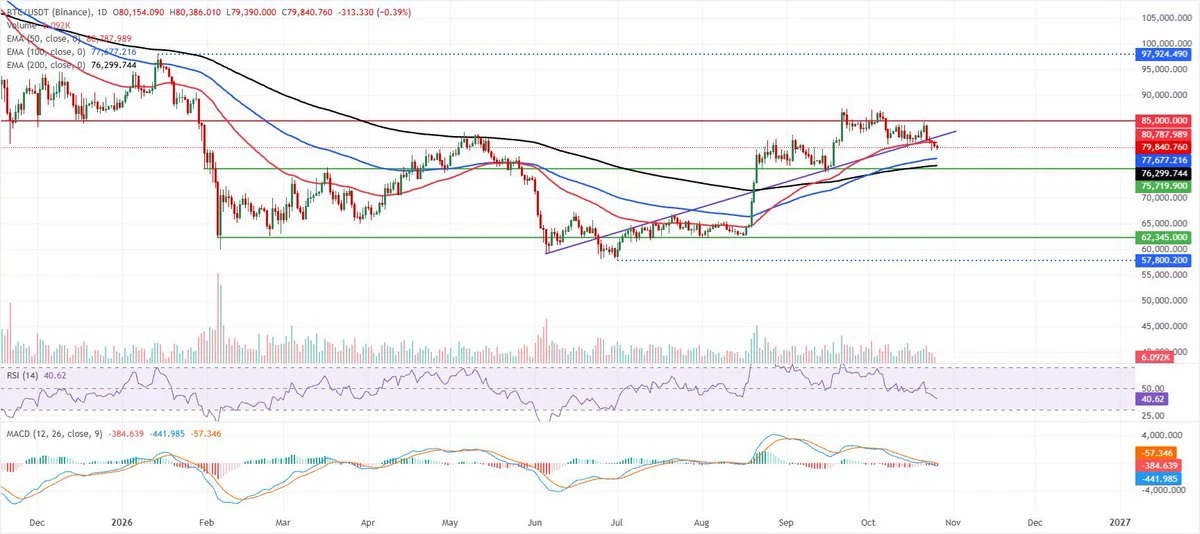
#Bitcoin
Bearish engulfing candle showing early on in the day.
Still ~10 hours until daily close. A wick back into the range would be a positive sign.
A close down here would be a little concerning. Buyers have some time to change the look if they want to.
post-image
BTC-0.58%
  • 1
#Ledger攻击均指向CryptoBilis Authorized distributors can fail too? The $86 million theft that exposed a massive blind spot in hardware wallet security
Authorized distributors can fail too? The $86 million theft that exposed a massive blind spot in hardware wallet security Many crypto asset holders firmly believe in a basic rule: as long as they buy a big-brand hardware wallet through an officially authorized distributor, the device is safe and their assets can be secure. But the recent theft of large amounts of assets from Southeast Asian users of Ledger hardware wallets has brutally shattered this
post-image
ThisIsTranslateContent:
#Ledger攻击均指向CryptoBilis Can Authorized Distributors Also Fail? The $86 Million Theft Exposes a Major Blind Spot in Hardware Wallet Security
Can Authorized Distributors Also Fail? The $86 Million Theft Exposes a Major Blind Spot in Hardware Wallet Security Many crypto asset holders firmly believe in a common rule: as long as they buy a hardware wallet from a major brand through an officially authorized distributor, the device is safe and their assets are secure. But the recent large-scale theft of assets from Southeast Asian users of Ledger hardware wallets has shattered this assumption. This security incident, with estimated losses exceeding $86 million, exposes a harsh reality: even hardware wallets purchased through official authorized channels cannot guarantee with 100% certainty that the devices were not tampered with during transportation and circulation.
On October 9, well-known hardware wallet manufacturer Ledger disclosed that it was investigating an asset theft incident concentrated in Southeast Asia. The Ledger devices held by the victims all came from its authorized distributor CryptoBilis in Indonesia, Malaysia, and the Philippines. Blockchain security researcher Specter initially estimated that the stolen assets could exceed $86 million and include various cryptocurrencies such as Bitcoin and Ethereum, although the amount has not yet been independently verified by a third party. According to Ledger's official purchasing guidelines, users can avoid the risk of buying counterfeit products by prioritizing the brand's direct stores or authorized distributors and running the Genuine Check verification when initializing the device for the first time.
The core logic of authenticity verification is to check whether the secure chip inside the device is an original manufacturer's chip. As commonly understood, passing this check means that the entire device was secure from the factory until it reached the user. CryptoBilis was indeed an officially authorized distributor listed by Ledger. Relying on this official endorsement, users lowered their guard, only to ultimately have their assets stolen.
The Security Blind Spot in Authorized Channels: The Chip Is Fine, but the Device May Already Have Been Tampered With
Here lies a technical limitation unknown to most investors: Genuine Check only verifies the secure chip itself and cannot detect whether additional eavesdropping hardware has been installed inside the device casing. Ledger's official documentation has long stated that global supply chains can hardly completely avoid interception and tampering attacks. Authorized status and chip authenticity verification can rule out counterfeit chips, but cannot guarantee that the device was not dismantled and modified after leaving the factory, during the distributor's warehousing and circulation processes.
On the same day that this incident gained momentum, Mark Karpelès, former CEO of the MtGox exchange, posted a disassembled Ledger Nano X on social media and discovered that a set of spy components had been secretly implanted inside the device. The heat-shrink film on the outer packaging made the device appear intact, and an ordinary person could not detect anything unusual. After the casing was opened, a microcontroller, cellular communications module, antenna, and eSIM module were found in the gap behind the OLED screen where cushioning foam had originally been placed. This hardware could read the content displayed on the screen, capture the characters when users entered their recovery phrases, and remotely transmit them through a cellular network.
Simply put: the secure chip remains intact, and the device can pass the Genuine Check, but the newly added eavesdropping hardware watches the screen and secretly captures the recovery phrase as soon as it is displayed. The private key remains stored in the original secure chip, but once the recovery phrase is stolen, hackers can still take control of the wallet's assets.
Security expert 23pds subsequently conducted a technical analysis, stating that if the additionally installed circuit board could read the screen data stream, it could theoretically record the recovery phrase and transmit it remotely. However, the expert also emphasized that this attack path remains only a theoretical inference at present. The sample requires further in-depth analysis pending Ledger's full official investigation. One point must also be clarified: there is currently no direct evidence proving that this modified prototype is connected to the CryptoBilis theft incident. These are two independent leads, but taken together, they bring the supply-chain risks of hardware wallets to the surface.
A Change in the Distributor's Ownership Concealed a Supply-Chain Time Bomb
What is even more thought-provoking about the incident is the change in control of the distributor. Records show that the distributor involved, CryptoBilis, completed an acquisition in March 2026, after which the original founding team withdrew from the company's operations and management. Co-founder Arravind Prabu said publicly that, due to a confidentiality agreement, the acquisition could not be disclosed publicly until October; since August, all company equity has been held by the new actual controlling party. The ownership change and major management turnover closely coincided with the asset theft on the timeline. The ownership change itself cannot directly prove that the new shareholders participated in tampering with devices or stealing assets. But it reveals a major vulnerability in the supply chain: after a brand authorizes a distributor, the distributor may be acquired and its management replaced, while the brand may not be able to immediately reverify or revoke its authorization. If someone inside the distributor has criminal intent, they can unseal brand-new devices in the warehouse, install eavesdropping components, and reseal the outer packaging. Ordinary users have no way to identify this with the naked eye.
After the incident broke out, Ledger urgently required CryptoBilis to suspend all sales and shipments and issued handling advice to users: devices that have not yet been initialized should not be configured; users who have completed initialization and deposited assets should promptly move those assets to a brand-new Ledger device and use a completely new recovery phrase. CryptoBilis has also voluntarily suspended all hardware wallet sales and closed its physical stores. Ledger stated that all reported loss cases came through this distributor channel; users who purchased devices directly from Ledger's official online store have not yet reported similar thefts, and the brand's own backend systems were not breached.
A Fundamental Rethinking of Hardware Wallets: Who Ultimately Bears the Security Responsibility?
For a long time, many crypto investors have treated hardware wallets as the ultimate safe for asset security. The default assumption has been: major brand + authorized distributor = absolute safety. This incident has completely shattered that illusion.
The security model of hardware wallets rests on two premises: first, that the secure chip has no vulnerabilities; second, that the device has not been physically tampered with throughout its journey from the factory to the user. Manufacturers can control secure-chip technology, but supply-chain circulation and third-party distributor warehousing are weak points that brands find difficult to fully control. Genuine verification, as a protective measure, can only answer “is the chip original?” It cannot answer “has additional eavesdropping hardware been installed inside the casing?” An attacker does not need to break the secure chip; they only need to watch the screen and read the recovery phrase to bypass the chip's protection. This type of physical supply-chain attack is extremely difficult to detect, and ordinary users lack the ability to inspect the device internally.
Of course, we cannot entirely dismiss the value of hardware wallets. Compared with hot wallets and exchange custody, hardware wallets remain a relatively reliable option for storing large amounts of crypto assets.
But this incident has taught everyone: an authorized channel is not a safe, and authenticity verification does not mean complete security.
Practical Protection Strategies for Ordinary Users
1. Prioritize the brand's official direct channels. Purchase directly from the hardware wallet brand's official website or official store, avoid third-party authorized distributors where possible, reduce the number of intermediaries, and lower the probability of tampering during transit.
2. Carefully inspect the packaging immediately upon delivery. Check whether the plastic wrapping or seals show signs of resealing. If the packaging is damaged or shows signs of being heat-sealed again, refuse delivery directly and do not initialize the device.
3. Do not display or enter your recovery phrase in a network-connected environment. Even if the device has not been modified, keep the environment clean when entering the recovery phrase, with no cameras nearby and the screen facing away from any electronic devices.
4. Use multisignature and asset diversification strategies for large holdings, and do not place all assets in a single hardware wallet.
5. If you suspect that a device is abnormal, do not transfer any assets into the wallet. Replace the device immediately and replace the entire set of recovery phrases.
Crypto asset security is a complete long chain: chip firmware, manufacturing facilities, warehousing and logistics, distributor management, and user habits—if any link fails, assets could be wiped out. The biggest warning from this $86 million theft is that security verification can only protect against known technical vulnerabilities, but has difficulty resisting deliberate physical tampering within the supply chain. A hardware wallet is not an absolutely safe “get-out-of-jail-free card.” For people holding crypto assets, while trusting brands and authorized channels, they must always maintain vigilance regarding supply-chain risks.
repost-content-media
ETH+0.98%
  • 2
Why could CRCL target a 100 billion market cap after its correction ends?
As shown in Figure 1, we said at the end of April that the buying opportunity for $CRCL ‌would come in the third or fourth quarter. After CRCL broke above 136.65 in May, we alerted everyone that this was not a new uptrend but a bull trap. Since 145 was not breached, the broader correction trend would not change. CRCL subsequently fell 58%, with the low of 57.84 occurring on August 3 in the third quarter.
The decline in CRCL from 289.99 may have ended at 57.84. This was a monthly-level decline, and as long as it does not
CRCL-1.22%
Join the weekly posting event to post, earn points and win big rewards! https://www.gate.com/campaigns/6244?ref=VLFCVA8MAQ&ref_type=132
post-image
  • 3
$AERO Fake Breakout Strategy: Another Real-Chart Example
A trading strategy should not depend on one coin, one timeframe, or one perfect-looking chart. What matters is understanding the price behaviour behind the setup.
In the previous article, we introduced the Fake Breakout strategy using JUPUSDT. If you missed it, you can read it here:
Previous Article: Fake Breakout — When a Breakout Becomes a Trap
This time, let’s look at another example: AEROUSDT on the 1-hour chart.
The goal is not to predict every move or present a perfect trade. We want to recognise the sequence that can turn an appar
post-image
AERO-7.02%
reject fiat
buy hk gold
post-image
I think it's safe to assume that $PLUME has bottomed
Official bottom is now marked around $0.009, printed in February and retested in June
@plumenetwork to go on a crazy up-only run?
post-image
PLUME+7.92%
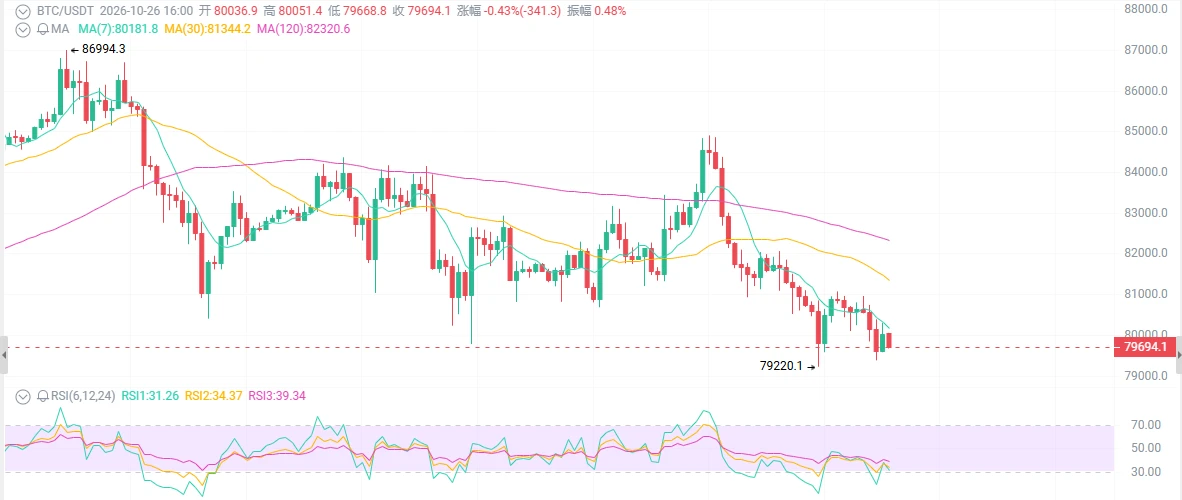
Btc update
live-cover
LIVE2,355
Seeing the Fear and Greed Index at 69 and rushing to chase altcoins higher is the most common trading mistake right now. A greedy index does not mean every coin is rising; $CFX ’s -7.19% today is a counterexample—the broader market sentiment is warm, but funds are clearly rotating within sectors, and CFX is on the receiving end of outflows.
Technically, $CFX ’s current price of 0.06248 has fallen below MA5 (0.063024) and MA20 (0.065348), with the moving averages in a bearish alignment; RSI at 41.2 is weak but not oversold, while the MACD histogram at -0.0005933 still indicates bearish momentum
post-image
CFX-9.72%
OGN-4.36%
CYBER+8.82%
Has the daily rebound ended? We’re live—come in and chat
post-image
🚨 $NBIS might want to test the orange box here.
post-image
NBIS-4.18%
Lmfao. Notice which country all the low quality cities are from?
post-image
$MAGIC It rose 13% in a day, but look at that upper wick—it touched 0.1467 and then dumped. Who’s distributing?
Don’t rush to call it a breakout. Let me break down the live market data: current price 0.1360, 24h high 0.1467, low 0.1161, with a range exceeding 26%. Trading volume is 374.1M, a clear increase for MAGIC. What does that mean? Capital has come in, but more importantly—someone has been heavily distributing above 0.14.
There are no official catalysts in today’s news, so this pump looks more like a catch-up move driven by sector rotation in GameFi, or perhaps a whale/market maker rapid
MAGIC+0.37%
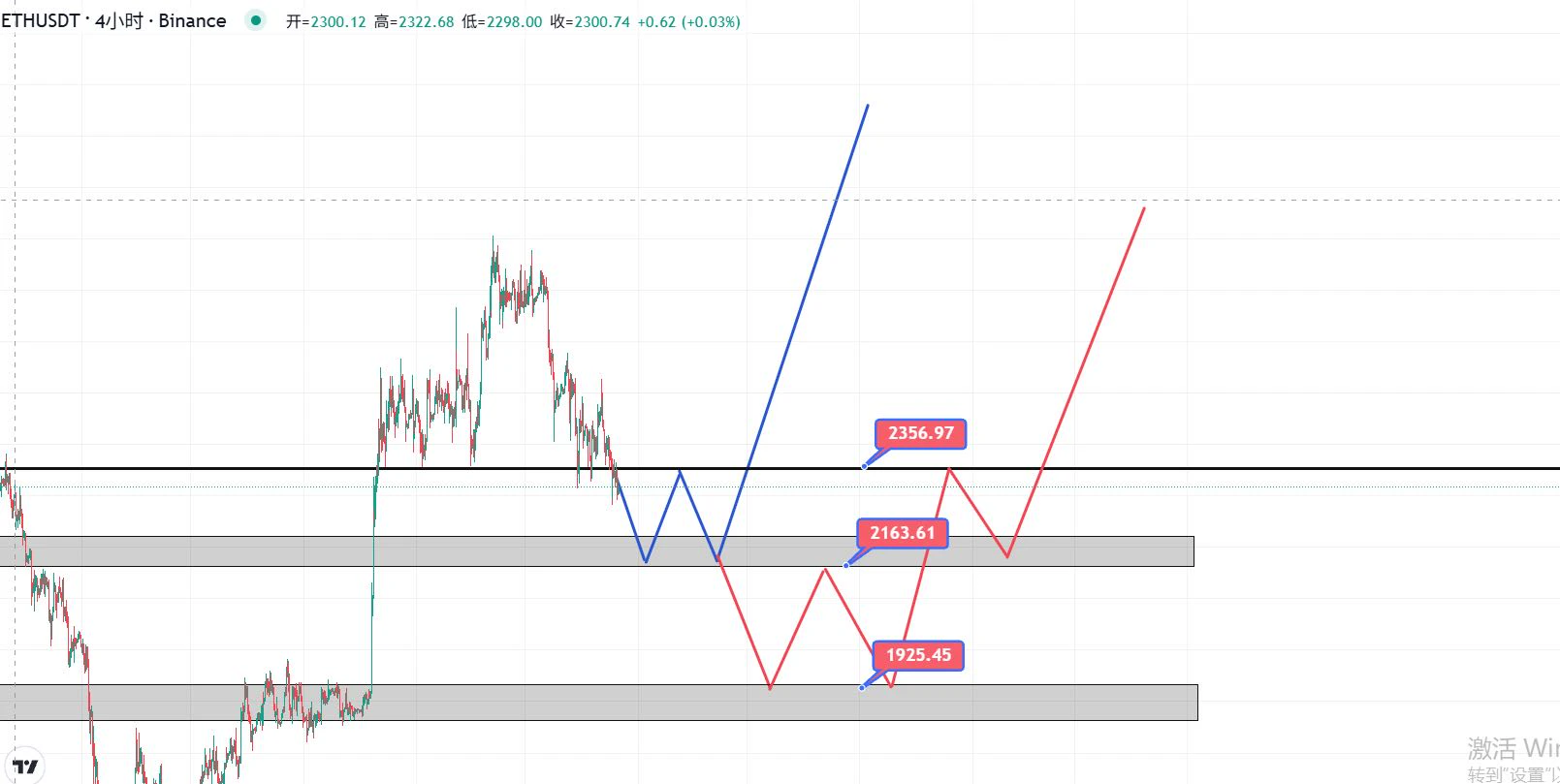
$ETH First, simply take 40 points
post-image
ETH+0.97%
  • 1
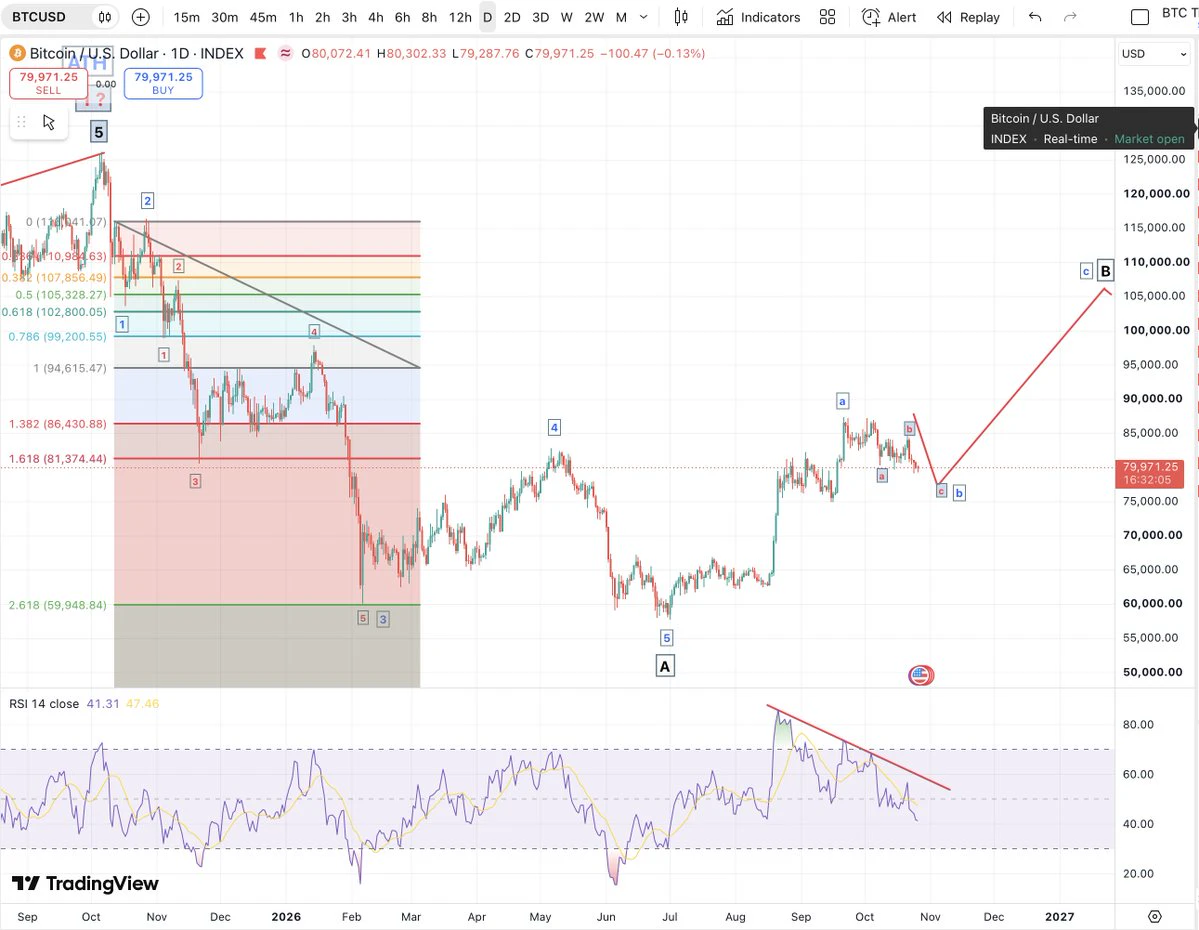
All we need is just a little patience...
Last week once again proved the importance of this trendline, and as long as it holds that means that crypto is going lower.
We likely get $ETH sub 2.3k and $BTC sub 80k.
post-image
ETH+0.98%
BTC-0.58%
Michael Saylor Hints at Another BTC Purchase
live-cover
LIVE2,666
The latest sell-off in Korean stocks has indeed been brutal, with the KOSPI plunging 3.65% in a single day, while Samsung Electronics and SK hynix tumbled 4.39% and 4.52%, respectively, falling back into the 6300-point range for the first time in two months. But I want to discuss this from a valuation perspective.
Goldman's latest report points out that the KOSPI's 12-month forward P/E ratio has fallen to 5.78x, lower than the bottom reached during the 2008 global financial crisis and the lowest valuation since 2004. Even assuming earnings per share suffered a 41% cut—the worst level during th
post-image
  • 4
Sun Ge said he was “willing to give $50 million for free to get offers from OpenAI and Anthropic”
@sunyuchentron
Everyone’s views and concerns are reasonable. Sun Ge, would you be willing to respond to these concerns?
1. “On the second day after joining, he switched the company’s computing power to his own relay station.”
2. “On the second day after joining, OpenAI went offline, and the servers might disappear.”
3. “After successfully getting the offer, will he receive a lawsuit demanding repayment within 24 hours?”
4. “Can the gentleman’s personal credit even unlock a shared bicycle?”
……
Sun
Load More

Join 40 M users in our growing community

⚡️ Join 40 M users in the crypto craze discussion

💬 Engage with your favorite top creators

👍 See what interests you

Trending Topics

GateWCTCS9GlobalTradingCompetition

35.22k Views5.41k Discussing

Gate WCTC S9 Global Trading Competition is officially live, crossing asset boundaries across crypto, stocks, and CFDs with an 8M USDT total prize pool. The Lucky Launchpad guarantees a win every time, new users get a 20 USDT futures voucher upon registration, and the Event Contract PK tournament features a prize pool of up to 400,000 USDT.[👉 Read announcement](https://www.gate.com/announcements/article/102133)

GateXRedBullWinsSingaporeGP

173.48k Views6.46k Discussing

WillYouBuyDipInKoreanStocks

61.57k Views1.78k Discussing

View More