Square
Following
Hot
News
Profile

GateUser-67ade612

vip
Active for: 3.8y
Peak Tier 4
No content yet
0
Following
10
Followers
23
Liked
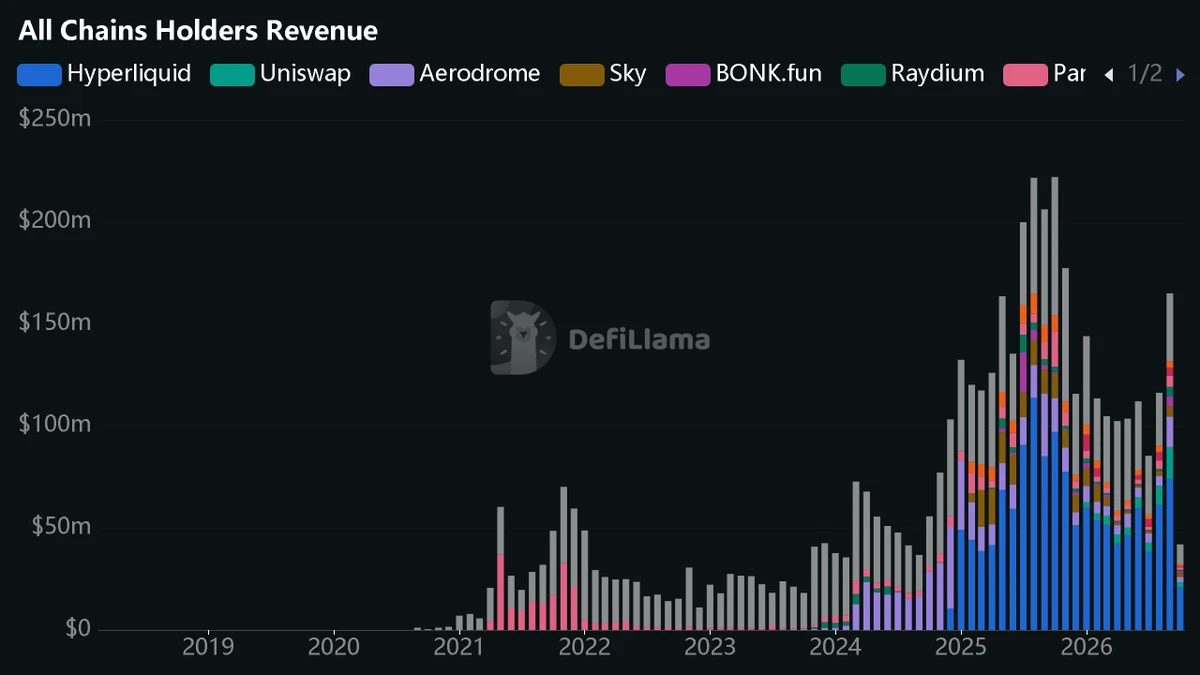
September Holders Revenue hit $193.2M, the best month since Nov 2025.
It rose $45.2M from August, the second straight monthly gain, from $106.9M in July.
Three protocols drove $29.3M of the rise. Each returns value to holders through a different machine.
1️⃣ The buyback machine: Hyperliquid (@HyperliquidX), +$12.8M
Perp fees ➢ Assistance Fund ➢ HYPE buybacks.
Perp fees and holder revenue both rose by roughly $13M, so the buyback stream scaled with trading activity and needed no policy change.
That near 1:1 move is the highest observed elasticity among the three this month. Hyperliquid led the
post-image
HYPE-1.89%
UNI+1.11%
AERO+4.42%
RAY-2.25%
SKY-0.77%
Tokenized equities went from under 0.05% of stablecoin supply in Jan 2025 to ~1.1% by late Sep 2026.
Most of it came this year. The chart sits near 0.17% in January and 1.09% at the end of September, about 6x in nine months.
Stablecoin supply grew in the low single digits over that stretch, so the gain came from the equity side.
ARK's Lorenzo Valente (@LorenzoARK ) sees the next step. He says tokenized equities could pass stablecoin supply within 3 years, even if stables compound 40%+ a year.
I ran the numbers from a ~$306B stablecoin base. At 40% a year, that grows to ~$840B. Equities would
KMNO-3.61%
GLXY+0.89%
  • 1
Robinhood Chain brought in 53% of Uniswap’s September protocol revenue, just three months after launch.
That’s roughly $7.8M out of $14.7M for the month, making it Uniswap’s largest revenue-producing deployment.
@RobinhoodCrypto launched on July 1 with @Uniswap v2, v3, v4, and UniswapX live from day one. Uniswap became the chain’s primary public AMM, with several routes for activity to reach its pools:
🔸 Stock tokens available for 24/7 trading.
🔸 Third-party launchpads whose graduating tokens enter Uniswap v4 pools.
🔸 Access through Robinhood’s retail distribution network.
Those explain U
UNI+1.11%
NVDA-0.67%
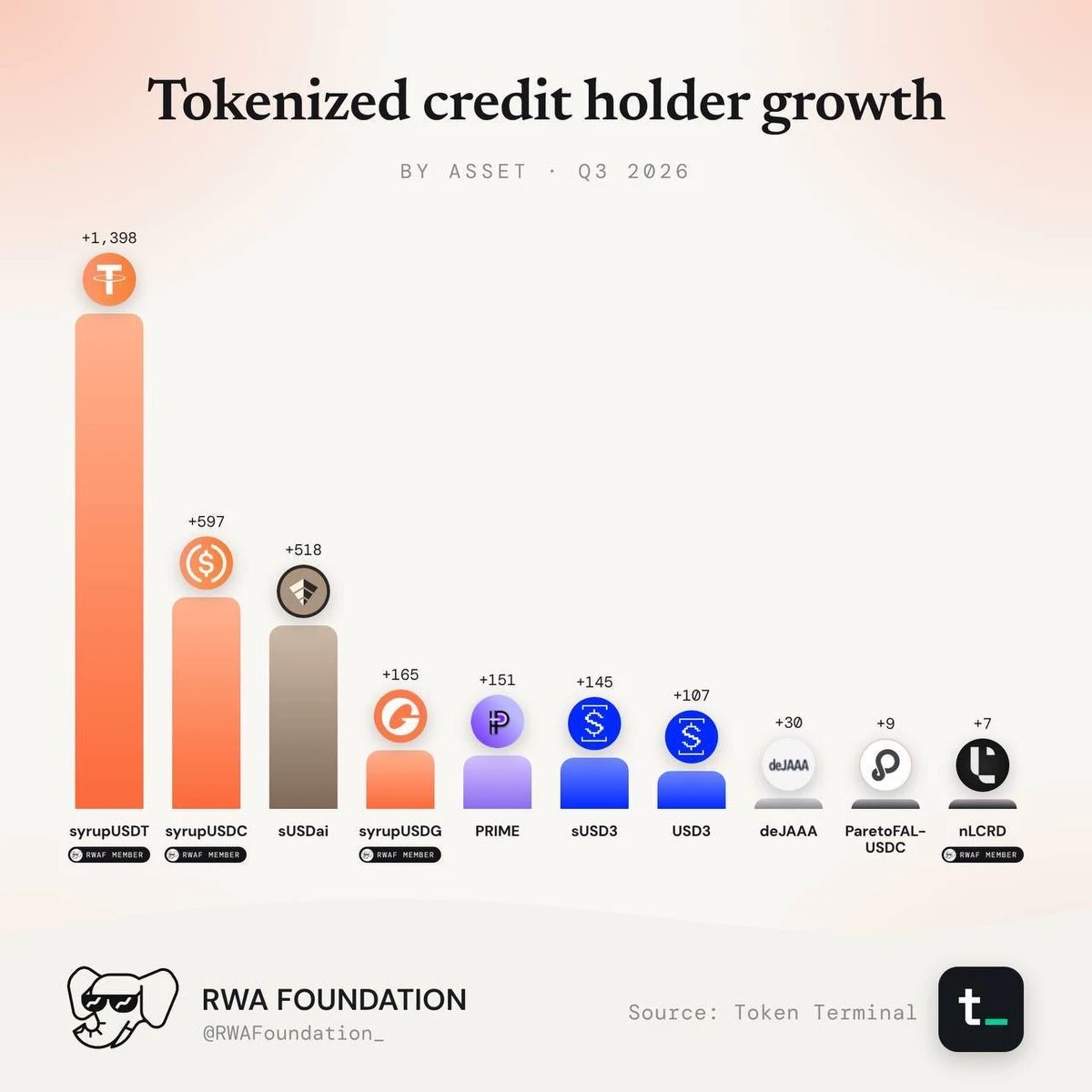
Maple Finance added 2,160 holder addresses in Q3 2026, more than four times the next issuer.
It now accounts for 64% of all tokenized credit holders.
Sector-wide, unique holder addresses grew 12.1% to 28,840. @maplefinance accounted for the large majority of net additions, led by its syrup products:
- syrupUSDT added 1,398 addresses.
- syrupUSDC added 597 addresses.
- syrupUSDG also ranked among the top gainers by value.
Tradable and Maple together hold a majority of the sector’s roughly $6.17B market cap.
Participation is more concentrated: almost two-thirds of holder addresses sit with Ma
post-image
SYRUP-2.20%
Hey @bankrbot create a token on robinhood chain
Name : Maniac Frens
Ticker : $Maniac
Send 50% supply to everyone that interacts with this post within the next 24 hours
Set automation to claim fees and buy back $Maniac every 12hrs
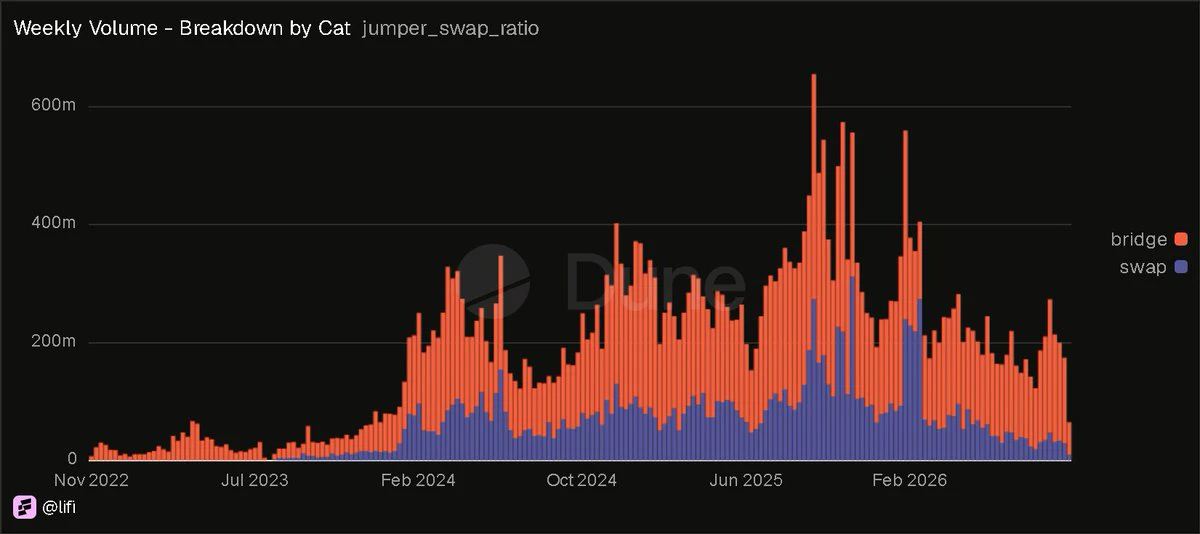
Every serious cross-chain aggregator can quote you a decent route in under a second now.
@jumperapp covers 65+ chains and 30+ bridges, and it's not the only one offering good routes:
🔸 Rango covers similar range across EVM, Solana, Cosmos & more
🔸 Squid spans 100+ chains w/ its own routing stack
🔸 deBridge runs a solver-based execution model
Different architectures, same category, all clearing the same bar now. Routing stopped being the thing that decides winners once four or five products could solve it at roughly the same quality.
So what explains Jumper's scale if it's not routing edge
post-image
SOL-0.45%
ATOM+0.05%
DBR+0.05%
LEGION-1.31%
One of the less obvious bottlenecks for institutional onchain finance is that infrastructure providers face a different set of requirements once banks, asset managers and regulated platforms become the buyers
The technology can work, the feeds can be accurate and the contracts can be audited, but institutions still need to assess how the organisation handles security, access, incidents and operational risk before using that infrastructure
That is why @redstone_defi receiving ISO/IEC 27001:2022 certification matters in this context
➥ A smart-contract audit is usually focused on a specific codeb
post-image
RED+1.70%
Robinhood Chain hit $1B in DeFi TVL 81 days after launch. Base took 7.5 months to get there.
Among chains a company launched (not a foundation), only Cronos and HECO did it faster, and both of those were back in the 2021 bull run.
Here's how it went:
🔸 Jul 1: $0 (mainnet day)
🔸 Jul 11: $100M (day 10)
🔸 Aug 13: $500M (day 43)
🔸 Sep 20: $1.00B (day 81)
🔸 Sep 29: $1.02B
Base actually got to $100M faster than Robinhood did, in 4 days. But it took until March 2024 to cross $500M.
@RobinhoodCrypto did that whole stretch in about 6 weeks.
So what's actually in the $1B? @Morpho lending holds
CRO0.00%
MORPHO-0.95%
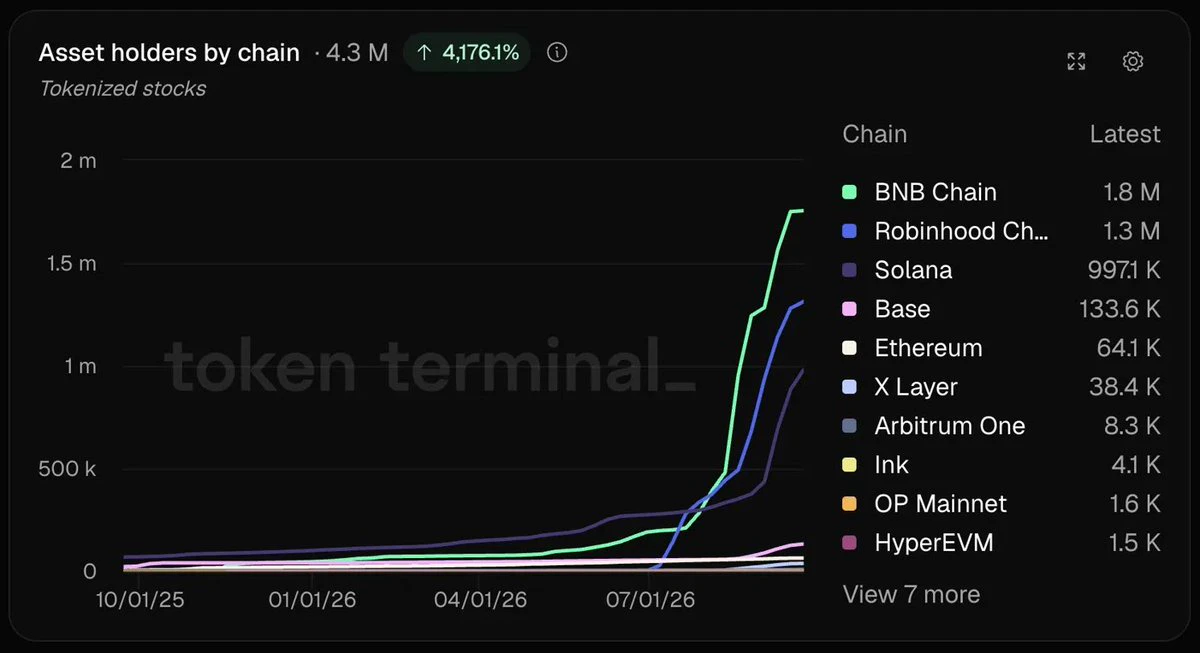
Tokenized stocks now have 4.3M holders, and that matters because every lending, trading and custody product needs an audience on day one.
Products like these only work once enough users are already on the rails, and this category has just crossed that point.
According to @tokenterminal , holder addresses grew roughly 43x in twelve months. The growth came through three channels:
🔸 @BNBCHAIN : 1.8M holders after the June 11 bStocks launch
🔸 Robinhood Chain (@RobinhoodCrypto ) : 1.3M holders since going live on July 1
🔸 @solana : ~1M holders on the back of xStocks, building since 2025
Once th
post-image
SOL-0.45%
BNB+1.02%
KMNO-3.61%
JUP+1.75%
Are you ready to follow the paw prints? 🐶
GOODBOI
I think we can all agree that most of the strongest bets in any crypto cycle are the ones that already have clear PMF
@jumperapp fits that well because it already has the distribution most super-app products are still trying to build
with over $40B in lifetime volume, 100k+ monthly active users, top 3 in bridging volume and already a top 10 swap aggregator, the distribution is already there
so imo the next step is seeing how much more of a user’s onchain journey jumper can capture inside one interface
today that activity is still fragmented across bridges, swaps, yield, perps and tokenized ass
RWA-1.09%
I think we can all agree that most of the strongest bets in any crypto cycle are the ones that already have clear PMF
@JumperExchange fits that well because it already has the distribution most super-app products are still trying to build
with over $40B in lifetime volume, 100k+ monthly active users, top 3 in bridging volume and already a top 10 swap aggregator, the distribution is already there
so imo the next step is seeing how much more of a user’s onchain journey jumper can capture inside one interface
today that activity is still fragmented across bridges, swaps, yield, perps and tokenize
RWA-1.09%
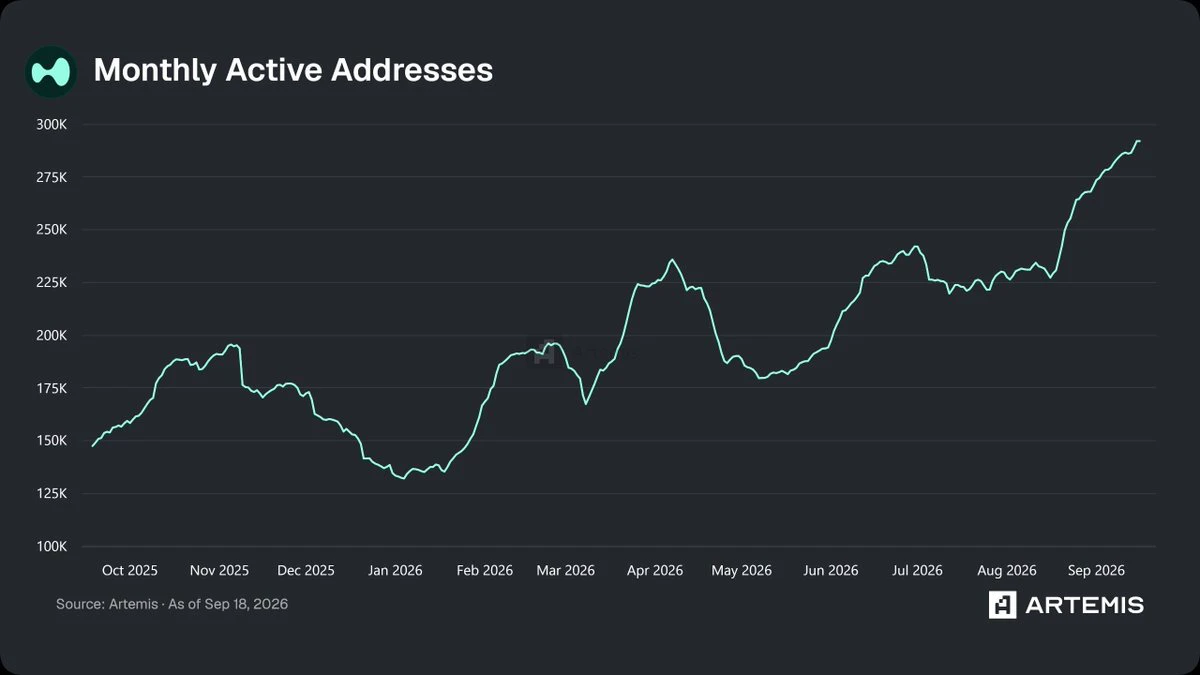
Hyperliquid's monthly active addresses just printed 291.9K, a fresh ATH, up from a ~132K January trough.
30d perp volume sits at $178.7B, OI's at $13.51B, and 30d protocol revenue is roughly $60M. Aster, Lighter, Pacifica, GMX and dYdX did about $119B in combined 30d volume. HL alone is doing roughly 1.5x that.
For comparison combined OI for those same five is only around $2B against HL's $13.5B. The gap's even wider there.
And this growth's happening w/o a points program. The incentive era ended at TGE back in Nov 2024, so everything since has had to be earned on product rather than emissions
post-image
HYPE-1.89%
ASTER+1.78%
LIT-0.93%
GMX+1.77%
DYDX+2.19%
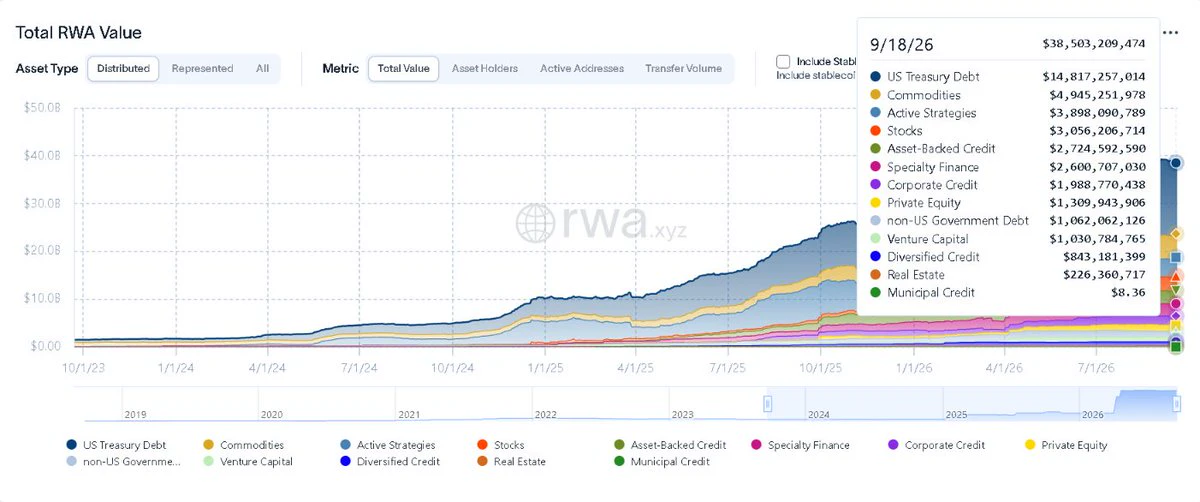
So tokenized RWAs (ex-stables) just crossed $38.5B onchain.
That's 3.2x where this market was when GENIUS was signed in July 2025 ($12B then).
Back in mid-2024, the whole category was still under $3B, so that's somewhere around 12-13x.
Fourteen months of real compounding. And the mix inside that $38.5B is arguably more interesting than the total itself.
The category breakdown:
🔸 Treasury debt & MMFs: ~$15.5B (~40% of the market), or up to $18B on the broader bonds+MMF bucket some trackers use.
Mostly BUIDL (@BlackRock / @Securitize ), USYC (@circle ), Franklin Templeton's BENJI/iBENJI product
post-image
BLK+1.35%
CRCL+4.57%
BENJI+0.31%
USDY+0.02%
So the CLARITY Act faces a Senate procedural vote today at around 18:15 UTC.
It needs 60 votes. Even if all 53 Republicans vote yes, seven Democrats or independents aligned with them still have to join in.
Cross-party support decides this one.
Will it advance?
The biggest value prop of Aave V4 was always the architecture, not any single market.
Avalanche is the first place we get to see it run outside Ethereum, and the early read is bullish.
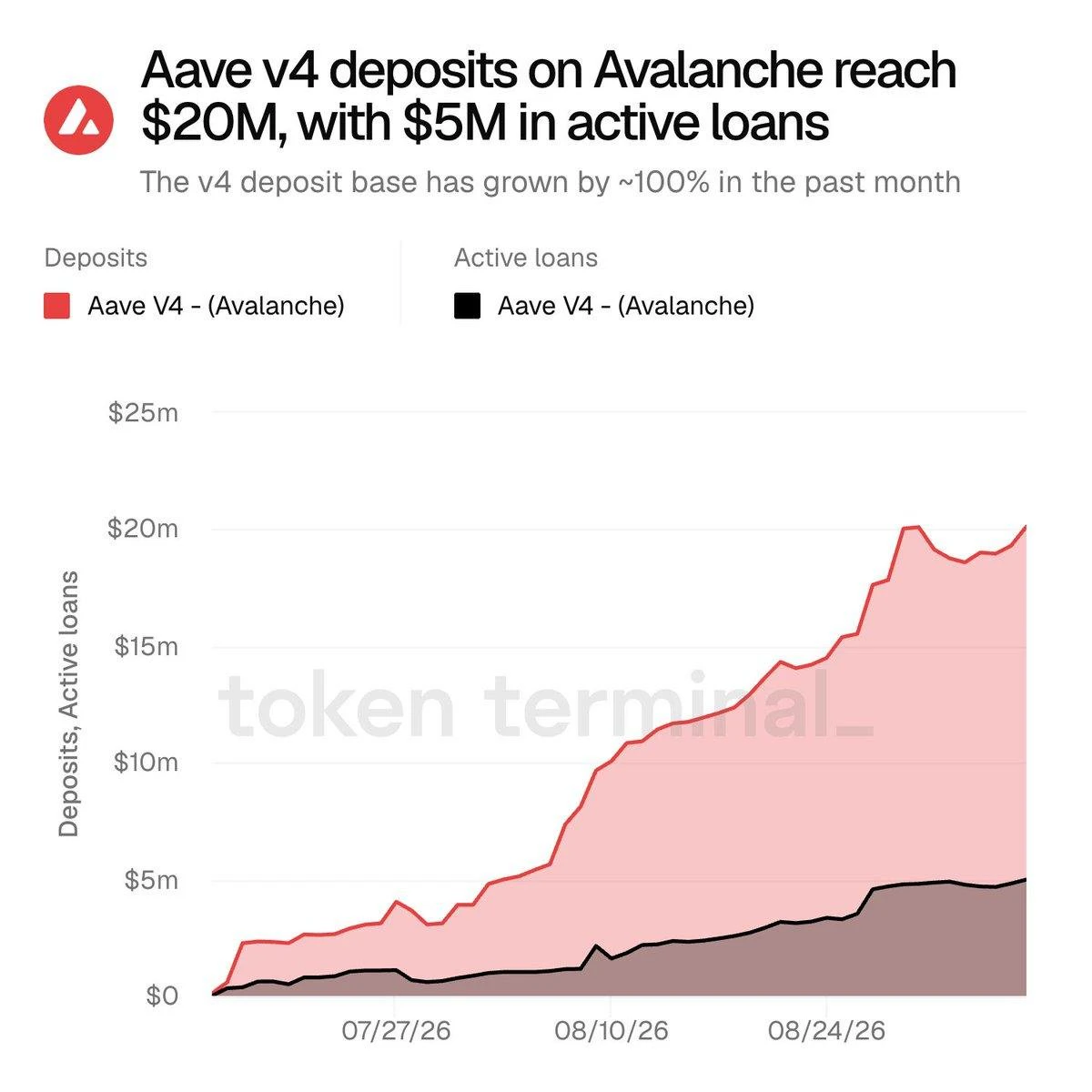
Since the 15 July launch, V4 deposits on Avalanche have gone from ~$4M (late July) to ~$20M, w/ ~$5M borrowed as of early September.
That's roughly 5x from the first print, and roughly doubled over the past month, on a brand new codebase, on a chain where @aave V3 already holds ~$299M of lending TVL, about 3x the next protocol.
Distribution already exists. V4 is the new architecture riding it.
The design is
post-image
AAVE+4.83%
AVAX+1.67%
ETH-0.35%
RWA-1.09%
We all know the spot ETF launch was a catalyst, and what Sept 3 confirms is that it has become standing market structure rather than a one-time event.
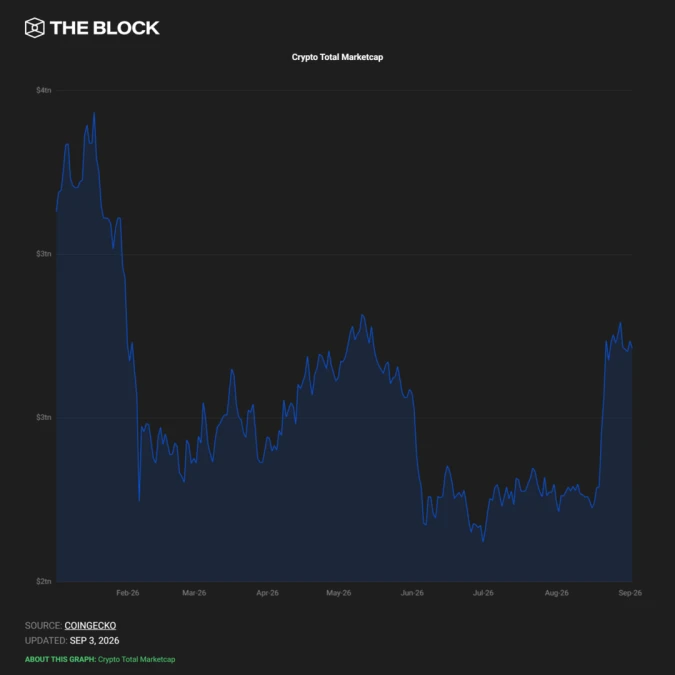
Total crypto market cap reached about $2.82T, +4.7% on the day & a ~7-month high.
Recovering ~$0.52T off the February low near $2.3T & leaving the market about two thirds of the way to the ~$4.27T ATH from October 2025.
The clearest read is real spot demand, with spot BTC ETFs taking in ~$731M on Sept 3, a top-three inflow day of 2026, ~$987M for the week & ~$3.8B over three weeks,
The strongest three-week stretch of the year, and since creating
post-image
BTC+0.66%
ETH-0.35%
ZEC+0.03%
ADA+7.59%
DOGE+1.33%
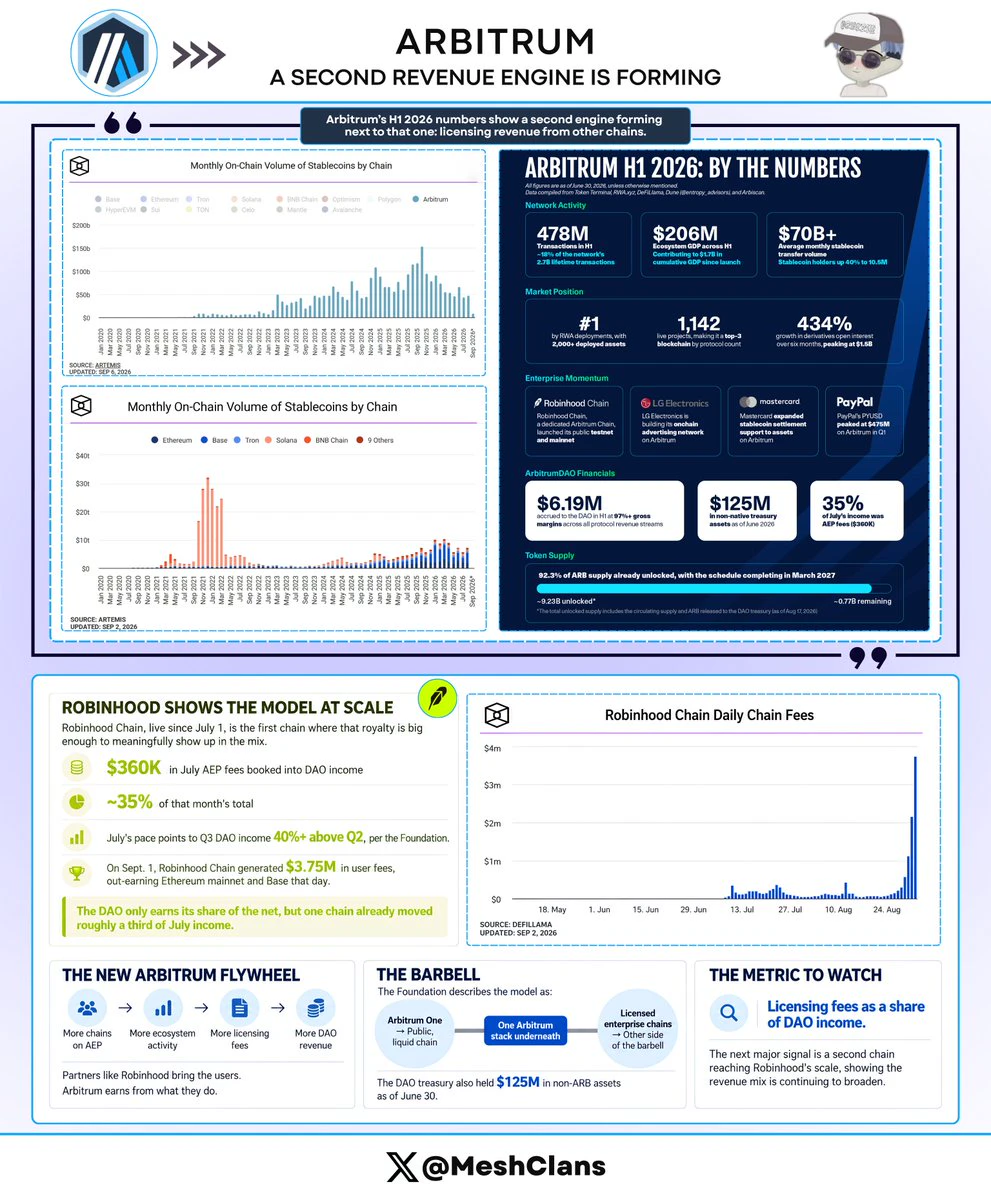
For a long time, L2s earned most of their money from base-layer gas fees. Arbitrum's H1 2026 numbers show a second engine forming next to that one.
$6.19M went to ArbitrumDAO in H1 2026 from four lines:
🔸 Arbitrum One fees
🔸 Timeboost
🔸 AEP licensing
🔸 treasury yield
Gross margin on the protocol lines (One fees, Timeboost, AEP) ran above 97%, up from above 90% in 2025. Treasury yield is a separate line with its own economics.
For context the @arbitrum network did 478M transactions in H1, about 18% of all lifetime activity in six months. Fees on One are cheap for users now, around $0.0074
post-image
ARB+2.92%
ETH-0.35%