Square
Following
Hot
News
Notifications
Profile

AlwaysVictorious

vip
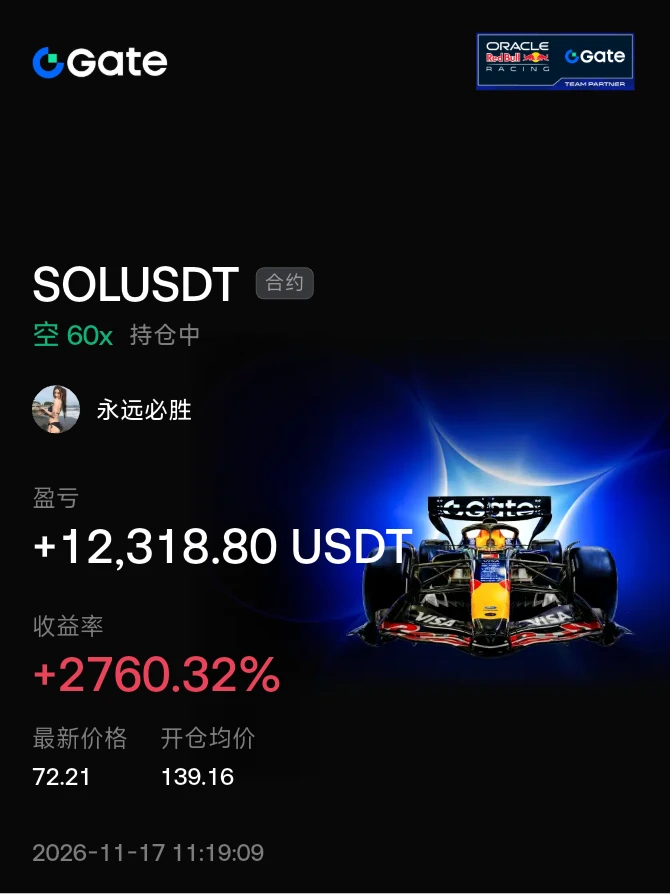
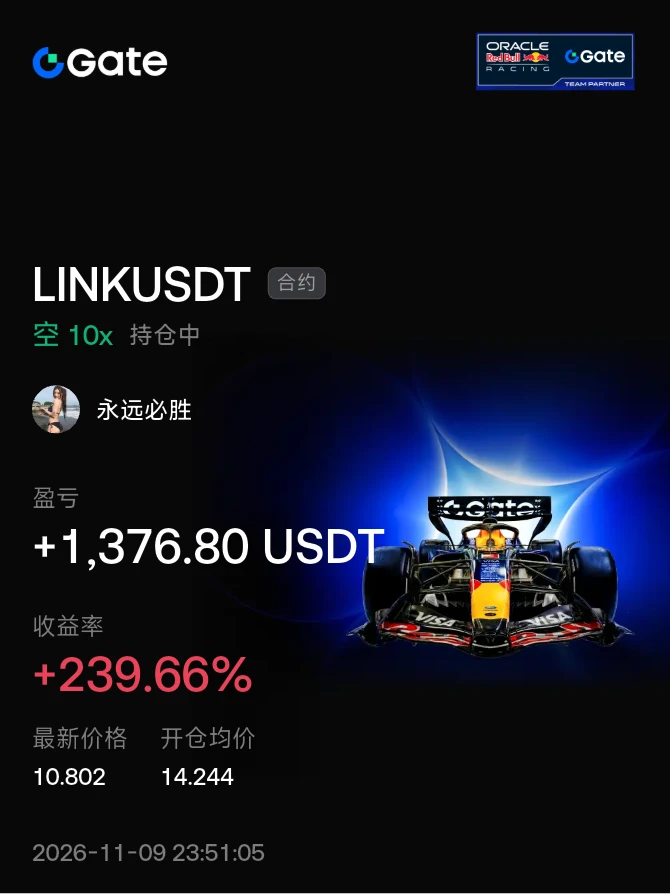
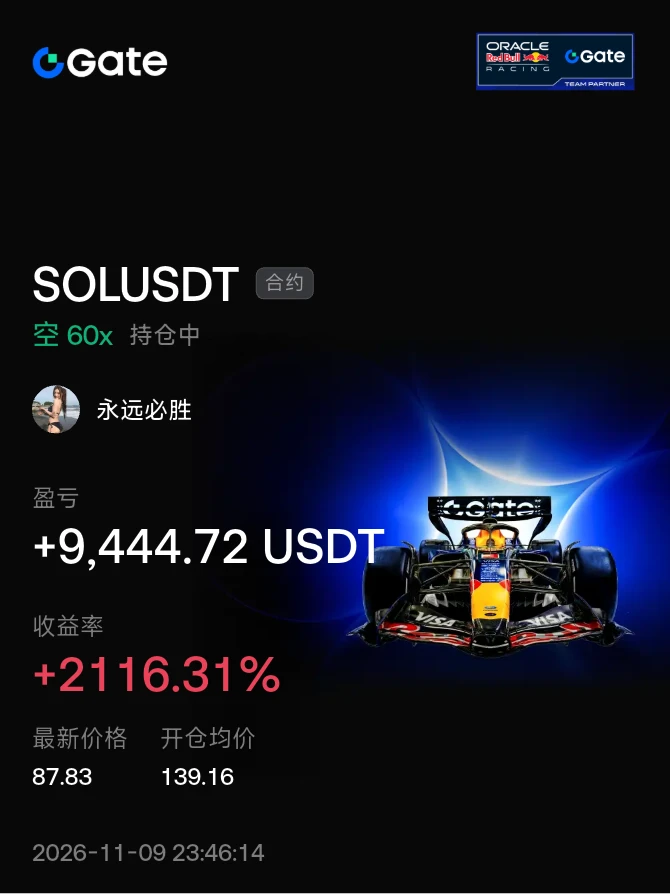
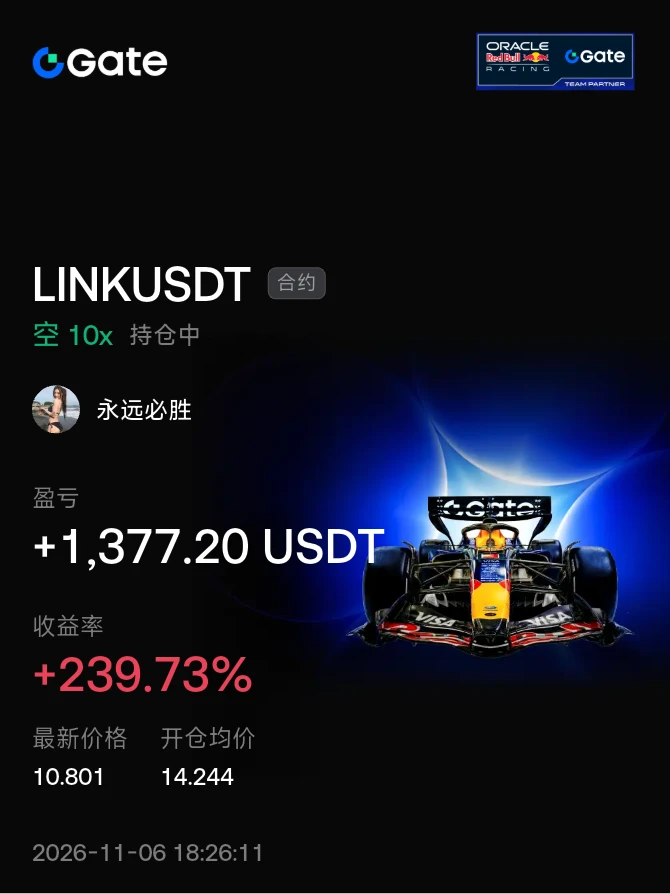
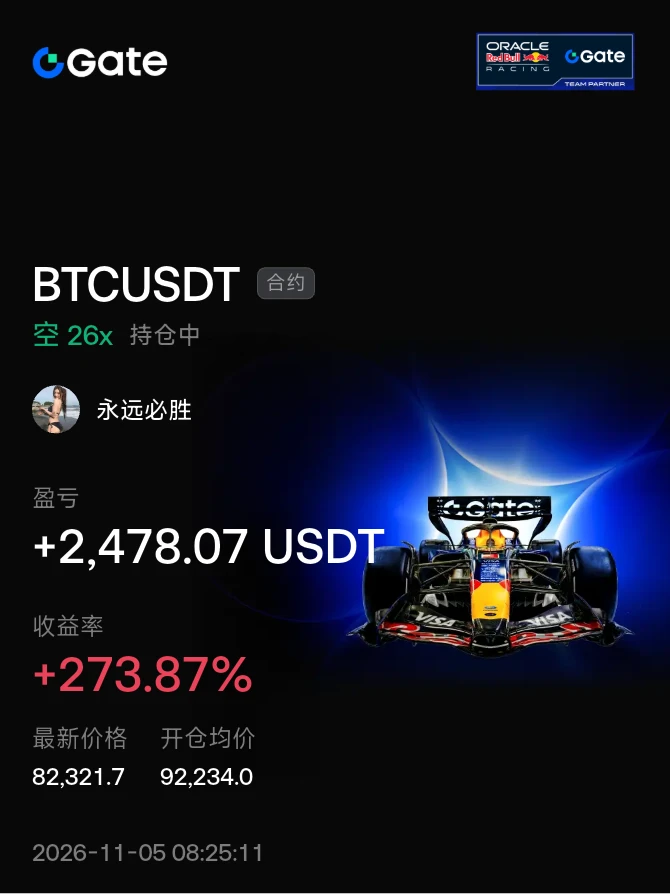
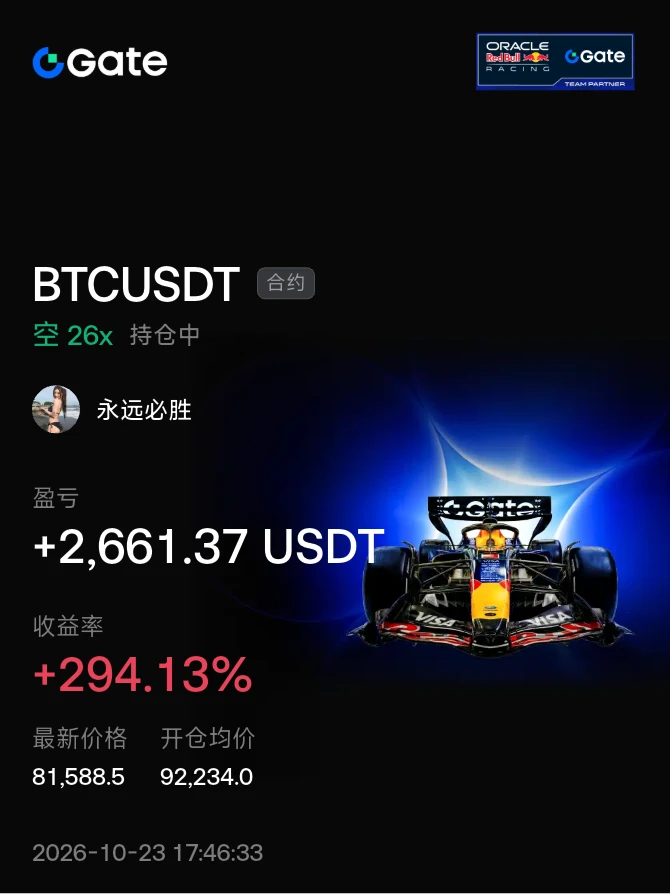
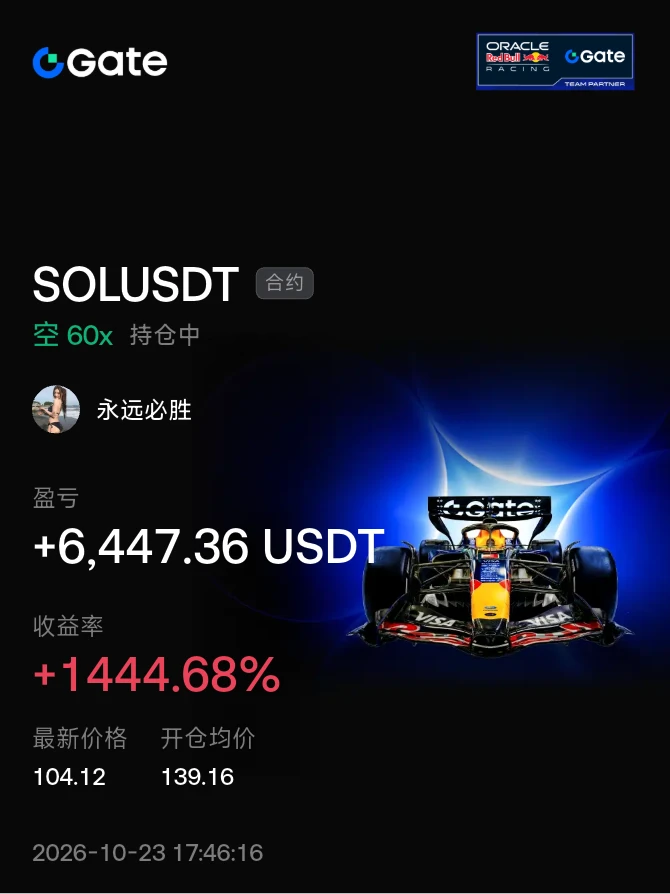
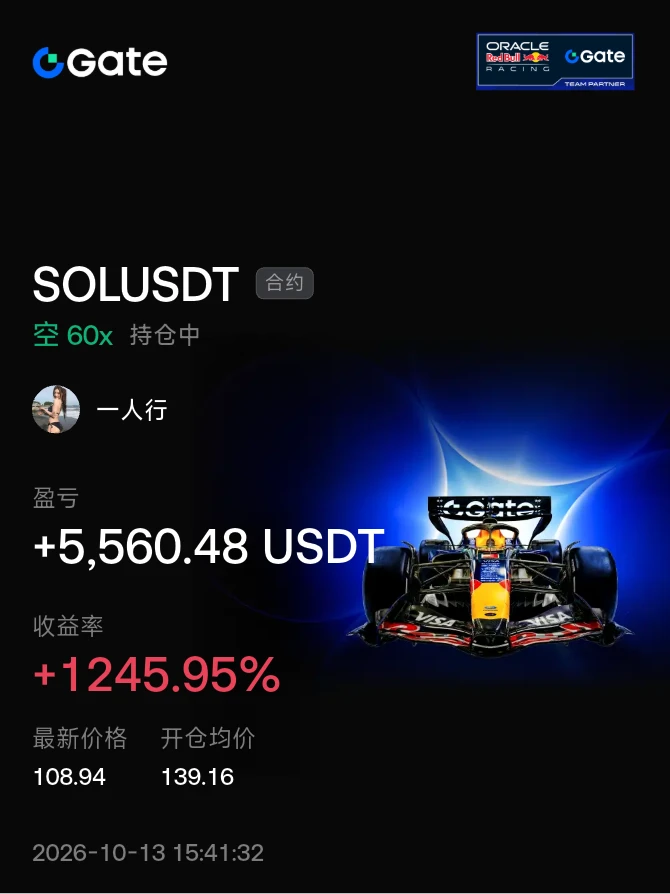
After experiencing two rounds of bull and bear markets, I have refined my skills through five years of practical trading. Here, I share my self-created "Winning Rate Entry Method" trading system. Starting with 100U, I steadily grew to 14000U in 85 days, validating the power of systematic trading. My trading core: · Strategy: Focus on intraday short-term and swing trading trends, skilled at capturing high winning rate starting signals. · Risk Control: Adhere to trading discipline, strictly manage drawdowns and positions, pursue stable compound interest, and avoid blind all in. · Mindset: Advocate rational trading, helping you build a strong mindset unaffected by market noise.
Peak Tier VIP 5Market AnalystFutures Trading Strategist
7
Following
48
Followers
25.4k
Liked
Dip-buyers, stay cautious! The U.S. Dollar Index has climbed to 103.486, a 19-month high!!!

The dollar is strengthening, and global risk appetite may contract further. Given today's declines in South Korea's KOSPI, SK hynix, and Samsung Electronics, what worries me more is that tech stocks and cryptocurrencies may face funding pressure at the same time.

For BTC, staging a sustained rebound in this environment will indeed be difficult.

So I still hold the same view: don't rush to buy the dip in spot markets, and don't rush to take a direction in futures just because of a single rebound candl
post-image
SOL-0.74%
SK Hynix-1.96%
BTC-0.67%
  • 2
#每周来晒 #U.S. October CPI is about to be released

No fluff—here’s the scenario framework I use. The only key variable is core CPI month over month, because the year-over-year figure is likely unavailable tonight, and the headline month-over-month decline has already been “arithmetically” locked in by the energy component. The information is concentrated in the 0.1–0.2 percentage-point range for core CPI.

Scenario 1: Core MoM ≤0.15% (genuinely positive, lower probability but best risk/reward). The rate-hike narrative shifts from “one hike in December” toward “hike in December and then stop.” Go
post-image
GLDX-0.40%
PAXG+0.37%
NAS100-0.07%
BTC-0.67%
  • 1
Actually, I think the biggest problem most people have when trading crypto is a lack of independent judgment.

What does that mean?

Put simply, you have no idea what phase the market is in.

Is the market trending up or down? Is overall risk appetite increasing or decreasing? Is money continuously flowing in, or steadily flowing out?

Without having figured any of this out, you start fixating on whether the coins you hold are going up or down.

When the market rises, you think a bull market is here; when it falls, you think a bear market is coming.

You see others making money going long, so
post-image
  • 5
Many people attribute Thursday’s crash to “deleveraging after a big rally,” but the trigger was actually very specific: expectations for AI regulation were repriced overnight after the midterm elections.

Democrats won both the House and the Senate, and the market immediately began pricing in four types of tightening: restrictions on data center expansion, requiring data centers to fully cover the costs of connecting to the power grid, taxes on AI services, and preservation of state-level regulatory authority. Texas is especially important—it has more planned data center projects than any othe
post-image
  • 8
Apple's decline on Thursday was relatively contained among the tech giants, and that was no coincidence. Q4 revenue came in at $114.48 billion and EPS at $2.10, both above expectations. iPhone revenue grew 17% year over year, while Services revenue hit a record $31.57 billion. On the same day Nvidia and AMD were dragged into the abyss by AI-trading fears, Apple's strong cash flow became its greatest defensive asset.

But Apple's problem isn't in its current-quarter results; it's in the gap between its gross-margin guidance and its AI narrative. Gross margin guidance for next quarter is 45%–46%
post-image
AAPL-0.26%
NVDA-0.42%
AMD-0.16%
  • 7
#Gate Stock Chat Season

The least exciting decision I’ve made this year, but the one I regret least so far, was choosing BYD over Tesla between the two EV leaders.

The starting point for my thesis was a valuation comparison I found hard to ignore: Tesla’s P/E ratio was once above 350x, about 10 times the Nasdaq 100’s average valuation of 35x; BYD’s forward P/E was around 17x. HSBC’s research report at the time put it more bluntly than I did—the 14-fold gap between the two companies’ market caps “has no reasonable justification.” BYD had the edge in manufacturing efficiency, global expansion,
post-image
TSLA+0.11%
HSBC-0.98%
GAS-0.57%
  • 13
#每周来晒 #US stocks, AI and crypto-related stocks rise

If you’re new to US stocks and crypto-related stocks, seeing copy like “Nasdaq up 1.05%, AMD up 3.4%, MSTR up 7.5%” can easily make you anxious: everyone else is making money—did I miss out again? But what beginners most need to know is precisely this: the “rising together” you see can turn into “falling together” within 24 hours.

The data for October 23 showed the Nasdaq down 2.6%, the Philadelphia Semiconductor Index down 6.72%, AMD down more than 8%, Nvidia down 4.4%, and BTC also retreating from above 84000 to around 82000. This doesn’t
post-image
NAS100-0.07%
AMD-0.16%
MSTR-6.31%
NVDA-0.42%
BTC-0.67%
#每周来晒 #US Earnings Season

If you only look at the headlines, Meta’s Q3 results “beat expectations”: revenue was $64.6 billion, $1.2 billion above the $63.37 billion expected, up 26% year over year; GAAP EPS was $3.83, above the expected $3.56; ad impressions rose 10% year over year and average price per ad increased 14%; Q4 revenue guidance was $73–76 billion, with the midpoint also above expectations. By traditional measures, this report shouldn’t have sent the stock lower.

But it did. At the close on October 22, Meta was down about 7%. The reason wasn’t revenue, but the cash flow line: Q3
post-image
  • 2
Last week, I was still watching whether BTC could decisively break through resistance at $86,500, viewing the 2026 opening price of $87,570 as a key psychological level. But after the CPI data was released, that framework needs to be adjusted.

Three specific adjustments:

First, move BTC’s watch range lower. Shift focus from “can it break above $86,000?” to “can it hold support between $81,000 and $82,000?” BTC briefly fell to around $81,700 this week. This area has repeatedly attracted dip buyers recently. If this support is decisively broken, the medium-term structure will need to be reasse
post-image
BTC-0.67%
  • 3
September core CPI rose 0.33% month over month, marking a strong gain for the second consecutive month; PPI rose 1.3% month over month, its biggest increase since March 2022. With the data right in front of them, the market had expected Warsh to emphasize that “inflation is too high,” but he did not mention the data at all. He said: “I will not prejudge the outcome of the meeting. I do not believe in saying right now what I might do at the upcoming meeting.”

That statement is more worth pondering than any hawkish rhetoric. Since taking office, Warsh has twice declined to publish an interest-r
post-image
  • 5
#每周来晒 #Korean Stocks Plunge—Would You Buy the Dip?

To be honest, seeing the way Korean stocks fell today, my first reaction was excitement. But after thinking it over calmly, I don’t think it’s time to act yet.

Let’s look at the facts: From the KOSPI’s all-time high of 9,385 points on June 19, it has retraced about 37% in three months. Foreign investors have cumulatively recorded net sales of more than 197 trillion won in the KOSPI market this year, compared with only around 4 trillion won for all of last year—nearly 50 times as much. Market trading volume has plunged 70% from its peak at th
post-image
After the sharp drop in South Korean stocks, many people have been asking whether this is a buying opportunity. I want to highlight a key judgment from Morgan Stanley’s latest research report: weakness in memory stocks’ share prices may lead earnings peaks by 4 to 8 months.

What does this mean? Samsung and SK hynix’s quarterly profits are indeed still hitting records, but share prices trade on expectations, not the past. Morgan Stanley strategist Shawn Kim explicitly noted that the market is pricing in “slower price increases, a slowdown in earnings upgrades, and increased future supply.” Eve
post-image
SK Hynix-1.96%
SKHY+0.36%
  • 4
Regardless of the brand, considering current driving conditions, a typical extreme-braking scenario would be:
Driving at 130 km/h under assisted driving (the upper speed limit for assisted driving) on a two-lane expressway. The vehicle ahead is 100 meters away in accordance with the standard following distance (though in real-world road conditions, the distance may be even shorter).
At this point, vehicles ahead in both lanes collide, roll over and come to rest sideways, blocking the lanes. Extreme braking is then required, reducing the speed from 130 to 0. Such scenarios do occur in reality;
  • 6
I have never really recommended that people open trades emotionally.

What truly causes people to lose money is often not getting the market wrong, but letting emotions take over trading.

When the price rises a little, they fear missing out and cannot help chasing in;

When the price falls a little, they think it has dropped too much and rush to buy the dip;

After taking a loss, they want to make it back quickly, so they start trading frequently;

After getting several trades right in a row, they feel they are in the zone and keep increasing their position size.

Once trading changes from ex
The market has not fully stabilized yet, so I’m still keeping a core position.

If it rebounds to around 84,500, I’ll consider closing the core position first. If it continues lower, I’ll keep holding and observe the support below.

At this stage, I don’t think there’s any need to trade frequently. I’ll first see whether the market can truly stabilize before deciding on the next step. ​​​
#每周来晒
post-image
FeaturedRates were cut by 25 bp in September to 4.00%-4.25%, and CME data shows the probability of a 25 bp rate cut in October as high as 94.6%. So the real question is: Could an upside CPI surprise lead the Federal Reserve to pause rate cuts in October?

I believe it would significantly lower the probability of a rate cut, but not completely reverse it. The September minutes exposed a key divide: of the 19 officials, slightly more than half expected at least two more rate cuts this year, while several believed there would be only one cut or none at all. The minutes also clearly showed that most offic
post-image
CME-2.47%
  • 1
I just finished reviewing the September nonfarm payrolls data, and honestly, this number is a little alarming.

U.S. nonfarm employment increased by just 29k in September, while the market expected 84k—a shortfall of nearly threefold. Even more notably, the July and August figures were revised down by a combined 60k, with July's revised figure turning into a decline of 10k. The unemployment rate also rose from 4.1% to 4.2%.

To be honest, I looked through the nonfarm payrolls trend over the past few months: August still showed 162k, but September plunged straight to 29k. This cliff-like slowdo
post-image
  • 1
Post the mantra once every day:

Buy after a sharp drop in the morning; sell after a sharp rise in the morning.
Don't chase a sharp rise in the afternoon; buy the next day after a sharp drop in the afternoon.
Don't sell during a sharp morning drop; go to sleep when there is neither a rise nor a fall.
Don't sell without a surge; don't buy without a plunge; don't trade during sideways movement.
Buy on the down days, not the up days; sell on the up days, not the down days.
Move against the market to be a true hero.
Wait a little longer when prices consolidate at highs or lows.
When prices consoli
post-image
  • 3
A Complete Review of a Meme Copy Trade: Why I Cut My Position in Panic

Last week, I followed a trader on Gate to trade WIF perpetuals. The entry logic was clear: WIF broke out of a nine-month reversal pattern, gaining over 40% in seven days, with strong momentum. I entered with a 20% position and 3x leverage.

As a result, WIF fell 11% the next day, and its market cap dropped to $230 million. Everyone in the group was panic-selling at the time. I stared at the candlestick chart and hesitated for a long time, but eventually cut my position.

During my later review, I realized that the fundamen
post-image
WIF-0.50%
  • 11
Load More