Square
Following
Hot
News
Notifications
Profile

WhyFay

vip
I'm back
Peak Tier VIP 0Diamond HandsCrypto Market Researcher
91
Following
40
Followers
1.9k
Liked
🚨 JUST IN: Sam Bankman-Fried's FTX reportedly invested $500 MILLION in Anthropic $ANT, a stake that would now be worth OVER $40 BILLION following its reported IPO. 📈
FTX sold the investment for just $1.34 BILLION during bankruptcy proceedings.
That's potentially more than $38 BILLION in missed gains, based on the reported valuation.
BlockNews
🚨 JUST IN: Sam Bankman-Fried's FTX reportedly invested $500 MILLION in Anthropic $ANT, a stake that would now be worth OVER $40 BILLION following its reported IPO. 📈
FTX sold the investment for just $1.34 BILLION during bankruptcy proceedings.
That's potentially more than $38 BILLION in missed gains, based on the reported valuation.
repost-content-media
ANT-13.13%
Five assets had their stop-losses swept in the same night? SanDisk fell below its previous low to 749, then rebounded to 797, while Bitcoin pierced 62,275 and reclaimed it within an hour—is this a shakeout or a true breakdown? In 5 minutes, starting with candlesticks, volume, and stop-losses, we’ll help you understand what signal the operator is waiting for 👇
JsBigShark
Five assets had their stop-losses swept in the same night? SanDisk fell below its previous low to 749, then rebounded to 797, while Bitcoin pierced 62,275 and reclaimed it within an hour—is this a shakeout or a true breakdown? In 5 minutes, starting with candlesticks, volume, and stop-losses, we’ll help you understand what signal the operator is waiting for 👇
BTC-0.67%
Have you checked out the ongoing Launchpool projects?

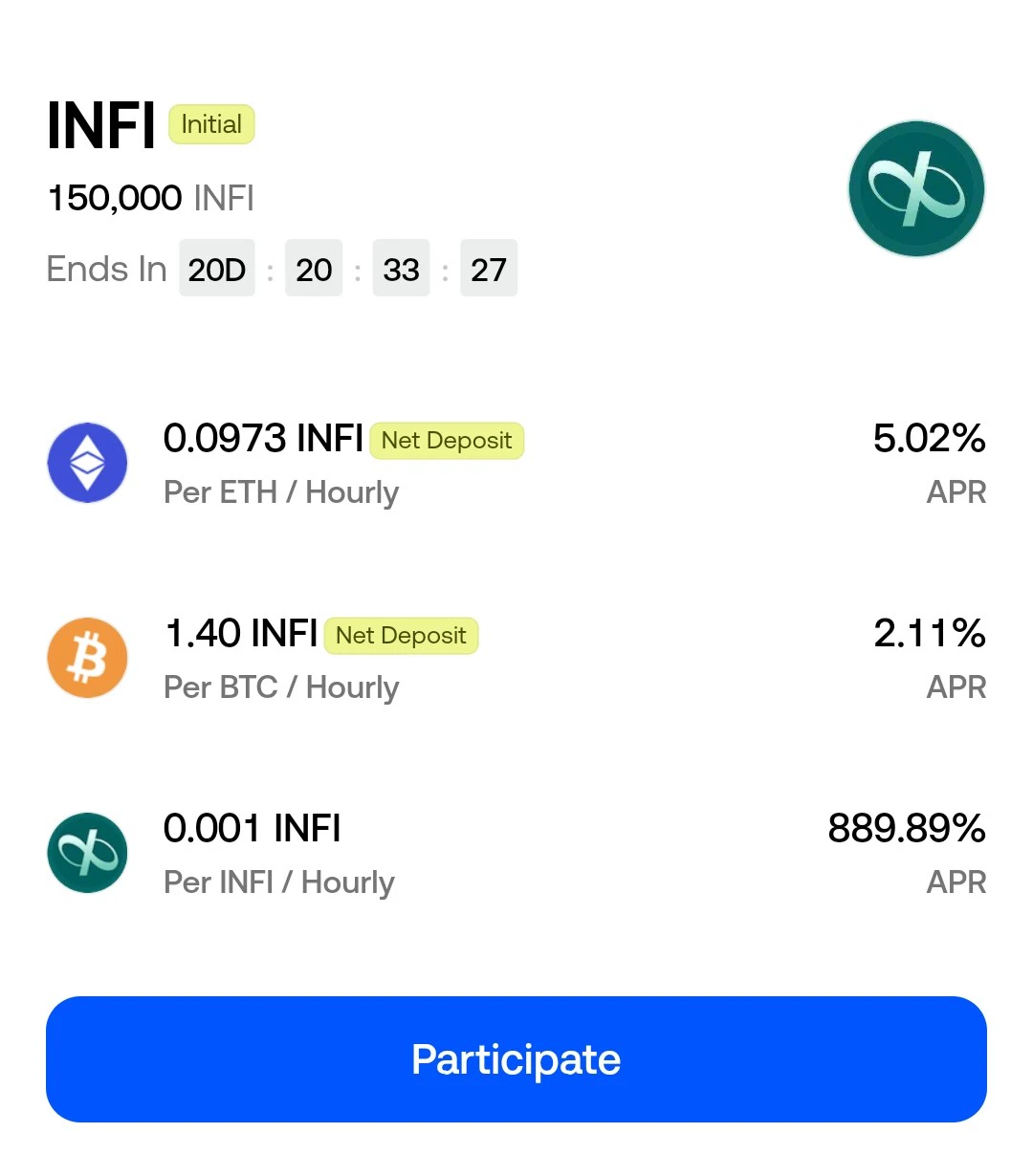
There are currently multiple Launchpool projects running simultaneously on Gate, offering options that cater to different risk preferences. You can earn rewards by staking assets—such as USDT, BTC, ETH, GT, or the respective native tokens—in projects like KOR, VLX, and the newly listed INFI.

When deciding which project is the best fit for you, I recommend looking beyond just the APR rates; consider the project's underlying dynamics and the required staking duration as well. So, which pool are you currently in, or which one are you conside
User_any
Have you checked out the ongoing Launchpool projects?
There are currently multiple Launchpool projects running simultaneously on Gate, offering options that cater to different risk preferences. You can earn rewards by staking assets—such as USDT, BTC, ETH, GT, or the respective native tokens—in projects like KOR, VLX, and the newly listed INFI.
When deciding which project is the best fit for you, I recommend looking beyond just the APR rates; consider the project's underlying dynamics and the required staking duration as well. So, which pool are you currently in, or which one are you considering? 👇
👉https://www.gate.com/launchpool
VLX👉 https://www.gate.com/share/act/2441e7f5
KOR👉 https://www.gate.com/share/act/1581ee1b
INFI 👉 https://www.gate.com/share/act/796e1e44
#GateSquare #Launchpool #Crypto #Staking
Not financial advice.
repost-content-media
BTC-0.67%
ETH-1.26%
GT-2.41%
IN-6.89%
VLX+0.00%
  • 1
Even the world’s most famous investor can miss an opportunity

Masayoshi Son is known in the investment world for taking risks. He thinks big and plays big. Yet, at an event in Tokyo on November 18, 2026, he made a remark that caught everyone by surprise: he admitted that failing to invest in Anthropic was one of his mistakes.

This statement is significant because Son did not hide his regret. Every investor misses out on opportunities, but not everyone is open about it. This is where Son’s story truly begins—not as a tale of failure, but as a story of choices.

It began in 2023

In 2023, Son
User_any
Even the world’s most famous investor can miss an opportunity
Masayoshi Son is known in the investment world for taking risks. He thinks big and plays big. Yet, at an event in Tokyo on November 18, 2026, he made a remark that caught everyone by surprise: he admitted that failing to invest in Anthropic was one of his mistakes.
This statement is significant because Son did not hide his regret. Every investor misses out on opportunities, but not everyone is open about it. This is where Son’s story truly begins—not as a tale of failure, but as a story of choices.
It began in 2023
In 2023, Son met personally with Dario Amodei, the founder of Anthropic. He was deeply impressed by Amodei, whom he considered an extraordinary individual. At the time, Anthropic’s valuation was a fraction of what it is today—roughly $4.1 billion.
In other words, Son had spotted the opportunity. A discussion took place, but it never materialized into an investment. To understand why, one must look at what SoftBank was focusing on at the time.
Son’s explanation is quite simple: SoftBank had already begun investing in OpenAI. He did not want to bet on two horses in the same race—or, in his own words, it is difficult to chase two rabbits at once.
In total, Son invested approximately $64.6 billion into OpenAI, securing a stake of about 13 percent. He channeled all his capital, attention, and energy into a single company. His logic was that by focusing entirely on one entity, one becomes stronger. However, this approach came with a price: missing out on another opportunity. Anthropic did not stand still. It grew rapidly with its conversational assistant, Claude. Its revenue multiplied in a short span of time. By November 2026, it began taking steps toward an initial public offering (IPO). Initially, the share price was discussed in the $70–$78 range, but it later climbed to $83. The company’s total valuation began to be discussed at figures as high as $1.4 trillion.
In other words, a company valued at around $4.1 billion in 2023 was, within three years, on its way to becoming one of the most valuable artificial intelligence companies in the world. Looking at this current landscape, Son remarked, "I wish I had invested back then." That is the source of his regret. He isn't saying he chose the wrong company; rather, he regrets missing out on a second company that he had correctly identified as a strong prospect.
Anthropic or OpenAI?
That is the question everyone is asking. If you had to choose today, which one would you pick? The answer cannot be summed up in a single sentence, as the two companies possess different strengths.
Anthropic focuses more on enterprise clients, safe and controlled AI, and recurring revenue. Its growth is rapid, and its accountability is increasing alongside its move toward an IPO. OpenAI, meanwhile, boasts a broader user base, greater brand power, and more substantial capital. However, its expenditures are also massive, and its IPO has been pushed further into the future.
In the short term, Anthropic’s business model appears more coherent and well-structured. In the long term, the scale of OpenAI could prove to be a greater advantage. Ultimately, the question isn't which one is "better," but rather which one will reach sustainable profitability first. For now, Anthropic seems to have a slight edge in this race—but the race is far from over.
Three simple lessons can be drawn from Son’s regret. First, recognizing a good opportunity isn’t enough; you have to make room for it. Everyone can spot a great company, but few are willing to allocate capital to it.
Second, committing to a single choice can be a powerful strategy, but it also carries an opportunity cost. Saying "yes" to one thing means saying "no" to another—a reality that should be acknowledged when making a decision.
Third, missing out on an opportunity isn’t the end of the world. By investing in OpenAI, one can still remain in the game. They may have missed out on Anthropic, but they haven’t missed the race for artificial intelligence. In other words, the real mistake wouldn’t be backing the wrong horse, but rather sitting out the race entirely.
If you had to choose today, which would you pick: the steady, calculated growth of Anthropic, or the grand, large-scale vision of OpenAI? Your answer reveals a great deal about your own investment personality.
This content is for informational purposes only and does not constitute investment advice.
#MasayoshiSonRegretsMissingAnthropic
$ANT ‌
repost-content-media
ANT-13.13%
#TetherPushesBackOnSPRating 🤔

USDT is the world’s largest stablecoin, designed to remain pegged to $1. On November 18, a rating agency maintained its lowest possible grade for this peg—5 out of 5, indicating a "weak" status.

This is not a credit rating. The core question is: how securely can USDT hold its $1 peg?

This rating does not mean that USDT has collapsed; it continues to trade near $1, and redemptions are still being processed.

However, it also does not mean it is "safe." The agency argues that the composition of the reserves is not robust enough to support the peg.

The agency o
User_any
#TetherPushesBackOnSPRating 🤔
USDT is the world’s largest stablecoin, designed to remain pegged to $1. On November 18, a rating agency maintained its lowest possible grade for this peg—5 out of 5, indicating a "weak" status.
This is not a credit rating. The core question is: how securely can USDT hold its $1 peg?
This rating does not mean that USDT has collapsed; it continues to trade near $1, and redemptions are still being processed.
However, it also does not mean it is "safe." The agency argues that the composition of the reserves is not robust enough to support the peg.
The agency observed an increase in the share of assets it deems "risky" within the reserves—rising from 24% a year ago to 28% today.
This "risky" category includes assets such as gold, Bitcoin, equities, secured loans, and corporate bonds—all of which are subject to high price volatility.
The assessment was released on November 18, based on data from September 30.
At that time, Tether reported approximately $191.5 billion in assets against $183.5 billion in liabilities, resulting in a surplus of $7.95 billion.
Tether contends that the issue lies not with its reserves, but with the agency’s measurement methodology.
Its defense is straightforward: reserves exceed liabilities, and the company has successfully met redemption requests for years.
The agency, however, maintains that sheer size is insufficient; the composition of the reserves and the level of transparency are equally critical. Issues regarding auditing, asset custody, and the segregation of reserves remain points of concern.
Do not view a stablecoin simply as "dollars in a vault"; treat it as a financial product.
Do not rely solely on one stablecoin. Evaluate it by looking at its reserves, transparency, and track record of redemptions.
This rating is not a report of an imminent collapse, but rather a warning—sufficient to help you understand the risks involved. This content is for informational purposes only and does not constitute investment advice.
repost-content-media
USDT+0.00%
BTC-0.67%
XAUUSD-1.47%
The largest initial public offering (IPO) in history arrived with the most unusual message.

Anthropic rang the opening bell, raising $107 billion in what stands as the largest IPO in history. Yet, it wasn’t the amount raised that drew the most attention, but rather the words addressed to investors on the day of the offering.

Typically, an IPO is a time to talk about growth, profit, and market share. Anthropic did the exact opposite. They stated that they might slow down, that they might say "no," and that they would stop entirely if necessary—sentiments almost never heard during a technology
User_any
The largest initial public offering (IPO) in history arrived with the most unusual message.
Anthropic rang the opening bell, raising $107 billion in what stands as the largest IPO in history. Yet, it wasn’t the amount raised that drew the most attention, but rather the words addressed to investors on the day of the offering.
Typically, an IPO is a time to talk about growth, profit, and market share. Anthropic did the exact opposite. They stated that they might slow down, that they might say "no," and that they would stop entirely if necessary—sentiments almost never heard during a technology company’s public debut.
The first message was clear: they would not bow to business pressures or political influence.
While easy to say, this is difficult to put into practice. Once a company goes public, it faces the expectations of thousands of investors—quarterly results, share price performance, and the relentless pressure for growth. Anthropic set boundaries from the start, declaring that they cannot be pushed for the sake of speed. This is not a challenge, but a framework: their priority is safety, not speed.
The second message was even more striking: if necessary, they will slow down the training and release of their artificial intelligence models, taking as much time as required to ensure they are safe.
In the current AI race—where everyone is sprinting to be faster, pushing for larger models, quicker releases, and earlier announcements—this is an unconventional stance. Anthropic asserts that being fast is not more important than being safe. If a model fails a safety test, they will not release it. This is not "slowness"; it is responsibility.
Anthropic is a public-benefit corporation. This means that, by law, it is obligated to consider the public interest, not just returns for its shareholders.
Understanding this structure is crucial; in a conventional company, decisions are driven solely by profit. A second question is added to the decision-making process here: is this also good for society? This structure provides Anthropic with both protection and a sense of responsibility; it makes it much harder to justify taking risky steps in the name of profit.
A specific business model is also integrated into this framework. Anthropic has rejected the advertising-based model that funds much of the internet—meaning they have opted out of a system that converts user data into ad revenue. While this choice may limit short-term income, it fosters greater trust in the long run.
When discussing safety, Anthropic didn’t speak in abstract terms; they provided concrete examples. For instance, when a new model proved exceptionally adept at identifying security vulnerabilities, they didn’t release it immediately. Instead, they first shared it with cyber-defense experts—ensuring that those on the side of defense could strengthen their positions before potential attackers could learn to exploit those same flaws.
They also clearly outlined the risks: misuse by individuals or states, economic disruption, and the potential loss of control over AI systems. They acknowledged that the most challenging safety-related work still lies ahead—in other words, they aren’t claiming to have solved everything; rather, they’re signaling that the hardest part is yet to come.
And this is a point that shouldn’t be overlooked: more than half of the major corporations are now using Claude. In August alone, medical professionals accessed a Claude-powered medical resource 42 million times. Furthermore, their recent capital raise has placed Anthropic in a stronger financial position.
Anthropic’s ambition is grand: they suggest that AI, working alongside humans, could compress a century’s worth of scientific and medical progress into just one decade. Realizing this vision requires both powerful technology and deep-seated trust.
Ultimately, while Anthropic has raised capital, what they have truly secured is a promise—a commitment to slow down, to say "no" when necessary, and to prioritize safety above all else. Now, the market will be watching to see whether that promise is kept. Because raising $107 billion is difficult, but keeping that promise is even harder.
This content is for informational purposes only and does not constitute investment advice.
$ANT
#AnthropicIPOPricesAt83
repost-content-media
ANT-13.13%
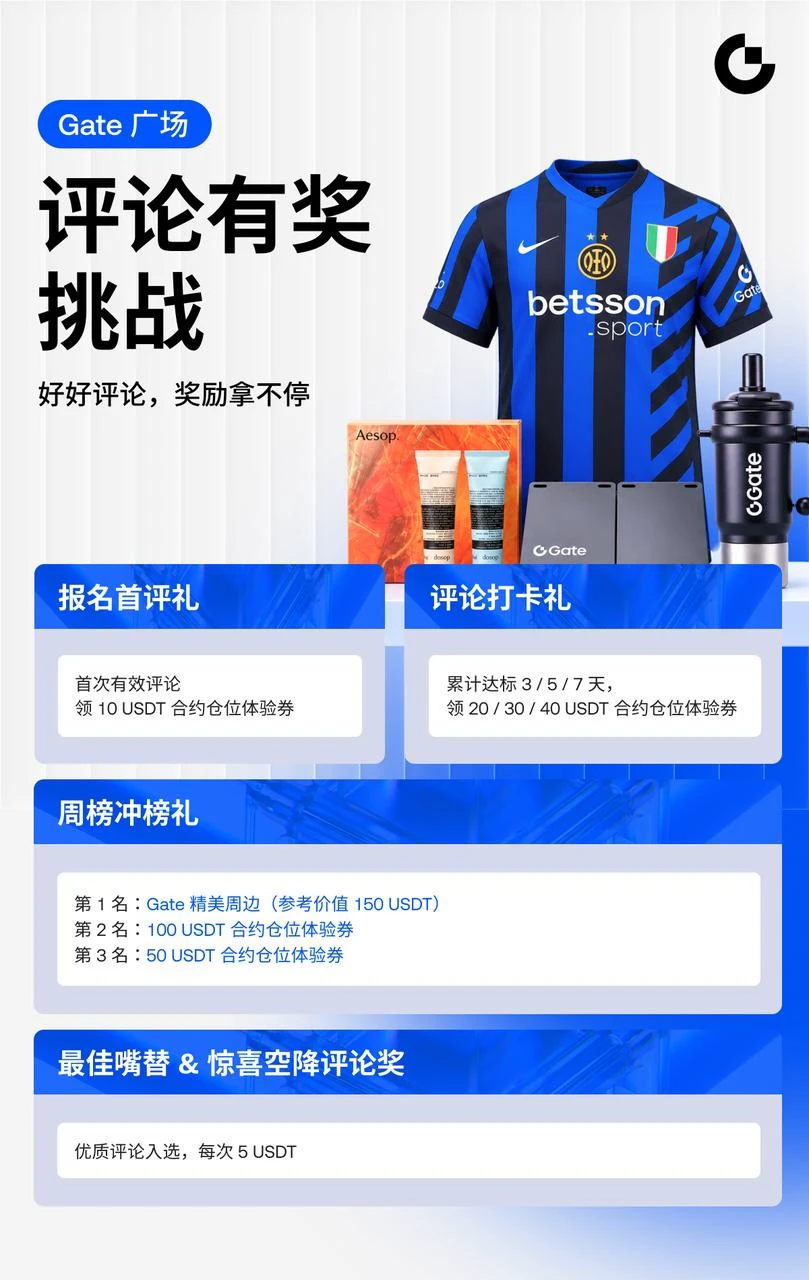
⏰ Last day to climb the leaderboard and win Gate merchandise worth 150 USDT!
Gate Square’s comment challenge with prizes ends today. Leave your thoughts in the comments and seize your last chance to participate 👇

🏆 Climb the leaderboard to win merchandise: The weekly No. 1 can receive premium Gate merchandise with an estimated value of 150 USDT
⭐ Great comments win cash: Each time a high-quality comment is selected, it earns a 5 USDT reward
🎉 First-time participant reward: After signing up, post your first valid comment under someone else’s post to claim a 10 USDT futures position experien
GateSquare
⏰ Last day to climb the leaderboard and win Gate merchandise worth 150 USDT!
Gate Square’s comment challenge with prizes ends today. Leave your thoughts in the comments and seize your last chance to participate 👇
🏆 Climb the leaderboard to win merchandise: The weekly No. 1 can receive premium Gate merchandise with an estimated value of 150 USDT
⭐ Great comments win cash: Each time a high-quality comment is selected, it earns a 5 USDT reward
🎉 First-time participant reward: After signing up, post your first valid comment under someone else’s post to claim a 10 USDT futures position experience voucher
💬 Add your perspective, share your experience, and ask follow-up questions. On the last day, let your thoughtful comments be seen!
👉 Sign up first, then comment—join now
https://www.gate.com/campaigns/6881
Please write your comment yourself. “One-click Comment” entries will not count toward the tally or selection.
‍#Gate广场 #评论有奖
repost-content-media
#Gate直通IPO第三期Anthropic
$70-78 Range: Is This Value High, or Is Price Buying the Future?

For Anthropic, the query is no longer whether it will go public. The query is at what price it will open.

The guide range is clear: $70 to $78 per share. At the top, an offer of about $64.4 billion. The night before, the draft still showed $69.3 billion. About $5 billion vanished before the roadshow even began.

Value also tells the same story. Two weeks ago the market talked about $2 trillion. Now it is near $1.4 trillion. That is a pullback of about 30%. Below SpaceX at about $1
YamahaBlue
#Gate直通IPO第三期Anthropic
$70-78 Range: Is This Value High, or Is Price Buying the Future?
For Anthropic, the query is no longer whether it will go public. The query is at what price it will open.
The guide range is clear: $70 to $78 per share. At the top, an offer of about $64.4 billion. The night before, the draft still showed $69.3 billion. About $5 billion vanished before the roadshow even began.
Value also tells the same story. Two weeks ago the market talked about $2 trillion. Now it is near $1.4 trillion. That is a pullback of about 30%. Below SpaceX at about $1.77 trillion at its IPO.
So is this price high? The answer is not simple in one line. Because this price is not buying today, it is buying 2028.
What Do the Numbers Say?
Let us make the table simple. Of 825 million shares, about 801 million are new from the firm. At the $74 midpoint, that part brings about $59.3 billion to the firm. The rest, 23.648 million shares, are old shares. All go to the 7 founders. Total about $1.75 billion. About $250 million each.
Add the private placement. $26 billion at the IPO price, from seven big tech firms. Google and Nvidia put $10 billion each. AMD, Broadcom, Micron, Microsoft and TSMC split the rest $6 billion. IPO plus private placement is near $100 billion.
This is the second largest offer in history. No record. SpaceX did a $75 billion offer, about $85.7 billion with the extra share option. Anthropic stays near $74 billion even with the option.
So scale is big, but not a record. The real debate is not on scale, it is on value.
Why Does Value Look High?
The case for high is strong. The firm forecasts $190 to $200 billion in revenue for 2028. Yearly run rate by end of October is about $81 billion. So for today's price to hold, revenue must more than double in two years.
Growth is also cooling. It was up 144% quarter on quarter in Q2, then 47% in Q3. Q2 had $974 million in operating profit, the first ever. Q3 swung to a $567 million loss. Compute cost rose from 48% of revenue to 58%. The firm had to buy about $5 billion in short-term compute at high prices. Price cuts and discounts cut Q3 revenue by about $600 million.
There is also near $900 billion in compute deals. Long-term buy and lease deals with Google, Amazon, Broadcom and others. Even if revenue stalls, payment goes on. The firm holds about $132 billion in cash and short-term holdings. The gap shows why this IPO is happening now.
Focus risk adds to it. In the first nine months, the top five buyers gave about a quarter of revenue. Over 80% of Q3 revenue came from models out in the past six months. So the firm must keep outrunning all rivals. One gap between models could cost it buyers fast.
Seen from this side, even $1.4 trillion looks high. Because price assumes a smooth future.
Why Could Value Look Low?
The case for low is also strong.
Revenue is real. $386 million in 2024, $4.585 billion in 2025, about $17 billion in Q3 alone. Yearly run rate is about $81 billion by end of October. The same buyer spends about 9 times more a year later. Net revenue retention is about 900%. Cash flow from work was about $3.9 billion in the first half.
This is not a one-time jump. Buyer spend turns into a repeat pattern. A buyer does not use once and leave, it uses more.
Product backs this too. Fable 5.2 came a day before the roadshow. It runs up to 30% faster than the last gen. A new fast mode is 2.5 times faster still. Price is $8 per million input tokens and $40 per million output tokens, about 20% cheaper than last gen. It scored 65 on Artificial Analysis intelligence index, first, ahead of Google Gemini 4 Carbon at 60. In FrontierCode 2.0, it scored 49.1%, up from 32.4%, and ahead of OpenAI GPT-6 Astra.
There is also a first-mover race. Among big model firms, Anthropic is the first to go public. Much cash around the world waits for a pure AI stock. The three firms together top $4 trillion in value, but cash in the market is finite. First to list gets it first.
Seen from this side, $1.4 trillion looks like a discount to $2 trillion. Because the firm leads on revenue, product and timing.
What Does Founder Selling Tell Us?
The most talked-about part in this debate is founder selling.
Selling itself is not a crime. Founders can sell a slice of the work they built over years. But timing creates a query in the market. While value is cut, sales of $250 million each weaken the "we believe" message.
My read is this: to read the sale as a lone red flag is not right. But to ignore it is also not right. This sale shows price has room to bargain. The market reads founder sales as a sign on the ceiling of value.
There is also an uneasy line in the books. In the first nine months, 5% to 7% of revenue, about $1.7 to $2.3 billion, came from buyers later found to have broken usage or business terms. Most came from users outside the US whose accounts were closed. Closing accounts with no refund has long been a habit. That it shows up as a steady income line raises a query on trust.
Paper loss must also be read the right way. In nine months, net loss on paper hit $104 billion. Real operating loss was only about $1.26 billion. The rest came from accounting revaluations tied to rising value. Early funding used a "pay now, get shares later" method. As value rose, those future shares rose in value too, and the rise had to be booked as a loss. This is a cash-free accounting effect, not a cash burn. But it clouds the books.
Plan: Step by Step, Not All at Once
My view is clear: no all-in. Step by step.
This IPO can move hard in both ways. Demand is strong. Orders filled the range at once, and big buyers showed more hunger than for SpaceX. But mood is weak. On Nov 5, US stocks fell 5.5% in one day. The worst in 19 months, and AI chip stocks fell hard.
First-day selling is also a risk. Some directors, execs and staff can sell up to 10% from day one. Many hold shares from when value was very low, so selling would lock in a big gain. If many sell at once, price drops.
So I split the plan into three slices:
First slice: small take in the IPO. The "if this price is the floor, I am not left out" share. Keep it small. Aim is not to join hype, but to stay at the table.
Second slice: buy after the 30-day shield. To hold price up, underwriters got a 30-day extra share option. If needed, up to 123.75 million shares more can be bought at the offer price. When that time ends, where price stands is the real test. SpaceX had the same shield, yet its stock fell below offer price in mid-July. The second slice waits for that time to end.
Third slice: buy on pullback. If price slips below offer price, this is a chance to buy by plan, not by panic. If the firm stays near its 2028 goal, the third slice goes in. If growth cools more, the third slice is not used at all. Waiting is also a trade.
One rule for each slice: total risk stays small enough that one trade will not shake the account. Stop level is written before the buy. A first-day pop is not an excuse to widen the stop.
Result: High, but Not Without Reason
My answer is "high, but not without reason."
High, because price already holds much of the future. Revenue must more than double in two years. Compute cost, circular money flow, buyer focus and $900 billion in deals make that hard.
Not without reason, because the business is real. Revenue grows, buyers spend more, product scores back it up. OpenAI faces more pressure: about $278 billion in cash burn seen from 2026 to 2030. OpenAI closed $11 billion at $1.25 trillion value on Nov 6. In Sept, it said no IPO in 2026, citing AI safety. Advisers had given two paths, cut value and go now, or wait. It turned down the cut. Anthropic chose to go public even at a cut, because its books look ready to show.
So I look at this IPO with discipline, not hype. Size stays measured. Short term is mood, long term is results. A first-day pop alone is not proof of success.
Anthropic may be a century IPO. That does not make it a good deal at any price. A good deal needs right price, right size, right horizon. Without those three, even the strongest story will not shield a buyer.
#WCTCS9
#ShareWeekly
The AI revolution is being tested not only in technology labs but also in Wall Street's biggest capital race. Demand for Anthropic's initial public offering (IPO) highlights the market's appetite for AI, but the real question isn't just the massive interest it's generating; it's whether that interest truly justifies the company's massive $1.4 trillion valuation. According to a Reuters report dated November 13th, demand initially doubled on the first day, then increased to six times the initial offer in the following days. Claims of 10-20 times the offer circulating on social media haven't yet
M谋ngYueZen
The AI revolution is being tested not only in technology labs but also in Wall Street's biggest capital race. Demand for Anthropic's initial public offering (IPO) highlights the market's appetite for AI, but the real question isn't just the massive interest it's generating; it's whether that interest truly justifies the company's massive $1.4 trillion valuation. According to a Reuters report dated November 13th, demand initially doubled on the first day, then increased to six times the initial offer in the following days. Claims of 10-20 times the offer circulating on social media haven't yet been officially confirmed, but even six times the demand is enough to make this IPO one of the most talked-about financial events of the year.
So what exactly does this six-fold demand mean? Simply put, it shows that investors placed orders for six times the number of shares available. The company is offering 825 million shares, listed on Nasdaq under the ticker symbol "ANT," at a price range of $70-78. This points to a valuation of approximately $1.4 trillion on a fully diluted basis. The aggressiveness of institutional investors stems from the fact that AI is no longer an "experiment" but an indispensable infrastructure for businesses. However, there's a critical distinction here: high demand can generate excitement, but sustainable returns ultimately depend on earnings, cash flow, and the price the investor pays. Being a great company isn't always the same as being an attractive investment.
In short, Anthropic's IPO represents much more than just a single company going public; it's a massive test of institutional capital's confidence in the long-term economics of AI. The market is currently searching for an answer to the question: "Are we buying the future today, or will AI truly create a revenue boom that justifies these prices?" High demand doesn't automatically mean the share price will rise after the listing; the real opportunity isn't to grab a share in this highly sought-after IPO, but to correctly assess whether the company's future growth can sustain this valuation. Do you think this massive demand marks the beginning of a new era of AI investment, or is it simply investors overpricing a future that hasn't arrived yet?
Share your opinions in the comments below. 👇
👉 Subscribe now:https://www.gate.com/zh/ipos/ipo-access/anthropic-ipo-access/69
📝 Event details:https://www.gate.com/announcements/article/102761
👉 Explore ANT futures:https://www.gate.com/futures/USDT/ANT_USDT
‍#ANTPreMarketFuturesNowLive
#GateIPOAccessPhase3Anthropic
#GateIPOAccessAnthropic
#Gate股票畅聊季
#ShareWeekly
NFA ✔️ DYOR 🔎
A $1.91 Billion Liquidity Test for Bitcoin: A Temporary Hurdle or an Institutional Reset?

The $64,732 price level currently appearing on screens is more than just a technical correction; it is a snapshot of the relentless pressure that global financial conditions are exerting on cryptocurrencies. Having shed 20% of its value over the last 30 days, Bitcoin has drifted significantly from its peak of $87,000. While the massive outflows from ETFs and the shifting interest rate expectations of the Federal Reserve might appear unrelated at first glance, they actually converge on a single common den
M谋ngYueZen
A $1.91 Billion Liquidity Test for Bitcoin: A Temporary Hurdle or an Institutional Reset?
The $64,732 price level currently appearing on screens is more than just a technical correction; it is a snapshot of the relentless pressure that global financial conditions are exerting on cryptocurrencies. Having shed 20% of its value over the last 30 days, Bitcoin has drifted significantly from its peak of $87,000. While the massive outflows from ETFs and the shifting interest rate expectations of the Federal Reserve might appear unrelated at first glance, they actually converge on a single common denominator: the global cost of capital and the tightening of liquidity.
The real question is not simply, "Why is Bitcoin falling?" Rather, it is: Does this decline represent a temporary withdrawal of risk capital, or is it the beginning of a structural shift in the behavior of institutional investors?
Let’s examine the bigger picture behind the scenes, step by step, in light of the data.
📉 The Inflation Shock and the Fed’s Shifting Stance
It all began with the U.S. Consumer Price Index (CPI) data for October, released on November 10. Monthly inflation came in at 0.4%—surpassing the 0.3% forecast—while core inflation also exceeded expectations at 0.3%. This data signaled that inflation was not merely confined to food and energy, but had become firmly entrenched within the broader economy. The market’s reaction was immediate: bond yields surged, the dollar strengthened, and risk assets faced a sell-off.
A critical detail here is that the market is increasingly pricing in an interest rate hike for December. According to CME FedWatch data, the probability of a 25-basis-point rate hike—which stood at 88.8% on November 10—reached levels ranging from 92.9% to 100% in various market metrics over the following days. These figures, hovering in the 98% range, do not represent a finalized Fed decision; rather, they serve as an indicator of how strongly the market believes in a "higher for longer" interest rate scenario. The real danger is not a single rate hike, but the prospect of interest rates remaining elevated until 2027, which would exert persistent pressure on liquidity.
💸 A Quiet $1.91 Billion Withdrawal
Spot Bitcoin ETFs—the primary lifeline for the crypto market—saw a total net outflow of $1.91 billion over seven consecutive trading days, starting November 5. On November 13 alone, $143.5 million flowed out of BlackRock’s IBIT fund.
These figures represent more than just routine profit-taking. ETFs serve as the most critical bridge between traditional finance and the crypto ecosystem; pension funds, asset managers, and institutional investors use these products to gain exposure to Bitcoin. This sustained, seven-day outflow signals a significant weakening in marginal demand from the institutional sector. However, this does not mean that "all institutional investors have abandoned Bitcoin"—it simply indicates that, for the time being, risk appetite has been taken off the table.
⚙️ The Invisible Mechanism Accelerating the Decline: Leverage
So, why did the price fall so sharply? Because multiple forces are at play in the market simultaneously. Expectations of rising interest rates and a strengthening dollar are forcing investors in need of cash to sell off risky assets. Compounding this are the internal dynamics of the crypto market itself. On November 13, approximately $1.64 billion worth of crypto positions were liquidated within a 24-hour period—88.7% of which were long (bullish) positions.
In other words, much of the decline stems not from investors concluding that "Bitcoin’s long-term value is gone," but rather from forced liquidations of leveraged positions triggered as prices fell. Leverage effectively turns the downturn into a snowball effect.
It’s the Direction of Capital, Not the Price, That Matters
What we are witnessing is not the collapse of Bitcoin’s long-term monetary thesis; rather, it is an asset—highly sensitive to liquidity conditions—being put to the test in an environment of high interest rates.
If inflation cools, bond yields stabilize, and the dollar loses strength, ETF inflows could turn positive again, potentially leading to a recovery for Bitcoin. Conversely, if inflation remains high, the Federal Reserve tightens policy further, and ETF outflows persist, Bitcoin could enter a more prolonged period of weak demand.
As an individual investor, one should avoid automatically viewing a price drop as a "buying opportunity," while also being careful not to mistake every rebound for the start of a "new bull market." Currently, I am not just watching the price chart; I am closely monitoring capital inflows into ETFs, U.S. 10-year real yields, and the dollar index. So, in your view, is this $1.91 billion outflow merely a temporary risk-reduction move by institutional investors, or is it the first sign of a deeper, structural shift in their Bitcoin allocations? If the Fed keeps interest rates high until 2027, can Bitcoin stage a sustained recovery before global liquidity improves?
Share your thoughts in the comments! ✍️
This content is for informational purposes only and does not constitute investment advice.
$BTC ‌ ‌#BTCBreaksKeySupportAsFearDeepens
#BTC
#WCTCS9 #ShareWeekly
BTC-0.67%
IBIT-0.79%
  • 1
M谋ngYueZen
🚨 The countdown is ON!
$ANT HROPIC is making its move on GATE .
Are you ready to get in early? 👀
Would you participate in the public offering, or would you wait for the opening day? 🤔 Final hours for the Anthropic IPO 📊
Subscriptions for Anthropic (ANT) close today; you can participate with 100 USDT, and trading begins on November 19.
Share your answer—the "why" behind it is what’s truly valuable.
Don't miss the window. ⏳🔥
👉 Subscribe now:https://www.gate.com/zh/ipos/ipo-access/anthropic-ipo-access/69
📝 Event details:https://www.gate.com/announcements/article/102761
👉 Explore ANT futures:https://www.gate.com/futures/USDT/ANT_USDT
‍#ANTPreMarketFuturesNowLive
#GateIPOAccessPhase3Anthropic
#GateIPOAccessAnthropic
For informational purposes only; this is not investment advice.
$ANTHROPIC
Strategy spent 2x more on preferred shares than Bitcoin, now exits MSCI
MSCI has scheduled Strategy’s removal from the MSCI USA Index for the November 30 close, putting a date on a financing test for the Bitcoin treasury company. MSTR common-stock sales recently funded both Bitcoin purchases and a larger preferred-share buyback.
During November 2–8, Strategy allocated $188 million of common-stock proceeds to STRC preferred-share repurchases and $82 million to Bitcoin purchases. The competition for that money makes future MSTR fundraising central to how quickly the company can keep adding Bitco
134Ceros
Strategy spent 2x more on preferred shares than Bitcoin, now exits MSCI
MSCI has scheduled Strategy’s removal from the MSCI USA Index for the November 30 close, putting a date on a financing test for the Bitcoin treasury company. MSTR common-stock sales recently funded both Bitcoin purchases and a larger preferred-share buyback.
During November 2–8, Strategy allocated $188 million of common-stock proceeds to STRC preferred-share repurchases and $82 million to Bitcoin purchases. The competition for that money makes future MSTR fundraising central to how quickly the company can keep adding Bitcoin.
⚠️ Personal market analysis only. NFA — manage risk and DYOR.
Educational content, not investment advice or a recommendation to buy, sell, deposit, or withdraw any asset. No paid promotion or referral/affiliate links.
repost-content-media
BTC-0.67%
MSCI-1.93%
MSTR-4.66%
STRC-1.65%
#JensenHuangResigns
The $2.13 Billion Question NVIDIA’s Board Can’t Answer With a Press Release

Two of NVIDIA’s largest shareholders just did something Wall Street rarely sees: they asked the board to slow down.

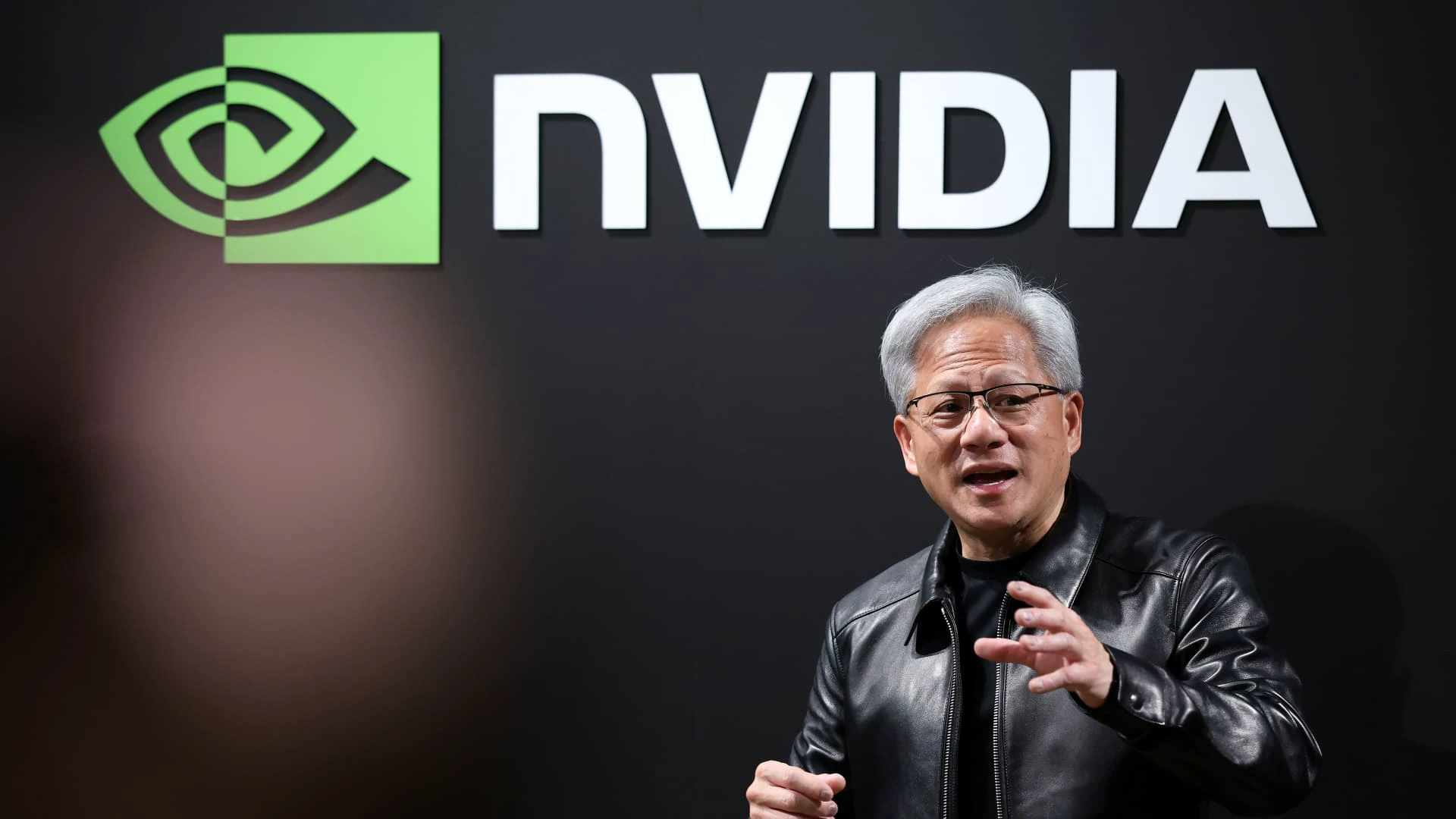
Brad Gerstner of Altimeter Capital and Gavin Baker of Atreides Management—holding a combined $2.13 billion in NVDA stock—sent a letter urging the board not to rush a permanent CEO appointment and to keep the door open for Jensen Huang’s return. Notably, they did not demand his immediate reinstatement. They called for a “slow, measured, and deliberate process” because, in their words
KatyPaty
#JensenHuangResigns
The $2.13 Billion Question NVIDIA’s Board Can’t Answer With a Press Release
Two of NVIDIA’s largest shareholders just did something Wall Street rarely sees: they asked the board to slow down.
Brad Gerstner of Altimeter Capital and Gavin Baker of Atreides Management—holding a combined $2.13 billion in NVDA stock—sent a letter urging the board not to rush a permanent CEO appointment and to keep the door open for Jensen Huang’s return. Notably, they did not demand his immediate reinstatement. They called for a “slow, measured, and deliberate process” because, in their words, “there are more questions about recent events than answers”.
That distinction matters. This isn’t a coup or a proxy fight. It’s a plea for institutional patience at the exact moment NVIDIA faces its first real leadership vacuum in 33 years.
Huang resigned on November 12 amid reports of personal relationships and an independent board investigation. Colette Kress, the long-time CFO, stepped in as interim CEO—a safe, steady hand. But safe and steady is not the same as founder-mode.
And that is the unspoken fear lurking beneath the letter: NVIDIA’s moat was never just its chips. It was Jensen Huang’s Rolodex, his handshake deals, his ability to act as Silicon Valley’s central banker for AI startups. Elon Musk himself noted that “many of those deals were a handshake with Jensen, not a written contract”. A new CEO—no matter how competent—cannot simply inherit those relationships.
Which brings us to next week.
NVIDIA is scheduled to report fiscal Q3 2027 earnings on Tuesday, November 17—just five days after Huang’s exit. The numbers will almost certainly be strong. The AI buildout has not paused for a boardroom drama.
But the call will be different. Kress will have to answer questions she has never faced before: Are supply commitments still secure? Are hyperscalers hedging? Has the “Jensen premium” in the stock begun to unwind?
The stock has already fallen nearly 24% since late October. Some of that is macro. Some of it is the leadership shock. The earnings report will be the first clean test of whether NVIDIA’s institution can carry the weight its founder once did.
Gerstner and Baker are not asking for a comeback. They are asking for time—time for the facts to settle, for the board to investigate, and for shareholders to see whether the machine Huang built can run without its architect.
Next week’s report won’t answer that question. But it will tell us how much time the board actually has. #ShareWeekly $NVDA ‌
repost-content-media
NVDA-3.21%
Moments when everything in the markets turns red simultaneously are the times when investors are most prone to error. This is because what is actually falling at such moments is not the value of the assets themselves, but the flow of liquidity in the market.

On Friday, November 13, 2026, we experienced exactly this. Bitcoin dipped below $68,000—its lowest level since August—marking a 9% decline over the past week. But what is truly notable is that Bitcoin was not alone: gold also fell to a one-year low, the U.S. Dollar Index climbed to a 19-month peak, and the 10-year Treasury yield rose abov
User_any
Moments when everything in the markets turns red simultaneously are the times when investors are most prone to error. This is because what is actually falling at such moments is not the value of the assets themselves, but the flow of liquidity in the market.
On Friday, November 13, 2026, we experienced exactly this. Bitcoin dipped below $68,000—its lowest level since August—marking a 9% decline over the past week. But what is truly notable is that Bitcoin was not alone: gold also fell to a one-year low, the U.S. Dollar Index climbed to a 19-month peak, and the 10-year Treasury yield rose above 5.1%. This scenario should remind you of one thing: this is not a "crypto crash," but a liquidity test.
🩸 When Everything Falls at Once: The Moment Correlation Approaches 1
The principle of "diversification" works well in the markets during normal times. However, in moments of panic, this rule is effectively suspended. When investors are forced to raise cash, they sell everything they hold—whether it is currently in profit or at a loss. This is why gold, Bitcoin, and stocks all move in the same direction.
That is precisely what happened this week. Bitcoin’s 30-day correlation with the Nasdaq currently stands at 0.69, while its correlation with gold sits at 0.38. In other words, Bitcoin is being traded not as "digital gold," but as a "high-beta technology asset." Further evidence supporting this: In the last 24 hours, the positions of 185,595 traders were liquidated, with total liquidations reaching $1.64 billion. Of this, 89%—amounting to $1.46 billion—consisted of "long" positions (bets on a price increase).
📉 The Core Issue: Market "Fuel" Is Dwindling
It is easy to talk about a price drop, but what lies beneath the price? According to Glassnode data cited by Gate, the stablecoin supply has shrunk by $14.2 billion over the last 30 days, falling below $280 billion. This marks the fastest contraction since the collapse of Terra in June 2022. During the same period, $1.64 billion flowed out of U.S. spot Bitcoin ETFs. In short, the influx of new dollars into the market is slowing, while existing capital is exiting. This indicates that "dry powder"—available purchasing power—is evaporating.
Add the commodities sector to the mix: Gold futures closed at a one-year low of $3,885 on Thursday. Silver is down 2.59%, and Brent crude is hovering around the $95 mark. In other words, no asset—not even those considered "safe havens"—is immune to this withdrawal of liquidity.
🕰️ Is History Repeating Itself? Lessons from 2020 and 2008
This scenario is, in fact, familiar. When the COVID-19 panic set in during March 2020, stocks plummeted by 34%, Bitcoin lost as much as 50% of its value in a single day, and even gold retreated by 12% within a few days. A similar phase occurred during the 2008 global financial crisis: first, everything was sold off, and then, as central banks injected liquidity, assets staged a rapid recovery.
However, a caveat is in order: past recoveries were driven by swift and aggressive interventions from central banks. In 2020, the Fed initiated unlimited bond purchases, and similar liquidity support was provided in 2008. Today, however, the Fed’s hands are not as free as they were in 2020, due to the ongoing battle against inflation. Consequently, the expectation that "liquidity will return and everything will bounce back" may be more precarious this time around, particularly regarding timing.
💎 So, What Should an Investor Do?
Let’s be clear: this is not a call to "buy the dip." Nevertheless, the following three observations may assist in your decision-making process:
1. Panic selling is a symptom of a liquidity crisis, not its final stage. Once forced liquidations cease and the supply of sellers is exhausted, prices often recover faster than anticipated—though no one can predict exactly when this will happen.
2. True value emerges once correlations return to normal. A shift—such as gold reclaiming its role as a "safe haven" or Bitcoin realigning with its "digital gold" narrative—could serve as a key signal. Currently, both are being swept in the same direction.
3. In this environment, holding cash is, in itself, a position. If you are scouting for opportunities, exercise patience and wait for liquidity to stabilize. After all, one should look to buy into "post-bottom stability" rather than the "bottom" itself.
👉Do you believe this liquidity crunch is merely a transient panic, or is it the onset of a more prolonged contraction?
👉How do you interpret the simultaneous decline in gold and Bitcoin?
Share your thoughts in the comments. ✍️
This content is for informational purposes only and does not constitute investment advice.
$BTC $XAU $XAG $NAS100 $CL
repost-content-media
BTC-0.67%
XAU+0.38%
XAG+0.47%
NAS100-0.07%
CL-1.83%
#Gate直通IPO第三期Anthropic
A $70-78 Band, 825 Million Shares, and a High Bar for Error

A $70-78 price band for 825 million shares does not leave much room for error. When a private AI lab moves to list at this scale, the market does not ask only whether the technology works. It asks whether the price already reflects years of future growth.

Anthropic is the firm behind the Claude family of large language models. It serves both individual users and enterprise clients. Its enterprise use covers software development, customer support, document review, code generation, data summary, and workflow au
discovery
#Gate直通IPO第三期Anthropic
A $70-78 Band, 825 Million Shares, and a High Bar for Error
A $70-78 price band for 825 million shares does not leave much room for error. When a private AI lab moves to list at this scale, the market does not ask only whether the technology works. It asks whether the price already reflects years of future growth.
Anthropic is the firm behind the Claude family of large language models. It serves both individual users and enterprise clients. Its enterprise use covers software development, customer support, document review, code generation, data summary, and workflow automation.
Based on the updated filing dated 10 November 2026, the firm plans to offer 825 million Class A shares at $70-78 per share. At the top of the band, this points to a raise of up to $64.4 billion. Press reports cite demand of about six times the shares on offer. That figure is not yet confirmed in official terms, but it shows strong market interest.
The Growth Case
The growth case rests on three pillars.
First, enterprise demand. AI has moved from an experiment to operating infrastructure. Firms use these models to cut cost, lift output, and improve service quality. Demand rests on a recurring subscription model, not on one-off spend. A recurring model gives the firm clearer revenue visibility.
Second, safety and reliability. For enterprise clients, accuracy, security, privacy, and auditability now matter as much as raw model power. Anthropic is known for a careful and measured approach in this area. That approach can be a reason for choice in finance, health, legal, and public-sector work, where rules are strict.
Third, ecosystem and partnerships. Work with large cloud and software firms widens distribution. Such partnerships give access to a client base that marketing alone could not reach.
Subscription Terms
The stated terms are set to allow access for smaller participants as well.
• Reference price: $70-78 per share
• Subscription amount: 100 - 3,000,000 USDT
• Minimum participation: 100 USDT
• Subscription period: 12 November 11:00 - 17 November 17:00 (UTC+8)
• Share delivery: After a successful allocation, shares go directly to the stock account
• Lock-up: No lock-up period
No lock-up gives real flexibility. Shares can trade freely after listing, which supports liquidity. At the same time, it means early trading may be volatile. Unlocked shares can create selling pressure in the first sessions.
Valuation: Is The Price Fair?
The $70-78 band must be read with care. Press reviews put the implied value at above $1 trillion. Set against current revenue, that level looks high.
Two views clash here.
The positive view holds that the AI market is still at an early stage and that current revenue does not reflect future market size. On this view, value should be judged on a five to ten year horizon, not on today.
The cautious view holds that a high value narrows the margin for error. If revenue growth slows, if rivalry rises, or if costs rise faster than expected, value can come under pressure fast. History shows that tech firms that list at high values often face sharp swings in the first years.
This article leans to the cautious view. The growth case is strong, but the price already holds a large share of that growth. For this reason, participation should be judged on risk and reward, not on trust in the firm alone.
Risks
Rivalry risk: Rivalry in AI is intense. Large tech firms and new startups chase the same client base. Model quality is converging fast. This can weaken pricing power.
Cost risk: Model training and operation need large compute power and energy. These costs can rise faster than revenue. The path to profit is therefore uncertain.
Rule risk: AI faces more rules on data use, safety, and transparency. New rules can affect product speed and cost structure.
Valuation risk: Reports of six times demand are a positive signal, but they can also build excess hope for the first day. Excess hope raises the risk of a sharp pullback.
Client concentration risk: If a large share of enterprise revenue comes from a small group of large clients, revenue becomes fragile. The loss of a large client would have a direct effect on revenue.
How To Decide On Participation
Three questions should be answered before participation.
First, what share of the portfolio will this be? A high-volatility listing of this kind should be kept to a small share of the total portfolio. To place a large share of a portfolio in one listing is not sound risk control.
Second, what is the horizon? Short-term trading and long-term holding need a different discipline. For short-term trading, first-day volatility must be weighed. For long-term holding, trust in the three to five year growth path must be the base.
Third, is there a plan for a down case? If price falls below the listing price, the investor should know in advance what to do. This case should be handled with a plan, not with panic.
Conclusion
Anthropic has strong technology and a solid enterprise client base. The terms look investor-friendly on access, with a low minimum and no lock-up. High demand shows strong market interest.
Yet valuation is high and risks cannot be ignored. Rivalry, cost, rule, valuation, and client concentration risks all call for a careful read of this listing.
For this reason, participation should be handled with discipline, not with excitement. Keep the amount measured, set the horizon clearly, and plan for the down case in advance. A view that trusts the growth case but also questions the price is the most sound stance for this IPO.
#WCTCS9
#ShareWeekly
repost-content-media
🔥 Share every day and claim rewards every day!
Post with trending topics to claim red packets worth up to 10 USDT!

🎁 Event Rewards
1️⃣ Post to claim a red packet: New users are guaranteed a reward, randomly receiving 0.01–10 USDT!
2️⃣ Weekly leaderboard rewards: Win up to 100 USDT for high-quality content!

📢 Today's Hot Topic | Jensen Huang Resigns as NVIDIA CEO—Will the AI Market Face a Turning Point?
NVIDIA announced that Jensen Huang has resigned as CEO and director. The news rattled the market, and $NVDA shares plunged at one point. Is Huang's departure just a short-term sentiment sh
GateSquare
🔥 Share every day and claim rewards every day!
Post with trending topics to claim red packets worth up to 10 USDT!
🎁 Event Rewards
1️⃣ Post to claim a red packet: New users are guaranteed a reward, randomly receiving 0.01–10 USDT!
2️⃣ Weekly leaderboard rewards: Win up to 100 USDT for high-quality content!
📢 Today's Hot Topic | Jensen Huang Resigns as NVIDIA CEO—Will the AI Market Face a Turning Point?
NVIDIA announced that Jensen Huang has resigned as CEO and director. The news rattled the market, and $NVDA shares plunged at one point. Is Huang's departure just a short-term sentiment shock, or will it change NVIDIA's long-term valuation fundamentals? How much will AI stocks be affected?
📌 How to Participate
1️⃣ Sign up for the event: https://www.gate.com/campaigns/6244
2️⃣ Share your views with #每周来晒 and #黄仁勋辞职
👉 Share your views to win great rewards: https://www.gate.com/post/topic/JensenHuangResigns?topic_id=213890
repost-content-media
NVDA-3.21%
When inflation data comes in above expectations, it is not just prices that are repriced in the market—the narratives themselves undergo a repricing as well. Tesla and SpaceX, the two most discussed names this week, sit squarely at the heart of these narratives.

In the U.S., the October Consumer Price Index (CPI) rose by 0.4% month-over-month—exceeding expectations—with core inflation reported at 0.3%. This surprise bolstered expectations for Federal Reserve interest rate hikes, exerting sell-side pressure on technology stocks. Yet, the market’s primary concern is not inflation itself, but ra
User_any
When inflation data comes in above expectations, it is not just prices that are repriced in the market—the narratives themselves undergo a repricing as well. Tesla and SpaceX, the two most discussed names this week, sit squarely at the heart of these narratives.
In the U.S., the October Consumer Price Index (CPI) rose by 0.4% month-over-month—exceeding expectations—with core inflation reported at 0.3%. This surprise bolstered expectations for Federal Reserve interest rate hikes, exerting sell-side pressure on technology stocks. Yet, the market’s primary concern is not inflation itself, but rather the sustainability of future promises within a high-interest-rate environment.
🚗 Tesla: The Robotaxi Narrative and the Valuation Test
Tesla shares rebounded this week, moving from the $338 level toward the $380 range. The tangible developments driving this shift include the launch of the company’s robotaxi service in San Antonio and the announcement that Cybertruck production will cease by mid-2027, with capacity being reallocated to the Cybercab. Further bolstering this narrative is an eightfold increase in "unsupervised" miles driven—reaching nearly 2 million in a single quarter—alongside FSD (Full Self-Driving) subscriptions climbing to 1.74 million.
However, there is a significant valuation challenge on the flip side. Tesla is trading at a multiple of approximately 400 times its earnings, while the reported revenue from its robotaxi operations remains zero. Although vehicle sales still account for 72% of quarterly revenue, capital expenditures for 2026 are projected to exceed $25 billion. In short, the market is currently pricing in a future that has yet to appear on the income statement. 🚀 SpaceX: A Lesson Following a Historic IPO
On June 12, 2026, SpaceX went public at $135 per share, marking one of the largest initial public offerings in history. The stock climbed to $225 within the first three days of trading, only to experience a sharp pullback. Currently trading around the $140 mark, SPCX is struggling to hold its ground just above its IPO price.
The primary engine behind SpaceX is Starlink, which has reached 12 million subscribers and accounts for approximately 61% of the company’s revenue. However, Morningstar’s pre-IPO assessment—labeling the stock as "significantly overvalued"—explains why it has retreated 50% from its peak. Even the most compelling narrative must undergo a correction when earnings fail to catch up to the valuation.
🔗 The Common Thread: Narrative or Balance Sheet?
Tesla and SpaceX can be viewed through the same lens: both are priced based on the promises of tomorrow rather than the earnings of today. For instance, 81% of ARK Invest’s $4,400 price target for Tesla by 2031 is predicated on its robotaxi business. Meanwhile, market speculation regarding a potential merger between Tesla and SpaceX remains purely hypothetical; ARK’s outlook in this regard should be interpreted as a scenario rather than a formal investment thesis.
Nevertheless, a genuine integration is taking place behind the scenes: SpaceX’s incorporation of xAI, alongside its leasing of computing capacity to companies like Anthropic and Google, demonstrates how the Musk ecosystem is consolidating rockets, satellite internet, artificial intelligence, and automation into a single, capital-intensive structure. This implies both an advantage of scale and a concentration of risk.
"Narrative-Driven" Investing in the Shadow of Inflation
The CPI data, which came in above expectations, has prompted the market to revisit a fundamental question: "In an environment of high interest rates, how feasible is it to finance such ambitious visions for the future?" The recovery of Tesla’s stock to $380 and the resilience of SpaceX’s valuation—hovering around the $140 mark—suggest that investors still believe in these narratives. However, the gap between belief and actual price will eventually be clarified by balance sheets. In the coming quarters, the tangible revenue generated by the "robotaxi" initiative—categorized under "Services"—along with the profitability of SpaceX’s business segments beyond Starlink, will determine the sustainability of these narratives.
In your view, are "narrative-driven" stocks like Tesla and SpaceX being valued appropriately in this high-inflation environment, or is the market still overly optimistic? Can the revenues from robotaxis and Starlink truly justify these valuations? Share your thoughts in the comments! You are also welcome to join the conversation and share your own trading insights using the hashtag #Gate股票畅聊季.✍️
This content is for informational purposes only and does not constitute investment advice.
$SPCX ‌$TSLA ‌
repost-content-media
TSLA-2.40%
SPCX-3.69%
The climb of the US Dollar Index (DXY) to a 19-month high is more than just a currency fluctuation; it is the clearest indicator of global capital seeking a "safe haven" and a repricing of risk appetite.

On November 11, 2026, the DXY rose by 0.68% to reach 102.90—its highest level since April 2025. So, what lies behind this surge, and what does it mean for the markets?

📈 Hot Inflation and a Hawkish Fed

The primary driver pushing the DXY to its peak was the US Consumer Price Index (CPI) data for October. Headline inflation rose by 0.4% month-on-month, exceeding the 0.3% forecast, while co
User_any
The climb of the US Dollar Index (DXY) to a 19-month high is more than just a currency fluctuation; it is the clearest indicator of global capital seeking a "safe haven" and a repricing of risk appetite.
On November 11, 2026, the DXY rose by 0.68% to reach 102.90—its highest level since April 2025. So, what lies behind this surge, and what does it mean for the markets?
📈 Hot Inflation and a Hawkish Fed
The primary driver pushing the DXY to its peak was the US Consumer Price Index (CPI) data for October. Headline inflation rose by 0.4% month-on-month, exceeding the 0.3% forecast, while core inflation also came in above expectations at 0.3%—marking the third consecutive month of such an outcome.
This data sharply shifted expectations regarding Federal Reserve interest rate hikes. According to the CME FedWatch tool, the probability of a quarter-point hike at the December meeting has climbed to 87%, while the chance of a half-point hike stands at 15%; the scenario of rates remaining unchanged has been almost entirely priced out. Furthermore, comments from Fed Governor Christopher Waller—suggesting that a hike of only 25 basis points could pose a risk to the Fed's credibility—have reinforced this hawkish tone.
🌍 The Other Side of the Basket: Weakness in the Euro 🧐
The rise of the DXY is not driven solely by factors originating in the US. The euro, which accounts for 57.6% of the index, fell to the $1.11 level—its lowest point since May 2025—amid concerns over debt in France and diminishing expectations for interest rate hikes by the ECB. In other words, the strengthening of the dollar is also a reflection of weakness on the European side.
₿ Impact on the Crypto Market: Bitcoin Falls Below $70,000 🤔
As the DXY (US Dollar Index) surpassed the 103 level, a sharp wave of selling hit the crypto market. Bitcoin dropped to $69,000, marking its lowest level since August, while over $1.3 billion in futures positions were liquidated across the market in the last 24 hours—$677 million of which involved Bitcoin positions. Ethereum also dipped below $2,000.
The mechanism behind this relationship is straightforward: as the dollar strengthens, the opportunity cost of holding non-yielding assets (such as Bitcoin and gold) increases. With US bond yields exceeding 5%, the capital allocated to riskier assets shrinks. However, it is worth noting that this relationship is not absolute; factors such as ETF inflows, regulatory developments, or the clearing of leveraged positions can occasionally disrupt this correlation.
⚠️ Key Points to Watch
The sustainability of the rise in the DXY depends on upcoming data. The Federal Reserve meeting on December 9 and the subsequent inflation figures will determine whether this trend is lasting or merely temporary. Furthermore, the 103.07 level—the DXY’s 52-week high—stands out as a critical resistance point from a technical perspective.
In summary, the DXY reaching a 19-month high reflects a strong U.S. economy and expectations for a hawkish Federal Reserve. For crypto investors, this serves as a reminder that macroeconomic liquidity conditions remain a decisive factor.
This content is for informational purposes only and does not constitute investment advice.
$BTC $NAS100 $US500 $EURUSD $XAU
#Gate股票畅聊季 #GateStockTalkSeason
repost-content-media
USIDX-0.19%
BTC-0.67%
ETH-1.26%
NAS100-0.07%
US500-0.17%
Sometimes, the calmest-looking market sessions are the harbingers of the greatest storms. While US stock markets saw only modest declines on Thursday, the bond market and commodity prices reveal a far more unsettling picture.

The S&P 500, Nasdaq, and Dow Jones indices all closed the day with losses of around 0.4%. Yet, the real issue is not the extent of the decline in stocks, but rather the increasing premium investors are now demanding to hold risky assets. The rise in bond yields and a strengthening dollar provide a clear answer to this.

Thursday’s close: A quiet but deep fissure

At firs
User_any
Sometimes, the calmest-looking market sessions are the harbingers of the greatest storms. While US stock markets saw only modest declines on Thursday, the bond market and commodity prices reveal a far more unsettling picture.
The S&P 500, Nasdaq, and Dow Jones indices all closed the day with losses of around 0.4%. Yet, the real issue is not the extent of the decline in stocks, but rather the increasing premium investors are now demanding to hold risky assets. The rise in bond yields and a strengthening dollar provide a clear answer to this.
Thursday’s close: A quiet but deep fissure
At first glance, the index figures appear moderate: the S&P 500 fell 0.35% to 7,592 points, the Nasdaq dropped 0.40% to 25,366 points, and the Dow Jones lost 0.36% to finish at 52,297 points.
However, behind this uniform decline lies a tremor centered on Nvidia. Uncertainty regarding the company’s leadership structure caused its stock to plunge by as much as 14% during the day. Although the loss was contained to 4.3% by the close, Nvidia alone shed $182 billion in market capitalization. This keeps alive the fear that a crack in the primary engine of the artificial intelligence trade could spread to the entire sector. If the "locomotive" is faltering while the indices appear calm, that calm may well be deceptive.
The real story is unfolding in the bond market
The real story is being written in the bond market. The yield on the 10-year U.S. Treasury note tested the 5.14% level during the Asian session, closing above 5.10% for the first time since January. This rise in yields signifies much more than a simple mathematical equation; it reflects investors demanding a higher premium for holding long-term bonds in an environment where inflation remains stubbornly persistent.
This has two significant implications. First, as bond yields climb, the present value of future cash flows declines—exerting natural downward pressure on assets, particularly high-valuation technology stocks. Second, rising yields mean that mistakes become more costly. Growth narratives that were easily financed in a low-interest-rate environment now demand much stricter balance-sheet discipline. In short, telling a compelling story is no longer enough; the balance sheet must also speak for itself.
A dual squeeze: The dollar and oil
The U.S. Dollar Index rose by 0.3% to reach 103.17, its highest level since April 2025. The Federal Reserve’s hawkish tone, combined with a strong dollar, creates a challenging backdrop for risk assets. A strengthening dollar not only makes assets more expensive for investors outside the U.S. but also exerts downward pressure on commodity prices.
Meanwhile, the sense of relief seen earlier in the week has given way to renewed tension in the oil market. Following a 3.3% surge on Thursday, Brent crude is trading at approximately $95.45 per barrel. This uptick has reignited concerns over inflation, further complicating the task for central banks. The dollar is strengthening, oil prices are rising, and bond yields are increasing. When all three happen at once, the breathing room for risky assets shrinks.
Bitcoin 🤔
The crypto market is where all these macro pressures are most clearly reflected. Bitcoin retreated rapidly from the $73,000–$74,000 range, testing levels below $69,000—dropping as low as $68,500 according to some data sources. This decline is not merely a technical sell-off; it is also a natural consequence of the rising opportunity cost of holding a non-yielding asset, driven by increasing bond yields.
The levels to watch right now are clear. The $68,000–$69,000 zone serves as an immediate stabilization area; if the price fails to hold here, the selling pressure could intensify. $70,000 acts as the first test for a recovery—sustaining a position above this level could signal the return of buyers. A move past the $71,000–$71,500 resistance range would be necessary for a more meaningful rebound. Meanwhile, $67,000 is the level to monitor on the downside should the sell-off extend. It is important to note that these levels are not absolute support or resistance points, but rather reference lines to help gauge the market's direction.
Today’s test: The PPI data
The U.S. Producer Price Index (PPI), set to be released today, represents the next critical threshold for the market. Expectations point to a 0.4% monthly increase. Because the PPI reflects price pressures on goods and services before they reach the consumer, it is considered a leading indicator for the Consumer Price Index (CPI).
A reading softer than expected could curb the rise in bond yields and provide a short-term reprieve for risk appetite. Conversely, a "hotter" (higher-than-expected) figure would likely reinforce concerns regarding the CPI, potentially pushing both bond yields and the dollar even higher. However, a single data point does not guarantee a lasting trend. The key indicator to watch is how bond yields and the US dollar react following the data release. If yields continue to rise, it would not be surprising to see the pressure on stocks and cryptocurrencies persist.
The most critical question today is: can buyers absorb the pressure stemming from both inflation concerns and the artificial intelligence-driven trade simultaneously? While a rebound in Bitcoin would certainly be welcome, a recovery that bypasses the implications of the data raises further questions regarding its sustainability. It is necessary to wait for the price to stabilize and then assess the quality of any recovery. In a high-interest-rate environment, even a compelling growth narrative cannot survive without reliable execution and a solid balance sheet.
This content is for informational purposes only and does not constitute investment advice.
$BTC $XAUUSD $XBRUSD $NAS100 $US500
#Gate股票畅聊季 #GateStockTalkSeason #JensenHuangResigns #USOctoberPPIComingSoon #BTCDown4%
repost-content-media
SPX500+0.19%
NVDA-3.21%
NAS100-0.07%
BTC-0.67%
Load More