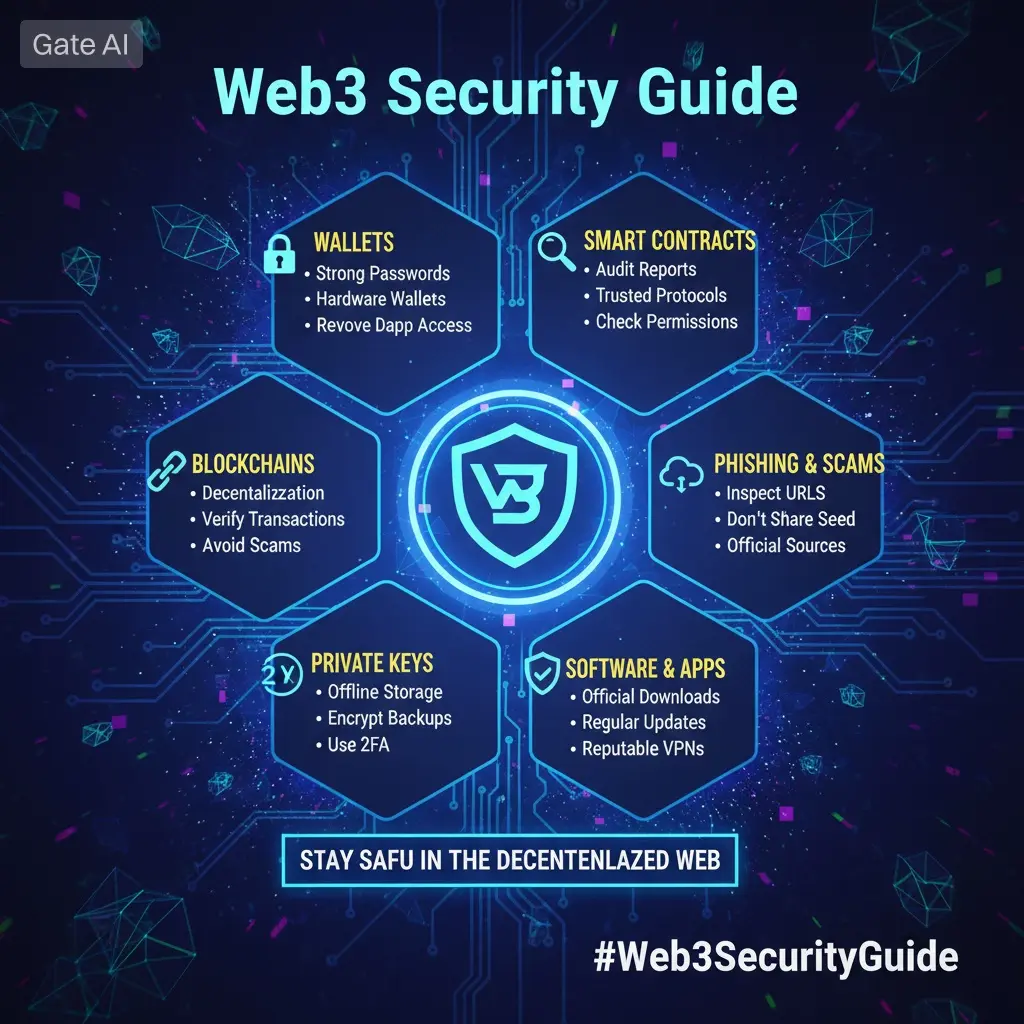
#Web3SecurityGuide Web3 Security Guide: Protecting Your Digital Future in the New Era of Blockchain
The rapid growth of Web3, blockchain technology, and digital assets has created a new financial and technological revolution. Millions of users around the world are exploring decentralized applications, cryptocurrency trading, blockchain gaming, NFTs, and innovative financial solutions. However, with greater opportunities comes the responsibility of understanding security.
In the Web3 ecosystem, security is not just a technical feature — it is a daily practice. Unlike traditional financial systems where institutions often manage security on behalf of users, Web3 gives individuals more control over their assets. This freedom creates new possibilities but also requires users to become more aware, careful, and responsible.
A secure Web3 journey starts with knowledge. Understanding how wallets work, how transactions are processed, and how personal information can be protected helps users make smarter decisions. The strongest security system is not only built through technology but also through awareness and good habits.
Why Web3 Security Matters
The blockchain industry continues expanding at an incredible speed. New platforms, decentralized applications, and digital services are introduced every day. While innovation brings progress, it also attracts malicious actors who attempt to exploit weaknesses through phishing attacks, fake platforms, social engineering, and other security threats.
For every crypto user, protecting digital assets should be a top priority. A single careless action, such as connecting a wallet to an unknown website or approving a suspicious transaction, can create unnecessary risks.
Web3 security is based on several important principles:
• Protect your private keys and recovery information
• Verify every transaction before approval
• Use trusted platforms and applications
• Stay updated about security threats
• Learn how to identify suspicious activities
These simple practices can help users create a stronger security foundation.
The Importance of Wallet Protection
Crypto wallets are one of the most important parts of the Web3 ecosystem. They provide access to digital assets and blockchain interactions. Because wallets control ownership, protecting wallet information is essential.
Users should understand the difference between public information and private information. Wallet addresses can be shared for receiving assets, but private keys and recovery phrases must always remain confidential.
No legitimate platform, exchange, or support team should request your private keys or recovery phrase. Any request for this information should immediately be considered suspicious.
Hardware wallets and advanced security tools can provide additional protection by reducing exposure to online threats. However, even the strongest tools require responsible usage and careful decision-making.
Understanding Common Web3 Threats
As the crypto ecosystem develops, attackers continue creating new strategies. Being familiar with common threats helps users recognize danger before it becomes a problem.
Phishing remains one of the most common risks in Web3. Attackers often create fake websites, messages, or applications that look similar to legitimate services. Their goal is to trick users into revealing sensitive information or approving harmful transactions.
Another major risk is social engineering. Instead of attacking technology directly, criminals may attempt to manipulate users through fake support messages, investment promises, or urgent requests.
Users should always verify information from official sources and avoid making rushed decisions when dealing with digital assets.