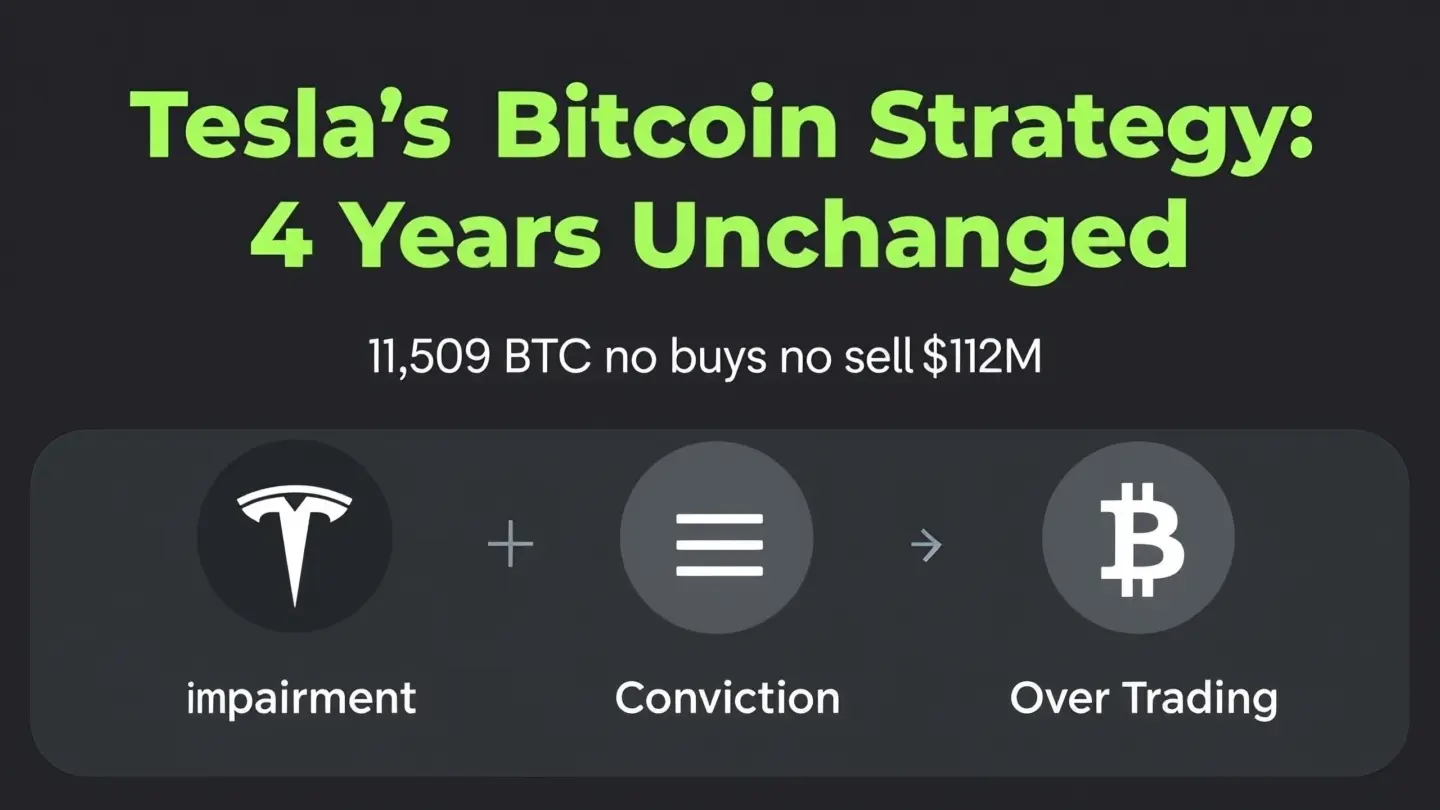

#eslaHolds11509BTCFor4Years
𝗧𝗲𝘀𝗹𝗮 𝗛𝗼𝗹𝗱𝘀 𝟭𝟭,𝟱𝟬𝟵 $𝗕𝗧𝗖 𝗙𝗼𝗿 𝟰 𝗬𝗲𝗮𝗿𝘀 — 𝗪𝗵𝗮𝘁 𝗗𝗼𝗲𝘀 𝗧𝗵𝗶𝘀 𝗦𝗮𝘆 𝗔𝗯𝗼𝘂𝘁 𝗖𝗼𝗿𝗽𝗼𝗿𝗮𝘁𝗲 𝗕𝗶𝘁𝗰𝗼𝗶𝗻 𝗦𝘁𝗿𝗮𝘁𝗲𝗴𝘆?
The relationship between 𝗧𝗲𝘀𝗹𝗮 and $𝗕𝗧𝗖 remains one of the more interesting examples of corporate exposure to Bitcoin. The company has reportedly continued holding approximately 𝟭𝟭,𝟱𝟬𝟵 $𝗕𝗧𝗖 for around four years, a position that has attracted significant attention from both traditional investors and the crypto community.
What makes this interesting is not simply the size of the Bitcoin holding.
The bigger story is what a long-term corporate Bitcoin position represents in a market where companies are increasingly considering digital assets as part of their treasury strategies.
When a publicly traded company holds $𝗕𝗧𝗖 for several years rather than actively trading it, the strategy becomes fundamentally different from short-term speculation.
The company is effectively maintaining exposure to an asset known for its high volatility while accepting that the value of the position can fluctuate significantly over time.
For 𝗧𝗲𝘀𝗹𝗮, this means its Bitcoin holdings can become an additional factor influencing how investors view the company's overall financial position.
The value of the 𝟭𝟭,𝟱𝟬𝟵 $𝗕𝗧𝗖 position can rise or fall with the broader cryptocurrency market, potentially creating changes in the company's reported financial results and investor sentiment.
This is why corporate Bitcoin holdings are increasingly becoming an important topic for market analysts.
𝗧𝗵𝗲 𝗾𝘂𝗲𝘀𝘁𝗶𝗼𝗻 𝗶𝘀 𝗻𝗼 𝗹𝗼𝗻𝗴𝗲𝗿 𝗼𝗻𝗹𝘆 𝗮𝗯𝗼𝘂𝘁 𝘄𝗵𝗲𝘁𝗵𝗲𝗿 𝗕𝗶𝘁𝗰𝗼𝗶𝗻 𝗴𝗼𝗲𝘀 𝘂𝗽 𝗼𝗿 𝗱𝗼𝘄𝗻.
The bigger question is how companies manage exposure to an asset that can experience large price movements in relatively short periods.
Holding $𝗕𝗧𝗖 for four years can be viewed as a long-term approach rather than an attempt to profit from every short-term market cycle.
That distinction matters.
A long-term holder does not necessarily need to react to every daily price movement. Instead, the strategy is based on a broader belief that the asset may have long-term value as a scarce digital asset and alternative store of value.
However, corporate Bitcoin exposure also comes with risks.
If the price of $𝗕𝗧𝗖 declines sharply, the market value of the company's holdings can fall significantly.
This can create additional volatility for investors who are already exposed to the company's core business.
In other words, shareholders may indirectly gain exposure to Bitcoin's price movements without directly owning Bitcoin themselves.
This creates an interesting dynamic.
An investor buying 𝗧𝗲𝘀𝗹𝗮 is primarily investing in the company's business, technology, products, and future growth potential.
But the company's Bitcoin holdings can also become part of the broader investment narrative.
𝗧𝗵𝗶𝘀 𝗰𝗮𝗻 𝗰𝗿𝗲𝗮𝘁𝗲 𝗯𝗼𝘁𝗵 𝗼𝗽𝗽𝗼𝗿𝘁𝘂𝗻𝗶𝘁𝘆 𝗮𝗻𝗱 𝗿𝗶𝘀𝗸.
When $𝗕𝗧𝗖 performs strongly, the company's Bitcoin position may attract positive attention and strengthen the perception that the company has strategic exposure to the digital-asset economy.
But when Bitcoin experiences a major correction, investors may begin questioning whether corporate balance sheets should carry such volatile assets.
This is why the four-year holding period is particularly notable.
It demonstrates that corporate Bitcoin strategies are not always based on short-term market timing.
Instead, some companies may view Bitcoin as a longer-term strategic asset.
For the broader crypto market, this can be an important signal.
If large public companies continue to hold $𝗕𝗧𝗖 over extended periods, it could contribute to the narrative that Bitcoin is becoming more integrated into mainstream corporate finance.
However, investors should still separate 𝗛𝗼𝗹𝗱𝗶𝗻𝗴 𝗕𝗶𝘁𝗰𝗼𝗶𝗻 from 𝗥𝗲𝗰𝗼𝗺𝗺𝗲𝗻𝗱𝗶𝗻𝗴 𝗕𝗶𝘁𝗰𝗼𝗶𝗻.
A company's decision to hold Bitcoin does not automatically mean the asset is suitable for every investor.
Bitcoin remains volatile, and its price can move significantly in either direction.
𝗠𝘆 𝘃𝗶𝗲𝘄 𝗶𝘀 𝘁𝗵𝗮𝘁 𝗧𝗲𝘀𝗹𝗮'𝘀 𝗵𝗼𝗹𝗱𝗶𝗻𝗴 𝗶𝘀 𝗶𝗻𝘁𝗲𝗿𝗲𝘀𝘁𝗶𝗻𝗴 𝗽𝗿𝗶𝗺𝗮𝗿𝗶𝗹𝘆 𝗯𝗲𝗰𝗮𝘂𝘀𝗲 𝗶𝘁 𝗿𝗲𝗳𝗹𝗲𝗰𝘁𝘀 𝗵𝗼𝘄 𝗰𝗼𝗿𝗽𝗼𝗿𝗮𝘁𝗲 𝗔𝗺𝗲𝗿𝗶𝗰𝗮 𝗶𝘀 𝗰𝗼𝗻𝘁𝗶𝗻𝘂𝗶𝗻𝗴 𝘁𝗼 𝗲𝘅𝗽𝗲𝗿𝗶𝗺𝗲𝗻𝘁 𝘄𝗶𝘁𝗵 𝗱𝗶𝗴𝗶𝘁𝗮𝗹 𝗮𝘀𝘀𝗲𝘁𝘀.
The real question is whether this strategy will become more common among major companies or remain limited to a smaller group of businesses willing to accept higher volatility.
If more corporations begin treating $𝗕𝗧𝗖 as a long-term treasury asset, the potential impact could extend beyond individual companies.
It could influence institutional demand, market liquidity, corporate finance strategies, and the broader perception of Bitcoin as a legitimate financial asset.
At the same time, corporate adoption does not eliminate Bitcoin's volatility.
The market can still experience sharp corrections, and investors must remain aware of the risks.
𝗙𝗼𝗿 𝗺𝗲, 𝘁𝗵𝗲 𝗺𝗼𝘀𝘁 𝗶𝗻𝘁𝗲𝗿𝗲𝘀𝘁𝗶𝗻𝗴 𝗽𝗮𝗿𝘁 𝗶𝘀 𝘁𝗵𝗲 𝗹𝗼𝗻𝗴-𝘁𝗲𝗿𝗺 𝗺𝗶𝗻𝗱𝘀𝗲𝘁.
Four years is a meaningful period in the crypto market.
During that time, $𝗕𝗧𝗖 has experienced multiple major market cycles, large price swings, changing regulation, and significant changes in institutional adoption.
Yet the reported holding has remained part of the corporate balance-sheet story.
That makes 𝗧𝗲𝘀𝗹𝗮'𝘀 𝟭𝟭,𝟱𝟬𝟵 $𝗕𝗧𝗖 𝗽𝗼𝘀𝗶𝘁𝗶𝗼𝗻 an interesting case study in how companies can approach Bitcoin as a strategic long-term asset rather than simply a short-term trading opportunity.
𝗙𝗶𝗻𝗮𝗹 𝗩𝗶𝗲𝘄:
The significance of 𝗧𝗲𝘀𝗹𝗮 𝗵𝗼𝗹𝗱𝗶𝗻𝗴 𝟭𝟭,𝟱𝟬𝟵 $𝗕𝗧𝗖 𝗳𝗼𝗿 𝗮𝗿𝗼𝘂𝗻𝗱 𝟰 𝘆𝗲𝗮𝗿𝘀 goes beyond the number of coins.
It raises a much bigger question about the future relationship between 𝗖𝗼𝗿𝗽𝗼𝗿𝗮𝘁𝗲 𝗙𝗶𝗻𝗮𝗻𝗰𝗲 and 𝗗𝗶𝗴𝗶𝘁𝗮𝗹 𝗔𝘀𝘀𝗲𝘁𝘀.
If more companies begin holding $𝗕𝗧𝗖 as part of long-term treasury strategies, Bitcoin could gradually become a more familiar component of corporate balance sheets.
But the most important lesson for investors remains simple:
𝗟𝗼𝗻𝗴-𝘁𝗲𝗿𝗺 𝗰𝗼𝗻𝘃𝗶𝗰𝘁𝗶𝗼𝗻 𝗱𝗼𝗲𝘀 𝗻𝗼𝘁 𝗿𝗲𝗺𝗼𝘃𝗲 𝗿𝗶𝘀𝗸.
𝗕𝘂𝘁 𝗶𝘁 𝗰𝗮𝗻 𝗰𝗵𝗮𝗻𝗴𝗲 𝗵𝗼𝘄 𝗶𝗻𝘃𝗲𝘀𝘁𝗼𝗿𝘀 𝘃𝗶𝗲𝘄 𝘀𝗵𝗼𝗿𝘁-𝘁𝗲𝗿𝗺 𝗺𝗮𝗿𝗸𝗲𝘁 𝗺𝗼𝘃𝗲𝗺𝗲𝗻𝘁𝘀 𝘃𝘀. 𝗹𝗼𝗻𝗴-𝘁𝗲𝗿𝗺 𝗮𝘀𝘀𝗲𝘁 𝘀𝘁𝗿𝗮𝘁𝗲𝗴𝘆.
𝗧𝗲𝘀𝗹𝗮 𝗛𝗼𝗹𝗱𝘀 𝟭𝟭,𝟱𝟬𝟵 $𝗕𝗧𝗖 𝗙𝗼𝗿 𝟰 𝗬𝗲𝗮𝗿𝘀 — 𝗪𝗵𝗮𝘁 𝗗𝗼𝗲𝘀 𝗧𝗵𝗶𝘀 𝗦𝗮𝘆 𝗔𝗯𝗼𝘂𝘁 𝗖𝗼𝗿𝗽𝗼𝗿𝗮𝘁𝗲 𝗕𝗶𝘁𝗰𝗼𝗶𝗻 𝗦𝘁𝗿𝗮𝘁𝗲𝗴𝘆?
The relationship between 𝗧𝗲𝘀𝗹𝗮 and $𝗕𝗧𝗖 remains one of the more interesting examples of corporate exposure to Bitcoin. The company has reportedly continued holding approximately 𝟭𝟭,𝟱𝟬𝟵 $𝗕𝗧𝗖 for around four years, a position that has attracted significant attention from both traditional investors and the crypto community.
What makes this interesting is not simply the size of the Bitcoin holding.
The bigger story is what a long-term corporate Bitcoin position represents in a market where companies are increasingly considering digital assets as part of their treasury strategies.
When a publicly traded company holds $𝗕𝗧𝗖 for several years rather than actively trading it, the strategy becomes fundamentally different from short-term speculation.
The company is effectively maintaining exposure to an asset known for its high volatility while accepting that the value of the position can fluctuate significantly over time.
For 𝗧𝗲𝘀𝗹𝗮, this means its Bitcoin holdings can become an additional factor influencing how investors view the company's overall financial position.
The value of the 𝟭𝟭,𝟱𝟬𝟵 $𝗕𝗧𝗖 position can rise or fall with the broader cryptocurrency market, potentially creating changes in the company's reported financial results and investor sentiment.
This is why corporate Bitcoin holdings are increasingly becoming an important topic for market analysts.
𝗧𝗵𝗲 𝗾𝘂𝗲𝘀𝘁𝗶𝗼𝗻 𝗶𝘀 𝗻𝗼 𝗹𝗼𝗻𝗴𝗲𝗿 𝗼𝗻𝗹𝘆 𝗮𝗯𝗼𝘂𝘁 𝘄𝗵𝗲𝘁𝗵𝗲𝗿 𝗕𝗶𝘁𝗰𝗼𝗶𝗻 𝗴𝗼𝗲𝘀 𝘂𝗽 𝗼𝗿 𝗱𝗼𝘄𝗻.
The bigger question is how companies manage exposure to an asset that can experience large price movements in relatively short periods.
Holding $𝗕𝗧𝗖 for four years can be viewed as a long-term approach rather than an attempt to profit from every short-term market cycle.
That distinction matters.
A long-term holder does not necessarily need to react to every daily price movement. Instead, the strategy is based on a broader belief that the asset may have long-term value as a scarce digital asset and alternative store of value.
However, corporate Bitcoin exposure also comes with risks.
If the price of $𝗕𝗧𝗖 declines sharply, the market value of the company's holdings can fall significantly.
This can create additional volatility for investors who are already exposed to the company's core business.
In other words, shareholders may indirectly gain exposure to Bitcoin's price movements without directly owning Bitcoin themselves.
This creates an interesting dynamic.
An investor buying 𝗧𝗲𝘀𝗹𝗮 is primarily investing in the company's business, technology, products, and future growth potential.
But the company's Bitcoin holdings can also become part of the broader investment narrative.
𝗧𝗵𝗶𝘀 𝗰𝗮𝗻 𝗰𝗿𝗲𝗮𝘁𝗲 𝗯𝗼𝘁𝗵 𝗼𝗽𝗽𝗼𝗿𝘁𝘂𝗻𝗶𝘁𝘆 𝗮𝗻𝗱 𝗿𝗶𝘀𝗸.
When $𝗕𝗧𝗖 performs strongly, the company's Bitcoin position may attract positive attention and strengthen the perception that the company has strategic exposure to the digital-asset economy.
But when Bitcoin experiences a major correction, investors may begin questioning whether corporate balance sheets should carry such volatile assets.
This is why the four-year holding period is particularly notable.
It demonstrates that corporate Bitcoin strategies are not always based on short-term market timing.
Instead, some companies may view Bitcoin as a longer-term strategic asset.
For the broader crypto market, this can be an important signal.
If large public companies continue to hold $𝗕𝗧𝗖 over extended periods, it could contribute to the narrative that Bitcoin is becoming more integrated into mainstream corporate finance.
However, investors should still separate 𝗛𝗼𝗹𝗱𝗶𝗻𝗴 𝗕𝗶𝘁𝗰𝗼𝗶𝗻 from 𝗥𝗲𝗰𝗼𝗺𝗺𝗲𝗻𝗱𝗶𝗻𝗴 𝗕𝗶𝘁𝗰𝗼𝗶𝗻.
A company's decision to hold Bitcoin does not automatically mean the asset is suitable for every investor.
Bitcoin remains volatile, and its price can move significantly in either direction.
𝗠𝘆 𝘃𝗶𝗲𝘄 𝗶𝘀 𝘁𝗵𝗮𝘁 𝗧𝗲𝘀𝗹𝗮'𝘀 𝗵𝗼𝗹𝗱𝗶𝗻𝗴 𝗶𝘀 𝗶𝗻𝘁𝗲𝗿𝗲𝘀𝘁𝗶𝗻𝗴 𝗽𝗿𝗶𝗺𝗮𝗿𝗶𝗹𝘆 𝗯𝗲𝗰𝗮𝘂𝘀𝗲 𝗶𝘁 𝗿𝗲𝗳𝗹𝗲𝗰𝘁𝘀 𝗵𝗼𝘄 𝗰𝗼𝗿𝗽𝗼𝗿𝗮𝘁𝗲 𝗔𝗺𝗲𝗿𝗶𝗰𝗮 𝗶𝘀 𝗰𝗼𝗻𝘁𝗶𝗻𝘂𝗶𝗻𝗴 𝘁𝗼 𝗲𝘅𝗽𝗲𝗿𝗶𝗺𝗲𝗻𝘁 𝘄𝗶𝘁𝗵 𝗱𝗶𝗴𝗶𝘁𝗮𝗹 𝗮𝘀𝘀𝗲𝘁𝘀.
The real question is whether this strategy will become more common among major companies or remain limited to a smaller group of businesses willing to accept higher volatility.
If more corporations begin treating $𝗕𝗧𝗖 as a long-term treasury asset, the potential impact could extend beyond individual companies.
It could influence institutional demand, market liquidity, corporate finance strategies, and the broader perception of Bitcoin as a legitimate financial asset.
At the same time, corporate adoption does not eliminate Bitcoin's volatility.
The market can still experience sharp corrections, and investors must remain aware of the risks.
𝗙𝗼𝗿 𝗺𝗲, 𝘁𝗵𝗲 𝗺𝗼𝘀𝘁 𝗶𝗻𝘁𝗲𝗿𝗲𝘀𝘁𝗶𝗻𝗴 𝗽𝗮𝗿𝘁 𝗶𝘀 𝘁𝗵𝗲 𝗹𝗼𝗻𝗴-𝘁𝗲𝗿𝗺 𝗺𝗶𝗻𝗱𝘀𝗲𝘁.
Four years is a meaningful period in the crypto market.
During that time, $𝗕𝗧𝗖 has experienced multiple major market cycles, large price swings, changing regulation, and significant changes in institutional adoption.
Yet the reported holding has remained part of the corporate balance-sheet story.
That makes 𝗧𝗲𝘀𝗹𝗮'𝘀 𝟭𝟭,𝟱𝟬𝟵 $𝗕𝗧𝗖 𝗽𝗼𝘀𝗶𝘁𝗶𝗼𝗻 an interesting case study in how companies can approach Bitcoin as a strategic long-term asset rather than simply a short-term trading opportunity.
𝗙𝗶𝗻𝗮𝗹 𝗩𝗶𝗲𝘄:
The significance of 𝗧𝗲𝘀𝗹𝗮 𝗵𝗼𝗹𝗱𝗶𝗻𝗴 𝟭𝟭,𝟱𝟬𝟵 $𝗕𝗧𝗖 𝗳𝗼𝗿 𝗮𝗿𝗼𝘂𝗻𝗱 𝟰 𝘆𝗲𝗮𝗿𝘀 goes beyond the number of coins.
It raises a much bigger question about the future relationship between 𝗖𝗼𝗿𝗽𝗼𝗿𝗮𝘁𝗲 𝗙𝗶𝗻𝗮𝗻𝗰𝗲 and 𝗗𝗶𝗴𝗶𝘁𝗮𝗹 𝗔𝘀𝘀𝗲𝘁𝘀.
If more companies begin holding $𝗕𝗧𝗖 as part of long-term treasury strategies, Bitcoin could gradually become a more familiar component of corporate balance sheets.
But the most important lesson for investors remains simple:
𝗟𝗼𝗻𝗴-𝘁𝗲𝗿𝗺 𝗰𝗼𝗻𝘃𝗶𝗰𝘁𝗶𝗼𝗻 𝗱𝗼𝗲𝘀 𝗻𝗼𝘁 𝗿𝗲𝗺𝗼𝘃𝗲 𝗿𝗶𝘀𝗸.
𝗕𝘂𝘁 𝗶𝘁 𝗰𝗮𝗻 𝗰𝗵𝗮𝗻𝗴𝗲 𝗵𝗼𝘄 𝗶𝗻𝘃𝗲𝘀𝘁𝗼𝗿𝘀 𝘃𝗶𝗲𝘄 𝘀𝗵𝗼𝗿𝘁-𝘁𝗲𝗿𝗺 𝗺𝗮𝗿𝗸𝗲𝘁 𝗺𝗼𝘃𝗲𝗺𝗲𝗻𝘁𝘀 𝘃𝘀. 𝗹𝗼𝗻𝗴-𝘁𝗲𝗿𝗺 𝗮𝘀𝘀𝗲𝘁 𝘀𝘁𝗿𝗮𝘁𝗲𝗴𝘆.