#VitalikUnveilsLeanEthereum
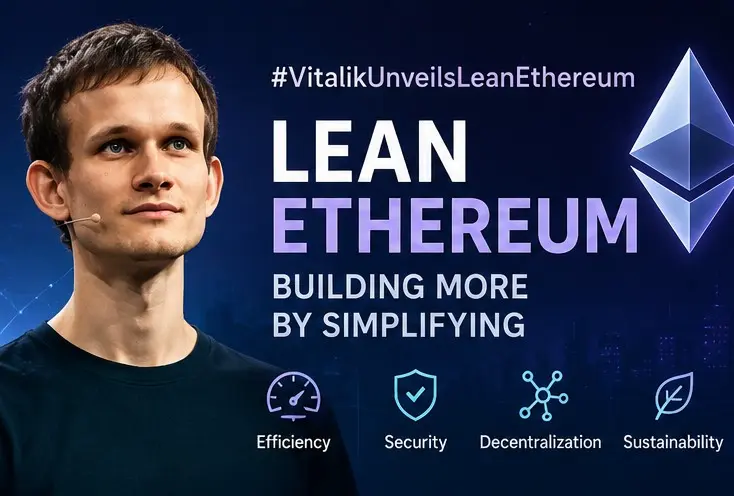
The future of Ethereum may not be about adding more complexity. Instead, it could be about achieving more through simplicity. Vitalik Buterin's vision of a "Lean Ethereum" represents one of the most important philosophical shifts in blockchain development, focusing on efficiency, scalability, decentralization, and long-term sustainability.
For years, Ethereum has evolved into the world's leading smart contract platform, powering decentralized finance, NFTs, gaming ecosystems, tokenization, and countless innovative applications. However, with this growth has come increasing complexity. More features, more layers, and more technical requirements have made the ecosystem powerful but also challenging to optimize and maintain.
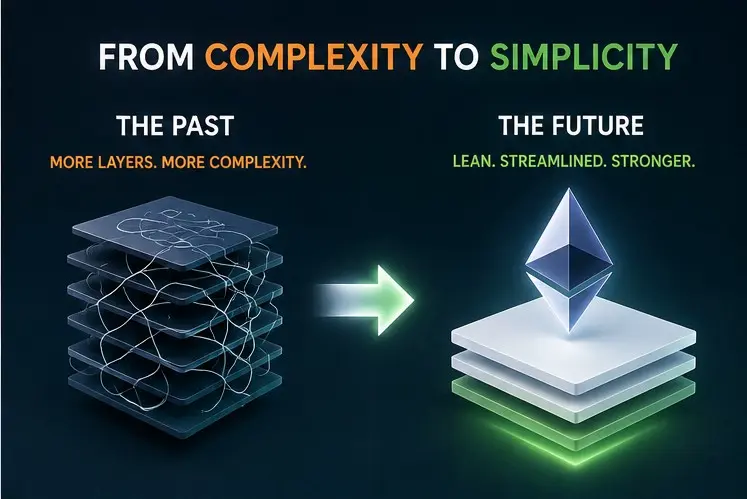
The concept of Lean Ethereum introduces a refreshing perspective: simplify the protocol while strengthening its core foundations. Rather than continuously expanding the base layer with additional features, the goal is to streamline operations, reduce unnecessary overhead, improve network performance, and preserve decentralization for future generations of users and developers.
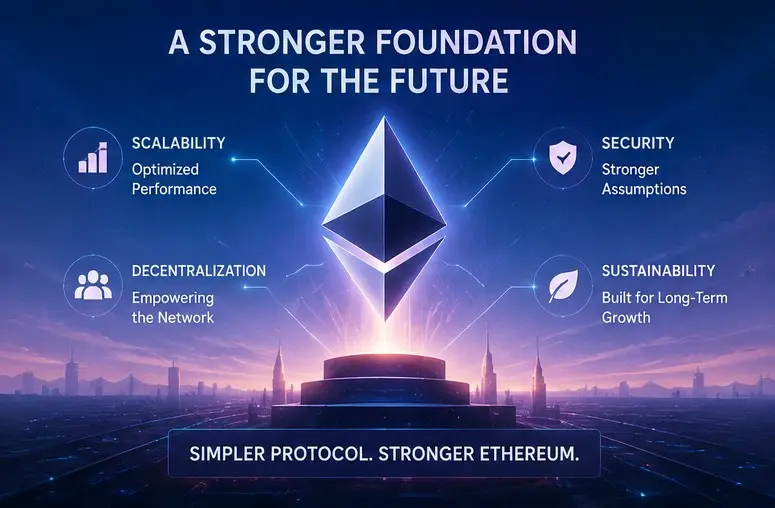
This approach aligns with one of the most important principles in technology: systems that remain simple at their core often prove to be the most resilient over time. A leaner Ethereum could potentially offer faster development cycles, reduced operational costs for validators, enhanced security assumptions, and a more sustainable roadmap for long-term ecosystem growth.
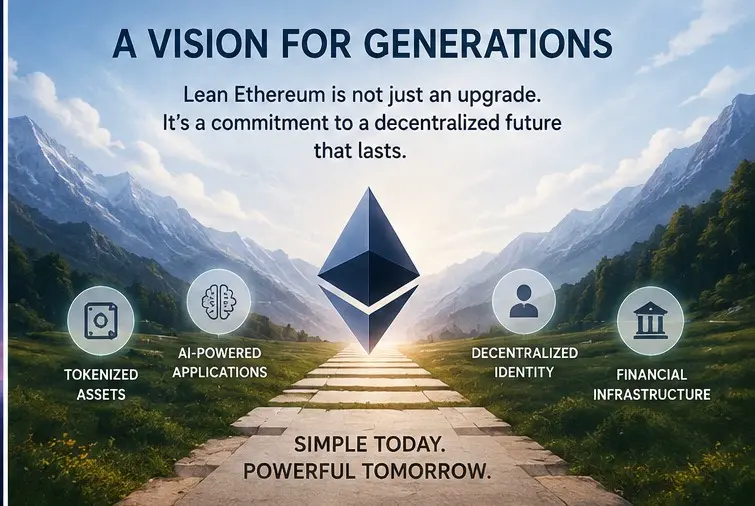
The timing of this vision is particularly significant. As blockchain adoption accelerates globally and institutional participation increases, scalability alone is no longer enough. Networks must also demonstrate reliability, efficiency, and adaptability. A streamlined Ethereum architecture could provide a stronger foundation for future innovations, including tokenized assets, AI-powered applications, decentralized identity systems, and next-generation financial infrastructure.
What makes this vision especially compelling is that it does not abandon Ethereum's core values. Instead, it reinforces them by prioritizing decentralization, security, and accessibility while removing unnecessary complexity. This balance between innovation and simplicity could become one of Ethereum's greatest competitive advantages in the years ahead.
In my view, the Lean Ethereum initiative represents more than a technical upgrade. It represents a strategic evolution in blockchain philosophy, proving that sometimes the path to greater innovation begins with making things simpler.
The future of Ethereum may not be about adding more complexity. Instead, it could be about achieving more through simplicity. Vitalik Buterin's vision of a "Lean Ethereum" represents one of the most important philosophical shifts in blockchain development, focusing on efficiency, scalability, decentralization, and long-term sustainability.
For years, Ethereum has evolved into the world's leading smart contract platform, powering decentralized finance, NFTs, gaming ecosystems, tokenization, and countless innovative applications. However, with this growth has come increasing complexity. More features, more layers, and more technical requirements have made the ecosystem powerful but also challenging to optimize and maintain.
The concept of Lean Ethereum introduces a refreshing perspective: simplify the protocol while strengthening its core foundations. Rather than continuously expanding the base layer with additional features, the goal is to streamline operations, reduce unnecessary overhead, improve network performance, and preserve decentralization for future generations of users and developers.
This approach aligns with one of the most important principles in technology: systems that remain simple at their core often prove to be the most resilient over time. A leaner Ethereum could potentially offer faster development cycles, reduced operational costs for validators, enhanced security assumptions, and a more sustainable roadmap for long-term ecosystem growth.
The timing of this vision is particularly significant. As blockchain adoption accelerates globally and institutional participation increases, scalability alone is no longer enough. Networks must also demonstrate reliability, efficiency, and adaptability. A streamlined Ethereum architecture could provide a stronger foundation for future innovations, including tokenized assets, AI-powered applications, decentralized identity systems, and next-generation financial infrastructure.
What makes this vision especially compelling is that it does not abandon Ethereum's core values. Instead, it reinforces them by prioritizing decentralization, security, and accessibility while removing unnecessary complexity. This balance between innovation and simplicity could become one of Ethereum's greatest competitive advantages in the years ahead.
In my view, the Lean Ethereum initiative represents more than a technical upgrade. It represents a strategic evolution in blockchain philosophy, proving that sometimes the path to greater innovation begins with making things simpler.
 The abstract is generated by AI