Square
Following
Hot
News
Notifications
Profile

 USMacroWeek

36K Views841 posts
#美债收益率或已见顶 A peak in yields is only one condition for a rally. A sustained decline in Treasury yields would ease pressure on U.S. stocks and crypto markets; whether a new rally takes shape depends on why yields are falling and whether corporate earnings and capital flows follow.

First, the premise that yields have peaked
SEB believes the 10-year Treasury yield is near its peak, citing strong growth and monetary policy that has not yet become restrictive. It expects yields to hover around 5%. So far, there has been no confirmed, sustained decline.

Why falling yields can support risk assets
Re
MU+7.08%
  • 43
  • 10
#美债收益率或已见顶 A peak in yields is only one condition for a rally. A sustained decline in Treasury yields would ease pressure on U.S. stocks and crypto markets; whether a new rally takes shape depends on why yields are falling and whether corporate earnings and capital flows follow.

First, the premise that yields have peaked
SEB believes the 10-year Treasury yield is near its peak, citing strong growth and monetary policy that has not yet become restrictive. It expects yields to hover around 5%. So far, there has been no confirmed, sustained decline.

Why falling yields can support risk assets
Re
ThisIsTranslateContent:
#美债收益率或已见顶 A peak in yields is only one condition for a rally. A sustained decline in Treasury yields would ease pressure on U.S. stocks and crypto markets; whether a new rally takes shape depends on why yields are falling and whether corporate earnings and capital flows follow.
First, the premise that yields have peaked
SEB believes the 10-year Treasury yield is near its peak, citing strong growth and monetary policy that has not yet become restrictive. It expects yields to hover around 5%. So far, there has been no confirmed, sustained decline.
Why falling yields can support risk assets
Reduced valuation pressure on U.S. stocks: Tech and AI stocks are valued based on future cash flows, which are worth more when discounted at lower long-term interest rates.
Lower opportunity cost for crypto assets: When interest rates are high, investors are more inclined to keep their money in Treasuries; when rates fall, capital is more likely to flow into volatile risk assets. The reason for the decline matters.
Cooling inflation and softer rate hike expectations: This tends to benefit U.S. stocks and crypto, as markets are more willing to assign higher valuations to growth stocks and tech assets.
Growing recession fears: Investors will first buy Treasuries as a safe haven, and tech stocks and Bitcoin may fall together. That is what happened on November 20: the 10-year yield fell, but the Nasdaq and Bitcoin both plunged.
U.S. stocks also depend on earnings
With lower interest rates, whether AI leaders can turn capital spending into revenue and profits will determine whether the Nasdaq and S&P can break above their previous highs.
If it is only position rebalancing, the indexes may rebound to near their previous highs and then face resistance, which looks more like a recovery than a new rally. Crypto markets also depend on capital flows.
Bitcoin is more affected by global liquidity and risk appetite. If stablecoin supply and ETF inflows do not improve, falling interest rates alone are unlikely to drive a sustained rally.#美股宏观周 $MU

repost-content-media
  • 2
  • 1
#10月PCE通胀升至近三年高位 #美股宏观周

US Markets and the Bitcoin Outlook: Strong Growth, but Inflation Complicates the Fed’s Decision

In my assessment, these data points create a complex macroeconomic environment rather than serving as a clear bullish signal for risk assets.

The key distinction here is as follows: while robust economic growth supports corporate earnings, persistent inflation limits the Federal Reserve’s (Fed) ability to lower interest rates. For both US equities and Bitcoin, the trajectory of Treasury yields and expectations regarding the Fed’s future policy will be more decisive than t
  • 8
  • 4
#PCEAndGDPData
PCE Inflation, Strong GDP, and the Fed’s December Decision: Can U.S. Stocks and Bitcoin Sustain Their Momentum?

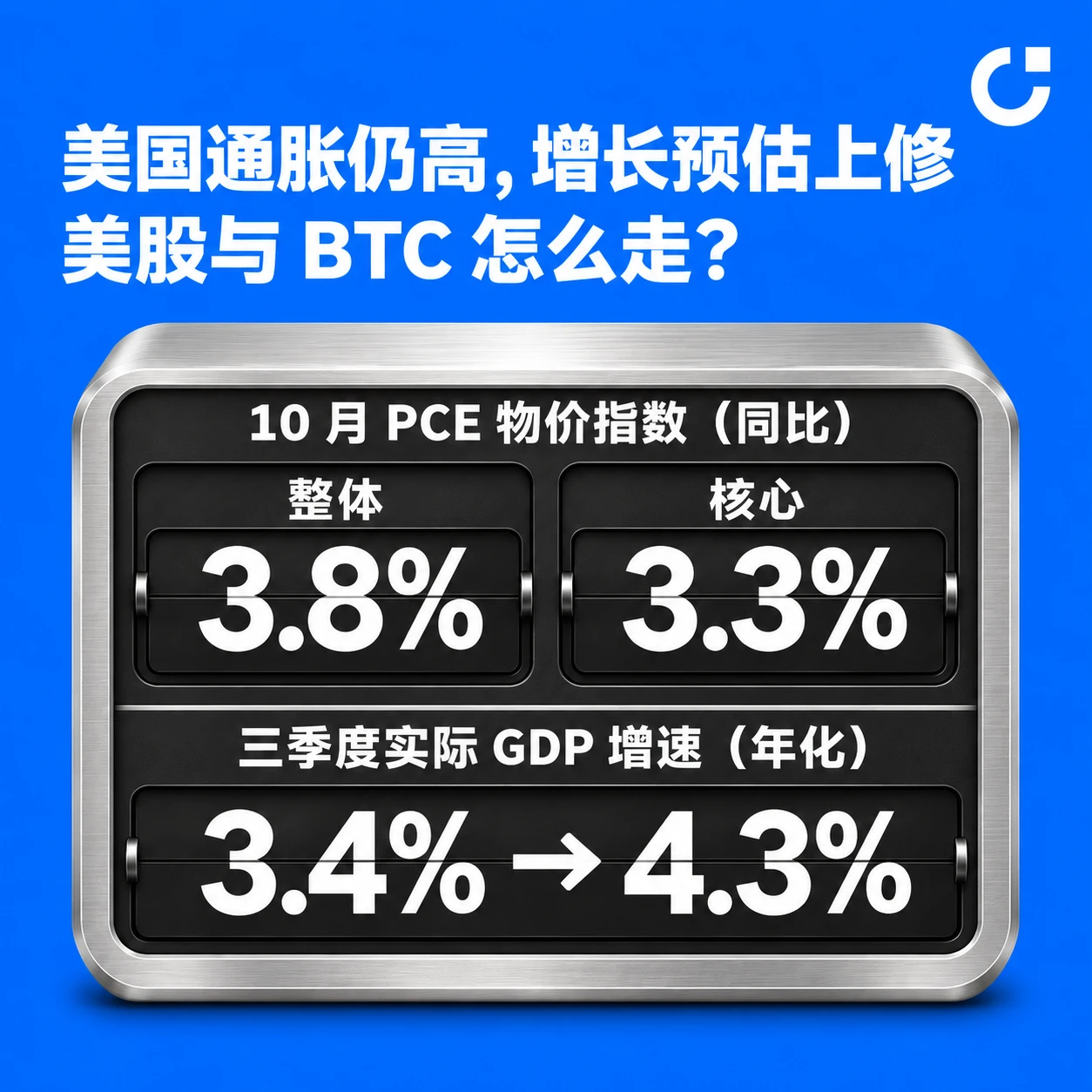
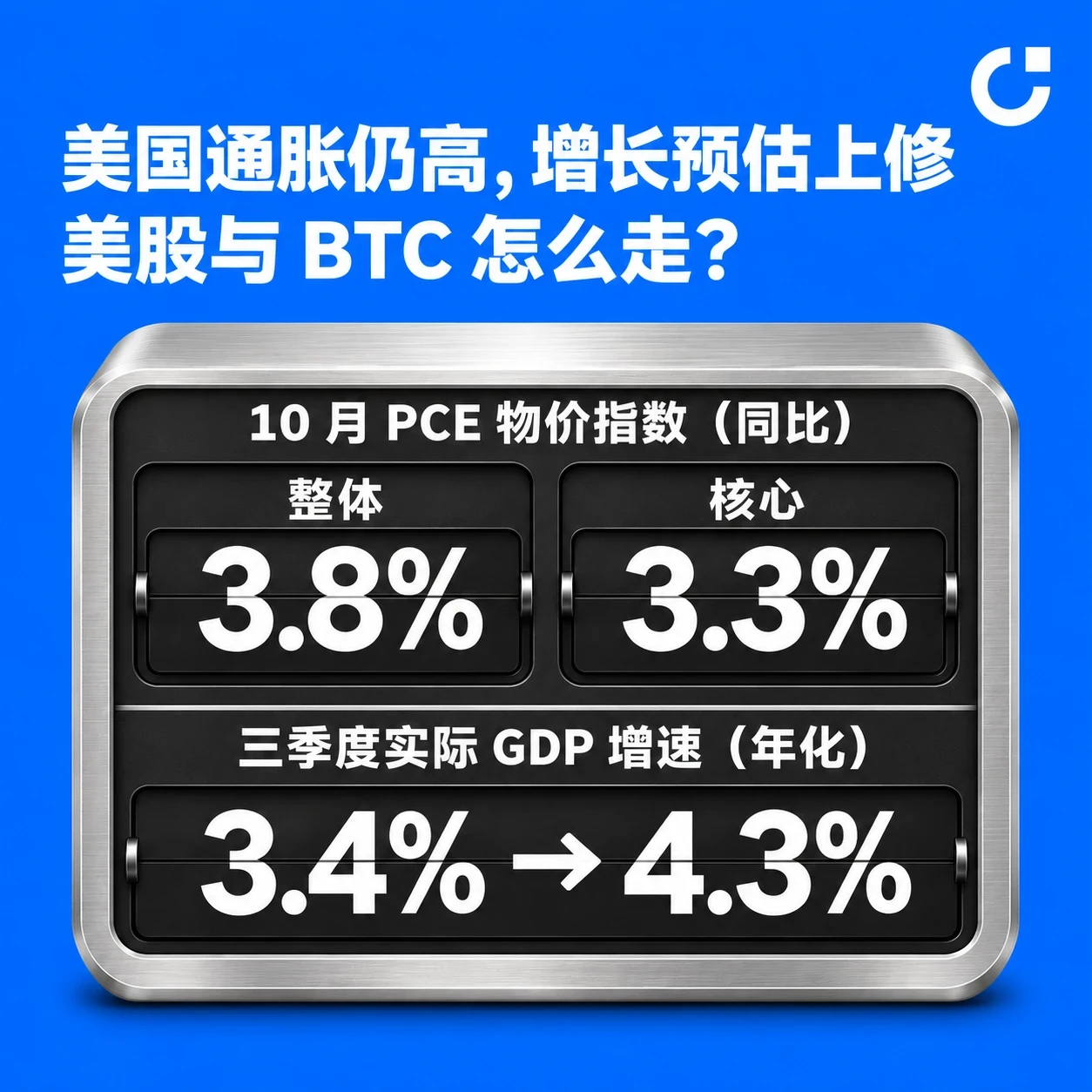
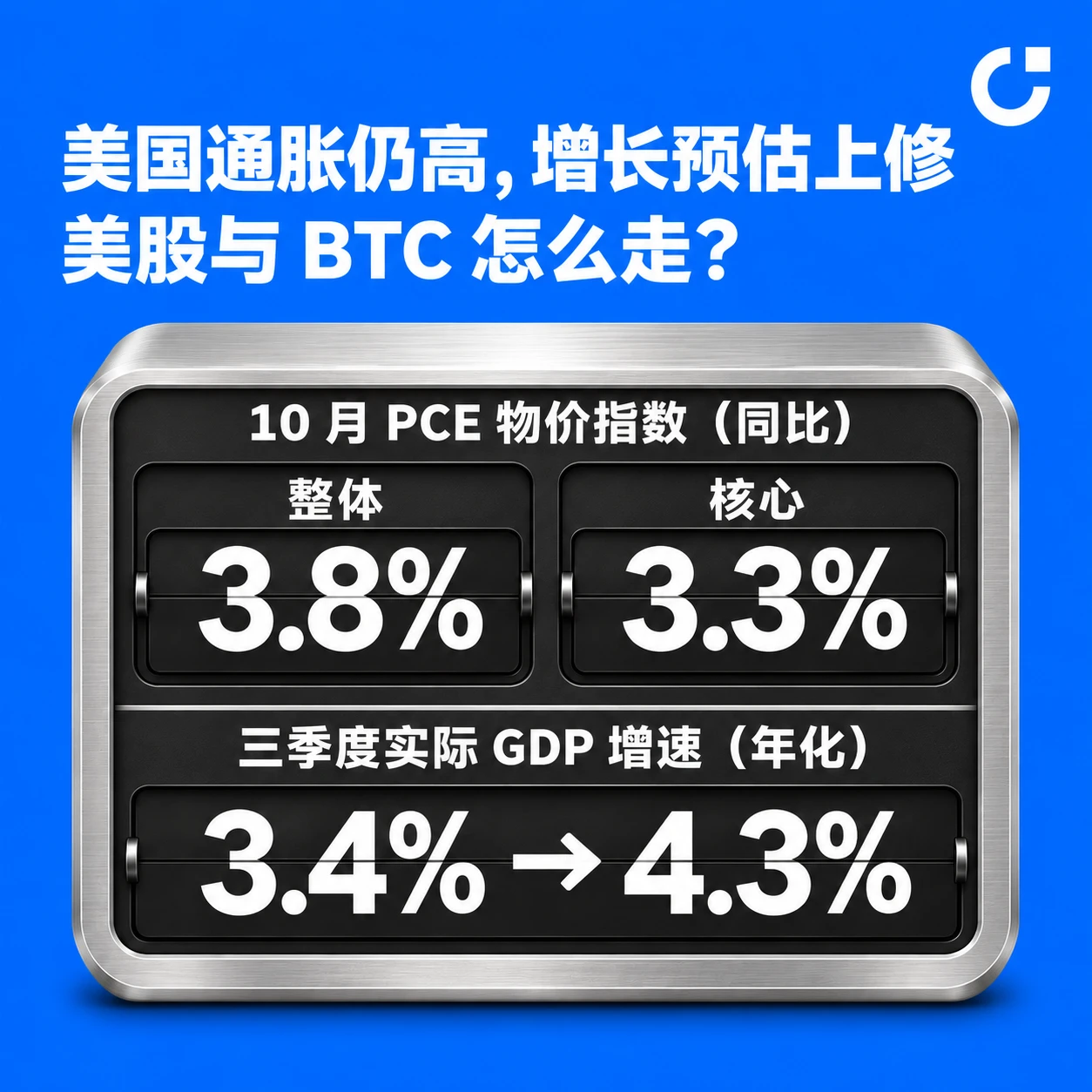
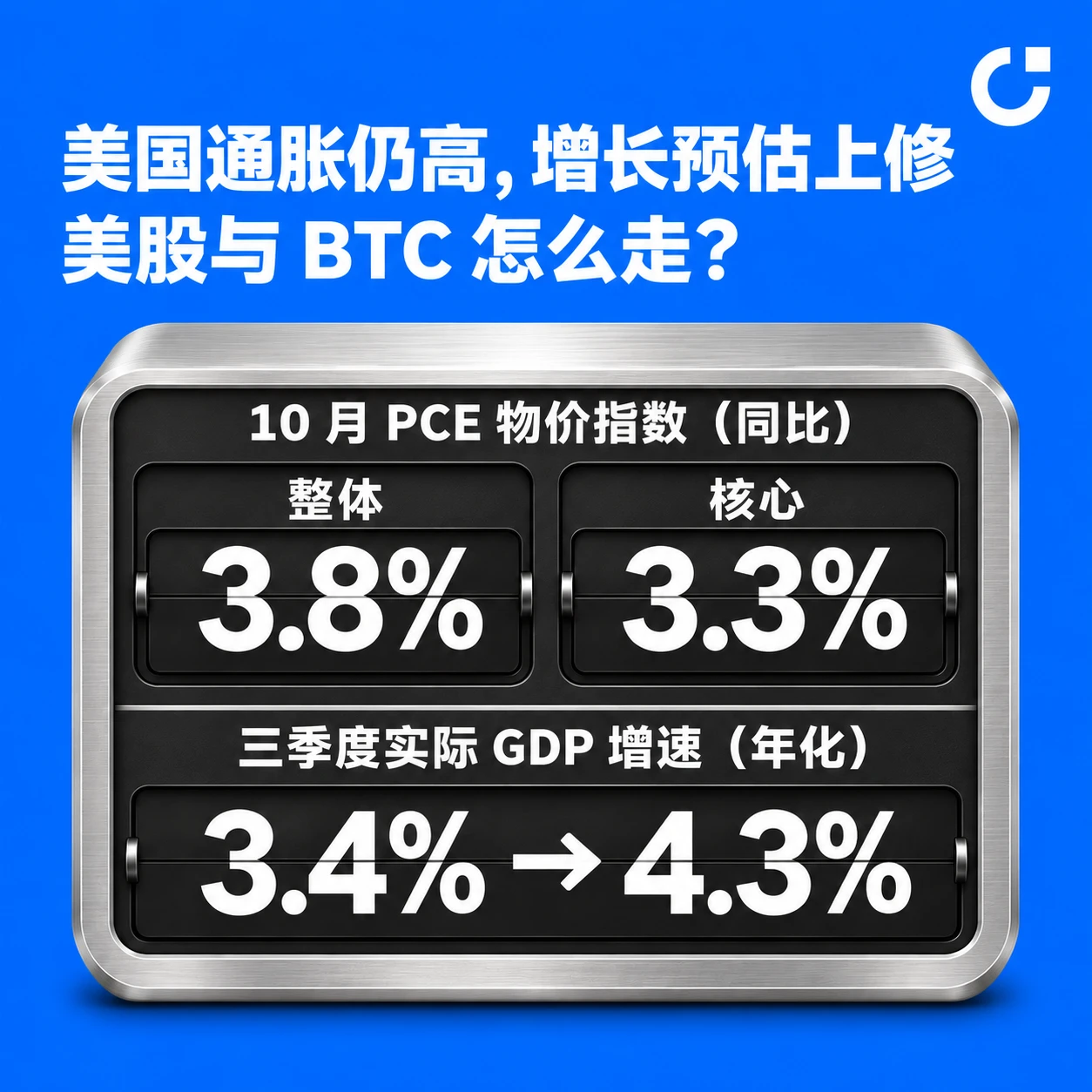
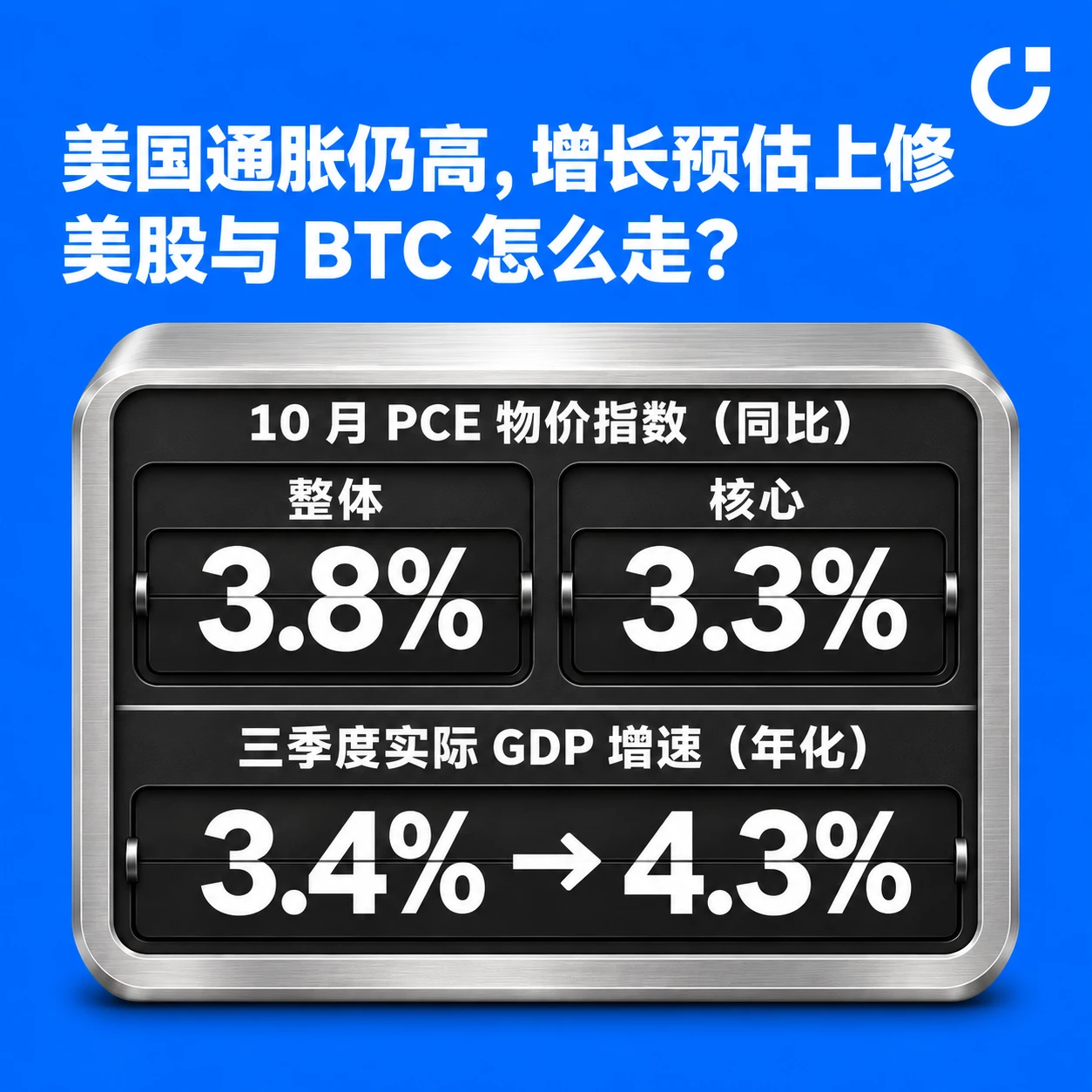
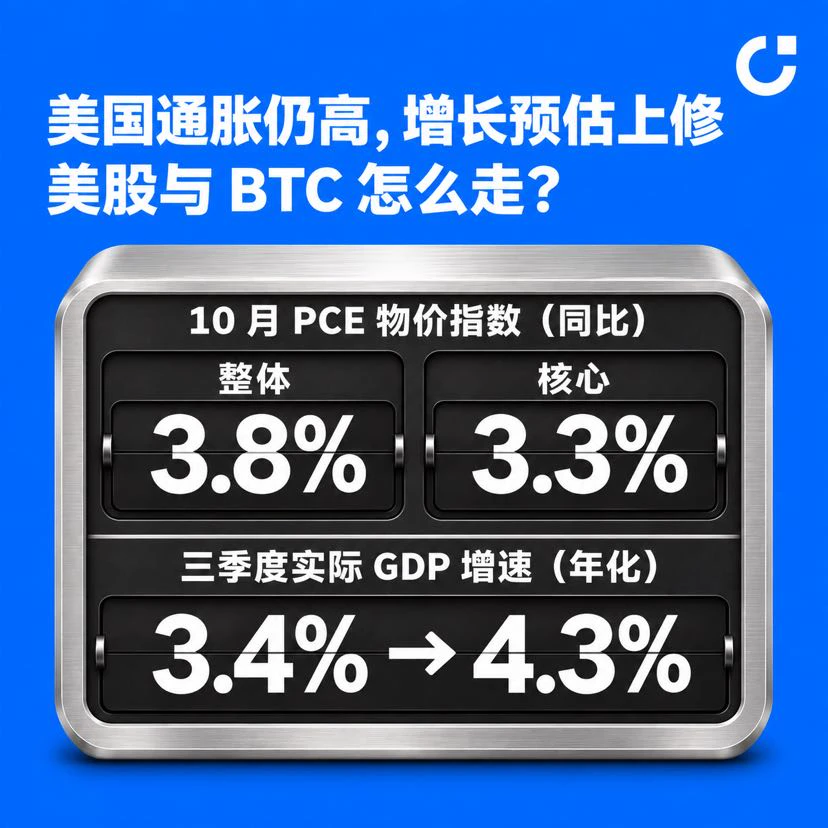
The latest U.S. economic data has placed financial markets in a challenging position, with strong economic growth creating optimism while persistent inflation continues to raise concerns about the Federal Reserve’s next policy move. October’s PCE inflation increased to 3.8% year over year, while core PCE rose to 3.3%. At the same time, third-quarter real GDP growth was revised upward from 3.4% to 4.3% annualized, highlighting the resilience of the U.S. economy. These
post-image
BTC-0.67%
SPCX+0.78%
  • 9
  • 2
#10月PCE通胀升至近三年高位 #美股宏观周 MACRO SHOCKWAVE: 3.8% PCE INFLATION MEETS 4.3% GDP SURGE HOW WALL STREET & BITCOIN DIGEST THE FED’S DECEMBER MOVE
The latest U.S. macroeconomic releases have rewritten the Q4 playbook for global liquidity, equities, and digital assets. While earlier market narratives leaned toward policy stabilization, the latest Bureau of Economic Analysis (BEA) figures delivered a dual shock: consumer inflation is climbing at its fastest annual pace in nearly three years, while underlying U.S. economic expansion is running far hotter than Wall Street projected.
As U.S. markets reopen
post-image
  • 18
  • 2
📊 PCE data is out. What’s the outlook for U.S. stocks and BTC?

U.S. October PCE rose 3.8% year over year, while core PCE rose 3.3%; Q3 real GDP annualized growth was revised up from 3.4% to 4.3%.

Growth is strong, but inflation remains high. How will the Fed adjust policy in December? Can U.S. stocks and BTC digest this round of data?

💬 Has your view changed since the data was released? Share in the comments what signal made you stick to or adjust your view: Treasury yields, tech stock performance, or a key BTC price level? Include the evidence behind your assessment, and let’s review tog
post-image
BTC-0.67%
  • 31
  • 20
#BTC U.S. inflation data is out, and BTC traders have to brush up on macroeconomics again!
The U.S. reported year-over-year core PCE inflation of 3.3% for October.
Those who are new to crypto might be wondering:
I came here to study candlestick charts—why do I also have to study U.S. inflation, the Fed, and interest rates?😂
Because BTC isn’t influenced only by support and resistance on the charts. The macro environment can also shift market risk appetite.
But here’s what I want to say:
Following the news doesn’t mean you have to guess the direction of the first candlestick after it comes out.
post-image
BTC-0.67%
  • 5
  • 2
‍#10月PCE通胀升至近三年高位 #美股宏观周

Economic Data – Strength Meets Sticky Inflation

October PCE inflation hit 3.8% year-over-year (matching expectations, up from September’s revised 3.7%), while core PCE rose to 3.3% (highest since November 2023 and above the 3.2% forecast). Monthly gains were both +0.3%. At the same time, Q3 GDP was revised sharply higher to 4.3% annualized from the initial 3.4% estimate (consensus had expected only 3.5%). Consumer spending and investment drove the upgrade. This combination of 4.3% growth and inflation still nearly double the Fed’s 2% target creates a clear policy t
HighAmbition
‍#10月PCE通胀升至近三年高位 #美股宏观周
Economic Data – Strength Meets Sticky Inflation
October PCE inflation hit 3.8% year-over-year (matching expectations, up from September’s revised 3.7%), while core PCE rose to 3.3% (highest since November 2023 and above the 3.2% forecast). Monthly gains were both +0.3%. At the same time, Q3 GDP was revised sharply higher to 4.3% annualized from the initial 3.4% estimate (consensus had expected only 3.5%). Consumer spending and investment drove the upgrade. This combination of 4.3% growth and inflation still nearly double the Fed’s 2% target creates a clear policy tension: the economy remains robust, yet price pressures are not cooling fast enough.
**Federal Reserve – Higher-for-Longer Probability Rises**
With core PCE at 3.3%, markets now assign a very high probability that the Fed will hold the current 3.75%–4.00% target range in December rather than cut. Some even see a non-zero chance of a hike if subsequent data stays hot. The effective federal funds rate sits near 3.88%. Prolonged restrictive policy raises the risk that rates stay elevated well into 2027, increasing debt-service costs and pressuring valuations. Fed commentary in the coming weeks will be critical for direction.
**Treasury Yields and the Dollar**
The 10-year Treasury yield is trading near 4.85% after recently touching above 5.15%. Hotter inflation data supports higher yields as investors price in delayed easing. The US Dollar Index (DXY) has strengthened into the 103.7–104.3 range. A firmer dollar and elevated real yields tighten global financial conditions, raising the cost of capital and weighing on risk assets.
**US Stock Market Impact**
The S&P 500 recently closed around 7,183 (down roughly 0.25% on the latest session after intraday swings of more than 3%), while the Nasdaq Composite finished near 23,586 (off about 0.6% after earlier drops exceeding 4%). Strong 4.3% GDP supports earnings, yet higher rates hit long-duration technology and AI stocks hardest through multiple compression. Investors are rotating toward more defensive names while growth stocks face continued pressure. Nasdaq remains significantly below its recent peaks, reflecting sensitivity to the higher-for-longer narrative.
**Bitcoin and Crypto Impact**
Bitcoin is currently trading near $60,800–$61,000 after a sharp multi-week decline of roughly 25% from late-October highs above $80,000. It has tested support in the $57,000–$58,500 zone multiple times. Higher Treasury yields and a stronger dollar historically create headwinds for non-yielding assets by raising opportunity costs and tightening liquidity. Strong US growth can eventually support risk appetite, but near-term the inflation/yield combination leans bearish for BTC, ETH, SOL and most altcoins. Holding key support is critical; a clean break lower opens the path toward the mid-$50,000s.
**Technical Levels and Trading Strategy**
Bitcoin’s key support cluster sits at $57,000–$58,500 (recent lows and Fibonacci confluence). A sustained break risks a move toward $55,000 or lower. Resistance is layered at $62,000–$65,000, with stronger levels near the 200-day moving average around $65,000–$72,000. RSI has spent extended periods in oversold territory, allowing for short-term bounces, but the broader trend remains downward until higher lows form. Traders should use tight risk management and reduced leverage given the elevated macroeconomic uncertainty heading into the December Fed decision.
**Final Market Outlook**
The 4.3% GDP print confirms economic strength, but 3.8% PCE / 3.3% core PCE keeps the Fed on a restrictive path. December carries high event risk for both equities (S&P near 7,183, Nasdaq near 23,586) and Bitcoin (near $61,000). The biggest near-term threat is a clear signal that rates will stay higher for longer. The next key catalysts are upcoming employment data, the next inflation prints, and the Fed’s December statement and projections.
repost-content-media
  • 3
‍#10月PCE通胀升至近三年高位 #美股宏观周

Economic Data – Strength Meets Sticky Inflation

October PCE inflation hit 3.8% year-over-year (matching expectations, up from September’s revised 3.7%), while core PCE rose to 3.3% (highest since November 2023 and above the 3.2% forecast). Monthly gains were both +0.3%. At the same time, Q3 GDP was revised sharply higher to 4.3% annualized from the initial 3.4% estimate (consensus had expected only 3.5%). Consumer spending and investment drove the upgrade. This combination of 4.3% growth and inflation still nearly double the Fed’s 2% target creates a clear policy t
GateSquare
📊 PCE data is out. What’s the outlook for U.S. stocks and BTC?
U.S. October PCE rose 3.8% year over year, while core PCE rose 3.3%; Q3 real GDP annualized growth was revised up from 3.4% to 4.3%.
Growth is strong, but inflation remains high. How will the Fed adjust policy in December? Can U.S. stocks and BTC digest this round of data?
💬 Has your view changed since the data was released? Share in the comments what signal made you stick to or adjust your view: Treasury yields, tech stock performance, or a key BTC price level? Include the evidence behind your assessment, and let’s review together 👇
‍#10月PCE通胀升至近三年高位 #美股宏观周
repost-content-media
  • 16
  • 1
#10月PCE通胀升至近三年高位 #美股宏观周
US Markets and the Bitcoin Outlook: Strong Growth, but Inflation Complicates the Fed’s Decision

In my assessment, these data points create a complex macroeconomic environment rather than serving as a clear bullish signal for risk assets.

The key distinction here is as follows: while robust economic growth supports corporate earnings, persistent inflation limits the Federal Reserve’s (Fed) ability to lower interest rates. For both US equities and Bitcoin, the trajectory of Treasury yields and expectations regarding the Fed’s future policy will be more decisive than th
post-image
BTC-0.67%
NVDA+0.81%
NAS100+2.03%
MU+7.08%
ANT+10.98%
  • 39
  • 4
Load More