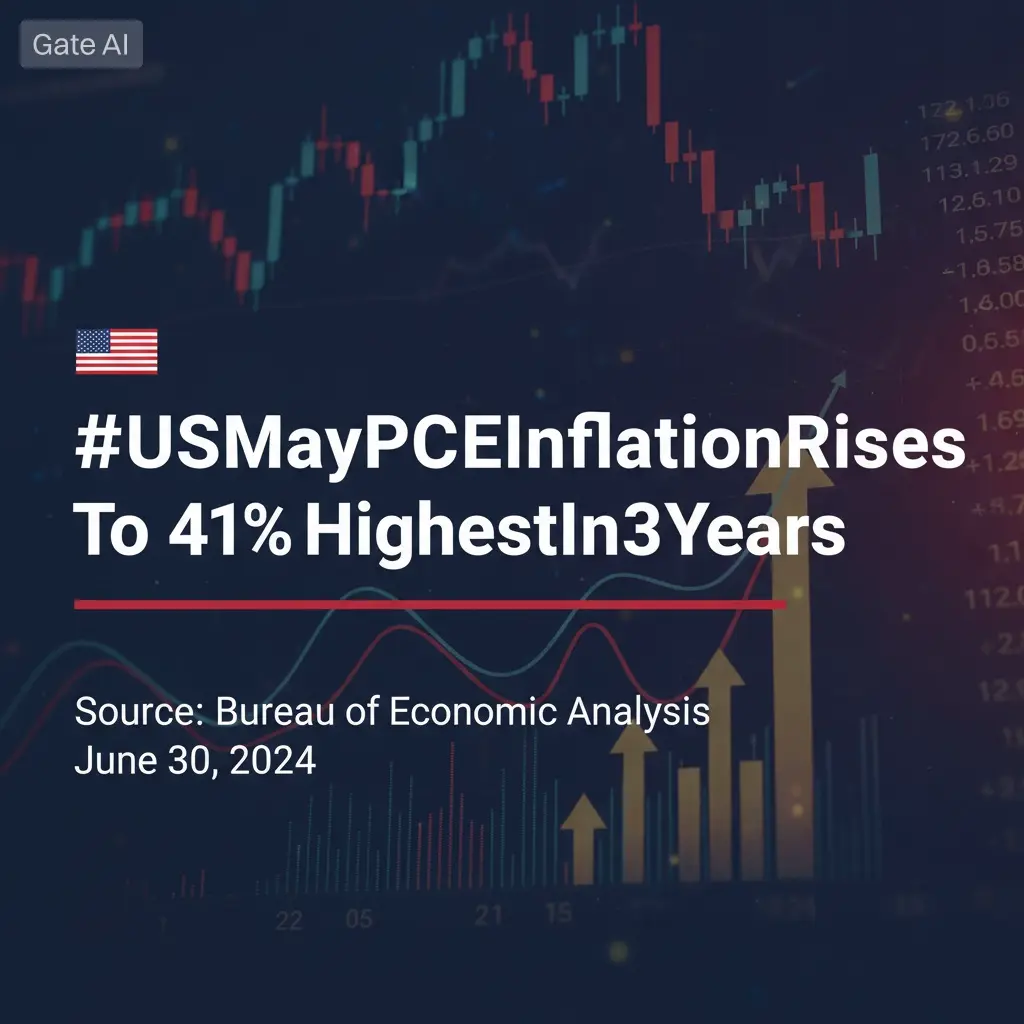
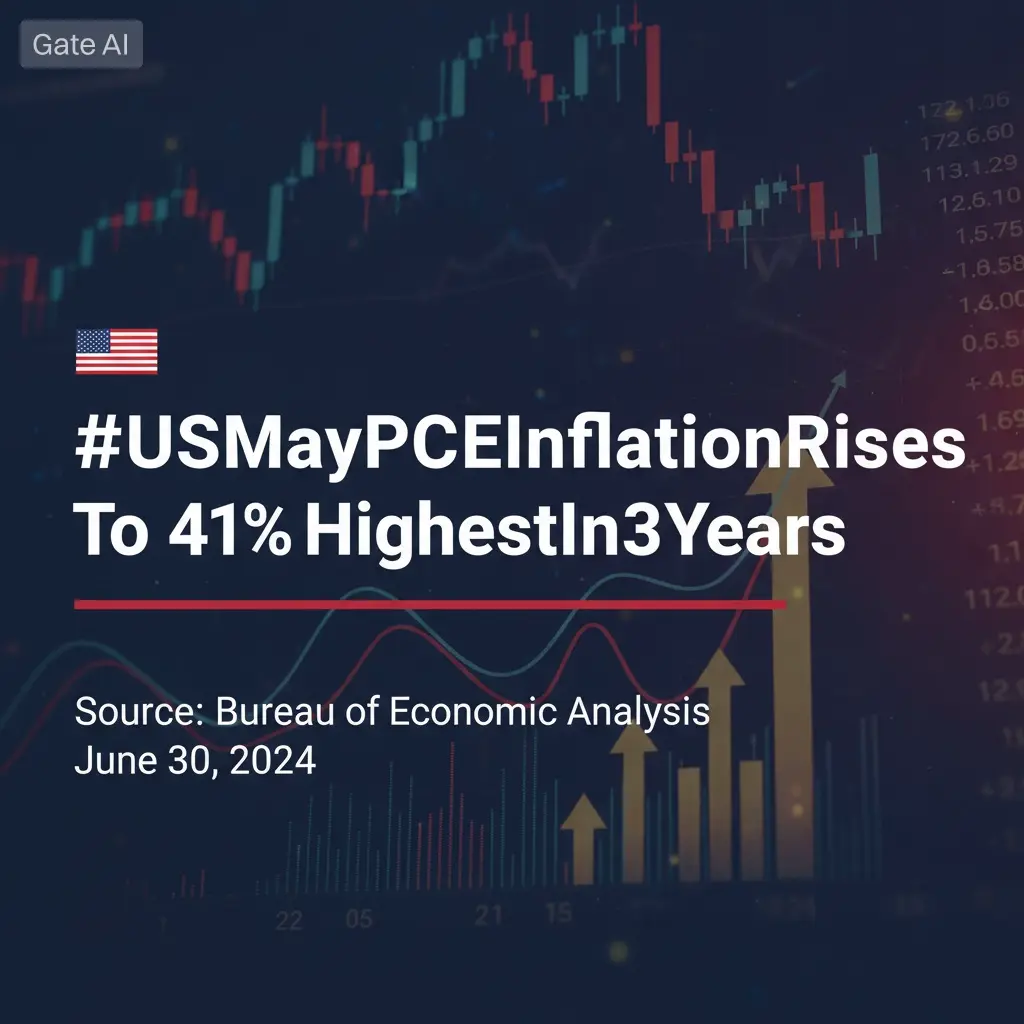
#USMayPCEInflationRisesTo4.1%HighestIn3Years
The latest U.S. May PCE inflation data has once again reminded global markets that the fight against inflation is far from over.
A reading of 4.1%, the highest level in nearly three years, suggests that price pressures remain stronger than many investors and policymakers had hoped.
Since the Personal Consumption Expenditures (PCE) Index is the inflation measure most closely monitored by the U.S. Federal Reserve, this report immediately becomes one of the most important economic indicators for financial markets.
Higher-than-expected PCE inflation increases the possibility that the Federal Reserve may keep interest rates elevated for a longer period.
Instead of moving quickly toward rate cuts, policymakers could remain cautious until inflation shows a sustained path back toward their long-term target.
This shift in expectations can significantly influence global financial markets.
Stock markets often become more volatile when inflation surprises investors.
Higher inflation can push Treasury yields higher, strengthen the U.S. dollar, and place additional pressure on growth-oriented sectors like technology.
Companies with higher borrowing costs may also face increased financial challenges if interest rates remain elevated.
For cryptocurrency markets, persistent inflation creates both risks and opportunities.
Tighter monetary policy usually reduces liquidity available for risk assets, including Bitcoin and altcoins.
However, some long-term investors continue to view digital assets as a potential hedge during periods of economic uncertainty, creating mixed market sentiment.
The impact extends far beyond the United States.
Because the U.S. economy plays a central role in global finance, inflation data can influence international capital flows, currency markets, commodity prices, and investment strategies around the world.
Central banks in many countries closely monitor U.S. economic developments before making their own policy decisions.
Investors should avoid making emotional decisions based on a single economic report.
Inflation is only one part of the broader economic picture, alongside employment, consumer spending, GDP growth, manufacturing activity, and future Federal Reserve guidance.
Successful investing requires patience, discipline, and a focus on long-term trends rather than short-term headlines.
Risk management becomes even more important during periods of elevated inflation.
Diversification, controlled exposure, and disciplined portfolio management can help investors navigate uncertain market conditions while reducing unnecessary risk.
History consistently shows that investors who remain patient during periods of volatility often achieve stronger long-term results.
The coming months will be critical.
If inflation remains stubbornly high, expectations for delayed interest-rate cuts may continue to grow.
If future inflation reports begin to cool, confidence in a more accommodative monetary policy could gradually return.
Until then, every major economic release will remain a key driver of market sentiment across stocks, bonds, commodities, and cryptocurrencies.
Inflation is more than just an economic statistic—it shapes monetary policy, influences investor confidence, and determines the direction of global financial markets. Staying informed, remaining disciplined, and focusing on long-term strategy is the key to navigating uncertain economic conditions.
The latest U.S. May PCE inflation data has once again reminded global markets that the fight against inflation is far from over.
A reading of 4.1%, the highest level in nearly three years, suggests that price pressures remain stronger than many investors and policymakers had hoped.
Since the Personal Consumption Expenditures (PCE) Index is the inflation measure most closely monitored by the U.S. Federal Reserve, this report immediately becomes one of the most important economic indicators for financial markets.
Higher-than-expected PCE inflation increases the possibility that the Federal Reserve may keep interest rates elevated for a longer period.
Instead of moving quickly toward rate cuts, policymakers could remain cautious until inflation shows a sustained path back toward their long-term target.
This shift in expectations can significantly influence global financial markets.
Stock markets often become more volatile when inflation surprises investors.
Higher inflation can push Treasury yields higher, strengthen the U.S. dollar, and place additional pressure on growth-oriented sectors like technology.
Companies with higher borrowing costs may also face increased financial challenges if interest rates remain elevated.
For cryptocurrency markets, persistent inflation creates both risks and opportunities.
Tighter monetary policy usually reduces liquidity available for risk assets, including Bitcoin and altcoins.
However, some long-term investors continue to view digital assets as a potential hedge during periods of economic uncertainty, creating mixed market sentiment.
The impact extends far beyond the United States.
Because the U.S. economy plays a central role in global finance, inflation data can influence international capital flows, currency markets, commodity prices, and investment strategies around the world.
Central banks in many countries closely monitor U.S. economic developments before making their own policy decisions.
Investors should avoid making emotional decisions based on a single economic report.
Inflation is only one part of the broader economic picture, alongside employment, consumer spending, GDP growth, manufacturing activity, and future Federal Reserve guidance.
Successful investing requires patience, discipline, and a focus on long-term trends rather than short-term headlines.
Risk management becomes even more important during periods of elevated inflation.
Diversification, controlled exposure, and disciplined portfolio management can help investors navigate uncertain market conditions while reducing unnecessary risk.
History consistently shows that investors who remain patient during periods of volatility often achieve stronger long-term results.
The coming months will be critical.
If inflation remains stubbornly high, expectations for delayed interest-rate cuts may continue to grow.
If future inflation reports begin to cool, confidence in a more accommodative monetary policy could gradually return.
Until then, every major economic release will remain a key driver of market sentiment across stocks, bonds, commodities, and cryptocurrencies.
Inflation is more than just an economic statistic—it shapes monetary policy, influences investor confidence, and determines the direction of global financial markets. Staying informed, remaining disciplined, and focusing on long-term strategy is the key to navigating uncertain economic conditions.