






#StrategyBuybackSurges12%
Strategy Unleashes a 2 Billion Dollar Defense Plan
Strategy just broke its nine-day losing streak with a 12.6% surge, and the move is sending a clear signal to the market: the company is no longer just buying Bitcoin — it is actively managing its own survival.
The catalyst was a new Digital Credit Capital Framework announced on June 29. The plan authorizes up to 2 billion dollars in stock buybacks, backed by a Bitcoin monetization program that allows the company to sell up to 1.25 billion dollars in BTC to fund the repurchases . CEO Phong Le described the shift as an evolution from "one-way capital issuance to active capital management" .
The Numbers That Matter
The mechanics are straightforward. Strategy currently holds 847,363 Bitcoin, worth approximately 50.7 billion dollars at current prices . But the company's market cap has fallen below the value of its Bitcoin holdings, with the mNAV ratio dropping below 1.0 for the first time . In simple terms, the market is pricing the entire company at a discount to the Bitcoin on its balance sheet.
The framework addresses this directly. The board authorized two separate 1 billion dollar buyback programs: one for preferred securities and another for Class A common stock . Neither program obligates the company to make purchases, but the authorization itself signals that management sees value at current levels .
The company also raised the annual dividend rate on its STRC preferred stock to 12%, up from 11.5%, effective for dividend periods beginning July 1 . The goal is to bring STRC back toward its 100 dollar stated amount, after it had sunk to a record low near 74 dollars .
Why This Matters for Investors
The most significant shift is the Bitcoin monetization program. For years, Strategy operated on a strict "buy and hold" model. That has changed. The company now has formal authorization to sell Bitcoin for three specific purposes: funding securities buybacks, paying preferred dividends and interest, and building its USD reserve .
This is not a liquidation. Executive Chairman Michael Saylor reaffirmed that the company "remains committed to Bitcoin as its primary treasury reserve asset" . The 1.25 billion dollar monetization capacity is small relative to the company's 50.7 billion dollar Bitcoin position — one analyst called it a "rounding error" . But the authorization itself is a structural shift that gives management more flexibility to defend the capital structure during periods of market stress .
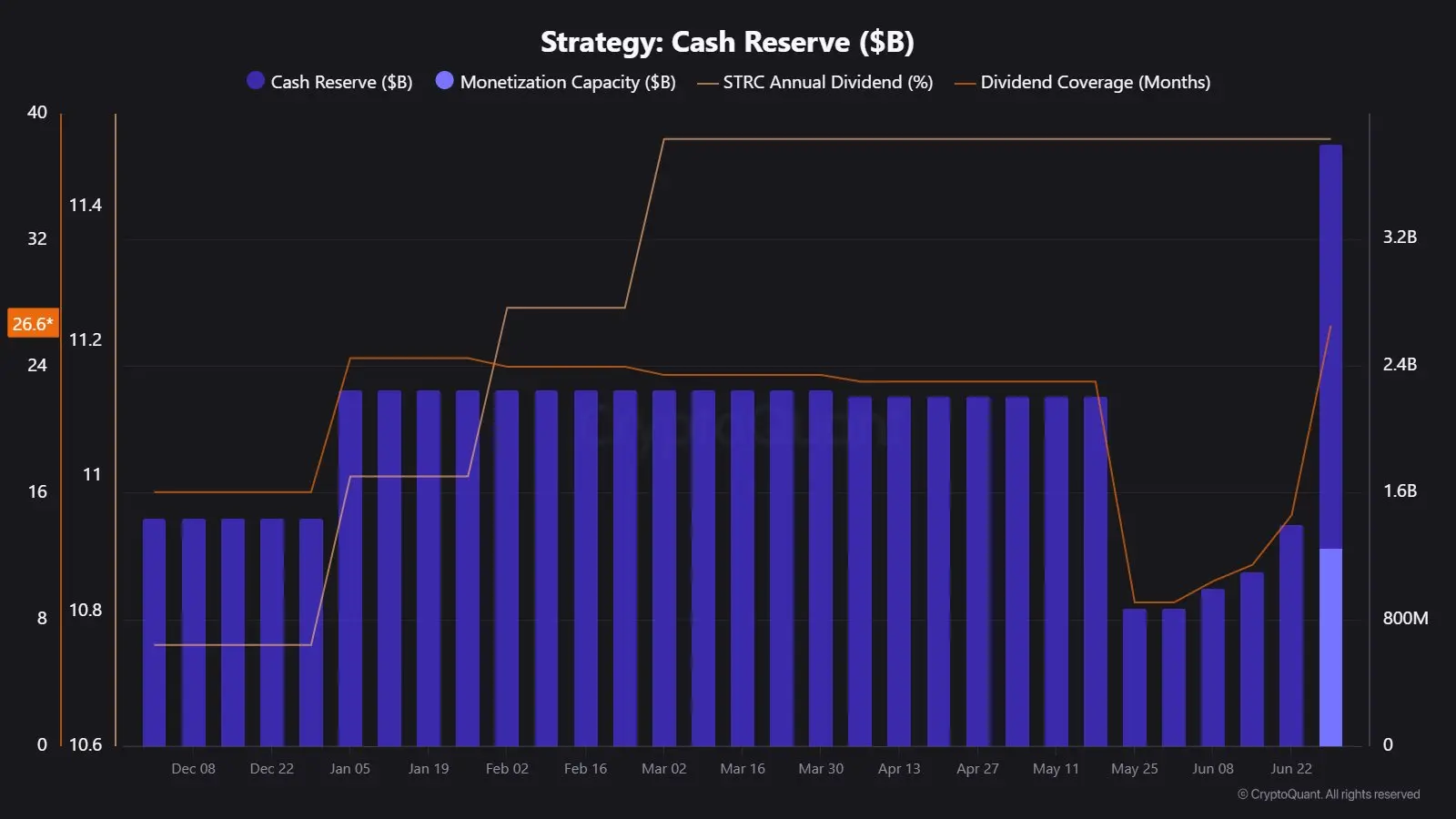
The company also built a 2.55 billion dollar USD reserve, enough to cover approximately 17.4 months of preferred dividend and interest obligations . A new board policy requires the reserve to maintain at least 12 months of coverage at all times . Combined with the monetization program, Strategy now has roughly 3.8 billion dollars in liquidity to meet its obligations .
Market Reaction and Analyst Views
The market responded positively. MSTR jumped 12.6% to 92.68 dollars on the announcement, while STRC climbed to approximately 81 dollars . Benchmark Equity Research reiterated its "Buy" rating and 570 dollar price target, citing the new framework as a sign that management can run the capital engine in "reverse" when markets demand it .
The Bottom Line
Strategy's 2 billion dollar buyback plan is a defensive move designed to stabilize a capital structure that came under severe pressure as Bitcoin weakened and the stock sold off. The framework gives management more tools to manage liquidity, support the preferred stock, and signal confidence to the market. Whether this is a turning point or a temporary relief rally will depend on Bitcoin's next move. But for now, the company has bought itself time and breathing room.
Strategy Unleashes a 2 Billion Dollar Defense Plan
Strategy just broke its nine-day losing streak with a 12.6% surge, and the move is sending a clear signal to the market: the company is no longer just buying Bitcoin — it is actively managing its own survival.
The catalyst was a new Digital Credit Capital Framework announced on June 29. The plan authorizes up to 2 billion dollars in stock buybacks, backed by a Bitcoin monetization program that allows the company to sell up to 1.25 billion dollars in BTC to fund the repurchases . CEO Phong Le described the shift as an evolution from "one-way capital issuance to active capital management" .
The Numbers That Matter
The mechanics are straightforward. Strategy currently holds 847,363 Bitcoin, worth approximately 50.7 billion dollars at current prices . But the company's market cap has fallen below the value of its Bitcoin holdings, with the mNAV ratio dropping below 1.0 for the first time . In simple terms, the market is pricing the entire company at a discount to the Bitcoin on its balance sheet.
The framework addresses this directly. The board authorized two separate 1 billion dollar buyback programs: one for preferred securities and another for Class A common stock . Neither program obligates the company to make purchases, but the authorization itself signals that management sees value at current levels .
The company also raised the annual dividend rate on its STRC preferred stock to 12%, up from 11.5%, effective for dividend periods beginning July 1 . The goal is to bring STRC back toward its 100 dollar stated amount, after it had sunk to a record low near 74 dollars .
Why This Matters for Investors
The most significant shift is the Bitcoin monetization program. For years, Strategy operated on a strict "buy and hold" model. That has changed. The company now has formal authorization to sell Bitcoin for three specific purposes: funding securities buybacks, paying preferred dividends and interest, and building its USD reserve .
This is not a liquidation. Executive Chairman Michael Saylor reaffirmed that the company "remains committed to Bitcoin as its primary treasury reserve asset" . The 1.25 billion dollar monetization capacity is small relative to the company's 50.7 billion dollar Bitcoin position — one analyst called it a "rounding error" . But the authorization itself is a structural shift that gives management more flexibility to defend the capital structure during periods of market stress .
The company also built a 2.55 billion dollar USD reserve, enough to cover approximately 17.4 months of preferred dividend and interest obligations . A new board policy requires the reserve to maintain at least 12 months of coverage at all times . Combined with the monetization program, Strategy now has roughly 3.8 billion dollars in liquidity to meet its obligations .
Market Reaction and Analyst Views
The market responded positively. MSTR jumped 12.6% to 92.68 dollars on the announcement, while STRC climbed to approximately 81 dollars . Benchmark Equity Research reiterated its "Buy" rating and 570 dollar price target, citing the new framework as a sign that management can run the capital engine in "reverse" when markets demand it .
The Bottom Line
Strategy's 2 billion dollar buyback plan is a defensive move designed to stabilize a capital structure that came under severe pressure as Bitcoin weakened and the stock sold off. The framework gives management more tools to manage liquidity, support the preferred stock, and signal confidence to the market. Whether this is a turning point or a temporary relief rally will depend on Bitcoin's next move. But for now, the company has bought itself time and breathing room.