



#夏日创作营 “Two Straits” crisis! Gold bearish news won’t fall—will the wind direction change?
Today, traders’ screens are flooded with alerts about a “Two Straits blockade.” The Iran-U.S. conflict is still escalating, and the U.S. military has launched airstrikes on Iranian targets for the 12th consecutive night. Trump has made it clear that if Iran attacks any ships in the Strait of Hormuz, the U.S. will directly destroy Iran’s bridges or power plants. The hardline stance has further tightened the situation.
Meanwhile, Iran-backed Yemeni Houthi forces have opened a new front toward the Red Sea, announcing a naval blockade of Saudi Arabia, and claiming attacks on two Saudi oil tankers. Among them, the “Enseria” vessel was hit by missiles in the Red Sea and caught fire; the crew is urgently putting out the blaze. At present, multiple tankers have been forced to reroute or return, and the safety risk for Red Sea shipping has surged. Geopolitical risk is spreading from the Persian Gulf to the Red Sea, and the risk of disruptions to global energy supply has risen significantly. The appeal of gold as a traditional safe-haven asset has also increased sharply.
Crude oil
Two major energy chokepoints are simultaneously in trouble—an escalation of Iran-related fighting combined with new Red Sea threats is creating an unprecedented risk of a supply chain disruption for crude oil. Oil prices have jumped sharply in a single day, and the nightmare of inflation is returning. On Wednesday, oil prices closed at the highest level since June 11. Brent crude rose 2.72% to $93.84 per barrel, reaching as high as $95.44 during the session; WTI crude rose 2.29% to $86.48 per barrel. In Thursday’s Asia session, Brent opened higher and kept climbing, briefly hitting a new high since June 9 at $96.07 per barrel, before slipping slightly. It is now trading above $95.50. Since last Friday, oil prices have gained more than 12%. With multiple bearish factors resonating together, the near-term international crude oil market is expected to continue maintaining high volatility and a bullish/strong performance pattern.
Gold
On Wednesday, gold prices maintained strong sideways movement, showing a clear “bearish news without falling” pattern—facing the pressure from rate-hike expectations triggered by the surge in oil prices, gold did not fall back despite the headwinds. Instead, it displayed resilience, indicating that the hedging function against geopolitical risks is once again dominating the pricing logic. The severity of the Middle East conflict has already outweighed the bearish impact of rate hikes. During periods when geopolitical crises overlap with economic uncertainty, gold often stays strong; even if the environment is one of potential rate hikes. In addition, the U.S. dollar index fell slightly by 0.1% to 101.12, providing extra support for gold prices. Although rising oil prices strengthen expectations of Federal Reserve rate hikes, which to a certain extent limits gold’s upside, market sentiment is still mainly driven by risk aversion, and the momentum-driven upswings caused by technical breakouts are still ongoing in the short term. The Middle East “Two Straits” crisis is unlikely to be resolved quickly in the short term, and is expected to continue providing safe-haven support for gold. However, it is also worth noting the Fed’s potential hawkish shift. If next week’s FOMC meeting releases stronger rate-hike signals, or if oil prices pull back after supply adjustments, gold may face pressure to take profits.
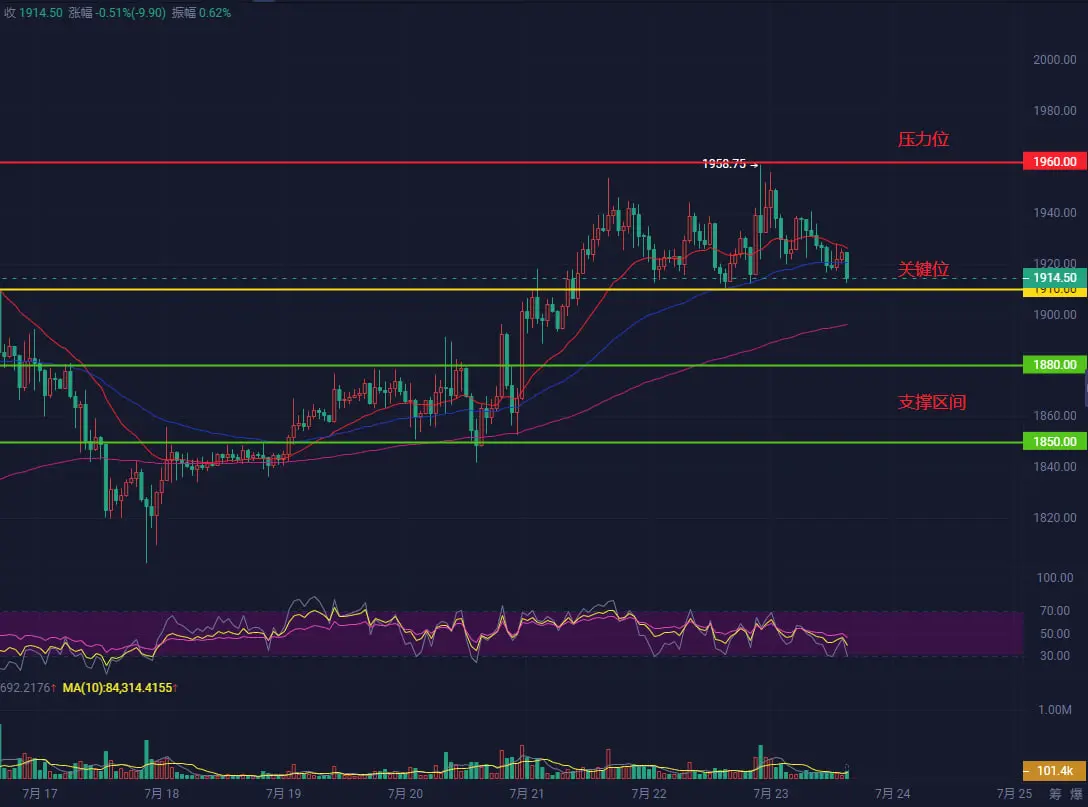
On Wednesday, gold showed a structure of rally then retracement. During the Asian and European sessions, prices continued the previous day’s strong sideways-to-higher movement, accelerating upward after breaking 4110 to around 4140 to consolidate. In the U.S. session, it made a second push toward 4165, but met resistance and pulled back; near the close it edged down slightly. The intraday fluctuation range was 4077~4165, with a swing of 88 points. On the daily chart, it closed with a bullish candle around 4130 with upper and lower shadows, and the closing price held above the 12-period exponential moving average. On the 4-hour timeframe, it has maintained a continuous bullish single-side advance pattern; the moving average system remains in a bullish alignment, and the intermediate upward structure has not been broken. On the 1-hour cycle, multiple bearish candles appeared and it also fell below the 12EMA; near-term momentum has weakened, and the market shifted from strong to weak. The current rise is part of a trend-continuation move, but this is the first time the hourly level has lost the short-term moving averages, which is a first weakening signal during the recent upswing. Yesterday’s push toward 4165 clearly met resistance; the pressure from profit-taking on the short term increased, and there is a need for a technical correction.
Intraday trading reference: If the price rebounds back to the 4150-4160 area and faces pressure, you can consider a short-term bearish position. The 4060-4080 area forms the core support zone; if the pullback stabilizes there, you can continue to look for long setups. In all likelihood, today will mainly be a tug-of-war consolidation, so it’s better to trade near the two ends of the range, and you should not chase orders at the middle price level.
FX
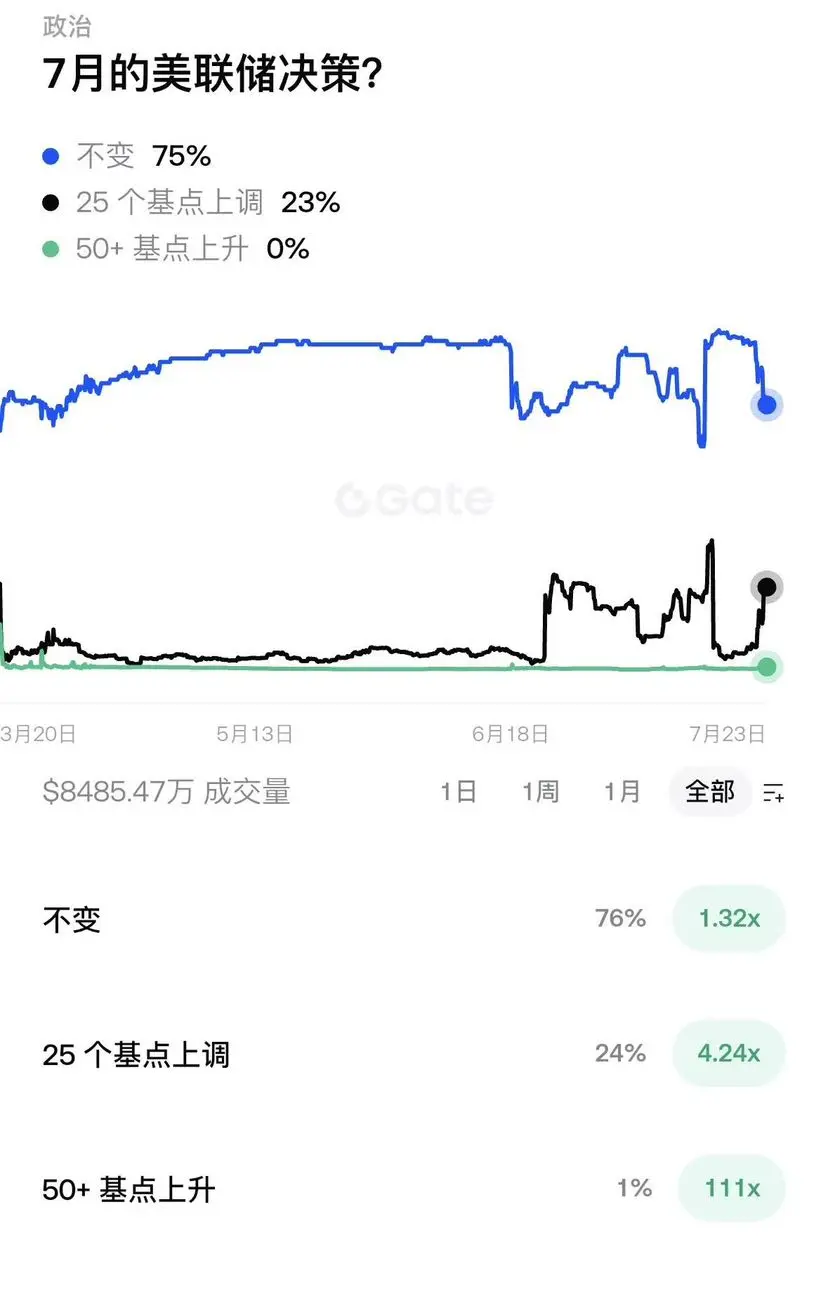
The U.S. dollar index fell 0.09% to 101.12 on Wednesday. U.S. two-year Treasury yields hit a 17-month high, and 10-year yields rose as well. In early Wednesday trading, money-market pricing showed the probability of a Fed rate hike in July at 24.1%, and the probability of at least 25 basis points of hikes in September has climbed to 69%.
U.S. stocks
On Wednesday, U.S. stocks closed broadly lower. The Nasdaq led the decline, down 0.57% to 25,690.90 points; the S&P 500 dipped slightly by 0.14% to 7,498.96 points; the Dow Jones was basically flat, down just 0.01% to close at 52,218.58 points. Market sentiment was cautious. Investors stayed on the sidelines before major tech firms such as Alphabet and Tesla released their second-quarter earnings reports, to assess whether valuations driven by the AI boom are reasonable. By sector, capital clearly rotated toward defensive sectors such as utilities seeking safe havens, while energy and materials stocks rose, supported by the warming inflation expectations.
Today, traders’ screens are flooded with alerts about a “Two Straits blockade.” The Iran-U.S. conflict is still escalating, and the U.S. military has launched airstrikes on Iranian targets for the 12th consecutive night. Trump has made it clear that if Iran attacks any ships in the Strait of Hormuz, the U.S. will directly destroy Iran’s bridges or power plants. The hardline stance has further tightened the situation.
Meanwhile, Iran-backed Yemeni Houthi forces have opened a new front toward the Red Sea, announcing a naval blockade of Saudi Arabia, and claiming attacks on two Saudi oil tankers. Among them, the “Enseria” vessel was hit by missiles in the Red Sea and caught fire; the crew is urgently putting out the blaze. At present, multiple tankers have been forced to reroute or return, and the safety risk for Red Sea shipping has surged. Geopolitical risk is spreading from the Persian Gulf to the Red Sea, and the risk of disruptions to global energy supply has risen significantly. The appeal of gold as a traditional safe-haven asset has also increased sharply.
Crude oil
Two major energy chokepoints are simultaneously in trouble—an escalation of Iran-related fighting combined with new Red Sea threats is creating an unprecedented risk of a supply chain disruption for crude oil. Oil prices have jumped sharply in a single day, and the nightmare of inflation is returning. On Wednesday, oil prices closed at the highest level since June 11. Brent crude rose 2.72% to $93.84 per barrel, reaching as high as $95.44 during the session; WTI crude rose 2.29% to $86.48 per barrel. In Thursday’s Asia session, Brent opened higher and kept climbing, briefly hitting a new high since June 9 at $96.07 per barrel, before slipping slightly. It is now trading above $95.50. Since last Friday, oil prices have gained more than 12%. With multiple bearish factors resonating together, the near-term international crude oil market is expected to continue maintaining high volatility and a bullish/strong performance pattern.
Gold
On Wednesday, gold prices maintained strong sideways movement, showing a clear “bearish news without falling” pattern—facing the pressure from rate-hike expectations triggered by the surge in oil prices, gold did not fall back despite the headwinds. Instead, it displayed resilience, indicating that the hedging function against geopolitical risks is once again dominating the pricing logic. The severity of the Middle East conflict has already outweighed the bearish impact of rate hikes. During periods when geopolitical crises overlap with economic uncertainty, gold often stays strong; even if the environment is one of potential rate hikes. In addition, the U.S. dollar index fell slightly by 0.1% to 101.12, providing extra support for gold prices. Although rising oil prices strengthen expectations of Federal Reserve rate hikes, which to a certain extent limits gold’s upside, market sentiment is still mainly driven by risk aversion, and the momentum-driven upswings caused by technical breakouts are still ongoing in the short term. The Middle East “Two Straits” crisis is unlikely to be resolved quickly in the short term, and is expected to continue providing safe-haven support for gold. However, it is also worth noting the Fed’s potential hawkish shift. If next week’s FOMC meeting releases stronger rate-hike signals, or if oil prices pull back after supply adjustments, gold may face pressure to take profits.
On Wednesday, gold showed a structure of rally then retracement. During the Asian and European sessions, prices continued the previous day’s strong sideways-to-higher movement, accelerating upward after breaking 4110 to around 4140 to consolidate. In the U.S. session, it made a second push toward 4165, but met resistance and pulled back; near the close it edged down slightly. The intraday fluctuation range was 4077~4165, with a swing of 88 points. On the daily chart, it closed with a bullish candle around 4130 with upper and lower shadows, and the closing price held above the 12-period exponential moving average. On the 4-hour timeframe, it has maintained a continuous bullish single-side advance pattern; the moving average system remains in a bullish alignment, and the intermediate upward structure has not been broken. On the 1-hour cycle, multiple bearish candles appeared and it also fell below the 12EMA; near-term momentum has weakened, and the market shifted from strong to weak. The current rise is part of a trend-continuation move, but this is the first time the hourly level has lost the short-term moving averages, which is a first weakening signal during the recent upswing. Yesterday’s push toward 4165 clearly met resistance; the pressure from profit-taking on the short term increased, and there is a need for a technical correction.
Intraday trading reference: If the price rebounds back to the 4150-4160 area and faces pressure, you can consider a short-term bearish position. The 4060-4080 area forms the core support zone; if the pullback stabilizes there, you can continue to look for long setups. In all likelihood, today will mainly be a tug-of-war consolidation, so it’s better to trade near the two ends of the range, and you should not chase orders at the middle price level.
FX
The U.S. dollar index fell 0.09% to 101.12 on Wednesday. U.S. two-year Treasury yields hit a 17-month high, and 10-year yields rose as well. In early Wednesday trading, money-market pricing showed the probability of a Fed rate hike in July at 24.1%, and the probability of at least 25 basis points of hikes in September has climbed to 69%.
U.S. stocks
On Wednesday, U.S. stocks closed broadly lower. The Nasdaq led the decline, down 0.57% to 25,690.90 points; the S&P 500 dipped slightly by 0.14% to 7,498.96 points; the Dow Jones was basically flat, down just 0.01% to close at 52,218.58 points. Market sentiment was cautious. Investors stayed on the sidelines before major tech firms such as Alphabet and Tesla released their second-quarter earnings reports, to assess whether valuations driven by the AI boom are reasonable. By sector, capital clearly rotated toward defensive sectors such as utilities seeking safe havens, while energy and materials stocks rose, supported by the warming inflation expectations.