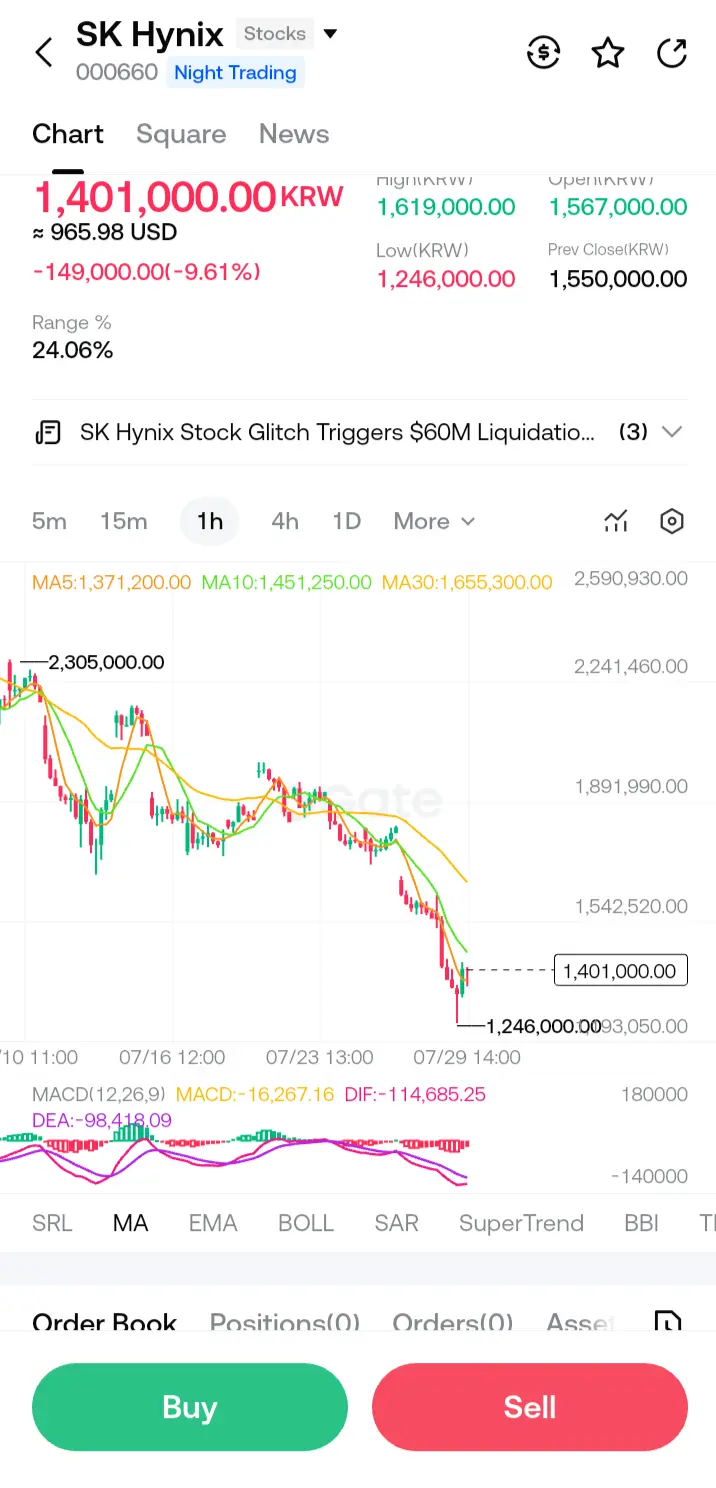



#SK海力士财报不佳盘后下跌 SK Hynix with a 5x PE: opportunity or risk?
SK Hynix with a 5x PE: the biggest risk is the 【cycle top low-PE valuation trap】; the opportunity comes from HBM structural barriers and long-term contracts hedging cycle volatility. Simply seeing a 5x PE and thinking “it’s cheap” is the most common pitfall for cycle investing.
First, clarify: the current 5x PE is calculated using annualized profits at the peak of this cycle’s boom; it is a forward PE, not steady-state normal earnings.
I. Why many people think: a 5x PE is a massive risk (bear logic)
1. Storage rule of thumb: at the peak of the cycle, PE looks the lowest
Storage is the “pig cycle” version of chips.
In the late stage of an up-cycle, profits surge to historical highs, the denominator becomes very large, and PE compresses to 5–7x. Once supply and demand reverse and chip prices fall, net profit shrinks quickly; a 5x PE turns into 15x, 20x, or even losses overnight.
In the past two storage down-cycles, the maximum profit drawdowns for major players were generally 70%~90%.
In the current quarter, the profit margin is 76%, which is the industry earnings ceiling for human memory storage; the market is pricing ahead: ultra-high profit margins cannot be maintained forever.
2. Ongoing mid-to-long-term supply pressure
1)Samsung continues to ramp up HBM capacity;
2)CXMT expands DRAM+HBM at scale, gradually releasing capacity in 2027–2028, pressuring general DRAM prices;
3)SK Hynix increases its own capital expenditures to 40~50 trillion won, continuing expansion and adding industry supply in the long run.
3. The market starts to worry that AI capex growth may slow at the margin
The foundation of this super bull market: cloud providers keep increasing AI compute capacity.
If the growth rate of capex from top customers slows, incremental HBM demand will cool, and the storage price rally will peak. This earnings report missing expectations was the trigger for shifting funding expectations.
4. Hidden risks in capital structure (a risk specific to the Korean market)
Many retail investors rely on leveraged ETFs to trade storage leaders; once the trend breaks, it can easily trigger a chain reaction of liquidations and amplify the downside. This time, the ADR listing rapidly broke below and priced in a decline in global risk appetite.
II. Bullish perspectives: a 5x PE still has structural opportunities (bull logic)
1. Fundamentally different from traditional storage cycles: HBM forms an independent growth curve
In the past, cycle ups and downs were driven by consumer electronics and PC demand;
now the key incremental driver is AI HBM. SK Hynix holds a leading global share in HBM and is deeply tied to Nvidia; it has already signed long-term supply agreements (LTA) with 10 major customers, locking in substantial capacity through 2027–2028.
Long-term contracts can smooth price volatility, and earnings stability is significantly higher than in the traditional DRAM cycle.
2. Extremely strong cash flow, with a thick financial safety cushion
In Q2, net cash position is close to 69.4 trillion won, with virtually no debt repayment pressure; it does not need panic-driven discounting to pull cash back, and it can better withstand cycle downturn shocks.
3. Valuation vs. peers is already at an extreme historical low
In the previous storage boom peak, SK Hynix’s reasonable PE core was 8–12x; now it has fallen back to 5x. The stock price has already priced in part of the pessimistic expectations for the 2027 cycle downturn.
If the scenario is only a mild cooling rather than an earnings collapse, there is still room for valuation repair.
III. The most critical watershed: distinguish “traditional DRAM” from “HBM”
Risk point: general DRAM may return to cyclical game dynamics; but the duration of the supply-demand gap in high-end HBM is longer.
Two scenario projections:
1. Bearish scenario (the high-probability market pricing direction)
General DRAM prices peak first and then decline; the company’s overall gross margin gradually falls. Incremental HBM cannot fully offset the decline in general storage profits.
→ Today’s 5x PE is only a temporary illusion, and the stock enters a prolonged consolidation digesting pessimism.
2. Bullish scenario (low-probability upside beyond expectations)
Global AI compute investment continues to exceed expectations. HBM4/HBM4E remain in persistent supply shortage; long-term contract orders keep expanding, and the company maintains high profitability; industry supply expansion is slower than demand growth.
→ A 5x PE provides a margin of safety and can see valuation repair.
IV. Key cross-linking implications for A-share investors (focus)
SK Hynix is a global memory-cycle bellwether:
1、If Hynix keeps digesting valuation and the market keeps trading the “cycle peak” expectation, it will continue to suppress CXMT and China’s domestic memory industry chain (equipment, materials);
2、If overseas memory leaders only give a 5x cycle valuation, it will continue to challenge the reasonableness of extremely high valuations for A-share memory stocks, and valuation-comparison pressure will remain for the long term.
V. Simple practical summary
1. You absolutely cannot rely solely on “a 5x PE is very low” as the buy thesis. A low PE at the top of cycle stocks is a classic value trap.
2. If you’re betting on a rebound, treat it as a cycle rebound trade only, not something to hold on to long term.
3. Track three core validation metrics to judge whether opportunities are realized:
① Do DRAM/HBM spot and contract prices turn downward?
② The latest capex guidance from cloud providers;
③ The trend of SK Hynix’s gross margin in subsequent quarters.
The above is only an industry-logic scenario analysis and does not constitute any cross-border stock investment advice. $SKHY
SK Hynix with a 5x PE: the biggest risk is the 【cycle top low-PE valuation trap】; the opportunity comes from HBM structural barriers and long-term contracts hedging cycle volatility. Simply seeing a 5x PE and thinking “it’s cheap” is the most common pitfall for cycle investing.
First, clarify: the current 5x PE is calculated using annualized profits at the peak of this cycle’s boom; it is a forward PE, not steady-state normal earnings.
I. Why many people think: a 5x PE is a massive risk (bear logic)
1. Storage rule of thumb: at the peak of the cycle, PE looks the lowest
Storage is the “pig cycle” version of chips.
In the late stage of an up-cycle, profits surge to historical highs, the denominator becomes very large, and PE compresses to 5–7x. Once supply and demand reverse and chip prices fall, net profit shrinks quickly; a 5x PE turns into 15x, 20x, or even losses overnight.
In the past two storage down-cycles, the maximum profit drawdowns for major players were generally 70%~90%.
In the current quarter, the profit margin is 76%, which is the industry earnings ceiling for human memory storage; the market is pricing ahead: ultra-high profit margins cannot be maintained forever.
2. Ongoing mid-to-long-term supply pressure
1)Samsung continues to ramp up HBM capacity;
2)CXMT expands DRAM+HBM at scale, gradually releasing capacity in 2027–2028, pressuring general DRAM prices;
3)SK Hynix increases its own capital expenditures to 40~50 trillion won, continuing expansion and adding industry supply in the long run.
3. The market starts to worry that AI capex growth may slow at the margin
The foundation of this super bull market: cloud providers keep increasing AI compute capacity.
If the growth rate of capex from top customers slows, incremental HBM demand will cool, and the storage price rally will peak. This earnings report missing expectations was the trigger for shifting funding expectations.
4. Hidden risks in capital structure (a risk specific to the Korean market)
Many retail investors rely on leveraged ETFs to trade storage leaders; once the trend breaks, it can easily trigger a chain reaction of liquidations and amplify the downside. This time, the ADR listing rapidly broke below and priced in a decline in global risk appetite.
II. Bullish perspectives: a 5x PE still has structural opportunities (bull logic)
1. Fundamentally different from traditional storage cycles: HBM forms an independent growth curve
In the past, cycle ups and downs were driven by consumer electronics and PC demand;
now the key incremental driver is AI HBM. SK Hynix holds a leading global share in HBM and is deeply tied to Nvidia; it has already signed long-term supply agreements (LTA) with 10 major customers, locking in substantial capacity through 2027–2028.
Long-term contracts can smooth price volatility, and earnings stability is significantly higher than in the traditional DRAM cycle.
2. Extremely strong cash flow, with a thick financial safety cushion
In Q2, net cash position is close to 69.4 trillion won, with virtually no debt repayment pressure; it does not need panic-driven discounting to pull cash back, and it can better withstand cycle downturn shocks.
3. Valuation vs. peers is already at an extreme historical low
In the previous storage boom peak, SK Hynix’s reasonable PE core was 8–12x; now it has fallen back to 5x. The stock price has already priced in part of the pessimistic expectations for the 2027 cycle downturn.
If the scenario is only a mild cooling rather than an earnings collapse, there is still room for valuation repair.
III. The most critical watershed: distinguish “traditional DRAM” from “HBM”
Risk point: general DRAM may return to cyclical game dynamics; but the duration of the supply-demand gap in high-end HBM is longer.
Two scenario projections:
1. Bearish scenario (the high-probability market pricing direction)
General DRAM prices peak first and then decline; the company’s overall gross margin gradually falls. Incremental HBM cannot fully offset the decline in general storage profits.
→ Today’s 5x PE is only a temporary illusion, and the stock enters a prolonged consolidation digesting pessimism.
2. Bullish scenario (low-probability upside beyond expectations)
Global AI compute investment continues to exceed expectations. HBM4/HBM4E remain in persistent supply shortage; long-term contract orders keep expanding, and the company maintains high profitability; industry supply expansion is slower than demand growth.
→ A 5x PE provides a margin of safety and can see valuation repair.
IV. Key cross-linking implications for A-share investors (focus)
SK Hynix is a global memory-cycle bellwether:
1、If Hynix keeps digesting valuation and the market keeps trading the “cycle peak” expectation, it will continue to suppress CXMT and China’s domestic memory industry chain (equipment, materials);
2、If overseas memory leaders only give a 5x cycle valuation, it will continue to challenge the reasonableness of extremely high valuations for A-share memory stocks, and valuation-comparison pressure will remain for the long term.
V. Simple practical summary
1. You absolutely cannot rely solely on “a 5x PE is very low” as the buy thesis. A low PE at the top of cycle stocks is a classic value trap.
2. If you’re betting on a rebound, treat it as a cycle rebound trade only, not something to hold on to long term.
3. Track three core validation metrics to judge whether opportunities are realized:
① Do DRAM/HBM spot and contract prices turn downward?
② The latest capex guidance from cloud providers;
③ The trend of SK Hynix’s gross margin in subsequent quarters.
The above is only an industry-logic scenario analysis and does not constitute any cross-border stock investment advice. $SKHY