#分享美股交易赢英伟达股票 After dropping 10.3%, the strongest rebound sector in the US stock market: not all AI, but "AI networks + optical interconnect + HBM" these three core lines
This US stock market plunge, on the surface, was a bubble burst in AI, but in reality, it was more like a "valuation kill due to high crowded trades."
On June 5th, the Nasdaq fell 4.2% in a single day, the largest daily drop since April 2025; the Philadelphia Semiconductor Index plummeted 10.3%, the worst since March 2020.
At the individual stock level, Marvell fell 16.7%, Micron dropped 13.3%, Intel declined 11.3%, AMD fell 10.9%, Broadcom down 7.9%, Nvidia decreased 6.2%. The main trigger was stronger-than-expected US employment data, reigniting fears of Fed rate hikes, while market disappointment also arose from overly high expectations for AI chips after Broadcom’s earnings. But this isn’t a collapse in AI demand. The real signal is: funds are not denying AI, but are re-evaluating who in the AI supply chain is truly missing, with real orders and real cash flow. So, after the plunge, the strongest rebound won’t be all AI stocks bouncing back together, but three categories:
First, AI networks and custom ASICs.
Second, CPO/silicon photonics/light sources.
Third, HBM and high-end storage.
And the most severely misjudged stocks, I believe, are not Marvell with the biggest drop, but Broadcom. Marvell is the most resilient, Broadcom’s decline is the most clearly misjudged, Micron’s expectations are the most off, and Coherent/Lumentum are industry shortfalls with the hardest constraints.
1. First, define the situation: this isn’t a fundamental collapse in AI, but a simultaneous "rate + crowded + overly optimistic expectations" sell-off
There are three core reasons for this plunge.
First, strong US employment data reignites rate hike expectations. Strong employment means inflation pressure and rate hike expectations rise again, leading to a natural valuation correction for high-valuation tech stocks. Barron’s also mentioned that robust employment reports trigger concerns about rising rates, with capital-intensive, long-duration sectors like semiconductors and solar energy hit hardest.
Second, AI semiconductor trading is too crowded. Even after the drop, the Philadelphia Semiconductor Index has still gained over 70% this year, indicating very high prior crowding. When high-flying sectors face rate and earnings expectation disruptions, they tend to experience concentrated sell-offs.
Third, Broadcom triggered a "high AI expectations" sentiment kill. In Q2, Broadcom’s AI semiconductor revenue was $10.8 billion, up 143% YoY; for Q3, it’s expected to reach $16 billion, over 200% YoY growth. Yet, because market expectations were even higher, the stock was hammered. This is the key point: the company’s fundamentals didn’t worsen; the market just felt it was "not enough beyond expectations." After such a drop, the strongest rebound isn’t from the least fallen or cheapest stocks, but from those with stable fundamentals, no industry trend deterioration, and where the decline was just valuation and sentiment misjudgment.

2. The strongest rebound direction one: AI networks and custom ASICs
This is the first main line to watch after the plunge. Because the next phase of AI data center challenges isn’t just "who has GPUs," but: how to connect GPUs, how cloud providers develop self-designed ASICs, and how to reduce costs in AI clusters. That’s the core value of Broadcom and Marvell. Broadcom was hammered because the market thought its AI chip revenue guidance was "not aggressive enough." But its actual performance isn’t weak: Q2 AI semiconductor revenue was $10.8 billion, up 143% YoY; it expects Q3 to reach $16 billion, over 200% YoY; and Q3 total revenue guidance is about $29.4 billion, up 84%, with an adjusted EBITDA margin of about 68%.
What does this mean? Broadcom isn’t retreating from AI; the market just overestimated expectations. If US tech stocks rebound later, Broadcom is likely to be one of the first core stocks to recover. It’s not the most elastic, but it’s the most solid in fundamentals. Marvell follows a different logic: it’s more like a high-beta play on AI networks and custom ASICs. Jensen Huang said at Taipei Computex that Marvell could become "the next trillion-dollar company," and it surged to a new high that day; also, Marvell will be included in the S&P 500 on June 22, which will bring passive fund inflows.
So, this line can be viewed as: Broadcom — most clearly misjudged; Marvell — most elastic in rebound. But they differ significantly: Broadcom fell 7.9%, not the most, but the most "misjudged"; Marvell fell 16.7%, with the potential for the strongest rebound, but it also had a huge run-up earlier this year, so it’s more of a high-elasticity trade, not the lowest-risk misjudgment.
3. The second strongest rebound direction: CPO, silicon photonics, light sources
Post this plunge, the second key area to watch is CPO and optical interconnects. The reason is simple: AI data centers continue expanding, and one of the toughest physical bottlenecks is bandwidth and power consumption. LightCounting estimates that the Ethernet optical modules and CPO market used in AI clusters will reach $16.5 billion in 2025 and $26 billion in 2026, with about 60% annual growth. It also notes that in 2026, AI cluster expansion will be constrained by XPU and switch ASIC shortages, but optical transceiver sales are still expected to grow about 60%.
This indicates one thing: AI optical interconnects aren’t ending in prosperity, but supply can’t keep up with demand. More critically, Nvidia has already locked in upstream photonics supply chains with real investments. In March, Nvidia announced plans to invest $2 billion each in Lumentum and Coherent, totaling $4 billion, along with major procurement commitments to enhance photonic tech and optical manufacturing for AI data center chips. This is a very strong signal. If it were just normal market conditions, Nvidia wouldn’t spend $4 billion upfront to lock laser, optical, and photonic capacity. It’s essentially telling the market: the next bottleneck in AI data centers isn’t just GPUs, but also light sources, silicon photonics, CPO, and optical interconnects. That’s why stocks like Coherent and Lumentum, if they get caught in this drop, will have very strong rebound potential later. But note: these stocks have already risen a lot, with high valuations, so they’re not "misjudged at low levels," but rather "industry trend with high elasticity and volatility."
The approximate relationships are:
Lumentum: lasers, light sources, optical communication devices. Coherent: photonic materials, lasers, optical devices, optical communication.
Marvell: AI networking, DSP, switching/interconnect, optoelectronic integration expectations.
Broadcom: ASIC + AI network platform.
The rebound logic here is clear: AI isn’t retreating; it’s expanding from GPUs to networks and optical interconnects. This aligns with previous research narratives: AI demand isn’t just in GPUs and optical modules, but will continue sinking into upstream bottlenecks like O-DSP, CPO, materials, chemicals, electronic fabrics, and silicon tetrachloride.
4. The third strongest rebound direction: HBM and high-end storage
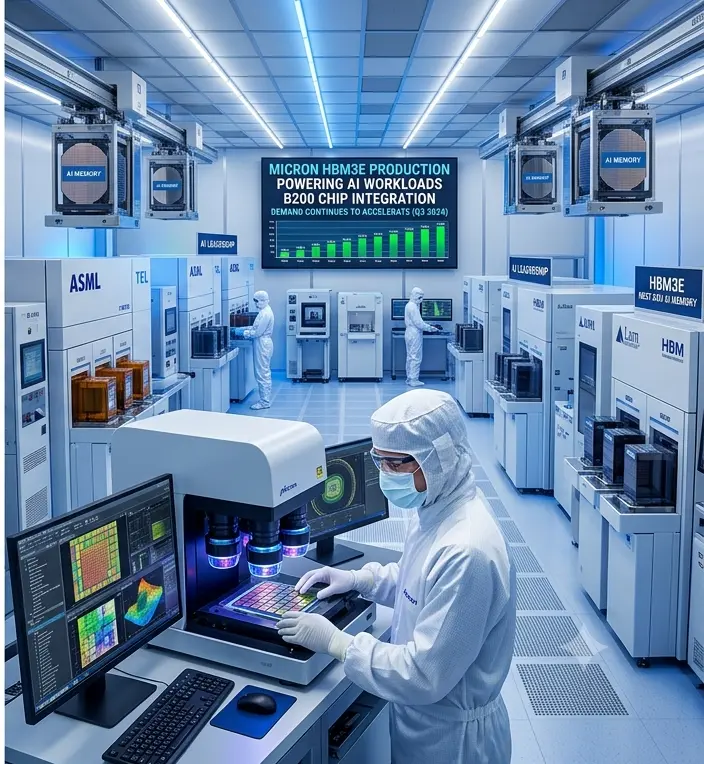
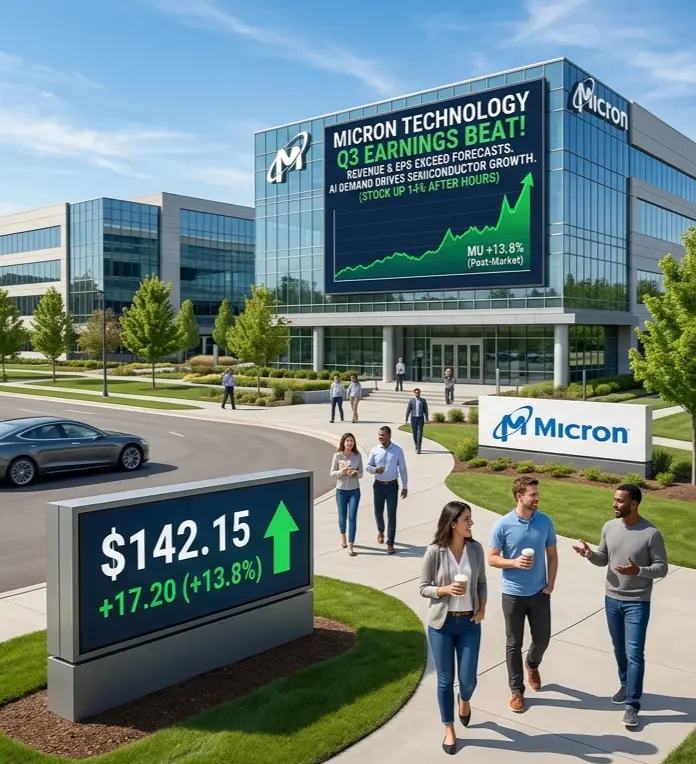
The third is HBM and high-end storage. Micron’s 13.3% drop was mainly due to market fears that after SK Hynix and Samsung’s massive capacity expansion, storage might oversupply in the future. But I think this concern is exaggerated short-term. During Taipei Computex, SK Group’s chairman said SK Hynix plans to double wafer capacity over the next five years to meet AI-driven storage demand; he also warned that memory supply bottlenecks could persist until around 2030. Reuters also mentioned that SK Hynix held about 58% of the global HBM market in Q1 2026, with Samsung and Micron each around 21%. This is very critical. If storage were truly about to oversupply, SK Hynix wouldn’t publicly say bottlenecks might last until 2030. Leading capacity expansion indicates they see a long-term gap, not a short-term boom. More importantly, AI storage isn’t just a normal DRAM cycle; it’s an HBM cycle. Regular DRAM expansion causes price pressure, but HBM is constrained by advanced packaging, TSV, yield, customer qualification, and GPU binding, so capacity release is much slower. Micron’s big drop isn’t without reason; it’s a company with risks tied to traditional storage cycle volatility, but also opportunities from increasing HBM market share.
Micron’s rebound logic: if the market re-recognizes that HBM remains tight rather than oversupplied, Micron will recover significantly. But it’s not my top misjudged stock, because storage’s inherent cycle properties mean bigger fluctuations.
5. The most severely misjudged stock: Broadcom
If I had to pick just one "most misjudged," it’s Broadcom. Not because it fell the most, but because the market’s reasoning for its decline was the least justified. The market hammered Broadcom because its AI chip guidance didn’t significantly beat expectations. But the company’s actual AI business data is very solid: Q2 AI semiconductor revenue was $10.8 billion, up 143% YoY; Q3 is expected to reach $16 billion, over 200% YoY; and it provided guidance of about $29.4 billion in total revenue for Q3, up 84%. This isn’t a company with deteriorating fundamentals. It’s more like the market expected a perfect score, but it delivered 95 points, and funds treated it as failing. Broadcom’s core advantages are threefold:
First, it positions itself in AI custom ASICs for Google, Meta, and other cloud providers’ self-developed AI chips, fundamentally requiring ASIC and networking capabilities like Broadcom’s.
Second, it’s positioned in AI networking: as AI clusters grow larger, networking becomes critical. Switches, interconnects, SerDes, and network chips will become core value pools.
Third, it has extremely strong cash flow: in Q2, operating cash flow was $10.49B, with free cash flow after capex at $10.26B, representing 46% of revenue. Such cash flow quality is very rare among high-valuation AI stocks.
So, it’s not a story stock; it’s one of the AI infrastructure companies with the highest cash flow quality. My judgment: after this plunge, Broadcom is most likely the most promising core misjudged stock for recovery in US AI hardware.
6. The most elastic stock: Marvell
If Broadcom’s misjudgment is the most obvious, then Marvell’s is the most elastic. Marvell’s decline was even larger, with a 16.7% single-day drop. But its industry logic is even more exciting: AI networks, custom ASICs, optical interconnects, DSPs, inclusion in the S&P 500, Nvidia ecosystem support—these labels all stack together. Jensen Huang said at Taipei Computex that Marvell could become "the next trillion-dollar company," which pushed its stock to a historic high.
So, Marvell’s future path could be more extreme: if AI hardware rebounds, it might bounce even more strongly than Broadcom; if AI continues to kill valuations, it could also see the largest volatility. It’s not a conservative misjudgment but a high-elasticity rebound play.
In one sentence: Broadcom is suited for recovery logic, Marvell for elasticity.
7. The stock with the biggest expectation gap: Micron
Micron’s recent drop mainly stems from the market interpreting SK Hynix’s capacity expansion as future supply pressure. But this understanding is only half correct. Capacity expansion does impact long-term supply, but if the industry leader sees the gap lasting until 2030, it confirms that HBM demand isn’t short-term but long-term. SK Hynix plans to double wafer capacity in five years, not because storage will oversupply immediately, but because AI storage demand is so large that it requires a five-year horizon. Micron’s misjudgment is that the market is applying normal DRAM cycle thinking to HBM companies, which is wrong.
However, Micron also faces risks: unlike Broadcom, its cash flow and business structure are less stable, and storage prices are volatile, making valuation very sensitive. So, Micron is better viewed as a "expectation gap" stock, not the most stable misjudged one.
8. The most constrained shortcoming stocks: Coherent and Lumentum
The logic for Coherent and Lumentum is very clear: AI expansion continues, CPO needs to be implemented, and light sources and photonic devices are indispensable. Nvidia’s $4 billion investment in these two companies, along with procurement commitments, is rare industry-level binding. It shows they’re not just ordinary optical communication stocks but key links in moving AI data centers from electrical to optical interconnects. But these stocks also have a problem: large prior gains, high valuation elasticity, and significant retracement risk. If they rebound later, it could be very strong; but if US stocks keep punishing high valuations, they’ll continue to fluctuate sharply. I categorize them as: industry shortfalls with the highest difficulty in trading.
9. Which stocks aren’t misjudged?
In this decline, some stocks look like they fell a lot but aren’t simply misjudged. Intel dropped 11.3%, but it’s not the core beneficiary of this AI hardware cycle. Its issues are more about advanced process nodes, foundry, product competitiveness, and financial recovery, not just being misjudged in AI supply chain. AMD fell 10.9%, with some misjudgment, but not the strongest. AMD benefits from AI GPUs, CPUs, and server cycles, but faces ongoing competition from Nvidia, with less certainty than Broadcom’s ASIC + networking platform or Marvell’s AI network elasticity. Nvidia fell 6.2%, not misjudged, just normal valuation fluctuation. Nvidia remains an AI core, but it’s too big and transparent; its rebound might be steady but not the most elastic.
10. Final conclusion: strongest rebound in these three lines, most severe misjudgment in Broadcom
After this US stock market plunge, my clear judgment:
First, the strongest rebound sectors: AI networks and custom ASICs.
Key stocks: Broadcom, Marvell. Broadcom for recovery, Marvell for elasticity.
Second, the most critical industry shortfall: CPO, silicon photonics, light sources. Key stocks: Coherent, Lumentum, Marvell. Nvidia’s $4 billion lock-in of photonics supply indicates optical interconnects are the next major bottleneck.
Third, the largest expectation gap: HBM and high-end storage.
Key stock: Micron. Market fears of capacity expansion, but SK Hynix says bottlenecks could last until 2030, indicating high-end storage isn’t a short-term story.
If only one stock is to be chosen as most misjudged: Broadcom.
If only one with the greatest rebound elasticity: Marvell.
If only one with the biggest expectation gap: Micron.
If only one representing the hardest industry shortfall: Coherent/Lumentum, the photonics and light sources.
In one sentence: this US stock market crash isn’t the end of AI, but a re-screening of the AI supply chain. Next, funds are most likely to shift from "buy all AI" to "buy real gaps": AI networks, CPO optical interconnects, HBM. And the real misjudged stocks aren’t the ones that fell the most, but those with stable performance, no order issues, and stronger industry positioning, yet were collectively hammered due to overly optimistic expectations. From this perspective, Broadcom is the most typical. $AVGO
This US stock market plunge, on the surface, was a bubble burst in AI, but in reality, it was more like a "valuation kill due to high crowded trades."
On June 5th, the Nasdaq fell 4.2% in a single day, the largest daily drop since April 2025; the Philadelphia Semiconductor Index plummeted 10.3%, the worst since March 2020.
At the individual stock level, Marvell fell 16.7%, Micron dropped 13.3%, Intel declined 11.3%, AMD fell 10.9%, Broadcom down 7.9%, Nvidia decreased 6.2%. The main trigger was stronger-than-expected US employment data, reigniting fears of Fed rate hikes, while market disappointment also arose from overly high expectations for AI chips after Broadcom’s earnings. But this isn’t a collapse in AI demand. The real signal is: funds are not denying AI, but are re-evaluating who in the AI supply chain is truly missing, with real orders and real cash flow. So, after the plunge, the strongest rebound won’t be all AI stocks bouncing back together, but three categories:
First, AI networks and custom ASICs.
Second, CPO/silicon photonics/light sources.
Third, HBM and high-end storage.
And the most severely misjudged stocks, I believe, are not Marvell with the biggest drop, but Broadcom. Marvell is the most resilient, Broadcom’s decline is the most clearly misjudged, Micron’s expectations are the most off, and Coherent/Lumentum are industry shortfalls with the hardest constraints.
1. First, define the situation: this isn’t a fundamental collapse in AI, but a simultaneous "rate + crowded + overly optimistic expectations" sell-off
There are three core reasons for this plunge.
First, strong US employment data reignites rate hike expectations. Strong employment means inflation pressure and rate hike expectations rise again, leading to a natural valuation correction for high-valuation tech stocks. Barron’s also mentioned that robust employment reports trigger concerns about rising rates, with capital-intensive, long-duration sectors like semiconductors and solar energy hit hardest.
Second, AI semiconductor trading is too crowded. Even after the drop, the Philadelphia Semiconductor Index has still gained over 70% this year, indicating very high prior crowding. When high-flying sectors face rate and earnings expectation disruptions, they tend to experience concentrated sell-offs.
Third, Broadcom triggered a "high AI expectations" sentiment kill. In Q2, Broadcom’s AI semiconductor revenue was $10.8 billion, up 143% YoY; for Q3, it’s expected to reach $16 billion, over 200% YoY growth. Yet, because market expectations were even higher, the stock was hammered. This is the key point: the company’s fundamentals didn’t worsen; the market just felt it was "not enough beyond expectations." After such a drop, the strongest rebound isn’t from the least fallen or cheapest stocks, but from those with stable fundamentals, no industry trend deterioration, and where the decline was just valuation and sentiment misjudgment.
2. The strongest rebound direction one: AI networks and custom ASICs
This is the first main line to watch after the plunge. Because the next phase of AI data center challenges isn’t just "who has GPUs," but: how to connect GPUs, how cloud providers develop self-designed ASICs, and how to reduce costs in AI clusters. That’s the core value of Broadcom and Marvell. Broadcom was hammered because the market thought its AI chip revenue guidance was "not aggressive enough." But its actual performance isn’t weak: Q2 AI semiconductor revenue was $10.8 billion, up 143% YoY; it expects Q3 to reach $16 billion, over 200% YoY; and Q3 total revenue guidance is about $29.4 billion, up 84%, with an adjusted EBITDA margin of about 68%.
What does this mean? Broadcom isn’t retreating from AI; the market just overestimated expectations. If US tech stocks rebound later, Broadcom is likely to be one of the first core stocks to recover. It’s not the most elastic, but it’s the most solid in fundamentals. Marvell follows a different logic: it’s more like a high-beta play on AI networks and custom ASICs. Jensen Huang said at Taipei Computex that Marvell could become "the next trillion-dollar company," and it surged to a new high that day; also, Marvell will be included in the S&P 500 on June 22, which will bring passive fund inflows.
So, this line can be viewed as: Broadcom — most clearly misjudged; Marvell — most elastic in rebound. But they differ significantly: Broadcom fell 7.9%, not the most, but the most "misjudged"; Marvell fell 16.7%, with the potential for the strongest rebound, but it also had a huge run-up earlier this year, so it’s more of a high-elasticity trade, not the lowest-risk misjudgment.
3. The second strongest rebound direction: CPO, silicon photonics, light sources
Post this plunge, the second key area to watch is CPO and optical interconnects. The reason is simple: AI data centers continue expanding, and one of the toughest physical bottlenecks is bandwidth and power consumption. LightCounting estimates that the Ethernet optical modules and CPO market used in AI clusters will reach $16.5 billion in 2025 and $26 billion in 2026, with about 60% annual growth. It also notes that in 2026, AI cluster expansion will be constrained by XPU and switch ASIC shortages, but optical transceiver sales are still expected to grow about 60%.
This indicates one thing: AI optical interconnects aren’t ending in prosperity, but supply can’t keep up with demand. More critically, Nvidia has already locked in upstream photonics supply chains with real investments. In March, Nvidia announced plans to invest $2 billion each in Lumentum and Coherent, totaling $4 billion, along with major procurement commitments to enhance photonic tech and optical manufacturing for AI data center chips. This is a very strong signal. If it were just normal market conditions, Nvidia wouldn’t spend $4 billion upfront to lock laser, optical, and photonic capacity. It’s essentially telling the market: the next bottleneck in AI data centers isn’t just GPUs, but also light sources, silicon photonics, CPO, and optical interconnects. That’s why stocks like Coherent and Lumentum, if they get caught in this drop, will have very strong rebound potential later. But note: these stocks have already risen a lot, with high valuations, so they’re not "misjudged at low levels," but rather "industry trend with high elasticity and volatility."
The approximate relationships are:
Lumentum: lasers, light sources, optical communication devices. Coherent: photonic materials, lasers, optical devices, optical communication.
Marvell: AI networking, DSP, switching/interconnect, optoelectronic integration expectations.
Broadcom: ASIC + AI network platform.
The rebound logic here is clear: AI isn’t retreating; it’s expanding from GPUs to networks and optical interconnects. This aligns with previous research narratives: AI demand isn’t just in GPUs and optical modules, but will continue sinking into upstream bottlenecks like O-DSP, CPO, materials, chemicals, electronic fabrics, and silicon tetrachloride.
4. The third strongest rebound direction: HBM and high-end storage
The third is HBM and high-end storage. Micron’s 13.3% drop was mainly due to market fears that after SK Hynix and Samsung’s massive capacity expansion, storage might oversupply in the future. But I think this concern is exaggerated short-term. During Taipei Computex, SK Group’s chairman said SK Hynix plans to double wafer capacity over the next five years to meet AI-driven storage demand; he also warned that memory supply bottlenecks could persist until around 2030. Reuters also mentioned that SK Hynix held about 58% of the global HBM market in Q1 2026, with Samsung and Micron each around 21%. This is very critical. If storage were truly about to oversupply, SK Hynix wouldn’t publicly say bottlenecks might last until 2030. Leading capacity expansion indicates they see a long-term gap, not a short-term boom. More importantly, AI storage isn’t just a normal DRAM cycle; it’s an HBM cycle. Regular DRAM expansion causes price pressure, but HBM is constrained by advanced packaging, TSV, yield, customer qualification, and GPU binding, so capacity release is much slower. Micron’s big drop isn’t without reason; it’s a company with risks tied to traditional storage cycle volatility, but also opportunities from increasing HBM market share.
Micron’s rebound logic: if the market re-recognizes that HBM remains tight rather than oversupplied, Micron will recover significantly. But it’s not my top misjudged stock, because storage’s inherent cycle properties mean bigger fluctuations.
5. The most severely misjudged stock: Broadcom
If I had to pick just one "most misjudged," it’s Broadcom. Not because it fell the most, but because the market’s reasoning for its decline was the least justified. The market hammered Broadcom because its AI chip guidance didn’t significantly beat expectations. But the company’s actual AI business data is very solid: Q2 AI semiconductor revenue was $10.8 billion, up 143% YoY; Q3 is expected to reach $16 billion, over 200% YoY; and it provided guidance of about $29.4 billion in total revenue for Q3, up 84%. This isn’t a company with deteriorating fundamentals. It’s more like the market expected a perfect score, but it delivered 95 points, and funds treated it as failing. Broadcom’s core advantages are threefold:
First, it positions itself in AI custom ASICs for Google, Meta, and other cloud providers’ self-developed AI chips, fundamentally requiring ASIC and networking capabilities like Broadcom’s.
Second, it’s positioned in AI networking: as AI clusters grow larger, networking becomes critical. Switches, interconnects, SerDes, and network chips will become core value pools.
Third, it has extremely strong cash flow: in Q2, operating cash flow was $10.49B, with free cash flow after capex at $10.26B, representing 46% of revenue. Such cash flow quality is very rare among high-valuation AI stocks.
So, it’s not a story stock; it’s one of the AI infrastructure companies with the highest cash flow quality. My judgment: after this plunge, Broadcom is most likely the most promising core misjudged stock for recovery in US AI hardware.
6. The most elastic stock: Marvell
If Broadcom’s misjudgment is the most obvious, then Marvell’s is the most elastic. Marvell’s decline was even larger, with a 16.7% single-day drop. But its industry logic is even more exciting: AI networks, custom ASICs, optical interconnects, DSPs, inclusion in the S&P 500, Nvidia ecosystem support—these labels all stack together. Jensen Huang said at Taipei Computex that Marvell could become "the next trillion-dollar company," which pushed its stock to a historic high.
So, Marvell’s future path could be more extreme: if AI hardware rebounds, it might bounce even more strongly than Broadcom; if AI continues to kill valuations, it could also see the largest volatility. It’s not a conservative misjudgment but a high-elasticity rebound play.
In one sentence: Broadcom is suited for recovery logic, Marvell for elasticity.
7. The stock with the biggest expectation gap: Micron
Micron’s recent drop mainly stems from the market interpreting SK Hynix’s capacity expansion as future supply pressure. But this understanding is only half correct. Capacity expansion does impact long-term supply, but if the industry leader sees the gap lasting until 2030, it confirms that HBM demand isn’t short-term but long-term. SK Hynix plans to double wafer capacity in five years, not because storage will oversupply immediately, but because AI storage demand is so large that it requires a five-year horizon. Micron’s misjudgment is that the market is applying normal DRAM cycle thinking to HBM companies, which is wrong.
However, Micron also faces risks: unlike Broadcom, its cash flow and business structure are less stable, and storage prices are volatile, making valuation very sensitive. So, Micron is better viewed as a "expectation gap" stock, not the most stable misjudged one.
8. The most constrained shortcoming stocks: Coherent and Lumentum
The logic for Coherent and Lumentum is very clear: AI expansion continues, CPO needs to be implemented, and light sources and photonic devices are indispensable. Nvidia’s $4 billion investment in these two companies, along with procurement commitments, is rare industry-level binding. It shows they’re not just ordinary optical communication stocks but key links in moving AI data centers from electrical to optical interconnects. But these stocks also have a problem: large prior gains, high valuation elasticity, and significant retracement risk. If they rebound later, it could be very strong; but if US stocks keep punishing high valuations, they’ll continue to fluctuate sharply. I categorize them as: industry shortfalls with the highest difficulty in trading.
9. Which stocks aren’t misjudged?
In this decline, some stocks look like they fell a lot but aren’t simply misjudged. Intel dropped 11.3%, but it’s not the core beneficiary of this AI hardware cycle. Its issues are more about advanced process nodes, foundry, product competitiveness, and financial recovery, not just being misjudged in AI supply chain. AMD fell 10.9%, with some misjudgment, but not the strongest. AMD benefits from AI GPUs, CPUs, and server cycles, but faces ongoing competition from Nvidia, with less certainty than Broadcom’s ASIC + networking platform or Marvell’s AI network elasticity. Nvidia fell 6.2%, not misjudged, just normal valuation fluctuation. Nvidia remains an AI core, but it’s too big and transparent; its rebound might be steady but not the most elastic.
10. Final conclusion: strongest rebound in these three lines, most severe misjudgment in Broadcom
After this US stock market plunge, my clear judgment:
First, the strongest rebound sectors: AI networks and custom ASICs.
Key stocks: Broadcom, Marvell. Broadcom for recovery, Marvell for elasticity.
Second, the most critical industry shortfall: CPO, silicon photonics, light sources. Key stocks: Coherent, Lumentum, Marvell. Nvidia’s $4 billion lock-in of photonics supply indicates optical interconnects are the next major bottleneck.
Third, the largest expectation gap: HBM and high-end storage.
Key stock: Micron. Market fears of capacity expansion, but SK Hynix says bottlenecks could last until 2030, indicating high-end storage isn’t a short-term story.
If only one stock is to be chosen as most misjudged: Broadcom.
If only one with the greatest rebound elasticity: Marvell.
If only one with the biggest expectation gap: Micron.
If only one representing the hardest industry shortfall: Coherent/Lumentum, the photonics and light sources.
In one sentence: this US stock market crash isn’t the end of AI, but a re-screening of the AI supply chain. Next, funds are most likely to shift from "buy all AI" to "buy real gaps": AI networks, CPO optical interconnects, HBM. And the real misjudged stocks aren’t the ones that fell the most, but those with stable performance, no order issues, and stronger industry positioning, yet were collectively hammered due to overly optimistic expectations. From this perspective, Broadcom is the most typical. $AVGO