Morph is evolving from an Ethereum Layer 2 into stablecoin payment infrastructure. This article examines Tachyon, the dual-chain architecture, Morph Payment Accelerator, and Morph’s strategy for positioning itself in the PayFi ecosystem.
2026-08-24 09:00:28
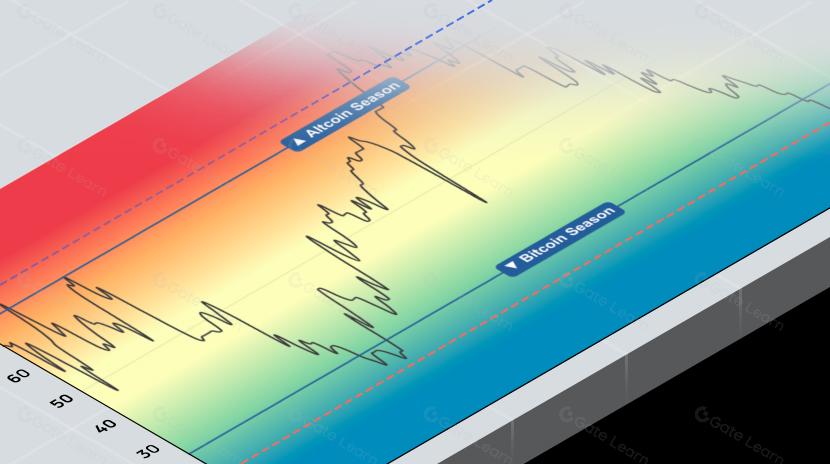
The Altcoin Season Index is a market indicator that measures how many leading altcoins have outperformed Bitcoin over a rolling 90-day period, showing whether market momentum is concentrated in Bitcoin or spreading across a broader group of cryptocurrencies. For sophisticated retail crypto traders and investors, as well as institutions and businesses tracking digital-asset trends, it is a practical way to judge market breadth, relative performance, and whether capital is rotating beyond Bitcoin.
2026-08-24 09:00:00
TronScan is the primary blockchain explorer for the TRON network. It allows users to check TRX and TRC-20 transactions, inspect wallet balances, analyze smart contracts, monitor tokens, and view network activity without logging in. By connecting a compatible wallet such as TronLink, users can also transfer assets, stake TRX, vote for Super Representatives, and interact with TRON ecosystem applications.
2026-08-24 08:45:06
CoW Protocol is an intent-based trading protocol that helps users swap crypto through batch auctions and competing solvers rather than direct on-chain order execution. Its design aims to improve price discovery, reduce MEV exposure, and match compatible orders through Coincidence of Wants when possible.
2026-08-24 08:19:47
Aave, Morpho and SparkLend are the three largest crypto lending protocols by Total Value Locked (TVL) in 2026, followed by JustLend, Maple and Compound. In practice, crypto lending protocols are DeFi platforms where users supply crypto assets to earn variable yield or borrow against collateral through blockchain-based smart contracts.
2026-08-24 08:16:47
Stablecoins are crypto assets designed to maintain a relatively stable value, usually by referencing a fiat currency such as the U.S. dollar, another asset such as gold, or a collateral and hedging mechanism. The main types of stablecoins are fiat-backed, crypto-backed, synthetic or hedged, algorithmic, and commodity-backed, and each holds its peg through a different structure. The largest stablecoins in 2026 include Tether (USDT), USDC, Sky Dollar (USDS), DAI, Ethena USDe, USD1, Global Dollar (USDG), PayPal USD (PYUSD), Ripple USD (RLUSD), and USDD.
2026-08-24 08:04:40
Polygon Bridge is a cross-chain tool for transferring tokens between Ethereum and Polygon. Users can move assets through Polygon PoS, Polygon zkEVM, third-party bridges, or Gate deposit and withdrawal routes with a compatible wallet.
2026-08-24 07:36:56
ATR is generally better for measuring the absolute size of price movement, while Bollinger Band Width (BBW) is better for showing whether volatility is relatively compressed or expanded. ATR expresses movement directly in price units; BBW measures the distance between the Bollinger Bands relative to their middle moving average. Comparing the two shows how each indicator is calculated, how their signals behave during low- and high-volatility conditions, and where each fits into practical market analysis.
2026-08-24 06:30:19
Bollinger %B is generally better for identifying where price sits relative to a volatility-adjusted range, while the Relative Strength Index is better for identifying momentum extremes. Bollinger %B shows whether price is near, inside or beyond the upper and lower Bollinger Bands, whereas RSI measures the strength of recent gains versus losses on a 0–100 scale. Comparing them side by side helps clarify how each indicator defines an extreme, when their signals may agree and when they can point to different market conditions.
2026-08-24 06:20:19
Sui is a high performance Layer 1 blockchain whose native token is SUI. Its core objective is to address structural limitations found in traditional blockchains, particularly in scalability, transaction latency, and user experience. Rather than relying solely on hardware improvements to increase TPS, Sui redesigns the execution model at the architectural level. By enabling parallel processing of non conflicting transactions, the network can handle large volumes of activity simultaneously, providing scalable infrastructure for future large scale Web3 applications.
2026-08-24 06:15:30
A Bitcoin rally usually develops when several forces reinforce one another: new spot demand absorbs available BTC, institutional capital increases buying pressure, macro liquidity improves, market structure turns bullish and leveraged short positions begin closing. No single factor reliably explains every rally.
2026-08-24 06:10:21
Hyperliquid is a decentralized exchange focused on on-chain perpetual futures trading. This article explains what Hyperliquid is, how it works, its advantages, risks, and how to use it.
2026-08-24 06:10:07
Dogecoin (DOGE) is an open-source, peer-to-peer digital currency based on the Scrypt algorithm, originally born as a technical fork of Litecoin. Despite its origins in the absurdity of meme culture, its exceptional transaction efficiency and ultra-low fees have allowed it to evolve into a significant instrument in the crypto payment landscape.
2026-08-24 06:04:46
Cardano is a public blockchain network centered on smart contracts, utilizing a layered architecture and a Proof of Stake (PoS) mechanism. It aims to provide a more secure and scalable underlying support for decentralized applications and financial infrastructure. Its consensus mechanism, Ouroboros, enhances network security and energy efficiency through mathematical modeling and formal verification design. ADA, Cardano's native token, serves as both the settlement currency for network transactions and a key tool for staking and governance. Through decentralized stake pools and incentive mechanisms, network participants collectively maintain system operations and security, enabling Cardano to operate continuously without centralized control.
2026-08-24 06:00:43
Ripple is a fintech giant dedicated to building the "Internet of Value." Its core vision is to leverage blockchain technology to enable assets to flow globally as seamlessly as information. As the backbone of its ecosystem, the XRP Ledger (XRPL) is an open-source decentralized ledger, while its native asset, XRP, serves as a "bridge asset" between different fiat currencies, designed to solve the problem of liquidity fragmentation in cross-border payments.
2026-08-24 05:55:17