Linea fits builders who prefer zk validity proofs, Consensys distribution, and ETH/LINEA dual-burn economics; Arbitrum fits applications that depend on mature DeFi liquidity and the Nitro execution stack; Optimism fits teams building on or linking to the OP Stack Superchain, including Base. The three networks diverge structurally in rollup type, withdrawal assumptions, and native-token roles—directly related to the Type 2 zkEVM and ETH-only gas design outlined in Linea zkEVM Layer 2.
| Dimension |
Linea |
Arbitrum |
Optimism |
| Rollup type |
Type 2 zkEVM (validity proofs) |
Optimistic Rollup (Nitro) |
Optimistic Rollup (OP Stack / Bedrock) |
| Proof model |
zk-SNARK validity proofs |
Fraud proofs + challenge window |
Fraud proofs + challenge window |
| L2 gas token |
ETH (only) |
ETH |
ETH |
| Native token |
LINEA (incentives / dual-burn, not gas) |
ARB (governance, etc.) |
OP (governance, etc.) |
| Typical withdrawal path |
Settlement after L1 proof verification |
~7-day challenge period on official bridge |
~7-day challenge period on official bridge |
| Ecosystem focus |
Consensys / MetaMask distribution |
DeFi depth + Orbit custom chains |
OP Stack + Superchain (incl. Base) |
| Institutional backing |
Consensys |
Offchain Labs |
OP Labs |
The table captures the core mechanism split: Linea shortens reliance on a fraud window through cryptographic validity proofs; Arbitrum and Optimism share an Optimistic security model and differ mainly in ecosystem strategy and developer tooling. Cross-chain comparison should weigh bridging UX, sequencer dependencies, and token economics—not a single headline metric.
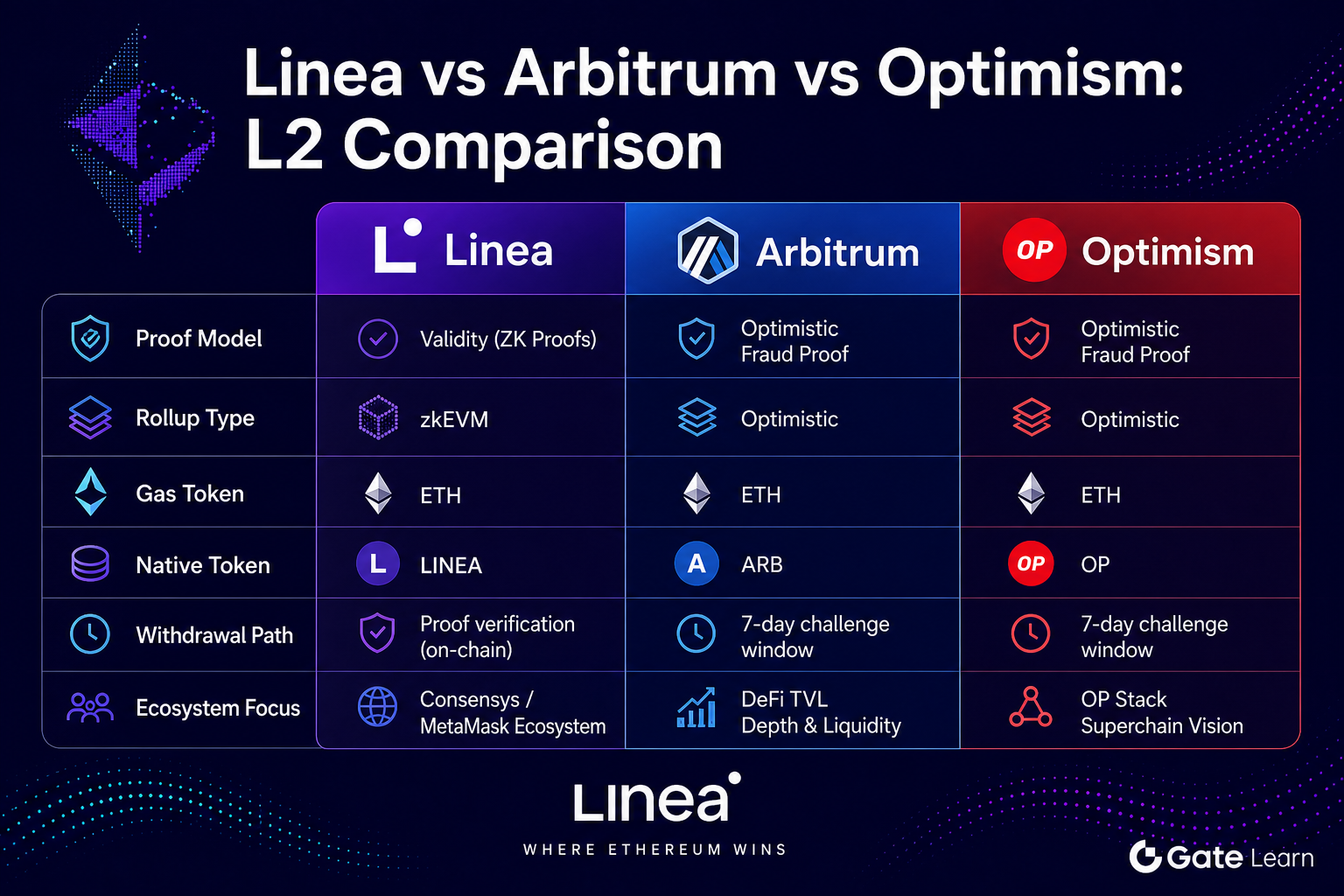
Figure 1. Side-by-side comparison of Linea, Arbitrum, and Optimism on proof models, gas tokens, and ecosystem positioning.
What Is Linea?
Linea is a Consensys-incubated Type 2 zkEVM Layer 2 that executes EVM-compatible transactions off-chain and settles on Ethereum mainnet with zk-SNARK validity proofs. Gas is paid exclusively in ETH; the LINEA token handles ecosystem incentives and dual-burn routing—not on-chain fees. LINEA tokenomics breaks down supply, allocation, and the dual-burn path in full. Linea emphasizes Ethereum-equivalent execution and native distribution through the Consensys product matrix (MetaMask, Infura).
What Is Arbitrum?
Arbitrum is an Optimistic Rollup network developed by Offchain Labs. Its flagship chain, Arbitrum One, runs on the Nitro stack: transactions execute off-chain, compressed data and state roots post to Ethereum, and fraud proofs secure correctness. Users pay gas in ETH; ARB serves governance and ecosystem coordination. The Arbitrum ecosystem has long aggregated DeFi protocols and extends into Orbit chains for custom L3 deployments. Arbitrum represents the mature Optimistic path oriented toward execution efficiency and DeFi depth.
What Is Optimism?
Optimism is an Optimistic Rollup network advanced by OP Labs. After the Bedrock upgrade, it is built on the OP Stack: off-chain execution, on-chain data availability, and fraud proofs form the security model. Gas is paid in ETH; the OP token participates in governance and mechanisms such as RetroPGF. Optimism’s Superchain vision lets chains like Base share the same OP Stack, enabling shared upgrades and interoperability. Optimism represents the Optimistic path focused on modular reuse and multi-chain coordination.
Proof Models and Withdrawals: How Do zkEVM and Optimistic Rollups Differ?
Linea’s validity-proof path confirms batch state once Ethereum verifies a zk-SNARK on L1—withdrawal finality hinges on proof verification, not a waiting challenge period. Arbitrum and Optimism assume batches are valid by default and can be overturned only via fraud proofs within a challenge window. Per public documentation from each project, withdrawals through the official bridge from Arbitrum One or Optimism mainnet to Ethereum typically require roughly a seven-day challenge period; third-party fast bridges can shorten waits but add trust assumptions and fee structures.
| Path |
Linea (zkEVM) |
Arbitrum / Optimism (Optimistic) |
| Security core |
Validity proof (per batch) |
Fraud proof (challengeable in window) |
| Official-bridge withdrawal |
Shorter path after L1 proof verification |
~7-day challenge window (common in public docs) |
| Trust assumptions |
Proof system + L1 verifiers |
At least one honest verifier + data availability |
| Operational dependencies |
Sequencer, prover, bridge contracts |
Sequencer, challengers, bridge contracts |
The Optimistic challenge window is a design feature, not mere delay; the zk route trades proof generation and verification cost for a different finality path. Both models still depend on bridge contracts, sequencers, and upgrade governance—L2 operational risk does not disappear with proof type alone.
For cross-chain strategists, the proof split also affects how third-party bridges and liquidity networks price risk. Fast bridges on Optimistic chains often wrap or pool liquidity to bypass the challenge window; zk routes may advertise shorter canonical paths but still depend on prover liveness and L1 verification gas. Comparing Linea, Arbitrum, and Optimism therefore requires reading live bridge documentation—not assuming identical withdrawal UX because all three are “Ethereum L2s.”
How Do Gas, Native Tokens, and Fee Structures Compare?
All three networks charge L2 transaction gas in ETH, keeping usage coupled to Ethereum’s native economy. Differences sit in native-token roles: Linea’s LINEA is not used for gas—it powers incentives, the Ecosystem Fund, and dual-burn routing of net surplus (~20% ETH burn, ~80% LINEA purchased and burned on L1). Arbitrum’s ARB and Optimism’s OP focus on governance, grants, and coordination and likewise do not replace ETH as gas.
| Network |
Gas asset |
Native token role |
Surplus routing |
| Linea |
ETH |
Incentives + dual-burn |
Net surplus split per dual-burn rules |
| Arbitrum |
ETH |
Governance / ecosystem |
Protocol-defined (not gas-repurchase centric) |
| Optimism |
ETH |
Governance / RetroPGF |
Protocol-defined (not gas-repurchase centric) |
Fee evaluation should go beyond headline gas quotes: L1 data costs, congestion, prover load (zk route), and liquidity tools outside the challenge window all affect total cost. Linea’s dual-burn links usage to ETH and LINEA supply dynamics—a structural mechanism, not a yield promise.
Arbitrum leads on DeFi protocol count and TVL depth: per L2Beat public data (2025), Arbitrum One often ranks among the highest-TVL Ethereum L2s—suitable for migrations that need existing liquidity and user bases. Optimism’s OP Stack lets Base, Mode, and other chains share tooling; builders planning multi-chain deployment or Superchain membership align well with Optimism docs and stacks. Linea’s edge is the Consensys matrix—MetaMask default network listings, Infura RPC, and Linea Hub offer wallet-to-bridge onboarding; Bridge to Linea provides a standalone checklist for wallet prep, bridging, and balance verification.
Developers can ask four scoping questions: whether target users already sit in Arbitrum DeFi pools; whether OP Stack licensed components are required; whether MetaMask-scale distribution matters; and whether a zk proof path is preferred. Tooling-wise, all three support Solidity and standard Ethereum stacks (Hardhat, Foundry, standard JSON-RPC); differences appear in block explorers (Lineascan, Arbiscan, Optimistic Etherscan), bridge UIs, grant programs, and sequencer API details.
From a user perspective, onboarding friction differs by wallet defaults and bridge familiarity. MetaMask users may encounter Linea through Consensys product surfaces; active DeFi users often already hold positions on Arbitrum; Superchain participants may route activity through Base while still referencing Optimism documentation. None of these paths removes the need to verify chain ID, official bridge URLs, and token contract addresses before moving funds—the same verification discipline applies on Linea, Arbitrum, and Optimism.
How Aligned Are They With Ethereum?
All three use Ethereum as the settlement layer, inheriting L1 security and data-availability assumptions. Linea brands itself a Type 2 zkEVM, pursuing EVM equivalence and sync with Ethereum upgrades; the Consensys background reinforces scaling Ethereum rather than extracting value. Arbitrum and Optimism also emphasize EVM compatibility—Arbitrum Stylus adds multi-language contracts; Optimism exports standardized rollup components through the OP Stack.
Ethereum alignment is more than EVM compatibility: ETH-denominated gas, L1-anchored state roots, public bridge contracts, and upgrade timelines all matter. Linea’s dual-burn routes net surplus toward ETH destruction and LINEA supply management, tightening economic coupling at the token layer; Arbitrum and Optimism express ecosystem commitment through governance tokens and public-goods funding. Compare “alignment” across execution equivalence, economic coupling, and governance transparency separately.
Which Should You Choose?
Choose Linea if: zk validity proofs are preferred, Consensys / MetaMask distribution is valuable, LINEA incentives and dual-burn mechanics are acceptable, and the app needs a standard EVM deployment path.
Choose Arbitrum if: mature DeFi liquidity and user bases matter, Nitro execution performance and Orbit custom-chain options are useful, and the Optimistic challenge-window withdrawal rhythm on the official bridge is acceptable.
Choose Optimism if: building on or linking to OP Stack Superchain members (e.g., Base), participating in RetroPGF-style governance culture, and accepting the Optimistic security model.
No single L2 is universally superior: zk versus Optimistic is a trade-off among security assumptions, cost, and UX; ecosystem depth and distribution determine real launch friction. Multi-chain deployment, cross-chain liquidity, and user onboarding should be planned separately.
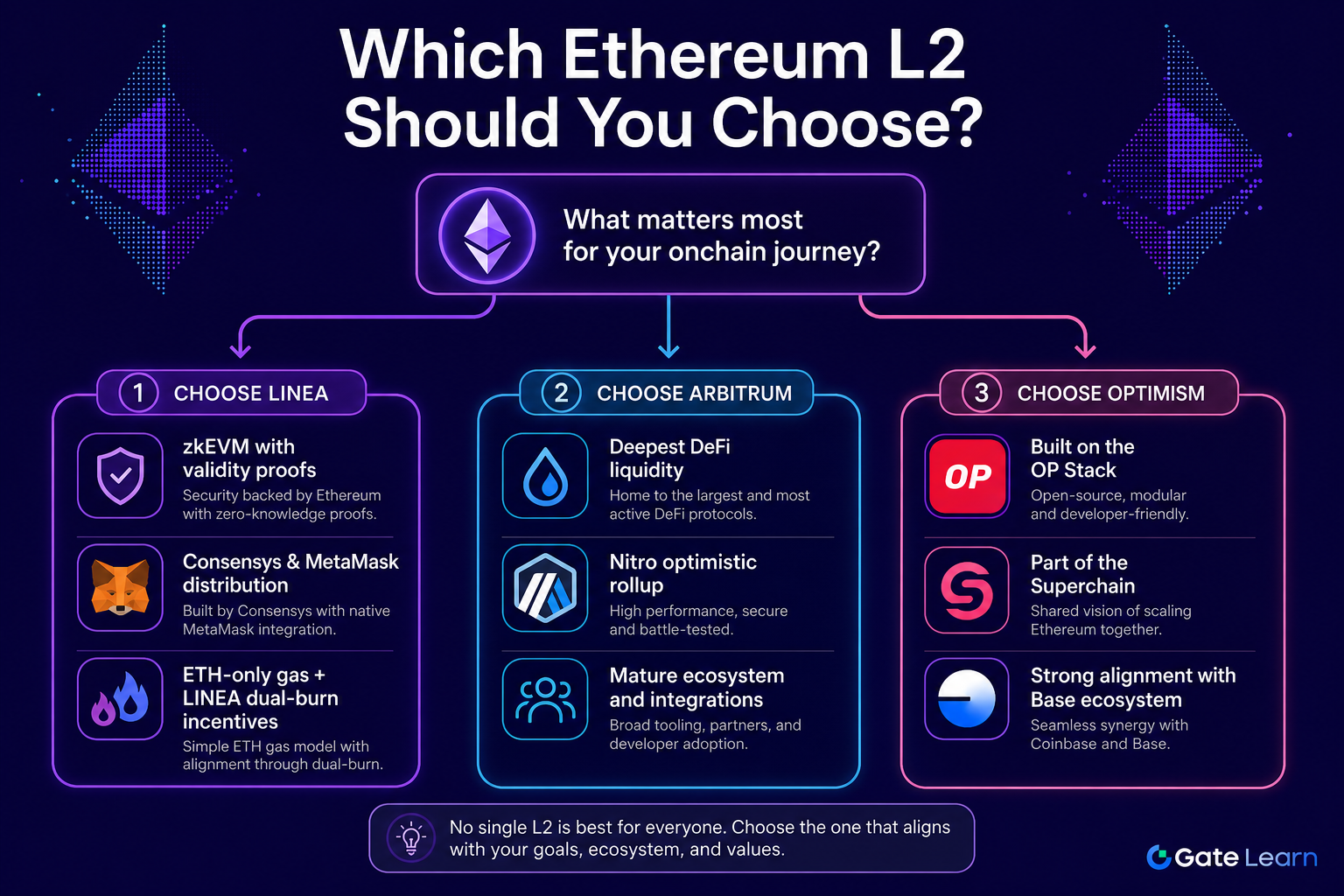
Figure 2. Decision paths for choosing an L2 based on proof preference, ecosystem needs, and Ethereum alignment.
Summary
Linea, Arbitrum, and Optimism represent two Ethereum L2 proof routes: Linea settles with Type 2 zkEVM and zk-SNARK validity proofs, ETH-only gas, and LINEA incentives plus dual-burn; Arbitrum and Optimism use Optimistic Rollups and fraud proofs, ETH gas, and ARB / OP for governance. Arbitrum leads on DeFi depth, Optimism on OP Stack Superchain tooling, Linea on Consensys distribution and the zk path. Selection should match proof preference, ecosystem dependencies, withdrawal paths, and native-token roles—and include bridging, sequencer, and contract risks in the same evaluation frame.
FAQ
What is the biggest mechanism difference between Linea and Arbitrum or Optimism?
The largest split is proof model: Linea uses zkEVM validity proofs—batch state is confirmed when Ethereum verifies a zk-SNARK on L1. Arbitrum and Optimism use Optimistic Rollups with fraud proofs and challenge windows; official-bridge withdrawals typically take about seven days. All three charge L2 gas in ETH; native tokens serve different roles.
Why is Linea called zkEVM while Arbitrum and Optimism are Optimistic Rollups?
A zkEVM cryptographically verifies execution correctness on L1 via zero-knowledge proofs. Optimistic Rollups assume batches are valid unless overturned by fraud proofs during a challenge window. Linea follows the former; Arbitrum (Nitro) and Optimism (OP Stack) follow the latter—so security assumptions and withdrawal timing differ.
Do all three chains use ETH for gas? What are native tokens for?
All three charge L2 transaction gas in ETH. Linea’s LINEA funds ecosystem incentives and dual-burn—it does not pay gas. Arbitrum’s ARB and Optimism’s OP focus on governance and ecosystem funding and likewise do not replace ETH as the fee asset.
How long do withdrawals from Linea, Arbitrum, or Optimism to Ethereum take?
After Ethereum verifies Linea’s validity proof, the official path is typically shorter than an Optimistic challenge window. Arbitrum and Optimism official-bridge withdrawals to Ethereum commonly require about a seven-day challenge period per public documentation; third-party fast bridges can shorten waits but add trust assumptions and fees.
Why would a developer deploy on Linea instead of Arbitrum?
Common reasons include preferring zk validity proofs over fraud-proof windows, tapping Consensys / MetaMask distribution, or aligning with LINEA dual-burn and ETH-centric token design. Apps heavily dependent on existing Arbitrum DeFi liquidity may face higher migration cost than cold-starting on Linea.
What limitations apply when comparing Linea, Arbitrum, and Optimism?
Three structural limits matter: ecosystem metrics such as TVL and protocol counts change over time—verify against public sources like L2Beat; fast bridges, sequencers, and upgrade keys carry shared L2 operational risk regardless of proof type; native-token governance and allocation differ—do not conflate gas roles with incentive roles.







