These three Gate paths are often compared as if they were the same “buy crypto” button. They are not. Gate Convert stays inside a quoted one-click swap. Spot uses the order book. Gate P2P coordinates buyers and sellers around payment methods and platform release rules.
Key Takeaways
- Convert is a one-click quoted swap that settles into the spot account; spot matches orders on the order book; Gate P2P settles crypto against off-platform fiat payment confirmation.
- Gate help materials state that no fees are charged in the Convert process, while the flash swap price can still sit slightly above spot when buying and slightly below spot when selling.
- Choose Convert for speed and simplicity, spot for market/limit price control, and Gate P2P for fiat payment methods—not as interchangeable tools for the same job.
- Large Convert sizes may need Block Trade or careful spot execution instead of a standard Convert quote.
What Is Gate Convert?
Gate Convert helps users swap one supported currency for another in one click. Users select spend and receive assets, review the quoted result, confirm, and settle automatically into the spot account—without placing a spot market or limit order. Gate help materials describe Convert pricing as a flash swap price that can differ from the spot price.
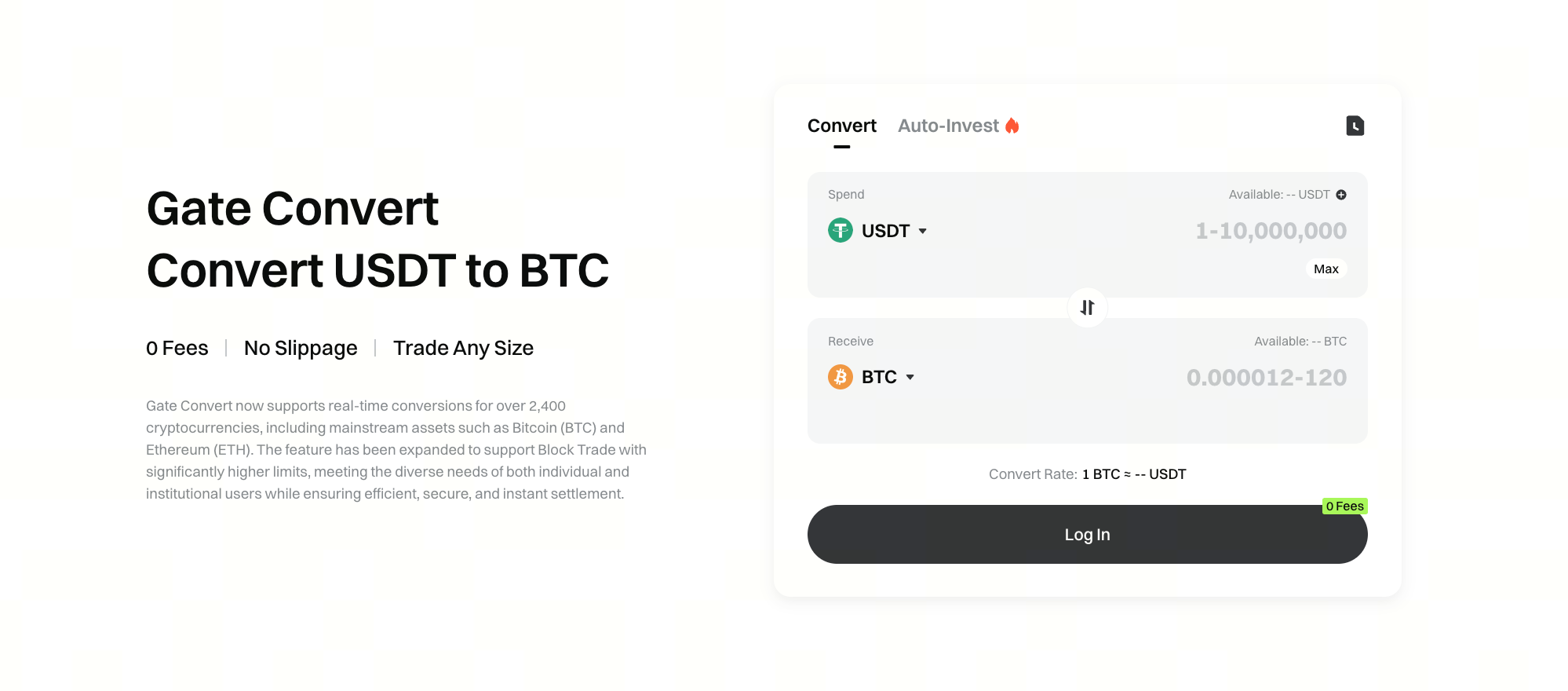
For readers comparing Gate Convert vs spot, the boundary is execution design: Convert is quote-and-confirm; spot is order-book trading. Gate P2P is a separate path when fiat payment methods between users are required.
What Is Spot Trading on Gate?
Spot trading uses the public order book for a trading pair. Users can place market or limit orders, review depth and charts, and pay maker/taker trading fees under the account’s fee schedule. Spot prioritizes price and order-type control rather than a single Convert-style quote.
Spot is slower to learn than Convert and easier to misuse with large market orders on thin books. It remains the clearer path when a specific limit price or partial working of size matters more than one-click conversion.
What Is Gate P2P?
Gate P2P (P2P Express) matches a buyer and a seller who agree on price, amount, and payment method. Crypto is typically locked under platform rules while fiat moves through a bank transfer, e-wallet, or other local rail. Release depends on payment confirmation and dispute processes when something goes wrong.
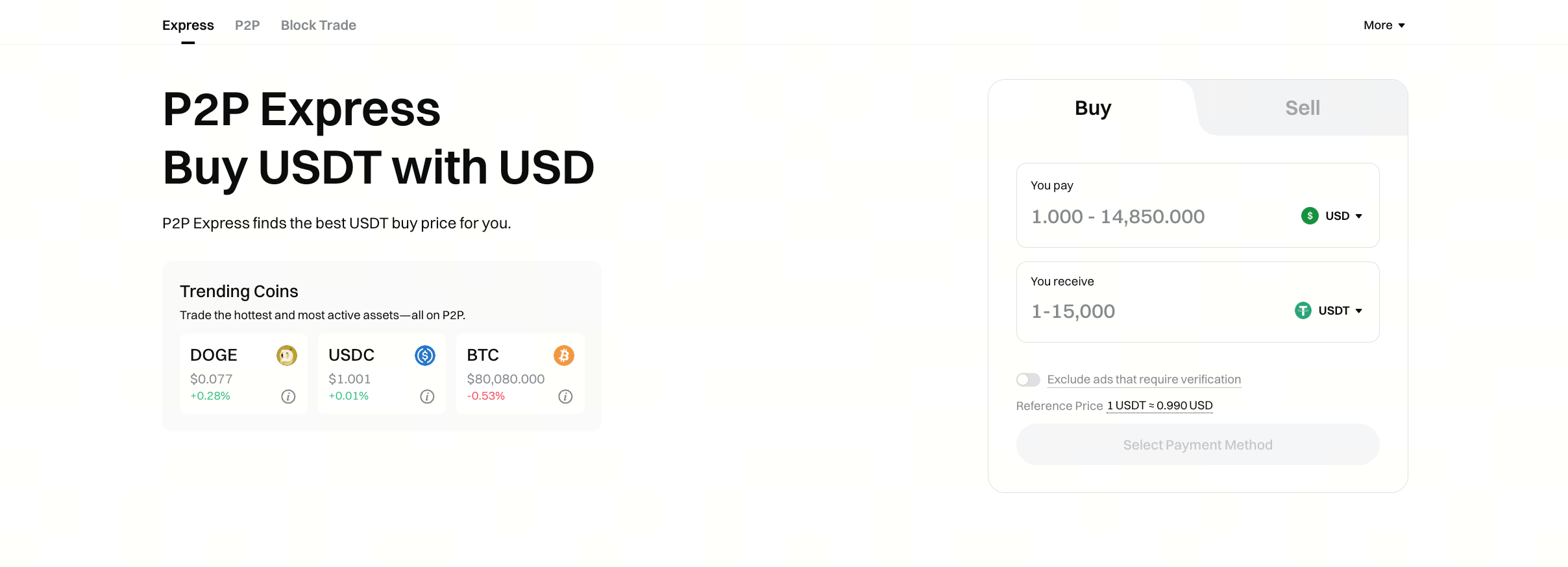
Gate P2P is not a substitute for Convert when both assets are already crypto balances on Gate. Its comparative advantage is fiat access and local payment flexibility, along with counterparty and payment-operation risks that Convert and spot do not share in the same form.
Convert vs Spot vs Gate P2P: Fees, Price, Speed, Settlement, and Limit Orders
| Dimension |
Gate Convert |
Spot trading |
Gate P2P |
| Execution |
Quoted one-click swap; preview then confirm |
Order-book match (market or limit) |
Ad + escrow-style user-to-user flow |
| Fee presentation |
Help center: no fees charged in the Convert process; flash swap price may differ from spot |
Maker/taker trading fees by VIP tier |
Embedded in ad price; payment costs off-platform |
| Price control |
Accept or reject the quote |
Market or limit orders |
Negotiate via ads and payment terms |
| Speed |
Fast after confirmation |
Depends on order type and liquidity |
Depends on payment and counterparty |
| Fiat rails |
Not the primary design |
Not the primary design |
Core design |
| Settlement |
Spot account |
Spot account |
Crypto release after fiat confirmation |
| Best for |
Simple crypto-to-crypto conversion |
Controlled crypto-to-crypto trading |
Fiat↔crypto with local payment methods |
The useful cost metric is the final receive amount (or fiat outcome for Gate P2P), not whether a fee label says “zero.” Convert can look free while the quote embeds a difference versus spot; spot shows trading fees while offering limit control; Gate P2P can look attractive on headline price while adding payment delay and dispute risk. Product and help references: Gate Convert, Guide to Convert (App), and Gate fee schedule for spot VIP rates.
Which Should You Choose?
Choose Gate Convert if the assets are already on Gate, the priority is a short path from A to B, and the preview receive amount is acceptable. Use the Convert on web and app checklist before you confirm.
Choose spot trading if a limit price, partial working of size, or order-book visibility matters more than one-click simplicity—especially on larger notionals.
Choose Gate P2P if the task is moving between local fiat payment methods and crypto with a counterparty, and both sides follow payment and release rules carefully.
Choose Block Trade or a hybrid approach if the Convert size is large enough that a standard quote is the wrong tool.
Summary
Gate Convert, spot, and Gate P2P are complementary execution rails. Convert optimizes for quoted speed inside crypto balances; spot optimizes for price control on the order book; Gate P2P optimizes for fiat payment methods between users. Comparing only the fee label misleads; comparing the receive outcome and the job-to-be-done does not.
FAQ
Is Gate Convert better than spot trading?
Neither is universally better. Convert is simpler and quote-based; spot offers market and limit control on the order book. The better path depends on size, urgency, and whether the Convert preview receive amount beats an expected spot fill.
When should someone use Gate P2P instead of Convert?
Use Gate P2P when fiat payment methods and user-to-user settlement are required. Use Convert when both sides of the exchange are supported crypto balances already on Gate.
Does Convert or spot have lower costs?
It depends on the pair, size, and market conditions. Convert may charge no separate fee in-process while the flash swap price differs from spot; spot charges maker/taker fees with different price formation. Compare final receive amounts.
Can Convert replace a spot market order?
For small, urgency-driven crypto-to-crypto swaps, Convert can serve a similar job with a simpler interface. For precise pricing or large-size management, spot or Block Trade is usually the clearer fit.
Where do Convert and spot settle?
Both Convert and spot trading settle into the Gate spot account for the traded assets. Gate P2P settlement follows payment confirmation and release rules instead of an order-book fill.