On the Gate Convert product page, Block Trade is presented as an expansion of Convert rather than a separate unrelated venue. The practical question for readers is when a standard quote is enough and when a block-sized Convert path is the better tool than walking the spot book.
Key Takeaways
- Block Trade extends Gate Convert toward significantly higher conversion limits than a typical retail Convert quote.
- Gate product copy frames Block Trade around superior large-order execution, reduced slippage, competitive pricing, and instant settlement for individual and institutional users where offered.
- Eligibility, limits, and quoting can differ by account, asset, and region; the live Convert surface is authoritative.
- Block Trade still needs quote review: larger size raises the cost of confirming a stale or misread rate.
What Is Gate Convert Block Trade?
In market language, a block trade is a large transaction handled with special size and impact considerations, often away from dumping the full notional into a thin public book. Gate Convert’s Block Trade applies that idea inside the Convert product family: users seeking large conversions can request execution under higher limits with pricing aimed at large tickets.
Gate’s Convert product page positions Block Trade for individual and institutional users who need efficient, secure, and instant settlement at sizes that exceed comfortable standard Convert amounts. Settlement remains tied to the Convert/spot account model rather than a peer-to-peer fiat payment flow.
How Does Block Trade Differ From Standard Convert?
Standard Convert is optimized for interface simplicity: pick assets, read a quote, confirm. That works well for routine sizes. As notional grows, a single Convert-style fill can embed a wider effective spread as market conditions shift, or the interface may hit a maximum that varies by pair—help materials note that maximum amounts vary by token or trading pair and should be checked in real time on the page.
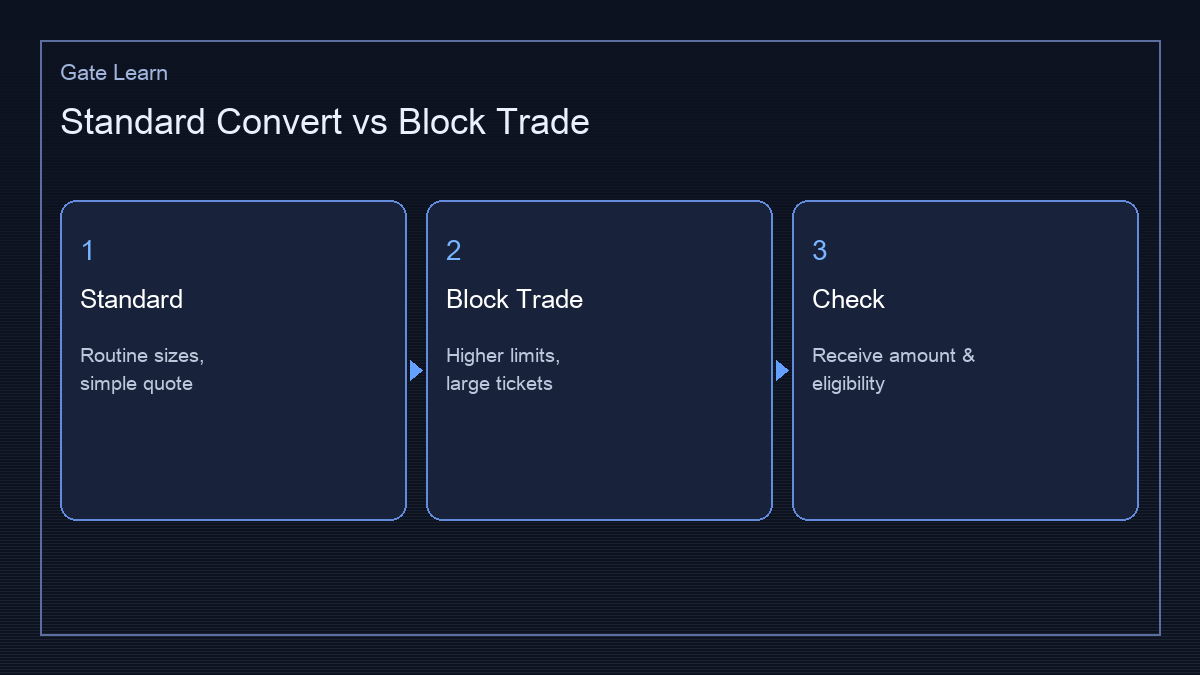 Figure 1. Standard Convert vs Block Trade by size and quoting envelope.
Block Trade is the Convert-side answer to that scale problem. It keeps the conversion framing—moving from asset A to asset B under Convert—while changing the size and execution envelope. Gate product messaging highlights significantly higher limits, reduced slippage, and competitive pricing for large orders. Users should still preview and confirm; the difference is the quoting and limit regime for large orders, not a promise that every large ticket is automatically cheaper than spot.
Retail Convert still follows the Convert on web and app preview-and-confirm loop. Block Trade is an overlay for size, not a replacement checklist for every Convert user.
How Does Convert Block Trade Differ From Spot Large Orders?
Spot large orders interact with the public order book. A market order can walk levels and create slippage; a limit order can rest and fill partially. Those tools give price control at the cost of complexity and possible incomplete fills.
Convert Block Trade keeps a conversion quote mindset: agree on a conversion outcome for a large size, then settle without manually managing depth. Compared with Gate P2P, Block Trade is still crypto-to-crypto inside Gate’s Convert rails, not a fiat payment escrow between users; Convert vs spot vs Gate P2P draws that line.
Neither path is universally superior. Spot may win when the book is deep and the trader wants a specific limit. Block Trade may win when the user wants a single large conversion quote without broadcasting size on the book. The receive amount and any eligibility constraints decide the trade, not the product name.
Who Is Gate Convert Block Trade For?
Block Trade is aimed at users whose conversion size regularly exceeds what a standard Convert quote handles comfortably, including individual and institutional users and high-net-worth profiles where Gate offers the feature.
It is not required for small portfolio tweaks. For those, standard Convert remains the shorter path. It is also not a fiat on-ramp; Gate P2P or other fiat products cover that job. Availability can depend on KYC tier, jurisdiction, and asset. If Block Trade controls are not visible, the account may be limited to standard Convert or spot. Do not assume a fixed industry dollar minimum; use the live Convert page limits.
What Should Users Check Before Confirming a Block Trade Quote?
- Size versus need — Confirm the notional matches the inventory goal; oversized tickets raise quote sensitivity.
- Receive amount — Treat the preview receive quantity as the economic outcome, including any embedded difference versus spot.
- Asset tickers — Large tickets amplify ticker-selection mistakes.
- Alternative paths — Briefly compare a spot limit or sliced execution if the book is deep and time allows.
- Settlement location — Verify expected credit in the spot account after confirmation.
- Quote validity — Re-preview if the quote window expires before confirmation.
These checks mirror retail Convert hygiene at a higher consequence level. A wrong confirmation on a block size is still an internal settlement, but users should accept only after reviewing the economics.
Risks and Limitations
Block Trade reduces some forms of visible book impact; it does not remove market risk on the receive asset after settlement. Quotes can still be unfavorable relative to a patient spot strategy. Feature access may be limited. Documentation and UI labels can evolve, so the Convert product page and Guide to Convert (App) remain the live rule set for minimums, maximums, and eligibility.
Block Trade also does not replace risk controls around deposits and withdrawals. Moving proceeds off-platform after a large conversion reintroduces network fees and address-risk checks that Convert itself does not solve.
Summary
Gate Convert Block Trade is the large-order extension of Gate Convert: higher limits and execution framing for sizeable crypto-to-crypto conversions that settle into the spot account. It differs from standard Convert mainly in scale and quoting envelope, and from spot large orders mainly in interface and impact management. Confirm the receive amount, eligibility, and alternatives before treating Block Trade as the default for every large ticket.
FAQ
What is Gate Convert Block Trade?
It is Gate Convert’s large-size conversion mode for higher limits and large-order execution. The Convert product page describes it as an expansion beyond standard Convert quotes, with reduced slippage and competitive pricing framing for large orders where offered.
How is Block Trade different from normal Convert?
Normal Convert targets simple quoted swaps at routine sizes. Block Trade targets significantly higher limits and large-order execution quality, while still living inside the Convert product family.
Does Block Trade remove slippage completely?
No. Product messaging emphasizes improved large-order execution and reduced impact versus naive public-book dumping, but users must still evaluate the quoted receive amount for each ticket.
Who can use Convert Block Trade?
Gate positions it for individual and institutional users with larger conversion needs where the feature is offered. Actual eligibility depends on account and region settings on the live Convert surface.
Should every large trade use Block Trade instead of spot?
Not automatically. Deep books and limit strategies can still be preferable. Compare the Block Trade quote with a realistic spot execution plan and choose the better receive outcome for the time horizon.