





Square
Following
Hot
News
Profile
Share your thoughts
placeholder
Article
#DrLinHanSpeaksAtOxfordUnion 🎤 Dr. Lin Han Speaks at Oxford Union! 🇬🇧
A platform for powerful ideas and meaningful discussions! 🌍 Dr. Lin Han’s appearance at the prestigious Oxford Union brings attention to the importance of innovation, global collaboration, and the future of technology.
💡 Big ideas can inspire change. 🌐 Global cooperation can create new opportunities. 🚀 The next generation has the power to shape tomorrow.
What do you think is the biggest challenge facing the future of technology? Share your thoughts below! 👇
post-image
Future hotel check-in.
Humanoid at the desk.
This is she. Any complaints?
post-image
🚀 Gate Futures Combo Trading Competition Season 1 Officially Opens
🔥 Team up to compete and share the 20,000 USDT prize pool
🤖 Flexibly combine multiple futures contracts and deploy long/short strategies with one click
🎁 New User First-Order Bonus: Receive 10 USDT upon creating your first order
🏆 Trading Volume Leaderboard: Top 50 winners can earn up to 1,000 USDT
💰 Participation Surprise Bonus: Randomly receive 0-50 USDT in trial funds when opening an order
👉 Participate Now: https://gate.onelink.me/7pdk/9d3ee318563e5477
BotsOfficial
🚀 Gate Futures Combo Trading Competition Season 1 Officially Opens
🔥 Team up to compete and share the 20,000 USDT prize pool
🤖 Flexibly combine multiple futures contracts and deploy long/short strategies with one click
🎁 New User First-Order Bonus: Receive 10 USDT upon creating your first order
🏆 Trading Volume Leaderboard: Top 50 winners can earn up to 1,000 USDT
💰 Participation Surprise Bonus: Randomly receive 0-50 USDT in trial funds when opening an order
👉 Participate Now: https://gate.onelink.me/7pdk/9d3ee318563e5477
repost-content-media
Gate Initial Listing: $DNA
🔹 Trading pair: $DNA / $USDT
🔹 Trading time: October 16, 19:00 (UTC+8)
🔹 0-fee swap start time: October 16, 20:00 (UTC+8)
Trade now: https://gate.com/zh/trade/DNA_USDT
Go to Swap: https://www.gate.com/zh/convert/USDT/DNA
Learn more: https://www.gate.com/zh/announcements/article/102248
GateLaunch
Gate Initial Listing: $DNA
🔹 Trading pair: $DNA / $USDT
🔹 Trading time: October 16, 19:00 (UTC+8)
🔹 0-fee swap start time: October 16, 20:00 (UTC+8)
Trade now: https://gate.com/zh/trade/DNA_USDT
Go to Swap: https://www.gate.com/zh/convert/USDT/DNA
Learn more: https://www.gate.com/zh/announcements/article/102248
repost-content-media
DNA+0.00%
  • 1
Ethena's USDe supply on Monad hit a record $142.19M, up 72.58% in the past 30 days. USDe is now the second-largest stablecoin on Monad, behind only USDC.
@ethena
ENA-12.04%
USDE+0.00%
MON-8.64%
USDC+0.01%
The primary driver of this euphoric and greed in thr market is the 2x, 3x leveraged ETFs.
Saw it in the crypto run in 2024 and then the AI run in 2026
$KORU down 80% and down a further 18% pre-market.
The entire market is just leverage
post-image
KORU-11.77%
I always hate having to switch from fundamentally driven trading back to purely technical setups.
It's like going back to the slums.
Let's hope for more tailwinds that can support winning narratives over the longer term, but we may be in for a boring Q4.
post-image
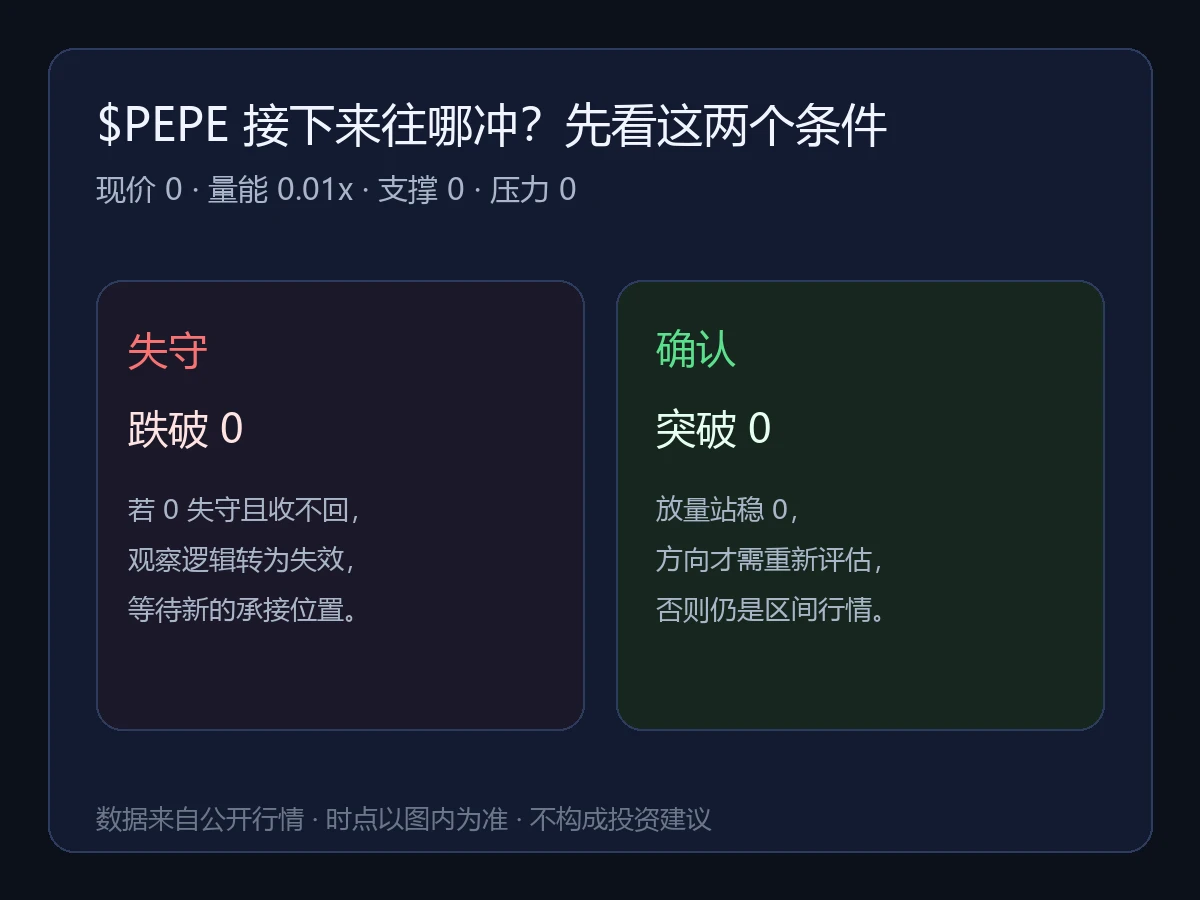
Looking at $ZEC again today, one detail made me pause: the follow-through after $ZEC’s sharp 24-hour drop.
The current price is 1,089.61, down 12.29% over 24 hours; it is about 1.34% above the 1-hour support at 1,075 and about 15.18% below the resistance at 1,254.97, while volume is only 0.17 times the average of nearly 20 candles.
Looking at this data alone, I would remain somewhat skeptical. A major move has already occurred, so the next step should be to verify whether it will continue, rather than extrapolating the past 24 hours into the future.
There is no need to guess too much next. If
post-image
ZEC-12.73%
evening updates
live-cover
LIVE2,080
Multiple rounds of positioning have all been successfully executed, with precise timing on Bitcoin and Ethereum long and short trades. Every entry was based on market signals—not subjective speculation, but following the trend.
Markets rise and fall, and opportunities are never lacking; the challenge is sticking to your trading system and strictly executing the plan.
Steady returns do not come from one reckless gamble, but from repeatedly catching the rhythm and turning small wins into big ones.
Every idea is well-founded, every result verifiable; trading is ultimately about aligning knowledge
BTC-2.94%
Panic Selling Hits South Korean Stocks! KOSPI plunges 7 and SK Hynix crashes 10.
live-cover
LIVE1,943
$33.88M in trading fees sounds like a pretty good business.
Until you realize only $3.35M of that reaches tokenholders.
That’s less than 10 cents for every dollar users pay in trading fees.
According to DeFiLlama’s 30-day snapshot, @Raydium generated:
> $33.88M in fees: What traders paid.
> $5.62M in revenue: What the protocol retained.
> $3.35M in holder revenue: What accrued to tokenholders.
Here’s where the numbers get revealing.
Raydium’s holder revenue represents approximately 59.6% of its protocol revenue.
That sounds like strong tokenholder capture.
But compare it against the original $
post-image
RAY-12.51%
【The 20:30 Showdown: Gold and Silver Recover First, While Crypto Waits for the Other Shoe to Drop】
The aftershocks of the blowout CPI have yet to subside, but the market has already split into two worlds: gold reclaimed 4,155 and silver bounced back to 56.7, with the double bottom around 55 holding firm; meanwhile, crypto continues to bleed—Ethereum broke below the 2,359 previous low to hit a new nearly five-week low, SOL retreated to the $100 level, and ZEC plunged nearly 13% in a single day. Faced with the same inflation data, safe-haven capital has already cast its vote with actual gold and
BTC-2.94%
📉 Japanese and South Korean stocks plunged across the board, while memory chips became the focus of traders' attention
The Nikkei 225 Index fell 4.90%, the South Korean KOSPI Index fell 7.56%, and semiconductor and memory stocks once again became market hotspots.
Interestingly, the more volatile the market, the higher the trading attention on related assets.
Odaily reports that CoinGlass data shows:
🔥 SK Hynix: Gate holdings account for 15.8% of the total network, ranking second
📊 SanDisk: Gate holdings account for 18.15% of the total network, also ranking second
Amid the sharp decline, som
GateSquare
📉 Japanese and South Korean stocks plunged across the board, while memory chips became the focus of traders' attention
The Nikkei 225 Index fell 4.90%, the South Korean KOSPI Index fell 7.56%, and semiconductor and memory stocks once again became market hotspots.
Interestingly, the more volatile the market, the higher the trading attention on related assets.
Odaily reports that CoinGlass data shows:
🔥 SK Hynix: Gate holdings account for 15.8% of the total network, ranking second
📊 SanDisk: Gate holdings account for 18.15% of the total network, also ranking second
Amid the sharp decline, some are seeking rebound opportunities, while others are choosing to hedge risks.
The long-term logic of AI-driven memory demand remains intact, but have short-term stock prices already undergone a sufficient correction?
Do you have greater confidence in rebound opportunities for Hynix and SanDisk, or do you think the memory sector still needs to digest valuation pressure?
Bring #日韩股集体大跌 to Gate Square to share your market observations, trading strategies, or portfolio review.
💬 Is the decline creating an opportunity, or even greater volatility? Share your view.
📖 Odaily reports:
https://www.odaily.news/zh-CN/newsflash/524805
repost-content-media
SK Hynix-11.06%
SKHY-6.09%
SKHYV-0.98%
SNDKG-7.90%
JPN225-4.40%
#日韩股集体大跌
🚨 ASIAN STOCKS PLUNGE! KOSPI -7.57%, SK HYNIX -11.06% — BUY THE DIP OR EXPECT MORE SELLING?
My Original Market View | October 15, 2026
Asian markets are under heavy selling pressure, with semiconductor and memory stocks facing sharp corrections. The key question is whether these declines are creating genuine buying opportunities or warning of another wave of losses.
My strategy is to separate the long-term AI growth story from short-term market sentiment. Strong industry demand can create opportunities, but it does not guarantee an immediate recovery.
1. Japan and South Korea: A Maj
GateSquare
📉 Japanese and South Korean stocks plunged across the board, while memory chips became the focus of traders' attention
The Nikkei 225 Index fell 4.90%, the South Korean KOSPI Index fell 7.56%, and semiconductor and memory stocks once again became market hotspots.
Interestingly, the more volatile the market, the higher the trading attention on related assets.
Odaily reports that CoinGlass data shows:
🔥 SK Hynix: Gate holdings account for 15.8% of the total network, ranking second
📊 SanDisk: Gate holdings account for 18.15% of the total network, also ranking second
Amid the sharp decline, some are seeking rebound opportunities, while others are choosing to hedge risks.
The long-term logic of AI-driven memory demand remains intact, but have short-term stock prices already undergone a sufficient correction?
Do you have greater confidence in rebound opportunities for Hynix and SanDisk, or do you think the memory sector still needs to digest valuation pressure?
Bring #日韩股集体大跌 to Gate Square to share your market observations, trading strategies, or portfolio review.
💬 Is the decline creating an opportunity, or even greater volatility? Share your view.
📖 Odaily reports:
https://www.odaily.news/zh-CN/newsflash/524805
repost-content-media
#美国9月CPI超预期 #每周来晒 U.S. inflation remains high, rate hike expectations surge, and the crypto market falls under pressure. How will things develop from here?
U.S. inflation has once again sounded an alarm for global financial markets. On October 14 local time, the U.S. Bureau of Labor Statistics released September Consumer Price Index (CPI) data. The data showed that U.S. CPI rose 3.7% year over year in September, higher than the market expectation of 3.6% and August’s 3.4%; it rose 0.6% month over month, up from August’s 0.4%. More notably, core CPI, which excludes food and energy prices, rose
post-image
ThisIsTranslateContent:
#美国9月CPI超预期 #每周来晒 U.S. inflation remains elevated, expectations for rate hikes have surged, and the crypto market has come under pressure and fallen. How will things develop from here?
U.S. inflation has once again sounded an alarm for global financial markets. On October 14 local time, the U.S. Bureau of Labor Statistics released the Consumer Price Index (CPI) data for September. The data showed that U.S. CPI rose 3.7% year over year in September, higher than the market expectation of 3.6% and August’s 3.4%; month over month, it rose 0.6%, accelerating further from August’s 0.4% increase. More notably, core CPI, excluding food and energy prices, rose 2.6% year over year, up from August’s 2.4%, and increased 0.3% month over month. Meanwhile, U.S. gasoline prices surged 9.1% month over month in September, becoming an important factor driving overall inflation higher. This means that U.S. inflation not only failed to continue declining as the market had expected, but instead rebounded significantly. It has also intensified market concerns over future monetary policy. After the inflation data was released, market expectations for a rate hike at the Federal Reserve’s October meeting rose significantly. According to Reuters, the implied probability of an October rate hike in the interest-rate futures market briefly rose to about 37%; other market data indicated even higher probabilities, with the specific figure varying based on the timing of trading and statistical methodology. U.S. Treasury yields and the dollar strengthened in tandem, while Bitcoin and gold also came under pressure after the data was released. It must be emphasized that rising rate-hike expectations do not mean the Federal Reserve has already decided to raise rates. But for the crypto market, even if a rate hike has not yet occurred, investors may adjust their positions in advance and trigger price volatility as long as they begin reassessing the future interest-rate path. Previously, the market had expected cooling inflation to create room for rate cuts and further improve liquidity for risk assets. However, the September CPI data, which exceeded expectations, shattered that optimism. Investors now need to consider not only whether rate cuts will be delayed, but also reassess the possibility that high interest rates could persist for longer or even rise again.
So why does U.S. inflation have such a major impact on the crypto market? What exactly does this CPI data mean? If the Federal Reserve continues to maintain a tight policy, where will Bitcoin and other crypto assets go?
I. A rebound in inflation means the Federal Reserve’s policy room is becoming more limited
The most notable aspect of this data is not only that headline CPI rose from 3.4% to 3.7%, but also that core inflation rebounded at the same time. Rising gasoline prices were an important driver of this inflation rebound, but price pressures were not limited entirely to the energy sector. U.S. housing, some services, and used cars also increased, indicating that inflation remains somewhat broad-based. This is undoubtedly a difficult signal for the Federal Reserve. If inflation continues to fall, the Federal Reserve will have more room to lower interest rates to support employment and economic growth. But when inflation picks up again, cutting rates too early could cause demand to heat up again and further expand price pressures.
Therefore, the Federal Reserve may need to maintain restrictive interest rates for an extended period and, if necessary, may not rule out further rate hikes.
For the market, what truly matters is not whether the Federal Reserve has already announced a rate hike, but whether future funding costs could continue to rise. When investors expect interest rates to remain high, they generally allocate funds to high-risk assets more cautiously. As a highly volatile asset class, the crypto market naturally cannot remain entirely unaffected.
II. Why do rising rate-hike expectations suppress the crypto market?
As Bitcoin spot ETFs, institutional allocations, and derivatives markets have developed, crypto assets have become increasingly connected to traditional financial markets. Macroeconomic conditions and monetary policy have already become important variables affecting the crypto market.
The logic behind the market coming under pressure this time mainly consists of the following aspects.
1. Rising interest-rate expectations put pressure on risk-asset valuations Crypto assets themselves do not provide fixed interest income. Their prices depend more on market demand, future expectations, and investors’ willingness to take on risk. When the market expects the Federal Reserve to cut rates, investors often anticipate improved financial conditions and increase their allocations to Bitcoin and other risk assets. But if inflation data continues to exceed expectations, rate cuts may be delayed and the risk of rate hikes may even emerge, prompting the market to reassess the valuations of these assets. This impact is usually more pronounced for Meme coins and small- and mid-cap tokens, which lack stable cash flows and whose prices are mainly supported by market sentiment and future expectations, when monetary policy expectations shift.
2. Rising U.S. Treasury yields change the logic of capital allocation
U.S. Treasuries are an important pricing benchmark for global financial markets. When investors can obtain higher returns through relatively low-risk assets, the appeal of allocating to highly volatile crypto assets may decline. At the same time, higher financing costs can also restrain some leveraged trading and venture investment activities. Of course, Treasury yields, the dollar, and crypto assets do not always exhibit a simple inverse relationship. The market is also affected by factors such as economic growth expectations, fiscal policy, and capital flows. But when inflation exceeds expectations and interest-rate expectations rise, risk assets are generally more likely to face pressure.
3. Leveraged liquidations amplify price volatility
Compared with traditional assets, another characteristic of the crypto market is its active leveraged trading. When macro news triggers a price decline, highly leveraged investors may face insufficient margin, which in turn triggers forced liquidations. Concentrated liquidations add to selling pressure and push prices down further. If changes in funding rates, declining liquidity, and crowded long positions occur simultaneously during the decline, the market may experience a rapid plunge within a short period.
Therefore, macro factors may only be the starting point for a weakening market, while the internal leverage structure is what truly amplifies the decline.
4. Market sentiment weakens, and capital becomes more cautious.
Crypto market prices reflect not only fundamentals but also depend heavily on expectations. When investors originally expected a rate-cut rally but discover that inflation remains stubborn, risk appetite is often the first thing to change. Some funds may reduce their positions, increase their cash allocation, or shift toward more liquid assets. For tokens with insufficient trading depth, even a relatively small amount of selling can cause a significant price impact. This means that the impact of inflation is not only rising funding costs, but also a change in the market’s assessment of future market performance.
III. The biggest uncertainty ahead: What will the Federal Reserve choose?
Going forward, the key issue for the crypto market is not a single CPI report, but how this data will affect the Federal Reserve’s subsequent policy path.
Based on the current macroeconomic logic, three scenarios may emerge.
Scenario One: Inflation remains stubborn, and high rates last longer
If subsequent CPI and core inflation remain above expectations, while services prices, housing costs, or energy prices come under new upward pressure, the Federal Reserve may continue to maintain restrictive interest rates. In this case, market expectations for rate cuts may be pushed back further, while the dollar and Treasury yields may remain relatively strong. The crypto market may continue to face valuation pressure, limiting Bitcoin’s rebound potential, with capital potentially becoming more concentrated in assets with better liquidity and stronger market consensus. Meme coins, small-cap tokens, and highly leveraged trading may become higher-risk areas under this scenario. But this does not mean the market will necessarily fall in one direction. If inflation pressures have already been fully priced in, or if demand from other sources of capital provides support, crypto assets may still experience a temporary rebound.
Scenario Two: Inflation gradually declines, and rate-cut expectations heat up again
If subsequent data shows that inflation was only a short-term fluctuation, with core inflation gradually declining while the labor market and consumer demand cool somewhat, the Federal Reserve may regain room to ease monetary policy. Once the market begins to believe that interest rates may fall, declining Treasury yields, a weaker dollar, and improved risk appetite could all support the crypto market. Under this scenario, Bitcoin may be the first to benefit from improving macro expectations, after which capital could gradually spread to Ethereum and other higher-risk assets. However, rate cuts are not necessarily always positive. If falling inflation is caused by a rapid economic recession, investors may instead reduce their allocations to risk assets. Therefore, when assessing market conditions, it is also necessary to monitor economic growth and employment data rather than looking only at interest-rate changes.
Scenario Three: Inflation and economic growth diverge, and the market remains volatile
Another possibility is that inflation fluctuates while economic growth has not yet slowed significantly, leaving the Federal Reserve with neither sufficient reason to cut rates quickly nor enough basis to raise them immediately. Under these circumstances, policy expectations may swing back and forth in response to different data points. Every CPI release, nonfarm payrolls report, or speech by a Federal Reserve official could trigger short-term market moves. The crypto market may switch frequently between gains and losses, forming a range-bound market. For investors, this environment is often more difficult to navigate than a one-directional market, because expectation gaps can easily emerge before and after data releases, while chasing rallies and selling into declines can more easily result in losses.
IV. Besides CPI, which indicators should be watched going forward?
To determine whether the current crypto market correction will expand further, it is important to focus on the following types of indicators.
First, core CPI and core PCE. Core inflation can help the market determine whether price pressures are persistent, while the Federal Reserve places particular emphasis on the Personal Consumption Expenditures (PCE) price index as an important reference for evaluating inflation. If core inflation continues to fall, the market may reassess the possibility of rate cuts; if it remains elevated, expectations for tighter policy may strengthen further.
Second, U.S. employment data. If the labor market remains strong, the Federal Reserve may have more room to maintain higher interest rates; if employment cools significantly, it will need to weigh inflation risks against economic growth risks.
Third, U.S. Treasury yields and the dollar index. These two indicators can reflect the market’s repricing of the interest-rate path and the appeal of dollar assets. If yields continue to rise and the dollar strengthens, the crypto market may remain under pressure.
Fourth, Bitcoin spot ETF flows and derivatives data. ETF inflows and outflows can help track changes in institutional demand; futures open interest, funding rates, and liquidation volumes can help determine whether the market is excessively leveraged.
Fifth, the Federal Reserve’s actual policy signals. The market trades on future expectations, not merely on data that has already been released. Investors need to monitor Federal Reserve statements, meeting minutes, and officials’ speeches to determine whether the policy direction has truly changed. Only by combining macroeconomic data, policy expectations, and the internal structure of the crypto market can one more accurately determine whether the current decline is a short-term correction or a risk repricing over a longer cycle.
V. Conclusion: Inflation determines policy room, while liquidity influences market direction
U.S. inflation remaining above expectations means that the easing environment the market has been anticipating may not arrive soon. Rising rate-hike expectations are essentially the result of investors reassessing future funding costs and risk-asset valuations. For the crypto market, short-term pressure remains, especially when leverage is high and market sentiment is fragile, as the impact of macroeconomic data may be amplified further.
But another misconception should also be avoided: inflation exceeding expectations does not mean the Federal Reserve will necessarily raise rates, and a decline in the crypto market does not mean the long-term market cycle has ended.
The key for the market going forward will be whether inflation can continue to fall, whether employment and economic growth undergo significant changes, and how the Federal Reserve balances price stability against economic risks. If inflation remains stubborn, the market may need more time to digest expectations for high interest rates; if inflation gradually cools and liquidity expectations improve, crypto assets may regain upward momentum.
For investors, rather than betting on short-term gains or losses following a particular data release, it is better to continuously track inflation trends, interest-rate expectations, and market capital flows. When macroeconomic uncertainty remains high, controlling leverage, managing positions, and leaving room to respond to different scenarios are often more important than blindly predicting market tops or bottoms.$SNDK ‌
repost-content-media
GAS-4.29%
MEME-5.89%
ETH-5.45%
  • 2
#SolanaMajorUpgradeScheduled
🚨 SOLANA’S ALPENGLOW UPGRADE IS COMING — WILL IT CHANGE THE FUTURE OF $SOL ?
Solana is approaching a major technological milestone, and the crypto market has a big question to answer: Can Alpenglow’s next-generation consensus upgrade strengthen Solana’s competitive position and create a new opportunity for $SOL?
Scheduled for October 21, 2026, at approximately 15:00 UTC (8:00 PM Pakistan time), Alpenglow aims to transform how Solana validators reach agreement on transactions. This is more than a routine network update. It represents a significant step toward faste
SOL-4.38%
.@ionet is at ~165B tokens through @OpenRouter in the first 13 days of October.
That’s already ~1.8x everything we did in July.
If the current pace holds, October lands somewhere around 4x July’s total volume.
I care more about that than raw GPU count tbh.
The useful output per deployed GPU keeps moving as sparse models get better and the serving stack gets tighter. So the network can grow in two directions at once: more hardware coming online, and more work getting squeezed out of what’s already there.
Tokens served per GPU is a great sign of whether the network itself is actually getting bet
post-image
Down 6.065 percent today and trading right near 9.587 dollars after bouncing between a 10.299 high and a 9.337 low. Watching $AVAX bleed out while staring at the charts at two in the morning builds character. Keep an eye on whether 9.337 holds or caves under pressure. Not financial advice and DYOR. #GateIdleEarnAutoYieldUpTo3% #GateLaunchesTrenchesWith0GasFee #ShareWeekly #WeekendMarketBullishOrBearish
post-image
AVAX-6.54%
FeaturedThese past few days, the people getting liquidated while farming points on Papertrade have had it really rough. Some groups are even posting: “Taking in Papertrade-liquidated college girls.”
So, is there a way to farm points with controlled risk?
Yes. Today, we’ll teach you how to use Papertrade + HertzFlow for Delta hedging, accumulating PAPER while controlling directional risk.
Papertrade + HertzFlow hedged PAPER accumulation, actionable plan: Papertrade has no traditional points; PAPER comes from realized losses.
The goal is not to mindlessly create losses, but to have HertzFlow’s opposite
post-image
BTC-2.94%
USDC+0.01%
HYPE-3.00%
  • 2
Load More

Join 40 M users in our growing community

⚡️ Join 40 M users in the crypto craze discussion

💬 Engage with your favorite top creators

👍 See what interests you

Trending Topics

USSeptemberCPITopsEstimates

36.75k Views2.75k Discussing

US September CPI rose 3.7% YoY, above the 3.6% estimate; core CPI rose 2.6%, also above the 2.5% estimate. With inflation topping forecasts across the board, how will rate hike expectations shift? How will BTC react? Share your view.

DrLinHanSpeaksAtOxfordUnion

135.63k Views1.86k Discussing

USSeptemberPPIReleased

91.35k Views1.77k Discussing

View More